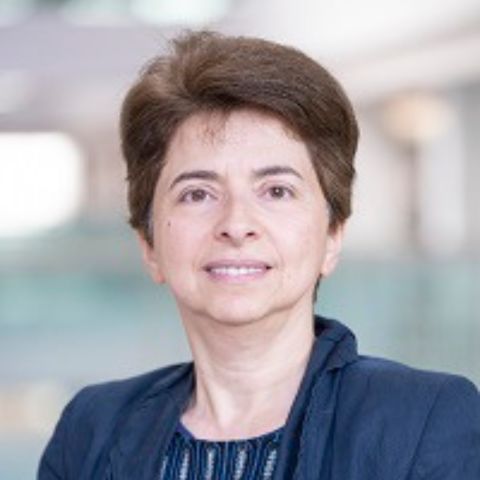
Svetlana Lazebnik is a Full Professor and Willett Faculty Scholar in the Department of Computer Science at the University of Illinois at Urbana-Champaign (UIUC), part of the Grainger College of Engineering. She holds a Ph.D. from UIUC (2006) and previously served as an Assistant Professor at the University of North Carolina at Chapel Hill (2007–2011). Her research focuses on computer vision, including generative models for virtual try-on, image stylization, scene understanding, and joint modeling of images and language. She has advised numerous Ph.D. students and postdocs, many of whom now hold prominent academic and industry roles. Education: Ph.D. in Computer Science, UIUC (2006); supervised by Jean Ponce. Research Interests: Her work spans generative adversarial networks (GANs), diffusion models, virtual try-on systems (e.g., Dressing-in-Order, Street Try-On), exemplar-based stylization, and large-scale photo analysis. She has pioneered spatial pyramid matching and contributed to binary code learning for image retrieval. Key Awards: NSF CAREER Award (2008), Microsoft Research Faculty Fellow (2009), Sloan Research Fellow (2013), IEEE Fellow (2021), and the Longuet-Higgins Prize (2016) for her CVPR 2006 paper. Teaching: Recent courses include CS 444 (Deep Learning for Computer Vision), CS 543 (Computer Vision), and a Ph.D. Job Search Seminar. She has also taught at UNC Chapel Hill. Grants & Funding: Supported by NSF, Amazon, AWS, Microsoft, Sloan Foundation, Google, ARO, and Adobe. Notable grants include CCF 2348624 and IIS 1718221. Labs/Groups: Leader in the Illinois CS Vision Group, contributing to collaborative projects on embodied AI, multi-agent systems, and visual-semantic reasoning.
Natacha Crooks Dr. Natacha Crooks is an Assistant Professor in the Department of Electrical Engineering and Computer Science (EECS) at UC Berkeley. Her research focuses on distributed systems, databases, and security, with a particular emphasis on consistency models, BFT protocols, and cloud computing. She is a founding member of the SkyLab and a core contributor to the Data Systems and Foundations Group at Berkeley. She holds a Ph.D. in Distributed Systems from the University of Texas at Austin (2019) and a BA in Computer Science and Law from the University of Cambridge (2012). Affiliations & Roles: Assistant Professor, UC Berkeley EECS Visiting Researcher at Azure Research, Security & Privacy Founding Member of SkyLab Member of Berkeley Center for Decentralized Intelligence Former Scientific Advisor at Improbable and Astronomer Research Interests: Her work bridges distributed systems and database research, addressing challenges in transactional consistency, fault-tolerant protocols, and cloud resource optimization. Key themes include: Designing scalable BFT consensus algorithms Secure multi-cloud storage solutions Optimizing distributed transaction processing Privacy-preserving distributed systems Awards & Recognition: Sloan Research Fellow (2025) NSF CAREER Award ACM SIGOPS Dennis M. Ritchie Doctoral Dissertation Award (2020) IEEE CS TCDE Early Career Award (2024) Teaching: Fall 2025: CS 294-282 (Research Culture and Community Norms), Wheeler 130. Industrial Collaboration: Prior roles include visiting researcher at Cornell University, Microsoft Research (DMX group), and Imperial College London. Industrial partnerships include work with Materialize, Astronomer, and Improbable.
Dominic Thibault is an Assistant Professor at the Faculty of Music, Université de Montréal . His research-creation explores human-machine interaction in musical contexts, focusing on embodied cognition through electroacoustic compositions, audiovisual performances, and musical software development. Co-director, Laboratoire Formes·Ondes Active member, CIRMMT (Centre for Interdisciplinary Research in Music Media and Technology) Research axis leader, Expanded Musical Practice (CIRMMT) Member, Québecor Millénium entrepreneurship committee Scientific committee member, ACFAS
Veysel Murat İstemihan Genç is a Professor in the Department of Electrical Engineering at Istanbul Technical University (ITU), College of Engineering. His research is centered on modern power systems, with a focus on transient stability, cybersecurity, and integration of renewable energy sources. He actively leads multiple research projects and supervises graduate students in advanced power system technologies. Research Interests: His work spans key areas including transient stability assessment, machine learning applications in power systems, cyber-attack detection in AGC systems, and dynamic security evaluation under high renewable penetration. He employs cutting-edge techniques such as ensemble learning, deep neural networks, and hybrid optimization algorithms. Publication Trends: Recent publications (2023–2025) highlight a strong trend toward integrating AI and machine learning for real-time transient stability prediction, cybersecurity in distributed energy systems, and performance optimization of solar and wind-integrated grids. His work frequently addresses challenges in low-inertia systems and false data injection attacks. Scientific Projects: Strengthened Machine Learning-Based Dynamic Security Evaluation for Transient Stability under False Data Injection Attacks (BAP, 2025) Analysis and Control Methods for Stability of Large-Scale Low-Inertia Power Systems (BAP, 2023–2024) Dynamics Security Evaluation of Renewable-Rich and Cyber-Attacked Power Systems (BAP, 2022–2024) Risk-Based Stability Assessment and Corrective Control Methods in Power Systems (BAP, 2019–2022) Wide-Area Monitoring Protection and Control System Design Using Advanced Signal Processing and Machine Learning (TÜBİTAK, 2018–2020) Advising and Grants: He is the principal investigator (PI) on multiple funded research projects from BAP and TÜBİTAK, indicating strong grant acquisition and leadership. His supervision of 27 ongoing theses reflects an active role in mentoring graduate students in electrical engineering and power systems. Labs and Teams: While specific lab names are not mentioned, his projects suggest leadership in a research group focused on smart grid technologies, AI-enabled power system security, and renewable integration at Istanbul Technical University.
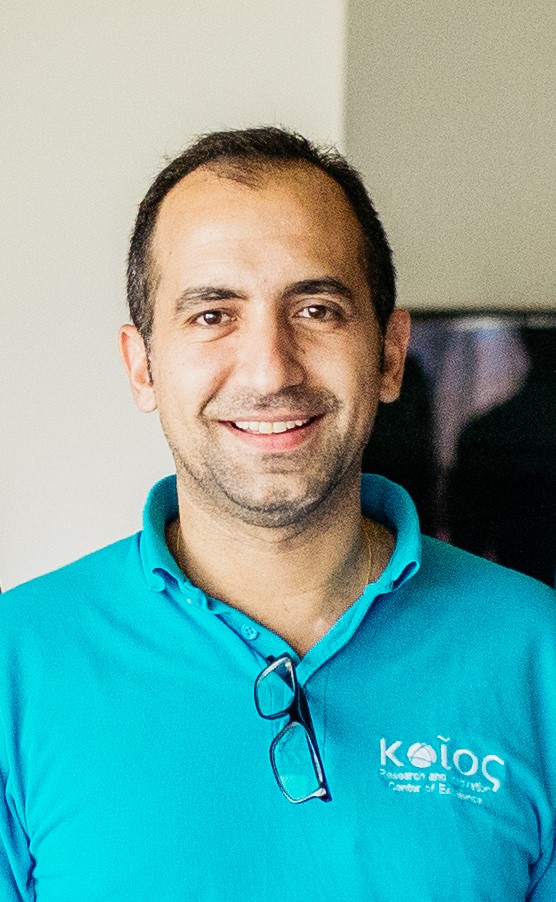
Panayiotis Kolios is an Assistant Professor at the Department of Computer Science, University of Cyprus (UCY). Previously, he served as a Research Assistant Professor at the KIOS Research and Innovation Centre of Excellence (2013–2024) and a Visiting Lecturer at UCY. He holds a BEng and PhD in Telecommunications Engineering from King’s College London (2008 and 2012, respectively). His research focuses on networked intelligent systems, emergency management using AI and UAV technologies, and cyber-physical systems. Education: BEng in Telecommunications Engineering, King’s College London, 2008 PhD in Telecommunications Engineering, King’s College London, 2012 Research Interests: His work centers on autonomous systems, intelligent transportation, and emergency management. Key areas include AI-driven disaster response, UAV-based surveillance, and algorithmic optimization for critical infrastructure. He develops solutions for real-time situational awareness and decision-support in emergencies. Recent work trends show a focus on multi-UAV coordination, disaster management platforms (like AIDERS), and AI applications in emergency response. His team’s 2023 win in the Cooperative Aerial Robots Inspection Challenge highlights advancements in UAV inspection algorithms. Scientific Awards: First Prize in Cooperative Aerial Robots Inspection Challenge (CDC 2023) Grants and Advising: He has secured over €40 million in EU and industrial grants, leading projects like PREDICATE, SWIFTERS, and AIDERS. His team advises on emergency response strategies and has trained first responders through EU-funded programs such as the Exchange of Experts training. Labs and Teams: He leads the Security and Emergency Response Group at KIOS CoE and established the Cyprus Civil Defence Aerial Observation Unit. His team collaborates with institutions like the Cyprus Police and Fire Service to operationalize UAV technologies in disaster scenarios.
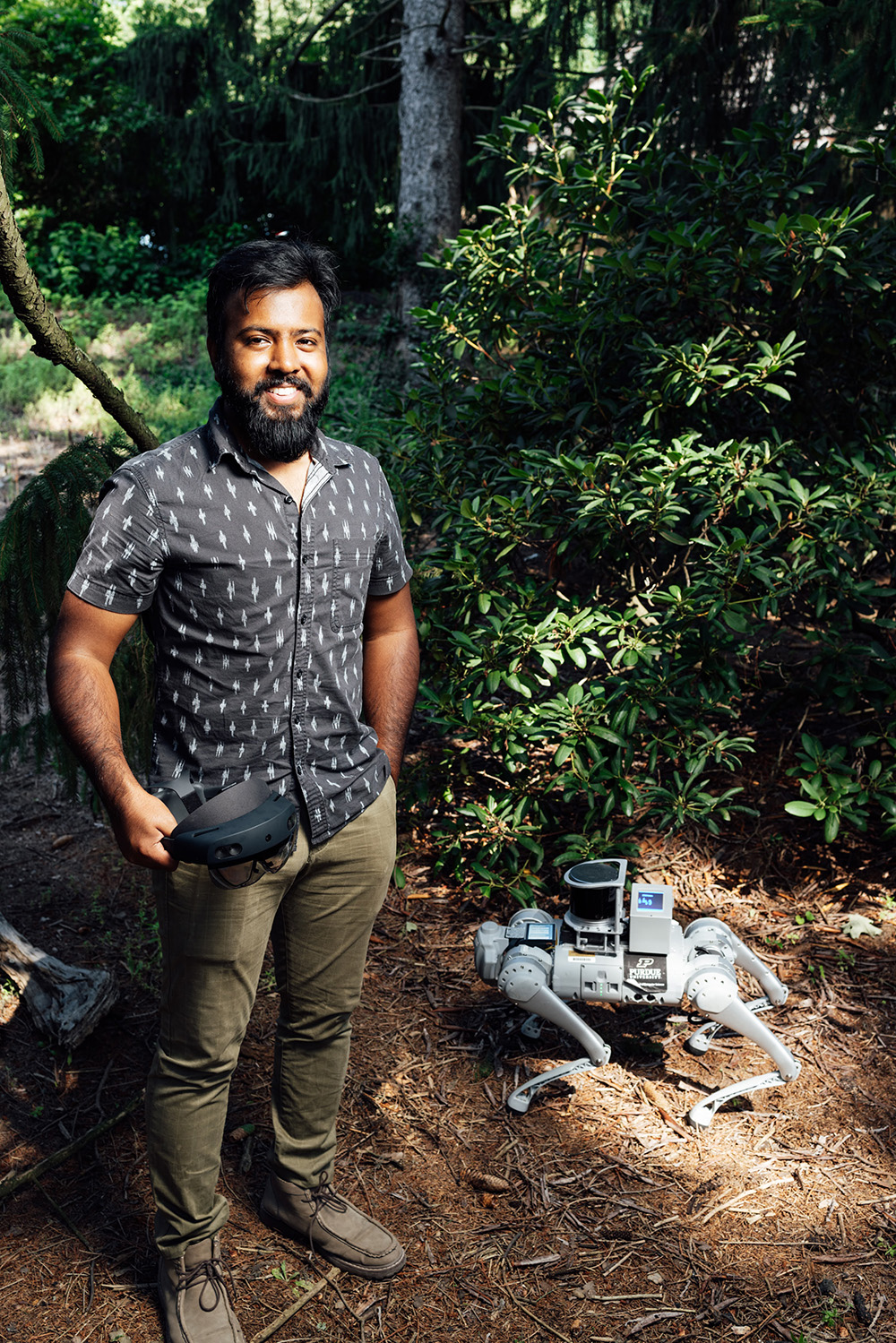
Dr. Aniket Bera is an Associate Professor in Computer Science at Purdue University and holds an Adjunct Associate Professor role at the University of Maryland at College Park (UMIACS). He directs the IDEAS Lab at Purdue and previously served as a Research Assistant Professor at UNC Chapel Hill. His research focuses on Affective Computing, Computer Graphics (AR/VR), AI & Robotics, Social Robotics, and medical AI applications for mental health diagnostics. Affiliations: Purdue University (Primary), University of Maryland (Adjunct), UMIACS Career: Joined Purdue in 2017, extensive industry collaborations with Disney Research, Intel, and C-DAC Research Interests: Affective Computing: Emotion perception via gait analysis, speech, and facial/body expressions AR/VR: Redirected walking, virtual environments, and human motion modeling Medical AI: AI-driven mental health detection systems (e.g., VidSole dataset) in collaboration with medical schools Key Contributions: Developed Project Dost (mental health initiative) Received 2020 Brain & Behavior Seed Grant ($X) for emotion-gait research Authored 65+ papers (1,800+ citations) with awards at IEEE VR 2021 Funding & Leadership: Serves as Senior Editor for IEEE RA-L (Planning/Simulation) Conference Chair for ACM SIGGRAPH MIG 2022 Labs/Teams: IDEAS Lab (Purdue), UMD GAMMA Group
Amol Deshpande is a Professor in the Department of Electrical Engineering and Computer Sciences at the University of California, Berkeley, College of Engineering. With over 160 publications spanning from 2000 to 2025, his research has significantly impacted the database systems community. His work bridges theoretical foundations with practical systems, evidenced by numerous publications in top-tier venues including SIGMOD, VLDB, and ICDE. Professor Deshpande's research focuses on database systems, with particular expertise in graph databases, data management, probabilistic databases, query optimization, and data provenance. His work addresses fundamental challenges in managing complex data, including efficient graph analytics, dataset versioning, streaming data processing, and privacy-preserving data management. Recent research directions include entity-relationship abstractions beyond traditional relations, standalone catalog engines for large data systems, and graph theoretical approaches to dataset versioning. His publication trends show a consistent focus on evolving database technologies, with early work on probabilistic databases and query optimization, transitioning to graph analytics and data provenance, and more recently addressing modern challenges in data cataloging, privacy-first data management, and serverless stream processing. His research spans both theoretical contributions (e.g., approximation algorithms for stochastic optimization) and practical systems building (e.g., RStore, TreeCat). Professor Deshpande has mentored numerous PhD students who have become active researchers in the database community, including Hui Miao, Souvik Bhattacherjee, and Konstantinos Xirogiannopoulos. His collaborative work spans across institutions, with frequent collaborations with researchers from MIT, University of Maryland, and other leading institutions. His research has been supported by major funding agencies and has influenced both academic research and industry practices in data management. The evolution of his work reflects the changing landscape of data management, from traditional relational systems to modern graph and streaming data challenges.
Prof. Raimon Jané Campos is a leading figure in biomedical signal processing at the Universitat Politècnica de Catalunya (UPC) and Universitat de Barcelona (UB). As co-director of UPC's Biomedical Signal and System Group (CREB) and coordinator of the Biomedical Engineering PhD Programme, he bridges engineering and clinical applications. His work focuses on respiratory and sleep disorder diagnostics, with significant contributions to COPD and sleep apnea monitoring through wearable devices and machine learning. PhD in Biomedical Engineering (UPC, 1989) Visiting researcher at Université de Nice-Sophia Antipolis Vice-president of Spanish Society of Biomedical Engineering Research spans respiratory mechanics , sleep-disordered breathing , acoustic biomarkers , bioimpedance , and machine learning in biomedical contexts . His 2025 work on microcalorimetric pathogen classification and 2024 spiking neural networks for apnea detection demonstrate cutting-edge integration of computational methods with physiological monitoring. Articles from 2017-2024 reveal consistent focus on non-invasive diagnostics , cardiorespiratory synchronization , and smartphone-based health solutions . Awarded the Barcelona City Technology Research Award (2005) and serving on the International Advisory Board for Physiological Measurement since 2010, his career combines academic leadership with real-world clinical translation through IBEC's technology transfer initiatives.
Magali (Maggie) Delmas is a Professor of Strategy at the UCLA Anderson School of Management and the UCLA Institute of the Environment & Sustainability. She serves as Faculty Director of the UCLA Anderson Center for Impact, leading the Open for Good Initiative, which aims to make corporate sustainability data more transparent and actionable. Additionally, she directs the UCLA Center for Corporate Environmental Performance and previously served as President of the Alliance for Research in Corporate Sustainability (ARCS). Professor Delmas received her Ph.D. in Strategic Management from HEC Paris and an M.A. in Political Science from the University of Paris. Her academic journey has positioned her at the intersection of business strategy and environmental sustainability, where she has built a distinguished career examining how corporations can effectively integrate sustainability into their core operations. Dr. Delmas's research focuses on corporate sustainability strategy, climate-related disclosure, and the design of effective information strategies to promote conservation behavior and build green markets. She has authored over 100 articles, book chapters, and case studies that explore energy conservation, eco-labeling, climate lobbying, and the detection and prevention of corporate greenwashing. Her work particularly examines how behavioral interventions can effectively motivate sustainable practices, as demonstrated in her large-scale UCLA Engage program that used real-time energy feedback to uncover conservation strategies. Her research spans multiple disciplines, connecting business strategy with environmental science, behavioral economics, and policy analysis. A notable trend in her recent work involves the examination of how transparency in corporate sustainability reporting affects business practices and environmental outcomes. She has made significant contributions to understanding the relationship between eco-certification and product quality, particularly in the wine industry, where her research has shown that organic wines often receive higher quality ratings. Distinguished Scholar Award, Academy of Management/ONE Division Best Book Award, Academy of Management/ONE Division (The Green Bundle) Research Impact on Practice Award, Academy of Management & Network for Business Sustainability (two-time recipient) 2019 Academy of Management/Organization and the Natural Environment Best Book Award 2016 Organization & Environment Journal Best Paper Award Multiple additional awards spanning environmental economics, wine economics, and sustainability research Professor Delmas actively mentors doctoral students interested in strategy, corporate sustainability, environmental policy, and climate-related disclosure. Her students gain hands-on experience with unique datasets from the Open for Good Initiative and engage in interdisciplinary work across UCLA's Institute of the Environment & Sustainability. Her PhD students have pursued successful careers in both academia and policy roles, continuing to advance scholarship and practice in sustainability and strategy. She has secured significant research funding for projects examining energy conservation behavior, corporate sustainability reporting, and the effectiveness of environmental labels. As Faculty Director of the UCLA Anderson Center for Impact, she oversees the Open for Good Initiative, which produces the annual State of Corporate Sustainability Disclosure report. This initiative has become a critical resource for policymakers, investors, and business leaders seeking to understand corporate climate and environmental reporting practices. Her leadership also extends to the UCLA Center for Corporate Environmental Performance, where she coordinates research examining the relationship between environmental management and business performance.
Dr. Leila Notash is a Professor in the Department of Mechanical and Materials Engineering at Queen's University, where she has been a faculty member since 1997. She is a Fellow of Engineers Canada (FEC) and a licensed Professional Engineer with Professional Engineers Ontario (PEO), with significant contributions to engineering education and professional service. Her educational background includes: Bachelor of Science in Mechanical Engineering, Middle East Technical University (Ankara, Turkey) - High Honor Student (2nd out of 166) Master of Applied Science in Mechanical Engineering, University of Toronto PhD in Mechanical Engineering, University of Victoria Dr. Notash's research centers on robotics and mechatronics, with specialized expertise in cable-driven parallel manipulators. Her work integrates kinematics, fault-tolerant design, and neural network applications to address challenges in robot calibration, workspace analysis, and motion control under real-world constraints like cable mass and elasticity. She investigates both theoretical frameworks and practical implementations for industrial and specialized robotic systems. Analysis of her recent publications (2020-2024) reveals a clear trajectory toward intelligent control systems, where machine learning techniques—particularly neural networks and reinforcement learning—are increasingly applied to solve complex problems in cable-driven robotics. This includes motion control optimization, path generation, and kineto-static analysis while accounting for physical limitations such as cable elasticity and mass effects, demonstrating a shift from traditional mechanical analysis to data-driven adaptive control methodologies. Her scientific recognition includes: Fellow of Engineers Canada (FEC) University of Toronto Open Fellowship University of Toronto International Differential Fee Waiver Charles S. Humphrey Graduate Student Award NSERC Doctoral Prize Nominee (1996) Dr. Notash has mentored 161 undergraduate students as Faculty Advisor for the Mechanical '06 cohort and pioneered international educational initiatives like the International Undergraduate Student Design project (IVDS), connecting Queen's University with Middle East Technical University and Union College. Her service extends to editorial leadership for Mechanism and Machine Theory and ASME journals, and governance roles including Faculty Senator at Queen's University (2009-2025) and PEO Council Councillor-at-Large (2019-2025). She has established collaborative research networks through initiatives like the Reading Week shop course 'Design Basics 1.0' and sustained leadership in the Canadian Committee for the Promotion of Mechanism and Machine Science (CCToMM) and the International Federation for the Promotion of Mechanism and Machine Science (IFToMM), where she chaired the Permanent Commission on Communications (2006-2011).
Prof. Dr.-Ing. Christoph Stiller is a full professor at the Karlsruher Institut für Technologie (KIT) and serves as the director of the Institute of Measurement and Control Technology (Institut für Mess- und Regelungstechnik, MRT). His work focuses on autonomous driving, sensor fusion, probabilistic estimation, HD mapping, motion planning, and intelligent transportation systems. Education: Details on his academic degrees are not provided in the text, but he holds the title of Dr.-Ing. indicating a doctoral degree in engineering. Research Interests: Prof. Stiller's research spans a wide array of topics critical to the development of autonomous vehicles. His work includes: Sensor Fusion: Integrating data from LiDAR, cameras, and radar to create robust perception systems. HD Mapping & Localization: Developing high-definition maps and precise localization techniques for urban and highway environments. Motion Planning & Decision Making: Creating algorithms for safe and efficient trajectory planning under uncertainty. Machine Learning & AI: Applying deep learning and reinforcement learning to perception, prediction, and control tasks. Publication Trends: His recent publications (2023–2025) emphasize robust traffic light detection, image stitching for panoramic views, motion prediction using redundancy reduction, and safety-enhanced model predictive control. The work increasingly integrates learning-based methods with classical control and estimation theory. Scientific Awards: No specific awards are listed in the provided text. Teaching & Supervision: Prof. Stiller teaches foundational and advanced courses in measurement and control systems, probabilistic estimation, and autonomous driving. He holds regular office hours during both summer and winter semesters and is actively involved in advising students and researchers. Labs & Teams: He leads the Institute of Measurement and Control Technology (MRT) at KIT, which is engaged in cutting-edge research in autonomous systems. The institute collaborates with industry and academia on large-scale projects such as UNICARagil and various European initiatives.
Lifeng Zhou is an Assistant Professor in the Department of Electrical and Computer Engineering at Drexel University, where he leads the Zhou Lab focused on advancing robustness and reliability in multi-robot systems through integration of foundation models. His research addresses real-world challenges in environmental monitoring, disaster response, and urban mobility. Education PhD, Electrical and Computer Engineering, Virginia Tech, 2020 MS, Control Science and Engineering, Shanghai Jiao Tong University, 2016 BS, Automation, Huazhong University of Science and Technology, 2013 Research Focus Dr. Zhou's work integrates robotics, algorithms, game theory and machine learning to develop secure and scalable autonomous systems. Primary research thrusts include: Resilient multi-robot coordination in adversarial environments Large language model integration for robotic decision-making Game-theoretic resource allocation strategies Risk-aware planning for autonomous vehicles Publication Trends Recent work (2024-2025) demonstrates strong focus on large language model applications in multi-robot systems, with 12/15 articles exploring LLM integration for flocking, scene segmentation, and decision-making. Additional emphasis includes adversarial robustness in target tracking (5 articles) and autonomous driving applications (4 articles). Awards and Recognition Best Paper Award, WACV 2025 LLVM-AD Workshop Professional Service Associate Editor, ICRA Conference Editorial Board Laboratory Focus The Zhou Lab develops foundational algorithms for secure and scalable multi-robot systems, with current projects spanning environmental monitoring drones, disaster response coordination, and autonomous vehicle perception systems.
Haipeng Shen is a Professor of Innovation and Information Management at HKU Business School, The University of Hong Kong, serving as Associate Dean (EMBA and IMBA) and holding the Patrick S C Poon Professorship in Analytics and Innovation. He chairs the Business Analytics and Innovation program and joined HKU in 2015 after previously holding a professorship at the University of North Carolina at Chapel Hill. His academic credentials include: PhD in Statistics, The Wharton School of Business, University of Pennsylvania, 2003 MA in Statistics, The Wharton School of Business, University of Pennsylvania, 2000 BS in Mathematics, School of Mathematical Sciences, Peking University, 1998 Professor Shen's research focuses on data-driven decision making under uncertainty, with expertise spanning big data analytics, business analytics, healthcare analytics, and service engineering. He develops advanced statistical and machine learning methodologies to solve complex operational problems in call centers, optimize stroke care protocols, and enhance financial risk modeling, emphasizing real-time applications in high-stakes environments. Analysis of his recent publications reveals a consistent interdisciplinary approach bridging operations research, statistics, and domain-specific knowledge. His work demonstrates strong methodological innovation in time-series forecasting for service systems, risk assessment frameworks for medical complications, and covariance structure analysis for financial markets, with direct translational impact on business operations and clinical outcomes. His scientific contributions have been recognized with prestigious awards including: Most Influential Publication Award from China Stroke Association (2018) Fellow of the American Statistical Association (2015) Best Advisor of the Year Award from Academy of Asian Business (2018) Elected Member of International Statistical Institute (2015) Cluster Chair for Big Data Analytics at INFORMS International (2015) As an academic leader, Professor Shen has secured significant research funding from organizations including The Xerox Foundation and National Institute on Drug Abuse. He serves as Associate Editor for Management Science, Journal of the American Statistical Association, and Technometrics, while mentoring graduate students in statistical methodology and applied analytics. His current initiatives position HKU Business School at the forefront of healthcare innovation through big data analytics, driving collaborations with medical institutions to transform stroke care and hospital operations in Asia.
Mustafa Gül is a Professor in the Department of Civil and Environmental Engineering at the University of Alberta’s Faculty of Engineering. He also serves as Director of Internationalization at the Faculty of Engineering’s Deans Office. His research focuses on smart, sustainable, and resilient cities, with an emphasis on infrastructure monitoring and energy-efficient systems. Education: PhD in Civil Engineering (University of Central Florida, 2009), MSc in Electrical Engineering (University of Central Florida, 2011), MSc in Civil Engineering (Boğaziçi University, 2004), BSc in Civil Engineering (Boğaziçi University, 2002). Dr. Gül’s research spans two primary domains: Crowdsensing-based Monitoring of Built and Natural Environments (CoMBiNE) using AI, signal processing, and data analytics for infrastructure health; and Energy-Efficient Smart Cities through solar PV integration, IoT applications, and net-zero energy homes. His work bridges structural engineering, machine learning, and sustainable urban development. Recent publications highlight advancements in smartphone-based damage detection, UAV-assisted disaster assessment, and AI-driven energy systems. His team’s work on crowdsensing bridges, solar PV optimization, and smartphone analytics has been widely recognized in journals like Structural Control and Health Monitoring and Energy and AI . Notably, his 2017 paper earned the Best Paper Award at ISARC. Students supervised include Azim, R. , Keskin, M. , and Do, N. T. , among others. Scientific Awards: Best Paper Award, 34th International Symposium on Automation and Robotics in Construction (ISARC 2017) Dr. Gül’s projects often involve interdisciplinary collaboration, leveraging sensor networks, computer vision, and optimization algorithms to address urban resilience and energy sustainability. His leadership extends to course CIV E 779 and ongoing research initiatives in Alberta, Canada.
John Diffley is a Principal Group Leader and Associate Research Director at The Francis Crick Institute in London, UK, where he leads research on DNA replication mechanisms. His work focuses on understanding how cells precisely duplicate their DNA during cell division and how errors in this process contribute to cancer development. Diffley obtained his PhD from New York University in 1985 and completed postdoctoral training with Bruce Stillman at Cold Spring Harbor Laboratory until 1990. He established his research group at the Clare Hall Laboratories (originally Imperial Cancer Research Fund, then Cancer Research UK) before moving to The Francis Crick Institute in 2015. His research spans DNA replication initiation, cell cycle control, replication fork checkpoints, and epigenetic inheritance. Diffley's lab has pioneered methods to reconstitute chromatin replication using purified proteins, providing unprecedented insights into chromosome biology. His team combines genetics, cell biology, and biochemistry to study the molecular 'machines' that copy DNA in yeast and human cells. Analysis of Diffley's recent publications reveals a strong focus on structural mechanisms of DNA replication, particularly using cryo-EM to visualize replication machinery. His work examines helicase loading and activation, replication fork stability under stress, and the connection between replication errors and cancer development. The research spans model organisms to human cells, with increasing emphasis on structural approaches in recent years. FRS (Fellow of the Royal Society) FMedSci (Fellow of the Academy of Medical Sciences) Diffley actively mentors a diverse team of postdoctoral researchers and PhD students, investigating various aspects of DNA replication. His lab has received substantial funding to support their work on replication mechanisms, with projects spanning basic biochemical reconstitution to studies of replication errors in cancer contexts. The lab maintains multiple technical platforms including structural biology, biochemistry, and cell biology approaches. His research group operates within The Francis Crick Institute's collaborative environment, utilizing shared facilities for structural biology, microscopy, and genomics to advance understanding of DNA replication mechanisms and their implications for genome stability and disease.