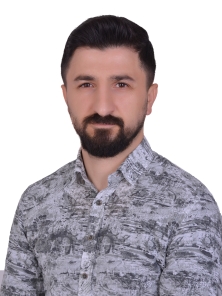
Gizem Kayişoğlu is an Assistant Professor in the Department of Maritime Transportation and Management Engineering at Istanbul Technical University. Her research focuses on cybersecurity challenges in maritime systems, human error probability, and risk assessment methodologies. She actively explores vulnerabilities in shipboard systems such as ECDIS, VDR, and radar while emphasizing regulatory compliance and maritime safety standards. Her work integrates frameworks like CORAS, Fuzzy FUCOM, and SLIM to address cybersecurity dynamics and human factors in maritime operations. Key collaborations involve analyzing ransomware threats, AIS system vulnerabilities, and port infrastructure protection through interdisciplinary approaches. Her articles highlight trends in maritime cybersecurity, including ransomware mitigation, cyber hygiene practices, and critical infrastructure protection. She has contributed to developing risk assessment tools and checklists tailored for maritime environments, emphasizing both technological and human aspects of safety. No scientific awards have been explicitly mentioned. She has not listed formal advisees, and her professional activities focus on advancing maritime cybersecurity through academic and applied research.
Hamza Salih Erden is an Associate Professor (Docent) at the Informatics Institute of Istanbul Technical University in Turkey. His research focuses on energy optimization in data centers, thermal management systems, and computational fluid dynamics applications. With over 34 research outputs and an h-index of 12, he leads projects in energy-grid integration and carbon-aware load management. Research Focus Dr. Erden's work centers on improving energy efficiency in technological infrastructure through: Advanced cooling techniques for data centers Integration of thermal energy storage systems Computational fluid dynamics modeling Demand-response optimization for smart grids AI-driven monitoring of energy systems Publication Trends Recent works (2022-2025) demonstrate strong focus on sustainable energy technologies, particularly optimization of data center operations through thermal management innovations, integration of renewable energy solutions, and AI applications for system monitoring. Economic assessments of energy-saving techniques feature prominently. Awards and Recognition Technical Paper Award (2016) Multiple International Scientific Publication Incentive Awards (2017-2021) Poster Award (2012) Graduate Student Grant (2007) Projects and Funding Leads multiple energy research projects including: Carbon-aware load management in data centers (2025) Grid-integrated energy system modeling for data centers (2021-2023) CFD analysis of CRAH bypass methods (2018-2020) Economizer applications in Turkish data centers (2016-2017)
Ramazan Yeniçeri is a Lecturer at Istanbul Technical University's Department of Aeronautical Engineering. His research focuses on Unmanned Aerial Vehicles (UAVs), Field Programmable Gate Arrays (FPGAs), and computational fluid dynamics, with applications in hardware acceleration and autonomous flight systems. Academic Rank: Lecturer University: Istanbul Technical University Department: Aeronautical Engineering Research Interests: Yeniçeri's work bridges aerospace engineering and computer science, emphasizing: FPGA-based hardware acceleration for aerospace systems UAV communication networks (FANETs) and formation flight Dynamical modeling for 6-DoF systems Autopilot software and real-time operating systems Scientific Awards: He has received the BOEING Academic Work Encouragement Award (2017) and the Best Doctoral Thesis Award (2015) . Project Leadership: As Principal Investigator (PI), he leads projects like: "IHA Kayıt, Takip, Kontrol ve Hava Trafik Yönetim Sistemi" (2024–2025) "FPGA Tabanlı 6DoF Dinamik Hızlandırıcı Tasarımı" (2024) "EU Sürü İHA" (2020–2022) His recent publications highlight trends in UAV communication, FPGA acceleration, and multi-sensor tracking.
Prof. Dr. Kumru Didem Atalay is a distinguished academic at Başkent University, specializing in Industrial Engineering . With a PhD in Statistics from Ankara University (2007), she has made significant contributions to Operations Research , Fuzzy Logic , and Decision Support Systems . Her work bridges statistical analysis with real-world applications in healthcare logistics, pandemic response, and manufacturing optimization. Education: PhD (2007), MS (2000), BS (1998) in Statistics from Ankara University Current Role: Professor in Industrial Engineering at Başkent University Her research focuses on stochastic processes , fuzzy modeling , and healthcare operations , particularly in pandemic-era service quality and microchannel manufacturing. She has developed innovative methods for project scheduling , risk analysis , and multi-criteria decision-making . Recent publications examine Covid-19's impact on education quality and fuzzy linear programming for project scheduling . She applies intuitionistic fuzzy models to optimize manufacturing systems and hesitant fuzzy regression for pandemic death count estimation. Scientific recognition includes a Runner-up Prize at the 15th ICMSEM (2021) and a Bronze Medal at ISIF21 (1970). She supervises advanced research on topics like multi-trip home healthcare routing and fuzzy quality function deployment .
Betül Boz is an Assistant Professor at the Department of Computer Hardware, Faculty of Engineering, Marmara University. She holds a B.Sc. and M.Sc. in Computer Engineering from Marmara University, and a Ph.D. in Computer Engineering from Boğaziçi University. Her research focuses on computer architecture, optimization, and evolutionary computing. B.Sc., M.Sc., and Ph.D. in Computer Engineering Her research interests include computer architecture, parallel algorithms, optimization techniques, and evolutionary algorithms applied to graph coloring and scheduling. Recent work explores cloud computing scheduling, register allocation, and bioinformatics applications like circRNA-disease prediction. She has published extensively in these areas, utilizing evolutionary computing and machine learning. Key trends in her publications include evolutionary algorithms for graph coloring (2015–2025), register allocation (2004–2024), and cloud computing optimization (2023). She also investigates biomedical applications such as circRNA-disease association prediction. She has advised one thesis, managed one project, and her work aligns with UN Sustainable Development Goals. Her research outputs include 14 WoS-indexed publications, 11 WoS citations, and an h-index of 25 on WoS.
Erdinç Altuğ serves as a Professor in the Department of Mechanical Engineering at Istanbul Technical University, specializing in advanced aerial robotics and control systems. His work bridges theoretical control methodologies with practical UAV applications. Research interests focus on Unmanned Aerial Vehicle design and fault tolerance Quadcopter dynamics and vertical takeoff systems Adaptive control for parametric variations Rapid prototyping of hybrid VTOL platforms His recent publications demonstrate consistent innovation in autonomous flight systems, particularly in fault-tolerant operational modal analysis and modular multi-drone configurations. Current projects include: Hibrit İnsansız Hava Aracı Ile Otonom Teslimat Sistemi Geliştirilmesi (TUBITAK, 2020-2022) Mini Jet Motorlu Dikine Kalkıp İnebilen Otonom Taşıyıcı Robot Geliştirilmesi (TUBITAK, 2018-2021) Kampüs içi ve bina içi ortamlarda çalışacak otonom taşıma aracı algoritmaları (SRP, 2018-2021) Supervising 26 graduate works, his research impacts both academic and industrial UAV development.
Cavit Fatih Küçüktezcan is an Assistant Professor in the Department of Electrical Engineering at Istanbul Technical University, College of Engineering. His research focuses on power system security, optimization methods, and smart grid technologies. He actively contributes to advancements in electric vehicle energy systems, battery modeling, and resilience of renewable-rich power grids. Research Interests: His work spans power system dynamic security , preventive and corrective control , heuristic and evolutionary optimization (e.g., differential evolution, mean-variance mapping, genetic algorithms), and the application of machine learning for transient stability prediction. He also investigates electric vehicle battery systems , including optimal cell selection and real-time energy consumption modeling. The publication trends show a shift toward data-driven and AI-enhanced approaches in power systems, especially in modeling cyber-attack impacts and improving grid resilience. His recent articles emphasize practical applications in sustainable transportation and secure grid operation under uncertainty. Scientific Contributions: Developed optimization frameworks for preventive control with search space reduction. Applied mean-variance mapping optimization to enhance dynamic security. Explored machine learning benchmarks for transient stability under cyber threats. Contributed to battery modeling and energy efficiency in electric buses. Advising and Grants: While specific details on students or funded projects are not available in the provided text, his collaborative research patterns suggest active supervision and team-based research in power systems and energy technology. He frequently co-authors with researchers from Istanbul Technical University, indicating strong institutional collaboration. Labs and Teams: Though no specific lab or research group is named, his work aligns with smart grid, energy systems, and optimization research teams within the Department of Electrical Engineering at ITU. His focus on real-time data and cyber-physical systems suggests potential involvement in intelligent grid monitoring and control initiatives.
Mine Çağlar is a Professor in the Department of Mathematics at Koç University, specializing in probability theory and stochastic processes with applications in mathematical finance and risk analysis. Her work addresses fundamental problems in Markov additive processes, Lévy processes, and Brownian motion, contributing to both theoretical advances and practical financial modeling. Her academic credentials include: PhD in Statistics and Operations Research from Princeton University (1997) Master’s in Industrial Engineering from Bilkent University (1991) B.A. in Industrial Engineering from Middle East Technical University (1989) Professor Çağlar’s research centers on extreme event analysis in stochastic processes, particularly maximum drawdown, maximum loss, and optimal stopping problems. She investigates path properties of spectrally negative Lévy processes and develops mathematical frameworks for degenerate market models. Her work bridges abstract probability theory with real-world financial applications, including risk management and hedging strategies. Recent publications demonstrate sustained innovation in stochastic analysis, with a focus on long-time behavior of complex processes and boundary-crossing phenomena. Analysis of her 15 most recent publications (2018–2024) reveals a cohesive research trajectory emphasizing Markov additive processes (40% of articles), Lévy process extremes (30%), and financial applications (20%). Key methodological trends include path decomposition techniques, Monge-Ampère equations on Wiener space, and stochastic flow modeling. Her work increasingly integrates fluid dynamics concepts like Çinlar models for turbulence simulation, reflecting interdisciplinary expansion into applied mathematics. Her scholarly recognition includes: Hayri Körezlioğlu Research Award (2013) Parlar Foundation Research Incentive Award (2005)
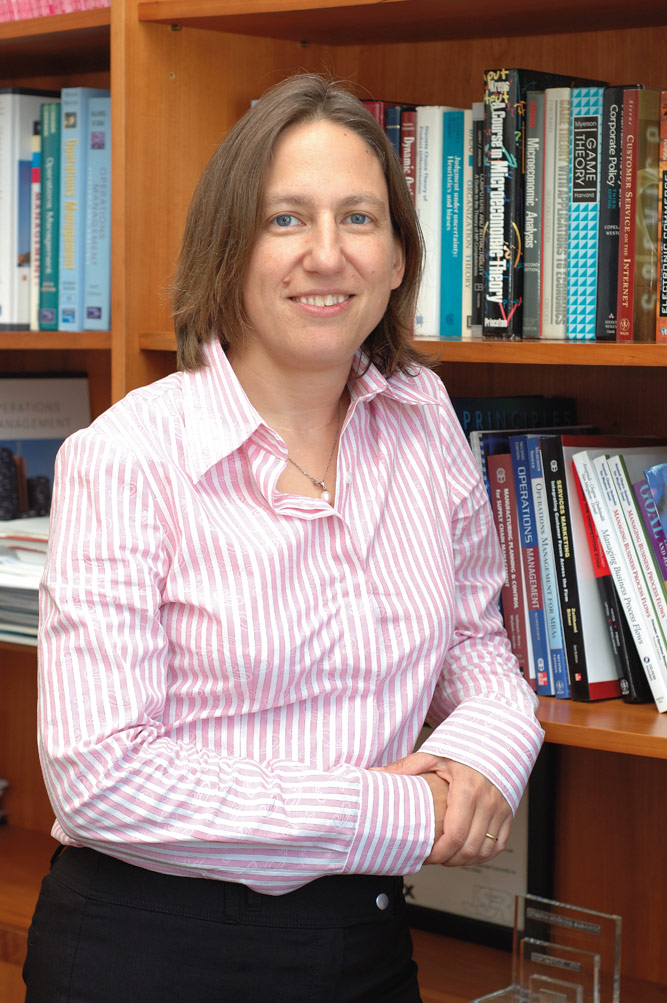
Zeynep Akşin Karaesmen is a Professor in the Operations Management and Information Systems group at Koç University, where she has been since Fall 2002. She holds a PhD (1996) and MS (1994) in Operations Management from the Wharton School, University of Pennsylvania, and a BS in Industrial Engineering from Middle East Technical University (1990). Previously, she served as faculty at INSEAD and was a visiting scholar at Kellogg School of Management (2008-2009). Her research focuses on Service Operations Management Behavioral Operations Management Call Center and Healthcare Operations Stochastic Modeling Mathematical and Empirical Analysis Her recent publications analyze Call Center Delay Announcements Workforce Cross-Training Service System Design Human Capital Valuation Healthcare Capacity Planning Customer Retrial Behavior Scientific Awards TÜBA Social Sciences Incentive Award (2006) IBM Faculty Award (2011) Koç University Outstanding Faculty Member (2017) Wickham Skinner Best Paper Award (2016, 2nd Place) MSOM Service Management SIG Prize Finalist (2015) Best Paper Awards (multiple) She serves as Associate Editor for Management Science , Manufacturing & Service Operations Management , and other journals. Her teaching includes Operations Management (EMBA/MBA/undergraduate), Service Operations Management, and Supply Chain courses.
Burak Berk Üstündağ is a Professor in the Department of Computer Engineering at the Faculty of Computer and Informatics, Istanbul Technical University (ITU). He has been a key academic figure at ITU since the 1990s, progressing through the ranks from Research Assistant to full Professor, a position he attained in 2019. He has also held significant administrative roles, including Director of the Application and Research Center and membership in the ITU Informatics Institute Management Board. PhD, Control and Computer Engineering, Istanbul Technical University (2000) MSc, Control and Computer Engineering, Istanbul Technical University (1994) BSc, Electrical Engineering, Istanbul Technical University (1991) His research is deeply rooted in Artificial Intelligence , with a focus on Neural Networks , Wavelet-based models , and machine learning applications in environmental, agricultural, and maritime domains. He has developed frameworks like PECNET for multivariate time series forecasting and has pioneered work in cognitive communication systems, particularly for underwater and agricultural monitoring. His work bridges theoretical AI models with real-world applications in precision agriculture, water quality monitoring, and ionospheric forecasting. The most recent articles show a strong trend in applying deep learning (LSTM, DNNs) and hybrid models (Wavelet-NN) to complex, real-time systems. His research spans environmental data science , smart agriculture , underwater acoustics , and cognitive risk management . He emphasizes performance, real-time operation, and intelligence quantification in AI systems. His scientific awards include: Outstanding Young Scientist of the Year (2004) Junior Chamber International - Year's Professional Award (2003) Yılın Meslek Ödülü (2002) Service Award from Air Force Academy (2000) Gelişimine Katkı Ödülü from ITU (1996) Prof. Üstündağ has actively supervised research and led multiple projects as Principal Investigator, including national and institutional grants in AI-driven software systems, social media robots, real-time cognitive risk management, and elderly support devices. He has advised students in AI, neural networks, and intelligent systems, though specific names are not listed. His lab activities are centered around the Software Development Laboratory and cognitive systems research under various funded projects.
Professor Hakan Temeltaş is affiliated with Istanbul Technical University , where he serves in the Department of Control and Automation Engineering . His research focuses on robotics, control systems, and autonomous technologies. He has contributed to advancements in motion planning, localization, and deep reinforcement learning for robotic systems. Research Interests: Robotics, Autonomous Systems, Control Engineering, Machine Learning Current Projects: Deep reinforcement learning for quadrupedal robots, localization frameworks, multi-agent systems His recent work includes autonomous exploration strategies using Rapidly-Exploring Random Trees (RRT), multi-stage localization for mobile robots, and quaternion-based orientation estimation in robot manipulators. He supervises projects involving adversarial attack mitigation and self-recovery mechanisms in quadrupedal robots. Publications highlight applications of deep reinforcement learning in robotics, with a focus on dynamic stability, sensor fusion, and simulation environments. His research outputs span conferences like IEEE RAAI and journals such as Robotica and Unmanned Systems . Scientific Awards : None explicitly mentioned in the provided data. As a principal investigator, he leads projects on ground reaction force balancing, autonomous navigation, and swarm robotics. His collaborations extend to simulation frameworks and real-time control systems for mobile robots.
Neslihan Serap Şengör is a Professor at the Department of Electronics and Communication Engineering, Istanbul Technical University . Her work bridges Artificial Intelligence , Neuroscience , and Circuits and Systems Theory . Research areas include: Neuromorphic computing with Intel Loihi Basal ganglia and motor control modeling Spiking neural networks for hardware Cognitive process simulation Projects focus on: Hardware implementation of motor learning Computational models for Parkinson's disease Cortex structure simulation on neuromorphic chips Contact: sengorn@itu.edu.tr
Mehmet BÜYÜK is an Associate Professor at the Department of Electrical and Electronics Engineering, Faculty of Engineering, Adıyaman University. He serves as Vice Dean of the Faculty since August 2023. He holds a PhD from Çukurova University (2019) and has been an IEEE member since 2015. Education: BSc (2007-2012), MSc (2015), PhD (2019) in Electrical and Electronics Engineering from Çukurova University. Professional roles include Research Assistant (2015-2020), Research Lecturer (2020-2022), Assistant Professor (2022-2023), and current Associate Professor status. Research focuses on renewable energy systems, electric vehicles, power electronics converters, and grid integration challenges. Notable projects include wireless power transfer systems, V2G/V2H interfaces, and smart home energy management. Publications emphasize power quality solutions, inverter topologies, and fuel cell applications. Awards include multiple TÜBİTAK incentives and a Wiley Top Cited Article recognition. Active in reviewing for top journals like Renewable and Sustainable Energy Reviews. Current activities include leading the faculty as Vice Dean, supervising student projects, and collaborating on TÜBİTAK-funded research projects addressing renewable energy challenges and emergency power systems.
Assoc. Prof. Dr. Onur Behzat Tokdemir is an Associate Professor in the Civil Engineering Department at Istanbul Technical University (ITU), with prior affiliation at Middle East Technical University (METU). His expertise spans Construction Technologies, Project Management, and Construction Management, with a focus on integrating Artificial Intelligence (AI) and Machine Learning (ML) into infrastructure development. He holds a Ph.D. from Illinois Institute of Technology and has extensive industry experience in project management roles with firms like Renaissance Holding and Qatar Project Management. Education: B.Sc. from METU (1990-1995), M.Sc. from Illinois Tech (1995-1997), Ph.D. from Illinois Tech (1997-2003). His research emphasizes AI-driven solutions for construction safety, cost prediction, and digital twin applications. Notable projects include the EU-funded 'DIGITWINS4CIUE' and the strategic tender decision support system leveraging ML. Awards include the ITU Academic Performance Publication Award (2022-2024) and METU's Prof. Dr. Mustafa N. Parlar Award (2019). He has advised over 15 theses on topics like AI in safety assessment, labor efficiency prediction, and post-disaster housing frameworks. Active memberships include the American Society of Civil Engineers (ASCE) and the Chamber of Civil Engineers.
Assoc. Prof. Dr. Umut Asan is an active faculty member in the Department of Industrial Engineering at Istanbul Technical University (ITU), Faculty of Management. He holds the academic rank of Associate Professor and has been affiliated with ITU since 1999, progressing from Research Assistant to his current role. He earned his PhD from Technische Universität Berlin and holds a Master’s and Bachelor’s from ITU in Engineering Management and Industrial Engineering, respectively. PhD: Technische Universität Berlin (2003–2009) MSc: Istanbul Technical University, Engineering Management (1999–2001) BSc: Istanbul Technical University, Industrial Engineering (1995–1999) Dr. Asan's research lies at the intersection of decision science and industrial systems, with a strong emphasis on Multi-Criteria Decision Making (MCDM) , Fuzzy Cognitive Mapping , Scenario Planning , and Digital Twins . His work applies advanced modeling techniques such as Bayesian networks and fuzzy logic to solve complex problems in supply chain resilience, urban mobility, technology adoption, and organizational behavior. His recent publications (2023–2025) reveal a consistent trend toward integrating artificial intelligence and data-driven methods into decision support systems. Topics include electric vehicle adoption in urban logistics, digital twin frameworks for manufacturing, risk analysis in forestry and rail systems, and consumer behavior in digital platforms. These works demonstrate interdisciplinary applications across engineering, business, and social sciences, often using fuzzy and probabilistic models to handle uncertainty. Dr. Asan is actively involved in research leadership, having served as Vice Dean (2018–2023) and currently supervising numerous graduate theses. He is the principal investigator of funded projects, including BAP grants on qualitative cross-impact analysis and consumer cognitive models. Principal Investigator, "A New Approach to Qualitative Cross-Impact Analysis" (BAP Project, 2016–2020) Principal Investigator, "A New Approach to Consumer Causal Chain Models" (BAP Project, 2022–2024) He is a member of several international academic societies, including the International Society on MCDM, ENBIS, and EURO, reflecting his active engagement in the global operations research community. His research has been published in journals such as IEEE Access, European Journal of Forest Engineering, and Decision Science Letters, with a growing citation impact (Scopus h-index: 13). Dr. Asan advises a large cohort of graduate students, both at the Master’s and PhD levels, in areas ranging from risk modeling to digital transformation. His lab or research group focuses on decision support systems and cognitive modeling, supervising theses on FMEA, Bayesian networks, and digital twins. Future work appears to be directed toward enhancing predictive capabilities in industrial and societal systems through hybrid AI models.