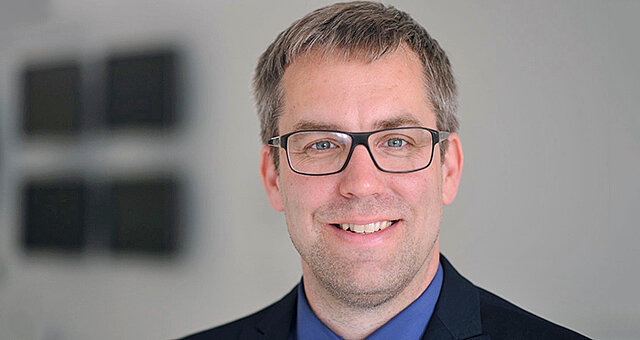
Aaron KellyView profile
Assistant Professor
Aaron Kelly holds dual roles as Visiting Scientist at the Max Planck Institute for the Structure and Dynamics of Matter (Theory Department) in Hamburg, Germany, and Assistant Professor at Dalhousie University in Halifax, Canada. His research focuses on theoretical and computational methods for nonadiabatic quantum dynamics, particularly in molecular systems and quantum-classical hybrid environments. He is affiliated with the Center for Free-Electron Laser Science (CFEL) and the Theory Group within the Max Planck Institute. His work addresses challenges in simulating electronic coherence, surface-hopping dynamics, and cavity-modified molecular processes using advanced quasiclassical and mapping Hamiltonian approaches. Recent research highlights include developing efficient algorithms for nonadiabatic dynamics simulations, benchmarking methodologies for multi-state systems, and exploring ultrafast phonon-mediated scattering mechanisms. His contributions bridge quantum mechanics with classical models, enabling studies of exciton dissociation, charge transfer at interfaces, and photon correlations in cavity-QED systems. Key collaborations involve advancing computational tools for vibronic spectroscopy without Born-Oppenheimer approximations and probing zero-point energy effects in molecular systems. His work often emphasizes practical applications of theoretical frameworks to real-world phenomena, such as energy transport in molecular junctions and environmental effects on electronic transitions.