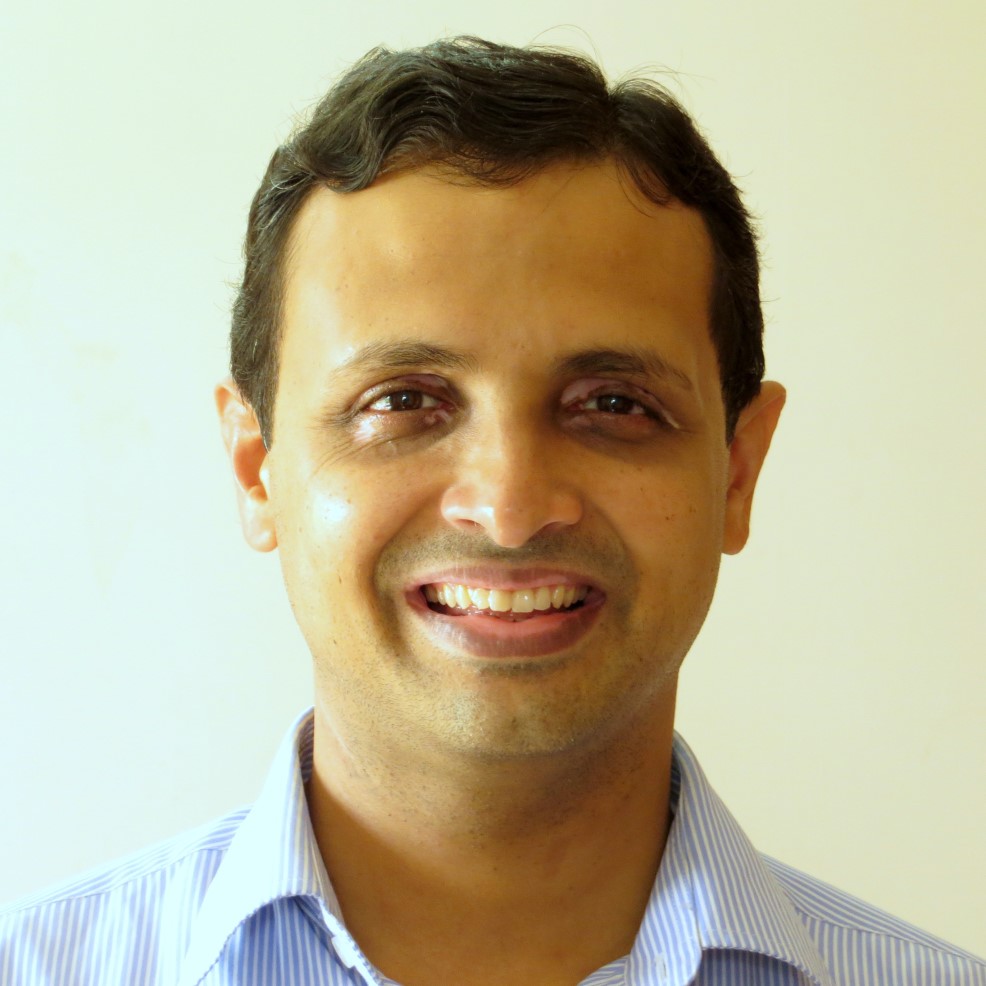
Vineeth N Balasubramanian is a Professor in the Department of Computer Science & Engineering at the Indian Institute of Technology Hyderabad, with affiliate faculty status in the Department of Artificial Intelligence. His research focuses on the intersection of deep learning, machine learning, and computer vision, emphasizing explainability, robustness, and real-world applications. He leads Lab 1055, which investigates problems such as Explainable and robust AI/ML systems Lifelong learning in evolving environments Multimodal vision-language models Applications in agriculture, autonomous navigation, and human behavior analysis His recent work includes causal reasoning in transformers, vision-language model capabilities, and drone-based object detection. Funded by organizations like Google, Microsoft, Intel, and DST, he has received multiple awards including the World's Top 2% Scientists (2022-23), INSA/INAE Fellowships, and Best Paper recognitions. Lab 1055 collaborates with institutions like CMU, UBC, and Monash University, contributing to cutting-edge advancements in AI.
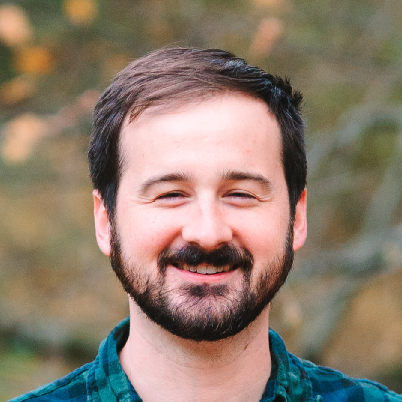
Chris Donahue is an Assistant Professor in the Computer Science Department at Carnegie Mellon University . He also serves as a part-time Research Scientist at Google DeepMind on the Magenta team. His work focuses on leveraging generative AI to enhance human creativity, particularly in music. Education: PhD in Computer Science (UC San Diego), Postdoctoral Scholar (Stanford University) His research spans controllable generative modeling of music and audio , with a focus on real-time interactive systems. Projects like Piano Genie , Beat Sage , and Copilot Arena demonstrate his commitment to real-world deployment. His Generative Creativity Lab (G-CLef) explores AI applications beyond music, including programming and natural language. Recent publications highlight advancements in multimodal music evaluation , real-time adaptation , and AI-driven sound morphing . He co-developed Magenta RealTime , an open-weight real-time music generation model, and MusicFX DJ Mode . Scientific Awards: Best Paper Award (top 1) at NAACL Student Research Workshop 2025 Best Paper Award (top 1% of submissions) at CHI 2025 Best Paper Runner-up at ISMIR 2021 He co-advises PhD students like Wayne Chi (NDSEG Fellow) and mentors Irmak Bukey . His lab receives support from the AIxArts incubator fund at CMU .
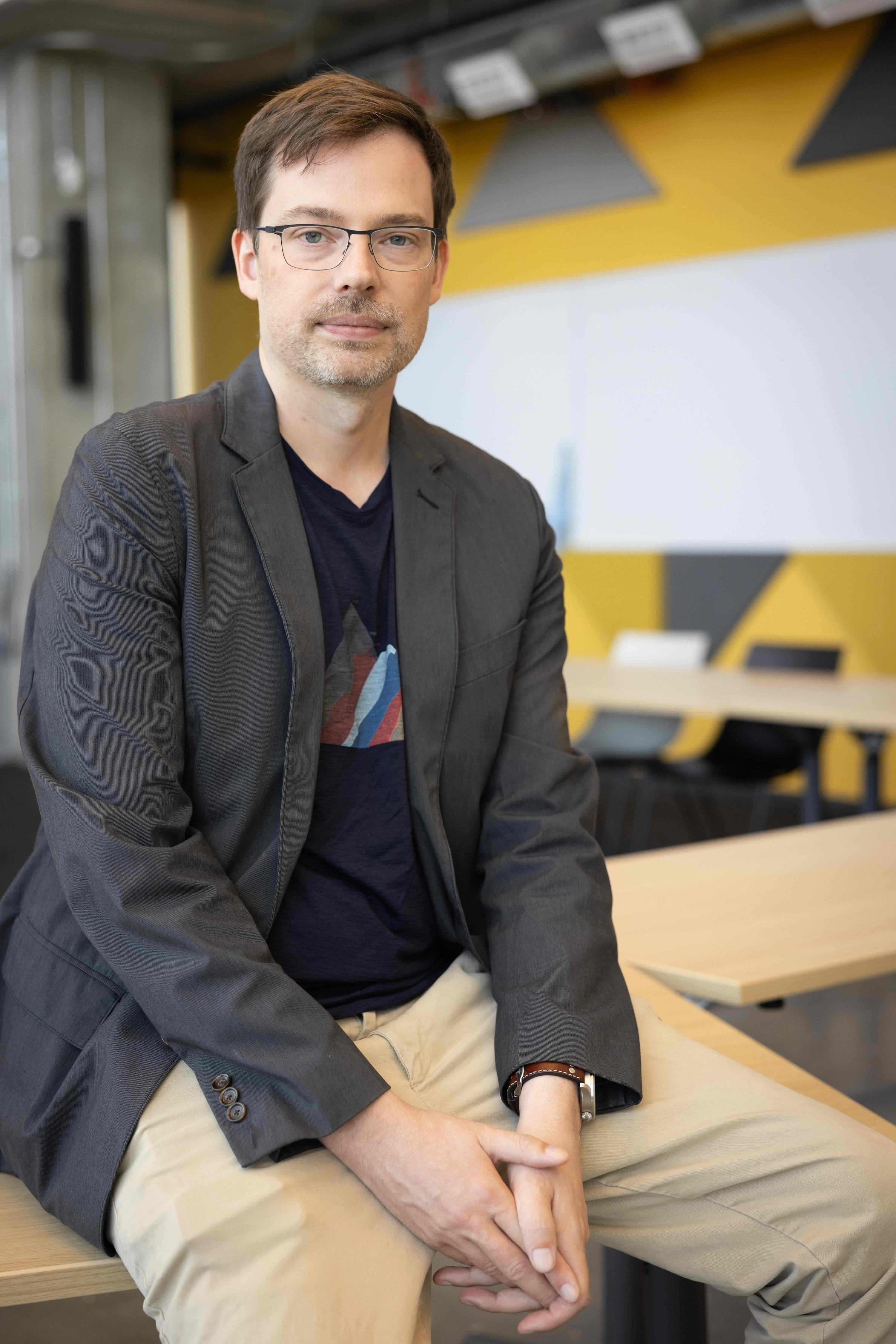
Lerrel Pinto is an Assistant Professor of Computer Science at the Courant Institute of Mathematical Sciences at New York University (NYU), where he leads the General-purpose Robotics and AI Lab (GRAIL) as part of the CILVR research group. His work bridges the gap between theoretical machine learning and practical robotics applications, with a focus on enabling robots to generalize and adapt in real-world environments. Dr. Pinto received his undergraduate degree from IIT Guwahati, followed by a PhD from the Robotics Institute at Carnegie Mellon University (CMU). He then completed a postdoctoral fellowship at the University of California, Berkeley before joining NYU as faculty. His research program centers on robot learning and decision making, with several key thrusts that demonstrate his innovative approach to robotics. Pinto's work emphasizes large-scale learning techniques that leverage both extensive data and sophisticated model architectures. A significant portion of his research focuses on representation learning for sensory data, particularly developing methods that enable robots to make sense of visual, tactile, and auditory inputs. His lab has made notable contributions to reinforcement learning algorithms that allow robots to adapt to new scenarios with minimal retraining. Pinto also champions open-source robotics , developing affordable robot platforms that democratize access to robotics research. Analysis of Pinto's recent publications reveals a strong trend toward multimodal perception in robotics, integrating visual, tactile, and auditory information to create more robust robot systems. His work increasingly focuses on zero-shot and few-shot learning capabilities, enabling robots to handle novel situations without extensive retraining. There's also a clear progression toward general-purpose robotics , moving away from task-specific solutions toward more flexible systems that can handle diverse real-world challenges. Dr. Pinto's scientific contributions have been recognized with several prestigious awards: Sloan Research Fellowship (2025) NSF CAREER Award (2024) RAL Early Career Award (2024) Best Student Paper Award at ICRA (2016) Outstanding Paper Award at MFM-EAI workshop at ICML (2024) Best Paper Award at NGSM workshop at ICML (2024) Best Student Paper Award at RSS (2023) As an advisor, Pinto has mentored numerous students who have gone on to impactful careers in both academia and industry. His former PhD student Denis Yarats co-founded Perplexity.AI, while Mahi Shafiullah became a postdoc at UC Berkeley and Meta AI. Many of his Masters students have pursued PhDs at top institutions like CMU, MIT, and Stanford, or joined leading robotics companies including 1X, Fauna Robotics, and NVIDIA. Pinto's lab has secured significant research funding, including the NSF CAREER award and likely other grants supporting his robotics research program. The General-purpose Robotics and AI Lab (GRAIL) that Pinto leads brings together a diverse team of researchers working on cutting-edge robotics challenges. The lab maintains strong collaborations with industry partners and other academic institutions, facilitating technology transfer and real-world impact. GRAIL's research spans multiple robotics platforms and focuses on developing algorithms that enable robots to learn from diverse experiences and generalize across environments.
Xingxing Zuo is an Assistant Professor (tenure-track) in the Robotics Department at MBZUAI. He holds a PhD from Zhejiang University (2021) and a Bachelor’s from UESTC (2016). Previously, he was a Postdoctoral Scholar at Caltech (2024–2025), a Postdoc at ETH Zurich (2019–2021), and held visiting roles at TU Munich, University of Delaware, and University of Technology Sydney. His research focuses on robotics, 3D computer vision, and embodied AI, with emphasis on robot-human collaboration, state estimation, and sensor fusion. Educations: PhD in Robotics, Zhejiang University (2021, with honors) Bachelor’s in Computer Science, University of Electronic Science and Technology of China (2016, with honors) Research Highlights: Develops novel methods for LiDAR-camera-inertial fusion, neural radiance fields, and radar-cameras systems Pioneered techniques like Flying Co-Stereo (long-range aerial mapping) and FMGS (vision-language embedded 3D splatting) Focuses on real-time SLAM, robust depth estimation, and photorealistic scene reconstruction Awards & Recognition: Best Paper Finalist at ICRA 2021 (CodeVIO) Oral Presentation at ICCV 2021 (MBA-VO) Recipient of Google Visiting Faculty Researcher (2023) Grants & Labs: Organized Thermal Infrared in Robotics workshop at ICRA 2025 Leads research on embodied AI and multi-sensor SLAM systems Develops open-source tools like LIC-Fusion and Coco-LIC frameworks
Alan Ritter is an Associate Professor at the School of Interactive Computing , Georgia Institute of Technology, with additional affiliation to the Machine Learning Center . His research focuses on Natural Language Processing , particularly robust models across domains/languages with fewer labels and efficient resource use, plus data-driven dialogue agents for open-topic conversations. Research Interests : Robust NLP models, cross-lingual transfer, resource-efficient learning, dialogue systems, cultural bias measurement, and privacy-aware language models Students : Mentors Ph.D. students in Georgia Tech's ML and CS programs, including Junmo Kang, Yang Chen, and Duong Minh Le. Alumni include Fan Bai (Ph.D. 2023), Yang Chen (Ph.D. 2024), and Andrew Li (M.S. 2024). Awards : NSF CAREER Award, Amazon Research Award, ACL 2024 Best Social Impact Paper, IUI 2009 Best Student Paper. Recent Work : Studies training budget allocation between supervised and preference-based finetuning, cross-lingual information extraction, cultural bias in LLMs, and privacy risk mitigation in social media disclosures. Service : Served as Program Chair for NAACL 2025, Area Chair for multiple top-tier conferences (COLM, EMNLP, ACL, EACL, AAAI). Email : alan.ritter@cc.gatech.edu
Arti Singh is an Assistant Professor in the Department of Agronomy at Iowa State University. Her research focuses on plant breeding, soybean diseases, genomics, and phenomics, with a strong emphasis on integrating artificial intelligence and high-throughput technologies into agricultural systems. She leads projects involving AI-driven disease identification, precision agriculture, and crop improvement strategies. Her expertise includes developing machine learning models for real-time weed and insect classification (e.g., WeedNet and InsectNet), deploying drones and ground robots for crop phenotyping, and leveraging genomic data to map traits like flowering time and disease resistance in legumes. Singh collaborates on initiatives like the AIIRA Institute for Resilient Agriculture and the BioTrove biodiversity dataset. Singh’s work spans plant stress phenotyping, digital twin technologies for plant sciences, and multi-sensor phenotyping for early disease detection. Her research bridges computational methods with traditional agronomy, aiming to enhance crop resilience and sustainability in the face of environmental challenges. Her recent projects include optimizing robotic navigation for precision agriculture, improving soybean yield estimation via video analysis, and dissecting genetic architectures of traits in mungbean and soybean using GWAS and genomic tools. She actively contributes to conferences and publishes in high-impact journals, advancing both foundational and applied aspects of agricultural science.
Sanjiv Singh is a Research Professor at the Robotics Institute within Carnegie Mellon University's School of Computer Science. His academic journey at CMU spans from Systems Scientist (1995-2001), to Senior Research Scientist (2001-2003), Associate Research Professor (2003-2007), and finally Research Professor since 2007. He also holds an adjunct faculty position in Mechanical Engineering since 2009. Singh serves as Editor-in-Chief of the Journal of Field Robotics, demonstrating his leadership in the robotics community. His educational background includes a Ph.D. and M.S. in Robotics from Carnegie Mellon University (1995, 1992), an M.S. in Electrical Engineering from Lehigh University (1985), and a B.S. in Computer Science from the University of Denver (1983). Dr. Singh's research focuses on three primary themes: Autonomous Navigation (developing motion planning and control for ground and air vehicles with applications in agriculture, exploration, and low-flying aircraft), Coordinated Multi-Robots (examining team-based tasks like structure assembly and search/rescue operations), and Forceful Interaction with the world (using physical models to enable robots to handle complex, high-force interactions). His work spans aerial robotics, agricultural and forestry robotics, mining robotics, 3D vision, sensing and perception, visual servoing, motion planning, and field service robotics. Analysis of his recent publications (2016-2020) reveals a strong focus on collision avoidance algorithms, sensor fusion techniques, and real-time navigation systems. His research demonstrates consistent advancement in SLAM (Simultaneous Localization and Mapping) technologies, particularly in GPS-denied environments, with increasing sophistication in handling complex aerial maneuvers and multi-robot coordination. Editor-in-Chief of Journal of Field Robotics Dr. Singh has advised numerous graduate students throughout his career, with current advisees including Matt Aasted (Ph.D), Andrew Chambers (M.S), Hugh Cover (M.S), Michael Dille (Ph.D), and Justin Haines (M.S). His past students include prominent researchers like Sebastian Scherer, Joe Djugash, Fred Heger, Geoff Hollinger, and Ji Zhang who have gone on to make significant contributions in robotics. His research has been supported through various projects including CASC (agricultural applications), Riverine, Transformer, Trestle, and Ember. His laboratory work focuses on developing practical robotic systems capable of operating in challenging real-world environments, with particular emphasis on agricultural applications, search and rescue operations, and coordinated multi-robot teams that can work effectively alongside humans.
Nima Fazeli is an Assistant Professor of Robotics at the University of Michigan (2020–Present), holding courtesy appointments in Computer Science & Engineering (CSE) and Mechanical Engineering. He directs the Manipulation and Machine Intelligence (MMint) Lab, focusing on enabling dexterous robotic manipulation through multimodal representation learning, tactile sensing, and model-based reasoning. His work integrates mechanics, perception, controls, and planning to achieve autonomous interaction with uncertain environments. Education: PhD, MIT (2019); MSc, University of Maryland (2014); BSc, Amirkabir University of Technology (2011) Research interests emphasize embodied intelligence , including visuo-tactile fusion, contact dynamics modeling, and cross-modal learning. Recent work explores tactile shadows, deformable object manipulation, and language-guided robot control. His research is supported by the NSF CAREER grant and National Robotics Initiative, with applications in manufacturing, assistive robotics, and space systems. Publications span topics like tactile sensing hardware (e.g., GelSlim 4.0), visuo-tactile implicit representations (ViTaSCOPE), and failure recovery policies (Racer). His team’s work has been featured in outlets like The New York Times and BBC. Key Awards: NSF CAREER Grant (2024) Teaching includes Introduction to Robotic Manipulation . Collaborations involve cross-disciplinary projects with mechanical, electrical, and biomedical engineering groups.
Farzad Mashayek is a Professor and Department Head of Aerospace and Mechanical Engineering at the University of Arizona, College of Engineering. He is a member of the Graduate Faculty and leads the Computational Multiphase Transport Laboratory. His research integrates high-fidelity simulations, machine learning, and experimental validation across diverse domains in fluid dynamics and energy systems. Educational Background: PhD in Mechanical Engineering, State University of New York at Buffalo, Buffalo, NY MS in Mechanical Engineering, Sharif University of Technology, Tehran, Iran BS in Mechanical Engineering, Sharif University of Technology, Tehran, Iran His research interests include turbulent reacting flows, plasma dynamics, electrostatic atomization, solid-ion and lithium batteries, computational fluid dynamics, and machine learning applications in engineering. He employs high-order spectral element methods, phase-field modeling, and deep neural networks to study complex multiphysics phenomena such as drop impact, battery degradation, and turbulence modeling. The recent publications reflect a strong trend toward integrating machine learning with multiphysics simulations, particularly in battery safety (thermal runaway prediction), materials characterization (STEM image analysis), and fluid dynamics (modal analysis of turbulence). His work often involves collaboration with experimental groups to validate models, especially in dental aerosol suppression and electrohydrodynamics. Scientific Awards: Sustained Service Award, American Institute of Aeronautics and Astronautics (AIAA), Spring 2022 Best Presentation Award, The 20th International Conference on Computational Mathematics, Parallel and Distributed Computing, Summer I 2018 Dr. Mashayek has secured funding from NSF (GOALI program) for controlled coating via charged droplet deposition. He advises graduate students and postdoctoral researchers in computational mechanics and energy systems, fostering interdisciplinary research. He has contributed to engineering education, particularly during the pandemic, with active learning strategies in online instruction. He leads a dynamic research team focused on advancing simulation tools and applying them to real-world challenges in energy, manufacturing, and public health.
Christian Rupprecht is an Associate Professor at the Department of Computer Science, University of Oxford, specializing in computer vision and machine learning. His research focuses on unsupervised learning, 3D reconstruction, and visual understanding. His work includes contributions to conferences such as GCPR'25, ICCV'25, and CVPR'25, with papers spanning topics like correspondence estimation, animal pose modeling, and synthetic data generation. He leads projects within the prestigious Visual Geometry Group (VGG). Notably, his paper VGGT received the Best Paper Award at CVPR'25. His research integrates deep learning and geometric modeling, emphasizing robustness and generalization in visual systems. Best Paper Award at CVPR'25
Dr. Kaya de Barbaro is an Associate Professor in the Department of Psychology at the University of Texas at Austin (College of Liberal Arts). She holds a Ph.D. from the University of California San Diego. Her research focuses on bridging computer science and developmental/clinical psychology, particularly maternal mental health and infant social-emotional development. She directs the Daily Activity Lab, which uses mobile/wearable sensors and machine learning to analyze real-world interactions, aiming to develop just-in-time interventions for new mothers. Key research areas include maternal-infant dynamics, physiological synchronization, and the impact of environmental chaos on development. She has pioneered methods for analyzing high-density data, such as Granger causality and machine learning algorithms to detect behaviors like crying and holding. Recent work emphasizes leveraging ecological momentary assessment surveys and 24-hour LENA audio recordings to understand proximal mechanisms of development. Dr. de Barbaro teaches Psychology 333D (Introduction to Developmental Psychology) and has developed curricula for both in-person and online formats. She is actively involved in training students through the Eureka program at UT Austin. Her lab collaborates on tools like chatbots for postpartum mental health and has published extensively on sensor-based methodologies in developmental science.
Bobak Mortazavi is an Associate Professor in the Department of Computer Science & Engineering at Texas A&M University. His research focuses on medical analytics, machine learning, wearable sensors, and cyber-physical systems. He leads interdisciplinary projects in healthcare technology, including AI-driven diagnostics and predictive modeling for cardiovascular diseases. He has received notable awards such as the Best Demonstration Award at IEEE EMBS 2012 and the Best Paper Award at the Fourth International Conference on Data Analytics 2015. His work bridges machine learning with clinical applications, emphasizing practical solutions for healthcare challenges. Recent research includes developing AI tools for aortic stenosis detection, electrolyte estimation via ECG, and real-time patient monitoring systems. He collaborates with industry and academic partners to advance telemedicine and wearable health technologies. Key contributions include the SMART-LV project for smartphone-based cardiac diagnostics and the ArterialNet framework for blood pressure reconstruction using wearable sensors. His work is published in top journals like IEEE Journal of Biomedical and Health Informatics and Elsevier's Pervasive and Mobile Computing.
Azizjon ALIMOV is a Full Professor at IÉSEG School of Management (University of Lille, France), specializing in Corporate Finance, Mergers and Acquisitions, and Law and Finance. He holds a Ph.D. in Finance from the University of Oregon (2007) and an MBA from Central Michigan University (2001). His HDR (Habilitation) in Management Sciences was awarded by the University of Lille in 2023. His research focuses on corporate governance, cross-border M&A dynamics, and the interplay between legal frameworks and financial decision-making. Key themes include intellectual property rights' impact on corporate debt costs, product market competition effects on corporate cash holdings, and government borrowing influences on acquisition strategies. His work frequently examines global contexts, with studies spanning North America, Asia, and Europe. Notable publications include analyses of IPO staging mechanisms (2024), managerial discipline through trade liberalization (2023), and the role of labor protection laws in loan contracting (2015). His recent work emphasizes reproducibility in management science methodology (2023) and cross-border regulatory challenges in M&A. No scientific awards are explicitly listed; however, his extensive publication record reflects sustained academic contributions. He has advised students across institutions including City University of Hong Kong and the Sauder School of Business, though specific advisee names are not documented here. His professional experience includes roles at the University of Arizona (2008–2010), California State University (2007–2008), and as an HSBC Visiting Assistant Professor at the University of British Columbia (2016–2018). He currently leads the Finance Track at IÉSEG, contributing to programs like the Grande École Master’s in Finance and MSc Corporate Finance courses.
Professor Ihab Ilyas is a leading figure in data management and machine learning at the Cheriton School of Computer Science , University of Waterloo , where he holds the Thomson Reuters Research Chair in Data Quality . He is currently on leave from the university, serving as a Distinguished Engineer, Proactive Intelligence at Apple Inc . His research focuses on data cleaning , large-scale data integration , knowledge graphs , and machine learning applications in data quality . He has pioneered systems like HoloClean and Saga , with commercial impacts through co-founded startups Inductiv (acquired by Apple) and Tamr . PhD in Computer Science from Purdue University Co-founder of Inductiv (acquired by Apple) Co-founder of Tamr Research Interests include: Probabilistic and uncertain data management Machine learning for data quality and enrichment Big data systems and information extraction Knowledge graph construction and optimization Scientific Awards and Recognitions include: Fellow of the Royal Society of Canada (2024) C.C. Gotlieb Computer Award (2024) IEEE Fellow (2021) ACM Fellow (2020) Cheriton Faculty Fellowship (2013-2016) Ontario Early Researcher Award
Ameil Joseph is an Associate Professor at McMaster University's School of Social Work, where they contribute to critical scholarship at the intersection of mental health, race, and social justice. Their work examines how ideas about difference, normalcy, sexuality, eugenics, race, ability and mental 'illness' cohere and perform within policy, law and practice, with over a decade of professional experience in mental health settings including supportive housing, settlement services, crisis respite, and forensic community treatment. Education: Ph.D in Social Work, York University (2009-2014) MSW, Wilfrid Laurier University (2005-2007) BA in Psychology, University of Waterloo (1998-2003) Dr. Joseph's research engages with critical mental health, postcolonial theory, critical race theory, and critical disability studies to examine the historical production of ideas about difference. Their scholarship particularly focuses on how these ideas manifest in mental health systems, immigration policy, and criminal justice, with attention to issues of social justice, violence, ethics, and confluence. Their work bridges theoretical frameworks with practical implications, addressing the complex interplay of colonialism, racism, sanism, and eugenics in contemporary social systems. Analysis of Dr. Joseph's recent publications reveals a sustained focus on colonial and eugenic violence within mental health, immigration, and criminal justice systems. Their scholarship consistently examines how racism, sanism, and ableism intersect to produce particular forms of state violence, particularly against racialized immigrants with mental health conditions. Recent work has expanded to address temporal dimensions of oppression, data colonialism, and community responses to grief and loss during the pandemic, demonstrating both theoretical sophistication and practical relevance to current social issues. Scientific Awards: University Scholar 2025 - Recognized for research leadership and impact among eight McMaster professors honored as University Scholars Dr. Joseph has secured significant research funding, including nearly $75,000 from the Social Sciences and Humanities Research Council (SSHRC) for community-engaged projects addressing social justice issues. Their teaching portfolio includes advanced courses on critical mental health perspectives, race and colonialism in Canadian society, and social justice theory. While specific graduate students aren't listed in available materials, their extensive co-author network suggests active mentorship and collaboration. Dr. Joseph contributes to community-based initiatives in Hamilton addressing racism in healthcare and mental health systems, connecting academic scholarship with practical community responses to systemic issues. Dr. Joseph maintains an active presence in community responses to contemporary challenges, particularly through initiatives addressing grief during the pandemic and systemic racism in healthcare. Their work exemplifies the integration of scholarly rigor with community engagement, demonstrating how academic research can inform and be informed by real-world social justice efforts.