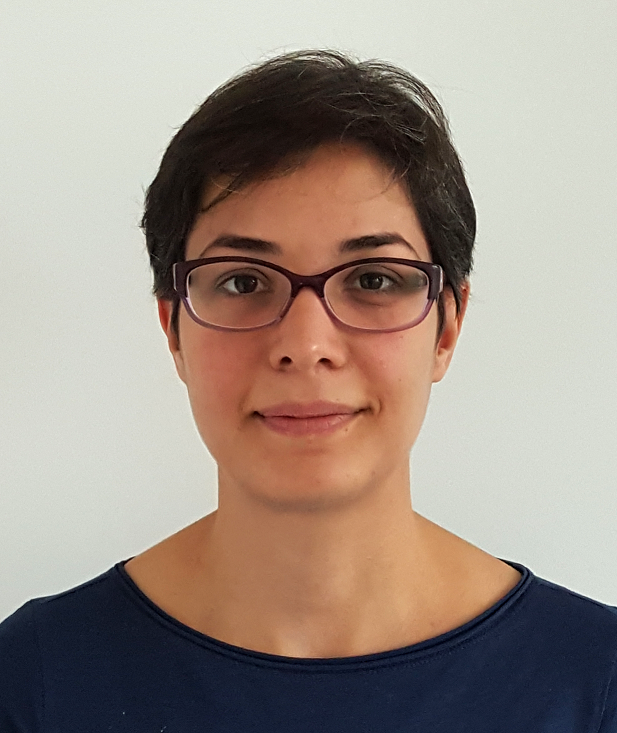
Hao-Wen Dong is an Assistant Professor in the Department of Performing Arts Technology at the University of Michigan, with an affiliation to the Computer Science and Engineering Department. His research focuses on Human-Centered Generative AI for content creation, emphasizing music, audio, and video domains. He holds a Ph.D. in Computer Science from UCSD, advised by Julian McAuley and Taylor Berg-Kirkpatrick. Affiliations: University of Michigan (Primary), UCSD (Ph.D.), National Taiwan University (B.S.) Research Pillars: Generative AI models for new domains, AI-assisted creative tools, and multimodal content creation His work spans music generation (e.g., MuseGAN), audio synthesis (e.g., ViolinDiff), and multimodal systems (e.g., TeaserGen). He has led over 25+ publications in top venues like ISMIR, ICASSP, and ICLR. He advises students in interdisciplinary projects and teaches courses on AI Music and Generative AI for Music/Audio Creation. Notable awards include the Doctoral Award for Excellence in Research (2024) and Rising Stars in AI (2024).
Mattias Villani is Professor of Statistics at Stockholm University, specializing in Bayesian statistics and machine learning. He obtained his PhD in Statistics from Stockholm University in 2000 and has held positions at Sveriges Riksbank and Linköping University. Villani develops computationally efficient Bayesian methods for inference, prediction and decision-making with flexible probabilistic models. Research Interests: His work spans Bayesian computation (MCMC, HMC, variational inference), machine learning (Gaussian processes, mixture models), and applications in neuroimaging, transportation, and econometrics. Research focuses on scalable Bayesian methods for large datasets and complex models. Publication Focus: Recent articles concentrate on Bayesian neuroimaging analysis, transportation network modeling, and efficient MCMC algorithms. Methodological innovations in subsampling techniques for large-scale Bayesian computation represent a significant research trend. Student Advising: Supervises PhD students in statistical methodology development and applications. Current research groups focus on spatiotemporal modeling, locally stationary processes, and neuroimaging statistics.
Sukhpal Singh Gill is an Assistant Professor (Lecturer) in Cloud Computing at the School of Electronic Engineering and Computer Science, Queen Mary University of London (UK). He holds a PhD, ME, and BE in Computer Science and is a Fellow of the Higher Education Academy (FHEA). His roles include Programme Director for MSc Advanced Computer Science and MSc Business Analytics, as well as Deputy Chair of the Main Misconduct Panel. He leads the GillNet Research Lab and is the Editor-in-Chief of the International Journal of Applied Evolutionary Computation (IJAEC) , with editorial roles in IEEE IoT, Nature Scientific Reports, and other journals. Education: PhD in Computer Science ME in Computer Science BE in Engineering Research Interests: Focus on Cloud Computing, Edge AI, IoT, Energy Efficiency, and Quantum Computing. His work bridges theoretical advancements with practical applications in healthcare, smart cities, and sustainable computing. Notable projects include AI-driven frameworks for carbon-neutral cloud resource management, blockchain-empowered healthcare systems, and quantum cloud computing models. Teaching: Teaches modules such as Cloud Computing (Postgraduate), Fundamentals of Web Technology (Undergraduate), and Semi-structured Data and Advanced Data Modelling (Postgraduate/Undergraduate). He emphasizes inclusive curriculum design and innovative teaching tools like the Q-Module-Bot for AI-supported learning. Awards & Grants: Recipient of 12,500+ citations and an H-index of 54 (Google Scholar). Secured grants for projects on edge AI, federated learning, and sustainable cloud computing. Winner of awards including the IEEE IT Professional Magazine Outstanding Reviewer Award (2024) and Elsevier's Best Paper Award (2023). Labs & Teams: Leads the GillNet Research Lab , focusing on cutting-edge research in cloud-edge computing, AI, and quantum systems. Collaborates with industry partners on projects like HealthEdgeAI and AIoT-driven smart healthcare systems .
Paul Franzon is the Cirrus Logic Distinguished Professor and Associate Department Head for Graduate Affairs at the Department of Electrical and Computer Engineering, North Carolina State University. He holds a PhD and Bachelor's in Electrical Engineering and a Bachelor's in Physics/Mathematics from the University of Adelaide, Australia. His research focuses on quantum information science, machine learning-driven hardware design, 3D integration, and high-speed systems. Education: PhD in Electrical Engineering, University of Adelaide (1988) Bachelor's in Electrical Engineering, University of Adelaide (1984) Bachelor's in Physics and Mathematics, University of Adelaide (1982) Research Interests: Quantum computing and algorithm optimization AI-driven design automation for 3D integrated circuits High-speed communication systems Hardware security and FPGA acceleration Awards & Honors: IEEE Fellow (2006) Alcoa Foundation Distinguished Engineering Research Award (2005) NC State Alumni Distinguished Undergraduate Professor Award (2003) NSW Australia Expatriate Scientist Award (2003) Advising & Grants: Advised PhD student Priyank Kashyap (2023 graduate) Recipient of NSF Young Investigators Award (1993) Labs & Collaborations: Center for Advanced Electronics Through Machine Learning (CAEML) IEEE EPS Society (Associate Editor)
Jeff Huang is an Associate Professor in the Department of Computer Science & Engineering at Texas A&M University, affiliated with the College of Engineering. His research focuses on software engineering, programming languages, concurrency, and runtime verification, with notable contributions to static analysis, race detection, and vulnerability mitigation in concurrent systems. Education: Postdoc, Computer Science, University of Illinois at Urbana-Champaign (2013-2014) Ph.D., Computer Science, Hong Kong University of Science and Technology (2012) B.E., Electrical Engineering, National University of Defense Technology, China (2008) Research Interests: Huang's work bridges theoretical foundations and practical applications in concurrency debugging, static analysis tools, and cybersecurity for smart contracts. He emphasizes scalable solutions for pointer analysis, race detection, and vulnerability detection in distributed systems and blockchain technologies. Recent Trends in Publications: His recent work explores AI-driven program execution (e.g., SGLang), blockchain security (e.g., Smart Contract analysis), and dynamic/static analysis techniques for memory safety. These studies underscore advancements in automated tools for securing concurrent and distributed systems. Awards: 2023 ACM SIGSOFT Distinguished Paper Award 2019 DARPA Young Faculty Award 2016 NSF CAREER Award 2013 ACM SIGSOFT Outstanding Doctoral Dissertation Award Advising & Grants: Huang has advised PhD students including Bozhen Liu and Peiming Liu, who have contributed to OpenMP race detection and pointer analysis tools. His grants include NSF awards for pointer analysis as a service and DARPA funding for young faculty research. Labs & Teams: He leads the O2 Lab, focused on concurrency verification and cybersecurity, collaborating with industry partners like Coderrect Inc. and DOE on scalable static analysis frameworks.
Yunming Xiao is an Assistant Professor at the School of Data Science, The Chinese University of Hong Kong (CUHK), Shenzhen. Previously, he served as a Research Fellow at the University of Michigan and earned his Ph.D. in Computer Science from Northwestern University in 2024. His research focuses on computer systems, networks, and security, with emphasis on security and privacy of Internet services and performance optimization of cloud infrastructure. His work has been recognized with the Best Paper Award at APNet and Best Student Paper Award at ACM EuroSys. Education: Ph.D. in Computer Science, Northwestern University (2024) B.Eng. in Computer Science, Beijing University of Posts and Telecommunications (2019) His research bridges cloud infrastructure and security, where projects like SwiftRDMA, Conspirator, and MegaTE demonstrate innovative approaches to resource scheduling, SmartNIC integration, and traffic engineering at scale. These works highlight his focus on solving real-world performance and security bottlenecks in distributed systems. Scientific Awards: Best Paper Award, APNet'25 Best Student Paper Award, ACM EuroSys'24 Yunming actively collaborates with industry, having interned at Google, Hewlett Packard Labs, Nokia Bell Labs, and Bytedance. He serves on TPCs for major conferences including CCS'26, IMC'26, and IEEE S&P'26.
Azza Abouzied is Associate Professor of Computer Science at New York University Abu Dhabi and Global Network Associate Professor at the Tandon School of Engineering. She serves as Vice Provost for Faculty Advancement and Engagement at NYUAD starting September 2024. Her research bridges database systems and human-computer interaction, focusing on intuitive tools for data querying and decision-making in uncertain, collaborative environments. PhD, Yale University (2013) MPhil, Yale University MSc, Dalhousie University BSc, Dalhousie University Her research centers on human-data interaction, designing systems that make data accessible to non-experts. She combines techniques from UI design, machine learning, and databases to build tools that simplify complex data tasks. Her earlier work focused on example-driven querying and synthetic data generation, while her recent work explores in-database prescriptive analytics and decision support in domains like disinformation mitigation and epidemic planning. Her publications span database and HCI venues, with a recurring theme of enhancing usability without sacrificing scalability. She co-founded Hadapt, a Big Data analytics platform, and has led interdisciplinary research through the Human-Data Interaction Lab and the Center for Interacting Urban Networks. Her teaching includes foundational courses such as Database Systems, Operating Systems, and Data, as well as the critical thinking course Techruption. VLDB Test of Time Award (2019) Best Paper Award in Database Systems Honorable Mention in HCI Publications Azza mentors undergraduate capstone students and advises prospective PhDs, research assistants, and postdocs. She is actively involved in academic leadership, having chaired NYUAD’s faculty council in 2024 and co-chaired the SIGMOD 2025 program. Her work emphasizes empowering users to critically engage with data and AI, both in research and education.
Dr. Malcolm Heywood is a Professor in the Faculty of Computer Science at Dalhousie University, Halifax, Canada. He leads the Network Information Management and Security (NIMS) Lab and is actively involved in research on genetic programming, coevolution, reinforcement learning, and big data analytics. His research interests span: Genetic Programming and Evolutionary Computation Coevolution and Competitive Learning Problem Decomposition and Hierarchical Models Streaming Data Analysis and Anomaly Detection Network Security and Insider Threat Detection Reinforcement Learning in Games (Atari, ViZDoom, Dota 2) Dr. Heywood's recent publications focus on emergent behaviors in reinforcement learning using Tangled Program Graphs (TPG), benchmarking genetic programming for streaming data, and applications in cybersecurity and computational finance. His work demonstrates a strong trend toward scalable, efficient evolutionary models for complex, real-world problems. His scientific awards include: Silver placed at Human-Competitive (Humies) Competition (2018) Best Paper at EuroGP (2017) Best Paper at DETA track, ACM GECCO (2017) Best Paper at RWA track, ACM GECCO (2018) Nomination for Best Paper at DETA track, ACM GECCO (2019) He has supervised numerous graduate students, including PhD and Master's candidates, many of whom have continued research in evolutionary computation. His lab has developed open-source code distributions for Tangled Program Graphs and Symbiotic Bid-Based GP. Dr. Heywood teaches courses in Computer Organization, Introduction to AI with Gaming Applications, and Genetic Algorithms and Programming.
Lena Mamykina is an Associate Professor of Biomedical Informatics at Columbia University's Vagelos College of Physicians and Surgeons. As a member of the Data, Media and Society Committee and Health Analytics Co-Chair, she develops technologies to empower individuals and communities in health management. Georgia Institute of Technology: M.S. and Ph.D. in Human-Computer Interaction and Human-Centered Computing Columbia University: M.A. in Biomedical Informatics Ukrainian State University of Maritime Technology: B.S. in Computer Science Her research in the Action Research for Collective Health (ARCH) group focuses on: Biomedical Informatics and Human-Computer Interaction Ubiquitous/Pervasive Computing for health monitoring Computer-Supported Collaborative Work in clinical teams Personalized health coaching systems using AI Recent publications highlight trends in: AI-driven diabetes management and glucose forecasting Context-aware mobile health applications Conversational agents for behavioral interventions Data assimilation techniques with sparse patient data Equity-focused health informatics design Human-AI collaboration in clinical settings
Prof. Dr. Kai Essig is a Professor of Human Factors and Interactive Systems at the Faculty of Communication and Environment, Rhine-Waal University of Applied Sciences, Kamp-Lintfort, Germany. He has a strong interdisciplinary background combining computer science, cognitive science, and human-computer interaction, with a focus on eye tracking, visual perception, and assistive technologies. Master of Science in Computer Science and Chemistry, Bielefeld University (1998) Ph.D. in Computer Science, Bielefeld University (2007) His research centers on eye tracking, human-computer interaction, usability engineering, visual attention, and cognitive interaction technology . He investigates how movement expertise influences visual perception and how multimodal software can support real-time human actions. His work integrates computer vision, machine learning, and neuroscience to develop intelligent systems that adapt to user behavior. The 15 most recent publications reflect a consistent trend in eye movement analysis, mental representations, brain-machine interfaces, and assistive technologies . These works span domains such as sports psychology, robotics, augmented reality, and cognitive neuroscience, demonstrating a strong interdisciplinary approach. Key themes include gaze-based interaction, automated annotation of visual behavior, and the implementation of smart systems for daily living assistance. Scientific recognition includes: Landmark in the Land of Ideas (2018) – for the ADAMAAS project, awarded by 'Land of Ideas', a joint initiative of the German government and the Federation of German Industries Prof. Essig has been actively involved in research projects such as ADAMAAS (Adaptive and Mobile Action Assistance in Daily Living Activities), which received national recognition. He has collaborated extensively with the Neurocognition and Action-Biomechanics Research Group at Bielefeld University and the Excellence Cluster CITEC. While no formal advising of students is listed, his publications suggest mentorship and collaboration with junior researchers. His lab work is centered on eye-tracking systems, multimodal interaction, and cognitive modeling , particularly within applied environments like smart glasses and assistive technologies.
Rui Ning is an active Assistant Professor in the Department of Computer Science at Old Dominion University (ODU), within the Batten College of Engineering & Technology. His academic journey includes a B.S. in Computer Science & Engineering from Lanzhou University (China), an M.S. in Computer Science from the University of Louisiana at Lafayette, and a Ph.D. in Electrical & Computer Engineering from ODU. Dr. Ning's research focuses on cybersecurity, privacy-preserved AI, and secure AI systems, with particular emphasis on backdoor detection in neural networks, federated learning security, and privacy-preserving deep learning. His work bridges theoretical security mechanisms with practical implementations in real-world AI systems, addressing critical vulnerabilities in modern machine learning frameworks. Analysis of his publication trends reveals a strong focus on adversarial machine learning, with increasing attention to multimodal AI security since 2022. His research shows consistent growth in addressing sophisticated attack vectors while developing practical defense mechanisms applicable to industry settings. Notably, his work spans both theoretical contributions and practical implementations, often achieving high acceptance rates at top-tier conferences. Mark Weiser Best Paper Award, IEEE PERCOM, 2018 Best In-session Presentation Award, IEEE INFOCOM, 2019 NSF CRII Award, 2022 Ph.D. Researcher of the Year, ODU ECE, 2019 Dr. Ning actively mentors graduate students, currently supervising multiple Ph.D. candidates and an M.S. student at ODU. His grant portfolio demonstrates significant research impact, with over $1.5 million in funding as PI or Co-PI from sources including NSF, DoD, NSA, and industry partners like Interdigital. His research addresses critical challenges in AI security with practical applications for cybersecurity infrastructure. Dr. Ning also contributes substantially to academic service as a reviewer for top conferences and journals, and serves on program committees for major AI and security venues.
Kangsoo Kim is an Assistant Professor in the Department of Electrical and Software Engineering at the Schulich School of Engineering, University of Calgary, where he leads the Human-X Interaction (HXI) Lab. He holds a Ph.D. in Computer Science from the University of Central Florida and previously served as a postdoctoral researcher at the University of Delaware and the Synthetic Reality Lab at UCF, with an additional appointment in the College of Nursing. Education: Ph.D. in Computer Science, University of Central Florida, 2018 M.S. in Electronics and Computer Engineering, Hanyang University, 2011 B.S. in Electronics and Computer Engineering (Cum Laude), Hanyang University, 2009 Dr. Kim's research focuses on Human-Computer Interaction, particularly in immersive eXtended Reality (XR), including Virtual, Augmented, and Mixed Reality. His work explores virtual avatars, social interaction in XR, perception and cognition, and the integration of XR with IoT and digital twins. He investigates how embodied virtual humans influence social presence, trust, and user behavior in educational, healthcare, and industrial settings. His recent publications span top-tier venues such as IEEE TVCG, ISMAR, and IEEE VR, with themes centered on virtual agents, empathy in XR, avatar embodiment, and industrial applications of XR and digital twins. Trends include the use of AI-powered avatars, physiological feedback integration, and XR for public education and infrastructure safety. Scientific Awards: AKCSE Early Achievement Award (2023) Innovation Award at TechConnect World (2021) ACM SUI Best Paper Award (2019) ICAT-EGVE Best Demo Audience Choice Award (2020) ACM VRST Best Student Paper Award (2017) Dr. Kim actively mentors students and has advised numerous graduate researchers in areas including virtual pets, avatar behavior, XR for health, and industrial applications. He has secured research funding through competitive fellowships and grants, including UCF Graduate Fellowships and IEEE VR Doctoral Consortium support. He has also contributed to patents in AR magnification and serves as an Associate Editor for Presence: Virtual and Augmented Reality. He leads the HXI Lab, which conducts interdisciplinary research bridging computer science, psychology, and engineering to advance XR technologies for real-world impact in education, healthcare, and industry.
Ahmad Lotfi is a Professor of Computational Intelligence and Head of Department of Computer Science at Nottingham Trent University , with a Visiting Professor role at Tokyo Metropolitan University . He leads the Computational Intelligence and Applications (CIA) research group and has supervised over 30 PhD students to completion. PhD in Learning Fuzzy Systems (University of Queensland, 1995) MTech in Control Systems (Indian Institute of Technology, India) BSc in Control Systems (Isfahan University of Technology, Iran) His research spans computational intelligence , ambient intelligence , robotics , and machine learning , with applications in dementia monitoring , smart environments , and healthcare technology . Recent work focuses on using thermal sensor arrays for privacy-preserving human activity analysis. He has secured funding from Innovate UK , EPSRC , The Royal Society , and Horizon 2020 , with projects like iCarer (assistive living), SmartBerry (agricultural AI), and BigSpark (financial data augmentation). His 15 most recent articles demonstrate expertise in Wi-Fi-based activity recognition , EEG fall detection , and thermal sensor fusion . Senior Member IEEE Member of British Computer Society (MBCS) Editorial roles in Soft Computing and Journal of Ambient Intelligence and Smart Environments He has served as Program Chair for conferences like PETRA and ICCRT , and as Keynote Speaker at PETRA 2023 . His 28+ years of academic leadership include organizing UKCI and UKRAS conferences.
Dr. Fariba Mostajeran is a Researcher at the Human-Computer Interaction research group within the Department of Informatics at the University of Hamburg. Her interdisciplinary work bridges computer science, psychology, and environmental science to investigate the psycho- and physiological effects of immersive media on users across different age groups, with particular focus on therapeutic applications of virtual and augmented realities. Her educational background includes: B.Sc. in Computer Engineering-Software from the University of Isfahan (Iran) M.Sc. in Digital Media from the Universität Bremen Ph.D. in Human-Computer Interaction at the Universität Hamburg Dr. Mostajeran's research centers on Medical Mixed Reality , Digital Health , and Human-Computer Interaction , with emphasis on how virtual environments can enhance cognitive performance, psychological well-being, and therapeutic outcomes. She systematically investigates the impact of virtual nature exposure on memory, attention, and mood, developing applications for mental health treatment, rehabilitation, and workplace design. Her methodological approach combines controlled experiments with user-centered design to create effective immersive interventions. Analysis of her recent publications reveals three major research thrusts: (1) the therapeutic applications of virtual nature for mental health and cognitive enhancement, (2) the development and evaluation of intelligent virtual agents for healthcare applications, and (3) understanding the cognitive and physiological mechanisms underlying user responses to immersive environments. Her work increasingly focuses on multimodal interaction with virtual agents and their implementation in clinical settings. Her scholarly contributions have been recognized through: Ideas and Venture Fund (IVF), Universität Hamburg, 2024-2025 EXIST-Gründerstipendium (EXIST Founder Scholarship), 2014-2015 Deutschlandstipendium (German Scholarship), 2012-2013 Dr. Mostajeran has supervised over 30 master's and bachelor's theses focusing on virtual reality applications across diverse domains including mental health interventions, cognitive training, and therapeutic environments. Her research has received support from university innovation funds and national scholarship programs. She serves on multiple academic committees including professorship selection committees and examination boards, contributing significantly to institutional governance. Her active participation in major conferences as program committee member and reviewer demonstrates her standing in the HCI and VR research communities. She works within the Human-Computer Interaction research group at the University of Hamburg led by Prof. Dr. Steinicke, which maintains strong connections with clinical partners and industry collaborators to translate research findings into practical healthcare applications. The group's facilities include state-of-the-art VR laboratories equipped for comprehensive user studies measuring both behavioral and physiological responses.
Stavros Vologiannidis serves as an Assistant Professor in the Department of Informatics, Computer and Telecommunications Engineering at the International University of Greece. His academic career spans both teaching and research in control theory, robotics, and machine learning applications. Previously, he was associated with the Mathematics Department at Aristotle University of Thessaloniki where he completed his education and conducted postdoctoral research. Education: B.Sc. in Mathematics from Aristotle University of Thessaloniki (1997) Ph.D. in Control Theory from Aristotle University of Thessaloniki (2005) with dissertation titled 'ALGEBRAIC-POLYONYMICAL COMPUTING METHODS IN CONTROL THEORY' Dr. Vologiannidis' research focuses on Classical and Intelligent Control Theory, Robotics, and Machine Learning, with particular expertise in polynomial matrices and automatic control systems. His work bridges theoretical mathematics with practical engineering applications, especially in educational robotics and industrial control systems. He has developed several educational platforms including EUROPA, a ROS-based educational robot for teaching sensor integration and data acquisition. His publication record shows a clear evolution from theoretical control systems research toward applied machine learning and educational technology. Recent work demonstrates increasing focus on practical applications of AI in education, urban feature recognition, industrial monitoring, and robotics education across multiple educational levels from middle school through university. His research combines mathematical rigor with real-world implementation. Scientific Recognition: Excellence Scholarship in the 'Excellence Scholarships 2010' program of the Research Committee Total citations exceeding 250 with Scopus H-index of 9 Dr. Vologiannidis has secured numerous research grants and led multiple projects including 'Rapid Earthquake Damage Assessment Consortium – REDACt', 'Predictive Maintenance 4.0', and 'Development of computational methods for optimization of eigenvalue assignment problems'. He has collaborated extensively with institutions across Europe including UTIA Foundation in Prague and has participated in EU-funded projects like GALENOS and GN4-1 GÉANT Research and Education Networking. His laboratory work centers around the EUROPA educational robotics platform and the StreetScouting urban feature detection system, both of which integrate hardware, software, and educational applications. These projects demonstrate his commitment to translating theoretical research into practical educational and industrial tools.