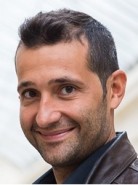
Michele Magno is a Senior Lecturer and Privatdozent at ETH Zürich's Department of Information Technology and Electrical Engineering (D-ITET), leading the D-ITET Center for Project-based Learning (pbl.ee.ethz.ch). He holds a PhD in Electronic Engineering from the University of Bologna (2010) and has held visiting roles at institutions like the University of Nice and Mid Sweden University. His research focuses on low-power systems, wearable devices, energy harvesting, and IoT applications. Magno has authored over 350 peer-reviewed papers, with a Google H-index of 49. Notable awards include the 2024 Best Paper Award at ECCV and multiple best poster/demo recognitions at IEEE conferences. His industrial collaborations include projects with STMicroelectronics, Texas Instruments, and Logitech. Teaching contributions include courses on embedded systems, FPGA programming, and machine learning on microcontrollers. Magno's innovations span smart sensors for wind turbines, bio-medical monitoring, and autonomous racing systems, with patents in touch communication and energy-neutral devices. Recent work emphasizes ultra-low-power solutions for AI-integrated wearables, energy-efficient IoT nodes, and real-time embedded vision systems. His labs and teams pioneer technologies like TinyssimoRadar for in-ear gesture recognition and WakeMod for ultra-low-power IoT connectivity.
Dr. Yulia Sandamirskaya is the Head of the Research Center 'Cognitive Computing in Life Sciences' at Zurich University of Applied Sciences (ZHAW), where she leads a research group focused on neuromorphic cognitive architectures for embedded AI systems. Her work integrates neural dynamics with robotic control , spanning real-time tasks such as sensing, planning, decision-making, learning, and motor control for assistive robots. She collaborates extensively with institutions like ETH Zurich and KTH Royal Institute of Technology, utilizing neuromorphic hardware such as dynamic vision sensors (DVS) and robotic platforms. Her research encompasses neuromorphic architectures for obstacle avoidance, path integration, and sequence learning, as well as theoretical frameworks like Dynamic Neural Fields (DNFs) for cognitive modeling. She explores autonomous learning mechanisms, including unsupervised and reinforcement learning, and applies these to robotics in domains such as spatial language grounding and haptic exploration . Her group has published extensively on topics like event-based vision , resonator networks , and hardware implementations of neural algorithms. Dr. Sandamirskaya has supervised multiple MSc theses on neuromorphic systems and robotic applications, with advisees working on projects like UAV obstacle avoidance, tactile object recognition, and neural-dynamic sequence generation. She actively contributes to workshops and conferences, including Science Robotics , CVPR , and IEEE conferences , and her work addresses challenges in low-power, high-speed robotic agents operating in real-world environments.
Cesare Alippi is a Full Professor at the Faculty of Informatics, Università della Svizzera italiana (USI), and also holds a professorship at Politecnico di Milano, Italy. He serves as a visiting Professor at Guangdong University of Technology (China) and Consultant Professor at Northwestern Polytechnic of Xi'an (China). His academic leadership extends to multiple international institutions where he has served as a visiting researcher including UCL (UK), MIT (USA), ESPCI (France), CASIA (China), A*STAR (Singapore), and University of Kobe (Japan). Professor Alippi's research interests center around graph-based learning, adaptation and learning in non-stationary environments, and intelligence for embedded, cyber-physical systems and IoT. His work bridges theoretical foundations with practical applications in sensor networks, environmental monitoring, and industrial processes. He has established significant research infrastructure including the Wireless Embedded Systems (WEmSy) Lab and the Internet of Things Lab, with notable deployments for marine environment monitoring in Queensland, Australia and the Fiji Islands, as well as rockfall and landslide monitoring systems across Italy and Switzerland. His research output shows a clear evolution toward graph-based deep learning approaches for time series analysis, anomaly detection, and spatiotemporal forecasting, reflecting the growing importance of graph neural networks in handling complex relational data in non-stationary environments. Major Awards: IEEE CIS Enrique Ruspini Meritorious Service Award (2024) IEEE CIS Outstanding Computational Intelligence Magazine Paper Award (2018) Gabor Award from International Neural Network Society (2016) IBM Faculty Award (2013) IEEE Instrumentation and Measurement Society Young Engineer Award (2004) Professor Alippi has held significant leadership roles including Past Board of Governors member of the International Neural Network Society, Past member of the Administrative Committee of the IEEE Computational Intelligence Society, and Past Vice-President for Education of the IEEE Computational Intelligence Society. He has served as Associate Editor for Proceedings of IEEE and several other prestigious journals. His research has been supported through numerous grants including an IBM Faculty Award in 2013 specifically for research on Intelligent Embedded Systems working in non-stationary environments. His research infrastructure includes the Wireless Embedded Systems (WEmSy) Lab and the Internet of Things Lab, with notable deployments including a sophisticated automatic, adaptive, sustainable and reliable wireless monitoring system for marine environments deployed in Queensland, Australia (2007) and under deployment at the Fiji Islands (2014-2015). He has also led several top-world deployments for rockfall and landslide monitoring across Italy and Switzerland since 2010, demonstrating the practical impact of his research in real-world harsh environments.
Prof. Dr. Yulia Sandamirskaya is a faculty member at Zurich University of Applied Sciences (ZHAW) in the School of Life Sciences and Facility Management. She leads the Institute of Computational Life Sciences and is an ORCID-registered researcher with a focus on neuromorphic computing and cognitive systems. Her work bridges computational neuroscience with practical robotics applications. Robotics for dementia care Neuromorphic computing Embodied AI systems Spiking neural networks Industrial force-control systems Human-robot interaction Her recent publications demonstrate expertise in neuromorphic architectures for sensory processing, including visual scene understanding, spectral classification, and real-time control systems. She actively contributes to setting benchmarks in neuromorphic computing and develops practical applications in healthcare robotics. Current projects include RobotCare (service robots for elderly care), Neuromorphic Technology for Embodied AI , and Emerging AI (completed). She collaborates with institutions in Switzerland, UAE, and Italy while working on industrial applications of neuromorphic systems.
Nabil Ouerhani is a Professor in Computer Science at Haute Ecole Arc // HES-SO, leading the 'Interaction Technologies' research group focused on Human-Machine Interaction (HMI), Human-Robot Interaction (HRI), and Industry 4.0 applications. His work integrates IoT, cyber-physical systems, and multi-agent systems to develop innovative industrial solutions. Education: BSc HES-SO in Computer Science - Haute Ecole Arc - Ingénierie Key Research Areas: Collaborative robotics and AI-driven automation Thermal error prediction in machine tools IoT-enabled energy efficiency solutions Virtual/Augmented Reality for industrial safety Recent Projects: BonsAPPs (EU H2020): AI-as-a-Service platform for Deep Edge applications Decolleteur 4.0 (Innosuisse): AI-based Swiss-Type lathe programming system TherMoMac : Hybrid thermal error prediction for machine tools Grants & Funding: BonsAPPs: CHF 5,750,000 (EU H2020) Decolleteur 4.0: CHF 1,217,809 (Innosuisse) ECOMAC25: CHF 439,062 (Innosuisse) Research Collaborations: Industry partners: Tornos SA, NVISO SA, ST Microelectronics Academic partners: University of Bologna, ETH Zurich, SUPSI
Boegli Alexis is an Associate Professor at Haute Ecole Arc - Ingénierie (HES-SO) since 2018, with a PhD in Science from the University of Neuchâtel. Specializing in embedded systems, RF technologies, and energy-efficient electronics, he focuses on applications requiring high constraints such as energy autonomy and compactness. His research spans BLE-based localization, dielectric elastomer actuators, and energy harvesting for biomedical devices. His educational background includes a BSC in Computer Science and Communication Systems from HES-SO and advanced studies in Microengineering at EPFL. He teaches courses like Electrotechnics I and co-supervises doctoral students in interdisciplinary projects. Key research areas include: RF Localization Systems (BLE AoA/AoD) High-Voltage Electronics for Capacitive Actuators Zero-Power Wearable Energy Harvesting Smart Sensor Networks Recent work demonstrates sub-meter accuracy in IoT localization systems using BLE and developed ultra-high-voltage (7kV) converters for dielectric elastomer actuators. His 2025 research explores inverted actuation cycles for facial prosthetics, reducing energy consumption by 1.5%. Patents include a BLE-based access control system combining RF positioning and video analysis (2022) and a real-time regulatory compliance method for wireless transmitters (2013). Collaboration with EPFL and CSEM drives technology transfer in industrial and biomedical applications. His projects often involve Innosuisse, SNSF, and industry partners.
Glück Florent is an Associate Professor at the Geneva School of Landscape, Engineering and Architecture (HES-SO), affiliated with the Technical and IT school's Computer Science and Communication Systems department. He specializes in embedded systems, system virtualization, and interdisciplinary projects at the intersection of engineering and healthcare. Affiliations: HES-SO Geneve, hepia inIT, and collaborations with medical and industrial partners. Education: Not explicitly listed, but implied through roles and projects involving systems engineering and computer science. Research Interests: His work spans embedded systems design, real-time data processing, and applied machine learning. Key focuses include secure hardware-software co-design (e.g., FPGA-based security), medical device development (e.g., neonatal monitoring systems), and IoT infrastructure for smart buildings and recycling. Project Trends: Florent leads projects combining engineering with societal impact, such as automated recycling systems (LusTra), secure medical diagnostics (BrainCheckX), and educational virtualization platforms (Nexus VDI). Recent work emphasizes AI-driven solutions for healthcare (e.g., cochlear implant support) and decentralized energy management. Grants and Funding: Multiple projects funded by HES-SO Rectorat, CTI, and industry partners, totaling over CHF 400,000 since 2014. Labs/Teams: Active in distributed embedded systems research, leading teams on projects like DPESI (distributed storage) and HERVA (random number validation platforms).
Stefano Albini is a Researcher at the Embedded Systems Laboratory (ESL) within the Institute of Electrical Engineering and Microengineering at the School of Engineering, École Polytechnique Fédérale de Lausanne (EPFL). He is also a doctoral student in the Doctoral Program in Electrical Engineering. Email: stefano.albini@epfl.ch Phone: +41 21 693 26 68 Office: ELG 121, EPFL, Station 11, 1015 Lausanne Research Interests His work focuses on embedded systems, integrating computer engineering and electrical engineering principles to design specialized computing systems for mechanical or electrical applications. His research also intersects with microengineering, emphasizing hardware-software co-design and real-time system optimization.
Dr. Rubén Rodríguez Álvarez is a Doctoral Assistant at the Embedded Systems Laboratory (ESL), affiliated with the School of Engineering (STI) at École Polytechnique Fédérale de Lausanne (EPFL). As both a doctoral student and staff member, his work bridges academic research and technical implementation within the Electrical Engineering domain. Current role: Doctoral Assistant (Researcher-equivalent) Affiliation: EPFL, STI, IEM, ESL Research focus: Embedded systems, cyber-physical systems, and machine learning applications His work primarily explores interdisciplinary applications of embedded systems in modern technological challenges, including real-time computing and IoT integration. Contact: ruben.rodriguezalvarez@epfl.ch
Amirhossein Shahbazinia is a Researcher at the Embedded Systems Laboratory (ESL) within the Institute of Electrical Engineering and Microengineering (IEM) at École Polytechnique Fédérale de Lausanne (EPFL). He is also pursuing a Doctoral Program in Electrical Engineering.
Dr. Srikanth Madikeri is a Lecturer and Senior Researcher at the University of Zurich's Department of Computational Linguistics. He holds a Ph.D. in Computer Science from IIT Madras (2013) and a Bachelor of Engineering from Anna University (2008). Before joining UZH, he spent 11 years at Idiap Research Institute as a Postdoctoral Researcher and Research Associate. His research focuses on low-resource speech technologies, including Automatic Speech Recognition (ASR), Speaker Diarization, Language Recognition, and Spoken Dialog Systems. He specializes in adapting models for challenging domains like air traffic control and criminal investigations. Recent publications demonstrate strong trends in multimodal systems, domain adaptation for ASR, and efficient data selection techniques. His work frequently integrates speech processing with NLP tasks and criminal network analysis. Awards: Best Paper Award in Signal Processing Track (NCC 2011) International Create Challenge 2017 Winner He teaches Speech Technology and Machine Learning for Computational Linguistics at UZH. Professional activities include serving as Area Chair for Interspeech (2021-2022) and developing open-source toolkits like pkwrap for LF-MMI training.