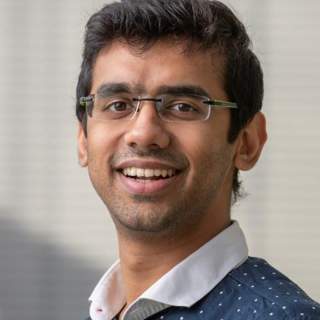
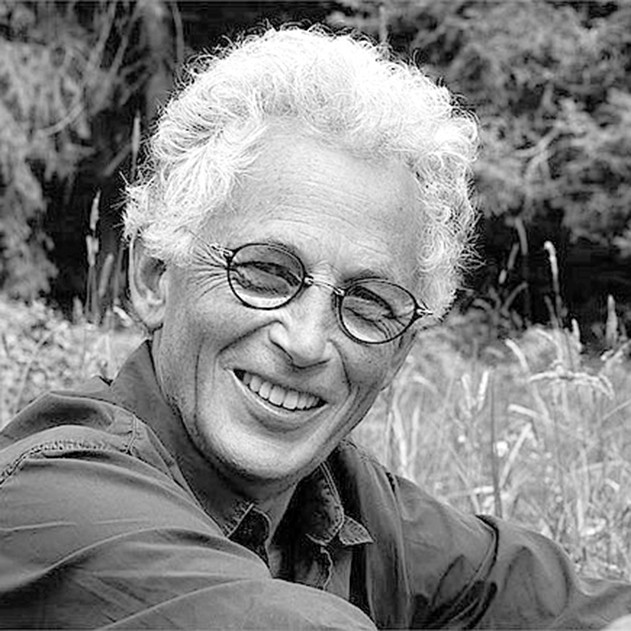
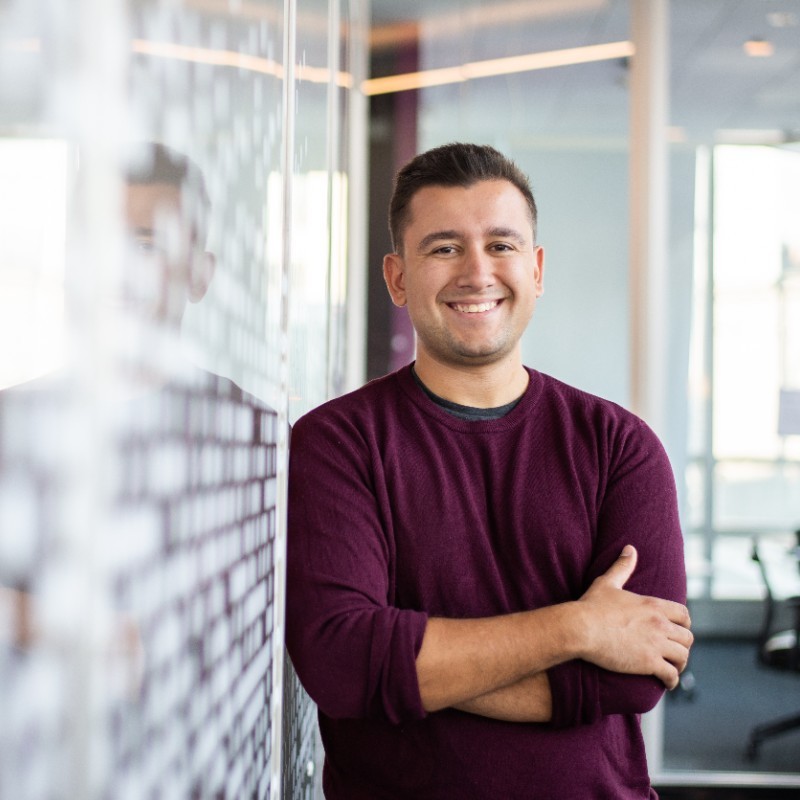
Professor Kwon Oh-jin is affiliated with Sejong University , where he serves in the Department of Electronic Engineering . His academic career spans over three decades, including a PhD in Electrical and Computer Engineering from University of Maryland (1994) and MS in Signal/Image Processing from University of Southern California (1991). His research focuses on image/video analysis , compression algorithms , watermarking systems , and steganography . Recent work explores machine learning-driven compression , 360-degree imaging , and JPEG standards implementation . His 15 most recent articles address topics like cybersecurity using CNNs , dynamic gesture recognition , and novel multimedia platforms for emerging standards. Professor Kwon leads the Visual Communication Research Lab (Chung923), supervising numerous PhD and MS students working on point cloud coding , JPEG privacy , and AI-based image coding . He has received multiple government and industry grants from organizations including the Agency for Defense Development and Ministry of National Defense .
Saleh Hadi Mohammed is an Associate Professor at the Faculty of Computer Science , National Research University Higher School of Economics (HSE), where he has worked since 2015. With over 10 years of academic experience, his expertise spans software engineering, blockchain systems, and intelligent transport technologies. Candidate of Technical Sciences (2013) Engineer in 'Computers, Complexes, Systems and Networks' (2008) Professional training in Moodle-based distance learning Research interests include: Intelligent transport systems and location-based services Software/hardware navigation integration and blockchain applications Cloud services, mobile app development, and MLOps platforms His recent publications analyze MLOps scalability, blockchain donation tracking, and AI-driven navigation for visually impaired users. Notable collaborations involve Springer, IEEE, and CEUR Workshop Proceedings. Scientific awards : Gratitude from HSE Faculty of Computer Science (2024) As a thesis supervisor , he has guided 15+ students in projects ranging from fraud detection to mobile education apps. He also leads SmartMLOps , HSE’s AI service deployment platform (2024), and participated in the Administrative Personnel Reserve Program (2024-2025).
Júlio Manuel Sousa Barreiros Martins is an Associate Professor at the Escola de Engenharia of Universidade do Minho and a Senior Researcher at Centro ALGORITMI. He is affiliated with the IE R&D Group and GEPE R&D Lab , focusing on power electronics, smart grids, and renewable energy systems. His research spans multiple domains, including: Hybrid AC/DC power grid architectures Power quality monitoring systems FPGA-based motor control solutions Electric vehicle charging infrastructure Microfluidic devices for biomedical applications Active power filtering technologies Publications demonstrate expertise in predictive control, sliding mode algorithms, and multilevel converter topologies. No scientific awards are listed in the available data. His work emphasizes experimental validation and practical implementation of energy systems.
Francesc Alías Pujol is a Professor at the Department of Engineering, Ramon Llull University (La Salle Campus Barcelona), where he also serves as Director of Teaching and Research Staff Policies since September 2019 and coordinates the PhD Program in Information Technologies since February 2022. He is a researcher in the Human-Environment Research (HER) group, focusing on speech and acoustic signal processing for natural human-machine interaction. His educational background includes: BSc in Telecommunications Engineering (1997) MSc in Electronics Engineering (1999) PhD in ICT and their application in Management (2006) MBA in Business Administration (2013) University Expert Program in Digital Transformation (2023) Dr. Alías's research primarily focuses on signal processing, with special emphasis on speech and acoustic signal processing to achieve natural interaction between humans, machines, and their environment. His work spans from Text-to-Speech (TTS) synthesis to vocal biomarkers for digital health applications, numerical voice simulation, and environmental acoustics. He has developed expertise in expressive speech analysis and synthesis, sound source identification, and smart city applications through wireless acoustic sensor networks. His publication record shows a consistent trajectory in speech and acoustic processing, with recent work focusing on the impact of global events like the COVID-19 pandemic on urban soundscapes, advanced techniques for glottal source analysis, and the development of algorithms for anomalous noise event detection in smart city applications. His research bridges theoretical signal processing with practical applications in environmental monitoring and human-computer interaction. Dr. Alías has received numerous scientific awards including: 3rd six-year research merit (2018-2023) from AQU Catalunya Most cited paper in Noise Mapping (2021) for his work on COVID-19's impact on urban noise 2nd six-year research merit (2012-2017) from AQU Catalunya Best academic record award for his MBA (2013) Multiple best paper awards from the Spanish Thematic Network on Speech Technology He has led and participated in numerous research projects including DISTRESIA (stress biomarker identification), FEMVoQ (3D voice simulation), SUARAMAP (acoustic monitoring for dementia detection), GENIOVOX (expressive voice generation), and DYNAMAP (dynamic noise mapping). His work has been supported by various funding bodies including the European Commission, Spanish Ministry of Science, and Catalan Government. As coordinator of the PhD Program in Information Technologies and former Director of the Department of Engineering (2014-2021), Dr. Alías plays a significant role in academic leadership at La Salle-URL. His research group focuses on the intersection of speech processing, environmental acoustics, and smart city applications, contributing to both theoretical advancements and practical implementations in these fields.
Vishesh Kumar Dubey is a Researcher at the Department of Physics and Technology within UiT The Arctic University of Norway . He is affiliated with the Ultrasound, Microwaves and Optics research group, focusing on advanced optical imaging techniques. Current position: Researcher in Physics and Technology University: UiT The Arctic University of Norway His research spans quantitative phase microscopy, super-resolution imaging, and machine learning integration in biomedical optics . Recent work emphasizes photonic chips for histopathology, coherence effects in phase imaging, and SERS-based bacterial detection . Publications highlight collaborations with multidisciplinary teams across Europe and Asia. Key trends in his work include label-free imaging, waveguide platforms, and computational optical methods . No scientific awards or student advising details are mentioned in the provided texts.
Carla Schenker is a Postdoctoral Fellow in the Department of Data Science and Knowledge Discovery at Simula Metropolitan, specializing in advanced tensor decomposition methods for multi-modal data analysis. Her research bridges machine learning, optimization, and neuroimaging applications, with a focus on interpretable pattern discovery from complex datasets. Her educational background includes: PhD from Oslo Metropolitan University, Norway (Thesis: A Flexible Framework for Data Fusion Based on Coupled Matrix and Tensor Factorizations for Interpretable Pattern Discovery) Dr. Schenker's research centers on Matrix and Tensor Factorizations , where she develops constrained optimization frameworks for PARAFAC2 and coupled decompositions. Her work enables Data Fusion across dynamic and static sources, with critical applications in neuroimaging biomarker discovery and temporal pattern tracking . She pioneers methods for handling incomplete temporal data while maintaining model interpretability, advancing both theoretical foundations and real-world implementations in multi-way data analysis. Analysis of her 11 publications (2019-2025) reveals a clear evolution: early work established optimization frameworks for regularized tensor factorizations (2019-2021), while recent breakthroughs (2023-2025) focus on temporal dynamics, interpretable evolving patterns, and constrained PARAFAC2 variants. Her research consistently bridges Machine Learning theory with applications in neuroscience and signal processing, demonstrating increasing sophistication in handling heterogeneous, multi-modal datasets. No scientific awards are documented in available sources. Public records indicate no formal student advising or grant leadership, though her collaborative publications involve significant interdisciplinary partnerships with institutions like Oslo Metropolitan University and international research teams. As a core member of Simula Metropolitan's Data Science and Knowledge Discovery department, she contributes to Norway's national research infrastructure for digital engineering, working within teams focused on algorithmic innovation for complex data challenges in healthcare and industrial applications.
Irfan Refai is an Assistant Professor at the University of Twente, leading the HARMONI Lab (Human-Actuated Robotics and Modeling for Occupational and Space Tasks) within the Chair of Neuromuscular Robotics. His research bridges biomechanics, machine learning, and wearable robotics to develop assistive technologies for occupational and space environments. Research Interests: Human-machine interfacing, wearable exosuits, musculoskeletal modeling, sensor fusion, and edge computing for biomechanical applications. Education: Ph.D. in Electrical Engineering (2021), M.Sc. with Research Honors in Electrical Engineering (2017), and B.E. in Biomedical Engineering (2012). Projects: Key contributions to EU-funded SOPHIA and S.W.A.G. projects focused on exoskeleton optimization, fatigue modeling, and industrial applications. Publications: Specializes in EMG-driven models, soft robot design, and minimal-sensor biomechanical systems, with recent work on space-ready exosuits and adaptive assistance algorithms. Leadership: Organizes workshops on digital twins in rehabilitation and industrial exoskeleton challenges; frequently invited to speak at international conferences.
Tobias Hallmen is a Researcher at the University of Augsburg 's Chair of Human-Centered Artificial Intelligence within the Faculty of Applied Computer Science . His work focuses on multimodal conversation analysis using machine learning and artificial intelligence in psychotherapy and medical/educational training contexts. Research interests include: Automated evaluation of conversational quality through multimodal data (audio, video, text) AI-based assessment systems for therapy sessions and parent-teacher interviews Development of real-time feedback mechanisms for skill improvement Integration of behavioral signal processing and empathy modeling Recent publications demonstrate expertise in vocal burst analysis , emotional mimicry prediction , and multimodal foundation models for behavioral annotation. Key technical domains: deep learning architectures , cross-modal data correlation , and computer vision applications . The Chair team under Prof. Dr. Elisabeth André currently includes 23 members with 10 projects active, including TherapAI (psychotherapy analysis) and KodiLL (medical training systems). Tobias Hallmen's work particularly addresses speaker classification , reception signal analysis , and remote physiological measurement techniques like video-based heart rate detection .
Prof. Dr. Martin Supper (born 1947) is an Adjunct Professor teaching Electroacoustic Music and Sonic Arts at the Faculty of Music, Berlin University of the Arts (UdK Berlin), where he also teaches in the postgraduate Sound Studies and Sonic Arts program. Since 2013, he has served as a regular guest professor for Sonic Arts at the Shanghai Conservatory of Music. Supper previously headed the UNI.K Studio for Sonic Arts and Sound Research from 1985 to 2017 and directed the postgraduate Sound Studies program from 2009 to 2015. Education: Training as radio and television technician Studies in Theoretical Computer Science, Linguistics and Systematic Musicology at Technical University of Berlin DAAD scholarship recipient (1980-82) at Instituut voor Sonologie, Rijksuniversiteit Utrecht Post-graduate degree in Computer Science PhD in Musicology under Helga de la Motte-Haber and Dieter Schnebel Supper's research focuses on the history and aesthetics of sound art, electroacoustic music, and computer music. His work explores questions about media-appropriate music and compositional strategies, particularly in the work of Iannis Xenakis. His scholarly approach bridges technical and artistic perspectives, examining how technological developments shape musical expression and perception, with special emphasis on spatial sound and the relationship between mathematical structures and musical form. His publications reveal a consistent focus on spatial sound phenomena, the theoretical foundations of electroacoustic music, and historical analyses of electronic music pioneers. Supper examines how sound interacts with physical space, the relationship between mathematical structures and musical expression, and historical developments in electronic music composition from both technical and aesthetic perspectives. Professional Recognition: DAAD scholarship recipient (1980-82) Contributing Editor of OPEN SPACE Magazine New York (2002-) Member of EARS consortium (ElectroAcoustic Resource Site project, UNESCO funded, 2005) Editorial Board member at Organized Sound, Cambridge University Press (2007-) MGG Advisory Board for Post-1950 US Music (1995-) Supper has extensive experience in academic leadership and organization. He founded and managed the Berlin studio CUE (1984-1989) and established the Studio for Electroacoustic Music & Sound Art at UdK Berlin in 1985. He has organized major international festivals including ICMC2000, SMC2008, and EMS2014. Supper has served on numerous prestigious juries including Ars Electronica Linz, Villa Aurora, and the DAAD Artists-in-Residence Programme. As a reviewer, he has evaluated submissions for major conferences and journals including ICMC, EMS, and Leonardo Music Journal. His artistic practice includes numerous compositions and sound installations, with notable works such as DH2 (1989), which was selected for the 1990 World Music Days in Oslo, and fragment (2003), which premiered in Florence as part of Tempo Reale Firenze. He has collaborated extensively with theater directors, actors, dancers, and filmmakers throughout his career.
Harald Pretl is a Professor at the Department of Integrated Circuits within the Institute for Integrated Circuits and Quantum Computing at Johannes Kepler University Linz (JKU). Holding the title Univ.-Prof., he maintains active research leadership with current projects extending through 2029 and 107 documented research outputs including patents, articles, and conference proceedings. His research spans integrated circuits, quantum computing, mm-wave transmission, biomedical sensing, and open-source EDA tools. He specializes in high-frequency circuit design, ultra-low-power biomedical sensors, and educational applications of open-source design methodologies for analog/mixed-signal IC development. Recent work demonstrates cross-disciplinary innovation bridging engineering, neuroscience, and artistic expression. Recent publications reveal strong emphasis on practical implementation challenges: THz transmitter efficiency, brain-computer interface applications, ADC performance metrics, and open-source layout automation. These works collectively advance wireless communication systems, biomedical instrumentation, and accessible semiconductor design education through open-toolchain development. Prof. Pretl has supervised 3 students and actively promotes open-source EDA adoption through educational initiatives. His funded projects include Sub-blocks generators for NSSAR ADC (2025-2029), Open Parasitic Extraction for KLayout, and United Micro Technology collaborations, demonstrating sustained industry engagement. He co-leads the JKU LIT - SAL Intelligent Wireless Systems Lab (IWS Lab) and contributes to the High-Performance Integrated Quantum Computing project. Current activities include 42 documented presentations such as 'Using Open-Source EDA Tools in Hands-On IC Design Education' (2025) and 'Recent Developments in Ultra-Low-Power Biomedical Sensing' (2025), reflecting his dual focus on research innovation and pedagogical advancement.
Clifton Paul Robinson serves as Assistant Professor of Computing and Data Science at Wentworth Institute of Technology while maintaining his research affiliation as Research Associate at Northeastern University's Institute for the Wireless Internet of Things under Professor Tommaso Melodia. He completed his Ph.D. in Cybersecurity at Northeastern in December 2024, building upon his M.S. in Cybersecurity (2020) and B.S. in Computer Science and Mathematics magna cum laude from Bridgewater State University (2018). His educational credentials include: Ph.D. in Cybersecurity, Northeastern University (2024) M.S. in Cybersecurity, Northeastern University (2020) B.S. in Computer Science and Mathematics, Bridgewater State University (2018) Dr. Robinson's research program focuses on the critical intersection of wireless security and artificial intelligence. His pioneering work on DeepSweep enables parallel and scalable spectrum sensing through convolutional neural networks with 98% accuracy while maintaining sub-millisecond inference times. He has made significant contributions to wireless security through his eSWORD framework for emulating jamming attacks and his award-winning TwiNet system that establishes bidirectional links between physical networks and their digital twins. His research addresses fundamental challenges in spectrum management, adversarial signal detection, and secure wireless communications infrastructure. His publication trajectory shows increasing sophistication in digital twin applications for wireless networks, with recent work demonstrating how bidirectional communication between physical and virtual networks can transform spectrum utilization and security monitoring. This research direction has important implications for 5G/6G networks, military communications, and critical infrastructure protection. His scientific recognition includes: Best Paper Award at IEEE GLOBECOM 2024 for TwiNet paper IEEE WCNC Student Travel Grant KCCIS Graduate Fellowship As an educator, Dr. Robinson has served as Instructor of Record for CY 2550 - Foundations of Cybersecurity at Khoury College, developing curriculum that integrates real-world case studies with theoretical concepts. His teaching extends to guest lectures on OSI model layers and cybersecurity ethics. His research has received support through the Global Resilience Institute's Critical Infrastructure Network project funded by the U.S. Department of Energy, and he completed a Signal Analysis Internship at The MITRE Corporation focusing on RF fingerprinting. Dr. Robinson works within Northeastern's Wireless Networks and Embedded Systems (WiNES) Laboratory, collaborating with a multidisciplinary team on cutting-edge wireless security projects. His work with METEOR and Colosseum represents significant advancement in large-scale wireless network emulation capabilities, bridging the gap between theoretical research and real-world implementation.
Kim-Phuc TRAN is an Associate Professor and Research Supervisor at Ecole Nationale Supérieure des Arts et Industries Textiles (ENSAIT), affiliated with the GEMTEX Research Laboratory. He serves as Section CNU 61 and holds leadership roles including Founder member of CybCom (2021-), Member of the Executive Committee of GEMTEX (2020-), and Coordinator of the Cybersecurity axis for GRAISyHM (2020-). His international engagement includes heading the International Chair in Data Science and Explainable Artificial Intelligence at Dong A University & International Research Institute for Artificial Intelligence and Data Science (IAD), Vietnam since 2018. Dr. TRAN's research spans multiple dimensions of Artificial Intelligence with a strong focus on Explainable, Trustworthy, and Transparent AI . His work encompasses Self-Supervised Learning, Anomaly Detection, Federated Learning, and Multimodal Deep Learning. He also investigates Ethical and Human-centered AI through Embedded AI, Wearable AI Devices, and Human-Centered Design to Address Biases. His research extends to Safety and Reliability of AI systems, including Adversarial Machine Learning and Cybersecurity for AI Systems. In Statistical Computing, he focuses on Statistical Process Monitoring and Advanced Control Charts, while his work on Intelligent Decision Support Systems addresses Clinical Decision Support, Supply Chain Optimization, and Predictive Maintenance. His research on Digital Twins spans Healthcare and Smart Manufacturing applications. His publication portfolio shows a strong emphasis on practical AI applications across industries, with particular focus on anomaly detection techniques (appearing in over 40% of his recent publications), industrial applications of AI (35%), and statistical process control methods (25%). His work demonstrates consistent growth in complexity from foundational machine learning approaches to sophisticated multimodal and federated learning systems integrated with domain-specific knowledge. Award for Scientific Excellence (Prime d'Encadrement Doctoral et de Recherche) 2021-2025 from the Ministry of Higher Education, Research and Innovation, France Dr. TRAN has secured substantial research funding as Principal Investigator, including the XAIDS_IChair (500K EUR, 2018-2028), SHSFL (211K EUR, 2020-2024), and EIoTIA (4500 EUR, 2022-2023). He serves as Associate Editor for IEEE Transactions on Intelligent Transportation Systems and Engineering Applications of Artificial Intelligence, demonstrating recognition of his expertise. His leadership extends to coordinating the International semester at ENSAIT and co-creating the International Research Institute for Artificial Intelligence and Data Science. He leads the Human Centered Design Group research team and is actively involved with the GEMTEX research laboratory and Tex-CARE chair. His work bridges academia and industry through multiple collaborative projects with partners like Rosenberger Group, Clear Fashion, and MatchMarket. His current research directions focus on integrating AI with wearable technology, advancing federated learning approaches, and developing trustworthy AI systems for critical applications in healthcare and manufacturing.
Konstantinos A. Tsintotas is an Assistant Professor at the Department of Information and Electronic Engineering, International Hellenic University. His research focuses on artificial intelligence, robotics, computer vision, and their applications in smart cities, healthcare, and manufacturing. He is actively involved in advancing AI-driven systems for critical infrastructure management, robotic vision, and embedded device technologies. His work spans theoretical advancements and practical implementations, including projects like SLAM algorithms for autonomous navigation, deep learning models for medical diagnosis, and IoT-integrated smart supply chains. Tsintotas also explores ethical implications of AI in human action recognition and contributes to neuromorphic computing through spiking neural networks. Key technical contributions include ReJSHand (real-time hand pose estimation), fall detection systems for embedded devices, and visual place recognition frameworks. His interdisciplinary approach bridges computer science, electrical engineering, and biomedical applications, reflecting a strong commitment to innovation at the hardware-software interface. Notable trends in his publications emphasize AI ethics, multimodal perception for robotics, and low-power embedded solutions. Ongoing work includes advancing digital twin technologies for supply chains and refining bio-inspired neural architectures for robotics applications.
Orlando Hernandez is an Associate Professor in the Department of Electrical and Computer Engineering at The College of New Jersey. He holds a Ph.D. in Electrical Engineering from Southern Methodist University (2002), an M.S.E.E. (1993) and B.S.E.E. (1991) from the University of South Florida. Prior to his academic career, he held industry positions at Texas Instruments and Maxim Integrated Products from 1993-2003, serving in design management roles for imaging systems, ASIC development, and microcontroller technologies. His research focuses on high-performance VLSI architectures for computer vision applications, including color image segmentation, digital signal processing, embedded systems, and mixed-signal design. Key research areas include hardware acceleration for image compression algorithms, real-time traffic monitoring systems, autonomous robotics, and advanced encryption implementations. His work consistently bridges theoretical algorithms with practical hardware implementations. Professional affiliations include Senior Membership in the Institute of Electrical and Electronics Engineers (IEEE). He has secured multiple research grants including a $93,320 National Science Foundation award for image processing instrumentation and several industry-sponsored equipment grants from Texas Instruments and Xilinx.
Dr. Vikram Pakrashi is an Associate Professor in Mechanical Engineering and Director of the Dynamical Systems and Risk Laboratory (DSRL) at University College Dublin. He specializes in structural dynamics, structural health monitoring (SHM), vibration control, and renewable energy systems. His work bridges industry and academia, focusing on infrastructure resilience and emerging technologies. Education: BEng (1st Class Hons) from Jadavpur University; PhD from Trinity College Dublin. Research interests include dynamical systems, risk analysis, and smart structures. He leads interdisciplinary projects funded by industry and agencies like SEAI and the EU. Recent research trends emphasize renewable energy infrastructure (e.g., offshore wind, wave energy devices) and innovative SHM techniques using machine learning and sensor networks. His articles highlight advancements in wave measurement, defect detection algorithms, and structural fragility analysis. Awards: Engineering Laboratory of the Year 2018 (Irish Laboratory Awards). Grants: Includes projects like SISdATA (Atlantic aquaculture systems) and FlOWDyn (dynamic cable analysis for floating offshore wind). Lab Leadership: Directs DSRL, fostering industry collaboration and applied research.