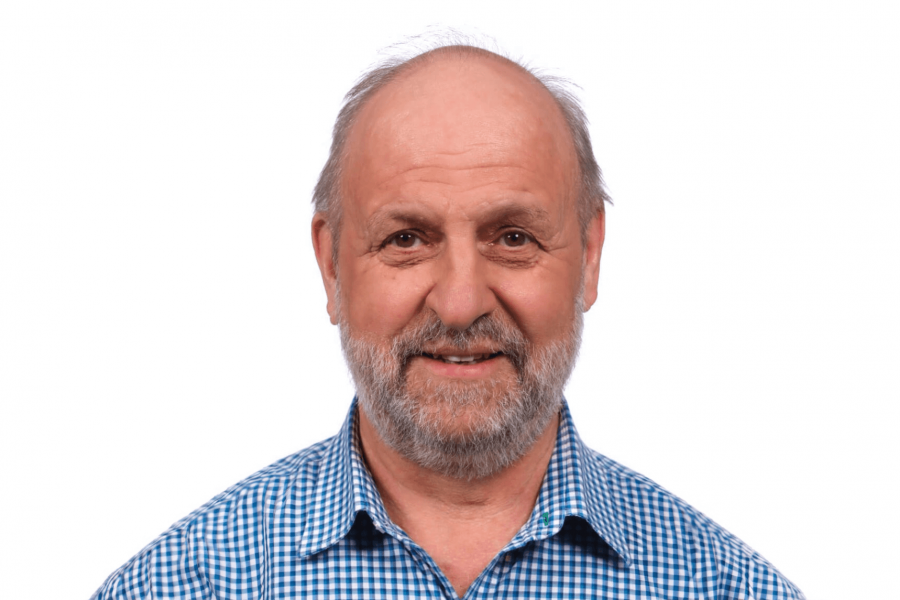
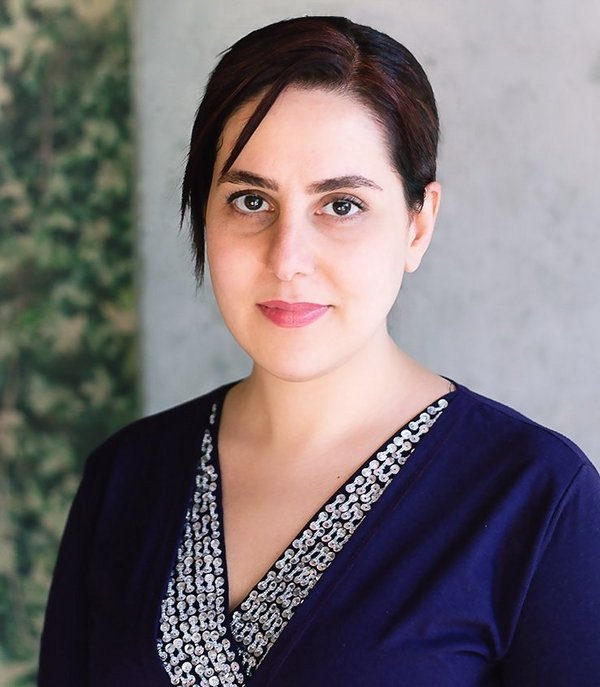
Ali Hassan is a researcher affiliated with the National University of Sciences and Technology (NUST), School of Electrical Engineering and Computer Science, Department of Computer and Software Engineering. His work spans multiple domains in computer science, engineering, and applied mathematics, focusing on areas such as machine learning, IoT, energy systems, and medical informatics. His research explores: Reinforcement learning applications for battlefield information systems IoT antenna design and performance evaluation Optimization of second-life battery systems in electric vehicles Transformers for real-time vehicle collision avoidance Image hashing techniques using visual attention models Neural network-based phasor estimation for power grids Biomedical sensor systems for non-invasive health monitoring Mathematical modeling of viral dynamics Recent publications demonstrate his emphasis on interdisciplinary approaches combining AI, signal processing, and sustainability. He has collaborated with institutions across Pakistan, France, Saudi Arabia, and the USA, with a focus on practical implementations in cybersecurity, energy optimization, and healthcare technology.
Katherine J. Kuchenbecker is the Director of the Haptic Intelligence Department at the Max Planck Institute for Intelligent Systems in Stuttgart, Germany, and an Honorary Professor at the University of Stuttgart. She previously held a tenured position as an Associate Professor at the University of Pennsylvania. Her research focuses on haptic interfaces and sensing systems, enabling users to interact with virtual and distant objects through touch. She earned her Ph.D. in Mechanical Engineering from Stanford University and completed postdoctoral research at Johns Hopkins University. Her academic journey includes leadership roles such as co-chair of the IEEE Technical Committee on Haptics and associate editorships for major conferences. She has received numerous awards, including the NSF CAREER Award (2009), IEEE Academic Early Career Award (2012), and elevation to IEEE Fellow (2021). Her work spans applications in medical robotics, teleoperation, and human-robot interaction. Kuchenbecker’s research emphasizes translating haptic technology into real-world applications, such as surgical training, tactile feedback in virtual environments, and assistive devices. Her team’s contributions include innovations in wearable haptic devices and tactile sensing for robots. She frequently delivers keynote addresses and chairs international conferences, furthering the field’s global impact. Her publications highlight advancements in haptic feedback systems, surgical robotics, and biomimetic sensors. She also advocates for diversity and leadership in academia, serving as Spokesperson for the International Max Planck Research School for Intelligent Systems since 2017.
Ganesh Neelakanta Iyer is a Lecturer in the Department of Computer Science at the School of Computing, National University of Singapore (NUS). He holds a PhD (2012) and MSc (2008) from NUS and a B.Tech. in Computer Science and Engineering from Mahatma Gandhi University, India (2004), where he ranked first. He brings over a decade of industry experience from companies like Salesforce, NXP, and Progress Software, and prior academic roles at Amrita Vishwa Vidyapeetham and IIIT-Hyderabad. His research interests span Software Engineering , Cloud/Edge Computing , Machine Learning , AI for Cultural Heritage , and Software Engineering Education . He founded the STeAdS (Software Engineering and Technological Advancements for Society) research group in 2021, focusing on technology applications in healthcare, education, and traditional arts like Kathakali and Wayang Kulit. The recent publications highlight a strong trend in AI-driven educational technologies , including LLMs for curriculum customization, web-based DevOps learning platforms, and agile project management tools. Another major theme is AI in cultural preservation , with works on Kathakali gesture and facial expression recognition. A third stream involves distributed systems and networking , particularly in edge computing and federated learning. Faculty Teaching Excellence Award 2024, NUS AWS Educate Cloud Faculty Ambassador (2019, 2020) Certified Kubernetes Administrator (CKA) University Topper (First Rank, 2004) NUS Postgraduate Research Scholarship (2009–2012) Dr. Iyer mentors students through UROP, FYP, Master’s, and PhD projects, and has led numerous grants and initiatives in cloud computing education and AI for societal benefit. He has delivered workshops and keynote speeches across the USA, Europe, Australia, and Asia. He actively leads the STeAdS virtual research group, fostering global collaborations. As a maestro in Kathakali, he integrates traditional art with technology, composing and staging performances while applying AI to preserve and analyze this heritage.
Kjell Gunnar Robbersmyr is a Professor at the University of Agder's Department of Engineering Sciences and director of the Top Research Center in Mechatronics. With a Ph.D. in mechanical engineering from NTNU (1992), his career spans academic leadership, research management at Agder Research, and active contributions to IEEE. His work focuses on mechatronics, machine design, and condition monitoring, with special emphasis on fault diagnosis in electric motors and vehicle crash modeling. Senior Member of IEEE Member of Norwegian Academy of Technical Sciences Member of Agder Academy of Sciences Research interests include: Advanced fault diagnosis in electric drives using AI and signal processing Vehicle crashworthiness modeling with lumped parameter and finite element methods Optical measurement technology for machine monitoring Digital twin applications for infrastructure and wind energy systems Condition monitoring of low-speed bearings and rotating machinery Recent publications demonstrate expertise in: Deep learning for imbalanced motor fault datasets Transformer networks in power electronics diagnostics 3D reconstruction techniques for mechanical systems Multi-classifier decision fusion in power systems Dynamic operations modeling for electric vehicles Scientific contributions include: Over 50 peer-reviewed articles Leadership in the Intelligent Monitoring research group Development of novel inverter topologies Innovations in wind turbine condition monitoring Advancements in laser-based mechanical diagnostics
Dr. Xiaolin Wu is a Professor in the Department of Electrical & Computer Engineering at McMaster University's Faculty of Engineering. With expertise in image processing, multimedia coding, computer vision, and artificial intelligence, he has made groundbreaking contributions to visual/multimedia computing and communication. His research has resulted in over 350 publications and four patents, including the renowned CALIC algorithm for lossless image coding and L3 codec for digital cinema. B.Sc. from Wuhan University (1982) Ph.D. from University of Calgary (1988) Dr. Wu's research spans critical areas such as image restoration (demosaicing, denoising, superresolution), multimedia coding (JPEG, wavelet transforms), and information display (Temporal Psychovisual Modulation). His work on TPVM, featured in MIT Technology Review, redefines display technology by leveraging human vision properties for multi-user VR/AR experiences. Recent publications focus on deep learning applications for image/video restoration, including multi-modality approaches and l∞-constrained compression. His algorithms, such as fast color quantizers and compressive sensing recovery methods, have been widely adopted in industries like medical imaging and digital cinema. Dr. Wu also holds an NSERC Senior Industrial Research Chair and has collaborated with global tech leaders including Microsoft, Nokia, and Huawei. IS&T/SPIE Best Paper Award UWO Distinguished Research Professor Award McMaster Distinguished Engineering Professor Award IEEE Fellow As an educator, Dr. Wu teaches courses in image processing, discrete methods, numerical analysis, and parallel computing, emphasizing algorithm design, data structures, and real-time systems. His work bridges academic research with industrial applications, ensuring practical impact across biomedical imaging, digital security, and smart display technologies.
Dr. Jaafar Alghazo is an Associate Professor in the Math, Science and Technology Department at the University of Minnesota. He currently teaches courses in Information Technology Management and Software Engineering, including ITM 3900-E90: Internship, SE 2200-001: Intro to Software Engineering, and SE 4500-001: Senior Project I. Research Focus: Machine Learning, Deep Learning, Medical Image Analysis, Cybersecurity, IoT, UAV Communications Key Publication Trends: 15 most recent works span 2025–2023, emphasizing neural network optimization, Arabic sign language recognition, flood detection, and secure medical imaging techniques
Magdy Bayoumi serves as Professor and Department Head of the Electrical & Computer Engineering Department at the University of Louisiana at Lafayette, holding faculty status within the institution's engineering division. His research expertise centers on core domains of Electrical Engineering and Computer Engineering: Circuit design and optimization Embedded systems development Computer architecture and hardware systems Digital signal processing Microelectronics and VLSI design Real-time computing systems While specific publication trends cannot be analyzed due to unavailable article data, his technical focus aligns with modern hardware engineering challenges. No scientific awards or student advisement details are documented in the source material. Laboratory facilities and research teams remain unspecified in the provided information.
Andrew Lammas is a Lecturer in Electrical and Electronic Engineering at Flinders University, within the College of Science and Engineering and affiliated with the Centre for Defence Engineering Research and Training. He holds a PhD and Bachelor of Engineering from Flinders University and has been actively contributing to research and teaching since 2023. His work spans robotics, control systems, machine learning, and renewable energy systems. Education: Bachelor of Engineering (Computer Systems), Flinders University, 2004 Doctor of Philosophy (Engineering), Flinders University, 2012 His research interests include robot localisation, control, state estimation, sensor fusion, battery management, and renewable energy systems. He has developed expertise in Bayesian filtering, Kalman and particle filters, digital twins, and hydrodynamic modeling. His teaching responsibilities include coordination and lecturing in Electronic Circuits and Estimation & Machine Learning. The most recent research articles highlight a strong focus on autonomous underwater vehicles, digital twins for defence applications, sim-to-real transfer in control systems, and condition-based maintenance using hybrid neural-physical models. These works reflect a consistent trajectory in intelligent robotic systems, adaptive control, and real-world deployment of AI in engineering contexts. Scientific Awards: No awards explicitly mentioned. Andrew Lammas supervises Honours, Master’s, and PhD students, with registered interests in robot planning, battery management, sensor processing, and control of robotic platforms. He has led industry and defence-affiliated research projects, including multiple technical reports for the Department of Defence. He is also involved in community outreach, such as regional roadshows and Science Alive events, promoting engineering and robotics. He is actively involved in the RobotX Maritime Robotics Competition and contributes to curriculum development in electrical and electronic engineering. His research aligns with UN Sustainable Development Goals in renewable energy and sustainable infrastructure.
Urbano J. Nunes is a Full Professor at Coimbra University and Senior Researcher at the Institute for Systems and Robotics (ISR-UC) , where he coordinates the Human-Centered Mobile Robotics Lab . His career spans national and international funded projects in mobile robotics , intelligent vehicles , and human-machine interfaces , with over 160 publications in journals and conferences. He has supervised 13 completed PhD students and currently guides 4 more. Key Roles : IROS Advisory Committee (2013-), IEEE ITS Society Vice President (2011-2012), IEEE RAS Technical Committee Cochair (2006-2011) Editorial Leadership : Associate Editor for IEEE Transactions on Intelligent Vehicles (2015-), former Associate Editor for IEEE Transactions on Intelligent Transportation Systems (2007-2016) Research Interests focus on human-centered mobile robotics , including mobile service robotics , assistive robotics , autonomous vehicle navigation , pattern recognition , and machine learning . His recent work involves 3D LiDAR processing, multispectral imaging in agriculture, and brain-computer interface (BCI) reliability improvements. Scientific Awards : IEEE ITS Society Outstanding Service Award (2006) IEEE RAS Most Active Technical Committee Award (2006) NiSIS Competition Winner for Automotive Dataset Analysis (2007) Grant Leadership includes 33 funded projects from 2001 to 2025 across domains like digital agriculture (GreenBotics), green automotive innovation (GreenAuto), and telerehabilitation platforms (INPACT), with international collaborations spanning EU programs and Portugal’s FCT grants. Labs & Teams : Coordinates the Human-Centered Mobile Robotics Lab at ISR-UC, integrating cross-disciplinary teams in robotics, AI, and BCI research. His group partners with institutions like CERN and European Commission JRC in cybernetic transportation systems.
Rafik Goubran is a Professor in the Department of Systems and Computer Engineering at the Faculty of Engineering and Design, Carleton University. He holds the distinguished title of Chancellor’s Professor and currently serves as the Vice-President (Research and International). He earned his Ph.D. from Carleton University and is a licensed Professional Engineer (P.Eng.). His research expertise spans digital signal processing, biomedical engineering, audio processing, and the development of smart environments for senior independent living, with applications in patient monitoring, sensor systems, and real-time analytics. Dr. Goubran's recent publications highlight a strong focus on applying machine learning and sensor technologies to healthcare challenges, particularly in gerontechnology. His work involves non-invasive monitoring of sleep apnea, cognitive decline, driving behavior in older adults, and ambient health monitoring using smart homes and IoT systems. He explores innovative methods such as using pressure mats, audio analysis, and video magnification for vital sign detection and behavioral assessment. Life Fellow, IEEE Fellow, Canadian Academy of Engineering (CAE) Chancellor’s Professor, Carleton University Dr. Goubran has co-supervised 24 Ph.D. and 72 Master’s students and has secured significant research funding from NSERC, CIHR, NCE, and OCE for projects related to aging, health monitoring, and smart technologies. He is the co-leader of the TAFETA project and was the founding Director of the Ottawa-Carleton Institute for Biomedical Engineering. His work involves extensive collaboration with institutions like the Bruyère Research Institute and industry partners such as QNX and BlackBerry. He leads a research lab focused on technology-assisted environments, developing systems for patient monitoring, fall detection, and cognitive assessment, contributing significantly to the field of assistive and ambient intelligence for healthcare.
Tony Szturm is a Professor and Senior Scholar in the Department of Physical Therapy at the College of Rehabilitation Sciences, University of Manitoba. His work bridges clinical rehabilitation and engineering innovation, focusing on technology-assisted and game-based therapeutic interventions delivered through telerehabilitation platforms. Institution: University of Manitoba School: College of Rehabilitation Sciences Department: Department of Physical Therapy Location: Bannatyne Campus, Winnipeg, MB Dr. Szturm holds a BSc in Biology and a BSc in Physical Therapy from the University of Western Ontario, and a PhD in Neurophysiology from the University of Manitoba. His research is deeply interdisciplinary, integrating wireless sensors, digital media, and interactive systems to support rehabilitation in both clinical and home environments. His primary research interests include technology-assisted rehabilitation , telerehabilitation , game-based motor training , and neurological recovery across diverse populations such as stroke survivors, children with neurodevelopmental disabilities, individuals with traumatic brain injuries, Parkinson’s patients, and aging adults. A key focus is enhancing accessibility, accountability, and engagement in therapy through innovative, low-cost digital tools. The 15 most recent inferred articles reflect a strong trend toward digital health innovation , remote monitoring , and interdisciplinary rehabilitation engineering . These works span areas such as upper limb recovery, balance and gait training, dual-task performance, vestibular rehabilitation, and patient engagement. The integration of wearable sensors, real-time feedback, and gamification principles is a consistent theme, demonstrating his commitment to translating research into practical, scalable solutions. Dr. Szturm is actively involved in mentoring, supervising postdoctoral fellows, PhD, and master's students through the Mentoring of Highly Qualified Personnel (HQP) Program, fostering collaboration between rehabilitation sciences and engineering disciplines. While no formal scientific awards are listed, his leadership in high-impact, publicly featured research projects underscores his contribution to the field. His lab and research group focus on developing and evaluating plug-and-play rehabilitation technologies that can be deployed in resource-limited settings, including international applications such as projects in India. These initiatives emphasize affordability, usability, and clinical effectiveness, aiming to expand access to high-quality rehabilitation globally.
Mariana Catela Jacob Rodrigues is an Assistant Professor in the Department of Applied Digital Technologies at Iscte – University Institute of Lisbon and an Associate Researcher at the Institute of Telecommunications – IUL, where she works within the Instrumentation and Measurements Group. She holds a PhD in Information Technologies and Systems from Iscte, completed in 2024, following a Master’s and Bachelor’s degree in Telecommunications and Computer Engineering from the same institution. Her research interests span a multidisciplinary range of topics, including: Internet of Things (IoT) Assisted Living Environments Smart Sensors and Wearable Devices Cardiorespiratory and Physiological Monitoring Environmental and Air Quality Monitoring Artificial Intelligence in Healthcare Mobile Application Development Virtual Reality in Rehabilitation The analysis of her recent publications reveals a strong focus on the integration of sensor technologies and AI for health and environmental applications. Her work frequently involves the development and evaluation of unobtrusive monitoring systems in ambient assisted living contexts, with specific attention to indoor localization, fall detection, and the impact of environmental stimuli—such as lighting and music—on autonomic nervous system responses. Much of her research is published in IEEE conferences and journals related to instrumentation, sensors, and medical measurements. Her scientific achievements include: Best Student Paper Award at the IEEE International Symposium on Medical Measurements and Applications (2022) ISTA Top Talent 2018-2019 (awarded in 2020) Best Student Paper Award at the 2nd International Symposium on Sensing and Instrumentation in IoT Era (2019) Mariana Rodrigues is actively involved in academic service and outreach. She has served on the organizing committees of multiple scientific events, including the International Symposium on Sensing and Instrumentation in IoT Era and several summer schools on Smart Systems for Ambient Assisted Living. She currently holds leadership positions in IEEE, serving as Chair of the IEEE Women in Engineering (WIE) Affinity Group and the IEEE Instrumentation and Measurement Society Chapter at Iscte. She has also contributed to science communication through events like the ISCTE Summer School on “Healthy and Sustainable Environment.”
Massoud Zolgharni is a Professor of Computer Vision at the School of Computing and Engineering, University of West London. He joined UWL as a Senior Lecturer in 2018 and was promoted to Associate Professor in 2020. Previously, he held academic positions at the University of Lincoln and was a Research Associate at Imperial College London. He is a Fellow of the Higher Education Academy and leads the MSc Artificial Intelligence and PhD programs at UWL. BSc in Mechanical Engineering, Amirkabir University of Technology Master’s and PhD, Brunel and Swansea Universities, UK His research focuses on computer vision and medical imaging , particularly in automated cardiac imaging using AI and deep learning . His work aims to develop low-cost, non-invasive techniques for echocardiography and cardiovascular diagnostics. He has published extensively in journals such as Computers in Biology and Medicine , IEEE Transactions , and European Heart Journal . Recent publications (2023–2025) highlight his leadership in AI-driven echocardiography, including left ventricle segmentation, Doppler analysis, and multimodal seizure detection. His research integrates deep learning, signal processing, and real-world clinical validation, establishing a strong interdisciplinary profile bridging computing and medicine. Scientific Awards : Fellow of the Higher Education Academy He has secured major grants from the British Heart Foundation , including a £1.5M Programme Grant (2022–2027) on AI integration in echocardiography. He serves on university research committees, acts as Critical Reader for the School, and organizes the monthly research seminar. He teaches across a wide range of computing and AI programs, contributing to curriculum development and research supervision.
Luciano Bononi is a Full Professor and Deputy Head of the Department of Computer Science and Engineering at the University of Bologna. He holds a PhD in Computer Science (2002) and has been active in academia since 2001, progressing through roles like Researcher, Senior Researcher, Associate Professor (2011), and Full Professor (2020). His research focuses on Wireless Systems, IoT, Digital Twins, Smart Cities, and Mobile Applications , with over 160 peer-reviewed publications and major contributions to EU projects like Arrowhead and IoE. Education: MS (Laurea) in Computer Science, University of Bologna (1997, Summa cum Laude) PhD in Computer Science, University of Bologna (2002) Research Interests: Bononi's work spans Wireless Protocols, IoT Platforms, Digital Twin Integration with AI, Smart Mobility/ Energy Systems, and Edge Computing . He leads the WiLMA Lab and the ALMA-AI CoInnovation Lab , focusing on real-world IoT deployments and smart city solutions. Key Contributions: Coordinated EU projects like Arrowhead (2013-2017) and national initiatives like PNRR-Mobility-Spoke 7 Recipient of 4 Best Paper Awards and top rankings in global scientist databases Editorial roles at 7 journals including Wiley's Wireless Communications and Elsevier's Ad Hoc Networks Organized over 15 international conferences as Chair and participated in 200+ TPC roles Labs & Teams: Directs the WiLMA Lab (Wireless Systems and Mobile Apps) and the ALMA-AI CoInnovation Lab , emphasizing interdisciplinary collaboration between academia and industry.
Zahra Ebrahimi Mamaghani is an academic researcher affiliated with the Embedded Systems team at the Faculty of Electrical Engineering and Information Technology, Ruhr University Bochum. Her work focuses on approximate computing, reconfigurable accelerators, and energy-efficient embedded systems. She completed her B.Sc. and M.Sc. at Sharif University of Technology (Iran) and is a PhD student at TU Dresden. She managed the X-DNet (BMBF-funded, collaborating with Huawei) and GREEN-DNN (acatech/BMDV-funded) projects, emphasizing distributed and in-network computing for 5G/6G applications. Education: B.Sc. and M.Sc. in Electrical Engineering, Sharif University of Technology, Iran PhD Candidate at TU Dresden (Cfaed Institute, 2018–2024) Research Projects: ReAp (DFG, 2018–2021) Relearning (ESF, 2021–2023) X-ReAp (DFG, 2023–2025) X-DNet (BMBF, with Huawei) GREEN-DNN (acatech/BMDV) Research Interests: Approximate computing, energy-efficient edge-to-cloud systems, SW/HW co-design, and reconfigurable architectures for 5G/6G. Her recent publications emphasize cross-layer approximation techniques, energy-efficient CGRAs, and distributed computing frameworks for multi-kernel applications. She advises students on topics like approximation of ML models for high-throughput systems, requiring expertise in FPGA programming (Verilog/VHDL), Python, and ML frameworks like TensorFlow/PyTorch. Her lab focuses on embedded systems and collaborates with industry partners like Huawei. She holds a notable position in managing interdisciplinary projects bridging academia and industry, particularly in sustainable computing for next-generation networks.