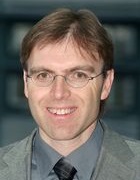
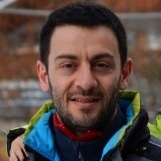
Ed Solovey is an Associate Professor of the Practice in the Department of Electrical and Computer Engineering at Boston University. His primary appointment includes affiliations with both primary and affiliated faculty roles. He holds an M.Eng from the Massachusetts Institute of Technology. His research focuses on Software Engineering, Distributed Systems, Databases, and Scalability. Notable work includes advancements in event tracking methodologies and formal simulation techniques for composite systems. He teaches core courses such as EC 327: Introduction to Software Engineering and EC 400: Software Engineering in Practice. His publications explore practical and theoretical aspects of software systems and automation models.
Prof. Georg Carle is a full Professor in Network Architectures and Network Services at the Technical University of Munich (TUM), affiliated with the TUM School of Computation, Information and Technology. He leads research in Internet technology, focusing on future network architectures, security, and real-time communication. Prior roles include positions at the University of Tübingen and Fraunhofer Institute for Open Communication Systems (FOKUS). Education: Electrical Engineering diploma from University of Stuttgart (1992), Master of Science in Digital Systems (Brunel University, London), and PhD in Telematics from University of Karlsruhe (1996). He held scholarships in complex systems and European Union-funded research at Institut Eurécom. Research Interests: Prof. Carle's work spans network security, sensor networks, autonomous systems, and future Internet protocols. His group develops tools like MoonGen (packet generator) and pos (experiment workflow system). Recent focus includes QUIC protocol analysis, network slicing, and reproducible experimentation frameworks. Key Contributions: Award-winning research includes Applied Networking Research Prizes (2017-2018), Best Paper Awards in IMC/PAM, and innovations in network measurement, security, and programmable data planes. His lab explores cutting-edge topics like post-quantum cryptography, low-latency networking, and 6G automation. Recognition: Honors include ACM SIGCOMM Community Contribution Award, IRTF ANRP, and multiple conference best paper accolades. He advises on network infrastructure for industrial IoT, automotive systems, and secure multiparty computation.
Djamal Zeghlache is a Professor at Telecom SudParis (now part of Institut Polytechnique de Paris), where he leads research in network virtualization, cloud computing, and software-defined networking. His work spans multiple domains including wireless communications, network security, and AI applications in networking systems. Affiliated with the SAMOVAR laboratory (Services and Architectures for Multimedia and Ubiquitous Access to Resources), he has established himself as a prominent researcher in network and service management. Professor Zeghlache's research interests focus on the intersection of networking and artificial intelligence, with particular emphasis on network virtualization, cloud computing, and software-defined networking. His work addresses critical challenges in network function virtualization, resource allocation, and optimization in distributed systems. In recent years, he has expanded his research to include AI-driven approaches for network management, healthcare monitoring using wireless technologies, and optical network control. His publications demonstrate a consistent trajectory from traditional networking challenges to more complex, AI-integrated solutions for modern network infrastructures. Analysis of his recent publications (2023-2025) reveals a strong trend toward integrating machine learning, particularly deep reinforcement learning and graph neural networks, into network management systems. His work spans multiple application areas including healthcare monitoring (using RF-based techniques for vital sign detection), transportation systems (bike-sharing optimization), and optical networking (disaggregated control frameworks). The interdisciplinary nature of his research connects computer networking with biomedical engineering, urban mobility, and formal methods for system verification. Professor Zeghlache has supervised numerous PhD students and collaborated extensively with researchers across Europe and internationally. His work has resulted in significant contributions to network virtualization, cloud resource management, and network security. He has been involved in multiple research projects focusing on next-generation networking technologies, including 5G, network slicing, and cloud-native network functions.
Professor Tianfeng Lu is a faculty member in the School of Engineering at the University of Connecticut, where he joined as an Assistant Professor in 2008 and was appointed as the United Technologies Associate Professor of Engineering Innovation in 2016. His research focuses on computational fluid dynamics, combustion chemistry, and turbulent flow simulations. He earned his B.S. and M.S. in Engineering Mechanics from Tsinghua University and his Ph.D. in Mechanical and Aerospace Engineering from Princeton University. Dr. Lu's work emphasizes reducing complex chemical mechanisms for efficient simulations of multidimensional turbulent flows and engineering systems. His contributions include advancements in ignition dynamics, detonation modeling, and plasma-assisted combustion. Key projects involve exascale simulations through initiatives like PELE and collaborations on real-fuel combustion models for engines. His articles highlight breakthroughs in combustion diagnostics, engine efficiency, and pollutant reduction, with recent efforts addressing hydrogen-methane mixtures and low-temperature combustion strategies. Awards include his endowed chair position, reflecting recognition of his impactful contributions to combustion science.
Patrik Voštinár is an Assistant Professor at the Department of Computer Science , Faculty of Natural Sciences , Matej Bel University . Holding a PhD in Applied Computer Science from the same university (2014-2017), he teaches courses in Programming , Discrete Mathematics , Web Technologies , and Android Programming . As department head and study advisor, he actively shapes academic programs and student experiences. Matej Bel University (2017-present) Department of Computer Science Faculty of Natural Sciences His research focuses on computer science education and educational technology , with particular emphasis on: VR/AR applications in teaching Game-based learning environments Microcontroller programming pedagogy Mobile application development education Physical computing tools for K-12 Adaptive learning interfaces His work with MakeCode , micro:bit , and EEG-controlled games demonstrates innovative approaches to programming education. He has received multiple eLearning competition awards for educational courseware development. Heart on the palm (Project of the year 2019) 2nd price in eLearning competition (2023) for Discrete Mathematics course Price of České společnosti pro systémovou integraci (2023) for Web Technologies 1st price in eLearning competition (2023) for Geometry Didactics Voštinár actively contributes to academic communities through: Membership in DIDINFO conference program (since 2017) Editorial Board member of Elementary Mathematics Education Journal Organizing workshops for primary/secondary students Popularizing informatics through extracurricular programs
Mahmut Tenruh is an Associate Professor at Muğla Sıtkı Koçman University, Faculty of Engineering, Department of Electrical and Electronics Engineering. He holds a bachelor's degree from Gazi University and a Ph.D. from the University of Sussex. His research focuses on wireless sensor networks, CAN protocols, embedded systems, and renewable energy applications. 2024: Performance analysis of photovoltaic systems in Yemen 2021: Robotics control systems and intelligent vehicle suspension design 2019: Time-triggered CAN FD protocol for real-time distributed control 2015-2014: Network modeling, solar data tracking, and scheduling optimization His work has been cited 23 times across various publications. He has supervised over 20 graduate theses and led multiple TÜBİTAK-funded projects, including remote pool control systems and wireless security solutions. TÜBİTAK Scientific Award (2011) Muğla Sıtkı Koçman University Scientific Award (2011)
Tamás Tettamanti is a Professor at Budapest University of Technology and Economics, serving as Deputy Head of the Department of Control for Transportation and Vehicle Systems. He holds a PhD (2013), Habilitation (2023), and DSc (2023) in Transportation Engineering, with expertise in road traffic modeling and control. 2007–2010: PhD Student 2010–2013: Assistant Lecturer 2014–2018: Senior Lecturer 2019–2024: Associate Professor 2025–present: Full Professor Education: High School Graduation (2001), DEUG (2004), MSc in Transportation Engineering (2007), Jazz Trumpet Graduate (2008) PhD (2013), Habilitation (2023), DSc (2023) Research focuses on road traffic modeling, intelligent transportation systems (ITS), autonomous vehicle integration, and emission-aware traffic control. His work bridges theoretical developments with real-world applications, including wireless traffic light systems and deep learning for urban mobility peaks. Scientific Awards: BME PhD Research Prize (2012) Literary Awards from Hungarian Scientific Association for Transport (2013, 2017, 2021, 2023) Bolyai János Research Scholarship (2017–2020) Michelberger Master Prize (2022) BME Jubilee Medal (2023) He has led major projects such as Dynamic Adaptive Traffic Control Services (2020–2024) and Deep Learning Anticipated Urban Mobility Peaks (DARUMA) (2021–2024), with industry collaborations including Google-BME Traffic Lab.
Dr. Balázs Varga is a Research Fellow at the Department of Control for Transportation and Vehicle Systems, Budapest University of Technology and Economics (BME). He holds a PhD in Transportation and Vehicle Sciences (2021) and an MSc in Vehicle Engineering (2015) from BME. His industry experience includes roles at AVL Hungary as a Software and Function Developer (2016–2018) and academic positions at Chalmers University of Technology (2015) and SZTAKI (2012–2014). Current Role: Research Fellow (2021–present) Teaching: Programming, Control Theory, Traffic Modeling (English language course) Research Interests: Varga specializes in road traffic modeling and control, focusing on AI-based traffic estimation and dynamic traffic management. His work integrates machine learning with mesoscopic and microscopic traffic simulation tools like SUMO to optimize urban mobility and reduce emissions. Projects: He leads the 2020–2024 national development project 'Dynamic, adaptive traffic control services and evaluation tools based on digitally connected data sources' (2019-1.1.1-PIACI KFI). This initiative leverages connected data sources for real-time traffic control and policy evaluation. Key Publications Trends: His recent articles explore topics such as graph neural networks for sensor placement, multiobjective control of emissions, and mixed-reality V2X testing. These works emphasize data-driven approaches, emission reduction, and simulation frameworks for autonomous vehicles.
Cliff B Jones is Professor of Computing Science at Newcastle University, where he has been faculty since August 1999. His distinguished career spans academia and industry, including positions at Harlequin (1996-1999) as Technical Director, The University of Manchester (1981-1996) as Professor of Computing Science, and IBM (1965-1979) where he worked in Hursley (UK), Vienna and Brussels. Dr. Jones earned his DPhil from Oxford University in 1981 under the supervision of Tony Hoare at Wolfson College. His doctoral research laid the foundation for his lifelong work on formal methods for software development and verification. His fifteen years at IBM included the creation of VDM (Vienna Development Method) with colleagues in the Vienna Lab. Prof. Jones is best known for his research into formal methods for the design and verification of computer systems. His current research focuses on concurrency, support systems, and logics, with particular emphasis on applying formal methods to wider issues of dependability. He is a pioneer of Rely/Guarantee reasoning for concurrent systems, with his Oxford research showing how interference could be handled in specifications and design verification. His work bridges theoretical foundations with practical applications, informed by his extensive industry experience. Prof. Jones' recent publications demonstrate a continued focus on concurrency verification through Rely/Guarantee reasoning, with increasing attention to real-time and mixed-criticality systems. His work shows a strong historical perspective on formal methods while addressing current challenges in concurrent programming, dependable systems, and the integration of AI techniques for proof automation. The research spans theoretical foundations, practical applications, and historical analysis of the field. His scientific achievements have been widely recognized: Fellow of the ACM (elected 1995) Fellow of the Royal Academy of Engineering (FREng, elected 2003) Fellow of IET (was IEE) Fellow of BCS Chartered Engineer (CEng) Senior Fellowship from the research council (5-year) Visiting Fellowship at Gonville & Caius College Prof. Jones has supervised numerous PhD students who have made significant contributions to formal methods. His research has been supported by substantial grants including EPSRC-funded projects (AI4FM, Taming Concurrency), an ARC grant DP130102901, and the Platform Grant 'Trustworthy Ambient Systems' (TrAmS). He served as Project Director for the five-university Interdisciplinary Research Collaboration (IRC) on 'Dependability of Computer-Based Systems' (2000-2007) and coordinated methodology work packages in the DEPLOY project. Prof. Jones leads the AI4FM project team at Newcastle University, which focuses on developing systems that can learn strategic ideas from interactive proofs to increase automation of similar proofs. Earlier in his career, he built a world-class Formal Methods group at Manchester University that was the academic lead in the largest Software Engineering project funded by the Alvey programme (IPSE 2.5), which created the mural theorem proving assistant.
Jose Lorenzo Trujillo serves as an Associate Professor in the Department of Automatic Control, Electronics, Computer Architecture and Networks at the University of Cadiz, Spain, with research centered on Systems Engineering and Automation. His academic profile integrates teaching, research, and departmental leadership within engineering disciplines. He earned his doctorate from the University of Cadiz in 2007 with a thesis on integrated software for real-time systems design and control, supervised by Dr. Manuel J. López Sánchez. His scholarly focus bridges theoretical and applied engineering domains, emphasizing practical implementations in automation and signal processing. Dr. Trujillo's research interests span critical technological frontiers: Systems Engineering Automatic Control Signal Processing Real-time Systems Computer Networks Electronics Information and Communication Technologies As a core member of the TIC196 research group (Automática, Procesamiento de Señales e Ingenieria de Sistemas), he advances projects in automatic control and systems engineering. While no specific awards are documented, his active thesis supervision and participation in funded research initiatives demonstrate sustained academic engagement and contribution to engineering knowledge.
Sandro Bartolini serves as Associate Professor in the Department of Information Engineering and Mathematical Sciences at the University of Siena, Italy, where he teaches advanced courses in computer architecture and parallel programming while leading cutting-edge research in high-performance computing systems. His academic journey began with a cum laude Laurea in Computer Engineering followed by a PhD in Computer Science and Engineering from Università di Pisa. Education: PhD in Computer Science and Engineering, Università di Pisa Laurea in Computer Engineering (cum laude), Università di Pisa Research Focus: His work centers on photonic interconnects for chip multiprocessors , energy-efficient software optimization for multi-core/GPU architectures, and performance-portable parallel programming models . Current investigations span cryptographic acceleration, blockchain algorithms, and hardware/software co-design for emerging computing paradigms, with strong emphasis on practical implementations bridging theoretical advances and real-world applications. Publication Trends: Recent publications (2019-2023) reveal three dominant threads: (1) Photonic network innovations addressing energy bottlenecks in chip multiprocessors, (2) The PHAST library ecosystem enabling seamless CPU/GPU programming across domains from autonomous vehicles to UAV navigation, and (3) Hardware accelerator designs for convolutional networks and cryptographic workloads. These works consistently target performance-portability challenges in heterogeneous computing environments. Grants and Collaborations: As principal investigator for the Italian Ministry-funded PHOTONICA project, he established international research partnerships with Murcia University, Columbia University, and Hong Kong University of Science and Technology, while securing industry collaborations with STMicroelectronics, Intel Munich, IBM, and IMEC. He has also managed complex IT system deployments for Siemens Italy, RAI (Italian public broadcasting), and SpaceDys. Academic Leadership: Bartolini serves as Associate Editor for the Eurasip Journal of Embedded Computing and actively contributes to the European HiPEAC network. His research group at Siena maintains strong industry ties for technology transfer, particularly in photonic interconnect validation and parallel programming frameworks for next-generation computing systems.
Dr. Xiaoyan Hong is an Associate Professor in the Department of Computer Science at The University of Alabama's College of Engineering. Her research focuses on mobile/wireless networks, vehicular networks, and delay-tolerant systems. Ph.D., Computer Science, University of California-Los Angeles (2003) M.S., Computer Science, Zhejiang University (2000) Research spans Internet of Things (IoT) , Connected Vehicles , and Underwater Wireless Networks . Key projects include NSF-funded underwater robot communication infrastructure and smart traffic light systems. Recent work explores Named Data Networking (NDN) in vehicular environments, Task Synchronization for autonomous vehicles, and V2I Communication for traffic optimization. NSF Research Experience for Undergraduates (REU) grant recipient $1.5M NSF grant for underwater robotics networking Her research integrates with multiple engineering centers, including the Center for Advanced Vehicle Technologies and Center for Transportation Operations .
Dr. Almas Shintemirov is a Research Fellow at Aalto University's Department of Electrical Engineering and Automation, specializing in robotics, control systems, and human-robot interaction. His research focuses on intelligent robotics, with emphasis on Real-time motion prediction for collaborative robots Nonlinear control algorithms for safe human-robot interaction Open-source robotic hardware design Deep learning applications in autonomous systems
Sammie Katt serves as a Postdoctoral Researcher in the Department of Computer Science at Aalto University's School of Science, specializing in Bayesian Reinforcement Learning for robotics and decision-making under uncertainty. Their work addresses critical challenges in partially observable environments through algorithmic innovation and practical implementations. Dr. Katt's research centers on Bayesian approaches to reinforcement learning, with deep expertise in Partially Observable Markov Decision Processes (POMDPs). They develop scalable algorithms for uncertainty quantification, robot navigation, and real-time decision-making, bridging theoretical advances with robotic applications. Key contributions include BADDr for adaptive POMDP solutions and gym-gridverse for simulation benchmarking. Analysis of Katt's 14 publications (2012-2023) reveals three dominant trends: (1) Bayesian methods for efficient POMDP solving using Monte Carlo tree search and deep learning, (2) Robotics applications in motion prediction, target search, and scene reconstruction, and (3) Framework development for reproducible RL research. Their work consistently emphasizes computational efficiency and real-world applicability in uncertain environments.
Mauro Andreolini is a University Researcher at the Department of Physical, Computer and Mathematical Sciences, University of Modena and Reggio Emilia. He teaches Operating Systems and Secure Software Development courses within the Computer Science degree program. His research focuses on Cybersecurity , Network Security , Machine Learning in Security , and Cloud Computing . His recent publications analyze Data Privacy through geohashing and clustering, Adversarial Attacks in cybersecurity, and Moving Target Defense architectures. He has also contributed to frameworks for Automated Security Assessments using deductive reasoning and Realistic Botnet Detection benchmarks. Andreolini's work addresses Graph Neural Networks in intrusion detection, n-Gram Analysis for automotive network security, and Side-Channel Vulnerabilities in USB devices. He collaborates with researchers like Artioli, Ferretti, Marchetti, and Colajanni on projects spanning Adversarial Machine Learning , Secure Software Development , and Cloud-Based Monitoring .