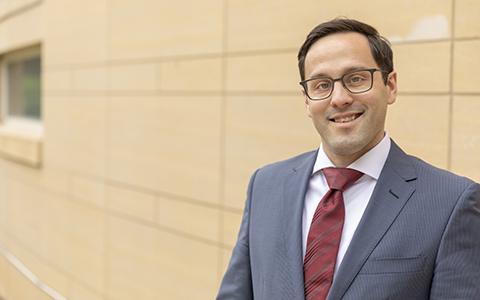
Dr. Almas Shintemirov is a Research Fellow at Aalto University's Department of Electrical Engineering and Automation, specializing in robotics, control systems, and human-robot interaction. His research focuses on intelligent robotics, with emphasis on Real-time motion prediction for collaborative robots Nonlinear control algorithms for safe human-robot interaction Open-source robotic hardware design Deep learning applications in autonomous systems
Mauro Andreolini is a University Researcher at the Department of Physical, Computer and Mathematical Sciences, University of Modena and Reggio Emilia. He teaches Operating Systems and Secure Software Development courses within the Computer Science degree program. His research focuses on Cybersecurity , Network Security , Machine Learning in Security , and Cloud Computing . His recent publications analyze Data Privacy through geohashing and clustering, Adversarial Attacks in cybersecurity, and Moving Target Defense architectures. He has also contributed to frameworks for Automated Security Assessments using deductive reasoning and Realistic Botnet Detection benchmarks. Andreolini's work addresses Graph Neural Networks in intrusion detection, n-Gram Analysis for automotive network security, and Side-Channel Vulnerabilities in USB devices. He collaborates with researchers like Artioli, Ferretti, Marchetti, and Colajanni on projects spanning Adversarial Machine Learning , Secure Software Development , and Cloud-Based Monitoring .
Geir Mathisen serves as a Professor within the Department of Technical Cybernetics, Faculty of Information Technology and Electrical Engineering at the Norwegian University of Science and Technology (NTNU). He is an active member of the Group for Industrial Computer and Instrumentation Systems, focusing on real-time systems integration and cyber-physical applications across industrial and energy domains. His educational background includes a Civil Engineering degree and a Doctorate (PhD), both earned from NTNU's Department of Technical Cybernetics, establishing foundational expertise in control systems and technical cybernetics. Professor Mathisen's research spans cyber-physical systems, deterministic networking, and distributed real-time systems with significant applications in smart grids and industrial automation. His work pioneers magnetic field energy harvesting for railway systems, edge-based fault detection for photovoltaic panels, and multi-robot coordination in sewing automation. Current investigations focus on power system state estimation, optimal power flow in smart grids, and deterministic communication channels for latency-sensitive applications. Analysis of his 2020-2024 publications reveals a strategic convergence of real-time computing with energy systems, particularly in railway energy harvesting and photovoltaic monitoring. His research consistently bridges theoretical advances in networking protocols with practical industrial implementations, emphasizing determinism and composability in distributed cyber-physical environments. Scientific Awards: No specific awards or fellowships were documented in the provided materials. Professor Mathisen actively supervises doctoral and master's students, including Johannes Schrimpf (2013 PhD thesis on industrial robot control), and offers project assignments as noted for fall 2021. His research is conducted through Norwegian collaborative projects on flexible distribution grids and smart grid services, though specific grant mechanisms remain unspecified in the source material. He contributes significantly to the Group for Industrial Computer and Instrumentation Systems at NTNU, which develops advanced solutions for industrial control, measurement systems, and cyber-physical integration, particularly in energy and manufacturing contexts.
Mahmut Tenruh is an Associate Professor at Muğla Sıtkı Koçman University, Faculty of Engineering, Department of Electrical and Electronics Engineering. He holds a bachelor's degree from Gazi University and a Ph.D. from the University of Sussex. His research focuses on wireless sensor networks, CAN protocols, embedded systems, and renewable energy applications. 2024: Performance analysis of photovoltaic systems in Yemen 2021: Robotics control systems and intelligent vehicle suspension design 2019: Time-triggered CAN FD protocol for real-time distributed control 2015-2014: Network modeling, solar data tracking, and scheduling optimization His work has been cited 23 times across various publications. He has supervised over 20 graduate theses and led multiple TÜBİTAK-funded projects, including remote pool control systems and wireless security solutions. TÜBİTAK Scientific Award (2011) Muğla Sıtkı Koçman University Scientific Award (2011)
Hamza Shakeel serves as Associate Professor (Reader) at Queen's University Belfast within the School of Electronics, Electrical Engineering and Computer Science. He holds affiliations with the Material and Advanced Technologies for Healthcare Institute and Energy Power and Intelligent Control research group, maintaining an active laboratory in Ashby Tower (Room 07.010). His work bridges semiconductor manufacturing, MEMS development, and environmental sensing technologies. Research focuses on microelectromechanical systems for precision sensing applications, particularly MEMS-based chemical sensors, microfluidics, and functional nanomaterials. Key specializations include lab-on-a-chip devices, micro-gas chromatography systems, quartz crystal microbalance sensors, and MEMS oscillators for gas/liquid analysis. Current projects emphasize greenhouse gas monitoring, microbial volatile collection, and advanced semiconductor manufacturing techniques using 3D printing. Recent publications demonstrate convergence of MEMS sensor innovation with AI-driven edge computing for environmental monitoring. Work spans materials science (fused silica resonators), analytical chemistry (photoionization detectors), and microfabrication techniques, showing consistent output in high-impact journals and conferences since 2011 with accelerating productivity through 2025. Scientific recognition includes: 3rd Prize Poster Presentation at Graduate Research Symposium, Blacksburg (2014) Early Career Travel Grant (2019) Secured research funding includes 6 active projects as PI/CoI, notably the National Edge AI Hub for cyber-disturbance analysis and MISO observatory for greenhouse gas monitoring across extreme environments. Supervised 3 research students with ongoing PhD recruitment in semiconductor and glass manufacturing. Laboratory resources include Agilent Gas Chromatography System, SRS QCM instrumentation, Laser Doppler Vibrometer, and specialized microfabrication equipment supporting sensor development from design through field deployment.
Justin Leiby is an Associate Professor of Accountancy at the University of Illinois Urbana-Champaign’s Gies College of Business, serving as Academic Director of the BSA/MSA Program and holder of the Professor Ken Perry Faculty Fellowship. His research focuses on auditing practices, professional skepticism, audit quality, and the application of data analytics in auditing. He is based at 196 Wohlers Hall in Champaign, Illinois, and can be reached at jleiby2@illinois.edu. Leiby’s work bridges experimental auditing research and real-world audit processes, examining how audit committees influence professional skepticism, the impact of data analytics on auditor decision-making, and the effects of incentive systems on auditor behavior. His recent studies address challenges in audit evidence review, audit effort allocation, and spreadsheet governance risks in financial reporting. Though no specific awards are listed, his leadership roles indicate recognition of his contributions to academic programs and research. His advising and grant activities are tied to his directorship of the BSA/MSA program, which likely involves curriculum development and student mentorship. Leiby’s research often intersects with interdisciplinary teams, leveraging online platforms to advance experimental methods in auditing.
John Supko is an Associate Professor of Music and Theater Studies at Duke University's Trinity College of Arts & Sciences. He also serves as Core Faculty in Innovation & Entrepreneurship and previously held roles like Interim Director of the PhD Program in Computational Media, Arts & Culture. Educated at Indiana University (B.Mus., 2002), Princeton University (M.F.A., 2005; Ph.D., 2009), he specializes in generative music that blends human creativity with algorithmic processes. His research explores intersections of chance, traditional notation, and real-time score generation. Notable projects include s_traits (a generative environment based on Bill Seaman’s text) and USINE (a 24-hour work combining ensemble and algorithmic electronics). His work has been hailed as 'spellbindingly beautiful' and 'hypnotic' for its fusion of sound, text, and technology. Recent artistic works include Time Becomes Again (2024) and Crossed Shadows (2024), emphasizing algorithmic innovation. Awards include the Hunt Family Publication Award (2013) and the Leo Kaplan Award (2008). Teaching spans composition, generative media, and arts entrepreneurship, reflecting his commitment to interdisciplinary creativity. Supko’s collaborations extend to computational media and experimental performance, with works exhibited globally. His lab focuses on using technology to disrupt conventional musical frameworks, advocating for 'exuberant rule-breaking' in artistic exploration.
Pere Millán Marco is an Associate Professor in the Department of Computer Engineering and Mathematics (DEIM) at Universitat Rovira i Virgili (URV), Tarragona, Spain. He serves as coordinator for Non-permanent lecturers. His research focuses on computer communications, mobile/sensor networks, and IoT, with emphasis on quality prediction and performance optimization in wireless environments. Education: M.Sc. in Computer Engineering (Polytechnic University of Catalonia, 1992); PhD in Computer Engineering (URV, 2018). Research Interests : Specializes in mobile and sensor network architectures, underwater acoustic networks, real-time communication protocols, and low-cost hardware solutions for educational and environmental applications. His work integrates time series analysis, predictive modeling, and social behavior patterns to enhance network efficiency. Publications Trends : Recent work emphasizes IoT applications in environmental monitoring (e.g., deep aquifer pumping systems), optimization of underwater acoustic networks, and low-cost multicomputer systems for teaching. Consistently explores predictive techniques for network topology and quality-of-service improvements in ad hoc and community networks. Awards & Recognition : Holds a granted US patent related to location-based information systems. Advising & Infrastructure : Involved in DEIM's teaching laboratory development. Active in organizing international conferences like UCAmI and VISIGRAPP. Member of the CloudLab research group, advancing cloud and distributed computing solutions.
Prof. John Franco is a Professor of Computer Science at the University of Cincinnati, serving as Director of the National Center of Academic Excellence in Cyber Operations. His roles include Editor-in-Chief of the Journal on Satisfiability, Boolean Modeling, and Computation , and Vice Chair of the SAT Association. He has held visiting scientist positions at institutions in Germany (FAW Ulm, Universität Paderborn) and spent sabbatical leave at Fort George G. Meade. Education: Ph.D. in Computer Science, Rutgers University, 1981 M.S. in Electrical Engineering, Columbia University, 1971 B.S. in Electrical Engineering, City College of New York, 1969 Research Interests: Franco’s work focuses on satisfiability (SAT) algorithms, formal verification, cybersecurity, and computational complexity. He has pioneered probabilistic analysis of SAT-solving heuristics and contributed to the integration of SAT techniques into network security and formal methods. His research bridges theoretical computer science with practical applications in cyber defense and algorithm optimization. Grants & Funding: Franco has secured over 18 grants from agencies like the NSA, NSF, and ONR. Notable projects include Satisfiability Algorithm Research (NSA grants since 1999), cybersecurity curriculum development (NSA 2018–2022), and Ohio Cyber Range initiatives. He has led or collaborated on federal and state-funded projects totaling millions in funding. Labs/Teams: Directs the National Center of Academic Excellence in Cyber Operations, a collaborative effort with local defense contractors. His work involves partnerships with institutions like Wright State Applied Research Corporation and Riverside Research Institute.
Dr. Sheldon Williamson is a Professor and NSERC Canada Research Chair in Electric Energy Storage Systems for Transportation Electrification at Ontario Tech University's Department of Electrical, Computer and Software Engineering, Faculty of Engineering and Applied Science. His research focuses on advanced energy storage technologies, power electronics, and their integration into transportation systems and smart grids. Education: Ph.D. (Electrical Engineering, Illinois Institute of Technology, 2006), M.S. (Electrical Engineering, Illinois Institute of Technology, 2002), B.E. (Electrical Engineering, University of Mumbai, 1999). Research Interests - Electric Energy Storage Systems for Transportation Electrification - Battery Management Systems (BMS) and Thermal Safety - Wireless Power Transfer and Charging Infrastructure - Cyber-Physical Security in EV Systems - Smart Grid Integration of Renewable Energy Publications : Over 50 peer-reviewed articles from 2021–2025, focusing on battery technologies, power electronics, and electrification challenges. Key themes include solid-state batteries, cloud-based BMS architectures, and dynamic wireless charging systems. No scientific awards explicitly listed in provided texts. Active in academic leadership and curriculum development within the department.
Dr. Lucia Bandiera is a Chancellor’s Fellow in Engineering Biology at the University of Edinburgh’s School of Engineering. Her research focuses on cybergenetic platforms to model and control biological systems, with applications in precision medicine and synthetic biology. She holds a PhD in Bioengineering from the University of Bologna (2013–2016) and has held postdoctoral positions at the University of Edinburgh’s Centre for Synthetic and Systems Biology. Key roles include Deputy Head of Graduate School (Postgraduate Experience) and Deputy Biological Safety Officer. Her academic qualifications include a BSc and MSc in Biomedical Engineering from the University of Bologna (2007–2012). She is an Associate Fellow of the Higher Education Academy (AFHEA, 2020) and has received prestigious funding such as the EPSRC Postdoctoral Fellowship (2017) and a tenure-track fellowship (2021). Her teaching includes courses on Lab-on-Chip Technologies and Engineering Principles. Research interests include mathematical modeling, optimal experimental design, and microfluidics. She leads projects like CONDSYC (EPSRC-funded), focusing on synthetic biology systems design. Her work spans biomolecular systems, cyber-physical platforms, and applications in liver disease and pandemic mitigation. Notable achievements include organizing the Institute for Bioengineering’s seminar series and contributing to datasets like Face coverings and respiratory tract droplet dispersion . Her lab develops tools for quantitative analysis of biological networks and precision medicine.
Athanasios Gkelias is a Research Fellow in the Department of Electrical and Electronic Engineering at Imperial College London's Faculty of Engineering. His research focuses on advanced wireless communication systems, network optimization, machine learning applications, and quantum computing methodologies. He contributes to interdisciplinary projects involving IoT coalitions, adversarial signal detection, and cognitive behavior analysis. Key research areas include: (1) Network resource management in Software-Defined Networks (SDN), (2) Localization systems for indoor environments, (3) 3D reconstruction using photometric stereo and origami-based modeling, and (4) distributed optimization frameworks for ad-hoc networks. His recent work explores quantum approaches to combinatorial optimization and self-supervised learning methods. Publications span 20+ years with notable contributions in network coding, vehicular ad-hoc networks (VANETs), and cross-layer design for wireless mesh networks. His work emphasizes practical implementations through frameworks like iVisher for caller ID spoofing detection and cooperative MAC protocols for multi-antenna systems. No scientific awards are listed in the provided information. His research has been applied in healthcare technology through emotion understanding systems for Alzheimer’s patients and in battlefield communication through IoBT coalitions. Active participation in Imperial College's Engineering faculty reflects his commitment to advancing telecommunications and network science.
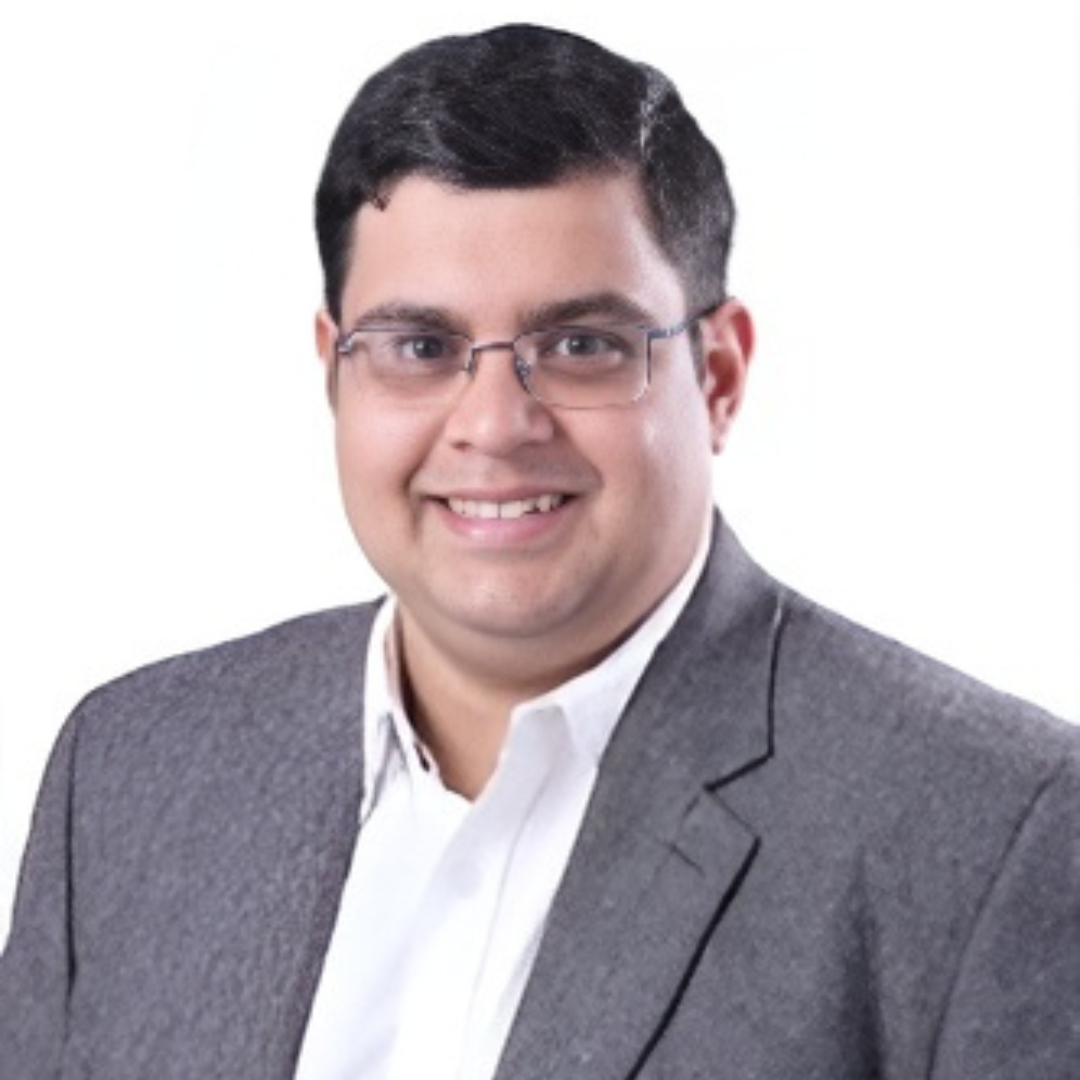
Riku Ala-Laurinaho is a Researcher at Aalto University's Department of Energy and Mechanical Engineering, with a focus on Digital Twin technologies and Industrial Automation. He holds a Master's (2019) and Bachelor's (2018) in Engineering and Technology from Aalto University. His research interests span Digital Twins in industrial contexts, Cyber-Physical Systems, IoT applications, and data-centric systems. He explores semantic-enhanced industrial metaverse frameworks and collaborative design paradigms. Recent work emphasizes context-aware systems, torsional vibration analysis tools, and Human-Centric Manufacturing processes. His publications (16+), including high-impact articles in Journal of Manufacturing Systems and SoftwareX , reflect a focus on industrial innovation. METEX award (2020) Contributions to 5+ open-source datasets (e.g., OpenTorsion, A!ex autonomous car dataset) His advising includes 1 supervised thesis, with grant details pending.
Amir Ghalamzan is an Associate Professor at the University of Surrey's School of Computer Science and Electronic Engineering, leading the Intelligent Manipulation Lab. His research focuses on robot learning, robotic grasping, teleoperation, and agri-food robotics. Previously, he held roles at the University of Lincoln and University of Birmingham. Education: PhD in Robot Learning (Politecnico di Milano, 2015), M.Sc. in Mechanical Engineering (Iran University of Science and Technology, 2009). Research Interests: He addresses real-world challenges like labor shortages in agriculture through robots for extreme conditions, such as strawberry picking. His work integrates advanced perception, AI, and control systems. Notable projects include developing autonomous strawberry-picking robots and haptic-guided teleoperation systems. Key Projects: Led the £310K CERES Agtech project (2020-2021) for autonomous strawberry robots, and contributed to the £1.5M Agri Open-Core project (2023-2027) for open-source harvesting software. Collaborated with institutions like Imperial College London and companies like Saga Robotics. Labs/Teams: Directs the Intelligent Manipulation Lab, focusing on tactile sensors (e.g., AST Skin) and soft robotics innovations.
Bryan Ward is an Assistant Professor of Computer Science and Electrical and Computer Engineering at Vanderbilt University's School of Engineering. His research focuses on enhancing the security and resilience of real-time and embedded systems in critical domains such as industrial control systems and space systems. Ward holds a Ph.D. in Computer Science from the University of North Carolina at Chapel Hill, along with dual bachelor's degrees in Computer Science and Engineering and Mathematics from Bucknell University. His academic contributions span multiple areas including operating system security, real-time scheduling, and hardware-software co-design for safety-critical systems. Key research themes include control-flow integrity, secure resource management in multi-core environments, and mitigating timing-based attacks in real-time embedded systems. Ward's work has explored advanced defense mechanisms like dynamic address space randomization, tagged architecture implementations, and retry-free transactional memory models. He has also investigated vulnerabilities in kernel scheduling and cache-sharing behaviors in multi-core platforms, proposing novel solutions to ensure predictability and security. Current projects emphasize securing cyber-physical systems through adaptive defenses that maintain strict timing guarantees required for safety-critical applications.