Marie Sandberg is an Associate Professor in the Promotion Programme at the Saxo Institute, University of Copenhagen. She is affiliated with the Faculty of Humanities and participates in HUM:Global initiatives focused on interdisciplinary global studies. Her research emphasizes ethnological analyses of migration, borders, and refugee policies, particularly exploring temporal governance, state-civil society interactions, and the paradoxes of welfare-state frameworks. Her work examines the everyday practices of refugees and volunteers in contexts of temporary protection status, as well as the ethical challenges in digital migration studies. She contributes to debates on deterrence policies, repatriation agendas, and the precarity of academic labor. Sandberg’s research methodologies often combine ethnography with critical analysis of policy frameworks. Key Research Themes: Refugee temporariness, border studies, humanitarianism, and academic precarity Professional Roles: Member of the Professional Project Group (PPG) in HUM:Global, coordinating interdisciplinary projects Geographic Focus: Europe, with emphasis on Denmark, Poland, and Germany Recent publications highlight her focus on the interplay between state policies and grassroots efforts, as well as the temporal dimensions of displacement. She has co-edited special issues on migration and authored studies on volunteerism in refugee relief work.
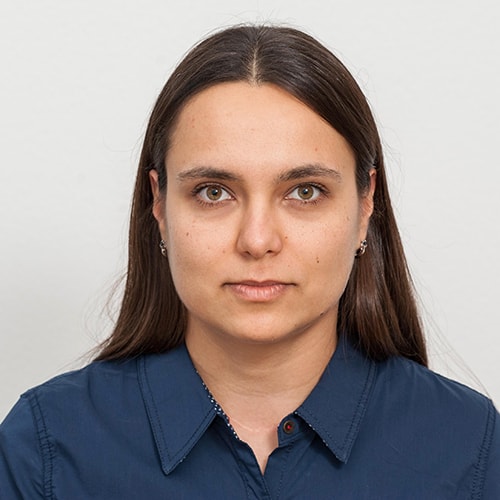
Olga Saukh is an Associate Professor at the Institute of Technical Informatics, Graz University of Technology (TU Graz), and a Faculty member at the Complexity Science Hub Vienna (CSH). She leads the Embedded Learning and Sensing Systems research group, which operates across both institutions, focusing on the design and deployment of efficient AI-based systems on edge and mobile platforms. Her work bridges deep learning and embedded systems, with applications in environmental monitoring, precision agriculture, and digital health. Ph.D. in Computer Science, University of Bonn (2009) Habilitation in Embedded Systems, TU Graz (2020) Postdoctoral Training, ETH Zurich (2010–2016) B.Sc. in Applied Mathematics, Taras Shevchenko National University of Kyiv (2002) M.Sc. in Applied Computer Science, University of Freiburg (2004) Her research centers on efficient machine learning, particularly model optimization, neural network pruning, and contrastive learning for resource-constrained devices. She is deeply engaged in solving real-world challenges in IoT, sensor networks, and cyber-physical systems. Her work emphasizes data privacy, sustainability, and practical deployment of AI at the edge. The 15 most recent publications highlight a strong trend in efficient deep learning, including model compression, pruning, and transfer learning, applied to diverse domains such as environmental sensing (air quality, pollution tracking), digital agriculture (cattle farming), and embedded AI (sensor calibration, on-demand sensing). Her work frequently appears in top-tier venues like NeurIPS, ICLR, and IEEE/ACM IPSN, reflecting her leadership at the intersection of machine learning and embedded systems. Scientific awards include: CONET Ph.D. Academic Award (2010) Multiple Best Paper Awards at IEEE PerCom, ACM/IEEE IPSN, IEEE ICPADS, IEEE SECON, and UrbCom Spotlight and Oral presentations at ICML and CoLLAs workshops Ph.D. scholarship from IPVS, University of Stuttgart (2004–2005) Prizes in Ukrainian national mathematics competitions (1996–1998) Olga Saukh actively serves on program committees of leading international conferences in machine learning and embedded systems. She has advised multiple students and leads a collaborative research group spanning TU Graz and CSH Vienna. Her group develops practical AI systems for real-world deployment, with a focus on sustainability and privacy. She co-organizes the public EfficientML reading group and has secured recognition through numerous grants and awards. Her future work continues to explore the theoretical and practical challenges of deploying efficient, trustworthy AI in mobile and embedded environments. Her research group, Embedded Learning and Sensing Systems, operates jointly between TU Graz and CSH Vienna, fostering interdisciplinary collaboration across institutions. The team develops AI solutions for edge computing, sensor networks, and cyber-physical systems, with a strong emphasis on environmental sustainability and data privacy. Members work on joint challenges using advanced collaboration tools, reflecting the distributed nature of modern academic research.
Mads Albertsen is a Professor in the Department of Chemistry and Life Sciences at the Faculty of Engineering and Science, Aalborg University, Denmark. He leads the Albertsen Lab and is a key member of the Center for Microbial Communities. His research focuses on high-throughput DNA sequencing methods to explore uncultivated microbes and populate the tree of life. He is actively involved in major interdisciplinary projects such as NanoEat , Microflora Danica , and DarkScience , funded by the European Research Council, Villum Foundation, and Poul Due Jensen Foundation. His research interests span metagenomics , long-read sequencing , bioinformatics , microbial ecology , and environmental biotechnology . He develops cutting-edge methods to improve throughput in microbial genome recovery and applies them to diverse areas including wastewater treatment, human microbiome studies, and infectious disease diagnostics. His work has significant implications for public health and sustainability. The recent publications highlight a strong trend in long-read sequencing (Oxford Nanopore), metagenome-assembled genomes (MAGs) , and microbial dark matter . His team has published high-impact papers in Nature , Nature Methods , and Nature Communications , with applications in environmental systems and clinical diagnostics, including SARS-CoV-2 and bloodstream infections. His scientific awards include: The Grundfos Prize (2021) The Fritz Kaufmann Prize (2021) The Rising Star Award by IWA & ISME (2016) Research Result of the Year in Denmark (2015) The Spar Nord Fond Research Prize (2015) Mads Albertsen advises numerous PhD students, leads externally funded research projects, and is involved in technology transfer through his co-founding of DNASense ApS (2014–2020). He also serves on scientific advisory boards and contributes to public policy, including as a member of the Danish SARS-CoV-2 variant risk-assessment group. He teaches courses in Data Science, Bioinformatics, Genomics, and Environmental Microbiology at Aalborg University. His lab, the Albertsen Lab , is part of the Center for Microbial Communities , a leading research center focused on microbial systems biology and environmental applications. The lab collaborates extensively with national and international partners in academia, industry, and public health institutions.
Anders Haug serves as Associate Professor at the Department of Business and Sustainability (DBS) within the University of Southern Denmark's Kolding campus. Having joined the university in 2008 as Assistant Professor in the Department of Entrepreneurship and Relationship Management before transitioning to his current role in 2010, his academic career spans over 15 years of research and teaching in operations, supply chain, and digital transformation contexts. His work bridges theoretical rigor with practical industry applications, particularly in engineer-to-order manufacturing and logistics sectors. Education: PhD in communication, representation and automation of design knowledge (2005-2007) Haug's research centers on information and knowledge management systems, with deep expertise in data quality frameworks, knowledge-based configuration, and digitalization of business processes. His fingerprint reveals distinctive contributions to product configuration systems, digital twin applications, and supply chain resilience—particularly examining how configurators transform warehouse services, manufacturing processes, and product-service ecosystems. Recent work increasingly addresses sustainability through green dynamic capabilities frameworks and life cycle assessment tools, maintaining strong empirical grounding via case studies in Danish manufacturing. Analysis of his 2024-2025 publications shows converging trends: digital technologies (configurators, digital twins) are examined through operational performance lenses while addressing sustainability imperatives. These works span operations management, information systems, and strategic management disciplines but consistently prioritize practical implementation frameworks for manufacturing SMEs. The research demonstrates methodological diversity—from conceptual modeling to empirical case studies—with strong industry relevance in logistics, engineering-to-order contexts, and manufacturing digitization. Scientific Awards: Top read paper in Business 2017/18 (Wiley) (2019) Haug has supervised 34 teaching courses between 2018-2024 covering business information systems, digitalization projects, and supply chain management. His academic service includes extensive peer reviewing for conferences like NOFOMA and DRS, plus organizational roles in Nordic business research networks. While specific grant details aren't provided, his 175+ research outputs and industry collaborations (evidenced by consultant work since 2006) indicate substantial research funding engagement. Media contributions on 3D printing and business process efficiency demonstrate effective knowledge transfer to practitioners. Though no dedicated research lab is specified, Haug's extensive co-authorship network—including collaborations on projects like digital twin implementation and configurator development—reveals embeddedness in multiple research collectives. His industry-facing approach manifests through case studies with logistics providers, manufacturer partnerships, and practical frameworks for warehouse service design and supply chain resilience.
Professor Dorthe Bleses is affiliated with Aarhus University's School of Communication and Culture, Department of Linguistics. Her research focuses on language acquisition, child development, and early childhood education, with particular emphasis on interventions and parental influences. She leads projects like The Puzzle of Danish and collaborates on initiatives such as READ in Foster Care and SPELL . Research interests include language development in Germanic languages, the impact of parenting behaviors on cognitive and social outcomes, and the effects of early interventions on literacy and numeracy skills. Her work integrates psycholinguistic theory with practical educational programs, emphasizing scalable solutions for disadvantaged populations. Key projects include evaluating large-scale literacy interventions (SPELL) and studying factors influencing language skills in diverse populations, including foster children and bilingual learners. Collaborations span Denmark and internationally, addressing topics like maternal health impacts on language acquisition and cross-cultural childcare practices. Though no awards are listed, her contributions to early childhood research are evident through her extensive publication record and leadership in interdisciplinary teams. She has no listed advisees but collaborates widely with colleagues like Rikke Svane and Erika Hoff on major studies.
Per Bækgaard is an Associate Professor at the Department of Applied Mathematics and Computer Science, Technical University of Denmark (DTU), specializing in Cognitive Systems. He serves as Head of Study for Human-Centered Artificial Intelligence, leading research in human-computer interaction, user experience, eye tracking, and cognitive neuroscience. His work bridges AI and human cognition to create systems that enhance daily life and support meaningful tasks. PhD, MSc EE, Technical University of Denmark His research interests center on Human-Computer Interaction (HCI) , User Experience , and Human-Centered Artificial Intelligence , with strong emphasis on Eye Tracking , Cognitive Neuroscience , and Digital Media . He explores how digital systems can adapt to users’ cognitive states using physiological signals like pupil dilation and gaze patterns, aiming to improve learning, health, and decision-making. His work aligns with UN Sustainable Development Goals in health and education. The recent publications reflect a strong trend in integrating eye tracking and pupillometry with AI-driven adaptive systems , particularly in education and healthcare. Themes include generative AI in learning , trustworthy AI in supply chains , and digital micro-interventions for mental health . The interdisciplinary nature spans computer science, psychology, and biomedical engineering, showcasing a cohesive focus on human-centered technology evaluation. Scientific Awards: Best Paper Award, 26 Jun 2020 – for contributions to gaze interaction research Per Bækgaard actively supervises PhD students and leads multiple research projects, including those involving generative AI in education , digital phenotyping , and AI in nursing and mental health . He is the main supervisor for several PhD projects and a co-supervisor or examiner in others, demonstrating a strong commitment to academic mentoring. His grant involvement includes projects funded by DTU and collaborative research initiatives in digital health and AI. He is part of the Cognitive Systems group at DTU, contributing to interdisciplinary research in AI, neuroscience, and human factors. His team collaborates on projects involving real-time physiological monitoring, adaptive interfaces, and AI-mediated learning systems, positioning him at the forefront of human-centered AI research in Scandinavia.
Jamie Yam Auxillos is an Assistant Professor at the University of Copenhagen, affiliated with both the Biotech Research & Innovation Centre (BRIC) and the Department of Biology, where she leads research in Computational and RNA Biology. Her work bridges molecular biology, synthetic biology, and cutting-edge sequencing technologies. Education: PhD in Cell and Molecular Biology (2020), Centre for Systems and Synthetic Biology, University of Edinburgh MSc in Systems and Synthetic Biology (2015), University of Edinburgh BSc Honours in Biomedical Sciences with Medical Microbiology (2014), Newcastle University Dr. Auxillos' research focuses on Molecular Biology, Synthetic Biology, and Biotechnology , with particular expertise in Sequencing Methods Development, Spatial Transcriptomics, and Nanopore long read sequencing. Her work combines computational approaches with experimental techniques to develop new methods for RNA analysis and to understand complex biological systems, particularly in cancer biology and synthetic yeast engineering. Her recent publications reveal a strong trend toward developing innovative sequencing methodologies and applying them to cancer research, with significant contributions to spatial transcriptomics and tumor microenvironment analysis. She has also made important contributions to synthetic biology tools, particularly for yeast engineering and CRISPR-based technologies. Dr. Auxillos has established collaborative networks across multiple countries and institutions, with significant research output including journal articles, reviews, and book chapters that have garnered substantial attention across academic and social media platforms. Her research has been shared widely, with publications posted by numerous X (Twitter) users, featured on Facebook pages, discussed on Reddit, referenced in policy sources and patents, and read by hundreds of researchers on Mendeley.
Gert Frølund Pedersen is a Professor at the Department of Electronic Systems , Aalborg University , within the Technical Faculty of IT and Design . His research focuses on antennas, propagation, and millimeter-wave systems. He leads projects like DRONES (30 million DKK from Innovationsfonden) for drone-based electromagnetic signature analysis and EcoSurf6G for energy-efficient reconfigurable surfaces in 6G networks. With over 758 research outputs and 21 PhD students supervised, he contributes extensively to wireless communication advancements. Antenna Engineering Millimeter-Wave Systems Reconfigurable Intelligent Surfaces Deep Learning in Antenna Design His recent work emphasizes millimeter-wave IoT applications , UWB propagation channels , and 5G/6G antenna arrays . Publications highlight innovations in transmitarray antennas , liquid crystal polarization control , and metasurface design using AI. His research spans from fundamental electromagnetic safety to cutting-edge wireless infrastructure. Notable awards include Best Reading Paper of the Issue (IEEE Transactions on Microwave Theory and Techniques, 2020), ESI Highly Cited Paper (2019), and Ridder af Dannebrog (2021). He frequently engages with media to address public concerns about mobilstråling (mobile radiation) and its safety.
Anne Kær Gejl is an Associate Professor at the Department of Sports Science and Clinical Biomechanics, University of Southern Denmark, where she conducts research in the Research Unit of Exercise Epidemiology. Her work bridges public health, exercise science, and educational psychology, with a strong focus on physical activity's role in cognitive and mental health development among children and adolescents. Her research interests center on physical activity , cognitive function (especially inhibitory control and executive function), brain-derived neurotrophic factor (BDNF) , and child development . She investigates how structured physical activity and screen-free interventions can enhance pre-reading, spelling, and mental health outcomes in young populations. Her work often employs randomized controlled trials , systematic reviews , and population-based studies , reflecting a rigorous methodological approach. Recent publications highlight trends in embodied learning , digital screen use , and feasibility of behavioral interventions . Her research consistently emphasizes the integration of physical activity into educational settings to support both academic and psychological well-being. Scientific Awards: None listed in the provided text. Anne Kær Gejl actively mentors students, including PhD candidates such as Anne Sofie Bøgh Malling and Lars Damsgaard. She has been involved in significant research grants related to physical activity interventions and educational outcomes, though specific grant names are not detailed. Her collaborative network includes researchers from public health, sports science, and education disciplines. She is part of the Research Unit of Exercise Epidemiology, contributing to team-based studies on youth health, physical activity monitoring, and cognitive development. Her lab engages in both experimental and observational research, often in school and community settings.
Agneta Ghose is an Assistant Professor at the Department of Sustainability and Planning within Aalborg University's Technical Faculty of IT and Design. Her work focuses on advancing Life Cycle Assessment (LCA) methodologies, data sharing practices, and sustainability science, particularly in bio-based systems and circular economy frameworks. She leads and contributes to projects such as ASCCENT (CO2 storage in construction materials) and ALIGNED (harmonizing LCA methods for bio-based sectors). Her research interests include FAIR data principles for LCA, ontology development for sustainability data integration, and environmental impact assessments for buildings and bio-based products. She has published extensively on topics like EPD harmonization, LCA methodological challenges, and carbon flux modeling in forests. Key contributions include the core ontology for Life Cycle Sustainability Assessment on the Semantic Web and frameworks for bio-based product evaluation. Recipient of the ESWC 2019 Best Poster Award for open dataset and ontology work Active in initiatives like the LCS group's LCA reading club and international conferences Collaborates with institutions globally on bioeconomy, climate mitigation, and sustainable construction Her projects emphasize translating academic research into actionable tools for industries, such as standardized LCI data templates and frameworks for net-zero construction products.
Birgitte Stougaard Pedersen is an Associate Professor in the Department of Aesthetics and Culture at the School of Communication and Culture, Aarhus University. She is actively engaged in research, leadership, and public scholarship, currently serving as Head of the Research Program 'Arts, Aesthetics, Communities' and Head of the Center for Literature Between Media. Her work bridges literature, sound, digital culture, and phenomenology. Her research interests include: Sound and aesthetic experience Digital audiobooks and voice Multisensory reading practices Phenomenological literary analysis Poetry slam and performance Media studies and medialization Recent publications reflect a strong trend in exploring how digital technologies transform reading and listening, particularly in children’s education. Her work integrates theoretical depth with empirical studies, often in collaborative, interdisciplinary settings. Themes such as rhythm, resonance, voice, and embodiment recur across her scholarship, showing a consistent focus on the sensory and affective dimensions of literature and media. Scientific recognition includes: AIAS Carlsberg Monograph Fellow (2025–2026) She has served as Principal Investigator on major projects like 'Reading Between Media,' funded by the Novo Nordisk Foundation, and has advised student bachelor projects. Her editorial roles include contributions to Resonance: Journal of Sound and Culture and Barnbogen . She is also active in public engagement through press and media contributions. She is involved in several research groups and networks, including 'Lydgruppen' and international collaborations with VIA University College and Malmö University, reflecting a strong commitment to interdisciplinary and cross-institutional research.
Bettina Lamm is an Associate Professor in the Department of Geosciences and Natural Resource Management at the University of Copenhagen, specializing in Landscape Architecture and Urbanism. Her work investigates the intersection of built environments and lived experiences through temporary interventions and art strategies in public spaces. Her educational background includes: PhD in Fiction Space - spatial expressions and experiences in virtual reality art from The Royal Danish Academy of Fine Arts, School of Architecture (2006) Landscape Architect MAA from The Royal Danish Academy of Fine Arts, School of Architecture (1996) Exchange studies at University of California, Berkeley (1994) Lamm's research centers on reprogramming interim landscapes via temporary art and architectural strategies, fostering new site readings and community experiences. She has curated exhibitions like Urban Play and led EU projects including SEEDS, exploring how temporary activation transforms derelict urban spaces. Her work emphasizes co-creation with communities—particularly children—in designing inclusive public spaces for play and social interaction. Recent publications reveal strong thematic continuity in public space dynamics, with focus areas including social housing estates, urban agriculture, and temporary urbanism. These works systematically examine how participatory design processes and temporary interventions contribute to human flourishing and sustainability while addressing challenges of maintaining publicness in diverse urban contexts. Lamm has secured major funding through HERA, EU Interreg, and national research councils for projects like PuSH (public space in social housing) and Move the Neighborhood (co-designing with children). She actively implements practical applications through projects such as Pios Plæne and Karens Minde—co-created play spaces in Copenhagen's Sydhavnen district. She maintains international research networks through conference organization (e.g., Instant Urbanism 2013) and exhibition curation, bridging academic theory with practical urban design challenges across Nordic and European contexts.
Carsten Elbro is a Professor at the Department of Nordic Studies and Linguistics (Faculty of Humanities, University of Copenhagen). He holds a Dr. phil. from the University of Copenhagen (1990) and has been a Professor since 1997. His research focuses on reading difficulties, dyslexia, and psycholinguistics. He founded the Centre for Reading Research and the Danish Dyslexia Information Centre. He serves on editorial boards for journals like Scientific Studies of Reading and Annals of Dyslexia . His work spans applied linguistics, educational interventions, and developmental psychology. Recent studies explore metaphor comprehension, early dyslexia intervention, and national assessment tools. He has advised 7 PhD students and collaborates internationally in projects on cross-linguistic phonological learning and inference abilities in reading. Elbro has led research initiatives funded by Danish, Taiwanese, and Hong Kong grants, emphasizing evidence-based pedagogy. His contributions bridge academic research and practical educational strategies to address literacy challenges.
Kurt Nørmark is an Associate Professor in the Department of Computer Science at Aalborg University, under The Technical Faculty of IT and Design, Denmark. He is actively engaged in research and teaching, particularly in the areas of programming education and programming language design. His research interests focus on Object-Oriented Programming , Programming Languages , Program Understanding , and Educational Technology in introductory programming. He has explored the use of video and digital tools to enhance student learning in programming courses, contributing to modern pedagogical approaches. The recent publications reflect a consistent trend in computing education , emphasizing gradual abstraction , program documentation , and student engagement through multimedia. These works are primarily situated within the broader fields of Computer Science Education and Educational Technology. Kurt Nørmark has participated in educational research projects, including the PBL Exchange initiative, which supports Problem-Based Learning through IT platforms. While no formal list of advisees or awards is provided, his contributions to curriculum development and digital teaching tools indicate active involvement in academic mentoring and educational innovation. He is associated with research initiatives aimed at improving teaching methodologies in computer science, particularly through the integration of videos and digital platforms in classroom settings.
Sebastian Porsdam Mann is an Assistant Professor at the Center for Advanced Studies in Bioscience Innovation Law within the Faculty of Law at the University of Copenhagen. His interdisciplinary work bridges philosophy, neuroscience, applied ethics, and international human rights law to examine how emerging technologies can advance scientific progress while respecting ethical and legal frameworks. His academic credentials include: BA (Hons) from University of Cambridge (2013) PhD in Ethical Aspects of Novel Developments in Neuroscience from University of Cambridge (2017) Graduate Diploma in Law from BPP University (2021) DPhil in The Orphan of Time: A History and Theory of the Right to Science from University of Oxford (pending) Prior to his current position, he held postdoctoral appointments at Harvard Medical School and the Universities of Oxford and Copenhagen, with the latter supported by a Carlsberg Foundation personal grant. His research focuses on the practical applications and regulatory conditions for novel technologies like blockchain and generative AI to facilitate scientific progress and uphold the human right to science. His scholarly contributions include co-authoring/editing The Right to Science: Then and Now (Cambridge University Press, 2021) and Scientific Freedom: The Heart of the Right to Science (Rowman & Littlefield, 2023). His work on fine-tuning large language models for academic enhancement ('AUTOGEN') ranks as the most read article in the American Journal of Bioethics, the premier journal in bioethics. His recent publications demonstrate a concentrated focus on applying AI technologies to healthcare challenges, particularly examining how generative AI can transform informed consent processes, clinical trial design, and biobanking frameworks while addressing ethical and governance concerns. His research shows strong international collaboration across multiple institutions and disciplines. Mann's work has received significant attention beyond academia, with media coverage and substantial social media engagement. His research on promoting innovation and regulating generative AI in health sectors was widely shared across platforms including X (formerly Twitter) and Bluesky, with considerable academic readership on platforms like Mendeley.