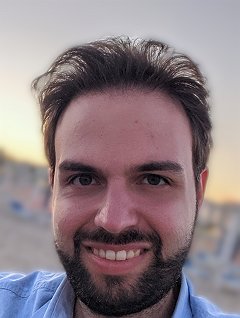
Felix Dobslaw is a Senior Lecturer and Associate Professor at Mid Sweden University , affiliated with the Department of Communication, Quality Technology and Information Systems (KKI). He leads the cross-disciplinary Software Engineering and Education (SEE) research group, focusing on the intersection of technology and human use in software development, with a particular emphasis on Generative AI applications.
Anubhav Agrawal, M.D., is an Assistant Professor in the Department of Obstetrics & Gynecology at the University of California, San Francisco (UCSF). He is based at the UCSF Fresno campus and holds the formal title of Volunteer Assistant Clinical Professor. His clinical and academic focus is on female pelvic medicine and reconstructive surgery (urogynecology), with particular expertise in robotic and minimally invasive surgical techniques for pelvic organ prolapse, urinary incontinence, and fecal incontinence. Education: MD, New York Medical College (2009) OBGYN Residency, State University of New York, Downstate Medical Center (2013) Female Pelvic Medicine and Reconstructive Surgery Fellowship, University of Louisville (2016) LIGO Surgical Masters Course in Total Laparoscopic Hysterectomy, Fresno (2017) Research Interests: Dr. Agrawal’s research centers on improving surgical outcomes in urogynecologic procedures, particularly through robotic and laparoscopic approaches. His work explores patient education, surgical anatomy, and the safety and efficacy of advanced surgical techniques. He has contributed to understanding vaginal mesh complications, patient perceptions of robotic surgery, and the development of educational tools for both patients and trainees. His publications span a range of topics including vaginal microbiome changes after mesh exposure, accuracy of bladder scanning in prolapse patients, and the readability of patient education materials. These studies reflect a commitment to evidence-based practice and patient-centered care. Awards and Honors: Schuyler G. Kohl Outstanding Chief Resident Teacher Award (2013) UCSF Fresno Physician Champions (2016) 3rd Place, UCSF Fresno Quality Improvement Symposium (2017) CREOG National Faculty Award (2017) UCSF Fresno Outstanding Attending Teacher Award (2018) Clinical Practice and Teaching: Dr. Agrawal is actively involved in clinical practice at UCSF Fresno, where he provides specialized care in urogynecology. He is recognized for his excellence in teaching and mentoring residents and medical students. His clinical expertise includes robotic-assisted surgeries, minimally invasive procedures, and comprehensive management of pelvic floor disorders.
Arjun Guha is an Associate Professor at Northeastern University's Khoury College of Computer Sciences, where he also serves as the Area Chair for Software. He conducts research in programming languages with a focus on program synthesis for low-resource programming languages and understanding how computer science education is impacted by large language models. His work spans multiple domains including WebAssembly, software-defined networking, and serverless computing. Guha's research interests center around programming language design, implementation, and application. He has made significant contributions to understanding JavaScript through formal semantics (LambdaJS), developing functional reactive programming for web applications (Flapjax), and creating tools for software-defined networks (NetKAT, Frenetic). His recent work focuses on leveraging large language models for code generation in specialized programming languages and understanding their impact on programming education. His publications reveal a strong trend toward applying AI and machine learning techniques to programming language problems, particularly in code generation and understanding. The research spans from foundational programming language theory to practical applications in education and software development tools, with increasing focus on the intersection of programming languages and large language models. Guha has received several prestigious awards including the OOPSLA Most Influential Paper Award in 2019 for his work on Flapjax, an ACM SIGPLAN Research Highlight for his work on NetKAT, and a Best Student Paper Award. His research has been recognized for its foundational contributions to programming language theory and practical impact on software development. OOPSLA Most Influential Paper Award (2019) for Flapjax ACM SIGPLAN Research Highlight for A Fast Compiler for NetKAT Best Student Paper Award for Flapjax paper Guha advises numerous PhD, MS, and undergraduate students, with several alumni now at leading tech companies and academic institutions. His research has been supported by the National Science Foundation, the Department of Energy, the Office of Naval Research, and industry partners including Google, JPMorgan Chase, MathWorks, Meta, Oracle, and Roblox. He leads the Programming Research Laboratory at Northeastern and is actively involved in major research collaborations like the BigCode Project. Guha is a member of the Programming Research Laboratory at Northeastern and leads several major research initiatives including the BigCode Project's evaluation working group. His lab develops practical software systems like MultiPL-E (a polyglot benchmark for Code LLMs) and WasmFX (bringing effect handlers to WebAssembly), with applications in education, software development, and high-performance computing.
Dr. Jennifer N Choi is a Professor of Dermatology specializing in Oncodermatology and Medical Dermatology at Northwestern University's Feinberg School of Medicine. She serves as Chief of Oncodermatology at the Robert H. Lurie Comprehensive Cancer Center and Chief of Medical Dermatology in the Department of Dermatology. Dr. Choi specializes in providing comprehensive skin care for cancer patients and survivors, with expertise in managing side effects from cancer treatments including chemotherapy, radiation, and transplantation therapies. Dr. Choi received her BA from Harvard University and her MD from Yale University School of Medicine. She completed her internship in Internal Medicine at Brigham and Women's Hospital/Harvard Medical School and her residency in Dermatology at Yale, where she served as Chief Resident. Her academic excellence was recognized with Cum Laude distinction from Yale and Magna Cum Laude from Harvard. Dr. Choi's research and clinical interests focus on oncodermatology, with particular expertise in recognizing and managing side effects from chemotherapy and radiation therapy. Her work encompasses rashes, dry skin, itching, nail and hair changes, cutaneous metastases, radiation dermatitis, infections in immunosuppressed patients, and toxicities from stem cell or solid organ transplantation. She directs a comprehensive skin care and skin cancer surveillance program for high-risk patients and cancer survivors, and oversees Northwestern Memorial's extracorporeal photopheresis unit. Dr. Choi is Co-Leader of the Skin Disease Team and an integral member of the Northwestern Melanoma Unit. She conducts rigorous screening skin examinations for skin cancer patients and is experienced with both surgical and non-surgical treatments for skin cancers. Compassionate Care Award, Melanoma Research Foundation (2018) Mentor of the Year, Department of Dermatology (2017) Named as one of the Top Docs of Connecticut (2013-2016) Cum Laude, Yale University School of Medicine (2003) Magna Cum Laude, Harvard University (1998) Dr. Choi serves in numerous leadership roles including Chair of the Oncodermatology Study Group for the Multinational Association of Supportive Care in Cancer and Co-Chair of the Skin Toxicity Working Group. She is an editorial board member for the Journal of American Academy of Dermatology Case Reports and directs multiple clinical research trials investigating the prevention and treatment of cancer therapy-related side effects. As Director of the Division of Medical Dermatology, Dr. Choi oversees a comprehensive dermatology practice that includes complex dermatologic therapies such as biologic therapy, immunosuppressive medications, and phototherapy. She is an active member of several professional societies including the American Academy of Dermatology, Women's Dermatologic Society, and Medical Dermatology Society.
Enrico Angelo Emili serves as Associate Professor of Special Teaching and Pedagogy at the University of Urbino Carlo Bo's Department of Humanistic Studies. Previously affiliated with the Universities of Bologna, Bolzano, and Perugia, he maintains an active academic profile with teaching responsibilities for the 2025/2026 academic year in Special Didactics and Inclusive Education courses for Education Sciences students. Department of Humanistic Studies (DISTUM), University of Urbino Carlo Bo Teaching Special Didactics for Education Sciences program Curator of www.inclusione.it educational resource platform Collaborator on national and international research projects Professor Emili's research centers on inclusive educational methodologies and technologies. His work addresses critical challenges in special educational needs, particularly focusing on disabilities, specific learning disorders, and other educational requirements. He develops practical applications of Universal Design for Learning (UDL) principles and investigates how educational mediators can create accessible learning environments for diverse student populations. His expertise spans assistive technologies, accessible children's literature, text readability standards, and individualized educational planning frameworks. Analysis of his recent scholarly output reveals a strong emphasis on translating theoretical concepts into classroom practice. His publications demonstrate growing interest in digital solutions for inclusion, including text-to-speech technologies, augmented reality applications, and video modeling techniques. The pandemic period notably influenced his research direction, with several works examining remote learning challenges for students with special needs. His international collaborations, particularly with Latin American institutions, highlight his commitment to addressing inclusion across diverse educational contexts. Author of "Costruire ambienti inclusivi con le tecnologie" (2023) Co-developer of "Super Quadretti" and "Super Righe" educational tools Principal investigator in national research projects on educational mediators Active participant in European collaborative initiatives Professor Emili maintains significant engagement with educational practice through his development of teaching resources and professional training activities. His work bridges academic research and classroom application, emphasizing practical strategies that educators can implement immediately. His international perspective, gained through collaborations across Europe and Latin America, enriches his approach to inclusive education challenges.
Naser Al Madi is an Assistant Professor of Computer Science at Colby College, where he teaches core courses including Data Structures and Algorithms (CS231) and Software Engineering (CS321). His research integrates eye tracking with software engineering to enhance source code comprehension through analysis of developer behavior and eye movement patterns during software development. His educational background includes a PhD from Kent State University (2020), followed by a visiting research scholar position at Harvard University's School of Engineering and Applied Science and Schepens Eye Research Institute in 2023. Prior to joining Colby, he began his teaching career at Hamilton College where he taught Operating Systems and Wearable Technology courses. PhD, Kent State University, 2020 Visiting Research Scholar, Harvard University, 2023 Began teaching career at Hamilton College Dr. Al Madi's research focuses on the intersection of eye tracking technology and software engineering, particularly examining how developers comprehend source code through eye movement analysis. His work extends to Human-Computer Interaction applications in clinical rehabilitation settings and the impact of AI tools like GitHub Copilot on code readability and developer workflows. He maintains an active research blog discussing cognitive aspects of programming and regularly collaborates with undergraduate students on research projects. His recent publications analyze lexical similarity in identifier names, the readability of AI-generated code, and longitudinal eye tracking studies of developers progressing from novice to expert levels. These works collectively explore how cognitive processes affect software development practices and how tools can be designed to better support developer cognition. Dr. Al Madi is deeply committed to inclusive computer science education, advocating that 'anyone can become a computer scientist if they work hard' regardless of background. He actively mentors undergraduate researchers, emphasizing the importance of diversity in technology development to prevent exclusionary design patterns. His teaching philosophy integrates modern software engineering practices with critical analysis of AI tools, requiring students to understand and verify all AI-generated code rather than using it uncritically. Based in the Davis Science Center at Colby College, he maintains an active presence in the software engineering research community, serving on program committees for major conferences including ASE and FSE. His blog features practical career advice for students, including guidance on resume building, internship applications, and navigating the tech industry.
Dmitry Alekseevich Ilvovsky is an Associate Professor at the Department of Data Analysis and Artificial Intelligence within the Faculty of Computer Science at the National Research University Higher School of Economics (HSE University) in Moscow. He also serves as a Research Fellow at the International Laboratory of Intelligent Systems and Structural Analysis. Having joined HSE in 2011, he has accumulated over 10 years of scientific and teaching experience in the field of computational linguistics and artificial intelligence. Dr. Ilvovsky holds a Candidate of Technical Sciences degree (2017) and a Specialist degree in Applied Mathematics and Computer Science from the Moscow Aviation Institute (2010). His professional interests focus on natural language processing, formal concept analysis, and discourse-based approaches to text analysis. He has made significant contributions to developing methods for detecting disinformation, propaganda, and unreliable information in text data. His recent research demonstrates a clear trend toward integrating discourse structure with deep learning approaches for various NLP tasks. His work spans fact-checking systems, dialogue management, propaganda detection, and text complexity assessment. He has pioneered approaches using discourse trees and structural linguistic information to enhance the performance of language models, particularly in identifying manipulative content and verifying claims against trusted sources like Wikipedia. Gratitude from HSE University (January 2024) Letter of gratitude from the Vice-Rector of HSE (August 2021) Letter of Gratitude from the Faculty of Computer Science at HSE (August 2017) Rector's personal allowance (2016-2017) Academic Work Allowance (2020-2021) Bonus for publication in journal from List A (2023-2026) Bonus for publication in international peer-reviewed journal (2017-2023) Dr. Ilvovsky actively supervises PhD research, notably guiding A. Chernyavskiy's work on models for automatic detection and verification of unreliable information. His teaching portfolio includes courses such as Automatic Text Processing for Bachelor's students and Mentor's Seminar for Master's students. He has also contributed to the development of the International Laboratory of Intelligent Systems and Structural Analysis, where he has worked since 2012, organizing international conferences including the Concept Lattices and Their Applications conference in 2016—the first time it was held in Russia.
Ali Mesbah is a Professor in the Department of Electrical and Computer Engineering at the University of British Columbia (UBC), where he leads the SALT lab. His research focuses on software engineering with emphasis on AI-driven software analysis, software testing, and software evolution. Previously, he was a Visiting Research Scientist at Google during 2017-2018. Dr. Mesbah received his BSc/MSc (2003) and PhD (2009) degree cum laude in Computer Science from the Delft University of Technology (TUDelft). After completing a postdoctoral fellowship with the Software Engineering Research Group at TUDelft and a Visiting Researcher position at Fujitsu Laboratories of America, he joined UBC in 2011. His research interests span software engineering with particular focus on AI-driven software analysis, software testing, software evolution, program comprehension, fault localization and repair. His work has significant applications in web application testing, JavaScript analysis, and automated program repair. He has pioneered techniques for testing modern web applications, analyzing JavaScript code, and leveraging AI for software maintenance tasks. His recent publications demonstrate a clear evolution toward integrating large language models with traditional program analysis techniques, focusing on test generation, bug repair, and understanding multi-hunk patches. His work bridges theoretical software engineering concepts with practical applications, particularly in web technologies and AI-assisted development. Amazon Research Award (2023) Killam Accelerator Research Fellowship (KARF) (2020) Killam Faculty Research Prize (2019) NSERC Discovery Accelerator (DAS) award (2016) ACM Distinguished Paper Awards at ICSE (2009, 2014) IEEE Distinguished Paper Award at ICST (2018) Best Paper Award at ESEM (2015) Best Paper Award at ICWE (2013) Dr. Mesbah has advised numerous PhD and MASc students, many of whom have gone on to positions at leading technology companies including Google, Amazon, Apple, Microsoft, and SAP. His research has been supported by various grants including the Amazon Research Award and NSERC funding. He leads the SALT lab at UBC, which focuses on software analysis, testing, and learning, with current research directions including AI-driven software engineering, web application testing, and program repair. The lab maintains active collaborations with industry partners and academic institutions worldwide.
Hui Liu is a Professor in the School of Computer Science and Technology at Beijing Institute of Technology, where he leads research in AI-based software development with a focus on LLM applications. His work spans software refactoring, quality improvement, and maintenance, funded by the National Natural Science Foundation of China and the National Key Research and Development Program of China. PhD from Peking University (2008) Former graduate student at Software Engineering Institute, Peking University Distinguished member of China Computer Federation Secretary-General of CCF Technical Committee on Software Engineering Professor Liu's research centers on LLM-based program generation, evaluation and testing of large language models, software refactoring techniques, and automatic construction of software engineering datasets. His work bridges artificial intelligence and software engineering, with particular emphasis on improving code quality through empirical studies and machine learning techniques. Current projects include code contamination detection, context-aware naming recommendations, and refactoring validation using LLMs. His research has evolved from traditional code smell detection to cutting-edge applications of large language models in software development. Liu's publication record shows a strong trend toward LLM applications in software engineering, with recent work focusing on code review generation, commit message generation, and refactoring validation using large language models. His research combines empirical methods with machine learning approaches, often analyzing large code corpora from open-source projects. The work spans both theoretical foundations and practical tool development, with several contributions merged into Eclipse as part of the open-source community. ACM Distinguished Paper Award (ESEC/FSE 2023) ACM Distinguished Paper Award (ICSE 2022) RE'2021 Best Research Paper Award IET Software Premium Award (2018) New Century Excellent Talents in University (2013) Beijing Higher Education Young Elite Teacher (2013) Professor Liu actively mentors PhD and Master's students, with recent graduates including Waseem Akram (awarded Outstanding Graduate) and several students publishing at top venues. His research is supported by major Chinese funding agencies, and he serves on program committees for leading software engineering conferences including ASE, ICSE, and FSE. He maintains strong industry connections through contributions to Eclipse and studies of open-source ecosystems like Rust. Liu leads a research group focused on AI for software engineering, with active projects on code generation, refactoring, and quality improvement. The group collaborates extensively with international researchers and contributes directly to open-source tools, particularly in the Eclipse ecosystem where multiple refactoring improvements have been merged.
Simone Scalabrino is an Assistant Professor at the University of Molise, Italy, where he is part of the STAKE lab. He also serves as CSO at Datasound. His academic career includes teaching courses such as Automated Software Delivery and Object-Oriented Programming at the University of Molise. Dr. Scalabrino received his Ph.D. from the University of Molise in 2019 with a thesis entitled "Automatically Assessing and Improving Code Readability and Understandability," supervised by Prof. Rocco Oliveto. He earned his Master's Degree in Computer Science from the University of Salerno in 2015 and his Bachelor's Degree in Computer Science from the University of Molise in 2013. His research interests focus on Software Quality, Software Testing, Software Security, and Empirical Software Engineering . Dr. Scalabrino's work spans multiple areas including code readability assessment, software testing methodologies, Docker container analysis, game quality assessment, and voice user interface testing. His research often combines empirical methods with machine learning techniques to address practical software engineering challenges. Analysis of his recent publications reveals a strong focus on improving software quality through various approaches. His work spans code readability assessment, Docker container analysis, game quality testing, and voice user interface evaluation. There's a clear trend toward applying machine learning techniques to traditional software engineering problems, particularly in the areas of code understanding, defect prediction, and quality assessment. His research often involves large-scale empirical studies with real-world data from open source projects and commercial applications. Scientific Awards Distinguished Reviewer Award @ FSE 2025 Distinguished Reviewer for TSE (2023) Best Reviewer Award for JSS (2022) ACM Distinguished Paper Award @ MSR 2019 ACM Distinguished Paper Award @ ASE 2017 ACM Distinguished Paper Award @ ICPC 2016 Dr. Scalabrino has been actively involved in mentoring students through research projects, though specific student names are not listed in the provided information. He has served on program committees for numerous prestigious conferences including ASE, ICSE, ICPC, and FSE. His service extends to reviewing for top-tier journals such as Transactions on Software Engineering and Empirical Software Engineering. He leads or contributes to several research projects including DevProDev, which focuses on developer-centered recommendation systems, and ATTICUS, a tele-monitoring system for ambient-assisted living. Dr. Scalabrino has also developed multiple research tools such as Code Readability Predictor, TIRESIAS, OCELOT, CLAP, and ACRyL to address various software engineering challenges.
Dr. Katarzyna Wądołowska-Lesner serves as Senior Lecturer at the Institute of Russian and Eastern Studies within the Faculty of Languages at the University of Gdańsk, concurrently holding the position of Deputy Director for Education at the Institute. Her academic career centers on advancing Russian language pedagogy through empirical research on textual comprehension and didactic methodologies. Her educational foundation includes a Master's degree in Russian Philology (2004) and a PhD in Humanities specializing in Linguistics (2013), both earned at the University of Gdańsk. These qualifications underpin her expertise in Slavic linguistics and language education. Wądołowska-Lesner's research focuses on quantifiable aspects of text readability, particularly examining compositional-graphic elements, paragraph structure, and linguistic difficulty metrics in Russian didactic materials. Her work investigates multimedia applications in vocabulary acquisition, silent versus aloud reading comprehension, and cross-linguistic challenges for Polish learners of Russian. This research bridges theoretical linguistics with practical classroom applications, emphasizing empirical validation of teaching strategies. Analysis of her 15 most recent publications reveals a consistent trajectory in text readability research, evolving from foundational studies on paragraph usage (2012) and multimedia tools (2011) toward sophisticated difficulty measurement formulas (2010) and business Russian applications (2008). Her scholarship demonstrates methodological rigor through student-based empirical studies while maintaining strong relevance to Slavic language education curricula. As an active member of the Polish Neophilological Society and the Polish Association of Teachers and Lecturers of the Russian Language, she contributes to national academic discourse. Her service as Deputy Director for Education at the Institute of Russian and Eastern Studies reflects institutional recognition of her administrative capabilities alongside scholarly contributions. While specific grant details are unreported, her sustained publication record indicates consistent research activity within the University of Gdańsk's academic framework.