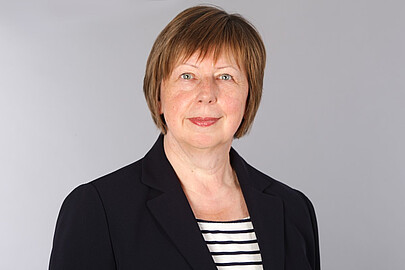
Christoph Schuster is a Faculty member at the Technische Universität Dresden under the Institute of Process Engineering and Environmental Technology , specifically in the Chair of Hydrogen and Nuclear Energy . He serves as Head of the Thermohydraulics Research Area and has led the Thermohydraulics Working Group from 2008 to 2020. His academic role as a Researcher focuses on Thermal Hydraulics and Nuclear Reactor Safety . PhD in Nuclear Energy Technology (1992) Studies in Energy System Technology (1982-1987) Research Interests include: Thermal Hydraulics of nuclear reactors Passive safety system effectiveness Spent fuel pool safety analysis Two-phase flow in natural circulation loops Reactor accident scenario modeling Article Trends show a consistent focus on Thermal Hydraulics , Nuclear Safety , and Two-Phase Flow , with recent work emphasizing Spent Fuel Pool Dynamics and Passive Safety Systems . Teaching Activities include courses on: Basics of nuclear energy technology Thermohydraulics of nuclear reactors Nuclear safety methods Transient power output in nuclear plants
Soha Hussein is an Assistant Professor at Ain Shams University in Egypt. She is actively involved in the software engineering research community, serving in various roles including Publication Co-chair for ASE 2025 and Posters/Tools/SRC Co-Chair for SPLASH/ISSTA 2026. Dr. Hussein received her Ph.D. and M.S. in Computer Science from the University of Minnesota. She also completed the Early Career Teaching and Learning program and the Prepare Future Faculty program at the University of Minnesota, demonstrating her commitment to both research and education. Her research focuses on enhancing software reliability and security through advanced program analysis techniques. Specifically, she specializes in symbolic execution, fuzzing, formal verification, and software testing. Her work addresses the critical challenge of path explosion in symbolic execution through innovative path-merging approaches. Dr. Hussein's research has practical applications in verifying Java programs and improving automated program verification techniques, with recent work extending to AWS Lambda applications. Her publications demonstrate a consistent trajectory of advancing verification techniques while maintaining strong theoretical foundations. Dr. Hussein has received multiple prestigious awards for her work on Java Ranger, including Gold Medals at SV-COMP 2020, 2021, and 2025, as well as a Bronze Medal at SV-COMP 2020. These awards recognize the effectiveness of her path-merging approach in reducing path explosion and improving verification efficiency. She is actively involved in mentoring students, particularly through the Google Summer of Code program where she serves as an organization admin and mentor for the Java Pathfinder (JPF) Organization. Dr. Hussein encourages excellent students to reach out for research opportunities in her lab, having successfully mentored students like Kunha Kim who accepted a Master scholarship at University of Colorado Boulder. Dr. Hussein leads research related to Java Ranger, an extension to Symbolic Pathfinder that implements path-merging techniques for Java verification. Her team continues to advance this work, with recent developments supporting string and array operations and applying the technology to AWS Lambda applications. She maintains active contributions to the SymbolicPathFinder/jpf-symbc repository on GitHub, demonstrating her commitment to open-source verification tools.
Prof. Dr. Jutta Winsemann is a Professor in the Department of Geology at Leibniz University Hannover, affiliated with the Faculty of Natural Sciences. She holds roles including Deputy Management in the Institute of Geology and is part of the Professors group in the Department of Geology. Her research focuses on Quaternary geology, clastic sedimentology, and basin analysis, with specialties in glacial and periglacial depositional systems, salt tectonics, and sedimentation dynamics. Education: Habilitation (venia legendi in Geology), University of Hamburg (1995) Doctorate (Dr. rer. nat.), University of Stuttgart (1992) Diploma in Geology and Paleontology, TU Berlin (1984) Research interests include subglacial meltwater dynamics, supercritical flow sediments, and tectonic interactions with glacial systems. Notable awards include the Dissertation Prize from the Friends of the University of Stuttgart (1992) and a DAAD scholarship for Costa Rica (1984–1986). Recent work explores glacial lake outburst floods, fault reactivation, and seismic deformation structures. Projects involve collaborative studies on salt tectonics, basin modeling, and geophysical analysis of sedimentary deposits. Her lab focuses on integrating field data with numerical simulations to understand sedimentary and tectonic processes. Publications emphasize glacial-lacustrine systems, structural geology, and paleoclimatic reconstructions. Active in interdisciplinary projects linking geophysics, sedimentology, and tectonics.
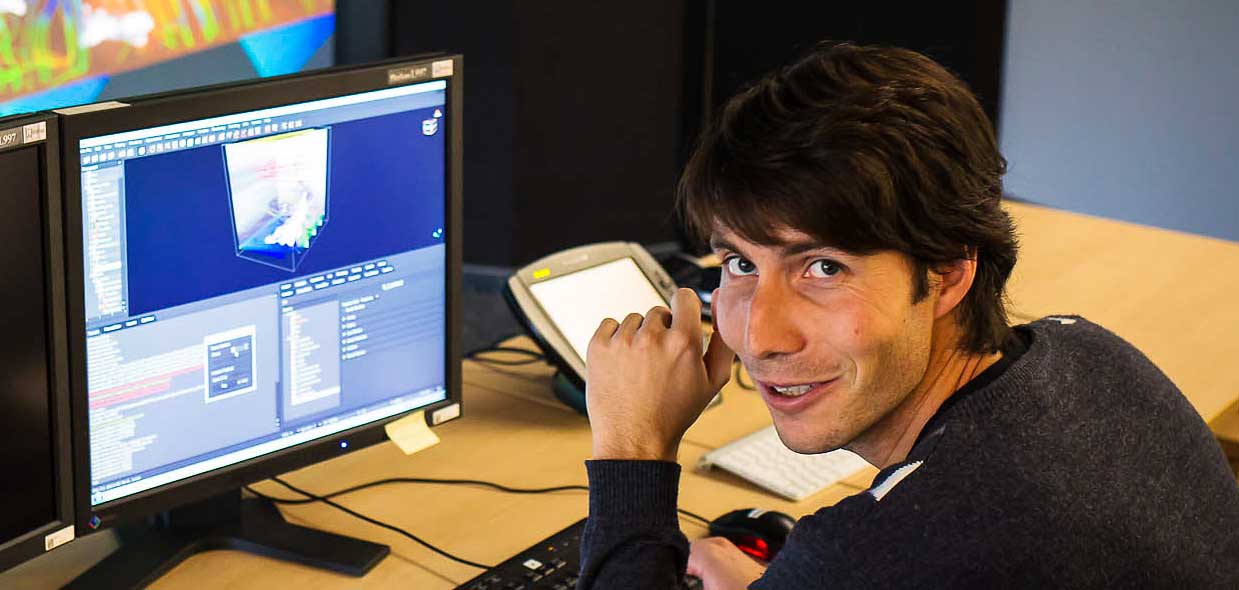
Lars Bilke is a Researcher at the Department of Environmental Informatics , Helmholtz Centre for Environmental Research - UFZ, Germany. His work focuses on software development for the OpenGeoSys simulation platform, build engineering for multiplatform systems, scientific 3D visualization, and virtual reality applications in environmental modeling. He leads the Software Engineering and Visualization workgroup and contributes to projects like TESSIN VISLab. Research interests include: Open-source geosimulation software development Multiplatform build systems Scientific visualization techniques Virtual reality for environmental data His publications from 2021-2025 cover advancements in geoscientific software tools, with a focus on OpenGeoSys and OGSTools versions. These works emphasize environmental system modeling, computational hydrosystems, and 3D data visualization methodologies. Bilke collaborates with teams on projects related to subsurface engineering, reactive transport modeling, and environmental risk assessment. Contact: lars.bilke@ufz.de
Frank Piessens is a full professor in the Department of Computer Science at KU Leuven, Belgium, with research spanning both offensive and defensive aspects of software and systems security. His defensive work includes formal verification for C-like languages, information flow security enforcement, memory safety hardening, micro-architectural side-channel mitigation, and embedded security architectures. On the attack front, he has pioneered techniques for transient execution vulnerabilities, memory corruption exploits, and controlled channel attacks. His research interests focus on software security , system security , formal methods , programming languages , and information flow security . Recent publications demonstrate expertise in secure compilation (linear capabilities, control-flow linearization), functional reactive programming for web/IoT systems, and type-theoretic approaches to program equivalence. His work bridges theoretical foundations with practical security implementations across hardware-software boundaries. Professor Piessens maintains active leadership in the academic community through program committee service for top-tier conferences including ACM CCS, Usenix Security, IEEE Security & Privacy, and ACM POPL. He has chaired major events such as POST 2016, IEEE Euro S&P 2018-2019, and IEEE SecDev 2021-2022, while delivering keynotes at SPLASH 2025 and PriSC 2022 on confidential computing and hardware security evidence.
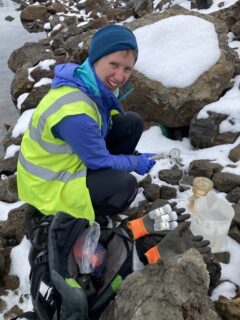
Prof. Dr. Barbara I. Kleine-Marshall is a Professor at the GeoZentrum Nordbayern , Friedrich-Alexander-Universität Erlangen-Nürnberg, specializing in Geochemistry and Mineral Geology . Her research focuses on fluid dynamics and geochemical processes in orogens, subduction zones, and rift systems, particularly the role of sulfur in crustal fluid-metal interactions. Education B.Sc. in Geoscience (Albert-Ludwigs-Universität Freiburg, 2006–2009) M.Sc. in Geology (Stockholm University, 2009–2010) PhD in Geology (Stockholm University, 2010–2015) Appointments Professor, FAU (2023–present) Adjunct & Postdoc, University of Iceland (2019–2023) Postdoc, NordVulk (2017–2019) Her work combines state-of-the-art analytical techniques (LA-ICP-MS, SIMS) with thermodynamic modeling (PhreeqC, GEMS) to study fluid sources, element mobilization, and global chemical cycles. Recent publications highlight sulfur cycling, hydrothermal alteration, and volatile fluxes in Iceland, Kenya, and Greece. Current projects include TraceS (DFG-funded study on sulfur fluxes in the Icelandic crust) and preparation for an EU HORIZON project on critical metal deposits. She actively collaborates with institutions in Iceland, Sweden, and Germany, contributing to understanding crustal fluid systems and anthropogenic sulfur sequestration.
Luis Cifuentes is a Senior Researcher at the Jülich Supercomputing Center (JSC), Research Center Jülich GmbH, and affiliated with the Chair of Fluid Dynamics at the University of Duisburg-Essen. His work focuses on high-resolution numerical modeling of turbulent and reactive flows using Large Eddy Simulations (LES) and Direct Numerical Simulations (DNS). Academic Affiliation: University of Duisburg-Essen Research Institution: Research Center Jülich GmbH Research Interests Computational Fluid Dynamics (CFD) Turbulent Reacting Flows Direct Numerical Simulation (DNS) and LES Turbulent Combustion Modeling (including MILD combustion) Nano-Particle and Soot Formation High-Performance Computing (HPC) AI-Based Engineering Solutions Publication Trends His research emphasizes DNS/LES of turbulent premixed/non-premixed flames, flame-vortex interactions, and particle formation dynamics. Key topics include scalar gradients, strain rates, flame curvature evolution, and Lewis number effects in combustion systems.
Dr. Yajian Gao is a Researcher at the Geophysics group of the Karlsruhe Institute of Technology (KIT), focusing on seismic waveform inversion and subduction zone geodynamics. His work employs spectral element methods for 2D/3D modeling of crustal and upper mantle structures. Institution: Karlsruhe Institute of Technology (KIT) Department: Geophysics group at Geophysical Institute Research Interests: His studies center on subduction zones (Central Andes, Central Asia), mantle hydration/dehydration processes, and distributed deformation analysis using passive seismic data and ambient noise interferometry. Publication Trends: Recent articles emphasize full waveform inversion applications, mantle dynamics, and microseism source characterization, reflecting expertise in computational geophysics and tectonic-geodynamic interactions.
Dr. Michal Kruszewski serves as a Senior Researcher at the Department of Engineering Geology and Hydrogeology at RWTH Aachen University, where he leads investigations in reservoir geomechanics, rock mechanics, and fault mechanics with applications in deep geothermal energy systems. His expertise spans numerical modeling, hydraulic testing, and stress state analysis, contributing significantly to sustainable geothermal resource development. His academic credentials include: Ph.D. in Geosciences from Ruhr University Bochum (2023) M. Eng. in Geology and Mining from AGH University of Science and Technology, Cracow, Poland (2017) Dr. Kruszewski's research focuses on the critical relationship between crustal stress states and fault behavior in geothermal reservoirs. His work examines how stress conditions affect fault stability and permeability, with direct implications for induced seismicity risk during geothermal operations. He employs advanced numerical modeling techniques combined with field data analysis to address challenges in geothermal energy development, particularly in the Ruhr region of Germany and Los Humeros in Mexico. His investigations into fault reactivation potential during fluid injection operations have provided valuable insights for safer geothermal system design. His publication record demonstrates consistent research productivity with numerous high-impact articles focusing on geomechanical characterization of geothermal systems. A significant portion of his work addresses the practical challenges of deep geothermal energy development, particularly the relationship between stress states, fault reactivation, and fluid flow in the subsurface. His recent publications (2023-2025) show continued innovation in modeling techniques and field applications. Dr. Kruszewski maintains active membership in key professional organizations: European Geosciences Union (EGU) American Geophysical Union (AGU) International Geothermal Association (IGA) Polish Geothermal Society (PSG) Society of Petroleum Engineers (SPE) As project lead for SIEGFRIED (BMWK) and contributor to PRECODE (BGE), he oversees research initiatives addressing critical challenges in underground engineering and geothermal development. His work on the PRECODE project investigates excavation-induced damage in tunnel environments, with implications for deep geological repositories. Dr. Kruszewski maintains strong international collaborations, particularly with Mexican research institutions through the GEMex project, advancing understanding of superhot geothermal systems in volcanic environments.
Matthias Hettel is a Higher Academic Councillor and Senior Scientist at the Institute for Chemical Technology and Polymer Chemistry, Karlsruhe Institute of Technology (KIT). His research focuses on computational fluid dynamics (CFD), combustion phenomena, and reactor engineering. He holds a Diploma in Mechanical Engineering (1990, specializing in Energy Technology and Fluid Dynamics) and a PhD in Chemical Engineering (2006, thesis on flame dynamics and numerical analysis). His work spans reactive/non-reactive flow modeling, catalytic systems (e.g., monolith reactors), fixed-bed reactor design, and numerical methods like CFD-DEM coupling. Notable contributions include the DUO simulation framework for multiphysics modeling and optimization of industrial reactors. He has received the Posterpreis der Fachgruppe Reaktionstechnik (2014) for his work on coupled 2D/3D CFD modeling of catalytic reactors. Key research areas include: combustion dynamics, fluidized bed reactors, emission control systems, and microfluidic tissue engineering. His interdisciplinary projects bridge chemical engineering, environmental science, and biomedical applications.
Prof. Bernd Finkbeiner is a faculty member at CISPA Helmholtz Center for Information Security and holds a Professorship in Computer Science at Saarland University. He earned his Ph.D. in 2003 from Stanford University. Leading the Reactive Systems Group since 2003, now part of CISPA, his research focuses on ensuring safety and security in computer systems through formal methods like specification, program synthesis, and verification. Key projects include output-sensitive reactive synthesis (OSARES), hyperproperty logics (HYPER), and real-time monitoring (RTLOLA). Education : Ph.D. in Computer Science, Stanford University, 2003 His research interests span hyperproperties, formal verification, runtime monitoring of cyber-physical systems, and distributed synthesis. He has pioneered tools like StreamLAB and AutoHyper for hyperproperty analysis. His work on temporal causality and information-flow guided synthesis addresses challenges in distributed and secure systems. Key Achievements : Recipient of ERC Advanced Grant 2022–2027 for Project HYPER Best Paper Awards at ICALP 2009, FSEN 2007, and VMCAI 2012 Leader of the Reactive Systems Group at CISPA Grants & Funding : ERC Advanced Grant supporting research on hyperproperties His lab develops cutting-edge tools for formal methods, including BoSy for bounded synthesis and RTLola for runtime verification. Current research explores compositional synthesis, explainable reactive systems, and robust monitoring for medical and autonomous systems.
Dr.-Ing. Karin Schwarzenberger is Group Leader for Interfacial Phenomena at Helmholtz-Zentrum Dresden-Rossendorf (HZDR) and since 2020 deputy group leader for the Chair of Transport Processes at Interfaces at TU Dresden. She has been continuously affiliated with TU Dresden’s Faculty of Mechanical Engineering since 2003, advancing from diploma studies through PhD to post-doctoral and leadership roles. Education: Doctoral studies (Dr.-Ing.), TU Dresden, Faculty of Mechanical Engineering, 2010–2015 Thesis: “Experimental Investigations on Stationary Solutal Marangoni Instability” Diploma in Process Engineering, TU Dresden, 2003–2010 Diploma Thesis: “Calculation of Interaction Energies between Fractal Aggregates” Research Interests Karin Schwarzenberger’s work centers on interfacial transport phenomena, pattern formation, and multiphase flows. Key areas include: Interfacial dynamics at liquid/liquid and liquid/gas boundaries Particle–particle and particle–interface interactions Solutal Marangoni instabilities and convective structures Coacervation and complexation of polymers and surfactants Microgravity effects on buoyancy-driven instabilities Her experimental approach combines high-resolution optical diagnostics with numerical simulations to unravel the coupling between mass transfer, surface tension gradients, and hydrodynamic instabilities. Publication Trends Between 2012 and 2025 Schwarzenberger has published more than 30 peer-reviewed articles. Recent work (2022–2025) demonstrates a clear shift toward applied interfacial engineering—surface functionalization of Ti64 alloys, foam fractionation for protein purification, and coacervation-based membrane formation—while maintaining fundamental studies on Marangoni convection and buoyancy-driven instabilities under microgravity. Scientific Awards No specific awards are mentioned in the provided materials. Advising & Funding While the text does not list individual students, her role as group leader at HZDR and deputy chair leader at TU Dresden implies supervision of doctoral researchers and technical staff. Funding is implicitly provided through Helmholtz Association programmes and collaborative projects with TU Dresden. Labs & Teams She heads the Interfacial Phenomena group at HZDR, located in building 310 at Bautzner Landstrasse 400, Dresden. The group operates state-of-the-art optical measurement techniques (PIV, LIF, high-speed imaging) and performs experiments both in the laboratory and under microgravity conditions (parabolic flights).
Hen-Geul Yeh is an active professor and researcher with a distinguished career spanning nearly four decades in electrical engineering and communications systems. With publications dating from 1986 to the present (2025), Yeh has established expertise in wireless communications, signal processing, and power systems applications. Yeh's research interests encompass wireless communications, signal processing, MIMO systems, OFDM systems, intercarrier interference cancellation, smart grid applications, electric vehicle charging systems, and artificial intelligence applications in communications. The research demonstrates a consistent evolution from foundational signal processing work to contemporary applications in smart grid and 5G/6G communications. Recent publications (2023-2025) reveal a strong focus on practical applications including EV charging infrastructure, UAV communications, fault detection systems, and green communication technologies. The work shows increasing integration of machine learning techniques with traditional signal processing approaches, particularly reinforcement learning for dynamic system optimization. Yeh has established longstanding collaborations with researchers including Donald C. D. Chang, Joe Lee, and Yu Yang, resulting in numerous co-authored publications across IEEE journals and conferences. The research output demonstrates consistent productivity with multiple publications per year, including several in top-tier IEEE journals. Current research directions emphasize sustainable technologies, with significant work on photovoltaic integration, electric vehicle infrastructure, and energy-efficient communication systems that address contemporary challenges in power and communications infrastructure.
Jana Hofmann is a tenure-track faculty member at the Max Planck Institute for Security and Privacy (MPI-SP) in Bochum, Germany, starting October 2024. Previously, she was a postdoctoral researcher at Microsoft Research (Azure Research), and completed her Ph.D. at Saarland University in collaboration with CISPA Helmholtz Center for Information Security. She holds an M.Sc. in Computer Science from the University of Edinburgh and a B.Sc. from Saarland University. B.Sc. in Computer Science, Saarland University (2013–2016) M.Sc. in Computer Science, University of Edinburgh (2016–2017) Ph.D. in Computer Science, Saarland University / CISPA (2018–2022) Her research lies at the intersection of formal methods, computer security, and logic. She develops principled techniques to detect, specify, and prevent information leakage in software and hardware systems. Her work focuses on hyperproperties—advanced formal specifications that capture security policies like non-interference and observational determinism—and their application to smart contracts and microarchitectural side-channels. She designs specification languages, verification and synthesis algorithms, and testing methodologies for black-box systems. Her recent publications span top venues in security (CCS, USENIX Security), formal methods (CAV, CSF, LICS), and verification (ATVA, NFM). Key themes include smart contract synthesis, automata-based model checking, microarchitectural isolation, and logical foundations of hyperlogics. Her work has received multiple distinguished paper awards, including at CSF’23 and CCS’24. She has been recognized with several scientific awards, including the Dr.-Eduard-Martin prize for the best computer science Ph.D. thesis at Saarland University (2022), the CSF and CCS Distinguished Paper Awards, the Claire Jones Prize for her M.Sc. at Edinburgh, and teaching awards such as the Busy Beaver and BeStE awards. Jana has advised multiple bachelor’s students on topics related to hyperproperties and smart contracts. She has contributed to teaching at Saarland University and the University of Edinburgh, covering programming, verification, and logic. She has also been actively involved in academic service, serving on program committees for CAV, CSF, LICS, and others, and participating in artifact evaluation. She leads research in the Confidential Computing Group at Microsoft Research and will establish her independent research group at MPI-SP, focusing on principled reasoning for relational security properties in hardware and software systems.
Prof. Dr. Cornelius Fischer serves as the Head of the Department of Reactive Transport at the Helmholtz-Zentrum Dresden-Rossendorf (HZDR) e. V., a leading research institution in Leipzig, Germany. Department: Reactive Transport Primary Affiliation: Resource Ecology Institute at HZDR Contact: c.fischer@hzdr.de His research focuses on: Reactive Transport Modeling Geochemical processes Environmental Science applications Hydrology and subsurface flow dynamics Contaminant transport mechanisms Subsurface Flow modeling As head of department, he leads advanced research initiatives in resource ecology and subsurface systems.