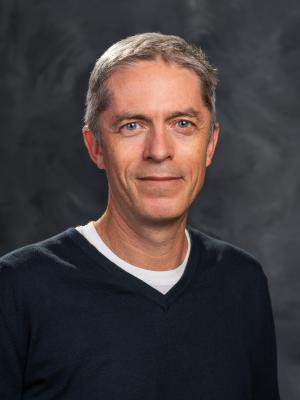
Ilya Morev is a Doctoral Researcher in the Department of Energy and Mechanical Engineering at Aalto University. His work focuses on energy conversion systems and computational fluid dynamics, particularly reactive flow simulations. Research Affiliation: Energy Conversion and Systems group Key Expertise: OpenFOAM, dynamic load balancing, analytical Jacobian methods In 2022, he co-authored a study published in Physics of Fluids on accelerating reactive flow simulations through computational optimizations. His research contributes to energy systems modeling and combustion analysis.
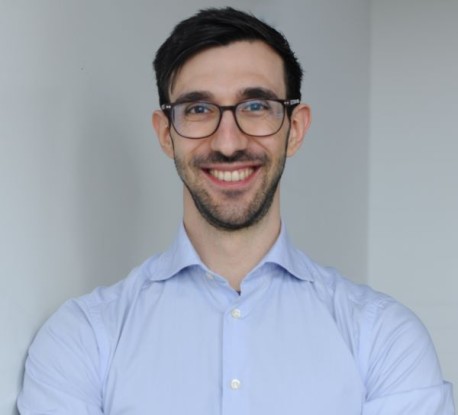
Dr. Martin M. Monti is a Professor at the University of California, Los Angeles, with appointments in Psychology, Neurosurgery, and Psychiatry and Biobehavioral Sciences. He is affiliated with the College of Letters and Science and contributes to interdisciplinary research in cognitive neuroscience, neurology, and neuromodulation. PhD, Princeton University (2007) - Psychology & Neuroscience MA, Princeton University (2006) - Psychology & Neuroscience BA, Università Commerciale L. Bocconi (2002) - Economics Dr. Monti's research focuses on disorders of consciousness, traumatic brain injury, and neural mechanisms of cognition. His work employs advanced neuroimaging techniques to investigate brain connectivity, consciousness recovery, and neuromodulation therapies like transcranial focused ultrasound. Key publication trends include studies on disorders of consciousness biomarkers, brain network dynamics, and clinical applications of neuromodulation. His 2025 work explores subcortical sleep quality correlates, while 2024 studies examine AI-driven consciousness models, thalamic stimulation effects, and accelerated aging post-TBI. 2019 Italian National Scientific Habilitation 2018 Sciacca Foundation International Prize for Medical Research 2020 & 2014 UCLA Life Science Faculty Awards 2019 & 2015 UCLA Psychology Department Distinguished Teaching Awards 2013 Association for Psychological Science (APS) Rising Star Dr. Monti leads clinical trials evaluating neuromodulation in consciousness disorders and contributes to the ENIGMA-Neuromodulation working group. His research bridges computational neuroscience, neuroimaging, and clinical neurology to advance coma recovery understanding.
Arlin B. Blood, PhD is an active Associate Professor with triple appointments in the School of Medicine at Loma Linda University, holding positions in the Pharmacology Division, Pediatric Neonatology Division, and Gynecology & Obstetrics Department. With over 128 publications spanning more than two decades, Dr. Blood maintains a robust research program focused on vascular physiology and gasotransmitter signaling. Dr. Blood's research primarily investigates nitric oxide metabolism, hypoxia responses, and vascular regulation in maternal-fetal systems. Key areas include nitrite pharmacology , pulmonary hypertension mechanisms , and cerebral blood flow regulation using sheep/lamb models. The work bridges basic science with clinical applications in neonatal physiology and obstetrics. Analysis of recent publications (2022-2025) reveals a strong focus on molecular mechanisms of hypoxia responses, particularly involving microRNA-210 regulation of mitochondrial function in pulmonary hypertension. The research shows increasing integration of omics approaches with traditional physiology techniques, demonstrating evolution from basic vascular studies toward more complex systems biology. Dr. Blood serves on NIH study sections including the CVRS Special Emphasis Panel, reviewing R01 applications focused on neonatal pulmonary disease. The research program appears well-funded with consistent publication output across multiple high-impact journals in physiology and pharmacology. The laboratory utilizes advanced techniques including vascular myocyte calcium imaging, chemiluminescence assays for nitric oxide metabolites, and translational models of hypoxia. Collaborations extend across departments with strong ties to researchers in obstetrics, neonatology, and basic pharmacology.
Prof. G. Eitelberg is a Professor in the Faculty of Aerospace Engineering at Delft University of Technology, specializing in Flight Performance and Propulsion. His work bridges experimental and computational research in aerodynamics, combustion, and vortex dynamics with applications in sustainable propulsion systems. His core research areas include: Combustion Science : Hydrogen-methane dual-fuel systems, swirl-stabilized combustors, and partially premixed flame modeling Vortex Dynamics : Precessing vortex core behavior, confinement effects in swirled flows, and aerodynamic instability Advanced Vehicle Design : Wing-in-ground effect vehicles and ground-effect aerodynamics Recent publications (2022-2025) demonstrate a clear trajectory toward decarbonized propulsion, with 70% of output focused on hydrogen combustion and vortex-driven flow control. His experimental work frequently integrates high-fidelity numerical validation, particularly using LES for turbulent reactive flows. Prof. Eitelberg has supervised 7 students according to institutional records. His research group operates within the Flight Performance and Propulsion department, utilizing advanced experimental facilities for combustion testing and aerodynamic validation, including wind tunnels and optical diagnostics for flow visualization.
Gaute Linga is an Associate Professor at the Department of Physics , Norwegian University of Science and Technology (NTNU). His research focuses on pore-scale fluid dynamics , two-phase flow in porous media , and chaotic mixing phenomena . Key journals: Advances in Water Resources , Nature Physics , Geophysical Research Letters Collaborations: University of Oslo (UiO), Université de Rennes, CNRS Recent work explores capillarity-driven mixing , electrohydrodynamic flow control , and chaotic transport in unsteady flows , with applications to geophysics and materials science. His publications show strong emphasis on experimental-computational synergy (e.g., neutron imaging, phase-field simulations) and nonlinear dynamics in confined systems. No student advising or award information appears in the text.
Hugo Atle Jakobsen is a Professor at the Norwegian University of Science and Technology (NTNU), specializing in computational fluid dynamics within the Department of Chemical Engineering. His research encompasses multiphase reactive flows, reactor technology (including packed beds, fluidized beds, and bubble columns), phase separation processes, and advanced numerical methods in fluid dynamics. He teaches courses in Transport Phenomena (TKP4160/KP8904), Reactor Technology (TKP4145/KP8902), and specialized reactor modeling. Jakobsen's research interests focus on: Multiphase reactive flow modeling for chemical reactors Development of finite volume and weighted residual methods for computational fluid dynamics Population balance modeling for complex fluid systems Experimental analysis of fluid particle behavior under turbulent conditions His recent publications (2021-2025) predominantly explore bubble/drop dynamics, interfacial mass transfer, and reactor modeling, with consistent themes in experimental validation of computational frameworks for multiphase systems. Trends indicate strong emphasis on turbulence effects, non-Newtonian fluid behavior, and innovations in population balance equations.
Olof Samuelsson is a Professor at the School of Engineering (Lund University), serving as Director of Third Cycle Studies and Coordinator for the LTH Profile Area: The Energy Transition. His work focuses on modernizing power systems to support renewable energy integration and electromobility infrastructure. Division for Industrial Electrical Engineering and Automation UN SDG: Clean Energy & Climate Action Research Themes: Grid Capacity, Reliable Power Supply, Blackstart Operations His research interests span power systems analysis , electrical machines , power electronics , and smart grid automation , with a focus on enabling renewable energy integration and electric transport networks. Key subtopics include: Wind/solar grid integration Electric vehicle charging impacts System integrity protection schemes Probabilistic grid modeling Space weather resilience Recent Scientific Trends His research group analyzes 15+ publications since 2023, emphasizing: Electrified transport grid impacts (2025) Renewable energy congestion management (2023) Probabilistic modeling of sub-transmission systems System integrity schemes across Nordic grids Awards : IEEE PES Chapter Outstanding Engineer (2017) Projects : Leads SPS4SE (2023–2026) and co-leads VINST (2020–2023) with the Swedish Energy Agency.
Son Dang is an Assistant Professor of Petroleum and Geological Engineering at the University of Oklahoma , focusing on advanced energy systems and subsurface fluid dynamics. His research bridges experimental and computational techniques to address critical challenges in energy production and carbon neutrality. Education: B.S., Petroleum Engineering, University of Oklahoma, 2012 M.S., Petroleum Engineering, University of Oklahoma, 2015 Ph.D., Petroleum Engineering, University of Oklahoma, 2019 Research Interests span material characterization, petrophysics, enhanced oil recovery (EOR), geo-storage, and mass transport in nanoporous media. His work emphasizes hydrogen storage, CO2 sequestration, and unconventional reservoir optimization. Scientific Contributions include pioneering studies on hydrogen diffusivity in depleted reservoirs, CO2 injection-induced geomechanics, and machine learning applications for rock typing. He employs nuclear magnetic resonance (NMR) spectroscopy and molecular simulations to unravel fluid-rock interactions at microstructural scales. Publications reveal a focus on energy transition technologies, with 15 recent works covering topics from supercritical CO2 fracturing to NMR-based diffusion analysis. These studies highlight his expertise in integrating experimental data with computational models to improve subsurface energy systems.
Sylke Hilberg is an Associate Professor at the Paris Lodron University of Salzburg, specializing in environmental and biodiversity research. She actively contributes to interdisciplinary hydrogeological studies in alpine regions, focusing on coal mine drainage and climate change impacts. Her work spans academic research, educational innovation, and environmental consultancy. Hydrogeology of alpine lakes and post-mining systems Development of digital learning tools for geological education Environmental impact assessment of mining activities Isotopic and geochemical analysis of water systems Her recent publications address topics like reactive mass transport in coal mines, hydrochemical characterization of alpine springs, and innovative educational methodologies. She has served as Principal Investigator in multiple projects including AlpLake-Change and Grubenwässer der Altbergbaue. Scientific Awards: Comenius EduMedia Siegel (2013) for educational program 'Zwischen Regenwolke und Wasserhahn' Hilberg participates in editorial work (e.g., reviewing for Hydrology and Water journals) and science communication initiatives. She integrates geological education with environmental research through projects like 'System Veder im Praxistest' and 'Geologie begreifen.'
Marcus Larsson is Assistant Professor and Head of the Department of Medical Technology at Linköping University, Sweden, where he also serves as Deputy Dean. His research develops optical methods—laser speckle contrast imaging, multispectral imaging and Monte-Carlo modelling—to quantify skin capillary perfusion and oxygenation, work that has continuous funding from national and EU sources and direct translation to cardiovascular risk assessment. Education: MSc in Applied Physics and Electrical Engineering, Linköping University, 1999 PhD in Biomedical Instrumentation, Linköping University, 2006 Marcus leads the Biomedical Optics group that designs real-time, non-invasive systems combining hardware advances with machine-learning algorithms. By merging spectroscopic and laser-Doppler data his team achieves comprehensive microcirculatory maps applicable to diabetes, sepsis and population-based cohorts such as SCAPIS. He is Director of Studies for the Biomedical Engineering programme, teaching five core courses from first-year design to specialised optics and modelling, and acts as assistant supervisor for doctoral student Andisheh Etminan. Collaborative projects involve senior colleagues Göran Salerud, Tomas Strömberg and Ingemar Fredriksson and are conducted within the Department of Medical Technology, a national centre for medical technology research and education founded in 1972.
Clark R. Landis is a Professor of Chemistry at the University of Wisconsin-Madison, where he leads the Landis Group in research focused on transition metal-catalyzed reactions. He holds a B.A. from the University of Illinois at Urbana-Champaign (1980) and a Ph.D. from the University of Chicago (1983). His research bridges experimental and computational approaches to homogeneous catalysis, with a particular emphasis on asymmetric synthesis, mechanistic studies of polymerization, and electronic structure analysis of transition metal complexes. Current projects explore 3,4-diazaphospholane ligands for enantioselective hydroformylation and novel NMR/instrumentation methods for fast reaction kinetics. The articles listed reflect trends in metallocene-catalyzed polymerization, asymmetric hydroformylation, computational modeling of catalysis, and NMR-based mechanistic analysis, underscoring his group's interdisciplinary focus. Scientific Awards : Fellow, American Chemical Society ACS Award in Organometallic Chemistry, 2010 Fellow, American Academy for the Advancement of Science Vilas Associates Award, UW-Madison, 1997-1998 NIH FIRST Award, 1988 Mark Galler Award for Ph.D. Dissertation, University of Chicago, 1984 Landis advises a team of graduate students and postdoctoral researchers, including Spencer Heins, Nick Smith, Andrew Maza, Megan Nieszala, and Katie Ziebarth, who investigate polymerization mechanisms, ethenolysis, and synthetic method development.
Vania Anagnostakou is an Assistant Professor at the University of Massachusetts Chan Medical School , affiliated with the Department of Radiology and its Neurointerventional Radiology division. Her work bridges clinical practice and translational research. Education: MD, National and Kapodistrian University of Athens Medical School MS in Interventional Radiology, National and Kapodistrian University of Athens PhD in Cardiology/Cardiopulmonary Rehabilitation, Panhellenic Medical Association Board Certifications: Radiology, Diagnostic Neuroradiology, Interventional Neuroradiology Research Interests: Focus on Neurointerventional Radiology and Cerebrovascular Diseases , with emphasis on advanced imaging techniques (e.g., optical coherence tomography) and novel device development for stroke and aneurysm treatment. Key themes include: Thrombectomy optimization and clot characterization Flow diverter technology and vascular healing Preclinical modeling for neurovascular interventions Machine learning applications in aneurysm detection Biomechanics of stent-retrievers Publications highlight interdisciplinary trends in Medical Imaging , Neurovascular Disorders , and Biomedical Engineering , with recent work addressing clinical guidelines for aneurysm therapy and thrombus analysis.
Dr. Paul Armstrong is a Lecturer in Pharmacology at the Centre for Immunobiology within the Blizard Institute at Queen Mary University of London. His research focuses on platelet pharmacology, particularly investigating how platelet turnover in disease states influences thrombotic risk and how platelet-monocyte aggregates contribute to disease pathophysiology. These studies aim to refine therapeutic approaches for cardiovascular diseases. Education : BSc in Pharmacology (University of Edinburgh), PhD at William Harvey Research Institute (2009) Research Themes : Platelet Reactivity, Thrombosis, Immune Cell Interaction, Cardiovascular Pharmacology Collaborations : Timothy D Warner's Lab; international institutions like Baker Institute (Australia) His recent publications emphasize platelet aging dynamics, noncoding RNA biomarkers, and novel assay development for platelet function testing. Collaborative studies explore cross-disciplinary approaches in thrombosis and hemostasis. No formal student advising or specific grants mentioned in available texts. Armstrong's work frequently addresses antiplatelet therapy optimization and platelet-endothelium interactions.
Riccardo Sprocati is a PostDoc researcher at the Technical University of Denmark (DTU), specializing in electrokinetic remediation technologies and multiphysics reactive transport modeling. His work addresses environmental challenges through advanced computational frameworks and sustainable resource recovery applications. Research Interests: Electrokinetic remediation of contaminated sites In situ mining of critical metals Multiphysics reactive transport modeling Surrogate and machine learning models Life cycle assessment (LCA) Publication Trends: His recent work focuses on electrokinetic transport dynamics in porous media, integrating machine learning with process-based models for bioremediation, and sustainable mining via electrokinetic recovery of metals from mine tailings. Key themes include electromigration/electroosmosis interplay, temperature-dependent transport, and geochemical coupling in heterogeneous systems.
Andrew Hurst is Professor and Chair of Energy Geoscience at the University of Aberdeen's School of Geosciences, holding this position since 1992 (previously titled Chair in Production Geoscience). He leads the Sand Injection Research Group (SIRG), active since 1998 with nearly 40 energy company sponsors, and serves as an elected Trustee of the Geological Society of London. His research spans sedimentary processes, resource evaluation, and waste sequestration applications. PhD Geology, University of Reading (1981) BSc Hons Geology & Mineralogy, University of Aberdeen (1977) Hurst's research integrates global to sub-micro-scale data to examine basin evolution, sediment provenance, and climate change relationships through weathering, erosion, and diagenesis. His work focuses on sand injectites—natural hydraulic fractures with fluidized sand injection—and their role in fluid migration, resource entrapment, and sequestration (nuclear, CO 2 , hydrogen). Additional research includes loessite origin linked to mass extinction events, green rural energy systems, and micro-scale granular modeling for rock properties. His recent publications reveal consistent emphasis on sand injectite reservoir characterization, hydro-mechanical modeling, and provenance studies across North Sea, California, and global analogues. William Smith Award (Geological Society of London, 1993) Wegener Medal (EAGE, 2004) Distinguished Service Award (AAPG, 2007) Grover E Murray Distinguished Educator Award (AAPG, 2012) Blaustein Professorship, Stanford University (2015) Hurst co-founded and served as Chief Editor of Petroleum Geoscience (GSL/EAGE), testified as an expert witness in the Deepwater Horizon Trial (2011-2014), and actively participates in AAPG, EAGE, and International Association of Sedimentology committees. His Sand Injection Research Group maintains industry collaboration for subsurface characterization, while his teaching includes MSc IPG, OGEM, Oil & Gas Engineering, and undergraduate courses. Current projects examine sequestration applications and low-carbon rural energy systems through agricultural waste repurposing. The Sand Injection Research Group (SIRG) operates as his primary research unit, maintaining industry partnerships for sand injectite studies with applications to hydrocarbon recovery and geological storage. His work integrates field outcrop analysis, seismic interpretation, and hydro-mechanical modeling to develop predictive frameworks for subsurface fluid behavior.