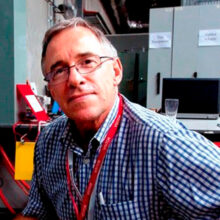
Richard Taylor is Associate Professor in QUT's Faculty of Engineering, specializing in applied superconductivity and power engineering. His research focuses on high-temperature superconducting (HTS) materials characterization, MgB2 wire technology, and energy-efficient cryogenic systems. Experimental work includes developing testing facilities for HTS machine performance under dynamic electromagnetic conditions. Publications demonstrate consistent focus on superconducting materials optimization for industrial applications.
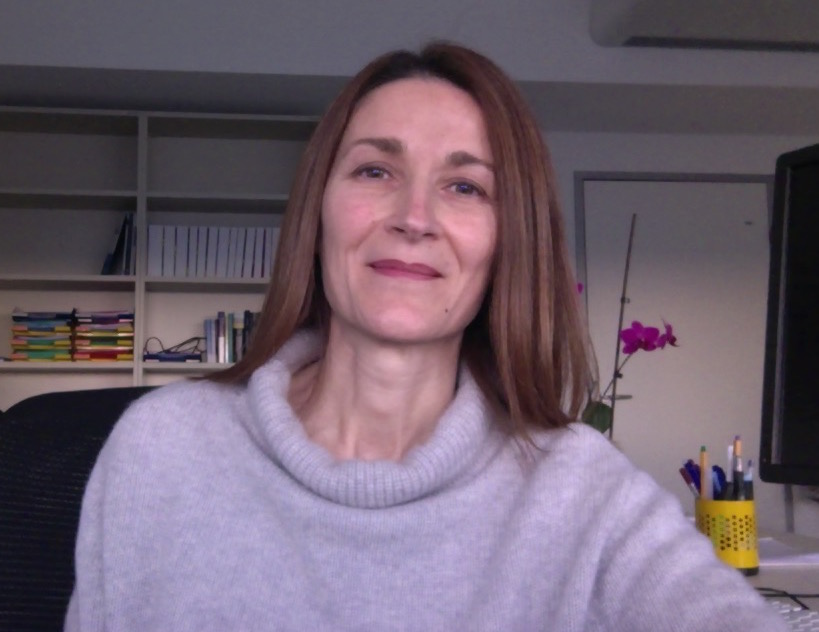
Ilaria Perugia is a University Professor (Univ.-Prof.) and Chair of Numerics of PDEs at the Department of Mathematics, Faculty of Mathematics, University of Vienna. She also serves as Deputy Head of the Research Platform Erwin Schrödinger International Institute for Mathematics and Physics. Her research focuses on numerical methods for partial differential equations with applications in computational physics and engineering. Professor Perugia's primary research interests include: Numerical methods for PDEs Finite element methods Discontinuous Galerkin methods Trefftz methods Virtual element methods Space-time methods Computational electromagnetics Wave propagation problems Nonlinear reaction-diffusion problems Her work spans theoretical analysis, algorithm development, and practical implementation of numerical methods for solving complex physical phenomena. Her recent publications demonstrate a strong focus on space-time methods, virtual element methods, and structure-preserving discretizations for wave equations, heat equations, and other PDEs. She has made significant contributions to the development of stable and efficient numerical schemes that preserve important physical properties of the underlying continuous problems, particularly in the context of wave propagation and computational electromagnetics. Professor Perugia leads a research group comprising several researchers and students including Mattia Corti, Matteo Ferrari, Monica Nonino, Andrea Scaglioni, Paul Stocker, Enrico Zampa, and Marco Zank. Her group actively collaborates on projects related to numerical analysis and scientific computing, with particular emphasis on developing novel discretization techniques for challenging PDE problems.
Endre Süli is a Professor of Numerical Analysis at the University of Oxford, affiliated with Worcester College and Linacre College. He has held various academic roles since 1985, including Fellowships and Tutorships in Mathematics. University Education: B.Sc. in Mathematics, University of Belgrade (1974-1978) M.Sc. in Mathematics, University of Belgrade (1978-1980) Ph.D. in Mathematics, University of Belgrade (1985) M.A., University of Oxford (1985) British Council Visiting Student, Reading University and University of Oxford (1983/84) Süli's research focuses on numerical methods for partial differential equations (PDEs), with expertise in finite element methods, adaptive algorithms, error control, and computational modeling of fractures and non-Newtonian fluids. His work bridges mathematical theory and practical applications in fluid dynamics and material science. His recent publications emphasize finite element approximations, nonlinear PDEs, and stochastic models for polymer dynamics. Themes include multiscale methods, tensor-sparsity for high-dimensional problems, and compressible flow simulations. Scientific Awards: Fellow of the Royal Society (2021) London Mathematical Society Naylor Prize and Lectureship (2021) Pro Urbe Prize, City of Subotica (2021) SIAM Fellow (2016) Member, Academia Europaea (2020) Foreign Member, Serbian National Academy of Sciences and Arts (2009) IMA Service Award (2011) Fellow, European Academy of Sciences (EurASc) (2010) Fellow, Institute of Mathematics and its Applications (2007) London Mathematical Society/New Zealand Mathematical Society Forder Lecturer (2015) Professor Hospitus, Charles University, Prague (2012) Distinguished Visiting Chair Professor, Shanghai Jiao Tong University (2013) Invited Speaker, International Congress of Mathematicians, Madrid (2006) Süli has supervised numerous research projects and held visiting appointments globally. His contributions to numerical analysis span foundational work on error estimation, nonlinear stability, and advanced computational frameworks for complex physical systems.
Christos Tapeinos is a Lecturer in Pharmaceutical Sciences at the University of Manchester, specializing in pharmaceutical nanotechnology for treating brain diseases (e.g., glioblastoma, neuroinflammation) and pancreatic cancer. His research focuses on developing smart nanomedicines, advanced in vitro models (e.g., fluidic systems mimicking brain environments), and stimuli-responsive nanomaterials to overcome biological barriers like the blood-brain barrier. He leads the development of skin-mimicking models for subcutaneous drug delivery as a Co-Investigator in the HALo program. Education: Docent in Pharmaceutical Nanotechnology (2022) PhD in Materials Science (2013) MSc in Materials Science (2010) BSc in Materials Science (2006) Research Interests: Drug delivery systems, nanoparticle engineering, in vitro disease models, biomimetic materials, and translational nanomedicine. He integrates nanotechnology with precision medicine to address complex diseases. Recent Articles Trends: Focus on nanoparticle-cell interactions, phototherapy systems, graphene-cerium oxide hydrogels, and targeted theranostics. Highlights include ROS-scavenging systems and multi-stage nanovectors for CNS pathologies. Awards: Marie Skłodowska-Curie Actions Fellowship. Grants/Projects: Supported by EPSRC, The Royal Society, and Translation Manchester. Active in the Hub for Long-Acting Technologies (2024–2030). Labs/Teams: Leads research groups developing fluidic BBB models, skin-mimicking drug diffusion systems, and nanomaterial-based therapies.
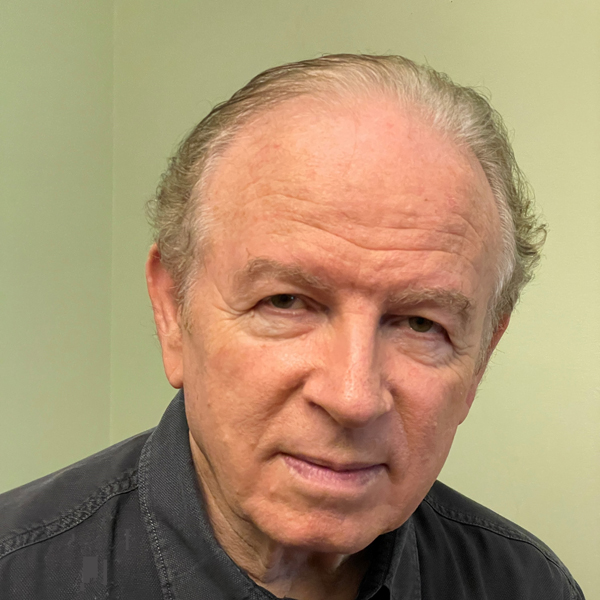
Eitan Tadmor is a Distinguished University Professor at the Department of Mathematics and Institute for Physical Science & Technology at the University of Maryland. He holds the 2024 Chaire d'excellence at Sorbonne University's Fondation Sciences Mathématiques de Paris, and has served as Director of multiple research centers including the Center for Scientific Computation and Mathematical Modeling (2002-2016) and The Sackler Institute of Scientific Computation (1993-1996). Current: University of Maryland (2005-present) Previous: UCLA (1995-2002), Tel-Aviv University (1989-1995), CalTech (1980-1982) His research spans nonlinear conservation laws , entropy-stable schemes , collective dynamics , spectral methods , and multiscale modeling . He pioneered the spectral viscosity method and developed stability criteria for numerical schemes. Recent publications focus on swarm-based optimization , Euler-Poisson equations , and hydrodynamic alignment with over 15000 citations. His work on kinetic formulations and regularizing effects in PDEs has become foundational in computational mathematics. 2022 Norbert Wiener Prize (AMS-SIAM) 2022 Gibbs Lecturer (AMS) 2015 Peter Henrici Prize (SIAM-ETH) 2013-2021 Fellow of AMS/SIAM NSF grants (1999, 2008-2012, 2012-2020) He developed CentPack software for hyperbolic conservation laws and co-authored influential review papers on numerical methods and mathematical modeling. His collaborative work with institutions like IPAM, KI-Net, and ETH-ITS demonstrates international scientific leadership.
Ulrich Tallarek serves as Professor of Analytical Chemistry in the Faculty of Chemistry at Philipps University of Marburg, where he has held a W3 professorship since 2011. He also serves on the Board of Directors for the Materials Science Center at the university, a position he has held since 2007. His research group focuses on the fundamental understanding of transport phenomena in porous media with applications spanning chromatography, battery technology, and microfluidic systems. The group maintains strong collaborations with institutions worldwide and secures substantial research funding for advanced computational and experimental work. Professor Tallarek's research interests center on functional porous solids, with specific focus on morphology-transport-performance relationships. His work bridges multiple scales from molecular dynamics simulations of solute behavior in nanopores to macroscopic transport in chromatographic columns and battery electrodes. Key research areas include diffusion in hierarchical porous media, electrokinetic phenomena in microfluidic systems, molecular simulation of chromatographic processes, and advanced characterization of porous materials using tomography and other techniques. His group has pioneered multiscale simulation approaches that connect molecular-level surface chemistry to macroscopic transport properties. The research output demonstrates consistent focus on understanding fundamental transport mechanisms in porous systems, with recent publications emphasizing multiscale simulation techniques, molecular dynamics studies of solvent effects in chromatography, advanced characterization of mesoporous structures, and applications to separation science and energy storage. The work shows strong integration of computational modeling with experimental validation across multiple length scales. 2003: Desty Memorial Prize for Innovation in Separation Science, The Royal Institution of Great Britain, London 2006: Young Scientist Award from DECHEMA e.V. 2011: Named Discussion Leader at the 2011 Gordon Research Conference on Physics & Chemistry of Microfluidics 2011–2012: Chairman of the German Chemical Society (GDCh), Marburg 2013: Finalist, World Technology Awards, for category Environment 2013: Named as one of the 100 most influential analytical scientists in the world (The Analytical Scientist Power List) 2017: Recipient of the Silver Jubilee Medal 2017, The Chromatographic Society, UK Professor Tallarek's research has been supported by numerous grants enabling high-performance computing resources, advanced instrumentation, and international collaborations. His group maintains strong ties with industry partners in separation science and analytical instrumentation. The Tallarek Research Group includes postdoctoral researchers, PhD students, and technical staff working across experimental and computational domains. Current projects focus on molecular simulation of chromatographic processes, advanced characterization of porous battery electrodes, and development of novel separation methodologies. The Tallarek Research Group operates state-of-the-art facilities for computational modeling, including access to high-performance computing resources at Forschungszentrum Jülich. The group also maintains experimental capabilities for chromatographic analysis, materials characterization, and microfluidic device development. Their work on physically reconstructed porous media has established new standards for connecting microstructure to transport properties in complex materials systems.
Jerome Hastings is a Research Professor at the Photon Science Directorate , Stanford University, and a Principal Investigator at the Stanford PULSE Institute. He is affiliated with the SLAC National Accelerator Laboratory and holds the academic rank of Research Professor (A.R.). His research focuses on advanced X-ray scattering techniques, femtosecond laser interactions, and high-energy-density material physics. Currently on leave from June 15, 2025, to September 15, 2025, Hastings has taught courses such as Advanced Topics in X-ray Scattering (APPPHYS 322) and Principles of X-ray Scattering (APPPHYS 222, PHOTON 222). Teaching : 2025-26: Advanced Topics in X-ray Scattering (Spr), Principles of X-ray Scattering (Win), Directed Studies (Aut/Wi/Spr), Research (Aut/Wi/Spr) Prior courses (2024-25, 2023-24) include similar offerings. Research Interests : His work explores the intersection of photon science and material dynamics, utilizing free-electron lasers to probe ultrafast structural changes, phonon hardening, and electronic responses in materials under extreme conditions. Key areas include X-ray diffraction , time-resolved spectroscopy , and high-intensity X-ray interactions . Publications : Hastings has contributed to 47 publications, with recent studies (2024) on supercooled liquid hydrogen crystallization and phonon hardening in laser-excited gold. Earlier works (2019-2016) address X-ray split-delay systems, photodissociation dynamics, and anomalous Compton scattering. Scientific Contributions : Notable projects include the development of compact X-ray diagnostics and phase-contrast imaging instruments at LCLS, enabling nanoscale temporal and spatial resolution for high-energy-density experiments. Students : He has advised doctoral candidates Arijit Majumdar, Chance Ornelas-Skarin, Madison Singleton, and Catherine Weibel. Contact : Academic email jerome.hastings@stanford.edu
Rajamani Gounder is the R. Norris and Eleanor Shreve Professor of Chemical Engineering at Purdue University's Davidson School of Chemical Engineering. He leads the Gounder Research Group, focusing on heterogeneous catalysis, zeolite synthesis, and catalytic materials for energy and environmental applications. His work includes developing structure-function relationships in zeolites for reactions like NOx reduction, hydrocarbon conversion, and biomass processing. Education: B.S., University of Wisconsin (2006); Ph.D., UC Berkeley (2011); Postdoctoral Fellow, Caltech (2011-2013). Research Interests: The group studies catalyst design for renewable energy, petroleum processing, and pollution control. Key areas include zeolite-based catalysts for NOx abatement, propene oligomerization, and methane oxidation. They emphasize synthesizing materials with controlled active site environments to optimize reactivity and selectivity. Publications: Recent studies explore copper ion mobility in Cu-CHA zeolites, propene oligomerization in MFI voids, and NH3 oxidation kinetics. These highlight advancements in catalytic mechanisms and material design. Awards: Recognitions include the Royal Society of Chemistry Fellowship (2023), ISCRE Rutherford Aris Award (2023), and multiple teaching awards (e.g., R. Norris Shreve Award). His work has been funded by DOE, NSF, and industry partnerships. Advising & Grants: Supervises a team of ~30 students (PhD, master's, undergrad) and collaborates with the Purdue Catalysis Center. His research is supported by grants from agencies like DOE and NSF. Labs/Teams: The Gounder Group operates in Forney Hall, part of Purdue's chemical engineering facilities. They engage with CISTAR (Catalysis Center for Energy Innovation) and other interdisciplinary networks.
Marco Paggi is a Full Professor of Structural Mechanics at the IMT School for Advanced Studies Lucca, Italy, since 2017. He previously held academic roles at Politecnico di Torino (Assistant Professor, 2007-2013) and has been an Alexander von Humboldt Fellow at Leibniz University Hannover. His research focuses on fracture mechanics, contact mechanics, and computational methods applied to renewable energy systems, composite materials, and multi-scale modeling. Key Themes: Fracture propagation, contact interfaces, phase field modeling, photovoltaic durability, and material heterogeneity. Awards: Stanford Top 2% Scientists (2020-2024) Research.com Top Scientists (2022-2024) European Structural Integrity Society Young Scientist Award (2010) Publications: His work spans tribology, computational fracture mechanics, and material degradation, with recent emphasis on phase field modeling for quasi-brittle materials and photovoltaic systems. He has pioneered methods for multi-scale and multi-physics analysis of structural systems. Mentorship: Supervised 17 PhD graduates and 14 postdocs, including award-winning researchers like Pietro Lenarda and Zeng Liu.
Ruth Baker is a Professor of Applied Mathematics at the University of Oxford and a key member of the Mathematical Institute . Her work bridges mathematics, computational modeling, and biology to address complex developmental systems. Research Interests : Developing mathematical frameworks for cell and tissue-level biological processes Integrating computational and statistical methodologies with experimental data Exploring data-driven modeling for multidisciplinary collaboration Scientific Awards : Simons Investigator (2024-2029) Royal Society Wolfson Research Merit Award (2017-2022) FIMA (2021) FRSB (2020) Leverhulme Research Fellowship (2017-2019) London Mathematical Society Whitehead Prize (2014)
Prof. Radek Erban is a Professor of Applied Mathematics at the Mathematical Institute , University of Oxford. He is affiliated with the Oxford Centre for Industrial and Applied Mathematics and works across interdisciplinary fields including Mathematical Biology, Stochastic Processes, and Reaction-Diffusion Systems. His research focuses on: Multiscale modeling of biological and chemical processes Stochastic simulation algorithms for reaction-diffusion systems Mathematical analysis of collective behavior in biological systems Computational methods for chemotaxis and gene regulatory networks Partial differential equation models for biological phenomena Recent work explores multi-resolution simulations of ions, morphogen gradient modeling, and hybrid numerical methods for stochastic processes. His publications span journals in applied mathematics, computational biology, and physical sciences. Current projects involve bridging atomistic and continuum models for chemical systems.
Alireza Yaseri serves as an Adjunct Assistant Professor in the Department of Civil Engineering within Smith Engineering at Queen's University. He maintains a dual affiliation with the GeoEngineering Centre, a leading research institute at Queen's specializing in geotechnical and geoenvironmental challenges, where he contributes to advanced computational modeling initiatives. Education: PhD in Geotechnical Engineering, Université Laval (2021) MSc in Geotechnical Engineering, Shiraz University (2012) Dr. Yaseri's research program centers on computational geomechanics with emphases on seismic soil-structure interaction, railway-induced vibrations, and constitutive modeling of granular materials. His work bridges theoretical mechanics and practical infrastructure challenges through advanced numerical techniques, particularly hybrid FEM-SBFEM implementations for dynamic analysis of earth dams, canyon systems, and transportation corridors. He investigates nonlinear soil behavior under monotonic/cyclic loading and develops predictive models for vibration propagation in complex geological settings. Analysis of his publication trajectory (2014-2024) reveals consistent innovation in computational geotechnics, with recent work focusing on 2.5D/3D modeling of train-induced vibrations and sophisticated sand constitutive frameworks. His 2024 publications demonstrate dual expertise in railway vibration prediction methodologies and critical-state soil mechanics, while his earth dam-canyon system analyses from 2020-2022 established foundational approaches for seismic amplification in flexible geological formations. As an active member of Queen's GeoEngineering Centre, Dr. Yaseri collaborates on interdisciplinary projects addressing infrastructure resilience, with particular relevance to dam safety and transportation geotechnics in seismic zones. His technical leadership in scaled boundary methods contributes to the center's reputation for computational innovation in geomechanics.
Vincenzo Sciacca is a Full Professor in the Department of Mathematics and Computer Science at the University of Palermo, Italy. His academic position is listed under classification code MATH-04/A, which typically refers to Mathematical Analysis in the Italian academic system. He maintains regular office hours on Thursdays from 3:00 PM to 6:00 PM at the Department of Mathematics and Computer Science, Via Archirafi 34, Office No. 216 (2nd floor). Professor Sciacca's research spans several areas of mathematical physics and fluid dynamics. His primary interests include: Fluid dynamics and vortex theory Partial differential equations, particularly Navier-Stokes and Euler equations Singularity formation in boundary layer theory Numerical analysis of complex fluid systems Mathematical modeling in geophysical fluid dynamics Complex singularity analysis for nonlinear systems Analysis of his recent publications reveals a strong focus on the mathematical aspects of fluid dynamics, with particular attention to singularity formation, vortex dynamics, and the behavior of solutions to fundamental equations in fluid mechanics. His work combines rigorous mathematical analysis with computational approaches to understand complex phenomena in fluid systems. Over the years, his research has evolved from fundamental studies of singularity formation to more applied problems in geophysical fluid dynamics and mathematical biology as evidenced by his 2024 paper on Multiple Sclerosis. Professor Sciacca maintains an active research profile with publications spanning from 1994 to the present, demonstrating sustained scholarly contribution to his fields of expertise. His work shows interdisciplinary reach, connecting pure mathematical analysis with applications in physics, geophysics, and biomedical modeling. He can be contacted at vincenzo.sciacca@unipa.it and maintains a personal web page at http://math.unipa.it/~sciacca/ where additional information about his teaching and research is available.
Gerda de Vries is a Professor in the Department of Mathematics & Statistical Sciences at the University of Alberta, Faculty of Science. Her research focuses on mathematical physiology, dynamical systems, and mathematical modeling, particularly in cellular biophysics, pattern formation, and systems biology. She has contributed extensively to understanding complex biological systems through interdisciplinary approaches combining mathematics and biology. Her work spans applications in radiation biology (e.g., cell cycle dynamics and low-dose radiation effects), biophysics (microtubule organization, motor proteins), ecology (predator-prey interactions, forest fire modeling), and education (adapting primary literature for STEM teaching). Recent research highlights include analyzing saddle-node bifurcations, bystander effects in radiation, and collective behavior in animal groups. De Vries has published over 50 peer-reviewed articles since 2000, with a focus on bridging abstract mathematical theory to concrete biological phenomena. Notable contributions include models of pancreatic β-cell dynamics, immune system versatility, and educational frameworks for mathematical biology. Her academic career includes leadership in curriculum development and interdisciplinary research, though no specific grants or awards are explicitly listed in the provided information.
Keisuke Ishihara is an Assistant Professor in the Department of Computational and Systems Biology at the University of Pittsburgh School of Medicine. His research focuses on engineering human brain and cardiac organoids using genetic, chemical, and computational approaches to uncover novel regulatory mechanisms and physical principles underlying tissue development. His lab is located at Biomedical Science Tower 3, with an office in room 10020A. Dr. Ishihara holds a PhD in Systems Biology from Harvard University. His work bridges synthetic biology, developmental biology, and biophysics to address fundamental questions in organogenesis and cellular morphogenesis. Recent research highlights include studies on BMP-mediated neural tube patterning in organoids and the biophysical dynamics of microtubule assemblies in large cells. Publications from his lab emphasize interdisciplinary approaches to understand cell size scaling, mitotic spindle dynamics, and self-organization in synthetic tissues. His team has contributed to advancements in organoid technology, uncovering dormant genetic programs and physical principles governing tissue architecture. Laboratory activities are centered at the University of Pittsburgh, collaborating with the School of Medicine's computational and systems biology initiatives. For more details, visit his lab website linked below.