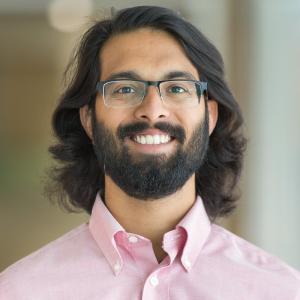
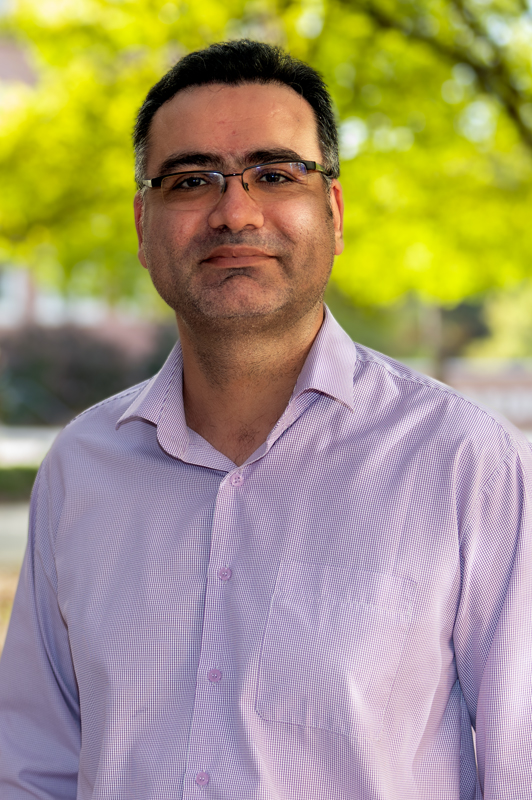
Eike Neumann is a Lecturer in the Department of Computer Science at Swansea University. His research focuses on computable analysis, computational complexity, and reachability problems for dynamical systems. Research Interests: Neumann specializes in foundational aspects of computation applied to dynamical systems, with emphasis on complexity analysis and computability in mathematical contexts.
Christian Schilling is an Associate Professor in the Department of Computer Science at Aalborg University's Technical Faculty of IT and Design. He holds a PhD in Computer Science from the University of Freiburg (2018) and leads research in distributed, embedded, and intelligent systems. His research focuses on formal verification techniques for hybrid systems, neural network control systems, and quantum computing applications. Key methodologies include reachability analysis, policy synthesis, and benchmark development for continuous-time systems. Recent publications demonstrate a consistent focus on verification of AI-controlled systems, with emerging work in quantum circuit equivalence checking. His articles frequently appear in top formal methods venues and benchmark reports. Schilling coordinates multiple research projects including: EQuaL: Quantum circuit verification via tensor decision diagrams Cosyne: Safe control systems with neural networks STORM_SAFE: Safety verification for critical infrastructure He maintains active collaborations across Europe and leads the development of JuliaReach tools for set-based computations.
PD Dr. Alden Marie Seaburg Waters is a Researcher at the Institute for Analysis within the Faculty of Mathematics and Physics at Leibniz University Hannover. Their primary roles include advancing research in partial differential equations, spectral theory, and applied mathematics. They are actively involved in teaching, including courses on Calculus of Variations and Optimal Control during the winter semester 2023/24. Research Interests: Alden’s work focuses on dispersive estimates for wave and Maxwell equations, stability problems in inverse scattering, and optimization techniques. They specialize in spectral and scattering theory with applications to electromagnetic phenomena and nonlinear elasticity. Their research bridges theoretical analysis with practical applications in fields like mathematical physics and biomedical imaging. Publications Trends: Alden’s recent work emphasizes dispersive estimates in exterior domains (e.g., toroidal geometries and spherical exteriors), the interplay between trace formulas and scattering phenomena, and low-regularity solutions for wave equations. Their contributions span mathematical physics, control theory, and inverse problems, with a focus on analytical rigor and interdisciplinary applications. Awards and Grants: No scientific awards or grants are explicitly listed in the provided texts. Funding sources or grant details are not mentioned. Labs/Teams: While specific lab affiliations are not detailed, their research collaborates with international teams on projects involving scattering theory, optimal control, and mathematical modeling.
Claire Tomlin is a Professor at the University of California, Berkeley, holding the Charles A. Desoer Chair in Engineering. She works at the intersection of hybrid systems, control theory, and robotics, with applications to air traffic management, biological cell networks, and autonomous systems. Ph.D. (EECS) UC Berkeley (1998) M.Sc. (Electrical Engineering) Imperial College, London (1993) B.A.Sc. (Electrical Engineering) University of Waterloo (1992) Research Interests: Her work focuses on hybrid systems (combining continuous/discrete dynamics), decentralized optimization , and human-automation systems . Key applications include UAV control , air traffic automation , and biological modeling (e.g., HER2+ cancer, Drosophila development). Selected Articles (2024-2025) span topics from dynamic programming for autonomous farms to deep learning-based safety filters , multi-agent reinforcement learning , and perception uncertainty analysis . Recent trends emphasize certifiable safety in AI-driven systems and Hamilton-Jacobi reachability for high-dimensional problems. Scientific Honors: MacArthur Fellow (2006) IEEE Fellow (2010) National Academy of Engineering Member (2019) American Academy of Arts and Sciences Member (2019) IEEE Transportation Technologies Award (2017) Advising & Collaborations: She has advised 21 Ph.D. students and 5 postdoctoral researchers. Her group collaborates with institutions like OHSU, LBNL, and Stanford. She leads the VeHICaL project on verified human-robot interfaces. Labs & Teams: Affiliated with the Berkeley Artificial Intelligence Research Lab (BAIR), VeHICaL, and the Berkeley Center for New Media (BCNM). Her work integrates with the UC Berkeley robotics ecosystem, including the SWARM Lab and FORCES.
Thomas Brihaye is a Professor in the Mathematics Department at the University of Mons (UMONS) in Belgium and is affiliated with the Complexys Institute, a research center focused on complex systems. His academic position involves both teaching responsibilities and advanced research in theoretical computer science and applied mathematics. His primary research explores game theory and its applications across multiple domains including formal methods , controller synthesis , and urban planning . He investigates mathematical frameworks for decision-making in complex systems, with recent emphasis on renewable energy optimization, cybersecurity protocols, and stochastic process modeling. Key methodological approaches include Markov decision processes, timed automata, and equilibrium analysis in adversarial environments. Analysis of Brihaye's publications reveals consistent focus on: Theoretical foundations of game theory and computational complexity Applications in energy systems (renewable communities, grid management) Formal verification methods for security and system reliability Stochastic modeling and probabilistic systems His work bridges theoretical computer science with practical challenges in sustainability and infrastructure. Brihaye actively contributes to academic dissemination through: Regular presentations at international conferences (LATIN, RP, CONCUR, FORMATS) Educational outreach programs ('Mathipulations' workshops and public lectures) Interdisciplinary collaborations on urban systems and cognitive psychology projects
Jianqiang Ding is a Doctoral Researcher at Aalto University's School of Engineering, Department of Electrical Engineering and Automation. His work focuses on nonlinear systems and control theory, particularly in reachability analysis for dynamical systems verification and controller synthesis. His research interests include: Reachability analysis for safety-critical systems Formal verification of nonlinear control systems Developing computational tools like PyBDR for set-boundary based analysis Controller synthesis for multi-input multi-output systems Image processing techniques for discernible mosaics Recent publications demonstrate expertise in: Formal methods for system verification Control theory applications in engineering Computational tool development for control systems His collaborative work appears in venues like Formal Methods Symposium and Computer Aided Verification Conference, with particular emphasis on mathematical rigor in control design.
Professor Igor Potapov serves as a Professor of Computer Science at the University of Liverpool, leading the Algorithms, Complexity Theory and Optimisation research group and acting as Council Member for Networks Sciences & Technologies. He holds key administrative roles including Director of MSc Studies in CS with Year in Industry and module coordination for Efficient Sequential Algorithms (COMP309), MSc Industrial Project (COMP599), and MSc Placement Experience (COMP598). His research centers on theoretical computer science with emphasis on reachability problems in infinite state systems , distributed computing and pattern formation , combinatorial optimisation , and decidability questions for mathematical structures. Current interdisciplinary work includes Algorithmic Crystal Structure Prediction for Material Design (Royal Society APEX Award 2024-2026) and foundational studies in automata-matrix theory connections. His methodological approach integrates abstract algebra, topology, and computation theory to analyze computational boundaries. Recent publications (2024-2025) demonstrate strong convergence between theoretical frameworks and practical applications, particularly in robotics scheduling (addressing collision avoidance and safety verification) and mathematical decidability (matrix semigroups, linear recurrence systems). These works bridge computational geometry with distributed algorithm design, revealing novel complexity boundaries in reachability analysis. His scientific recognition includes: Royal Society Apex Award (2024-2026) for Algorithmic Crystal Structure Prediction Royal Society Leverhulme Trust Senior Research Fellowship (2020-2021) for "Cornerstones of Reachability" As an active grant recipient, he manages multiple projects including Algorithmic Intelligence for Life, Society and Science (Royal Society 2024-2026) and UoL-SumDU Collaboration for Digitalisation of Ukraine (Research England 2023-2024). He supervises thesis work on crystal structure prediction and distributed shape formation while serving on examination committees for Oxford, Leicester, and Gran Sasso institutions. He co-leads the Science for Ukraine initiative's UK branch, developing academic mentoring programs and research twinning partnerships between UK and Ukrainian universities. His editorial work spans Fundamenta Informaticae (2020-present) and Lecture Notes in Computer Science (2009-2013), alongside conference organization for the Reachability Problems series.
Victor Preciado is an Associate Professor at the University of Pennsylvania, holding appointments in the Departments of Electrical & Systems Engineering and Computer & Information Science . He is affiliated with the Warren Center for Network & Data Sciences , the PRECISE Center , and the Applied Math and Computational Science graduate group . His research bridges Network Science , Dynamical Systems , and Data Science , focusing on modeling, analysis, and control of complex networked systems. Ph.D. in Electrical Engineering and Computer Science from MIT (supervised by Prof. George Verghese) Visiting scholar at UC Berkeley, Santa Fe Institute, and Courant Institute (NYU) Postdoctoral researcher at GRASP Lab (working with Prof. Ali Jadbabaie) His research interests include epidemic modeling and control , socio-technical networks , network controllability , and data-driven optimization . Recent work explores contact-aware robotics and operator learning using attention mechanisms. His publications from 2022–2024 highlight advancements in robust control , epidemic tracking , and hypergraph neural networks , with applications in pandemic management , robotics , and temporal network analysis . Scientific awards include: 2024: IEEE Robotics and Automation Society Best Paper Award finalist (for Stabilization of Complementarity Systems ) 2022: IEEE Control Systems Magazine Best Paper Award (retrospectively for Analysis and Control of Epidemics ) 2017: National Science Foundation CAREER Award 2019: IEEE Transactions on Network Science and Engineering Best Paper Award runner-up He has served as Associate Editor for IEEE Transactions on Network Science and Engineering and IEEE Transactions on Control of Networked Systems , and as Guest Editor for special issues on pandemics and control of epidemics in journals like Annual Reviews in Control and SIAM Journal on Control and Optimization .
Rupak Majumdar is a Scientific Director at the Max Planck Institute for Software Systems (MPI-SWS), with a distinguished career in formal verification, control systems, and programming languages. His research spans reactive, real-time, hybrid, and probabilistic systems, focusing on verification and synthesis problems in distributed and concurrent environments. Majumdar earned his B.Tech. in Computer Science from IIT Kanpur (where he received the President’s Gold Medal) and his Ph.D. from UC Berkeley (awarded the Leon O. Chua Award). His work has been recognized through prestigious honors including an NSF CAREER Award, Sloan Fellowship, ERC Synergy Grant, and Most Influential Paper Awards from PLDI and POPL. Research Areas: Formal Verification, Hybrid Systems, Stochastic Systems, Programming Languages, Automata Theory Leadership: Scientific Director, MPI-SWS; ISEC 2026 PC Chair His publications address critical problems in software verification, with recent work focusing on probabilistic systems, distributed protocol testing, and reinforcement learning for formal methods. Awards and grants reflect his impact on computer science and software engineering. Current students include Mahmoud Salamati, Ashwani Anand, V.R. Sathiyanarayana, and Mohammad Khoshechin, while graduated advisees hold positions at institutions like Amazon, Google, and academic research centers. Scientific Awards: President’s Gold Medal (IIT Kanpur) Leon O. Chua Award (UC Berkeley) NSF CAREER Award Sloan Foundation Fellowship ERC Synergy Award Distinguished Alumnus Award (IIT Kanpur) Most Influential Paper Awards (PLDI, POPL) Best Paper Awards (SIGBED, EAPLS, SIGDA)
Shreyas Kousik is an Assistant Professor in the Woodruff School of Mechanical Engineering at the Georgia Institute of Technology, affiliated with the College of Engineering. He leads the Safe Robotics Lab, focusing on translating mathematical safety guarantees to real-world robotic systems through uncertainty modeling and collision avoidance methods. Education: Ph.D. in Mechanical Engineering, University of Michigan (Advisor: Prof. Ram Vasudevan) B.S. in Mechanical Engineering, Georgia Institute of Technology (Advisor: Prof. Antonia Antoniou) Research Focus: His work bridges autonomy theory and practical implementation, specializing in: (1) Real-time safety verification for robotic systems, (2) Reachability-based trajectory design under uncertainty, (3) Neural network applications for safe control, and (4) Human-centered robotic interactions. Primary methodologies include zonotope-based reachability analysis, model predictive control, and imitation learning frameworks. Publications: Recent works demonstrate strong emphasis on safety-critical applications including manipulator control (2025), bipedal social navigation (2024), and autonomous vehicle planning (2023). Predominant themes include real-time verification, uncertainty quantification, and integration of learning-based methods with formal guarantees. Technical Contributions: Developed open-source tools including the Reachability-based Trajectory Design (RTD) framework and robot simulator. Contributes to robotics infrastructure through GitHub repositories focused on trajectory optimization and control implementations.
Nedialko Nedialkov is a Professor in the Department of Computing and Software at McMaster University, Faculty of Engineering. His research centers on differential-algebraic equations (DAEs) , interval methods , and computational science , with a focus on rigorous numerical solutions and structural analysis. Contact: nedialk@mcmaster.ca Teaching: Courses include Scientific Computing, Advanced Topics in Computing and Software, and Principles of Programming. Research Highlights: Nedialkov has developed symbolic-numeric methods for DAEs, improved verified ODE integration, and created tools like DAETS for structural analysis. His work spans applications in hybrid systems , control theory , and biomedical computing . Publications Trends: Over the past 15 years, his scholarship emphasizes DAEs, validated numerical methods, and computational modeling. Key subfields include Port-Hamiltonian systems , block triangularization , interval constraints , and automatic differentiation . Labs & Teams: Collaborates with McMaster Experts and contributes to open-source projects for validated numerical computing.
Ehsan Taheri is an Associate Professor in the Department of Aerospace Engineering at Auburn University. His research focuses on optimal control, orbital mechanics, and optimization applied to aerospace systems. His work addresses fundamental challenges in spacecraft trajectory design, guidance systems, and autonomous aerial vehicles. Dr. Taheri received his Ph.D. in Mechanical Engineering from Michigan Technological University, M.S. in Aerospace Engineering from K. N. Toosi University of Technology, and B.S. in Aerospace Engineering from Islamic Azad University. His research integrates control theory with practical aerospace applications, developing novel methods for trajectory optimization of low-thrust spacecraft and autonomous drones. Recent work explores neural network applications for collision avoidance and real-time trajectory planning in unmanned aerial systems. Dr. Taheri's publications demonstrate consistent focus on computational methods for orbital mechanics and control systems, with particular emphasis on fuel optimization, trajectory planning under constraints, and novel applications of Fourier series and neural networks to aerospace problems.
Mahesh Viswanathan is a Professor and Associate Head at the Siebel School of Computing and Data Science at the University of Illinois. His primary research focuses on formal methods, automata theory, and model checking, with applications in computer security, runtime verification, and cyber-physical systems. He received the NSF CAREER Award in 2005 for his contributions to these fields. His research explores: Foundations of automata theory and formal verification Runtime assurance mechanisms for safety-critical systems Concurrency analysis and race detection algorithms Differential privacy and security protocol verification Theoretical aspects of real-time and hybrid systems Viswanathan's recent publications demonstrate a strong focus on developing theoretically-grounded verification techniques for practical applications. His work frequently combines formal methods with machine learning approaches to solve challenging problems in program verification and system security. Awards and Honors: NSF CAREER Award (2005)
Junpeng Zhan is an Assistant Professor in the Department of Renewable Energy Engineering at the Inamori School of Engineering, Alfred University. He earned his B.S. and Ph.D. in Electrical Engineering from Zhejiang University (2009, 2014). His research focuses on quantum computing, smart grid technologies, and optimization methods, with a particular interest in solving NP-complete problems using hybrid quantum-classical algorithms like the Variational Quantum Search. He has held positions at Brookhaven National Laboratory and the University of Saskatchewan. Education: B.S. (Electrical Engineering, Zhejiang University, 2009), Ph.D. (Electrical Engineering, Zhejiang University, 2014). Research interests include quantum algorithms, machine learning applications in power systems, and renewable energy integration. Current grants include NSF-funded work on variational quantum algorithms for power system simulation and ISO-New England-funded projects on quantum computing for unit commitment. Teaching includes courses like Power System Operation and Python for Power Systems Research. He is an Associate Editor of IET Generation, Transmission & Distribution and has authored over 50 publications.
Maria Dels Dolors Magret Planas is a Professor in the Department of Mathematics at the Universitat Politècnica de Catalunya (UPC), specifically affiliated with the School of Industrial Engineering (ETSEIB). She is a core member of the SCL-EG research group (Sistemes de Control Lineals: estudi Geomètric), focusing on geometric approaches to linear control systems. Her research spans linear algebra, matrix theory, and control systems with particular emphasis on singular systems, switched linear systems, matrix pencils, and invariant subspaces. Over her career, she has developed geometric frameworks for analyzing controllability and stability properties of complex dynamical systems, with applications extending to electrical circuit analysis and coding theory. Her work bridges theoretical mathematics with practical engineering applications, demonstrating how abstract algebraic structures can solve concrete control problems. Analysis of her recent publications reveals a consistent focus on geometric methods in control theory, particularly investigating the structural properties of switched linear systems and singular systems. Her research demonstrates sophisticated applications of matrix theory to characterize system behavior, with particular attention to controllability subspaces, invariant structures, and distance metrics between system classes. These contributions have advanced theoretical understanding while providing practical tools for system analysis and design. Professor Magret Planas has successfully supervised doctoral students including Montoro López, Maria Eulalia (thesis on hyperinvariant subspaces) and Tarragona, Sonia (thesis on geometric study of differentiable families of singular systems). She has participated in numerous competitive R&D projects, including 'Estructuras geométricas de los sistemas de control lineales' and 'Red temática de álgebra lineal, análisis matricial y aplicaciones,' demonstrating sustained research funding and collaborative leadership. As a member of the SCL-EG research group within UPC's Department of Mathematics, she contributes to a vibrant research environment focused on geometric approaches to linear control systems. Her work exemplifies the strong tradition of applied mathematics at UPC, particularly in the intersection of algebra and control theory.