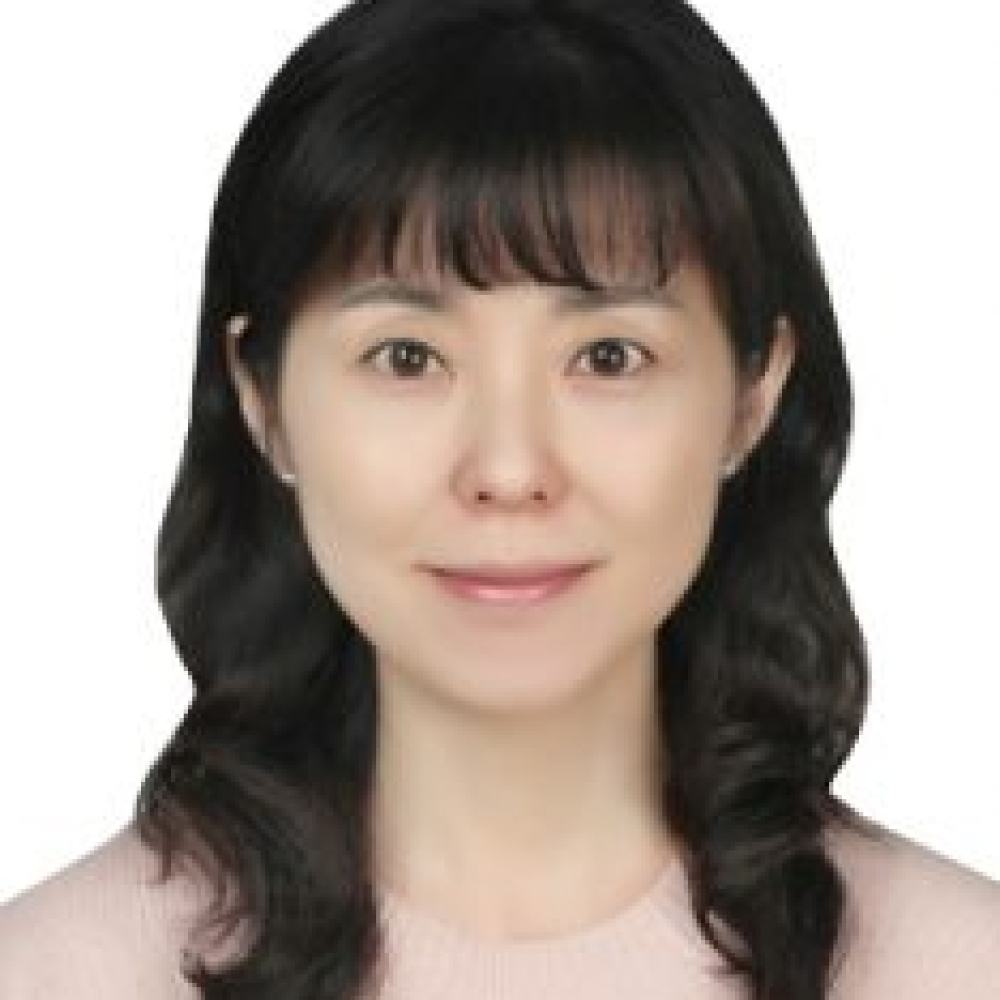
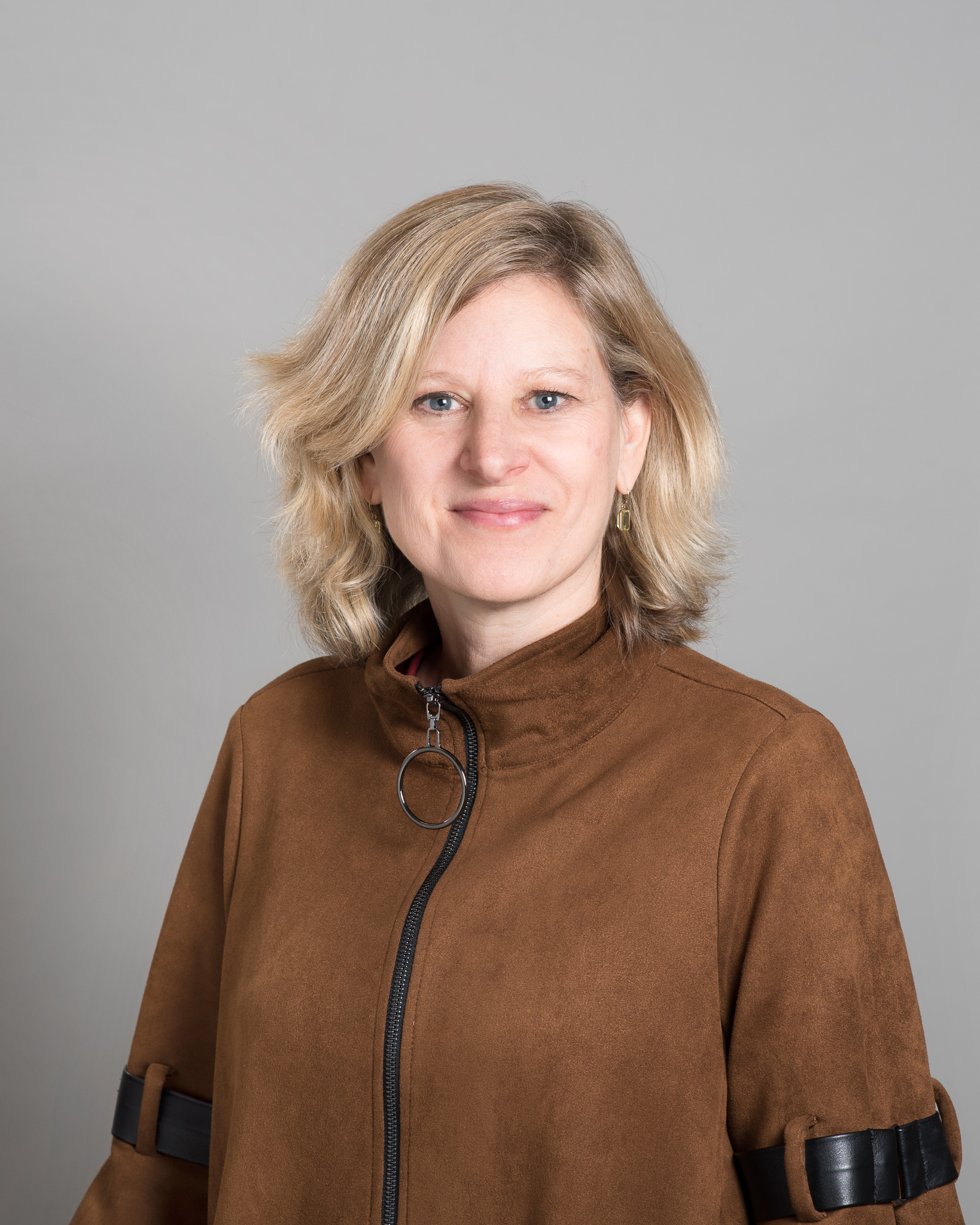
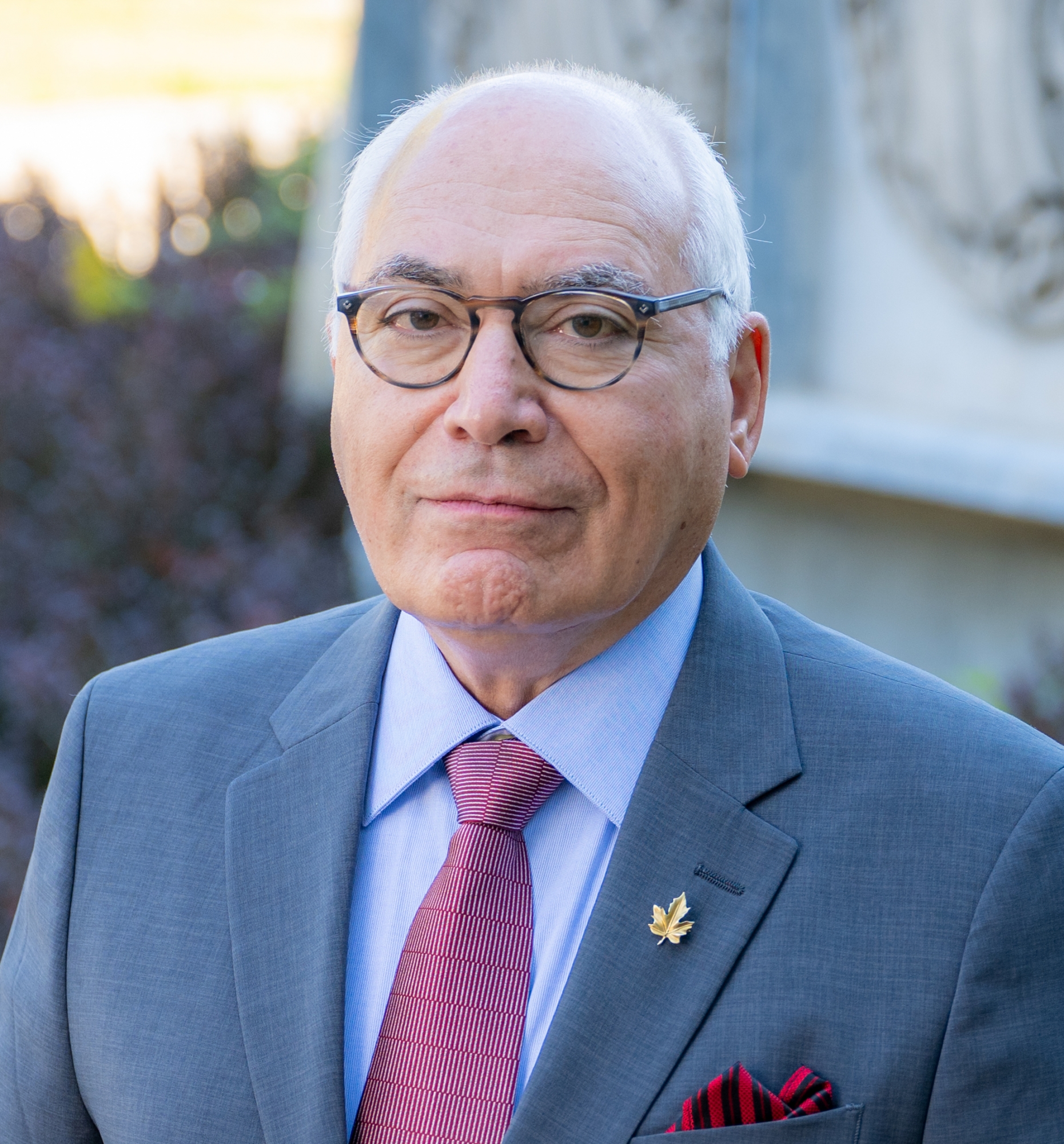
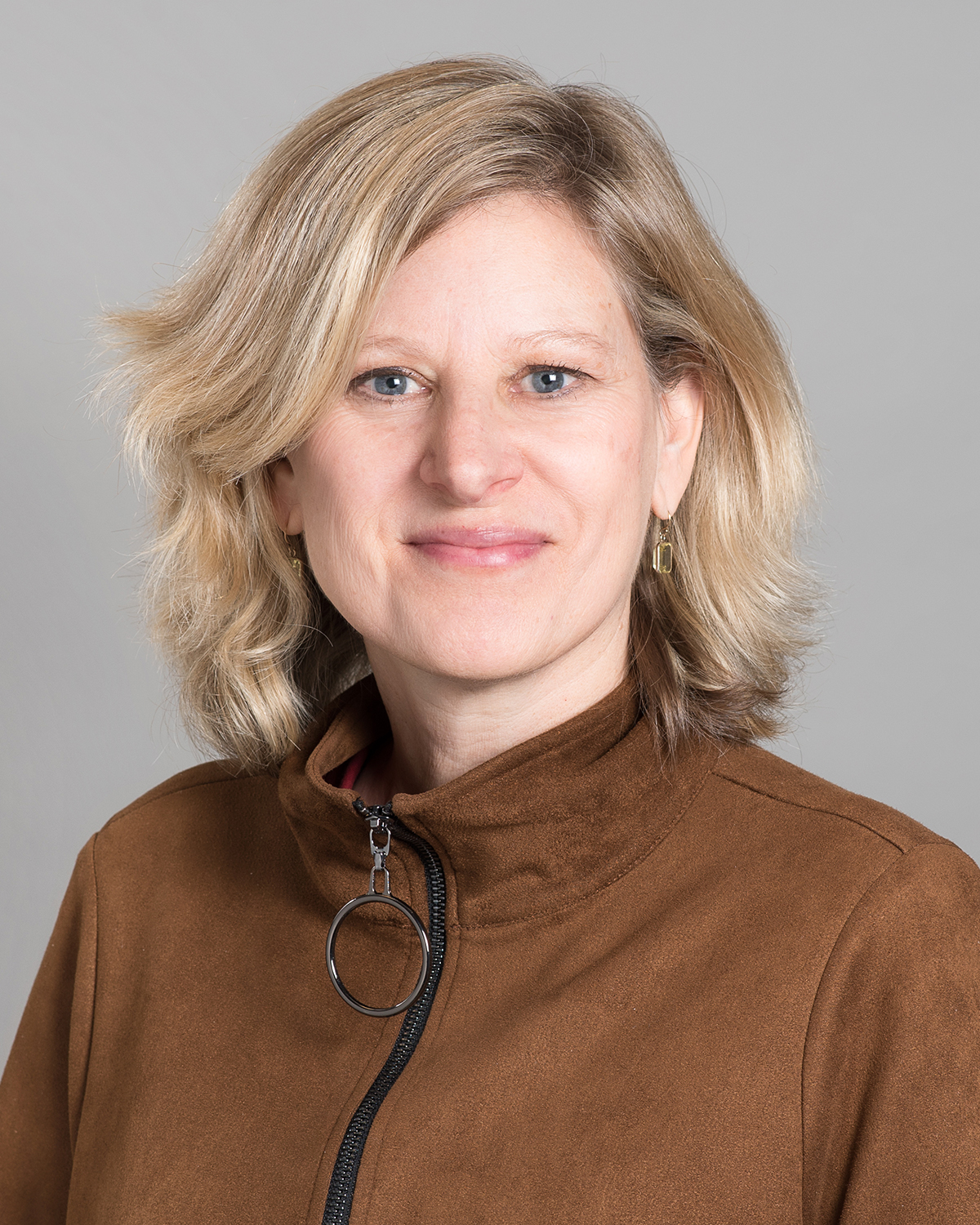
Hyejin Ku is a Full Professor in the Department of Mathematics and Statistics at York University's Faculty of Science. Her research focuses on the intersection of Mathematical Finance and Machine Learning, addressing challenges in risk measurement, portfolio optimization, and quantitative finance. She develops advanced mathematical models to enhance decision-making through reinforcement learning and data analytics. Notable projects include novel algorithms for credit rating prediction using neural networks and sequence-based clustering for credit risk assessment. Her work integrates applied mathematics with real-world financial applications, such as systemic risk reduction in multi-layer networks and option pricing under liquidity constraints. She holds a prominent position in mathematical finance, contributing to both theoretical advancements and practical solutions for financial markets. Her research trends emphasize interdisciplinary approaches, combining machine learning techniques with financial modeling to solve complex problems in risk management and asset valuation. Her publications span over two decades, showcasing contributions to portfolio optimization, derivatives pricing, and computational finance. Dr. Ku is affiliated with York University’s Department of Mathematics and Statistics, where she contributes to academic leadership and research mentorship. Her office is located in DB 2025, and she can be reached at hku@yorku.ca.
Mireille E. Broucke is a Professor in the Department of Electrical and Computer Engineering at the University of Toronto, where she is a member of the Systems Control Group within the Faculty of Applied Science and Engineering. She teaches various undergraduate and graduate courses including Adaptive Control and Reinforcement Learning, Robot Modeling and Control, and Introduction to Nonlinear Systems, demonstrating her commitment to education in control systems engineering. Professor Broucke's research focuses on mathematical system theory with particular emphasis on Systems Neuroscience, Reach Control Problems, and Patterned Linear Systems. Her work bridges theoretical control theory with applications in neuroscience and robotics. She has developed theoretical frameworks for understanding neural adaptation through control theory principles and has applied reach control theory to robotics problems including motion control of quadrocopters. Her research demonstrates how control theory can provide insights into biological systems while also advancing engineering applications. Her recent publications show a clear trend toward applying control theory to neuroscience, particularly in understanding adaptive internal models in the brain. The publications span from theoretical reach control problems on simplices and polytopes to practical applications in robotics and neural systems. Her work increasingly focuses on the intersection of control theory and neuroscience, examining how the brain implements adaptive control mechanisms for motor functions. This represents a significant shift from her earlier work which was more focused on pure control theory problems. Professor Broucke has advised several PhD students including Fatima Ghadieh, Erick Mejia Uzeda, and Mohamed Hafez. Her research has been supported by various grants that enable her work in control theory and its applications to neuroscience and robotics. She maintains an active research program with numerous publications in top control theory journals including IEEE Transactions on Automatic Control, Automatica, and Systems and Control Letters.
Dr. Wei Song is a Professor and the Coordinator of Software Engineering at the Faculty of Computer Science, University of New Brunswick (UNB) in Fredericton, New Brunswick, Canada. She has been with UNB since 2009, after completing her postdoctoral studies at UC Berkeley, and has established herself as a leading researcher in mobile networking and wireless communications. Her office is located in room ID419 and she can be reached at wsong@unb.ca. Education Ph.D. in Electrical and Computer Engineering, University of Waterloo (2003-2007) Postdoctoral Fellow, Department of Electrical Engineering and Computer Sciences, University of California, Berkeley (2008-2009) Research Focus Dr. Song's research spans multiple cutting-edge areas in mobile and wireless networking, with a strong emphasis on integrating artificial intelligence and machine learning techniques. Her work addresses fundamental problems in mobile social networks, Internet of Things, vehicular networks, and mobile cloud computing. She explores how cooperative intelligence and distributed AI can enhance network performance while addressing practical constraints such as energy efficiency and user incentives. Her recent work particularly focuses on intelligent edge computing, mobile crowdsensing with deep reinforcement learning, and social-aware data dissemination through device-to-device communications. She investigates how to turn decentralized mobile "crowds" into coherent working groups and how social connections can be leveraged to improve data dissemination efficiency. Publication Trends Dr. Song's recent publications (2016-2023) demonstrate a clear evolution from traditional wireless networking to AI-driven approaches. While her earlier work focused on fundamental problems in device-to-device communications and resource allocation, her recent publications increasingly incorporate deep reinforcement learning, graph neural networks, and other AI techniques to solve complex optimization problems in mobile crowdsensing and edge computing. This shift reflects broader trends in the field toward intelligent, adaptive networking solutions. Scientific Recognition Best Paper Award from IEEE ICC (2018) UNB Merit Award (2014) Best Student Paper Award from IEEE CCNC (2013) Top 10% Award from IEEE MMSP (2009) NSERC postdoctoral fellowship (2008) Best Paper Award from IEEE WCNC (2007) Professional Service and Mentoring Dr. Song serves as Senior Member of IEEE and has held significant leadership roles, including Chair of the Joint Computer and Communications Chapter of IEEE New Brunswick Section (2014-2020). She has chaired symposia at major conferences including IEEE VTC Fall 2023, 2017, and 2016. As a supervisor, she mentors graduate students in areas including intelligent edge computing and deep learning for networking, and is currently recruiting students for Winter 2024 and Fall 2025.
Mél Hogan is an Associate Professor in the Department of Film and Media at Queen's University and host of The Data Fix podcast. She serves as MA/PhD supervisor within her department, though currently not accepting new students while remaining available for supervisory committees and exams via Zoom. Her research critically examines the environmental impacts of data infrastructures through environmental humanities, critical data studies, and science and technology studies (STS). She employs qualitative, research-creation, and ethnographic methods to investigate data centers, archival theory, and elemental media, with particular focus on how digital technologies intersect with climate crisis and ecological systems. Her work bridges media studies with environmental concerns, emphasizing cultural, social, and historical dimensions of technology. Recent publications (2022-2025) reveal consistent thematic evolution toward data center ecologies, climate-tech intersections, and materialities of digital storage. Key trends include solastalgia (environmental distress) in cloud computing, archival responses to extinction, and critical examinations of AI's environmental costs. Her scholarship demonstrates increasing interdisciplinary reach across media archaeology, environmental humanities, and critical infrastructure studies. Dr. Hogan actively supervises graduate students with interdisciplinary projects using qualitative methods in communication/media studies, environmental humanities, and critical theory. She explicitly notes unsuitability for technical problem-solving projects or quantitative social science approaches, emphasizing her preference for critical-humanistic perspectives on data, media, and technology. Her advising philosophy centers on collaborative exploration of environmental impacts within data infrastructures.
Michael A. Saini is a Professor at the Factor-Inwentash Faculty of Social Work , University of Toronto, holding the Factor-Inwentash Chair in Law and Social Work and co-directing the Combined J.D. and M.S.W. program with the Law Faculty. His scholarship focuses on intersections of law and social work, with a specific emphasis on children and families within legal systems. Key research areas include Coparenting assessment methodologies Parent-child relationship dynamics Interparental conflict impact Technology in family justice Crossover cases between child protection and custody Legal systems as socially embedded phenomena His funded projects cover Co-parenting across family structures , Family justice in Quebec , Virtual visitation , and Access to effective family justice . Recent publications focus on coparenting scales , domestic violence implications , and pandemic-related family stressors . Scientific recognition includes Stanley Cohen Distinguished Research Award (2019) Meyer Elkin Essay Award (2017) John & Minnie McKay Award He maintains active roles as co-PI on four external grants , serves on editorial boards including Family Court Review , and holds leadership positions in organizations like the Association of Family and Conciliation Courts and Family Mediation Canada .
Dr. Shervin Erfani is a Professor in the Department of Electrical and Computer Engineering at the University of Windsor, Faculty of Engineering. His research focuses on computer and network security, data networking, communication network management, and multidimensional digital filter realization. He holds a position in 3048 CEI and can be reached at erfani@uwindsor.ca. His research interests span a wide range of topics, including IoT security, signal processing in linear time-varying systems, and fractional calculus applications. Recent work emphasizes bifrequency analysis, iterated Laplace transforms, and fractional differential equations. His contributions bridge theoretical advancements with practical implementations in security frameworks and network protocols. Publications highlight trends in secure communication architectures, such as Bitcoin security models and IoT applications, alongside foundational work in signal processing and circuit theory. Collaborations address challenges in network management, spectrum sensing, and system stability.
Mireille E. Broucke is a Professor in the Department of Electrical and Computer Engineering at the University of Toronto's Faculty of Applied Science and Engineering. She holds a PhD in Electrical Engineering and Computer Sciences from UC Berkeley (2000) and has extensive industry experience in control systems at companies like Texas Instruments and Lockheed. Her academic career includes visiting roles at UC Berkeley and the University of Bologna. B.S. (1984), University of Texas at Austin M.S. (1987), University of California, Berkeley PhD (2000), University of California, Berkeley Her research focuses on mathematical system theory , particularly hybrid systems , reach control problems , and geometric control . Recent work explores systems neuroscience , modeling brain processes through control theory. She has developed adaptive internal models and robust parameter adaptation frameworks. Key article trends include adaptive control in neuroscience, reach control theory for robotics, and geometric methods in linear systems. Her collaborations span institutions like TU Delft and the University of Bologna, with applications in quadcopter motion control and multi-robot coordination . Scientific Awards Member of the Institute of Electrical and Electronics Engineers (IEEE) Professional Engineer of Ontario Broucke advises students in control theory , robotics , and hybrid systems . She has led projects at research units like PATH (UC Berkeley) and PARADES (Rome). Her teaching portfolio includes courses on robot control , nonlinear systems , and geometric control theory . She contributes to linear quadratic optimal control and motion planning algorithms .
Neerja Mhaskar is an Assistant Professor in the Department of Computing and Software at McMaster University's Faculty of Engineering. She is currently accepting graduate students and maintains an active research group. Her office is located in ITB 220, and she can be reached at pophlin@mcmaster.ca. Her educational background includes a PhD in Computer Science from McMaster University (2016), a Master's degree in Engineering Science from Louisiana State University, and a Bachelor's degree in Mechanical Engineering from Jawaharlal Nehru Technological University Hyderabad, India. Dr. Mhaskar's research focuses on the design and analysis of efficient algorithms and data structures, with particular emphasis on string processing for applications in bioinformatics, network security, and data compression. She develops algorithms for pattern matching, secure network design, and big data analysis. Her work bridges theoretical computer science with practical applications in privacy and security, as well as computational biology. Her recent publications demonstrate a strong trend in string algorithms, especially in covering problems and indeterminate strings, with growing applications in network security and bioinformatics. Over the past decade, she has contributed to foundational stringology and expanded into network segmentation and protein sequence analysis. Dr. Mhaskar has not been mentioned to have received any scientific awards in the provided text. Dr. Mhaskar has successfully supervised multiple graduate students. Her current advisees include PhD candidates Shafigh Ashrafi, Hamed Hasibi, Nivetha Raj Pappuraj, and Amin Kashef, as well as Master's students Samkith Kishore Kumar Jain and Shutong Wu. Among her graduated students are Tieyun Zhang, Meng Wang, Chenge Liu, Zehong Wang, Hossein Dehghani, and Holly Koponen, who have gone on to work at companies such as Siemens Canada, Robinhood, and Robotic Assistance Devices, or pursued further studies.
Sidney Givigi is a Professor at Queen's University, associated with the School of Computing within the Faculty of Arts and Science. His research focuses on Robotics, Machine Learning, UAV Control, and Multi-Vehicle Systems. He leads projects in autonomous systems, swarm intelligence, and reinforcement learning applications. His work addresses challenges in autonomous vehicle coordination, adversarial attack mitigation in intelligent systems, and real-time decision-making algorithms. Collaborative perception under adverse conditions and dynamic system control are key research themes. Research highlights include the TRATSS task scheduling system for autonomous vehicles, the IPRPAS benchmark dataset for adversarial sample analysis, and innovations in UAV software update protocols. His contributions span theoretical frameworks and practical implementations in robotics and AI. He is affiliated with the Ingenuity Labs Research Institute, advancing translational research in automation and intelligent systems. No academic awards or student advisement information is explicitly documented in the provided texts.
Howard Cheng is an Associate Professor in the Department of Mathematics and Computer Science at the University of Lethbridge. He has been actively involved in research and teaching, with a focus on computer algebra, polynomial matrices, and image processing. Education: Ph.D., Computer Science (Waterloo) M.Sc., Computing Science (Alberta) B.Sc. Honors, Computing Science (Alberta) Dr. Cheng's research primarily deals with controlling intermediate expression growth in linear algebra problems, especially those involving polynomial matrices and their generalization to Ore polynomial matrices. He is also interested in compression and encryption algorithms for images and videos, with a particular focus on issues arising from compressing sets of related images. His current research involves computer vision algorithms with event-based cameras. Dr. Cheng has secured multiple research grants, including funding from the University of Lethbridge Research Fund and the Natural Sciences and Engineering Research Council (NSERC). His research has covered areas such as image set compression, computer algebra algorithms, and multi-precision evaluation of series of hypergeometric terms. Dr. Cheng is the coach for the University of Lethbridge's ACM Programming Contest teams and has been involved with the contest for many years, both as a former contestant (reaching World Finals in 1998) and in various organizational roles including judge and problem designer.
Susanne Bradley is a Teaching Professor in the Department of Computer Science at the University of British Columbia (UBC). She specializes in algorithm design, parallel computation, and numerical analysis. Her teaching responsibilities include courses such as CPSC 320 (Intermediate Algorithm Design and Analysis) and CPSC 418 (Parallel Computation). Her research focuses on preconditioners for saddle-point systems, eigenvalue analysis, and innovative educational methodologies like inverted two-stage exams. Bradley’s academic contributions span numerical linear algebra, computational methods, and biomechanical simulation. She has published extensively on topics such as eigenvalue bounds for saddle-point systems and the application of machine learning in sensorimotor control. Her work emphasizes practical solutions for complex computational challenges and pedagogical innovations to enhance learning outcomes. Her office is located in ICCS 241, and she can be reached at smbrad@cs.ubc.ca .
Sean Kauffman is an Assistant Professor in the Department of Electrical and Computer Engineering at Queen's University, Faculty of Engineering and Applied Science. He holds his office in Walter Light Hall, Room 611, and can be reached at sean.k@queensu.ca or by phone at 613-533-6000 ext. 77360. Dr. Kauffman earned his Ph.D. in Electrical and Computer Engineering from the University of Waterloo before completing a two-year postdoctoral position at Aalborg University in Denmark. Notably, he returned to academia after accumulating over a decade of industry experience as a software engineer, with his final industry role being Principal Software Engineer at Oracle. His research expertise spans several critical areas in computer science and software engineering, with a particular focus on safety-critical software systems. His work significantly contributes to the fields of Formal Methods, Runtime Verification, Anomaly Detection, and Explainable AI. Dr. Kauffman has established productive research collaborations with prestigious organizations including NASA's Jet Propulsion Laboratory, the Embedded Systems Institute, QNX, and Pratt and Whitney Canada. Dr. Kauffman's research output demonstrates a consistent focus on event stream analysis, formal verification techniques, and the development of practical tools for system monitoring. His most notable contribution is the nfer language and toolset, which has become influential in the runtime verification community for its ability to abstract event streams into meaningful temporal hierarchies. His publications reveal a progression from theoretical foundations to practical implementations, with applications spanning spacecraft telemetry, autonomous vehicles, and embedded systems. Among his scientific contributions, Dr. Kauffman has received recognition for his work on the complexity analysis of nfer evaluation, developing methods for annotating control-flow graphs for formalized test coverage criteria, and creating frameworks for anomaly detection in embedded systems. His research has been published in top-tier venues including Science of Computer Programming, International Journal on Software Tools for Technology Transfer, and proceedings of major conferences like Runtime Verification and NASA Formal Methods. As an educator, Dr. Kauffman employs active learning techniques, productive failure approaches, and peer instruction to foster student engagement. His industry background informs his teaching approach, providing students with practical insights into real-world software engineering challenges, particularly in safety-critical domains. Dr. Kauffman leads the CritLab research group at Queen's University, which focuses on critical systems research. The lab develops tools and techniques for analyzing and verifying systems where failures could have severe consequences, with applications in aerospace, automotive, and other safety-critical domains. His work on the nfer language has spawned related projects including nvis for visualizing temporal interval hierarchies.