Nina Baur is a Full Professor (W3) of Methods of Social Research at the Department of Sociology, Technische Universität Berlin, within Faculty VI: Planning Building Environment. Her academic roles include Director of the Global Center of Spatial Methods for Urban Sustainability (GCSMUS) and leadership in interdisciplinary research initiatives such as the Collaborative Research Center 'Re-Figuration of Spaces' (CRC 1265). She holds a Ph.D. (Dr. rer. pol.) in Sociology from Otto-Friedrich-University of Bamberg (2005) and a Master’s equivalent (Diplom-Soziologin) from the same institution (1999). Her research focuses on social science methodology, spatial methods, historical sociology, and economic sociology. Key areas include process-oriented methodology, innovation studies, and global methodological challenges. Notable projects involve analyzing commodity chains, urban sustainability, and interdisciplinary research collaboration between sociology, geography, and urban planning. She has received awards such as the DGS Dissertationspreis (2007) and the E.ON Kulturpreis Bayern (2005). Her international collaborations include visiting professorships at IIT Roorkee (India) and Japan Women’s University, and leadership in global academic networks via DAAD and BCGE programs. She serves on editorial boards of journals like Historical Social Research and Kölner Zeitschrift für Soziologie und Sozialpsychologie . Her publications emphasize methodological innovation, cross-cultural research, and spatial sociology. Recent work addresses decolonizing methodologies and global sustainability through spatial analysis frameworks.
Professor Michael J. Gill is Associate Professor of Organisation Studies at the Saïd Business School , University of Oxford, and Tutorial Fellow in Management at St Edmund Hall . He previously served as Assistant then Associate Professor at the University of Bath’s School of Management. Education MA – University of Warwick DPhil – Jesus College, University of Oxford (funded by a scholarship from the Centre for Professional Service Firms) Research Interests Michael’s research centres on the causes and consequences of individuals’ suffering in the workplace , exploring how organisations threaten workers’ mental health and erode their sense of self. He employs qualitative, phenomenological methods to study accountants, chefs, lawyers, consultants, doctors, nurses, police officers and other occupational groups. His work also addresses identity regulation —how organisations shape, constrain and re-define personal identity—and the ethical and methodological challenges of organisational research. Publication Trends Between 2015 and 2025 Michael has produced a steady stream of articles focusing on three broad themes: (1) identity regulation and the phenomenology of self in organisational settings, (2) digital innovation, stigma and professional regulation in healthcare and low- and middle-income countries, and (3) qualitative methodology , including interview design, covert research ethics and phenomenological approaches. Scientific Awards & Fellowships Scholarship from the Centre for Professional Service Firms (doctoral funding) Governing Body Fellow, St Edmund Hall, University of Oxford Tutorial Fellow in Management, St Edmund Hall, University of Oxford Advising & Grants While no specific doctoral students are named, Michael’s roles as Tutorial Fellow and Associate Professor imply active supervision and teaching responsibilities within the Oxford Saïd Business School and St Edmund Hall. Grant funding details beyond his doctoral scholarship are not provided. Laboratories & Teams Michael is affiliated with the Centre for Professional Service Firms and collaborates through the Saïd Business School research community. No dedicated laboratory is mentioned.
Dan Sheldon is a Professor in the Department of Computer Science at the University of Massachusetts Amherst, holding a Five College joint faculty position with Mount Holyoke College. His research focuses on developing algorithms to address environmental challenges using large datasets, emphasizing computational sustainability. Key areas include spatial optimization for endangered species conservation, continent-scale bird migration modeling, and interpreting weather radar data for ecological insights. Methodologically, his work leverages probabilistic inference, network modeling, and machine learning. Sheldon earned a PhD in Computer Science from Cornell University and an AB in Mathematics from Dartmouth College. His postdoctoral training at Oregon State University was supported by an NSF Bioinformatics Fellowship. He co-leads the BirdCast project, an NSF-funded initiative applying novel machine learning to avian migration studies. His research affiliations include the Center for Data Science and the Computational Social Science Institute. Research interests span computational biology, machine learning, and data privacy. Notable contributions include algorithms for ecological decision-making, differentially private synthetic data techniques, and Gaussian process applications in environmental forecasting. Awards include an NSF Fellowship in Bioinformatics. Current projects integrate radar data analysis, biodiversity tracking, and privacy-preserving statistical methods. Grants include the BirdCast NSF grant and collaborations in computational sustainability. His work bridges theoretical computer science with applied ecological challenges, emphasizing interdisciplinary approaches to global-scale environmental problems.
Ziming Zhang is an Assistant Professor in the Department of Electrical and Computer Engineering at Worcester Polytechnic Institute (WPI) , with additional affiliations in Data Science and Robotics Engineering. He previously held research roles at Mitsubishi Electric Research Laboratories (MERL) and Boston University. PhD in Computing (2013) from Oxford Brookes University , UK MS in Computing Science (2010) from Simon Fraser University , CA BS in Computer Science and Technology (2005) from Northeastern University , China Research interests span computer vision , machine learning , and their applications in point cloud processing , medical imaging , autonomous driving , and IoT . He leads the Vision, Intelligence, and System Laboratory (VISLab) at WPI. Recent publications focus on 3D reconstruction , hyperbolic learning , and robust classifiers . Awards include the R&D100 Award 2018 and NSF funding for data-efficient deep learning. PhD Students: Yecheng Lyu (co-supervised), Guojun Wu (co-supervised), Hangrui Zhang, Xuechu Yu Master's Students: Yun Yue, Yuping Shao Visiting Scholars: Fangzhou Lin His lab partners with industry and academic institutions, focusing on autonomous systems , robotics , and scientific imaging projects.
Prof. Jian Zhang is a Professor in the School of Electrical and Data Engineering at the University of Technology Sydney (UTS), specializing in computer vision, pattern recognition, and multimedia signal processing. He leads the Multimedia Data Analytics Lab at the Global Big Data Technologies Centre, focusing on agri-food sector applications such as livestock monitoring and AI-driven solutions for agricultural efficiency. Education : PhD, School of Information Technology and Electrical Engineering, University of New South Wales, 1999 MSc, The Flinders University of South Australia, 1994 BSc, East China Normal University, 1982 Research Interests : His work spans 2D/3D computer vision, large-scale image/video analytics, and cross-disciplinary projects in agriculture and remote sensing. He has pioneered AI systems for livestock counting, poultry welfare monitoring, and fish quality assessment, funded by organizations like Meat & Livestock Australia and Australian Eggs. Grants & Projects : Current projects include AI-based hen health monitoring ($5M+ funding since 2011) Collaborations with industry partners like Sydney Fish Market and Fremantle Port Students & Academic Leadership : Supervised 19 PhD graduates and 5 research fellows Recruiting new PhD candidates in computer vision and data analytics Labs & Teams : Director of the Multimedia Data Analytics Lab, collaborating with global experts through UTS's Distinguished Visiting Scholars program.
Prof. Dr. Matthias Weidlich is a faculty member at Humboldt University of Berlin within the Institute of Computer Science under the Faculty of Mathematics and Natural Sciences . His research focuses on Process Mining , Complex Event Processing , and Data Privacy with applications in Business Process Management and Scientific Workflows . Research Interests: Business Process Management and Process Mining Complex Event Processing and Stream Data Analysis Data Privacy and Security in Process Systems Scientific Workflow Systems and User Behavior Heterogeneous Network Embeddings Algorithm Design and Optimization Recent Publications (2023-2025) demonstrate expertise in: Efficient stream processing techniques Privacy-preserving process mining frameworks Scientific workflow analysis tools Graph neural network applications Multi-modal data integration Adaptive querying systems Contact: Office: Unter den Linden 6, 10099 Berlin Phone: 030 2093-41277 Email: matthias.weidlich@hu-berlin.de Web: hu.berlin/data
Dr. Craig Hancock is a Research Professor in Geospatial Engineering with 15 years of research experience in Surveying and Geodesy. His expertise spans GNSS error mitigation, structural monitoring, and geospatial techniques for digital construction. He has supervised 10 PhD students and published over 80 academic papers. Education: BSc and PhD in Surveying/Geomatics Key Projects: Principal Investigator for projects on GNSS error mitigation, structural health monitoring, and marine economy technology. His research focuses on three core areas: GNSS error categorization and mitigation (particularly ionospheric effects), structural and environmental change monitoring, and geospatial data acquisition for BIM and digital construction. Recent work includes improving 3D modeling accuracy, UAV-based GNSS spoofing detection, and BIM-enabled facility management in healthcare infrastructure. His articles explore topics like sensor optimization, structural dynamics, and geospatial data fusion. Grants include £150k for bridge deformation studies and £9k for ionospheric error analysis. He actively contributes to teaching and enterprise initiatives, integrating geospatial technologies with industry needs.
Federico Tombari is a Director of Research at Google Zurich and a Lecturer (Privatdozent) at the Chair of Computer Aided Medical Procedures (CAMP) at TUM. He leads applied research in Computer Vision and Machine Learning, focusing on 3D vision, robotics, augmented reality, autonomous driving, and healthcare applications. His work emphasizes unsupervised learning, large multimodal models, neural radiance fields, and scene graphs. Education & Professional Background: As PD Dr. Ing. Habil., he holds a habilitation in engineering and has been active in academic and industrial research for over a decade. His roles include Area Chair for top conferences like CVPR and ECCV, and Associate Editorships for journals like IJRR. Research Interests: Federico’s research spans 3D scene understanding, object recognition, SLAM, and novel view synthesis. He explores applications in surgical robotics, autonomous systems, and medical imaging. Recent trends in his work include generative models for scene generation and semantic scene graphs for holistic modeling. Grants & Industry Collaborations: He has led projects with Toyota, BMW, Audi, Zeiss, and others, focusing on 3D perception, autonomous driving, and medical vision. His work bridges academia and industry, emphasizing practical applications. Labs & Teams: He contributes to labs like DHM (Deutsches Herzzentrum München), NARVIS Lab, and RobUSt (Robotics and Ultrasound), advancing interdisciplinary research in healthcare and robotics.
Job J.A.M. van der Palen is a Full Professor in Cognition, Data and Education at University of Twente, with a long-standing external position as Clinical Epidemiologist at Medisch Spectrum Twente (MST) since June 1, 1993. His academic career spans over three decades with substantial research output including 528 publications, 16,222 citations, and an h-index of 60. He maintains an active research profile with 13 publications already in 2025, demonstrating continued scholarly engagement. Dr. van der Palen's research interests focus on chronic respiratory diseases, particularly Chronic Obstructive Pulmonary Disease (COPD) and asthma management. His work extends to eHealth interventions, randomized controlled trials methodology, and more recently, breast cancer research and delirium detection in elderly cardiac patients. His fingerprint analysis reveals strong expertise in Patient Medicine and Dentistry (100%), Inpatient Medicine (53%), COPD (50%), and Obstructive Lung Disease (37%). His recent publications (2024-2025) demonstrate a clear trend toward interdisciplinary research combining medical domains with data science approaches. There's a notable focus on personalized medicine through intensive longitudinal data analysis, AI-supported systematic reviews, and eHealth interventions for chronic disease management. His work bridges clinical practice with data-driven approaches, particularly evident in studies on COPD exacerbation action plans, pediatric asthma management, and advanced detection methods for postoperative complications. Best oral presentation MST Wetenschapsdag 2023 (as contributor) Dr. van der Palen has supervised 20 students' work according to institutional records, with recent activities including program committee membership for the Medisch Spectrum Twente Wetenschapsdag 2023. His research network spans multiple institutions, with significant collaborations in the Netherlands and internationally, particularly in respiratory medicine and clinical epidemiology. He has contributed to numerous randomized controlled trials and cohort studies focusing on chronic disease management and patient outcomes. His current research activities involve multiple teams working on COPD management (RE-SAMPLE cohort study), pediatric asthma (CIRCUS study), and breast cancer research. The Brain Pro-TCT study demonstrates his involvement in innovative approaches to postoperative care for elderly patients. His work with AI-supported screening methods indicates engagement with cutting-edge data analysis techniques in medical research.
Şule Alıcı is an Associate Professor in the Department of Basic Education, Faculty of Education, at Kırşehir Ahi Evran University , Turkey. Since 2022 she has held the rank of Doçent (Associate Professor) on a full-time basis, and since 2022 she also serves as Deputy Director of the University Research & Application Centre. Previously she was Assistant Professor (Dr. Öğretim Üyesi) at the same university (2022-2025) and Research Assistant at Middle East Technical University (2007-2018) and Queensland University of Technology (2017). Education PhD in Preschool Education, Middle East Technical University, Institute of Social Sciences, 2013-2018 MA in Preschool Education (Thesis), Middle East Technical University, Institute of Social Sciences, 2009-2013 BA in Mathematics & Science Education, Gazi University, Gazi Faculty of Education, 2002-2007 Research Focus Dr Alıcı’s scholarship lies at the intersection of early childhood education , education for sustainability , creative drama , and media literacy . She explores how preschool teachers can be empowered to integrate sustainability principles into daily practice, how creative drama can be harnessed to enhance children’s environmental awareness, and how critical media literacy can be used as a transformative tool in teacher professional development. Her work spans curriculum development, teacher education reform, and cross-cultural comparative analyses. Her recent publications reveal a consistent trajectory toward re-orienting early childhood teacher education for sustainability . Using mixed-methods and case-study designs, she investigates teacher candidates’ experiences during practicum, the role of forest schools and outdoor learning, and generational changes in traditional children’s play. Collectively, these studies highlight systemic challenges and innovative pathways for embedding sustainability and creativity within Turkish and international ECE contexts. Awards & Recognition TÜBİTAK Publication Incentive Award (2023) OMEP Special Achievement Commendation – Education for Sustainable Development (2017) National Publication Incentive Award (2011) Projects & Grants Dr Alıcı has led or co-investigated five funded projects, including ReNCitReScArCe (2024, UN & EU supported), Dijital Dünyada Siber Kimlik Farkındalığı (TÜBA-TÜBİTAK 2021-2022), and Müzede Yeşeren Umutlar (Ministry of Development, 2019). These initiatives engage pre-service teachers, school counsellors, rural women, and museum visitors in sustainability and digital citizenship education. Professional Service & Leadership She is Vice-Chair of the Transnational Dialogues in Research in Early Childhood Education for Sustainability network and of the EECERA Sustainability SIG , an active member of AERA, EECERA, OMEP and TEMA, and has organised several international conferences and special journal issues.
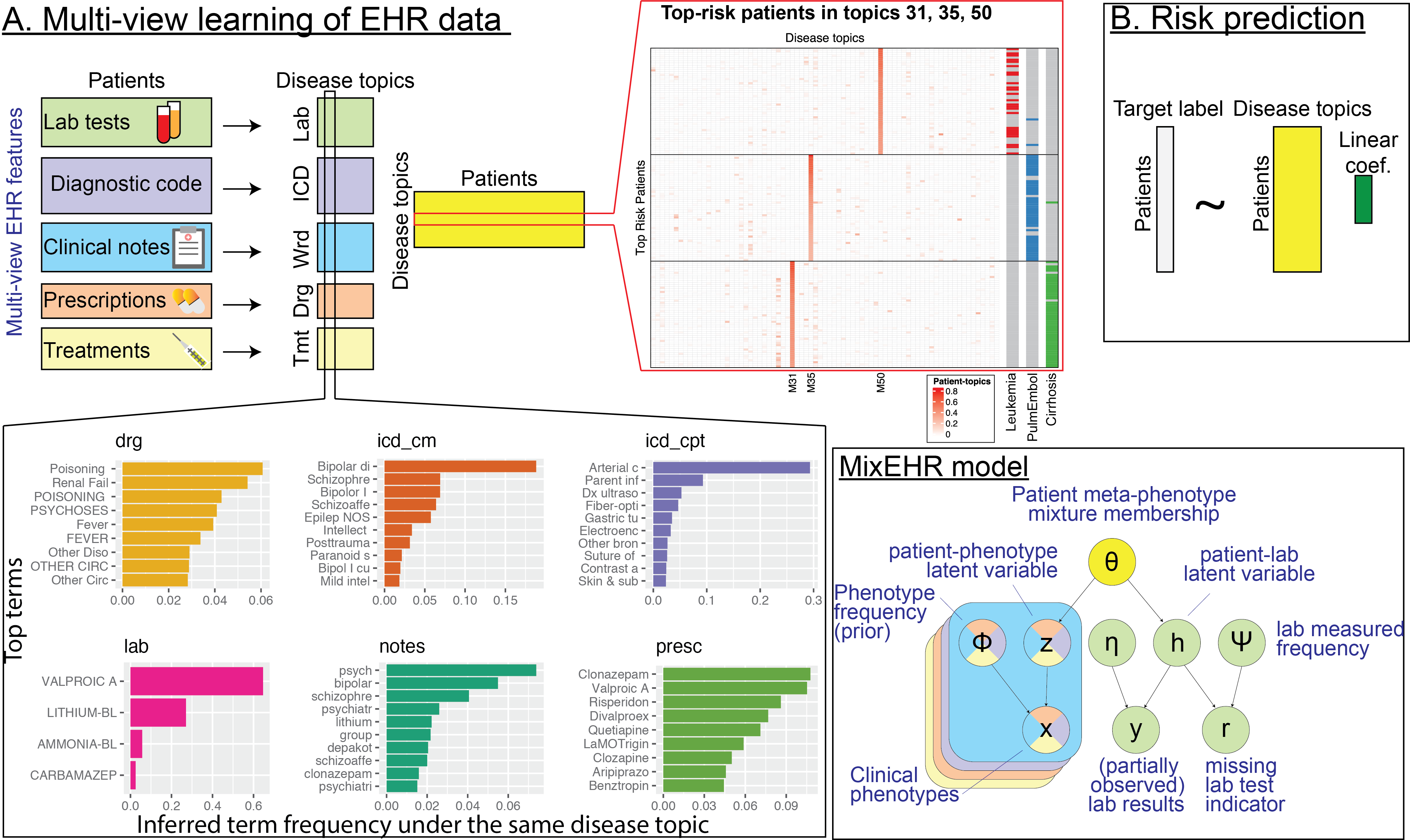
Yuè Li is a Professor in the Department of Computer Science at McGill University, where he leads the Li Lab focused on machine learning applications in genomics and healthcare. His research develops computational methods for analyzing electronic health records (EHR), single-cell multi-omics data, and population genetics. Dr. Li teaches core courses including Applied Machine Learning (COMP 551), Machine Learning in Genomics and Healthcare (COMP 565), and Computer Programming for Life Sciences (COMP 204). His research interests span: AI methods for computational biology and translational healthcare Multi-modal EHR integration and clinical topic modeling Time-series health forecasting and trajectory analysis Single-cell transcriptomics and epigenomics Polygenic risk modeling and causal variant inference Regulatory genomics and functional annotation integration Publications demonstrate strong focus on transformer architectures for healthcare forecasting, Bayesian methods for genomic inference, and neural topic models for clinical phenotyping. Recent work emphasizes foundation models for single-cell data and federated learning for EHR analysis. Scientific Awards: KDD HealthDay2022 Best Paper Award for seed-guided topic modeling Dr. Li mentors graduate students and postdoctoral researchers working on machine learning applications in biomedical domains. Current lab members include Master's students Bo-Hong Wang, Claris Gu, Neda Esfehani, and Ruilin Wang, along with postdoctoral researcher Dr. Jun Bai. The Li Lab operates within McGill's School of Computer Science, developing computational frameworks to integrate heterogeneous biomedical data for improved disease understanding and clinical decision support.
William Schonberg is a Professor in the Department of Civil, Architectural and Environmental Engineering at Missouri University of Science and Technology, specializing in aerospace engineering applications within civil infrastructure frameworks. His research bridges terrestrial engineering disciplines with space exploration challenges, particularly in spacecraft protection systems and lunar resource utilization. His primary research domains include: Micrometeoroid and Orbital Debris (MMOD) risk analysis and mitigation strategies Development and refinement of ballistic limit equations for spacecraft shielding Lunar regolith processing for in-situ resource utilization (ISRU) Space law frameworks addressing orbital debris accountability Electrostatic and magnetic separation techniques for regolith beneficiation Aluminum extraction from lunar materials via molten salt electrolysis Analysis of his 2023-2025 publications reveals a dual research trajectory: advancing Mars Sample Return mission safety through MMOD risk uncertainty modeling for Earth Entry Systems, and pioneering lunar resource processing technologies. His MMOD work focuses on probabilistic risk assessment methodologies for spacecraft shielding, while his ISRU research demonstrates practical approaches for sustainable lunar exploration through regolith beneficiation and metal extraction. No scientific awards were documented in the source materials. Information regarding graduate student advising, grant funding, or laboratory facilities was not explicitly provided in the available texts.
Dr. Judith Chow is a Research Professor and holds the Nazir and Mary Ansari Chair in Entrepreneurialism and Science at the Desert Research Institute (DRI) in Reno, Nevada. She is also a member of the graduate faculty in the Department of Environmental Science and Atmospheric Sciences Program within the Department of Physics at the University of Nevada, Reno (UNR), where she advises graduate students pursuing Masters and Doctoral degrees. With over 40 years of experience in atmospheric, air quality, and environmental health research, Dr. Chow leads DRI's Environmental Analysis Facility (EAF), directing a team of research scientists and technicians in developing and applying advanced analytical methods for characterizing atmospheric particles. Sc.D. in Environmental Science and Physiology from Harvard University (1985) M.S. in Environmental Health Sciences from Harvard University (1983) B.S. in Biology from Fu-Jen Catholic University, Taiwan (1974) Dr. Chow's research spans multiple critical areas in atmospheric science, with particular focus on ambient air and source sampling, chemical and physical analysis of suspended particulate matter, field study design and management, and source apportionment modeling. Her work integrates chemistry, physics, biology, engineering, biostatistics, toxicology, epidemiology, and medicine to address complex air quality challenges. She has established international collaborations across Asia, the Americas, Europe, Africa, Australia, and Antarctica, demonstrating the global relevance of her research. Analysis of Dr. Chow's most recent publications (2023-2025) reveals a continued emphasis on advanced particulate matter characterization, with growing attention to emerging pollution sources like battery fires, spacecraft materials, and industrial processes. Her work increasingly incorporates sensor technology and real-time monitoring approaches, reflecting the evolving nature of air quality research. There's also a noticeable expansion into environmental justice applications and health-focused studies, particularly examining the impacts of air pollution on vulnerable populations. ISI Highly Cited Researcher in ecology and environment with over 28,000 citations and an h-index of 83 Recognized as one of Stanford University's Top 2% of the World's Most Cited Scientists Appointed to U.S. EPA's Clean Air Science Advisory Committee (2015-2018, re-appointed 2021) Member of U.S. National Academy of Sciences committees addressing airborne particulate matter research priorities Co-editor for Aerosol and Air Quality Research and Particuology journals Dr. Chow advises numerous graduate students at UNR and has secured funding for over 50 large atmospheric studies throughout her career. She has led international projects assessing port operations' air quality impacts in southern California, measuring emissions in Canada's Oil Sands Region, designing air quality networks for the World Bank in developing countries, and evaluating photochemical aging effects on biomass burning emissions. Her Environmental Analysis Facility serves as a hub for advanced analytical methods development, particularly for characterizing suspended atmospheric particles and their effects on health, climate, visibility, ecosystems, and cultural artifacts. As founder and leader of DRI's Environmental Analysis Facility, Dr. Chow heads a multidisciplinary team that develops and applies advanced analytical methods to characterize atmospheric particles. Her facility has expanded capabilities to obtain more information from archived samples using thermal and mass spectrometric technologies, with current priorities including improved detection of brown carbon, application of microsensors to human exposure estimates, and simulation of source profile changes using photochemical flow tube reactors.
Noah Simon is an Associate Professor in the Department of Biostatistics at the University of Washington School of Public Health. His research focuses on high-dimensional statistical methods, machine learning, and their applications in biomedicine. He develops computational tools for genomic and clinical data analysis, including penalized regression techniques and adaptive clinical trial designs. Education: B.A. Mathematics, Pomona College (2008) Ph.D. Statistics, Stanford University (2013), advised by Robert Tibshirani Research Interests: Dr. Simon specializes in high-dimensional estimation, algorithm optimization, and clinical trial methodology. His work addresses challenges in biomarker discovery, imaging-based diagnostics, and genomic data analysis. Key areas include sparse-group lasso regularization, adaptive enrichment designs for personalized medicine, and scalable computational methods for big data. Grants & Funding: NIH Director's Early Independence Award ($250k/year, 2014–2019) Amazon and Google Cloud Computing Grants for biomarker research Awards: Forbes 30 Under 30 in Science (2015) NSF Graduate Research Fellowship Honorable Mention (2010) Weiland Fellowship (2011–2013) Advising: He mentors PhD and MS students in biostatistical methodology and data science, with current advisees including Jean Feng, Brayan Ortiz, and Jeremy Roth. Notable collaborations include work on neural activity detection via calcium imaging (SCALPEL) and nonparametric variable importance assessment using neural networks. Lab & Affiliations: Based at the Hans Rosling Center for Population Health, his group develops open-source software (e.g., sgl , standGL ) and contributes to biomedical data science initiatives at UW.
Iliyan Georgiev is a research scientist at Adobe, specializing in advanced computer graphics and physically based rendering. He holds a Bachelor's degree in Computer Science from Sofia University, Bulgaria, and a Master's degree from Saarland University, Germany, supported by a fellowship from the Max-Planck Institute. His work focuses on improving rendering efficiency through Monte Carlo methods, light transport simulation, and neural rendering techniques. Georgiev's research bridges the gap between theoretical and applied graphics, with contributions to bidirectional rendering algorithms, importance sampling, and 3D scene modeling. His publications highlight innovations in variance reduction, path sampling, and material-aware rendering. He has collaborated with leading institutions and companies, including Intel Visual Computing Institute, Disney Research Zürich, Weta Digital, Chaos Group, and Autodesk. Notable scientific awards include the Best Student Paper Award at ICPRAM 2025 and the Best Paper Award at EGSR 2024.