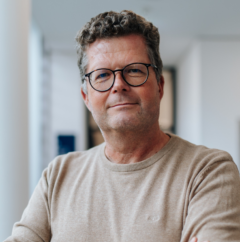
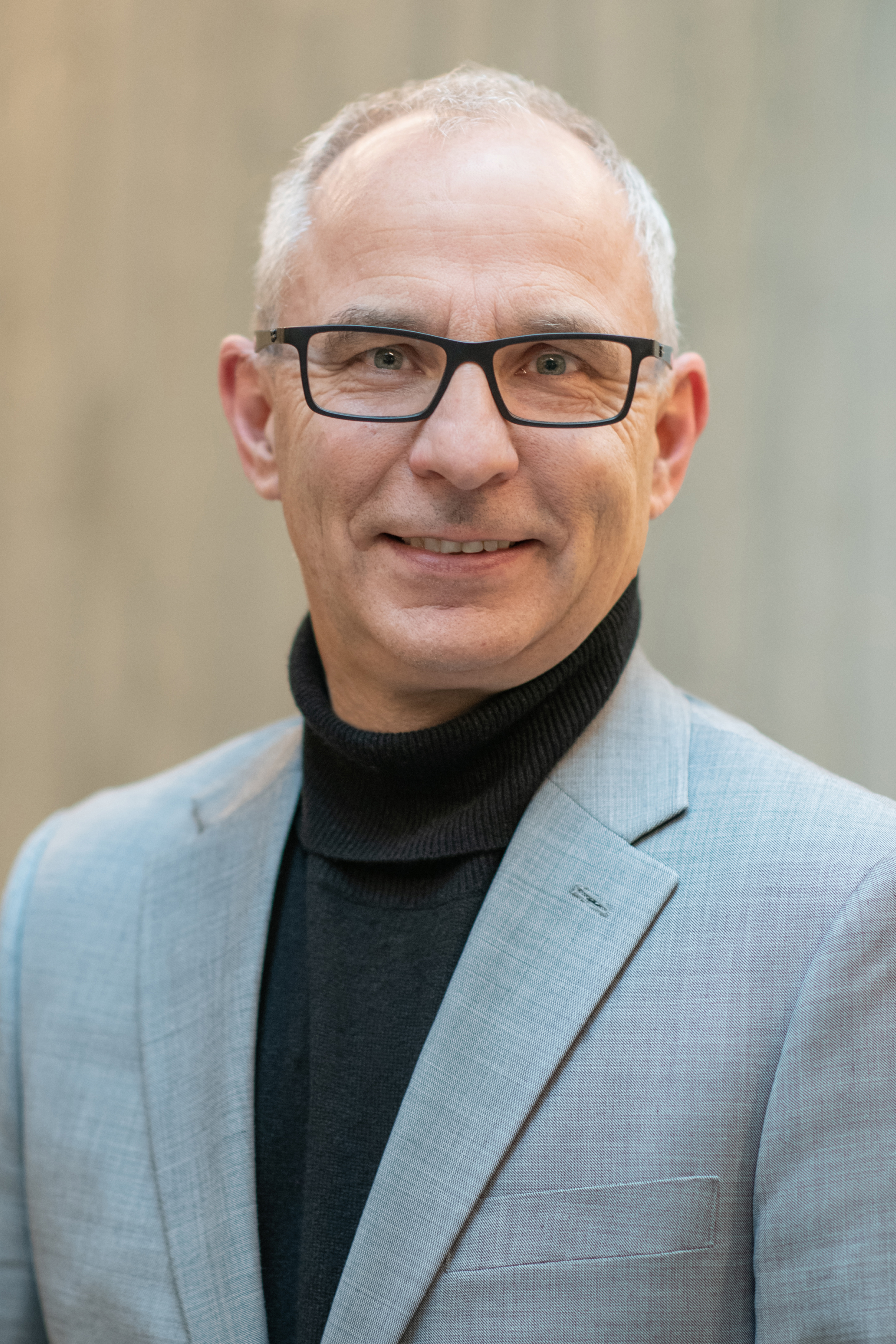
Prof. Marc Stamminger is a Professor of Visual Computing at FAU since 2002, leading the Chair of Computer Science 9 (Computer Graphics). His work focuses on algorithms for synthesizing and analyzing images through 3D modeling, LiDAR/Radar capture, and light simulation. He co-leads FAU Solar, applying 3D modeling for environmental lighting analysis under varying conditions. Stamminger has published over 250 papers, winning prestigious awards like the Siggraph Test-of-Time Award. He holds executive roles in Eurographics and is Vice Dean of FAU's Technical Faculty. Research interests span neural rendering , 3D reconstruction , radar imaging , and medical visualization . Recent work emphasizes radiance field rendering (e.g., VR-Splatting, INPC) and radar-based human motion tracking. His lab's FAU Solar project integrates large-scale 3D models with environmental lighting simulations. Publications trends highlight neural rendering optimizations , radar-MIMO systems , and agricultural digital twins . Key collaborations involve medical imaging (e.g., vocal fold reconstruction) and autonomous driving data generation. Awards: Siggraph Test-of-Time (2023?), 2× Siggraph Best-Of-Show Grants/Teams: FAU Solar Lab, Eurographics leadership, FAU Vice Dean Labs: Chair of Computer Science 9, FAU Solar Initiative
Dr. Jing Wang is a Professor in the Department of Bioinformatics at Southern Medical University's School of Medicine, with extensive research at the intersection of artificial intelligence and biomedical applications. Her work demonstrates strong cross-disciplinary collaboration across medical institutions, engineering departments, and computer science research groups. Her primary research interests include Artificial Intelligence in Healthcare , Biomedical Engineering , and Traditional Chinese Medicine Informatics , with recent publications showing particular expertise in medical imaging analysis, diagnostic assistance systems, and clinical decision support. Her work spans both theoretical algorithm development and practical clinical implementations. Analysis of her 15 most recent publications (2025-2026) reveals a strong trend toward clinically applicable AI systems, with approximately 60% of publications focused on medical diagnostics and treatment support systems. The remaining publications demonstrate expertise in industrial applications of computer vision and fundamental AI research. Her work shows consistent collaboration with both domestic Chinese institutions and international research groups. Notable scientific contributions include: Development of 'Tianyi', a traditional Chinese medicine language model for clinical practice Innovations in bionic soft robotics for rehabilitation assistance Novel approaches to medical image analysis for cancer diagnostics Her research program appears well-funded with consistent publication output across high-impact journals in biomedical engineering, AI, and medical informatics. Current work suggests strong emphasis on translating AI research into clinical practice, particularly in diagnostic support systems and rehabilitation technology.
Prof. Karsten Urban is a Full Professor of Numerical Mathematics at the University of Ulm, leading the Institute for Numerical Mathematics. He holds roles such as Dean of Studies in Computational Science and Engineering (CSE) and Deputy Spokesman for the Research Association for Scientific Computing in Baden-Württemberg. He is an active member of prestigious societies including the Deutsche Mathematikervereinigung (DMV) and SIAM. His academic journey includes a PhD from RWTH Aachen (1995), Habilitation (2001), and a full professorship at Ulm since 2005. Research focuses on numerical methods for PDEs, reduced basis techniques, multiscale simulations in fluid mechanics, biomechanics, quantum sciences, and financial mathematics. He has pioneered wavelet-based methods and collaborated with industries on ship propulsion and energy trading models. His work integrates mathematical rigor with real-world applications, emphasizing model reduction and computational efficiency. Editorial Roles: Managing Editor of Advances in Computational Mathematics , Editor of SN Partial Differential Equations and Applications . Awards: Teaching award of Baden-Württemberg (2005), Science-Economy Cooperation Awards (2004, 2008). Administrative Roles: Member of the University Council and ASIIN expert committee. Supervises doctoral students in numerical analysis, quantum simulations, and biomechanics. Active in interdisciplinary projects, including quantum systems (IQST) and fracture healing modeling in collaboration with biomechanics experts. His contributions bridge academia and industry, driving innovation in computational methods.
Prof. Dr.-Ing. Richard Membarth is a Research Professor for System-on-a-Chip and AI at the Edge Computing at Technische Hochschule Ingolstadt (THI). He is affiliated with the Hardware-Software Co-Design group and holds a secondary position at the German Research Center for Artificial Intelligence (DFKI) Saarbrücken. Co-creator of DSL frameworks like AnyDSL and Hipacc Key contributor to MetaDL (AI metaprogramming) and PRIME (predictive rendering) His research bridges GPU computing , domain-specific languages , and compiler technology , with recent work on Vulkan SPIR-V compilation and device-driven SpMV algorithms . Notable awards include the HiPEAC Paper Award (2018) and multiple Best Paper Awards for his compiler frameworks.
Baishakhi Ray is an Associate Professor of Computer Science at Columbia University, working at the intersection of AI, Software Engineering, and Security. She received her Ph.D. from the University of Texas, Austin, and has established herself as a leading researcher in applying artificial intelligence to software engineering challenges. Her educational background includes a Ph.D. from the University of Texas, Austin, which provided the foundation for her research career at the forefront of AI and software engineering. Dr. Ray's research focuses on leveraging artificial intelligence to solve fundamental challenges in software engineering and security. Her work spans multiple areas including code generation with large language models, vulnerability detection, software testing, and program analysis. She has pioneered approaches that combine deep learning with traditional software engineering techniques to create more robust, secure, and efficient software development processes. Her research has practical implications for improving code quality, enhancing software security, and accelerating development cycles through AI assistance. Her recent work demonstrates a strong emphasis on semantic-aware code generation, execution reasoning, and addressing hallucinations in code language models. She has also made significant contributions to evaluating the functionality and security of AI-generated code, identifying critical challenges in the practical adoption of AI for software development. Dr. Ray has received numerous prestigious awards recognizing her contributions to the field: IEEE TCSE Rising Star NSF CAREER award IBM faculty award VMware Faculty award Distinguished Paper awards at FSE'17, ASE'22, and ISSTA'23 ICSME Most Influential Paper award Publications featured in CACM Research Highlights As an Amazon Visiting Academic and active participant in major software engineering conferences, Dr. Ray has established herself as a thought leader in AI for software engineering. Her research has been widely covered in trade media, indicating its relevance and impact on industry practices. She has mentored numerous students through their research and has been instrumental in shaping the next generation of researchers in this interdisciplinary field. Her work demonstrates a consistent focus on bridging theoretical advances with practical applications, ensuring that her research has tangible benefits for the software development community. The trajectory of her publications shows an evolving research agenda that has successfully adapted to the rapidly changing landscape of AI and its applications to software engineering.
Iliyan Georgiev is a research scientist at Adobe, specializing in advanced computer graphics and physically based rendering. He holds a Bachelor's degree in Computer Science from Sofia University, Bulgaria, and a Master's degree from Saarland University, Germany, supported by a fellowship from the Max-Planck Institute. His work focuses on improving rendering efficiency through Monte Carlo methods, light transport simulation, and neural rendering techniques. Georgiev's research bridges the gap between theoretical and applied graphics, with contributions to bidirectional rendering algorithms, importance sampling, and 3D scene modeling. His publications highlight innovations in variance reduction, path sampling, and material-aware rendering. He has collaborated with leading institutions and companies, including Intel Visual Computing Institute, Disney Research Zürich, Weta Digital, Chaos Group, and Autodesk. Notable scientific awards include the Best Student Paper Award at ICPRAM 2025 and the Best Paper Award at EGSR 2024.
Prof. Dr. Hermann Winner is a full Professor and Head of the Institute of Automotive Engineering (FZD) at Technische Universität Darmstadt since 2002. He previously held leadership roles in predevelopment and series development at Robert Bosch GmbH (1987–2001) and served on international standards committees like ISO/TC204/WG14. Education : Diplomphysicist (1981), Westfälische Wilhelms-Universität Münster Doctorate (1987), Westfälische Wilhelms-Universität Münster (Topic: Dynamics of domain walls in metal ferromagnetic materials) Research Interests : His work focuses on automated driving systems , automotive sensor modeling , and safety validation methodologies . Key contributions include modular safety frameworks (S2I2), behavior-semantic scenery descriptions for autonomous vehicle development, and advanced driver assistance systems (PRORETA 5). He has pioneered research on lidar sensor simulation, brake wear particle emissions, and motorcycle dynamics safety. Article Trends : Recent publications (2022–2024) emphasize automated urban driving safety , semantic scenario modeling , and sensor-based localization . Earlier works (2012–2021) established foundational concepts in fail-operational architectures , collision criticality metrics , and automotive system decomposition . Scientific Awards : IEEE-ITS Institutional Award (2012) for leadership in automated driving research Labs & Projects : He leads the Institute of Automotive Engineering (FZD) at TU Darmstadt and has been integral to projects like UNICARagil (disruptive vehicle architectures), PRORETA series (collision avoidance systems), and collaborations with institutions such as the Daimler und Benz Stiftung and the Bundesanstalt für Straßenwesen.
Randy Verdecia-Peña is a researcher specializing in wireless communication and 5G technologies, focusing on millimeter-wave (mmWave) systems, software-defined radio (SDR), and network protocols. His work emphasizes practical experimentation with advanced signal processing techniques, including machine learning for channel estimation and hardware prototyping for integrated access and backhaul (IAB) architectures. Key contributions include phased array-aided 5G prototypes, flexible layer 2 protocols, and cooperative relay node design in both indoor and outdoor environments. Collaborations frequently involve hardware validation and performance analysis across frequencies like 26 GHz and 60 GHz.
Philipp Slusallek is a Professor for Computer Graphics at Saarland University since 1999 and Scientific Director at the German Research Center for Artificial Intelligence (DFKI), leading the "Agents and Simulated Reality" research area since 2008. He has held leadership roles such as Director for Research at the Intel Visual Computing Institute (2009-2017) and Dean of the Faculty of Computer Science and Mathematics (2002-2004). His affiliations include being a Principal Investigator in the German Excellence Cluster "Multimodal Computing and Interaction" (2007-2019) and a Visiting Professor at NVIDIA Research (2007-2008). PhD in Computer Science from Erlangen University Diploma in Physics from Frankfurt and Tübingen University His research spans computer graphics, artificial intelligence, and high-performance computing, with contributions to real-time ray tracing, digital reality, motion synthesis, and domain-specific languages (DSLs). Recent work includes visual programming tools for image processing (2022), DSL frameworks for high-performance libraries (2018), and compiler optimizations for vectorized code (2018). Key themes include simulation technologies, programming models, and computational sciences. Scientific honors include Fellow of Eurographics, Associate Editor of Computer Graphics Forum , membership in acatech (German National Academy of Science and Engineering), and advisory roles in AI policy. He has led research groups at institutions like Stanford University (Visiting Assistant Professor, 1998-1999) and the University of Tübingen (Researcher, 1990-1992).
Theresa Noegel is a Doctoral Candidate and Researcher at the Institute of Microwaves and Photonics (LHFT) within the Department of Electrical-Electronic-Communication Engineering at Friedrich-Alexander University Erlangen-Nuremberg (FAU). She has been with LHFT since March 2023, contributing to cutting-edge radar research for automotive applications. Her educational background includes: B.Sc. in Electrical Engineering and Information Technology (EEI) from 2016 to 2020 M.Sc. in Electrical Engineering and Information Technology (EEI) from 2020 to 2023 Theresa's research focuses on Radar Imaging Systems , Radar Signal Processing , and Automotive Radar , with emphasis on Synthetic Aperture Radar (SAR) techniques. Her work spans 3D imaging implementation, real-time processing algorithms, and joint communication-sensing integration using OFDM waveforms, addressing critical challenges in autonomous vehicle perception systems. Analysis of her 2022-2024 publications reveals a clear progression from foundational SAR image segmentation toward advanced 3D imaging and forward-looking accumulation methods, demonstrating increasing technical sophistication in automotive radar applications through both simulation and hardware implementation. As an active member of the Institute of Microwaves and Photonics research team, she collaborates on developing next-generation radar technologies for automotive safety systems, working closely with senior researchers including M. Hoffmann and M. Vossiek on real-world implementation challenges.
André Siegel is a Lecturer for special tasks at the Electronic Media Technology Group, Department of Electrical Engineering and Information Technology, Technical University of Ilmenau. He is actively involved in research and teaching related to audio engineering and acoustics, with a focus on spatial sound reproduction and simulation. His research interests span Audio Engineering , Room Acoustics , Binaural Sound Reproduction , Spatial Audio , Acoustic Simulation , and Audio Signal Processing . His work emphasizes practical implementations in real environments, including crosstalk cancellation, head-related transfer function measurement, and sound field analysis. The publications reflect a consistent research trajectory from 2005 to 2013, with a concentration on spatial audio technologies, room simulation methods, and perceptual aspects of sound reproduction. Key themes include the optimization of stereo and binaural systems, low-frequency acoustic behavior, and advanced measurement techniques using vector sensors and spherical arrays. André Siegel has not been awarded any scientific prizes or fellowships mentioned in the available data. He collaborates with researchers such as Hans-Peter Schade, Stephan Werner, and Julius T. Fricke. His work contributes to both academic knowledge and practical applications in room acoustical consultancy and immersive audio systems. He is based in Helmholtz Building, Room H 3529, and can be contacted at andre.siegel@tu-ilmenau.de.
Eddy Brandon De Leon Aguilar is a Researcher at the Technical University of Munich (TUM) within the Department of Mathematics, School of Computation, Information and Technology. He specializes in the Numerics of Partial Differential Equations group, focusing on numerical solutions for high-dimensional time-dependent PDEs arising from physics, particularly through time-dependent Gaussian approximations. Dr. de Leon Aguilar completed his doctoral studies at the Université de Bourgogne in Dijon, France, where he subsequently held a temporary research position before joining TUM. His academic trajectory demonstrates a consistent focus on computational mathematical physics. His research integrates advanced numerical methods with theoretical physics, emphasizing: Numerical Analysis of Partial Differential Equations Mathematical Physics and General Relativity applications Theta function theory and Riemann surface geometry Spacetime visualization through ray tracing algorithms Computational approaches to the Schottky problem Gravitational lensing and black hole shadow modeling Recent publications (2024-2025) reveal a concentrated research program at the intersection of numerical mathematics and theoretical physics. Key themes include computational solutions to algebraic geometry problems, visualization of complex spacetimes, and ray tracing applications in general relativity. A unifying thread across these works is the innovative use of theta functions and Gaussian-based numerical techniques for solving high-dimensional physical systems. No scientific awards are documented in the available materials. Dr. de Leon Aguilar's current research activities center on the Numerics of Partial Differential Equations group at TUM, where he collaborates on developing efficient computational frameworks for time-dependent PDEs. His work bridges abstract mathematical theory with practical numerical implementations for physics applications, particularly in gravitational physics and geometric analysis.
Dr. Thomas Hertweck is a Researcher at the Geophysical Institute (GPI) of Karlsruhe Institute of Technology (KIT), specializing in Applied Geophysics and seismics from data acquisition to processing. He has been involved in teaching geophysical laboratory exercises, professional internships, and courses such as Introduction to Reflection Seismics and Seismic Data Processing . Prior to joining KIT, he spent over 12 years in the seismic industry as a geophysical researcher, software developer, R&D manager, and head of an R&D department. Research Interests : Applied geophysics, seismic data processing, high-performance computing in geophysics, full waveform inversion, reflection seismics, and true-amplitude migration techniques. His work focuses on enhancing seismic imaging through innovative algorithms and software development. Recent Publications : His research covers diverse topics including rift basin development, velocity analysis strategies, negative frequency significance, and advanced seismic stacking methods. These publications highlight his expertise in seismic data processing, waveform inversion, and tectonic studies. Committee Involvement : He serves on the Examination Board of the KIT Faculty of Physics, the Admissions Committee for the Master's Program in Geophysics, and the editorial board of the Journal of Seismic Exploration.
Jan Novák is a researcher in computer graphics with a focus on physically-based rendering and global illumination. He completed his PhD at Karlsruhe Institute of Technology (KIT) in 2014 under Carsten Dachsbacher, with prior degrees from Czech Technical University in Prague and academic experience at Union College (US) and Nanyang Technological University (Singapore). He has held research internships at Disney Research Zurich (2011) and Pixar Animation Studios (2012), before joining Walt Disney Animation Studios in 2013 and returning to Disney Research Zurich in 2014. Education : B.Sc. and M.Sc. from Czech Technical University in Prague (2007-2009) PhD in Computer Science at Karlsruhe Institute of Technology (2014) Research Interests include global illumination, participating media, ray tracing acceleration techniques, and GPU computing. His work addresses challenges in realistic light transport simulation for scenes with complex volumetric effects and glossy materials. Publication Trends reveal a consistent focus on light transport optimization through GPU-accelerated techniques. Key contributions span visibility caching, path-space manipulation, beam/light representations for volumetric effects, and bias compensation methods. His research bridges theoretical advancements with practical implementations for scalable rendering systems. Teaching Experience includes multiple practical courses on GPU computing and graphics programming at KIT between 2010-2013. He also served as a reviewer for prestigious venues including ACM Transactions on Graphics, Eurographics, and SIGGRAPH conferences. Student Supervision covers bachelor and diploma theses on advanced rendering topics, including visibility caching techniques, virtual spherical lights, subsurface scattering algorithms, and 2D path tracing implementations.
Arnulph Fuhrmann is a Professor in Computer Science at Technische Universität Darmstadt. His research focuses on Virtual Reality (VR), Augmented Reality (AR), and advanced rendering techniques. He holds a Ph.D. in Computer Science (2006) from TU Darmstadt, with his dissertation titled Interaktive Animation textiler Materialien (Interactive Animation of Textile Materials). His work spans topics such as real-time rendering optimization, collision detection for deformable objects, and immersive systems for sign language communication. Notable contributions include studies on diffraction phenomena simulation, impostor-based rendering acceleration, and hybrid rendering techniques combining rasterization and ray-tracing. His research often addresses challenges in visual quality, performance, and user interaction in VR/AR environments. Recent articles highlight advancements in diminished reality systems, facial feature enhancement for avatars, and collaborative mixed reality frameworks. Fuhrmann collaborates extensively with institutions like RWTH Aachen and researchers in fields like human-computer interaction and computer vision. His work emphasizes practical applications of theoretical advancements, such as tools for software visualization in VR and accessibility solutions for deaf/hard-of-hearing users.