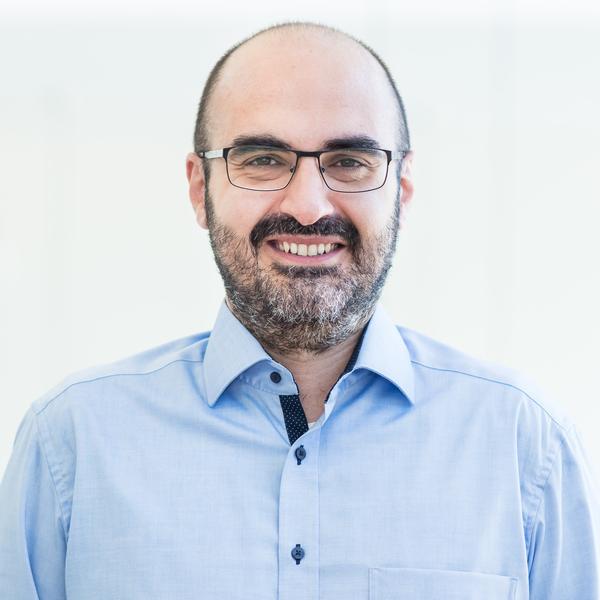
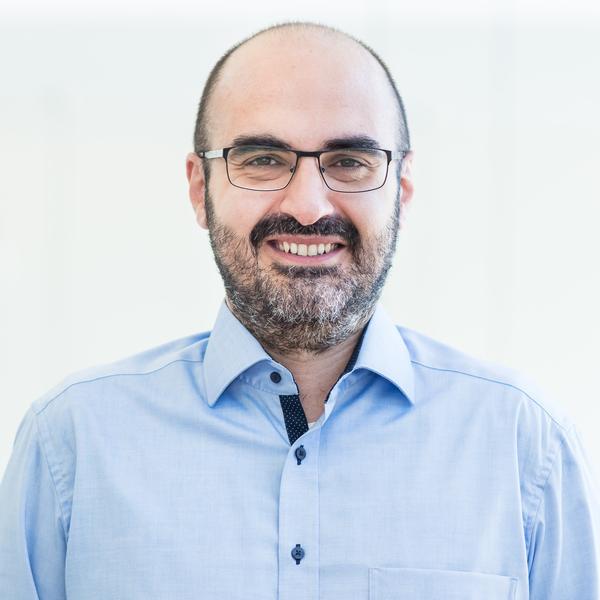
Marek Rei is an Associate Professor of Machine Learning at Imperial College London and a Visiting Researcher at the University of Cambridge . He serves as an AI Advisor for Locai Labs and Esgrid Technologies , while providing consultancy through Perception Labs . PhD in Minimally supervised dependency-based methods for natural language processing (University of Cambridge, 2013) MPhil in Computer Speech, Text and Internet Technology (University of Cambridge Computer Lab, 2008-2009) Bachelor's in Creating a Model for Audiovisual Speech in Estonian (Tallinn University of Technology) His research spans Machine Learning and Natural Language Processing , focusing on planning and reasoning with LLMs , model explainability , medical data modeling , information extraction , and grammatical error correction . Recent publications highlight trends in LLM robustness , membership inference , medical NLP , and corporate sustainability analytics . Scientific accolades include the Best Paper Award at the IEEE Conference on Secure and Trustworthy Machine Learning (SaTML 2025) . Collaborative work with institutions like Microsoft (via SwiftKey acquisition) and contributions to neural sequence labeling frameworks demonstrate his technical and industry impact.
Yohei Okamoto is an Associate Lecturer in the Department of Social Sciences at Murdoch University's School of Humanities, Arts and Social Sciences, within the College of Law, Arts and Social Sciences. His academic focus centers on tourism education pedagogy, transformative learning in study abroad programs, and digital game-based learning (DGBL) for sustainability. Education: Master of Philosophy (MPhil), Murdoch University (2014-2016), Thesis: 'The raison d’être of tourism education: Ontological, epistemological and ideological comparison between the Higher Education and Vocational Education and Training Tourism Programs in Australia' Postgraduate Diploma in Tourism, Murdoch University (2011-2012) Bachelor of Business Administration (BBA), Kyoto Sangyo University (2004-2008) Research interests include comparative analysis of Australian Higher Education (HE) and Vocational Education and Training (VET) sectors, digital pedagogical tools for sustainability education, and philosophical underpinnings of tourism education. His work emphasizes reciprocity in international academic exchanges and curriculum design innovations. Awards include the 2018 ATRAC Best Paper Award and a $33,000 New Colombo Plan Grant (2022) for Asian sustainable tourism study tours. His research trends span educational frameworks, technology integration, and sustainability across tourism studies. Grants and advising: Managed NCP mobility grants and advised projects on DGBL implementation. Active in curriculum development for both HE/VET tourism programs. Labs/Teams: Collaborates with Murdoch's Tourism Education Research Group and digital pedagogy initiatives.
Dr. Jamie Miles serves as a Clinical Research Fellow at the University of Sheffield's School of Medicine and Population Health and an Advanced Clinical Practitioner in Emergency Care at Barnsley Hospital NHS Trust. With a paramedic background, he uniquely bridges prehospital and emergency department care to optimize urgent care systems through early patient need identification and technology integration. His research focuses on prehospital emergency and urgent care , risk prediction modeling in emergency systems , economic analysis of ambulance services , and clinical decision-making frameworks . He aims to enhance patient pathways by developing collaborative spaces between industry, academia, and clinical practice for efficient, evidence-based solutions. Analysis of Dr. Miles' publications reveals a dominant emphasis on risk prediction models for ambulance triage (notably the SINEPOST study), ambulance pre-alert systems, and machine learning applications in emergency care. Recent trends show increasing exploration of AI in out-of-hospital settings and economic evaluations of ambulance service efficiency. Dr. Miles has secured £267,400 in research funding, serving as Chief Investigator for the SINEPOST project (£218,719) and Co-investigator for two grants : 'Avoiding acute emergency admissions in palliative patients' (£38,829) and 'Outcome Measures for the Emergency Care of Seizures' (£9,852). His collaborative projects involve NHS trusts and academic institutions, though no formal students are listed. He leads the multidisciplinary SINEPOST project team , which develops risk prediction tools for ambulance clinical decisions through partnerships with UK ambulance services and emergency departments. This initiative integrates clinicians, researchers, and data scientists to enhance safety in urgent care systems while reducing over-conveyance and optimizing resource allocation.
Dr. Giancarlo Pellegrino is a tenure-track faculty member at the CISPA Helmholtz Center for Information Security in St. Ingbert, Germany. Since 2017 he has held this position, while also serving as a Visiting Assistant Professor at Stanford University and previously as a Visiting Scholar (2017–2018) at the same institution within the CISPA-Stanford Center for Cybersecurity. Education PhD in Computer Science, Eurecom (Sophia-Antipolis, France) — advised by Prof. Davide Balzarotti Research Associate, Security & Trust Group, SAP Research Labs (until August 2013) Postdoctoral Researcher, Saarland University (2015–2017) Research Interests Giancarlo’s work sits at the intersection of empirical and behavioral security , web security , and vulnerability analysis . His group investigates how real-world systems fail, combining large-scale measurement studies with novel detection techniques to improve security testing. Core themes include: Security testing automation and coverage Vulnerability detection in web and mobile applications Human factors in security and privacy decision-making Adversarial machine learning for security tasks Publication Trends Between 2021 and 2025 he has published extensively in top-tier venues such as IEEE S&P, USENIX Security, NDSS, ACM CCS, CHI, and DSN. The work spans empirical analyses of CSRF defenses, large-scale studies of client-side request hijacking, innovative uses of LLMs for web-app scanning, and systematic evaluations of web-crawling algorithms for security measurements. Collectively, these papers advance both the science and tooling of modern vulnerability discovery. Scientific Awards Busy Beaver Award 2017 — conferred for the course “Cybersecurity I” Collaboration & Outreach Giancarlo maintains active collaboration networks through his joint affiliation with Stanford and CISPA, and his research group’s open-source efforts can be explored at https://trouge.net/ . While specific funded projects or advisee names are not detailed in the provided texts, his leadership of the “Scientific Group Pellegrino” indicates ongoing supervision of PhD students and postdocs in empirical security research.
J. Mark Thom serves as Associate Professor at Purdue University's Polytechnic Institute, teaching airframe systems in the Aeronautical Engineering Technology program while directing the Congressionally mandated National Test Facility for fuels and propulsion (NaTeF). His research focuses on alternative aviation fuels development, crew response analysis to engine malfunctions, aerospace diversity initiatives, and engineering logistics optimization, with significant contributions to integrating FAA Part 147 requirements into ABET-accredited curricula. Thom's scholarly work demonstrates consistent innovation in aviation fuel technology since the 1990s, with recent publications emphasizing alternative gasoline certification protocols, commercial spaceflight education frameworks, and gender diversity strategies in aerospace careers. His research bridges theoretical engineering principles with practical maintenance and safety considerations, particularly in materials compatibility testing for unleaded aviation fuels. Scientific recognition includes: Research Excellence Award (2015) for FAA PAFI program securing $1M+ funding Excellence in Research Awards (2011, 2010) for NaTeF development Favorite Faculty Nominee (2015) honoring mentorship impact Departmental Outstanding Tenured Faculty Award (2008) Certificates of Appreciation from Society of Logistics Engineers (2000, 1999) Multiple early-career awards including dual Departmental Outstanding Non-Tenured Faculty Awards (1995-1996) As Principal Investigator, Thom led the FAA's PAFI program—the aviation industry's most comprehensive fuel development initiative in a century—establishing critical testing methodologies for unleaded gasoline. His grant portfolio includes: NaTeF development contracts exceeding $1M annually (2010-2011) NSF-funded diversity initiatives (1997-2004) for women in engineering technology Commercial testing programs for three multinational petrochemical companies The National Test Facility under Thom's leadership functions as an essential industry resource for aviation fuel certification, while his consulting work through Baere Aerospace Consulting, Inc. extends expertise to private-sector innovation in propulsion systems and maintenance protocols.
Sina Zarrieß is a Professor of Computational Linguistics at the University of Bielefeld, affiliated with the Faculty for Linguistics and Literature Studies. His research focuses on computational models of language use, with applications in natural language generation, dialogue systems, and language-vision integration. He leads the Computational Linguistics Bielefeld group and collaborates on interdisciplinary projects in ecology, hate speech analysis, and multimodal interaction. Research interests include language model architecture optimization, pragmatic reasoning in generation, and ethical NLP. He actively contributes to workshops such as ACL, EMNLP, and NLP4Ecology, publishing on topics like character-based LMs, gaze-driven hate speech detection, and visualization-oriented dialog systems. His work bridges theoretical linguistics with applied machine learning, emphasizing interpretability and real-world impact. Notable projects include developing BabyLM character-based models, studying gender-inclusive language benchmarks (SlayQA), and creating tools like VIST5 for adaptive visualization dialog. He explores how LMs encode linguistic principles like Maximize Presupposition! and investigates zero-shot learning for novel object categories. Current research trends show a focus on model efficiency (e.g., sentence selection for classification), multimodal grounding (e.g., scene context in visual tasks), and human-AI interaction dynamics (e.g., explanation effects on user perception). Despite prolific publishing, no specific scientific awards are mentioned in the provided materials. Advising and grants are not explicitly detailed, though his extensive co-authorship network indicates active mentoring. The Computational Linguistics Bielefeld group maintains open research directions in visual question answering, poetry generation diversity, and historical hate speech evolution studies.
Prof. Dr. Christoph Schank is a faculty member at the University of Vechta, contributing to research and education in business ethics, sustainability, and organizational ethics. He is affiliated with the VISTRA Institute, a research hub focusing on management and socio-economic issues. His work emphasizes rethinking economics education for sustainable development, addressing ethical challenges in digital transformation, and exploring the societal implications of corporate responsibility. Research Interests: Business ethics frameworks and foundational critiques Education for sustainable development and posthumanist practices Algorithmic decision-making and workplace integrity Corporate social responsibility (CSR) and political dimensions Service learning as an educational tool Publications Trends: Recent works (2022-2025) focus on digitalization's impact on ethics, redefining economics education for the Anthropocene, and analyzing algorithmic HR systems. He also explores stakeholder cooperation ethics and sustainable logistics solutions. Labs/Teams: Active within the VISTRA research network, contributing to interdisciplinary projects on socio-economic challenges and business ethics education.
Brian Kisida is an Associate Professor at the Truman School of Government & Public Affairs, University of Missouri. He serves as Co-Director of the National Endowment for the Arts-sponsored Arts, Humanities, & Civic Engagement Lab. His research focuses on educational policy, particularly addressing gaps in achievement, experience, and attainment for at-risk students. He specializes in rigorous program evaluation, including randomized controlled trials, and has contributed to the U.S. Department of Education’s Institute of Education Sciences. Key research areas include the impact of cultural institutions, school-community partnerships, arts education, teacher diversity, urban charter schools, and long-term educational outcomes beyond standardized tests. His work explores non-cognitive outcomes, civic engagement, and the role of arts in social-emotional development. Kisida’s publications appear in top journals such as Journal of Policy Analysis and Management and Educational Researcher , and his findings have influenced congressional testimony and media coverage in outlets like The New York Times and CNN . His research on school vouchers, charter schools, and arts education has provided critical insights into educational equity and policy effectiveness. Current efforts emphasize expanding arts access through multisector collaborations and examining broader policy impacts on societal well-being.
Samuel Rodriguez Ferrandez is an Associate Professor at the Faculty of Law of the Universidad de Murcia, specializing in Criminal Law within the Department of Legal History and Criminal and Criminological Sciences. He is part of the Research Group in Criminal and Criminological Sciences. His academic focus centers on legislative evaluation, criminal policy analysis, neurocriminology, and innovative pedagogical methods in legal education. He holds a Ph.D. from the Universidad Miguel Hernández de Elche (2011), supervised by Dr. Fernando Miró Llinares, titled 'La ley penal y sus consecuencias hacia la construcción de un modelo teórico para la evaluación de las leyes penales.' His research explores themes such as cybersecurity legal frameworks in Spain, the integration of neuroscientific insights into criminal responsibility (neuroimputabilidad), and the application of empirical evidence in legislative processes. He has contributed to debates on penal legitimacy, judicial precedents, and comparative legal systems (e.g., Finland, Brazil). His publications reflect a critical engagement with penal policy, legislative reforms, and the pedagogical use of technology (e.g., video conferencing, mobile learning). Notable areas include the evaluation of criminal law effectiveness, the penal protection of environmental resources (water), and the theoretical foundations of criminal law. Though no specific awards are listed, his work has addressed impactful topics such as pandemic-related legal challenges (Ebola contagion liability), juvenile justice, and the penal implications of economic crimes (e.g., market fraud). His teaching innovations include integrating virtual classrooms and social networking tools into legal education. He collaborates on interdisciplinary projects, such as analyzing cyberfraud in collaborative economies and the penal treatment of corporate liability under Spanish law.
Giancarlo Pellegrino is a faculty member at CISPA Helmholtz Center for Information Security , where he leads the Application Security (AppSec) research group. His work focuses on web security, program analysis, and the security of emerging technologies like the metaverse/WebXR. He has developed tools such as YuraScanner (LLM-based), MAK (RL-crawlers), Black Widow, and CHARON for vulnerability detection. Research Interests: Autonomous vulnerability detection, cross-site request forgery (CSRF), DOM clobbering, web API security, and adversarial attacks on physical systems. Committee Roles: PC co-chair for USENIX Security 2025, vice PC chair for USENIX Security 2023-2024, and served on PCs for IEEE S&P, ACM CCS, and others. Scientific Awards: Best paper at CHI 2025 for 'Permission Rationales in the Web Ecosystem.' Distinguished paper at IEEE S&P 2024 for 'The Great Request Robbery.' Distinguished papers at IEEE S&P 2023 for DOM clobbering and cross-site information leaks. His work bridges practical tool development (e.g., JAW JavaScript analysis framework) and theoretical studies on emerging threats like RAG-based systems and perceptual ad-blocking security. He also investigates cyberattacks involving clickbait PDFs and social media account trading.
Dr. Kyoung-Yun Kim is a Professor in the Department of Industrial and Systems Engineering at Wayne State University's College of Engineering, where he directs the Computational Intelligence and Design Informatics (CInDI) Laboratory and serves as Director of the Smart Manufacturing Demonstration Center (SMDC). He holds a PhD from the University of Pittsburgh and BS/MS from Chonbuk National University, South Korea. As a Fellow of the Society for Design and Process Science (SDPS) and Editor-in-Chief of the Journal of Integrated Design and Process Science, Dr. Kim leads research in design science, semantic assembly modeling, and smart manufacturing. Research Focus: His work integrates ontology-based design, welding/joining technologies, and cyber-physical systems. Key domains include: Semantic reasoning for CAD/CAE systems Data-driven weldability certification Industrial IoT in manufacturing Sustainable product lifecycle management Human-machine collaboration frameworks Publication Trends: Recent articles (2020-2023) demonstrate strong emphasis on AI-driven manufacturing analytics, ontology-based knowledge systems, and cyber-physical integration. Earlier foundational work established novel methods for collaborative assembly design and robotic welding optimization. Awards & Honors: Fellow, Society for Design and Process Science (2017) Top Cited Article Award, Journal CAD (2005-2010) IIE Transactions Best Paper Award (2003) Google Scholar Classics in Manufacturing 1st Place, Center for e-Design Best Poster (2019) Leadership & Grants: Secured over $10M in funding from NSF, DOD, NIST, and industry partners (Ford, GM). Directs NSF I/UCRC for e-Design and co-leads the $3.8M NIST Rx Marketplace Orchestrator project. Educational innovations include NSF-supported curricula in sustainable design and smart manufacturing. Labs & Teams: Leads the CInDI Lab focusing on computational intelligence in design. Coordinates multi-institutional teams with Oregon State, Iowa State, and international collaborators (France, South Korea) for Industry 4.0 initiatives.
Yulan He is an active researcher in Natural Language Processing and Computational Linguistics with numerous publications in top-tier conferences including ACL, EMNLP, and COLING from 2023-2025. Their work spans both theoretical advancements in Large Language Model architectures and practical applications in healthcare, social media analysis, and information retrieval. Research interests focus on Large Language Model optimization , including improving faithfulness in rationale generation, enhancing reasoning capabilities, personalizing outputs to user preferences, and optimizing computational efficiency. Significant contributions include frameworks for debiasing opinion summarization, improving depression detection in clinical interviews, and developing methods for Theory-of-Mind reasoning in LLMs. Their work addresses critical challenges in LLM reliability, interpretability, and efficiency. Analysis of recent publications reveals consistent focus on bridging the gap between theoretical LLM capabilities and practical applications , with particular attention to healthcare contexts, social media analysis, and complex reasoning tasks. Their research demonstrates how to make LLMs more reliable, efficient, and aligned with human needs across diverse domains. Scientific contributions include: Novel frameworks for LLM faithfulness and reasoning (Drift, EnigmaToM) Efficient inference methods (SCOPE, PECAN) Bias mitigation techniques (LASS, Rehearse With User) Personalization approaches (PROPER) Healthcare applications (Explainable Depression Detection) As evidenced by senior authorship positions across numerous publications, Yulan He leads research projects and likely supervises graduate students in NLP research. Their work demonstrates strong technical expertise combined with practical problem-solving approaches to real-world NLP challenges.
Professor J. Ignacio Canales is Chair in Strategic Management at the Business School of the University of Aberdeen. He previously held academic positions at the University of Glasgow and the University of St Andrews, where he advanced from Lecturer to Professor. He is an active researcher, educator, and academic leader, currently serving as Director of the MA in International Business and Departmental Research Director. He holds a PhD in Management from IESE Business School and a BSc in Commercial Engineering from PUC Chile. University: University of Aberdeen School: Business School Academic Rank: Professor Email: ignacio.canales@abdn.ac.uk His research focuses on Strategic Management, particularly the strategy process, leadership, subsidiary strategy, and the social phenomena underlying strategy implementation. He has explored topics such as dynamic capabilities, innovation, CEO tenure, and digitalization in healthcare. His recent work includes studies on attention to innovation, open strategizing, and state ownership and innovation. The analysis of his recent publications reveals a strong emphasis on the microfoundations of strategy, the role of leadership and cognition in strategic processes, and the interplay between institutional logics and organizational change. His work bridges theoretical rigor with practical relevance, often employing case studies and qualitative methods to explore complex strategic phenomena. His scientific awards include the Booz Allen Hamilton Fellowship, multiple Outstanding Reviewer Awards from the Academy of Management, and a nomination for the SMS London Research Methods Paper Prize. He has also been recognized for his editorial contributions and leadership within the Strategic Management Society. Booz Allen Hamilton Fellowship, SMS, 2003 Outstanding Reviewer Award, AOM, 2008, 2005, 2003 SMS Best Paper nomination, 2020 IESE Business School Fellowship, 1999–2003 Professor Canales has supervised numerous PhD students, including Dr. Javier Yáñez-Arenas, Dr. Haitham Jafar, and Dr. Yameng Zhang. His supervision focuses on strategic management, leadership, and organizational dynamics. He has also held significant administrative roles, including Head of Business and Management, MBA Director, and AMBA accreditation champion. He is actively involved in knowledge transfer through his consulting firm, Strategy Channels, and through public engagement via podcasts, videos, and media interviews. He is an editorial board member for the Journal of Management , Journal of Management Studies , and Long Range Planning , and has held leadership positions in the Strategic Management Society, including Program Chair and Chair of the Strategy Practice and Strategy Process Interest Groups.
Associate Professor Simon Knight is a member of the University of Technology Sydney Centre for Research on Education in a Digital Society (CREDS), which he founded and directs. He holds the position of Associate Professor at UTS TD School and is a 2023 Australian Research Council Discovery Early Career Research Award (ARC DECRA) Fellow. His academic work spans multiple institutions, including honorary positions at University College London (2023-2026) and previous visiting roles at New York University, UCL, and Cambridge. PhD, The Open University (2012-2015) MA (Philosophy of Education), UCL Institute of Education (2009-2011) MPhil (Educational Research Methods), University of Cambridge (2011-2012) BSc (International Honours, Philosophy and Psychology), University of Leeds (2004-2008) Graduate Certificate in Higher Education Teaching and Learning, UTS (2018-2020) Dr Knight's research focuses on how people learn to navigate uncertainty, disagreement, and evidence in digital environments, with particular attention to the mediating role of technology. His work explores data as evidence, design for learning toward epistemic and ethical reasoning, and the intersection of critical thinking with information problem solving in the age of misinformation and generative AI. He has made significant contributions to the field of learning analytics, particularly in understanding epistemic cognition and its relationship to information seeking behaviors. His recent publication trends reveal a strong focus on AI ethics, critical information navigation, and the development of tools to support students in complex information landscapes. Knight's work increasingly addresses the challenges posed by generative AI in educational contexts, with multiple 2025 publications examining how learners can develop critical thinking skills when interacting with AI systems and navigating conflicting information sources. 2023 Australian Research Council Discovery Early Career Research Award (ARC DECRA) Fellow UTS 2020 Early Career Research Excellence Award UTS 2023 Medal for Excellence in Research and Teaching Integration Multiple UTS teaching awards As Co-Editor in Chief of the Journal of Learning Analytics (2015-2022) and active participant in numerous scholarly conferences, Dr Knight has significantly shaped the learning analytics field. He has secured research funding through his ARC DECRA fellowship and other grants, focusing on how technology can support evidence-based reasoning and critical thinking. His professional activities extend to serving on editorial boards, acting as an ARC Assessor, and contributing to policy development through submissions to government inquiries on digital transformation and civics education. Dr Knight leads the Centre for Research on Education in a Digital Society (CREDS) at UTS, which serves as the primary hub for his research activities. His work involves close collaboration with researchers across disciplines and institutions, including partnerships with UCL Knowledge Lab, KTH Digital Futures, and various Australian universities. The INFO-NAVIGATE project represents a key current initiative, developing tools to support critical thinking in complex information environments.
Associate Professor Karin Watson is a leading academic at UNSW Sydney within the Faculty of Arts, Design & Architecture . She serves as Director, Education in the Pro-Vice Chancellor office and leads the UNSW Education Focussed Program. A Scientia Education Academy Fellow and Senior Fellow of the Higher Education Academy (UK) , her expertise centers on student experience, feedback literacy, and fostering belonging in higher education. Education leadership in curriculum design and peer mentorship programs Recipient of multiple international and national awards for teaching excellence Her research spans online education , studio teaching methodologies , and pedagogical innovation , with a focus on scalable solutions like the Learning to Teach Online Project and the OnTask platform. She has secured competitive grants from organizations such as Explorance and Advance HE . Notable scientific awards include: 2024: Ranked 3rd internationally in the 'Advancing Teaching Global Mapping Study' 2024: ISSOTL 'Gary Poole Distinguished Reviewer Award' 2023: ADCET 'Accessibility in Action Award' 2022: Finalist in Wharton-QS Reimagine Education Awards She has led multi-institutional grants and projects with measurable impacts on global higher education practices.