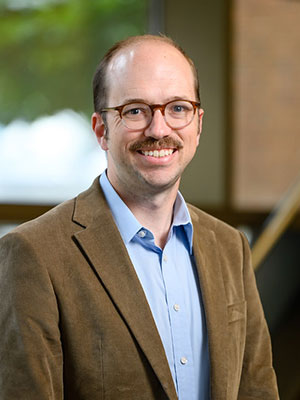
Sandra Elise Sekkouri is an Assistant Professor at the Department of Pedagogy, ICT and Learning at Østfold University College. She serves as a stage coordinator for second-year full-time and part-time kindergarten teacher education students. Education: MA in Kindergarten Pedagogy and Early Childhood Science (0-3 years), Østfold University College (2023) MA in Special Education, University of South-Eastern Norway (2015) BA in Early Childhood Education, University of South-Eastern Norway (2008) BA in Preschool Teacher, Honduras (1997) Research interests: Focused on digital practices in kindergarten , children's linguistic expressions , inclusion , and ethical/legal frameworks for technology use with children under three. Her work bridges pedagogy and digital citizenship, emphasizing children's agency. Recent publications analyze digital practices beyond screen time, ethical documentation in pedagogy, international curriculum comparisons, and children's contributions to technology-driven learning. She collaborates with regional competence programs like REKOMP and contributes to debates on professional digital competence standards. Professional activities include leadership roles in kindergarten teacher education and membership in the Toddler Science (0-3 years) research group. She has no listed scientific awards.
Vivek Rao serves as Associate Dean for Master's & Professional Programs and Executive Director of the Design and Technology Innovation Master's Program at Duke University's Pratt School of Engineering. He is also an Executive In Residence in Engineering Graduate and Professional Programs, teaching core courses including Design Ethics & Social Innovation and Design Innovation Studio while leading the development of Duke's new Masters of Engineering program. He earned his B.S. (2007), M.S. (2012), and Ph.D. (2018) in Mechanical Engineering from the University of California, Berkeley. His research spans Engineering Design Theory and Methodology , Product Design Innovation , and Emerging Technologies in Design , with significant focus on Sociotechnical Systems , Human-Computer Interaction , and Sustainability applications in water infrastructure. His interdisciplinary work integrates business innovation frameworks with engineering design principles. Analysis of his 15 most recent publications (2021-2024) reveals a dominant trend in AI-enhanced design tools, cybersecurity integration, and human-centered methodologies across disaster response, global health, and virtual collaboration contexts. These works demonstrate consistent interdisciplinary collaboration bridging engineering, business, and social sciences through journals like Design Studies and Journal of Mechanical Design. No scientific awards were documented in the source material. Rao has secured substantial external and internal grant funding during his postdoctoral research at UC Berkeley and maintains an active consulting practice with clients ranging from pre-seed startups to the US Department of Defense. His pedagogical approach emphasizes project-based learning, as evidenced by his development of foundational courses for Berkeley's Masters of Design program and Duke's new initiative. As Executive Director of Duke's Design and Technology Innovation program, Rao leads curriculum development and industry partnerships focused on translating design theory into real-world technological solutions, particularly in infrastructure and sustainability domains.
Parminder Bhatia is a prominent research scientist at Amazon with over 49 publications and 1,400+ citations spanning natural language processing, vision-language models, and medical AI. As a key contributor to Amazon's AI research initiatives, Bhatia has developed influential frameworks including A³Tune for medical vision-language alignment, SIMA for visual-language modality improvement, and ReCode for evaluating code generation robustness. Their work bridges theoretical advances with practical applications across healthcare, software engineering, and multimodal systems. Bhatia's research primarily focuses on enhancing large language models through innovative alignment techniques, efficient fine-tuning strategies, and robustness evaluation frameworks. Key contributions include solving attention distribution challenges in medical VLMs, improving cross-file context understanding for code completion, and developing self-improvement mechanisms for visual-language alignment without external dependencies. Their work demonstrates consistent innovation in addressing fundamental limitations of current AI systems while maintaining practical applicability across diverse domains. Analysis of Bhatia's 15 most recent publications reveals a strong emphasis on medical AI applications (40%), code generation/analysis (30%), and foundational LLM improvements (30%). The research shows an evolving trajectory from basic NLP tasks toward complex multimodal integration, with increasing focus on practical constraints like computational efficiency, robustness to perturbations, and adaptation to specialized domains. Notably, over 60% of recent work involves medical applications, establishing Bhatia as a leader in healthcare AI.
Matthew Lease is a Professor at the School of Information, University of Texas at Austin, where he serves as Director of Doctoral Studies and Assistant Graduate Advisor. He is a Distinguished Member of the Association for Computing Machinery (ACM), a Senior Member of the Association for the Advancement of Artificial Intelligence (AAAI), and an Amazon Scholar. Lease co-directs the $20M NSF-Simons AI Institute for Cosmic Origins (CosmicAI) and is a faculty founder and leader of UT's Good Systems, an eight-year, $20M university-wide Grand Challenge aimed at designing responsible AI technologies. In 2023-2024, he was invited four times to address the Texas Legislature on responsible AI. Ph.D. Computer Science, Brown University, 2010 M.Sc. Computer Science, Brown University, 2004 B.Sc. Computer Science, University of Washington, 1999 Lease directs the UT Austin Laboratory for Artificial Intelligence and Human-Centered Computing (AI&HCC), where his research spans artificial intelligence modeling and human-computer interaction design. His work focuses on creating novel datasets, building AI models, and evaluating both model performance and their impact on end-users. When automated AI falls short, his team designs human-in-the-loop approaches, leveraging AI model explanations and creative user interfaces. To promote fair AI, they focus on better annotation techniques to avoid bias and develop modeling strategies to mitigate dataset biases. Their work tackles real-world problems as part of UT Austin's Good Systems Grand Challenge, with an ongoing emphasis on content moderation—exploring automated, human-in-the-loop, and human-safe practices to combat disinformation, hate speech, and online polarization. Lease's recent publications (2021-2024) demonstrate a strong focus on human-centered AI, particularly in the areas of fair and explainable AI, content moderation, fact-checking, and crowdsourcing. His research integrates technical AI development with human factors considerations, emphasizing the importance of designing AI systems that work effectively with human users. The publications reveal a consistent theme of addressing bias in AI systems, improving human-AI collaboration, and developing methods to ensure the ethical deployment of AI technologies in sensitive domains like content moderation and misinformation detection. His work shows progression from foundational techniques in crowdsourcing and human computation toward more sophisticated approaches that consider psychological impacts and ethical implications. 2024 Test of Time Paper Award, AAAI Conference on Human Computation and Crowdsourcing (HCOMP) 2024 Most Influential Paper Award, IEEE/ACM International Conference on Automated Software Engineering (ASE) 2024 Best Paper Honorable Mention, ACM Conference on Computer Supported Cooperative Work (CSCW) 2022 Best Student Paper, Conference on Information Systems and Technology (CIST) 2020 Conference Award Track, Journal of Artificial Intelligence Research (JAIR) 2019 Best Student Paper, European Conference for Information Retrieval (ECIR) Early Career awards from DARPA, NSF, and IMLS Lease has secured significant funding for his research, including the $20M NSF-Simons AI Institute for Cosmic Origins and the $20M Good Systems Grand Challenge. His lab, AI&HCC, has developed numerous tools and methodologies for human-AI collaboration, particularly in the context of content moderation and fact-checking. He has advised numerous students who have gone on to publish in top-tier conferences and journals in AI, HCI, and NLP. Lease actively collaborates with industry partners including Amazon, where he serves as an Amazon Scholar, and has served on advisory boards for JASIS&T, Texas Advanced Computing Center (TACC), and UT Austin-Amazon Science Hub. His research has led to practical tools like SQUARE for aggregating crowd responses and methods for transparent AI evaluation. Lease leads the UT Austin Laboratory for Artificial Intelligence and Human-Centered Computing (AI&HCC), which has developed innovative approaches to human-AI collaboration. The lab's work on content moderation addresses critical challenges in online safety, including the psychological well-being of content moderators who face traumatic material. Their research on fair and explainable AI has produced methods for detecting toxic speech while maintaining accuracy across demographic groups. The lab actively collaborates with fact-checking organizations through co-design processes to create tools that meet real-world needs. As part of UT Austin's Good Systems initiative, the lab is developing AI technologies that prioritize human values and social responsibility from the outset of the design process.
Dr. Bentley Oakes is an Assistant Professor in the Department of Computer and Software Engineering at Polytechnique Montréal, affiliated with Université de Montréal and Mila. His research focuses on knowledge engineering for complex cyber-physical systems, particularly digital twins, ontological reasoning, and model-driven approaches. He teaches LOG6310E - Digital Twin Engineering and organizes the SEMTL meetings. Previously, he held postdoctoral positions at the University of Montréal and the University of Antwerp, and completed his PhD at McGill University in 2019 on model transformation verification. Education: PhD in Computer Science, McGill University (2019) Postdoctoral Researcher, University of Montréal (2017–2019) Postdoctoral Researcher, University of Antwerp (2014–2017) Research Interests: Digital twins (structure, validation, reporting) Ontologies and domain-specific knowledge representation Formal verification of cyber-physical systems Machine learning applications in systems engineering Model-driven engineering and transformations Awards: EDTConf 2024 Best Short Paper Award SoSyM/MODELS Journal-First Award (2023) Best Student Paper Award at SIMULTECH 2019 Advising & Labs: Advisor to PhD/Master’s students in digital twin engineering and related topics Oakes Lab focuses on accelerating knowledge engineering for complex systems Recruiting for PhD and internship positions (e.g., MITACS Globalink) Labs/Teams: The Oakes Lab collaborates with global experts and focuses on semantic integration, DT reporting frameworks, and LLM-based DT construction.
Chris Mabey is an Assistant Professor of Mechanical Engineering at Clemson University’s College of Engineering, Computing and Applied Sciences. He completed his Ph.D. at Brigham Young University in 2023 and immediately began his faculty role at Clemson the same year, bringing expertise in sustainable design, agent-based modeling, and engineering for global development. Education: Ph.D. in Mechanical Engineering, Brigham Young University, 2023 B.S. in Mechanical Engineering, Brigham Young University, 2014 Research Interests: Mabey’s scholarship sits at the intersection of engineering design and social-environmental impact. He develops data-driven, agent-based simulations to predict how products—especially low-resource technologies such as improved cookstoves—will be adopted and how they will influence sustainability metrics across social, environmental, and economic dimensions. His work integrates affordance theory, life-cycle assessment, and machine-learning techniques to create decision-support tools for designers targeting global development challenges. Publication Trends: Since 2021 he has authored fifteen peer-reviewed articles, the majority appearing in the Journal of Mechanical Design and sustainability-focused journals. His 2023 output alone includes six papers that collectively advance systematic literature review methods, predictive social-impact modeling, and trade-off characterization between environmental and social outcomes. Emerging work in 2024–2025 applies affordance theory to design for mental and social health, indicating a broadening agenda toward well-being-centered engineering. Scientific Awards & Recognition: No awards or honors are explicitly listed in the provided materials. Advising & Grants: No students or funded projects are mentioned in the supplied text; these sections will be updated as public information becomes available. Labs & Teams: While specific laboratory affiliations are not detailed, Mabey is situated in 218 Fluor Daniel Building, a hub for design and innovation research within Clemson’s mechanical engineering department, and he collaborates extensively with the broader Engineering for Global Development community.
Magdalena Kersting serves as a Tenure-track Assistant Professor of Science Education at the Department of Science Education within the Faculty of Science, University of Copenhagen. Her research bridges science education, embodied cognition, and technology, focusing on how bodily experiences shape scientific understanding. She teaches graduate courses in the Master in Science Teaching (MiSU) and Master in STEM Teaching (KASTEM) programs, emphasizing inquiry-based methods and science communication. Education: PhD in Physics Education, University of Oslo (2019) Diploma in Public Relations, Freie Journalistenschule Berlin (2018) Master of Science in Mathematics, University of Göttingen (2015) Bachelor of Science in Mathematics, University of Göttingen (2012) Bachelor of Science in Physics, University of Göttingen (2011) Dr. Kersting's research centers on embodied cognition in science learning, particularly how physical interactions influence comprehension of complex concepts like general relativity. Her work integrates design-based research to develop innovative curricula, including Einsteinian physics for K-10 students, while exploring intersections with science communication and historical perspectives. Recent projects emphasize teacher development through embodied metaphors and literacy practices. Analysis of her 2024-2025 publications reveals a cohesive trajectory: applying embodied cognition frameworks to STEM education with dual focus on curriculum innovation (especially Einsteinian physics) and teacher professional development. These works demonstrate methodological rigor through design-based research while addressing practical classroom implementation challenges across international contexts. Scientific Awards: International Astronomical Union PhD Prize in Education (2020) IARU’s Early-Career Collaboration Award (2025) Early Career Physics Communicator Commissioning Award (2021) Winner of Science on Stage National Competition in Norway (2017) Hartle Award for Best Oral Talk in Education & Public Outreach (2019) Best Oral Presentation of a Young Researcher in Physics Education (2019) New Philosopher Writers’ Award (2021) Dr. Kersting supervises MiSU and KASTEM Master's students while leading major initiatives like the Einsteinian physics curriculum implementation (years 3-10), which involves international teacher training partnerships. Her leadership extends to coordinating the ESERA Special Interest Group 'Languages & Literacies in Science Education' and co-founding the IMPRESS seminar series, fostering global collaboration in physics education research. She directs the SENSES workshops on embodied cognition applications and co-chairs the ESERA 2025 conference in Copenhagen. Her research group collaborates with institutions including OzGrav (Australia), Einstein First, and Karlstad University, focusing on translating theoretical frameworks into classroom practice through iterative design cycles and teacher co-creation.
Paola Corò is an Associate Professor in Assyriology at the Department of Humanities , Ca' Foscari University of Venice . Her institutional email is coropa@unive.it , and she is based at the Malcanton Marcorà campus. Specializes in Hellenistic Babylonian texts from Uruk Focuses on epigraphy , digital humanities , and machine learning applied to cuneiform studies Research highlights : 2024 publications on Ashurbanipal's library tablets and Seleucid royal narratives 2023 work on Greek identity markers in Babylonian sources 2022 monograph on temple property management in Hellenistic Uruk Scientific recognition : Premio Giovani Ricercatori (2001) Research grants (2003-2005, 2006-2007, 2017-2018) Member of KASKAL journal's Scientific Committee Coordinates the LIBER project (2019-2021) applying machine learning to cuneiform tablets, and participates in the International Association for Assyriology (IAA). She has taught Assyriology at both undergraduate and graduate levels, including blended learning formats and international Erasmus+ programs.
Simon Wyke is an Assistant Professor at the Department of Sustainability and Planning, Aalborg University. His academic background includes a Master's in Building Informatics and a PhD in Civil Engineering from Aalborg University. He is actively involved in research on data and knowledge management, subsurface infrastructure, nature-based solutions, and IT-based solutions in organizations. His work contributes to UN Sustainable Development Goals related to sustainable cities, responsible consumption, and climate action. Education: PhD in Civil Engineering, Aalborg University Master's in Building Informatics, Aalborg University Research interests focus on: - Subsurface infrastructure management and digital twin technologies - Sustainable urban planning through permeable pavements and NBS - Construction project management and cost overrun analysis - Reality capture and augmented/virtual reality applications in infrastructure - Quality management in construction processes - Waste management optimization in construction sites Notable projects include: - DDU: The Digital Underground (2023-2026): Explores subsurface infrastructure data registration and collaboration networks. - NBRACER (2023-2027): Focuses on climate-resilient nature-based solutions in Atlantic regions. - Optimeret design af byggeaffaldssystemer (2025-2027): Aims to improve waste management through behavioral modeling. He has published widely in journals like Engineering, Construction and Architectural Management and the KSCE Journal of Civil Engineering. His work emphasizes interdisciplinary approaches, combining engineering, data science, and environmental science. Collaboration efforts include partnerships with Danish utility companies and international climate initiatives. He actively peer reviews for construction management journals and participates in climate action conferences like Det Nationale Klimatopmøde.
Jordan B. L. Smith is a Lecturer in Audio Signal Processing at Queen Mary University of London's School of Physical and Chemical Sciences. He teaches digital audio courses in the Queen Mary School Hainan program, requiring annual 2-week trips to China. His research focuses on music structure analysis, music decomposition, and interactive tools for musical creativity. Education: BA in Music and Physics (Harvard College) MA in Music Technology (McGill University) MSc in Operations Research Engineering (University of Southern California) PhD in Computer Science (Queen Mary University of London) Research Interests: Jordan explores nested patterns in musical structure, listener perception of structure, algorithmic music generation, and interfaces for music remixing. His work bridges computer science and musicology, with contributions to tools like Unmixer (loop extraction) and CrossSong (musical logic puzzles). Publications Trends: His work emphasizes music structure segmentation, computational creativity, and human-audio interaction. Recent studies focus on scalable music generation (e.g., SymPAC) and improving structural analysis with semi-supervised methods (e.g., MuSFA). Awards & Collaborations: No explicit awards listed, but collaborations include AIST Japan, IRCAM Paris, and TikTok. Past roles include postdoc at AIST (2014–2017) and industry work at TikTok (2018–2022). Labs & Teams: Collaborates with the Centre for Digital Music (C4DM) in EECS. Engages in interdisciplinary projects combining music theory, AI, and user interaction design.
Dr. Cor Steging is a Postdoctoral Researcher at the University of Groningen's Faculty of Science and Engineering, specializing in Artificial Intelligence through the Bernoulli Institute. His work focuses on bridging machine learning with structured reasoning, particularly in legal contexts, with strong emphasis on ethical and transparent AI development. Research interests center on Hybrid Intelligence systems that combine learning and reasoning, with specialization in Responsible AI and Explainable AI methodologies. Key focus areas include: Alignment of machine learning outputs with human-understandable reasoning Application of AI in legal domains and justice systems Development of transparent AI systems for high-stakes decision environments Handling incomplete/inconsistent data in critical applications Ethical implications of prediction systems in law Recent publications reveal a clear trajectory toward practical implementation of Responsible Hybrid Intelligence , with growing emphasis on legal applications and ethical frameworks. The 2024 doctoral thesis establishes foundational methodology for aligning learning and reasoning, while 2023 publications deepen exploration of legal domain applications and workshop organization for responsible AI development. Collaborative research demonstrates strong network connections with prominent AI researchers including Bart Verheij, Silja Renooij, and Trevor Bench-Capon. Current work addresses critical gaps in AI transparency for legal decision-making, with particular attention to small/inconsistent datasets and ethical design choices in machine learning systems.
Bentley Oakes is an Assistant Professor in the Department of Computer Engineering and Software Engineering at Polytechnique Montréal. He holds a Ph.D. (2018) and M.Sc. (2015) from McGill University, and a B.Sc. (2013) from the University of Manitoba. His research focuses on Digital Twins , Model Transformations , and Knowledge Representation for cyber-physical systems. Ph.D. in Computer Science, McGill University, Canada M.Sc. in Science, McGill University, Canada B.Sc. in Computer Science, University of Manitoba, Canada His work bridges Model-Driven Engineering and Artificial Intelligence to advance the rigorous development of digital twins. Key research areas include: Digital Twin Engineering : Frameworks for systematic development, reporting, and validation. Knowledge Representation : Ontologies and contracts for modeling domain expertise. Model Transformations : Symbolic execution and debugging of ATL/DSLTrans transformations. Verification : Formal methods for cyber-physical systems and co-simulations. Oakes has published extensively in MODELS , MSR , TOSEM , and SoSyM . His recent studies on rationale extraction in open-source software and DevOps approaches for built assets highlight interdisciplinary innovations. He has been recognized for Outstanding Reviewing Contributions , receiving multiple Best Reviewer Awards at leading software engineering venues. At Polytechnique Montréal, he teaches courses such as: INF6900AE : Scientific and Technical Communication I INF7900AE : Scientific and Technical Communication II LOG6953FE / LOG6310E : Digital Twin Engineering LOG8371E : Software Quality Engineering
Xiang Zhang is an Associate Professor at the College of Information Sciences and Technology, The Pennsylvania State University, focusing on big data, data mining, machine learning, and biomedical informatics. His work develops algorithms for analyzing large-scale social, biological, and medical datasets using graph-based methods. Education: Ph.D. in Computer Science (2011), University of North Carolina at Chapel Hill Research Interests: Xiang Zhang's research spans graph neural networks, dynamic graph analysis, and biomedical data mining. He specializes in explainable AI, robust learning, and topology-aware models for imbalanced data. His group investigates security in graph models, synthetic data generation, and cross-domain adaptation. Publications Trends: Recent work emphasizes explainable dynamic graph neural networks, adversarial attacks on LLMs, and robust contrastive learning. His team explores topology-level imbalances, prompt attacks, and causal relation modeling in temporal systems. Scientific Awards: Best Research Paper Award at SIGKDD 2008 Best Student Paper Award at ICDE 2008 Best Paper Candidate at ICDM 2018 and ICDM 2012 SIGKDD Dissertation Award Honorable Mention (2012) Advising: He mentors a group of Ph.D. students including Zongyu Wu, Minghua Lin, and Junjie Xu, with alumni securing faculty positions at Florida International University and North Carolina State University.
Lisa Renee Hughes is a Professor at the Scott College of Business, Indiana State University, specializing in Educational Technology and Online Learning . With a Ph.D. in Curriculum and Instruction and two decades of academic experience, her work bridges Business Education with Writing Pedagogy and Instructional Design . Ph.D. , Indiana State University, 2020 M.S. , Indiana State University, 2014 M.A. , Indiana University-Purdue University Fort Wayne, 2007 B.S. , Indiana University, 2002 Her research focuses on Online Learning and Instructional Design , particularly strategies like Group Work and Portfolio Assessment . She advocates for Educational Technology to enhance Student Engagement and Curriculum Development . Her recent work explores Generation Z Pedagogy , Capstone Course Design , and High-Impact Practices . Hughes's publications span topics such as Writing Prompt Design , Rhetorical Analysis , and Template Course Design . These reflect her interest in aligning Educational Technology with Curriculum Development and Student Autonomy . Words and Wellness Writing Retreat Sponsorship (2017) Indiana State Inclusive Excellence Award Nominee (2017) Immersive Learning Award (2014) Editor's Choice Award (2011) She has secured grants like the Student Preceptor Recruitment and Retention Reward (2018) and contributed to committees including the Learning Management System Evaluation Steering Committee and Academic Technology Advisory Committee . Her work also addresses Educational Equity through projects like the Indiana School Voucher Bill Analysis .
Silja Renooij is an Associate Professor at Utrecht University's Department of Information and Computing Sciences, specializing in Artificial Intelligence and Intelligent Systems . Her work bridges Bayesian networks , probabilistic graphical models , and human-centered AI , with a focus on uncertainty quantification, sensitivity analysis, and legal reasoning applications. Current affiliation: Utrecht University Department: Information and Computing Sciences Academic rank: Associate Professor Contact: s.renooij@uu.nl Research interests include: Bayesian network construction and sensitivity analysis Probabilistic reasoning in legal and medical domains Interpretable AI through scenario-based modeling Conflict detection in black-box systems Hybrid human-AI reasoning frameworks Probability elicitation and evidence evaluation Recent publications demonstrate her focus on explainable AI through MAP-independence analysis, legal evidence modeling , and robust decision support systems . Her work often combines argumentation theory with probabilistic graphical models , emphasizing human-AI collaboration in critical domains like healthcare and law.