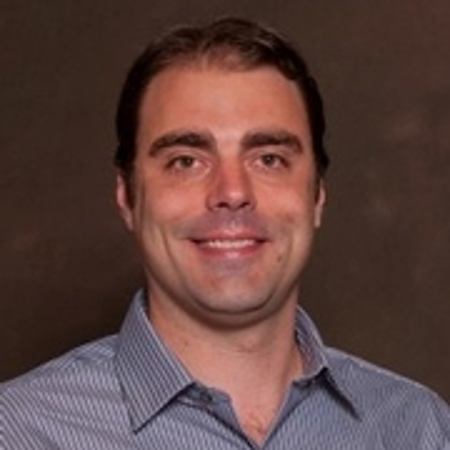
Professor Christopher L H Wrede is a tenured faculty member at the Department of Physics and Astronomy , Michigan State University , and leads experimental research at the Facility for Rare Isotope Beams (FRIB) . His work bridges nuclear physics and astrophysics , focusing on beta decays of proton-rich nuclides to study hydrogen burning in accreting compact stars and isospin-symmetry breaking effects in the Standard Model. Ph.D. in Physics from Yale University (2008) Research areas: Nuclear Astrophysics Low-Energy Nuclear Experiments Isospin Symmetry Detector Instrumentation His group develops advanced detectors like GADGET II , LIBRA , and DSL2 to measure nuclear reactions in novae, neutron stars, and cosmic explosions. Recent work leverages machine learning and MCMC Bayesian analysis for data interpretation. Scientific awards include the DOE Office of Science Early Career Research Program (2016). His students and postdocs contribute to international collaborations and instrumentation projects, often publishing in Physical Review C and Nuclear Instruments and Methods in Physics Research .
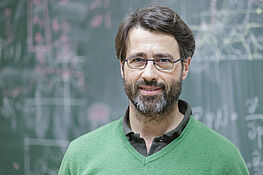
Christoph Dellago is a full Professor of Computational Physics at the Faculty of Physics of the University of Vienna, where he has been a faculty member since 2003. He currently serves as Director of the Erwin Schrödinger Institute for Mathematics and Physics, Head of the Computational and Soft Matter Physics Group, and Project lead of EuroCC Austria - National Competence Centre for Supercomputing. Previously, he served as Dean of the Faculty of Physics (2009-2012) and Coordinator of the Doctoral College Advanced Functional Materials (DCAFM). Full Professor, Faculty of Physics, University of Vienna (2003-present) Director, Erwin Schrödinger Institute for Mathematics and Physics (2017-present) Head, Computational Physics and Soft Matter Group (2024-present) Coordinator, Doctoral College Advanced Functional Materials (DCAFM) Austrian Representative, Council of CECAM Dellago received his PhD in Physics from the University of Vienna in 1996, followed by postdoctoral research at UC Berkeley as a Schrödinger Fellow of the Austrian Science Foundation. His research focuses on developing computational methods to study rare events in condensed matter systems, particularly transition path sampling methodology for simulating nucleation, chemical reactions, and biomolecular reorganizations. He has pioneered the application of machine learning to molecular structure recognition and potential energy surfaces. Recent work examines self-assembly of nanocrystals, biopolymer folding, aqueous interfaces, phase separation in alloys, thermo-polarization, cavitation, and freezing phenomena. Analysis of Dellago's recent publications (2023-2025) reveals a strong emphasis on machine learning applications in computational physics, particularly neural network potentials for simulating water interfaces, crystal defects, and phase transitions. His work bridges traditional statistical mechanics with modern computational techniques, creating powerful tools for studying complex dynamical processes that occur on timescales far beyond conventional molecular dynamics simulations. The publications demonstrate increasing integration of machine learning with rare event sampling methods, reflecting the cutting-edge direction of computational statistical mechanics. Förderpreis der Stiftung Futura zur Förderung junger Südtiroler im Ausland (1997) The Raymond and Beverly Sackler Prize in the Physical Sciences (2005) UNIVIE Teaching Award of the University of Vienna (2014) Dellago leads an active research group with multiple PhD students and postdocs, focusing on computational statistical mechanics. His group develops trajectory-based sampling methods and machine learning approaches for molecular simulation. He has secured significant funding through EuroCC Austria and various research platforms including the Research Platform Accelerating Photoreaction Discovery and the Research Platform Erwin Schrödinger International Institute for Mathematics and Physics. His research has been supported by numerous grants enabling advanced computational infrastructure for high-performance simulations. The Dellago Group operates within the Computational and Soft Matter Physics division at the University of Vienna, with strong connections to the Research Network Data Science. The group collaborates extensively with international research institutions and maintains close ties with the Erwin Schrödinger Institute, which Dellago directs. Their research environment combines theoretical physics, computational chemistry, and machine learning expertise to tackle fundamental questions in condensed matter physics and soft matter systems.
William L. Kath is the Margaret B. Fuller Boos Professor of Engineering Sciences and Applied Mathematics at Northwestern University's McCormick School of Engineering. He holds affiliations as Deputy Director of the National Institute for Theory and Mathematics in Biology, courtesy faculty in Neurobiology, and member of the Northwestern Institute on Complex Systems. His research bridges quantitative biology, neuroscience, and optics, focusing on dynamical models of biological systems and high-speed optical communication systems. Key projects include the EMBEDR algorithm for single-cell omics analysis and computational models of temperature sensing in Drosophila. Research interests emphasize quantitative and computational biology, particularly circadian rhythms, neuronal circuit modeling, and single-cell genomics. Collaborations include the Gallio lab (Drosophila thermosensation), Daniel Dombeck's lab (hippocampal neuron behavior), and Nelson Spruston's group (hippocampal microcircuits). His work on optics includes nonlinear pulse propagation and rare event analysis in fiber optics. Scientific awards include Fellowships from the Society for Industrial and Applied Mathematics and the Optical Society of America. He advises over 20 graduate students and has developed courses like ESAM 472 (RNA sequencing analysis) and ESAM 370 (Computational Neuroscience). Current students include Richard Suhendra and Nan Ding (jointly advised). Labs/teams: Leads the National Institute for Theory and Mathematics in Biology, co-leads the Gallio lab collaboration on thermosensory circuits, and maintains active projects in computational neuroscience and optics at Northwestern.
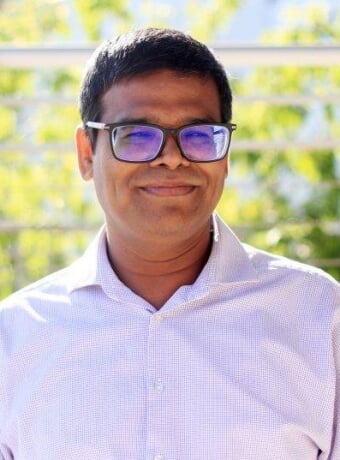
Snehamoy Chatterjee serves as Associate Professor and Witte Family Endowed Faculty Fellow in the Department of Geological and Mining Engineering and Sciences at Michigan Technological University. His expertise spans ore reserve estimation, mine planning optimization, and AI-driven safety systems, with significant contributions to remote sensing applications in mining and geological hazard assessment. Chatterjee earned his PhD in Mining Engineering from the Indian Institute of Technology Kharagpur, followed by postdoctoral research at the University of Alaska Fairbanks and the COSMO Stochastic Mine Planning Laboratory at McGill University. His academic journey includes prior faculty positions at India's National Institute of Technology. His research program integrates cutting-edge artificial intelligence with geospatial technologies to solve critical challenges in mining safety and resource management. Key focus areas include: Generative AI frameworks for real-time mining hazard prediction Hyperspectral and InSAR remote sensing for mineral exploration Deep learning applications in geophysical inversion Stochastic optimization of mine planning under uncertainty Machine learning-driven landslide and earthquake hazard mapping Chatterjee's 15 most recent publications (2023-2024) reveal a pronounced shift toward AI-geospatial fusion , with 60% of works applying deep learning to satellite imagery for hazard monitoring. His team's research spans three critical domains: mining safety systems (33%), geological hazard prediction (47%), and resource optimization (20%), demonstrating strong interdisciplinary collaboration across environmental science and engineering disciplines. Professional recognition includes: Editor's Best Reviewer Award 2014 from Mathematical Geosciences Journal APCOM Young Professional Award 2015 at the 37th APCOM conference Chatterjee actively mentors graduate students and leads multiple federally funded research initiatives focused on mine safety innovation and critical mineral exploration. His professional service includes editorial responsibilities for Mining, Metallurgy & Exploration and committee roles in major international conferences through IAMG, SME, and AGU. Current projects emphasize generative AI applications for predictive safety analytics and hyperspectral remote sensing for critical mineral discovery. His research extends through collaborations with the COSMO Laboratory network and industry partners across North America, India, and Australia, with recent fieldwork focusing on Alaskan platinum deposits and Indian coal reserves.
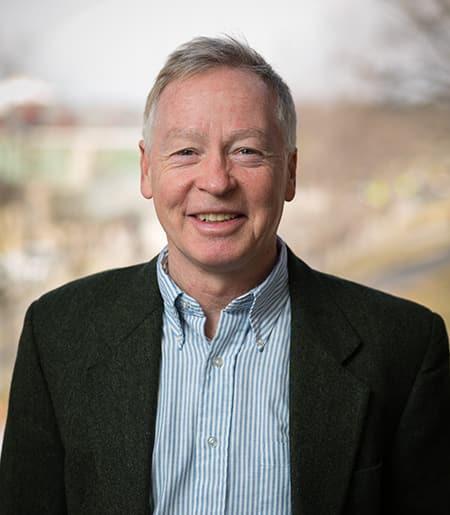
Lamine M. Mili is a Professor in the Bradley Department of Electrical and Computer Engineering at Virginia Tech. His expertise spans power systems, signal processing, and robust estimation theory. He holds an IEEE Fellowship (2016) for contributions to robust state estimation in power systems. Mili's research focuses on advancing methodologies for power system reliability, control, and integration of renewable energy sources. His work includes studies on dynamic state estimation, nonlinear dynamics, bifurcation theory, and quantum computing applications. He has contributed extensively to resilience engineering and computational social science in power systems. Mili’s recent articles address challenges in smart grids, quantum circuit error prediction, and multifractal signal analysis in EEG. His research often combines advanced statistical techniques with real-world grid data, emphasizing robustness and adaptability in dynamic environments. Education: Ph.D., University of Liège, 1987 M.S., University of Tunis, 1983 B.S., Swiss Federal Institute of Technology, Lausanne, 1976 Research Interests: Power system stability and control State estimation and robust filtering Quantum computing for power systems Resilience and cyber-physical-social systems Nonlinear dynamics and bifurcation analysis His recent publications reflect a focus on hybrid power systems, probabilistic methods, and data-driven approaches for grid optimization. The 2025 articles highlight advancements in photovoltaic state estimation, quantum error prediction, and robust modulation techniques. Mili’s work often bridges theoretical models with practical grid applications, emphasizing uncertainty quantification and real-time monitoring.
Dr. Anwar Bhatti is a Research Professor in the Department of Physics at the University of Maryland, affiliated with the CMS collaboration at CERN's LHC and the LZ Dark Matter Experiment. His research focuses on fundamental particle physics, including searches for dark matter, supersymmetry, and Higgs boson properties. He has contributed to experiments at the Large Hadron Collider (LHC), Fermilab's CDF collaboration, and the Sanford Underground Research Facility. Dr. Bhatti also served as a program manager in the U.S. Department of Energy's High Energy Physics Office, overseeing projects like the LUX-ZEPLIN (LZ) experiment, the Axion Dark Matter eXperiment (ADMX), and cosmic frontier initiatives. His work spans detector development, data analysis, and program management in high-energy physics, with expertise in liquid xenon technology and low-background experiments. He teaches introductory physics laboratory courses, emphasizing experimental techniques and data analysis for undergraduate students. Research Interests: Dr. Bhatti's work revolves around uncovering the nature of dark matter through direct detection experiments (e.g., LZ) and collider searches for supersymmetric particles. He investigates Higgs boson properties, explores models of extra dimensions, and analyzes data from the CDF and CMS detectors. His contributions to the DOE included managing projects like the South Pole Telescope (SPT-3G) and Fermi Gamma-ray Space Telescope, fostering international collaborations in cosmic frontier research. His technical expertise includes detector calibration, data acquisition systems, and background modeling for rare event searches. Key Projects: LZ experiment (dark matter detection), CMS collaboration (LHC physics), CDF top quark studies, DOE program management (ADMX, PICO-60), and teaching experimental physics laboratories.
David Strang is a Professor in the Department of Sociology at Cornell University's College of Arts and Sciences . His research focuses on innovation and diffusion in political, organizational, and scientific domains, with recent projects analyzing the evolution of research articles, social movements' influence on policy, and computational models of management practice adoption. Research Interests Political Sociology & Social Movements Organizations & Economic Sociology Models and Methods for Dynamic Processes Sociology of Science Email: ds20@cornell.edu His publications span sociological theory, computational modeling, and empirical studies of diffusion processes. Articles reflect trends in peer review analysis, management fashion cycles, and cross-cultural institutional adoption. Key collaborations include works with Kyle Siler and Robert J. David. David Strang's methodological expertise includes agent-based modeling and textual analysis. He has edited volumes like The Oxford Handbook of Management Ideas and authored books such as Learning by Example: Imitation and Innovation at a Global Bank . His work has appeared in Administrative Science Quarterly , American Journal of Sociology , and Sociological Theory .
Jaakko Akola is a Professor in the Department of Physics at the Norwegian University of Science and Technology (NTNU). His research focuses on computational materials science, particularly density functional theory (DFT) and atomistic simulations of materials, nanoparticles, molecules, and interfaces. He leads significant projects such as "SIDI" (inoculation in cast iron), "Infinity-RETIS" (chemical rare events), and "AllDesign" (rational alloy design), alongside coordinating EU-funded initiatives like "CritCat" for catalyst development. The Materials Theory group under Akola employs DFT, molecular mechanics, and Monte Carlo methods to explore atomic-scale structures and functions in technological applications. Key research areas include platinum-free catalysts for hydrogen energy, amorphous semiconductors for memory devices, noble metal nanoparticles in biological environments, and alloy design for cast iron and aluminum. Recent work integrates machine learning to advance theory-driven material design, reducing reliance on experimental trial-and-error. Akola's publications highlight advancements in hydrogen evolution catalysis, phase-change memory materials, and alloy precipitation. His projects often involve interdisciplinary collaborations with experimental teams. He teaches Quantum Physics 1 (FY2045) and Computational Physics (TFY4235) at NTNU, reflecting his commitment to education alongside research.
Erik Johnson is a Professor of Civil Engineering at an unspecified university, affiliated with the Sonny Astani Department of Civil and Environmental Engineering. He has held leadership roles such as Associate Chair, Interim Chair, and currently serves as Vice Dean for Academic Programs. His research focuses on smart structures, structural vibration control, and computationally-efficient simulation algorithms for dynamical systems, with applications in controllable damping devices and seismic mitigation. Education: B.S., M.S., Ph.D. in Aeronautical and Astronautical Engineering (University of Illinois at Urbana-Champaign), Graduate Certificate in Biblical Studies (Trinity Evangelical Divinity School) Professional Affiliations: Senior Member of AIAA; Member of ASCE and ASME; Chair of ASCE technical committees; Associate Editor, ASCE Journal of Engineering Mechanics His work spans disciplines including control theory, structural engineering, and computational methods. Articles highlight Bayesian approaches, inverse problems, and sensor placement optimization under uncertainty. Erik contributes to advancing seismic resilience and mechatronic systems for civil infrastructure. Scientific Awards: 2001 NSF CAREER Award, 2005 International Association for Structural Safety and Reliability Medal, 2016 University of Illinois Distinguished AE Alumnus Award
Prof. Michal Czakon is a full-time University Professor at the Institute for Theoretical Particle Physics and Cosmology, RWTH Aachen University. His research group focuses on high-energy theoretical physics, particularly top-quark interactions, QCD corrections, and Higgs boson production mechanisms at particle colliders. Top-quark physics Factorization and resummation techniques Parton showers with quantum effects Subtraction schemes for real radiation Automation of higher-order calculations His recent publications analyze renormalization effects, interference contributions, and precision observables in collider experiments. The group develops tools like Top++ and HELAC-NLO for cross-section evaluations. Scientific Awards: Sofja-Kovalevskaja Award (2004) Heisenberg Professorship (2009) Current advisees include PhD candidates and Master's students such as Manal Alsairafi, Marco Bigazzi, and Felix Eschment. The group also collaborates on software projects for high-energy physics simulations.
Matthew Szydagis is an Associate Professor in the Department of Physics at the University at Albany, State University of New York, where he conducts cutting-edge research in experimental astroparticle physics with a focus on dark matter detection. Education: PhD, University of Chicago, 2010 Postdoctoral Associate, University of California Davis, 2010-2014 Dr. Szydagis leads research efforts centered around the LZ (LUX-ZEPLIN) Dark Matter Experiment, the world's largest direct dark matter search project operating at the Sanford Underground Research Facility. His expertise lies in the physics of two-phase Xenon time-projection chambers and the development of sophisticated Monte Carlo simulation techniques to understand detector responses. In 2011, he created the NEST (Noble Element Simulation Technique) software package, which has become an essential tool for the broader scientific community working with noble element detectors. His research spans multiple disciplines including particle physics, astrophysics, and computational physics, with applications extending beyond dark matter research into neutrino physics and medical physics. Dr. Szydagis is an active member of the international LZ collaboration and leads the Dark Matter Research Group at the University at Albany. His work contributes significantly to establishing the world's most sensitive limits on dark matter interactions across a wide range of particle masses.
John F. Shortle is a Professor and Chair in the Department of Systems Engineering and Operations Research at George Mason University (GMU), part of the Volgenau School of Engineering. He specializes in applying queueing theory and stochastic processes to aviation safety, air transportation systems, and energy systems. Shortle has led major research initiatives funded by the FAA, NASA, and the Department of Energy, focusing on improving air traffic safety through advanced simulation and risk analysis techniques. Affiliations: Center for Air Transportation Systems Research (CATSR), GMU Education: PhD (UC Berkeley), MS (UC Berkeley), BS (Harvey Mudd College) Research Interests Shortle’s work emphasizes simulation methodologies, queueing theory applications, and stochastic modeling for critical infrastructure systems. Key areas include: Collision risk analysis in air transportation Aviation safety modeling (e.g., wake turbulence, event tree analysis) Energy systems reliability (e.g., blackout analysis) Autonomous systems validation Publications & Awards He co-authored the widely used textbook Fundamentals of Queueing Theory (5th ed., Wiley, 2018) and holds over 100 peer-reviewed publications. Notable awards include the Daniel H. Wagner Prize (2000) and the Military Operations Research Journal Award (2016). Leadership & Service President, INFORMS Simulation Society (2016–2018) Board Member, Winter Simulation Conference (2023–present) Editorial roles: IEEE Transactions on Reliability , Journal of Probability and Statistical Science Teaching Teaches advanced courses in stochastic processes (OR 645), queueing theory (OR 647), and dynamic systems (SYST 320).
Jeffrey F. Collamore is a full Professor at the Department of Mathematical Sciences , University of Copenhagen, specializing in Insurance and Economics (work area: IE). His research focuses on advanced probability theory and its applications in insurance mathematics and quantitative risk management. University of Copenhagen (2002-present) ETH Zurich (2000-2002) EURANDOM (1999-2000) Lund University (1998-1999) University of Illinois (1996-1998) Research Focus : Large deviations and rare event estimation Stochastic fixed point equations and random matrices Harris recurrent Markov chains Multidimensional ruin problems in insurance Stochastic simulation techniques Education : Ph.D. and MA in Mathematics, University of Wisconsin, Madison (Advisor: Peter Ney) BS in Physics and Mathematics, University of California, San Diego
Carlo Dallapiccola is a Professor and Graduate Program Director in the Department of Physics at the University of Massachusetts Amherst, actively contributing to the ATLAS experiment at CERN's Large Hadron Collider. His research is central to advancing experimental particle physics through searches for new phenomena and precision measurements of Standard Model processes. University: University of Massachusetts Amherst School: College of Natural Sciences Department: Department of Physics Academic Rank: Professor Emails: carlod@physics.umass.edu, carlo.dallapiccola@cern.ch Location: Lederle Graduate Research Tower, Amherst, MA His research interests lie at the forefront of high-energy physics, focusing on experimental searches for physics beyond the Standard Model , particularly long-lived new particles that decay with displaced vertices, a signature of models like gauge-mediated supersymmetry breaking and dark sectors. He is deeply involved in the performance and upgrade of the ATLAS detector , including the muon spectrometer and the new inner tracker (ITk) for the High-Luminosity LHC. His work also encompasses Higgs boson physics , top quark studies , and precision electroweak measurements , all requiring advanced data analysis and detector calibration techniques. The recent articles highlight a strong trend toward precision Higgs physics , including searches for rare decays (H→μμ, H→ZZγ), Higgs self-coupling via pair production, and CP properties in tau decays. There is also a significant focus on exotic and beyond-Standard-Model signatures , such as leptoquarks and vector-like quarks, alongside the development of advanced data analysis methods using machine learning and neural simulation-based inference for parameter estimation and jet flavor tagging. His leadership is evident in collaborative efforts, with no individual scientific awards listed in the provided text. He advises graduate students as Graduate Program Director, fostering the next generation of physicists. His work is supported by major international collaborations and grants from agencies funding high-energy physics research, though specific grants are not detailed here. He is a key member of the ATLAS collaboration and has contributed to major detector upgrade projects like the New Small Wheel and the ITk. His research integrates data from the LHC with sophisticated computing frameworks, placing him at the heart of one of the largest scientific endeavors in history.
Kenneth A. Bloom is a Professor in the Department of Physics and Astronomy at the University of Nebraska-Lincoln . His research focuses on experimental high-energy particle physics , particularly the study of top quarks and their weak interactions . He is actively involved in the D0 experiment at Fermilab and the CMS experiment at CERN, collaborating with faculty members Dan Claes, Aaron Dominguez, and Greg Snow.