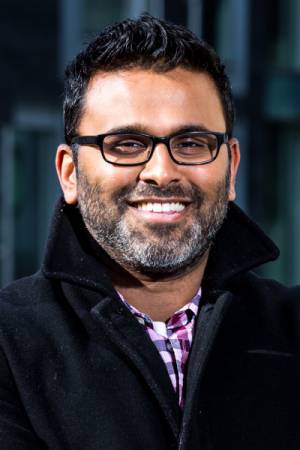
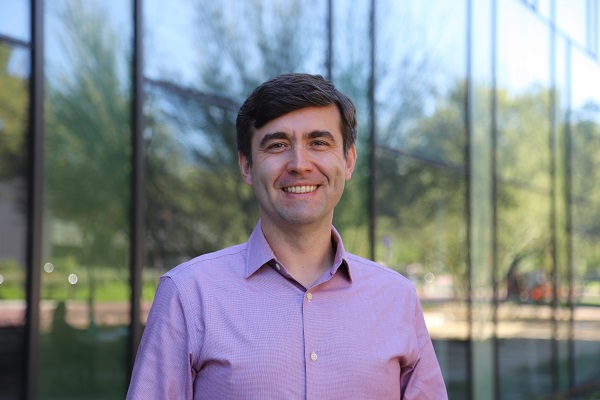
Deva Kannan Ramanan is a Professor at the Robotics Institute of Carnegie Mellon University , focusing on computer vision , machine learning , and human-centered robotics . His work bridges neurorobotics and visual perception , with applications in autonomous driving and 4D reconstruction . Research Topics Computer Vision 3-D Vision and Recognition Visual Servoing Neurorobotics Human-Centered Robotics Graphics & Creative Tools His recent publications in CVPR , ICRA , and ICCV emphasize 4D human reconstruction , neural rendering , and vision-language models for autonomous systems. He serves as General Chair of CVPR 2027 and Program Chair of CVPR 2018 , with IARPA funding for aerial-ground rendering (2023-2027). Current students include PhD candidates Sally Chen, Kangle Deng, and Zhiqiu Lin, while past advisees like Arun Vasudevan and Olga Russakovsky now hold positions at Amazon and Meta respectively.
Dr. Jimeng Sun is a Health Innovation Professor at the Siebel School of Computing and Data Science and Carle Illinois College of Medicine at the University of Illinois Urbana-Champaign. Co-founder of Keiji AI , he leads groundbreaking research at the intersection of artificial intelligence and healthcare, actively deploying clinical AI systems and developing frameworks like PyHealth and Therapeutics Data Commons . His research spans four major areas: Clinical AI Systems : Developing interpretable models (e.g., RETAIN) for patient similarity, temporal event prediction, medication recommendation, and clinical outcome forecasting Drug Discovery : Creating molecular optimization frameworks, drug-target interaction models, and AI-driven platforms Clinical Trials : Pioneering patient-trial matching, outcome prediction, and optimization frameworks using deep learning and graph neural networks Biosignal Analysis : Advancing sleep staging, seizure classification, and automated EEG/Cardiac monitoring systems With over 500 top-tier publications (including in Nature , NEJM AI , and leading AI conferences) and an h-index of 99, his work has been recognized with the Top 100 AI Leaders in Drug Discovery and Advanced Healthcare award. He maintains active collaborations with institutions like Massachusetts General Hospital , Medidata Solutions , and OSF Healthcare . His recent publications reveal a strong focus on: Reinforcement learning applications in medical data analysis Large language model adaptation for clinical tasks Knowledge graph integration with AI systems Synthetic data generation for healthcare Multi-modal learning in clinical contexts Explainable AI for medical applications Dr. Sun's lab ( Sunlab ) emphasizes practical impact over theoretical work, actively collaborating with hospitals and healthtech companies. He welcomes contributions from clinicians, researchers, and industry partners through initiatives like his AI for Health webinar series .
Dr. Konstantin (Kostia) M. Zuev serves as Teaching Professor in the Computing + Mathematical Sciences Department at California Institute of Technology , where he has made significant contributions to network science and computational statistics since 2016. His dual PhDs in Mathematics (Moscow State University, 2008) and Civil Engineering (HKUST, 2009) underpin his interdisciplinary research spanning differential geometry, stochastic simulation, and network dynamics. Education PhD in Mathematics, Lomonosov Moscow State University (2008) PhD in Civil Engineering, Hong Kong University of Science & Technology (2009) His research focuses on network science , particularly course-prerequisite networks and complex financial systems , with recent work extending to network navigability in cosmological models and rare event simulation. Over his career, he has developed innovative Bayesian inference methods and geometric preferential attachment theories while maintaining active collaborations across mathematics, physics, and biomedical domains. Recent publications highlight network analysis in education ( 2023 ), hyperbolic graph theory ( 2024 ), and pandemic-informed cancer mortality studies ( 2023 ). His 15 most recent articles demonstrate methodological innovations across disciplines including statistics, physics, finance, and cosmology. Scientific recognition includes Humboldt Research Fellowship (2021) Carver Mead Seed Fund Grant (2023) ASCIT Teaching Award (2018, 2023) Northrop Grumman Teaching Excellence Prize (2019) As Graduate Option Representative for Information and Data Sciences at Caltech and faculty advisor for multiple student organizations including the Caltech Karate Club and Caltech Chess Club , he actively bridges academic rigor with community engagement through outreach initiatives like the virtual math education channel and university math circles for K-12 students.
Freddy Bouchet is a Directeur de Recherche at CNRS and a Professeur attaché at École Normale Supérieure de Paris (ENS-PSL). His work bridges mathematical physics, climate science, data science, and statistical mechanics , focusing on turbulent flows, climate extremes, and large deviation theory . He will lead the Laboratoire de Météorologie Dynamique (LMD) starting 2025. Research Themes : Statistical mechanics of geophysical flows (Jupiter's jets, ocean currents). Large deviation theory for rare events in turbulence and climate. Non-equilibrium phase transitions in atmospheric/oceanic systems. Ensemble inequivalence in systems with long-range interactions. Scientific Awards : Three Physicists Prize Collaborations : Tapio Schneider, Antoine Venaille, J. Laurie, O. Zaboronski, B. Dubrulle, A. Venaille. Labs & Teams : Climate and Statistical Mechanics group at ENS de Lyon Future director of Laboratoire de Météorologie Dynamique (LMD/IPSL) Publications span climate dynamics, turbulence, statistical mechanics, and large deviation theory , with applications to Jupiter's atmosphere, ocean vortices, and non-equilibrium systems . His work often challenges paradigms like Tsallis non-extensive statistics.
Yiping Lu is an Assistant Professor in the Department of Industrial Engineering and Management Sciences at Northwestern University's McCormick School of Engineering. His research focuses on developing interdisciplinary approaches combining domain knowledge (differential equations, stochastic processes), machine learning, and experiments. Key interests include scientific machine learning (AI4Science), stochastic simulation, and robust machine learning. Education: Ph.D. in Applied and Computational Mathematics, Stanford University (2023) B.S. in Computational Mathematics, Peking University (2019) Research Highlights: Hybrid research integrating ML with scientific domains like PDEs and inverse problems Development of Physics-Informed Learning frameworks Contributions to deep learning theory (ResNets, neural collapse) Advances in kernel operator learning and adversarial robustness Awards: CPAL Rising Star Award (2024) University of Chicago Data Science Rising Star (2022) Stanford Interdisciplinary Graduate Fellowship (2021) Labs/Teams: SCALE Lab (Scientific Computation and Learning at Northwestern) Collaborations with NYU's Courant Institute and Stanford
Xiaozhe Wang is an Associate Professor in the Department of Electrical and Computer Engineering at McGill University, holding the Canada Research Chair (Tier II) in Resilient and Stable Zero-Emission Electric Power Grids and the Rubin & So Foundation Faculty Scholar. He joined McGill in 2016 after a postdoctoral fellowship at MIT under Prof. Konstantin Turitsyn. He earned his Ph.D. from Cornell University (2015), with a minor in Applied Mathematics, and holds degrees from Zhejiang University (B.S., 2010) and Cornell (M.Eng., 2011). His research focuses on resilient power grids, data-driven methodologies, and cybersecurity in energy systems. Key areas include electric vehicle integration, stability assessment, and control strategies for renewable energy systems. He develops advanced techniques for uncertainty quantification, wide-area monitoring, and adversarial attack detection. Notable achievements include pioneering work on polynomial chaos expansion for probabilistic assessment and sparse identification for nonlinear dynamics. His articles explore topics like microgrid control, false data injection attacks, and decentralized energy trading. Awards: Canada Research Chair (Tier II), Rubin & So Foundation Scholar Grants/Projects: Focus on resilience, cybersecurity, and renewable integration funded via NSERC, Mitacs, and industry partnerships. He advises students through fellowships like Mitacs Elevate and Banting Postdoctoral Fellowships. His lab emphasizes interdisciplinary approaches to modern grid challenges, including lab experiments and field trials.
Chee-Wooi Ten is a tenured Professor in the Department of Electrical and Computer Engineering at Michigan Technological University, where he has served since 2010 and achieved tenure in 2016. He concurrently holds an Affiliated Professor appointment in Applied Computing and directs both the PSERC Site and ICC CPS Center. His institutional roles emphasize cyber-physical security integration within power infrastructure. His educational background includes: PhD in Electrical Engineering from University College Dublin (2009) MSc in Electrical Engineering from Iowa State University (2001) BSc in Electrical Engineering from Iowa State University (1999) Ten's research pioneers cyber-informed security engineering strategies for bulk power systems, focusing on quantifying rare events through system risk models and data science. His work bridges power grid interactions with robotics and transportation systems to advance decarbonization and electrification. Key methodologies include validating cyber-physical security frameworks against steady-state and dynamic grid approaches, with emphasis on attack/defense combinatorics and smart home technologies. This transdisciplinary approach supports the fourth industrial revolution's resilience requirements. His publication trends reveal strong focus on risk-aggregated substation testbeds using generative adversarial networks, cyber insurance models for power systems, and cascading failure analysis from switching attacks. Recent works increasingly integrate machine learning with physics-based modeling to address cybersecurity threats in inverter-based resource integration and distribution emergency operations. Ten has secured over $6.5M in active funding including: $2M DOE grant (MTU portion $105,000) for CyDERMS Center on DERs/Microgrids cybersecurity $704,409 CyManII award for secure digitalization in smart manufacturing $1.05M DOE ARPA-E grant for decarbonized freight transportation modeling NSF CyberCorps Scholarship for Service program ($3.38M) His grants consistently address risk management through data-driven and physics-based modeling, with industry partnerships through PSERC and utility collaborations. As ICC CPS Center Director, he leads research on cyber-physical security testbeds and coordinates the PSERC Summer Transformation School. His team develops validation frameworks for NERC CIP compliance while addressing practical pain points in OT cybersecurity for grid operators.
Paul G Dupuis is the IBM Professor of Applied Mathematics at Brown University. His research focuses on applications of probability theory, stochastic processes, control theory, and numerical methods. He holds affiliations with the American Mathematical Society, Society for Industrial and Applied Mathematics (SIAM), and the Institute for Mathematical Statistics (IMS). His work emphasizes large deviation theory, Markov chain approximations, Monte Carlo simulation, and partial differential equations. Education: Ph.D. in Applied Mathematics from Brown University (1985), M.S. from Northwestern University (1982), and B.S. from Brown University (1981). Research Interests: Control of deterministic and stochastic processes, differential games, numerical methods, operations research, and stochastic processes. His contributions include foundational work on large deviation theory, risk-sensitive control, and queueing networks. Awards: Elected SIAM Fellow (2010), Fellow of the Institute for Mathematical Statistics (2011), IBM Professor of Applied Mathematics (2012), and AMS Fellow (2014). Previously held an NSF Postdoctoral Fellowship (1985-1988). Grants: Current funding from the Army Research Office and National Science Foundation. Key collaborations include work on stochastic approximation, constrained diffusions, and reflected Brownian motion. Teaching: Courses include Operations Research: Probabilistic Models, Information Theory, and Advanced topics in Probability and Stochastic Control.
Ming Lin is a Distinguished University Professor at the University of Maryland, College Park, holding joint appointments in Computer Science (Department of Computer Science), the Institute for Advanced Computer Studies (UMIACS), Electrical and Computer Engineering (ECE), and the Maryland Robotics Center. She holds the Dr. Barry Mersky and Capital One E-Nnovate Endowed Professorships. Her research focuses on physically-based modeling, virtual environments, haptics, robotics, and AI applications in healthcare and urban computing. Education: Ph.D., M.S., and B.S. in Electrical Engineering & Computer Sciences from UC Berkeley. She previously spent 20 years at UNC Chapel Hill before joining UMD in 2018. Research interests include collision detection algorithms (e.g., Lin-Canny algorithm), real-time physics simulation, virtual/augmented reality systems, and medical imaging applications. Her work has led to over 2 million downloads of her group's software tools and licenses with 60+ companies. Notable contributions include the Oculus Rift-related VR technologies and Amazon's virtual try-on system. Awards: IEEE Fellow (2012), ACM Fellow (2011), NAI Fellow (2022), and Washington Academy of Sciences Distinguished Career Award (2020). Active in professional service, she serves on the CRA Board and chairs the Committee on Widening Participation in Computing Research. Advising: Supervises 12+ PhD/Master's students. Her lab (GAMMA Group) focuses on AI-driven robotics, autonomous systems, and physically-based simulations. Key projects include traffic simulation frameworks, medical VR applications, and 3D garment modeling.
Konstantinos Spiliopoulos is a Professor and Director of Statistics at Boston University's Department of Mathematics and Statistics, part of the College of Arts & Sciences. He leads research in Applied Mathematics and Probability and Statistics groups, focusing on stochastic processes, machine learning, and mathematical finance. His research interests include stochastic analysis of complex systems, multiscale phenomena, and their applications to neural networks, PDEs, and financial modeling. Notable areas of study involve mean-field limits, rare event simulation, and asymptotic methods in stochastic differential equations. He has received grants such as DMS-EPSRC funding for analyzing online training algorithms in recurrent and deep neural networks. His work bridges theoretical advancements with practical applications in data science and computational methods. Spiliopoulos maintains an active presence in interdisciplinary research, addressing challenges in systemic risk, network dynamics, and optimization. His contributions span from fundamental probability theory to applied problems in engineering and finance.
Ankush Agarwal is an Associate Professor in the Department of Statistical and Actuarial Sciences at the University of Western Ontario. His research focuses on mathematical finance, financial statistics, and Monte Carlo methods, with applications to risk management and derivatives pricing. He supervises PhD students in quantitative finance and has taught courses on Monte Carlo methods and advanced financial modeling at Western University. Education: PhD in Mathematics from Tata Institute of Fundamental Research (2015) Research interests span regime-switching models, longevity risk hedging, stochastic differential equations, and rare event simulation. His work combines theoretical probability with computational techniques for financial applications. Recent publications include studies on McKean-Vlasov SDEs, implied Sharpe ratio estimation, and optimal portfolio strategies under stochastic volatility. These works demonstrate his expertise in stochastic processes and financial engineering. Supervision: Current PhD advisees include Ying Liao, Buchun Wang, and Shuya Zhang at the University of Glasgow. Former advisees include Yongjie Wang and Yihan Zou.
Michel Mandjes is a Professor at the University of Amsterdam's Faculty of Science and holds a Visiting Professor position at the Faculty of Economics and Business (FEB). His research focuses on stochastic processes, queueing theory, and probability theory, with applications in risk modeling, network analysis, and operations research. Recent publications highlight his contributions to multivariate Hawkes processes , Lévy-driven systems , and dynamic random graphs , emphasizing large deviations, rare event simulation, and statistical inference. His work bridges theoretical probability with practical challenges in traffic flow, financial risk, and social network modeling. The trends in his research include the development of stochastic models for network stability, appointment scheduling optimization, and inference techniques for non-stationary processes. His methodological innovations often leverage advanced probability theory and queueing frameworks to address real-world problems in transportation, healthcare, and finance.
Dr. Brian Y. Chen is an Associate Professor and Doctoral Program Director in the Department of Computer Science & Engineering at Lehigh University. His research focuses on bioinformatics, structural biology, and machine learning applications in computational biology. He holds a Ph.D. in Computer Science from Rice University and B.A. degrees in Mathematics and Computer Science from Rutgers University. Dr. Chen's work emphasizes developing algorithms to analyze protein structures, protein-protein interactions, and ligand binding mechanisms. He has contributed to tools like DeepVASP-S and MechPPI, which explain molecular interactions and predict binding specificity. His recent projects include Alzheimer’s disease diagnosis using multimodal data and containerization frameworks for bioinformatics software. He previously served as a postdoctoral researcher in Barry Honig's Lab at Columbia University, where he contributed to the Center for Computational Biology and Bioinformatics. His research spans structural bioinformatics, computational methods for protein function prediction, and interdisciplinary applications in medicine and materials science. Key achievements include a nomination for Outstanding Mentorship (2017) and collaborative projects funded by the Army Research Lab and Lehigh University. His lab explores cutting-edge AI techniques for biomedical problems, including interpretable machine learning models and scalable bioinformatics pipelines.
Ton Dieker is an Associate Professor in the Department of Industrial Engineering and Operations Research at Columbia University's School of Engineering and Applied Science. He is a DSI Member and affiliated with the Center for Financial and Business Analytics. His research focuses on stochastic models, simulation techniques, and high-dimensional stochastic analysis. Dieker holds a Master’s in Operations Research from Vrije Universiteit Amsterdam (2002) and a PhD in Mathematics from the University of Amsterdam (2006). Dieker’s research explores stochastic processes, queueing theory, and rare-event simulation. He has contributed to methodologies like QPLEX for stochastic systems and advanced techniques in sequential analysis and exact simulation. His work bridges theoretical foundations with computational applications, addressing challenges in large-scale networks and high-dimensional problems. Education: PhD in Mathematics, University of Amsterdam, 2006 Master’s in Operations Research, Vrije Universiteit Amsterdam, 2002 Dieker’s articles emphasize computational modeling, stochastic calculus, and optimization, reflecting his focus on bridging theory and practice. His work often addresses efficiency in simulation, exactness in algorithms, and scalability in complex systems. Awards: Goldstine Fellowship (IBM Research) NSF CAREER Award Erlang Prize (INFORMS) Fouts Family Early Career Professorship (Georgia Tech) He serves on editorial boards for Operations Research and Mathematics of Operations Research . His research also addresses capacity management in stochastic networks and applications in cloud computing and commodity sourcing.
Georg Stadler is a Professor of Mathematics and Computer Science at New York University's Courant Institute. His research focuses on computational inverse problems, uncertainty quantification, and PDE-constrained optimization, driven by applications in climate modeling, geophysics, and plasma physics. He holds a PhD from the University of Graz (2004) and has been recognized with awards including the Gordon Bell Prize (2015) and the SIAM Computational Science & Engineering Best Paper Prize (2019). Education: Ph.D. (Dr.), Mathematics, University of Graz, Austria, 2004. M.S. (Mag.), Mathematics, University of Graz, Austria, 2001. M.S., Mathematics and Geometry Education, Graz University of Technology and University of Graz, 2001. Research Interests: Large-scale PDE solvers, Bayesian inverse problems, extreme event probability estimation, and optimization under uncertainty. Applications in climate (sea/land ice, tsunamis), plasma physics (fusion), and computational earth science (mantle flow, plate tectonics). Recent Research Trends: His work emphasizes scalable algorithms for high-dimensional Bayesian inverse problems, with applications to tsunamis, stellarator coil design, and ice sheet dynamics. Recent articles highlight advancements in extreme event probability estimation and robust multigrid solvers for incompressible Stokes equations. Awards: Gordon Bell Prize (2015) for extreme scalability of implicit solvers. SIAM Best Paper Prize (2019) for computational science contributions. Young Scientist ASCINA Award and Springer CSE Prize (2011). Advising & Grants: Current PhD student Sonia Reilly and former advisees include Chen Li and Shanyin Tong. His research is supported by NSF, ONR MURI, and the Simons Foundation. He co-leads the Computational Mathematics and Scientific Computing Seminar at Courant. Labs & Collaborations: Active in Courant’s interdisciplinary groups, focusing on high-performance computing and inverse problems. Collaborates with institutions like UT Austin on mantle dynamics and fusion energy projects.