Margaret KalacskaView profile
Associate Professor
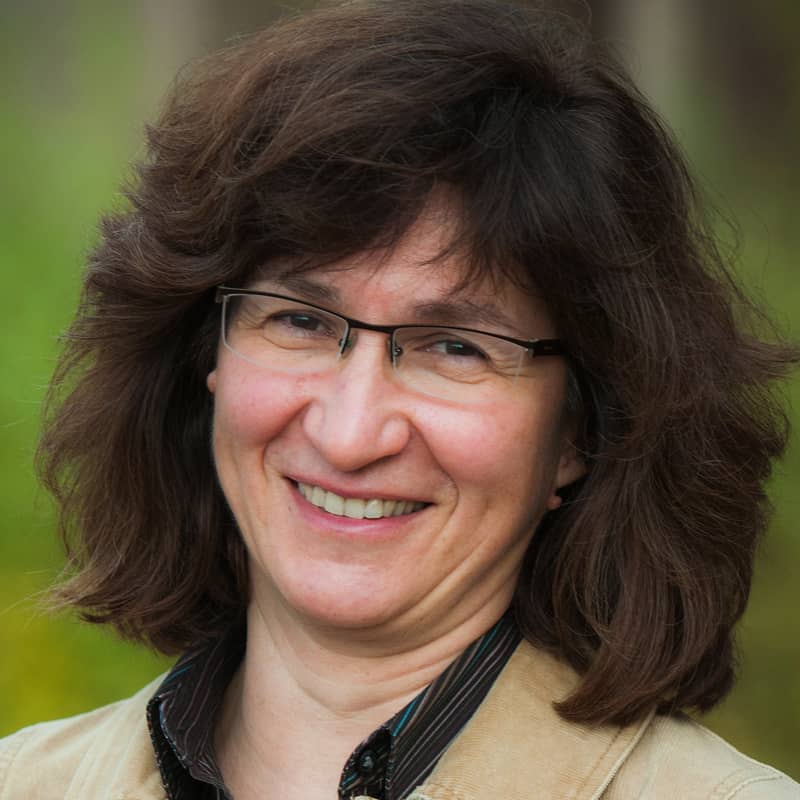
Margaret Kalacska is an Associate Professor in the Department of Geography at McGill University, leading the Applied Remote Sensing Lab. Her research focuses on advancing remote sensing technologies like hyperspectral imaging, Remotely Piloted Aircraft Systems (RPAS), LiDAR, and thermal imaging for environmental science and natural hazard monitoring. She has pioneered the use of RPAS-HSI systems, including developing Canada’s first fully operational RPAS-HSI for the Canadian Airborne Biodiversity Observatory (CABO) since 2018. Dr. Kalacska holds a PhD and MSc in Earth and Atmospheric Sciences from the University of Alberta. Her interdisciplinary work spans Canada, Brazil, Tanzania, Ghana, the Peruvian Amazon, Panama, Madagascar, and Costa Rica. Notable achievements include being the first Canadian woman to lead an airborne hyperspectral mission (MAC-13) in Costa Rica (2013) and receiving the Silver Medal from the Canadian Remote Sensing Society (2018). Her lab specializes in integrating cutting-edge remote sensing tools for biodiversity conservation, ecosystem monitoring, and disaster response. Recent projects include the Fish + Forest initiative studying aquatic habitats in Brazil and advancing custom RPAS for hyperspectral imaging. She also collaborates with the National Research Council of Canada and international organizations like NATO. Awards: Fessenden Prize (2014), Silver Medal (2018), Steacie Prize Nomination (2020) Key Projects: CABO, Fish + Forest , RPAS-HSI System Development Technologies: UAV LiDAR, Structure-from-Motion Photogrammetry, Satellite Data Validation Her research bridges environmental science and technology, emphasizing global applications in conservation and climate resilience.