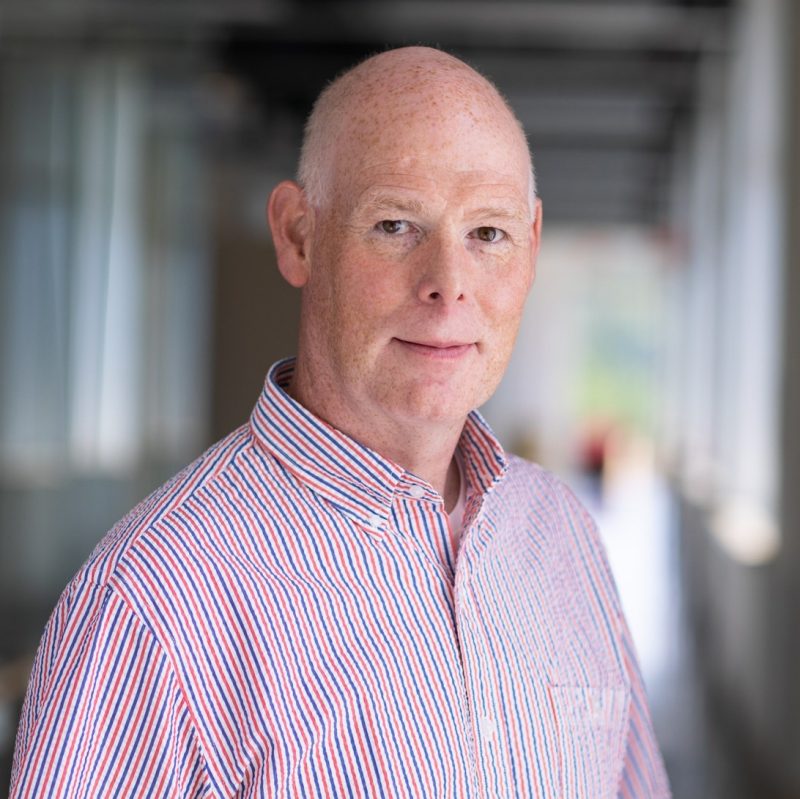
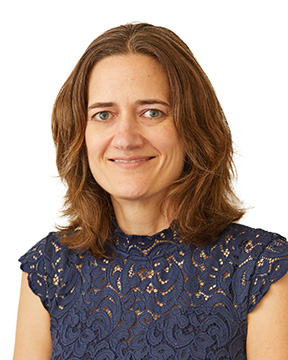
Rob Adamson is a Professor and Acting Director at the School of Biomedical Engineering, Dalhousie University. His research focuses on advanced imaging and therapeutic devices using light and ultrasound, with applications in otology, medical implants, and high-frequency ultrasound systems. He collaborates closely with industry partners to translate research into clinical solutions. His current projects include optical coherence tomography for middle ear imaging, ultrasound-based powering of medical implants, and development of a subcutaneous piezoelectric hearing aid (SPAHA). He leads a lab emphasizing applied engineering solutions, recruiting students in math, physics, and engineering disciplines. Key innovations include a 40-MHz phased-array ultrasound transducer for endoscopic imaging and a novel transcutaneous energy transmission system. His work bridges fundamental engineering principles with clinical needs, addressing challenges like long-range imaging in the ear and efficient power delivery to implants. Adamson has pioneered high-frequency ultrasound technologies for ear imaging and co-founded Daxsonics Ultrasound Inc. to commercialize advancements. His research emphasizes miniaturization, beamforming algorithms, and material science for medical devices.
Grace Gao is an Associate Professor in the Department of Aeronautics and Astronautics at Stanford University, leading the Navigation and Autonomous Vehicles Laboratory (NAV Lab). Previously, she was faculty at the University of Illinois at Urbana-Champaign. She holds a Ph.D. from Stanford University, focusing on robust and secure perception, localization, and navigation for aerial vehicles, autonomous driving, and space robotics. Education: Ph.D. in Aeronautics and Astronautics, Stanford University Research Interests: Her work integrates machine learning with navigation systems to enhance autonomy in harsh environments. Key areas include GNSS spoofing mitigation, lunar positioning, and neural radiance fields for 3D mapping. She emphasizes resilient algorithms for unmanned systems and space exploration. Awards: NSF CAREER Award Institute of Navigation Early Achievement Award 29 Best Paper Awards at Institute of Navigation conferences Everitt Award for Teaching Excellence (Stanford) Teaching & Advising: Recognized repeatedly as an excellent instructor, she has mentored students in autonomous systems and received awards for advising excellence from AIAA and Stanford. Labs & Projects: The NAV Lab develops open-source tools like gnss_lib_py and simulators like LuPNT for lunar navigation. Her work bridges theory with practical applications in space robotics and urban autonomous systems.
Andrea Nardin is a Fixed-term Assistant Professor at the Department of Electronics and Telecommunications (DET) within Politecnico di Torino. He is an active member of the Interdepartmental Center CARS@PoliTO (Center for Automotive Research and Sustainable Mobility), contributing to advancements in telecommunications and navigation systems. His research spans Digital Signal Processing Global Navigation Satellite Systems (GNSS) Signal Integrity Wireless Communication Andrea's scholarly work focuses on GNSS signal applications, ranging from combating electromagnetic interference to developing robust tracking architectures and orbit determination algorithms. His recent publications highlight innovations in jammer localization, lunar navigation, and Kalman filter optimization for space environments. Teaching engagements include collaborations on courses such as Numerical Estimation Methods for Radionavigation Hardware & Wireless Security Satellite Navigation Systems across multiple academic programs. He supervises PhD candidate Francesco Fiorina in the field of Electrical, Electronics, and Communications Engineering.
Emil Nilsson is a Senior Lecturer at the School of Information Technology, Halmstad University, Sweden, specializing in radar systems and electronics for interference-free applications in automotive and industrial contexts. His research integrates Photonics, Electronics, and Nanotechnology to solve real-world implementation challenges. Nilsson's research focuses on Radar Systems, Electronics, and Nanotechnology with emphasis on automotive radar reliability under environmental stressors like dust and moisture. His work addresses interference mitigation, advanced antenna design using 3D printing, and radar-communication (RadCom) integration for vehicular applications, demonstrating strong industry relevance through practical system implementations. Analysis of his 15 most recent publications (2011-2025) reveals three dominant research trajectories: automotive radar resilience (70% of works), interference mitigation strategies (55%), and innovative hardware solutions using additive manufacturing (30%). His publications consistently bridge theoretical signal processing with industrial applications, particularly in automotive safety systems and industrial process monitoring. He actively contributes to Halmstad University's Photonics, Electronics and Nanotechnology research group, focusing on next-generation radar communication systems for autonomous vehicles and industrial IoT applications through electromagnetic compatibility testing and advanced sensor development.
Dr. Thomas Kissinger is a Lecturer in Optical Instrumentation at the Centre for Engineering Photonics at Cranfield University. He holds a prestigious 5-year Royal Academy of Engineering Research Fellowship (2018-2023) focused on "Doppler-enhanced lidar system using range-resolved interferometry". With a background in physics and electrical engineering, Dr. Kissinger has been with the Centre for Engineering Photonics since 2011, first as a PhD student and then as a Research Fellow. Dr. Kissinger earned his physics degree (Dipl.-Phys.) and a Bachelor of Science in Electrical Engineering. His PhD research in range-resolved interferometric signal processing for fiber sensing applications won the 2016 Lord Kings Norton prize for the best overall PhD thesis across Cranfield University. Dr. Kissinger's research focuses on applying interferometric and optical measurement techniques to engineering problems. His main research areas include 3D Imaging and Lidar, Precision Optical Interferometry and Vibrometry, Optical Fibre Sensing (particularly Fibre Optic Shape Sensing), Manufacturing Instrumentation, and Optical Gas Sensing. His work has significant applications in manufacturing, robotics, autonomous vehicles, and healthcare. Analysis of Dr. Kissinger's recent publications (2022-2026) reveals a strong focus on precision optical measurement techniques, particularly in the areas of interferometry, fiber optic sensing, and metrology. His work shows increasing collaboration with international researchers and a growing emphasis on practical applications in manufacturing, aerospace, and nanotechnology. The trend indicates a shift toward more complex multi-parameter sensing systems and higher precision measurement capabilities. Lord Kings Norton prize for the best overall PhD thesis across Cranfield University (2016) Dr. Kissinger has been actively involved in several significant research grants, including a Royal Academy of Engineering Research Fellowship (2018-2023), an EPSRC grant on "Novel optical instrumentation for robotic manufacturing" (2015-2018), and the ATI-funded BladeSense project (2015-2019). He collaborates extensively with industry partners including Oxford Instruments Nanoscience, National Physical Laboratory, QinetiQ Group PLC, and Airbus SE, applying his research to real-world problems in welding, laser processing, and aerospace applications. Dr. Kissinger works within the Centre for Engineering Photonics, which holds three consecutive EPSRC Platform Grants. His research has practical applications in helicopter rotor blade monitoring, robotic manufacturing, and laser-based welding and additive manufacturing. His work on fiber optic shape sensing has particular relevance for structural health monitoring in aerospace applications.
Tim Talty is a Collegiate Professor and Director of Admissions for the Master of Engineering Program at Virginia Tech's Bradley Department of Electrical and Computer Engineering. He holds a Ph.D. from the University of Toledo (1996) and a B.S. from Trine University (1987). His research focuses on wireless communications, signal processing, and intra-vehicle sensor networks, with particular emphasis on physical layer security and mobile communications. Key research areas include lidar systems, vehicular antennas, and software-defined radio architectures. He has contributed to innovations in automotive communication networks, including UWB localization and transparent antenna fabrication. His work bridges theoretical advancements with practical applications in autonomous vehicles and telematics. Notable awards include the General Motors ‘Boss Kettering’ Award for Innovation (2019) and the Commander's Award for Civilian Service from the U.S. Army. He has served as an ABET program evaluator and actively participates in industry collaborations, including leadership roles in IEEE conferences and automotive R&D initiatives. Recent publications emphasize energy-efficient computing for ADAS, lidar miniaturization, and 5G vehicle connectivity. His research trends highlight interdisciplinary approaches to solving challenges in vehicular communication, sensor fusion, and autonomous systems.
Dimitrios D. Piromalis is an Associate Professor at the University of West Attica , specifically within the Department of Industrial Design and Production Engineering . He leads the Research Lab of Electronic Automation, Telematics and Cyber-Physical Systems (EATCPS) , focusing on electronic embedded systems for applications in autonomous vehicles, IoT, and cyber-physical systems. With over 120 publications and extensive industry collaboration spanning 25 years, his work bridges academic research and practical engineering solutions. Education : BSc, MSc, and PhD in Electrical and Electronics Engineering. Research Focus : Electronic embedded systems, autonomous vehicles, IoT, cyber-physical systems, digital twins, 3D/4D printing, energy management, and smart agriculture. Recent publications highlight trends in TinyML for smart cities, predictive maintenance integration, hybrid energy storage for EVs, and digital twin applications across agriculture and automotive sectors. His work also extends to emergency communication systems, biomedical sensors, and blockchain-enabled energy gateways. Industry Collaboration : Field Application Engineer and Technical Consultant for multinational semiconductor companies. Teaching : Platforms for AI and Python programming, autonomous vehicles and drones.
Knud Erik Meyer is an Associate Professor at the Department of Civil and Mechanical Engineering (Technical University of Denmark). His work focuses on experimental fluid mechanics , particularly optical methods such as Laser Doppler Anemometry (LDA) and Particle Image Velocimetry (PIV) , with applications in turbulent flow , heat transfer , and industrial systems . Education : PhD in Turbulent Flow and Heat Transfer (DTU, 1991-1993); MSc in Civil Engineering (DTU, 1983-1988) Academic History : Associate Professor (DTU, 2000-...), Assistant Professor (DTU, 1996-1999), Assistant Research Professor (DTU, 1994-1996) Meyer's research spans turbulent jets in cross-flow , swirling flow dynamics , microplastic settling , and personalized ventilation systems . He employs advanced optical diagnostics and computational modeling (CFD) to study complex flows in two-stroke diesel engines , wind turbines , and environmental fluid dynamics . His publications (108 total) emphasize flow structure identification , PIV data analysis , and thermal transport , with recent work on non-spherical particle tracking and microplastic dynamics . Notable projects include Sorting plastic by sedimentation and Axial fans and ventilation systems . Scientific Awards : Best Paper Award, International Symposium on Energy, Informatics, and Cybernetics (2009) Supervision : Mentored PhD students including S. Eberhard, B. A. K. Hartz, M. Rønne, and W. Situ on topics ranging from microplastic settling to combustion flow analysis . Collaborates extensively with international institutions and industry partners.
Dr. Todd Humphreys is an Assistant Professor in the Department of Aerospace Engineering and Engineering Mechanics at The University of Texas at Austin. He directs the Radionavigation Laboratory, focusing on software-defined GPS receivers and LEO-based positioning systems. His research emphasizes defending against GNSS spoofing/jamming and exploring satellite navigation innovations. Research interests include satellite navigation, orbital dynamics, and signal processing with applications in ionospheric remote sensing and cybersecurity. He co-founded Coherent Navigation to develop hardened GPS systems using Iridium signals. Recent work focuses on LEO mega-constellations (Starlink, OneWeb) for resilient PNT solutions, spoofing detection via single/dual-satellite geolocation, and multi-modal fusion for urban navigation (TEXR Dataset). His publications address OFDM signal design for ranging, radar-inertial positioning, and anti-spoofing countermeasures. Current projects involve beamforming optimization for LEO terminals and TITAN inertial-terrain navigation.
Dr. Mohamed Saadeldin is an Assistant Professor at the School of Computer Science, University College Dublin (UCD). He holds a B.Sc. (Honours) in Electrical & Electronic Engineering from the University of Khartoum (2005) and a Ph.D. in Computer Science from UCD (2013). His research spans generative AI, computer vision, and foundation models, with applications in healthcare, biomedicine, robotics, and energy. Recently, he has focused on AI-driven solutions for healthcare disparities, such as automated breast cancer screening using low-cost ultrasounds, and multimodal foundation models for precision medicine. He also explores LLM-driven UAV navigation and energy grid management using transformer models. Education: B.Sc. (Honours) in Electrical & Electronic Engineering, University of Khartoum, 2005 Ph.D. in Computer Science, University College Dublin, 2013 Teaching: Coordinates modules in Computer Graphics, Data Structures and Algorithms, and Mobile Computing at UCD’s joint college in China (BDIC). His research interests include generative AI for healthcare, computer vision in robotics, and deep learning for agricultural optimization. Notable projects include vision foundation models for medical imaging, collaboration with Systems Biology Ireland on multimodal models for drug repurposing, and energy grid management via smart meter data analysis. He has authored/co-authored over 30 publications, including IEEE transactions and book chapters. Grants and collaborations involve industry partnerships on load disaggregation and academic projects like VistaMilk for dairy sector applications. His early work on ultrasonic systems for indoor localization and gesture control demonstrates his long-standing expertise in signal processing and human-AI interaction.
Sherry Chhabra is a Research Fellow in the Physics & Astronomy Department at George Mason University. Her research focuses on solar physics, plasma dynamics, and radio astronomy, with a particular emphasis on coronal heating mechanisms, solar transient events, and space weather phenomena. She contributes to advanced observational facilities like the Owens Valley Long Wavelength Array (OVRO-LWA), leveraging low-frequency radio imaging to study solar activity and its heliospheric impacts. Her work spans theoretical modeling of coronal loops, observational analysis of solar radio bursts, and interdisciplinary projects involving multiwavelength observations. She actively participates in developing CubeSat missions for solar X-ray spectroscopy and advancing instrumentation for gravitational wave precursor detection. Recent efforts include diagnosing plasma properties in active regions and investigating particle acceleration processes in solar flares. Key research themes: Coronal plasma dynamics, solar radio emission mechanisms, and space weather forecasting. Instrumentation expertise: Radio interferometry, spectral imaging, and low-frequency solar observations. Chhabra's contributions bridge fundamental solar physics with applied space science, addressing questions about energy transfer in the corona and the role of transient events in shaping the heliosphere.
Dr. Robin AMAR is a Postdoctoral researcher at the University of Luxembourg's Interdisciplinary Centre for Security, Reliability and Trust (SnT), within the SPARC department. His research focuses on advanced waveform design for radar and communication systems, particularly in mmwave and automotive radar applications. He specializes in interference mitigation, Doppler-tolerant systems, and coexistence of radar-communication networks. His work integrates theoretical optimization with practical hardware implementations using platforms like USRP. Key research areas include polynomial phase waveforms, FMCW waveform optimization, and sensor network design. His studies address challenges in urban environments, spectrum sharing, and real-time signal processing. Dr. AMAR has contributed to both theoretical frameworks and experimental validations through measurement-based analyses. His expertise bridges electrical engineering, signal processing, and interdisciplinary security applications. Notable projects include designing interference-immune radar systems for automotive safety and developing dual-function waveforms for simultaneous sensing and communication. Despite no listed awards, his work demonstrates impactful contributions to radar technology innovation. He collaborates within SPARC's research teams but no specific labs or grants are detailed in the provided information.
Andrew C. Singer is a distinguished academic holding dual roles as the Dean of the College of Engineering and Applied Sciences at Stony Brook University and a Professor in the Department of Electrical and Computer Engineering. He also holds a courtesy appointment in the Institute for Advanced Computational Science and the School of Marine and Atmospheric Sciences at Stony Brook. Previously, he served as the Fox Family Professor at the University of Illinois Urbana-Champaign's Grainger College of Engineering, where he led innovation initiatives as the Associate Dean for Innovation and Entrepreneurship. His research focuses on signal processing, underwater acoustic communications, and biomedical applications of acoustics, with contributions to underwater acoustic localization, sensor networks, and machine learning for signal processing. Education and Career: While specific educational details are not provided, Singer’s extensive academic leadership roles and research output indicate a strong background in electrical engineering and signal processing. His work spans academia and industry, with notable contributions to acoustic communication systems, biomedical implants, and emergency medical devices (e.g., the emergency ventilator for pandemic response). Research Interests: Singer’s research integrates theoretical and applied aspects of signal processing, including underwater acoustic signal processing, biomedical acoustics, and the design of robust communication systems. He leads projects like Task Force Ocean (underwater acoustic signal processing) and ACOMS+X (acoustic communications in diverse environments), emphasizing practical applications in oceanography, healthcare, and emergency systems. Grants & Collaborations: His work is supported by grants from agencies such as the National Science Foundation, with collaborations extending to medical institutions, geotechnical engineering teams, and robotics researchers. Notable projects include through-soil wireless communication systems and ultrasonic biomedical implants for in vivo video transmission. Labs & Teams: The Singer Research Group at UIUC and Stony Brook focuses on advancing acoustic technologies, with projects like the Mechatronic Acoustic Research System and cooperative microphone array systems for speech enhancement. His team collaborates with engineers, physicians, and data scientists to bridge theoretical and applied challenges.
Jonathan Owen is a Courtesy Assistant Professor at the University of Kansas, affiliated with the School of Engineering and the Department of Electrical Engineering and Computer Science. His research focuses on advanced radar systems, including waveform design, cognitive radar, and spectrum sharing techniques. He has conducted experimental demonstrations of multi-user radar/communications (MURC), tunable phase-attached radar-communications (PARC), and real-time waveform-diverse pulse-Doppler systems. Notable contributions include optimizing non-uniform radar waveforms, developing clutter suppression algorithms like DeCCaF, and exploring gradient-based approaches for pulse repetition interval (PRI) staggering. His work emphasizes practical implementations using software-defined radar platforms like MicRIB. Dr. Owen’s research bridges theoretical signal processing with real-world radar applications, addressing challenges in spectral efficiency, Doppler robustness, and interference mitigation. Education and background details are not explicitly provided in the text. His publications span from 2015 to 2025, with a strong emphasis on experimental validation and cognitive radar systems. No scientific awards are listed here. Advising details and grant information are also not specified, though his experimental focus suggests involvement in laboratory setups and collaborative projects. Key research themes include spectral notching, adaptive waveform design, and radar-communications integration, with applications in both military and civilian domains. His work often combines hardware prototyping with algorithmic innovation, as seen in projects like the Software-Defined Radar (SDR) development and real-time spectrum sensing demonstrations.
Shelly Lesher is a Professor of Physics at the University of Wisconsin-La Crosse (UWL), currently on academic leave. She holds additional roles as Director of the Conference Experience for Undergraduate (CEU) program for the American Physical Society (APS) and served as the Director of the UWL McNair Scholars Program (2021–2024). She has held visiting fellowships at Yale University (2019–2020) and is a Guest Professor at the University of Notre Dame since 2010. Education: Ph.D. in Nuclear Physics from the University of Kentucky (Lexington, KY), B.A. in Physics from Indiana University South Bend (South Bend, IN). Professional history includes postdoctoral fellowships at the University of Leuven (Belgium), Lawrence Livermore National Laboratory, and the University of Richmond. Research: Focuses on experimental nuclear physics, particularly nuclear structure studies using advanced detector arrays like the La Crosse fIREBAll. Key interests include collective vibrations in nuclei, rare-earth isotopes, and interdisciplinary projects like the podcast My Nuclear Life . Current research is supported by NSF grants PHY-1919364 and PHY-2011267. Awards: Elected Fellow of the American Physical Society (2020), Presidential Visiting Fellow at Yale (2019–2020). Teaching: Courses include Physics for the Life Sciences , Nuclear Physics Research , and Global Nuclear Issues (a general education course). Active in inclusive mentoring practices for undergraduate students. Leadership: Chairs UWL’s Physics Department since 2021 and serves on the APS DNP Executive Committee (2023–present). Played a key role in the Nuclear Science Long-Range Plan for DOE/NSF (2023).