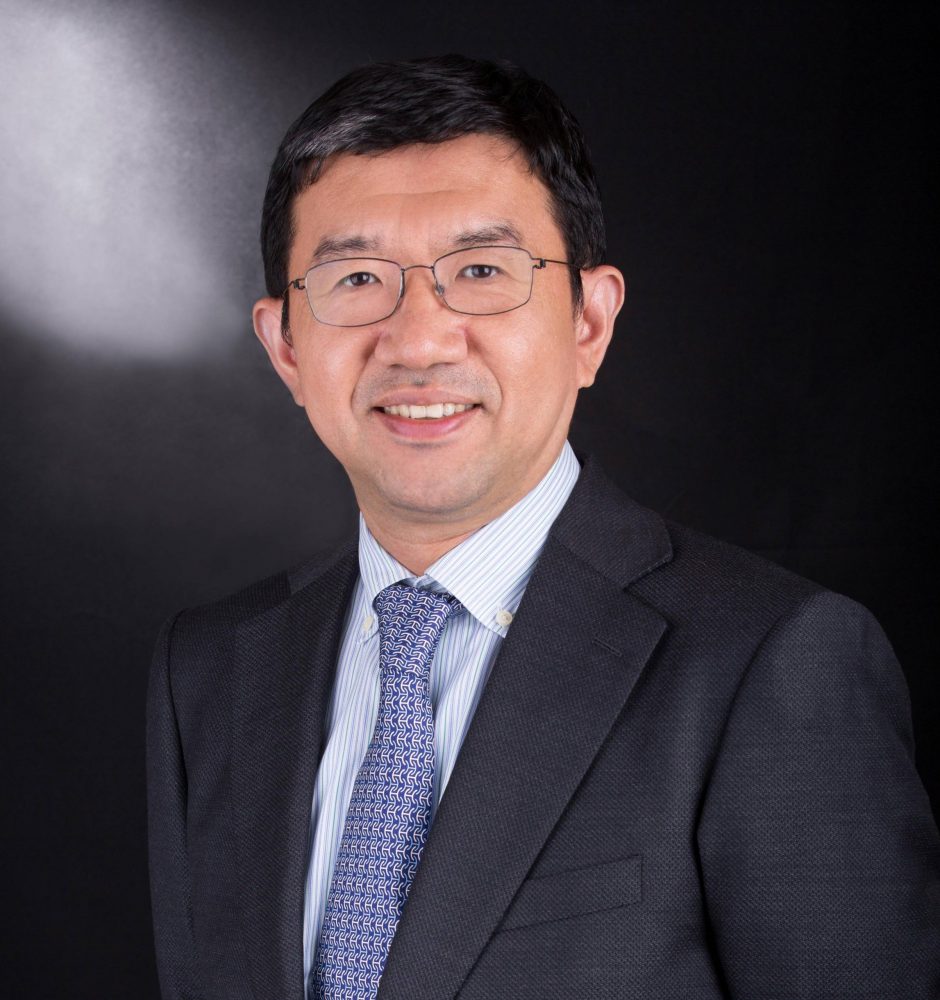
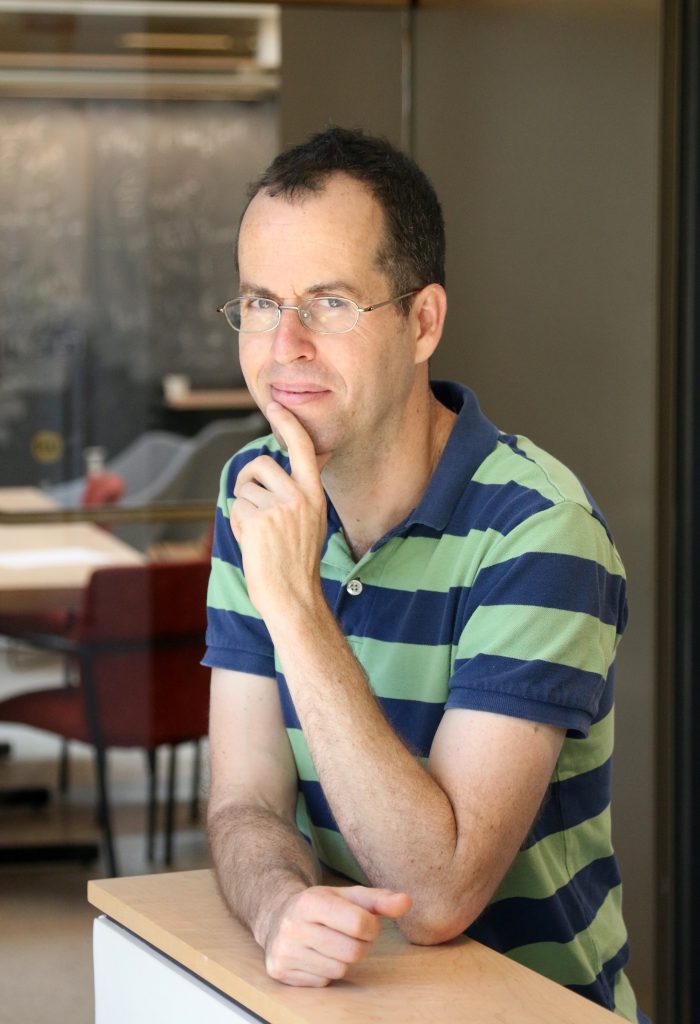
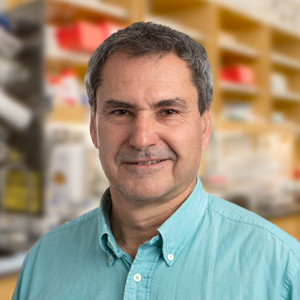
Geert-Jan Geersing is a Full Professor at University Medical Center Utrecht, specializing in Cardiovascular Health in General Practice. He combines clinical work as a general practitioner with high-impact research focused on cardiovascular disease management, prediction analytics, and primary care innovation. Leadership: Strategic Program 'Circulatory Health' Key Research Areas: Thrombo-embolic conditions (VTE, pulmonary embolism), atrial fibrillation (AF), bleeding risk prediction, and chronic care models for frail elderly patients Notable Projects: FRAIL-AF randomized controlled trial, Horizon program for elderly cardiovascular patients His work includes developing diagnostic prediction models using individual patient data meta-analysis and improving stroke/bleeding risk stratification in anticoagulation therapy. He leads research at the intersection of clinical practice and data science. Funding & Recognition : NWO Veni/Vidi grants for thrombo-embolic condition management Future Leaders Program participant (Dutch CardioVascular Alliance) External roles include Vice-chair of the FNT (Federatie Nederlands Trombosediensten) and leadership in scientific committees.
Associate Professor Zhidong Li is a prominent researcher at the Data Science Institute within the Faculty of Engineering and Information Technology at University of Technology Sydney (UTS), Australia. With over a decade of experience in data science and machine learning, he leads impactful research bridging theoretical advancements with practical applications across multiple critical infrastructure domains. Dr. Li earned his PhD from the University of New South Wales, Sydney, Australia, and previously served as a senior engineer at Data61, CSIRO (Commonwealth Scientific and Industrial Research Organisation), Australia's federal government agency for scientific research. His research spans machine learning, data mining, pattern recognition, image processing, and human-computer interaction with applications in water, gas, traffic, urbanization, visitor economy, agriculture, environment, finance, property market, railway, law, electric and health sectors. His work particularly focuses on developing interpretable AI models, temporal point processes, and practical applications for smart infrastructure management. His extensive publication record reveals strong thematic consistency in applying advanced machine learning techniques to infrastructure management problems, with particular emphasis on water systems. His research demonstrates progression from fundamental algorithm development toward increasingly sophisticated applications with real-world impact, especially in temporal modeling, graph neural networks, and fairness in AI systems. Scientific Awards 2022 R&D Excellence Award NSW Water Award 2021 UTS Medal for Research Impact for the Vice-Chancellor's Awards for Research Excellence 2018 Australian Museum Eureka Prize for Excellence in Data Science 2019 Victorian iAwards - Industrial & Primary Industries Merit for 'Predictive Analytics for Water Pipe Maintenance' Multiple AWA research innovation awards (NSW, National, QLD) Dr. Li actively supervises Masters and PhD students and leads numerous funded research projects across diverse sectors. His collaborative approach is evident through partnerships with water utilities, transport agencies, and various CRC projects focusing on Food Agility, Digital Finance, and Smartcrete. His work on the world's first independently-audited ethical talent AI in partnership with Reejig demonstrates his commitment to translating research into real-world solutions that address societal challenges while maintaining ethical standards.
Prof. Wojciech Sobieski is a faculty member at the Department of Mechanics and Fundamentals of Machine Design within the Faculty of Technical Sciences at the University of Warmia and Mazury in Olsztyn . His research focuses on fluid mechanics, numerical modeling, and porous media analysis, with applications in environmental engineering, hydraulic systems, and 3D printing. Academic Rank: Professor Scientific Discipline: Mechanical Engineering Key Research Areas: Tortuosity Analysis, Multiphase Flow, DEM Simulations His recent publications highlight advancements in computational methods for granular porous media, fluid flow modeling, and thermodynamic applications. Notable trends include the use of the Waterfall Algorithm for geometric analysis and sensitivity studies of numerical models like the Eulerian multiphase approach. He has contributed to understanding Forchheimer's laws and cavitation phenomena in hydraulic systems. Prof. Sobieski oversees the PathFinder Project , a research initiative focused on numerical modeling of porous media. His laboratory maintains infrastructure for multiphase flow simulations and particle-scale modeling. He has supervised 2 doctoral students to completion but currently has no active advisees.
Jin Li serves as Zhang Yonghong Professor in Economics and Strategy, Area Head of Management and Strategy, and Director of the Centre for AI, Management and Organization (CAMO) at Hong Kong University Business School. Previously, he held tenured positions at Kellogg School of Management and London School of Economics where he was Tenured Associate Professor of Managerial Economics and Strategy. Professor Li's research focuses on organizational economics, personnel economics, and labor economics, examining how firms design organizations to align incentives and build trust. His recent work explores digital economy topics including causality issues in machine learning algorithms, blockchain governance, and AI-organization interactions. This research demonstrates how organizational design creates competitive advantage through effective incentive structures and relational contracts. His publication portfolio shows consistent output in top-tier journals with recent emphasis on AI's organizational impact (2022-2023). Key thematic clusters include relational contracting dynamics (30% of recent work), digital transformation challenges (25%), labor market structures (20%), and blockchain governance mechanisms (15%). Management Department teaching prize at London School of Economics Associate Editor, Management Science Professor Li has advised numerous PhD students through courses like 'Economics of Organization for PhDs' at Kellogg. His service includes reviewing for 30+ top journals (AER, Econometrica, JPE, QJE, ReStud) and grant proposals for NSF and SSHRC. He serves as external PhD examiner for Norwegian School of Economics. As Director of CAMO, he leads research initiatives at the AI-organization interface, focusing on how artificial intelligence transforms workplace structures, managerial decision-making, and competitive dynamics in digital economies.
Dr. Axel Lubk is a Group Leader at the Institute for Solid State Research (IFW Dresden) , specializing in advanced electron microscopy techniques for materials science. His research spans four key areas: (1) TEM method development (high-resolution imaging, tomography, holography, and in-situ techniques), (2) charge particle optics and scattering theory , (3) magnetic nanotextures (domain walls, skyrmions), and (4) plasmonics (mode hybridization in heterogeneous structures and semiconductor heterostructures). Dr. Lubk’s work focuses on three-dimensional magnetic texture analysis using electron holography and tomography, particularly in systems like skyrmion tubes , FeGe , and Cr2O3 thin films . He has pioneered techniques for vector-field electron tomography and phase retrieval under varying boundary conditions, advancing nanoscale magnetic imaging. His recent studies include plasmonic properties in AgAu nanosphere chains , thermoelectric multilayer systems , and topological insulators like NiRh2Sb and TaTMTe4 . Dr. Lubk has published extensively in high-impact journals such as Nature Communications and Advanced Materials , with a focus on TEM instrumentation and quantitative analysis . He frequently presents at international conferences like the International Microscopy Congress and European School of Magnetism , emphasizing applications in spintronics , quantum materials , and nanostructured systems . His contributions to holographic vector-field electron tomography and machine learning for spectrum-image data have set new standards in electron microscopy.
Elizaveta Rebrova is an Assistant Professor in the Department of Operations Research and Financial Engineering (ORFE) at Princeton University. She is also associated with the Program in Applied and Computational Mathematics (PACM) and the Center for Statistics and Machine Learning (CSML). Education: Specialist degree from Moscow State University (2012), PhD in Mathematics from University of Michigan (2018 under Roman Vershynin) Prior Appointments: Postdoctoral Scholar at Lawrence Berkeley National Lab (2021), Assistant Adjunct Professor at UCLA Mathematics Department (2018-2021) Her research focuses on randomized numerical linear algebra , mathematics of data science , and high-dimensional probability . Key interests include developing algorithms for large-scale data with non-trivial structure, robust and interpretable learning, and stochastic optimization. Her recent work analyzes algorithmic convergence in structured settings, tensor-based data compression, and nonnegative matrix/tensor factorization under constraints. Recent publications span topics in randomized NLA , robust solvers , tensor methods , and nonnegative matrix factorization . Notable trends include improving convergence rates for iterative methods, handling adversarial noise in linear systems, and leveraging tensor structures for efficient data recovery. She supervises Ph.D. students including Jackie Lok, Shambhavi Suryanarayanan, and Sofiia Shvaiko. Her teaching at Princeton covers graduate probability theory (ORF526), convex optimization (ORF523), and network science (ORF387), with prior teaching roles at UCLA and University of Michigan.
Jamal Atif is a Professor at Paris-Dauphine University and holds multiple significant leadership positions including Project Manager for 'Data Science and Artificial Intelligence' at the Institute of Information Sciences and their Interactions (INS2I) of the CNRS, Deputy Scientific Director of 3IA PRAIRIE, Head of the MILES team/project at LAMSADE (UMR CNRS-Université Paris-Dauphine), Co-leader of the Transverse Artificial Intelligence Program at PSL University, and Director of the Dauphine Numérique program. Professor Atif's primary research focuses on the foundations of responsible artificial intelligence, with specific expertise in privacy preservation in machine learning, robustness of deep learning algorithms to malicious attacks, causality, and explainability. His work bridges theoretical foundations with practical applications in security and reliability of AI systems. He has developed innovative approaches to address adversarial vulnerabilities in machine learning models and has made significant contributions to privacy-preserving techniques in data analysis. His publication record demonstrates a consistent focus on robust and trustworthy AI systems, with recent work exploring differential privacy in clustering, adversarial robustness, and explainable AI. The research spans theoretical foundations in logic and knowledge representation to practical applications in finance, healthcare, and computer vision. His publications appear in top-tier venues including Machine Learning journal, Neural Information Processing Systems, and International Joint Conferences on Artificial Intelligence. Scientific Awards: Recipient of two awards from the North American Society of Radiology for his thesis work Professor Atif has co-supervised or is currently supervising around fifteen doctoral students, demonstrating his commitment to mentoring the next generation of AI researchers. His leadership extends to directing major institutional programs including Dauphine Numérique and the Transverse Artificial Intelligence Program at PSL University, where he shapes strategic research directions in AI. He leads the MILES team/project at LAMSADE, which focuses on foundational aspects of machine learning and artificial intelligence. The team's research spans theoretical aspects of learning algorithms to practical applications requiring robust and reliable AI systems, with particular emphasis on security and privacy considerations in modern machine learning deployments.
Sonia Lopez Alarcon is an Associate Professor in the Department of Computer Engineering at the Kate Gleason College of Engineering, Rochester Institute of Technology (RIT). She has been a faculty member since 2009, teaching core courses like Computer Organization and developing quantum computing curricula including the new CMPE-257 undergraduate course and CMPE-757 graduate course. Her research bridges computer architecture and quantum computing with emphasis on practical quantum circuit implementation. Her educational background includes a Bachelor of Physics and Master's in Device Physics from the University Complutense of Madrid (2002), followed by a PhD in Computer Engineering (2009) where she researched cache hierarchy in simultaneous multithreaded architectures. During her studies, she gained industry experience at Lucent Technologies and Fundetel working on integrated circuit design. Dr. Lopez Alarcon's primary research focuses on Quantum Computing and heterogeneous hardware solutions, specifically quantum circuit compilation processes, scalability challenges, and error resilience techniques. She investigates how to translate theoretical quantum algorithms into executable circuits while managing noise and resource constraints, with applications in optimization problems and physics simulations. Her work connects computer engineering principles to emerging quantum technologies. Analysis of her publication timeline shows a strategic shift from traditional computer architecture (2015-2018 cache/HLS research for GPU/heterogeneous systems) to quantum computing (2019-2021). Recent work explores quantum algorithms for combinatorial optimization (Grover's), quantum simulation of physical systems, and machine learning applications, reflecting her adaptation to the rapidly evolving quantum landscape while maintaining her architectural expertise. Her teaching excellence has been recognized through multiple awards: Kate Gleason College of Engineering Exemplary Performance in Teaching Award (2016, 2017, 2020) Computer Engineering Most Effective Teacher Award (2016) She actively mentors graduate students including Mark Danza (MS Computer Engineering candidate 2025), with whom she collaborated on quantum machine learning research featured in Quantum Zeitgeist (May 2025). She contributes to RIT's quantum information science minor launched in 2022, developing curriculum and supervising student research in this emerging field. Dr. Lopez Alarcon leads quantum computing research efforts within RIT's Department of Computer Engineering, collaborating with colleagues like Cory Merkel on quantum algorithm applications. Her work is supported through her personal research website and integration into university-wide quantum initiatives, positioning her at the forefront of academic quantum computing education and research.
Elchanan Mossel is a Professor of Mathematics at the Massachusetts Institute of Technology (MIT), with a joint appointment at the Institute for Data, Systems, and Society (IDSS). His research focuses on probability, combinatorics, statistical inference, and their applications to computer science and social choice theory. He earned his B.Sc. from the Open University of Israel, and both his M.Sc. (1997) and Ph.D. (2000) in Mathematics from the Hebrew University of Jerusalem. Before joining MIT in 2016, he was a faculty member at UC Berkeley and held visiting positions at the Weizmann Institute and the Wharton School of the University of Pennsylvania. Mossel's work bridges theoretical foundations and applied problems, including computational complexity, randomized algorithms, Markov random fields, and evolutionary biology. He has made significant contributions to the theory of social choice, game theory, and the mathematical underpinnings of machine learning. Notable achievements include resolving the Majority Is Stablest conjecture and advancing phylogenetic reconstruction methods. His awards include the Sloan Fellowship and Miller Fellowship. He has mentored numerous graduate students, including Sebastien Roch, Allan Sly, and Miklos Racz, and has held editorial roles in journals like the Electronic Journal of Probability . Mossel's teaching spans topics from introductory probability to advanced courses on social networks and game theory.
Haipeng Liu is an Assistant Professor in the Centre for Intelligent Healthcare at Coventry University. His research focuses on cardiovascular system modeling, biosignal processing, wearable nanosensors, and AI-driven diagnostics. He has supervised over 100 research outputs and holds editorial roles in journals like Frontiers in Physiology and Electronics . His work bridges clinical needs with technological innovation, particularly in healthcare technology and cardiovascular diagnostics. Research Interests: Computational modeling of cardiovascular systems, AI-enhanced diagnostics, wearable sensors, and medical imaging. Key Awards: British Heart Foundation Travel Award (2019), First Prize in National Mathematics Competition (2011). Collaborations: Active in global research networks, including the World Stroke Organization. His recent work emphasizes machine learning applications in cardiology and stroke diagnostics, with publications in Physics of Fluids , European Journal of Radiology , and Frontiers in Genetics . He is a sought-after advisor for PhD students exploring healthcare technology.
Pascal Sasdrich is a Researcher at Ruhr University Bochum, Germany, affiliated with the Faculty of Computer Science and the Security Engineering department. He holds a PhD in IT-Security/Information Technology from the same university (2018), following M.Sc. (2015) and B.Sc. (2012) degrees in the same field. His research focuses on Hardware Security, Secure Processor Design, Computer-Aided Security, and Security by Design. He has extensive experience in cryptographic hardware implementations, including countermeasures against side-channel and fault attacks. Teaching includes courses on Processor Security and Implementation of Cryptographic Schemes. His work bridges theoretical security models with practical hardware implementations, emphasizing automated tools and formal verification for secure embedded systems. Key projects include contributions to Project HEP (open-source hardware security chip design) and development of methodologies like EASIMASK for automated masking in hardware. Publications span cryptographic hardware implementations, fault and side-channel countermeasures, and formal security verification. Notable works include combined threshold implementations, secure processor extensions, and automated generation of masked hardware circuits. Current research emphasizes securing embedded systems through holistic design approaches, including ISA extensions and automated EDA tools.
Xiaojun Ruan is an Associate Professor in the Department of Computer Science at California State University, East Bay. He holds a Ph.D. in Computer Science from Auburn University (2011) and a B.E. in Computer Science and Technology from Shandong University (2005). His primary research focuses on energy-efficient systems, cloud computing optimization, storage systems, and security-aware resource management. He has extensive experience in thermal modeling, parallel I/O performance, and distributed deep learning frameworks. Dr. Ruan’s work emphasizes balancing energy efficiency, reliability, and performance in storage and cloud environments. Notable projects include DuoFS (hybrid storage system), energy-aware VM allocation strategies, and securing cloud infrastructure against co-residence attacks. His research bridges hardware-software co-design principles with practical system optimizations. His publications span topics from NVMe SSD performance optimization to text augmentation for spam detection, reflecting a blend of storage systems and machine learning applications. He has actively contributed to improving Shuffle I/O in big data processing, thermal management in clusters, and secure virtualization techniques. Dr. Ruan collaborates on interdisciplinary projects involving distributed computing, cybersecurity, and real-time systems. His lab focuses on deploying energy-efficient solutions while maintaining robust reliability, evidenced by over 50 peer-reviewed articles and ongoing contributions to academic conferences.
Davi De Castro Silva is a Researcher at the University of Cambridge, affiliated with the Department of Computer Science and Technology and the Centre for Quantum Information and Foundations. His current work is advised by Tom Gur and Sergii Strelchuk. Previously, he was a postdoc at CWI (Amsterdam) in QuSoft, advised by Jop Briët, and completed his PhD in Applied Mathematics at the University of Cologne under Frank Vallentin and Fernando de Oliveira Filho. He holds a Master's from IMPA (Brazil) under Roberto Imbuzeiro Oliveira and a BSc/MSc from École Polytechnique (France). His research focuses on theoretical computer science, quantum computing, and combinatorics, with recent emphasis on quantum speedups' structural foundations, such as symmetry's role. Key areas include additive combinatorics (e.g., higher-order Fourier analysis), computational complexity (lower bounds), combinatorial optimization (semidefinite programming), and quantum information theory. Notable contributions include studies on quasirandomness in additive groups, quantum algorithms' limitations, and tensor analysis. His work bridges combinatorial methods with quantum computing, exploring algorithmic efficiency and structural properties. He has published in journals like Discrete Analysis , Combinatorica , and Forum of Mathematics, Sigma , with preprints addressing quantum computation symmetry, Goldreich-Levin algorithms, and hypergraph quasirandomness. His research highlights interdisciplinary approaches to foundational questions in computing and mathematics.
MICHEL SANNER is a Professor of Molecular Biology at the Department of Integrative Structural and Computational Biology at Scripps Research. He holds a PhD in Computer Science from the University of Haute Alsace, France (1992). His research focuses on computational methods for molecular interactions, molecular graphics, and component-based software development. Notable contributions include the AutoDock suite (for molecular docking), PMV (a molecular visualization environment), and Vision (a visual programming tool). His research group develops tools like AutoDock CrankPep for peptide docking and F2Dock for protein-protein interactions. These tools are widely used in drug discovery and structural biology. His work emphasizes software engineering principles to create adaptable computational pipelines for analyzing macromolecular structures and simulating interactions. Publications span topics like peptide-docking methodologies, ligand-binding site prediction, and GPU-accelerated docking algorithms. His articles highlight advancements in computational methods for understanding protein-ligand interactions, with applications in anticoagulant research and HIV/FIV protease inhibition. Collaborations include work with Arthur J. Olson and David S. Goodsell on docking methodologies.
Jianlin Xia is a Professor of Mathematics at Purdue University, with a courtesy appointment in the Department of Computer Science. He joined the university in 2014. Xia holds a Ph.D. in Applied Mathematics from the University of California, Berkeley (2006). His research focuses on numerical linear algebra, fast algorithms for structured matrices, and their applications in computational science and engineering. His work addresses challenges in solving large-scale linear systems, eigenvalue problems, and partial differential equations (PDEs) using innovative methods like fast multipole techniques, hierarchical structures, and randomized algorithms. Key areas of research include: Design and analysis of fast algorithms for structured matrices (e.g., hierarchical, semiseparable, Cauchy matrices) Efficient direct and iterative solvers for PDEs, especially Helmholtz equations in seismic modeling Stability and robustness of numerical methods in high-performance computing Applications in wave propagation, inverse problems, and machine learning Xia’s contributions include advancements in low-rank approximations, divide-and-conquer eigenvalue decomposition, and scalable preconditioning techniques. His work emphasizes both theoretical analysis and practical implementation, often leveraging parallel computing architectures. Contact: xiaj@purdue.edu .