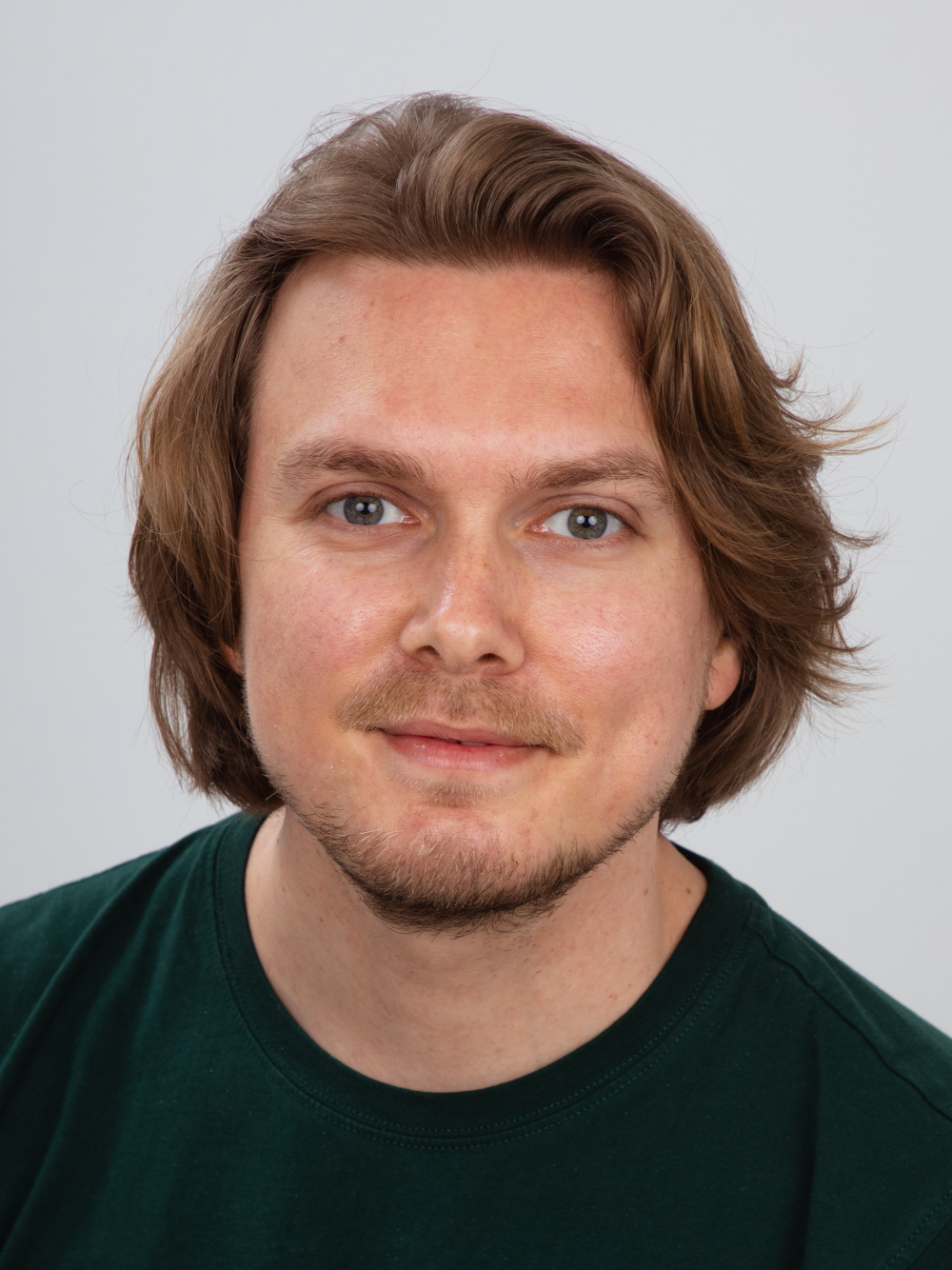
Jan Dreier is a Research Fellow at the Institute of Logic and Computation at Vienna University of Technology. His research centers on structural graph theory and algorithmic meta-theorems, particularly exploring the boundaries of tractability for model checking problems. Dreier's work bridges theoretical computer science and discrete mathematics, focusing on graph decompositions, parameterized complexity, and logical expressiveness. Key research themes include monadic stability in graph classes, applications of model theory to computer science, and efficient algorithms for logical queries on structured graphs. His publication record shows consistent focus on graph sparsity concepts and algorithmic applications of logic, with recent work expanding into approximation methods for counting queries. Research demonstrates sophisticated applications of combinatorial methods to fundamental problems in computational complexity.
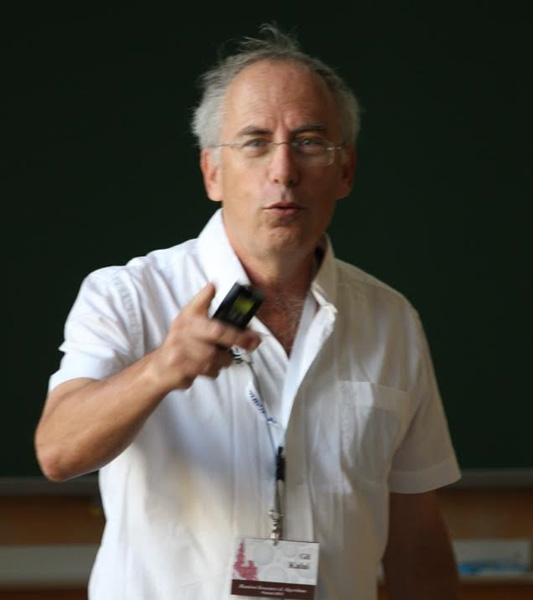
Gil Kalai is a Professor of Mathematics at the Hebrew University of Jerusalem since 1992, where he holds the Henry and Manya Noskwith Chair. He also serves as an Adjunct Professor of Mathematics and Computer Science at Yale University since 2004 in a long-term part-time visiting position. His academic career includes visiting positions at prestigious institutions including MIT, Cornell, IAS Princeton, Berkeley, Bell-labs, IBM, and Microsoft. Professor Kalai's research spans multiple areas within mathematics and theoretical computer science. His work in combinatorics encompasses geometric, probabilistic, and topological approaches. He has made significant contributions to the study of convex sets and polytopes, linear programming, and theoretical computer science. His influential 1988 paper with Kahn and Linial on Boolean functions pioneered applications of Fourier analysis in theoretical computer science. Kalai's research has evolved to include the application of Fourier analysis to thresholds, influences, symmetries, noise, percolation, and social choice. He has developed theories in algebraic shifting and studied face-numbers and other combinatorial invariants of polytopes. His work on the diameter of polytopes and randomized simplex algorithms has been influential in optimization theory. In 1993, his collaboration with Kahn produced a groundbreaking counterexample to Borsuk's Conjecture in 1325 dimensions. Professor Kalai's publications reveal a consistent focus on the intersection of combinatorics, geometry, and theoretical computer science. His work shows a progression from foundational combinatorial geometry to increasingly sophisticated applications of harmonic analysis in discrete mathematics. The recurring themes across his 30+ year career include Boolean functions, polytope theory, and probabilistic methods in combinatorics, demonstrating remarkable coherence in his research trajectory. 2016 European congress of Mathematics, plenary speaker 2013 ERC advanced grant 2012 Rothschild Prize 1994 International Congress of Mathematicians invited section talk, Zurich 1994 Fulkerson Prize 1993 Erdos Prize 1992 Polya Prize Though specific details of his advising are not provided in the source material, Kalai has written over 70 scientific papers and maintains an active research blog entitled "Combinatorics and More." His 2013 ERC advanced grant indicates significant research funding for his work. His extensive collaborations with researchers across multiple institutions suggest a robust research program with numerous PhD students and postdoctoral researchers, though specific names are not mentioned in the provided texts. Professor Kalai maintains active research connections across multiple institutions including Hebrew University, Yale, and various research centers worldwide. His work bridges pure mathematics and theoretical computer science, creating a unique interdisciplinary research environment that influences both fields.
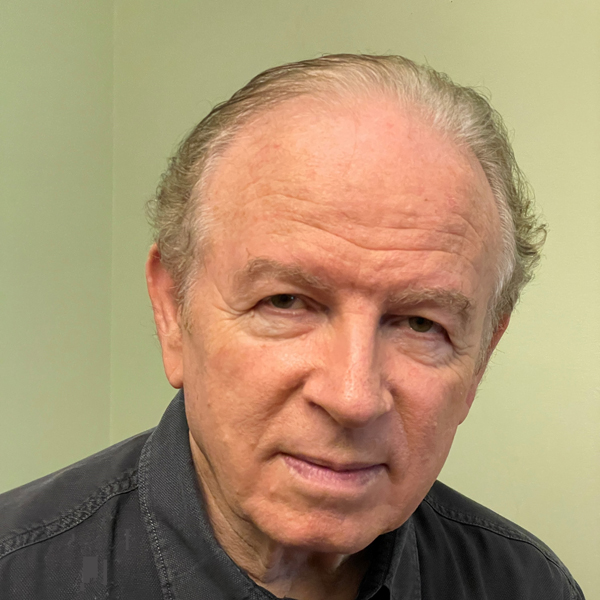
Eitan Tadmor is a Distinguished University Professor at the Department of Mathematics and Institute for Physical Science & Technology at the University of Maryland. He holds the 2024 Chaire d'excellence at Sorbonne University's Fondation Sciences Mathématiques de Paris, and has served as Director of multiple research centers including the Center for Scientific Computation and Mathematical Modeling (2002-2016) and The Sackler Institute of Scientific Computation (1993-1996). Current: University of Maryland (2005-present) Previous: UCLA (1995-2002), Tel-Aviv University (1989-1995), CalTech (1980-1982) His research spans nonlinear conservation laws , entropy-stable schemes , collective dynamics , spectral methods , and multiscale modeling . He pioneered the spectral viscosity method and developed stability criteria for numerical schemes. Recent publications focus on swarm-based optimization , Euler-Poisson equations , and hydrodynamic alignment with over 15000 citations. His work on kinetic formulations and regularizing effects in PDEs has become foundational in computational mathematics. 2022 Norbert Wiener Prize (AMS-SIAM) 2022 Gibbs Lecturer (AMS) 2015 Peter Henrici Prize (SIAM-ETH) 2013-2021 Fellow of AMS/SIAM NSF grants (1999, 2008-2012, 2012-2020) He developed CentPack software for hyperbolic conservation laws and co-authored influential review papers on numerical methods and mathematical modeling. His collaborative work with institutions like IPAM, KI-Net, and ETH-ITS demonstrates international scientific leadership.
Dr. Quirin Thomas Simon Vogel is a Senior Lecturer at the Department of Statistics, University of Klagenfurt. He previously held postdoctoral positions at the Technical University of Munich, New York University Shanghai, and served as an Interim Professor at Ludwig-Maximilians University of Munich. His research bridges probability theory with statistical mechanics and algorithmic applications. Current role: Senior Lecturer (2025) Previous roles: Postdoc (TUM, NYU Shanghai), Interim Professor (LMU Munich) His research focuses on: Random walks and their geometric/stochastic properties Randomized algorithms with applications in statistical models Quantum-inspired probabilistic systems (e.g. interacting bosonic loop soups) Large deviation theory for complex systems Percolation and phase transitions in particle models The articles reflect trends in probability theory, mathematical physics, and algorithmic applications. Key topics include high-dimensional percolation, Bose gas models, neural network theory, and stochastic geometry. The work combines rigorous mathematical analysis with interdisciplinary applications in physics and computer science. Scientific awards and functions cannot be determined from the provided data, as they describe other researchers. The department's research activities include projects on statistical learning, quantum models, and algorithmic probability, though Vogel's direct involvement in these specific funded projects isn't explicitly stated.
Martin Ringbauer is an Associate Professor at the Department of Experimental Physics , University of Innsbruck . His research focuses on advancing quantum computing and quantum simulation through innovative applications of trapped ion qudits and high-dimensional quantum systems . Affiliation: Department of Experimental Physics, University of Innsbruck Research Areas: Lattice gauge theories, symmetry-protected topological phases, quantum verification protocols, and fidelity estimation Key Contributions: Development of qudit-based quantum processors for simulating complex physics, experimental demonstrations of quantum error correction and joint measurements His recent publications highlight advancements in quantum simulation (lattice gauge theories, Haldane phases), quantum verification (fidelity estimation, classical validation), and qudit engineering (mixed-dimensional frameworks, entanglement optimization). These works leverage trapped ion technology as a platform for scalable and precise quantum operations.
Edgar Weippl is a Professor at the Faculty of Computer Science, University of Vienna, where he serves as Vice Dean and Head of the Research Group Security and Privacy. His work spans cybersecurity, blockchain, and machine learning, with teaching roles in information security and software security courses. Current Positions: Vice Dean (Faculty of Computer Science), Head (Security and Privacy Research Group), Deputy Head (Neuroinformatics & Knowledge Engineering Groups) Research Interests: Cybersecurity, blockchain, IoT security, code obfuscation, privacy technologies, reinforcement learning, and socio-technical systems security Selected Publications: Focus on blockchain privacy, VoWiFi security, code obfuscation, and reinforcement learning applications
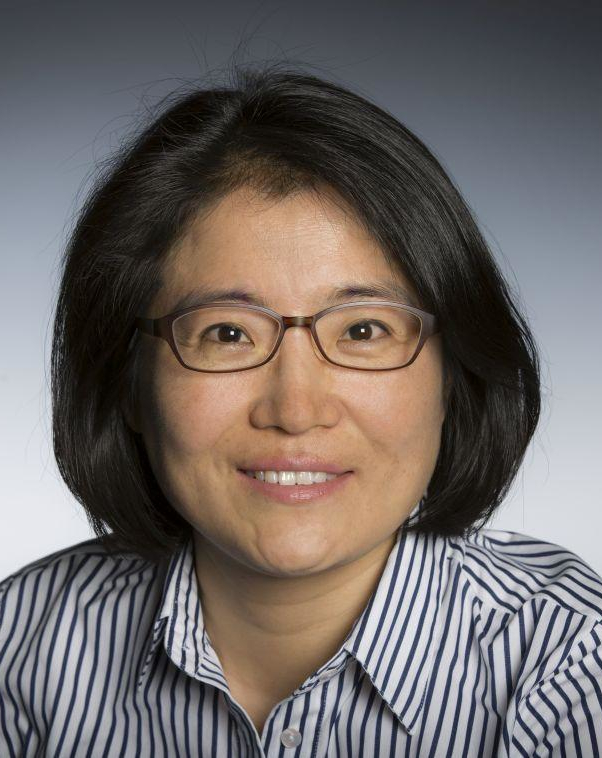
Mihyun Kang is a Professor in the Institute of Discrete Mathematics at Graz University of Technology (TU Graz), leading the Combinatorics Group. She holds significant academic positions and has been recognized with a Heisenberg Fellowship (German Research Foundation) and a Friedrich Wilhelm Bessel Research Award (Alexander von Humboldt Foundation). Her research focuses on combinatorics, discrete probability, and algorithms, with a specialization in random graph theory. She contributes to editorial boards, including Random Structures & Algorithms . Her research interests emphasize high-dimensional graphs, percolation processes, and structural properties of random graphs. She explores topics such as phase transitions, graph enumeration, and algorithmic applications in combinatorial problems. Her work bridges theoretical foundations with practical applications in algorithm design and probabilistic modeling. Dr. Kang’s scientific achievements include pioneering studies on hypergraphs, bootstrap percolation, and the evolution of random graph processes. Her recent publications highlight advancements in understanding graph components, connectivity thresholds, and universality phenomena in random structures. She collaborates widely, contributing to conferences and international initiatives like the SFB “Discrete random structures: enumeration and scaling limits.” Her professional activities include advising doctoral students and supervising research projects at TU Graz. She leads the Combinatorics Group, which hosts the Graz Combinatorics Seminar and actively engages in academic outreach. Her contributions extend to textbook authorship, including Diskrete Mathematik für die Informatik , and she maintains an active presence in discrete mathematics education and research.
Zhang Yi-Cheng is a Full Professor of Theoretical Physics at the University of Fribourg, Switzerland, since 1992. His academic career includes visiting professorships at Nordita (Denmark) and INFN (Italy), and postdoctoral research at Brookhaven National Lab (USA). He specializes in interdisciplinary fields such as Econophysics , Statistical physics , and Complex network sciences , focusing on applications in financial markets, social systems, and global trade networks. His research explores topics like market dynamics, network structures, and algorithmic ranking systems. Notable awards include the 2011 Honorary Director of the Complexity Sciences Research Center and recognition as a 2011 Chinese '1000 Talents' awardee . His work bridges physics-based methodologies with socio-economic systems, addressing challenges in information-driven economies and networked societies. Zhang has contributed to influential studies on ranking algorithms, percolation theory in networks, and the interplay between economic complexity and trade. His interdisciplinary approach has led to advancements in understanding systemic risks, market inefficiencies, and the role of information in shaping global economic interactions.
Prof. Martin van den Bent is a Professor of Neuro-Oncology at Erasmus University Rotterdam since 2006. He leads the Neuro-Oncology Unit at Erasmus MC Cancer Center and has held key roles in organizations like the EORTC Brain Tumor Group and the European Association of NeuroOncology (EANO). His expertise spans clinical trials, molecular biology of brain tumors, and glioma research. He has organized major conferences, including the EORTC-EANO-ESMO Trends in CNS Malignancies and the 2023 EANO Congress. Joined Erasmus MC Neuro-Oncology Unit in 1992 Chaired EORTC Brain Tumor Group (2003–2009) Served on EANO and ASCO committees His research focuses on chemotherapy for brain tumors, neurological complications, and clinical trial design. He has received multiple awards, including the Society for Neuro-Oncology’s Excellence in Clinical Research and the European CanCer Clinical Research Award. Prof. van den Bent has led numerous international trials, contributed to glioma treatment standards, and authored influential manuscripts in neuro-oncology. He collaborates with the Response Assessment in Neuro-Oncology (RANO) group to refine diagnostic criteria.
Philipp Schindler serves as an Assistant Professor in the Department of Experimental Physics at the University of Innsbruck, Austria. His research is centered on experimental quantum computing using trapped ion systems, with a focus on advancing quantum error correction and scalable quantum processor architectures. Dr. Schindler's primary research interests include quantum error correction, fault-tolerant quantum computing, quantum simulation, and the development of trapped ion quantum hardware. His work bridges theoretical concepts with experimental implementations, contributing to the realization of practical quantum computers through innovations in ion trap design, qudit-based processing, and verification protocols. Key methodologies involve precision control of molecular ions and multiqubit operations within cryogenic environments. Analysis of his recent publications (2022-2025) reveals a consistent emphasis on experimental demonstrations of quantum error correction, novel ion trap architectures, and the use of qudits for enhanced quantum processing. Key themes include fault-tolerant operations, two-dimensional connectivity for scalability, and verification protocols for quantum computations. His research shows increasing focus on molecular ion systems and cross-verification techniques for quantum hardware validation. No scientific awards were mentioned in the provided information. Details regarding his students and research grants are not available in the given text. Dr. Schindler operates within the quantum computing research group at the Department of Experimental Physics, utilizing specialized facilities including cryogenic setups and microfabricated ion traps at Technikerstraße 25 in Innsbruck.
Brian Horsak is a Privatdozent (equivalent to Associate Professor) at the University of Vienna, affiliated with the Department of Sport and Human Movement Science within the Faculty of Sports Sciences. He serves as a member of the PI Panel/Supervisors for the Sport Science program at the Vienna Doctoral School of Pharmaceutical, Nutritional and Sport Sciences (VDS PhaNuSpo). His research group is located at the St. Pölten University of Applied Sciences with strong collaboration to the Centre for Sport Science and University Sports at the University of Vienna. Dr. Horsak's primary research interests focus on clinical (gait) biomechanics and interdisciplinary approaches between therapy and technology. His work is dedicated to understanding musculoskeletal loading of the lower extremities during locomotion and exercise, and developing assistive technologies such as machine learning algorithms and virtual reality applications to support patients and therapists during rehabilitation. Specific areas include: Clinical gait analysis and biomechanics Musculoskeletal loading in lower extremities Patellofemoral instability and joint biomechanics Machine learning applications for gait classification Virtual reality for rehabilitation Biomechanics of obesity and pediatric movement disorders 3D motion capture and markerless technology His recent publications demonstrate a strong trend toward integrating advanced computational methods with clinical biomechanics. Over the past five years, his work has increasingly focused on smartphone-based motion capture systems, deep learning applications for gait analysis, and virtual reality environments. His research bridges engineering technology and clinical rehabilitation, with particular attention to knee biomechanics, patellofemoral disorders, and movement analysis in pediatric obesity. Dr. Horsak teaches courses including 'Methods and Concepts of Biomechanics and Sports Informatics' and serves as supervisor for PhD students Bernhard Dumphart and Mark Simonlehner. His research group maintains strong collaborations with the St. Pölten University of Applied Sciences and appears to be involved in multiple interdisciplinary projects combining sports science, engineering, and clinical rehabilitation.
Mathias Beiglböck is a full Professor at the Department of Mathematics within the Faculty of Mathematics at the University of Vienna. His research spans multiple areas of mathematical analysis with a strong focus on probability theory and its applications to finance and other fields. With over 60 publications spanning from 2009 to 2024, Beiglböck has established himself as a leading researcher in his field. Beiglböck's primary research interests center around optimal transport theory, martingale theory, and their applications to mathematical finance. His work explores the deep connections between probability theory and financial mathematics, particularly in areas such as option pricing, risk management, and stochastic processes. His research also extends to epidemiological modeling, as evidenced by his contributions to SARS-CoV-2 research during the pandemic. Analysis of his recent publications (2022-2024) reveals a strong focus on advancing the theoretical foundations of optimal transport and martingale theory while finding novel applications in finance and data science. His work often bridges pure mathematical theory with practical applications, particularly in financial modeling and risk assessment. The high citation counts across his publications (some exceeding 100 citations) indicate significant impact in his field. Beiglböck has collaborated extensively with researchers across Europe, particularly with scholars from France, Austria, and the UK. His work on the COVID-19 pandemic demonstrates his ability to apply mathematical expertise to pressing real-world problems, contributing to public health policy through rigorous quantitative analysis.
Martin Steinberger is an Associate Professor at the Institute of Control and Automation (IRT) at Graz University of Technology (TU Graz). His work focuses on advanced control systems, networked control, model predictive control (MPC), and automation in manufacturing and autonomous systems. He leads research into real-time optimization, fault diagnosis, and safety-critical applications in industries like pharmaceuticals and automotive. Research interests include: Networked Control Systems Model-Based Control Autonomous Vehicle Trajectory Planning Process Automation Robotics and Industrial Automation His work bridges theoretical control engineering with practical applications in manufacturing lines, chemical processes, and autonomous driving. Recent studies emphasize digital real-time release testing for pharmaceuticals, universal control concepts for manufacturing systems, and safety-aware trajectory optimization for automated vehicles. His publications frequently address challenges in time-varying delays, packet loss mitigation, and robust observer design for nonlinear systems. Steinberger collaborates on EU-funded projects and regularly contributes to conferences like the International Workshop on Variable Structure Systems. His research often involves experimental validation, as seen in work with compact pharmaceutical manufacturing setups and small-scale autonomous vehicle testing platforms.
Samuli Ripatti is a Professor of Biometry in the Department of Public Health at the University of Helsinki's Faculty of Medicine. He serves as Director of the Institute for Molecular Medicine Finland (FIMM) since 2023 and leads the Academy of Finland's Center of Excellence in Complex Disease Genetics. His research integrates genetics, statistics, and clinical medicine to advance understanding of cardiometabolic diseases and genomic risk prediction. Education: Statistics major, University of Helsinki PhD in Mathematical Statistics, Stockholm University (2002) Docent in Statistics, University of Helsinki (2007) Research interests focus on cardiometabolic diseases, polygenic risk scores (PRS), and genetic epidemiology. He has pioneered PRS for disease prevention and developed clinical risk algorithms, with applications in precision medicine and global health initiatives. Recent publications highlight trends in polygenic risk modeling across diverse diseases, lipidomics, sleep disorders, and trauma outcomes. His work spans genomics, bioinformatics, and translational medicine. Scientific awards: Knight, First Class, of the Order of the White Rose of Finland (2021) Highly Cited Researcher (2018, 2017, 2016) Ripatti chairs doctoral programs in life sciences and the EU-funded INTERVENE project, which develops genomic risk prediction methods. He has led research groups at FIMM-EMBL, the Broad Institute, and the Wellcome Trust Sanger Institute. As Director of FIMM and member of scientific advisory boards (e.g., NMRC Singapore, EXCEED), he shapes global genomic research collaborations and biobank infrastructure.
Michael Krivelevich is a Full Professor at the School of Mathematical Sciences, Tel Aviv University, holding this position since 2005. He previously served as Associate Professor (2002-2005) and Senior Lecturer (1999-2002) at the same institution. From 2015 to 2020, he acted as Dean of the Faculty of Exact Sciences at Tel Aviv University. Research Interests: Probabilistic and extremal combinatorics Random structures Applications of combinatorics to computer science Scientific Contributions: Authored two books: Positional Games (2014) and Random Graphs, Geometry and Asymptotic Structure (2016) Published over 200 research papers in combinatorics and related fields Editor-in-Chief of the Journal of Combinatorial Theory Series B (JCTB) Recognitions: Clay Lecturer (2019) Fellow of the American Mathematical Society (2017) Invited Speaker at ICM (2014) Pazy Memorial Award (2007) Academic Leadership: Dean of Faculty of Exact Sciences (2015-2020) Supervised 9 PhD and 16 MSc students at Tel Aviv University