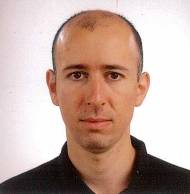
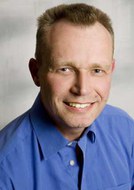
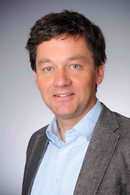
László Kozma is an Assistant Professor at the Theoretical Computer Science group of the Institute of Computer Science (Freie Universität Berlin). He obtained his PhD from Saarland University under Raimund Seidel, followed by postdoctoral positions at Tel Aviv University and TU Eindhoven. His research focuses on self-adjusting data structures , adaptive algorithms , and combinatorial optimization with applications to problems like the Traveling Salesman Problem, binary search trees, and geometric data structures. Academic Affiliation: Freie Universität Berlin (since 2018) Education: PhD in Computer Science (Saarland University, 2016); postdoc at Tel Aviv University and TU Eindhoven. His work explores the intersection of data structures, combinatorial algorithms, and geometric methods. He has made significant contributions to problems involving pattern-avoidance in inputs, saddlepoint detection , and self-adjusting heaps . Key areas include: Adaptive algorithms for pattern-avoiding inputs Optimal tree and heap structures Geometric and stochastic approaches to optimization Complexity analysis of classical algorithms Recent publications highlight efficient solutions for exponential cut problems (ESA 2025), balanced TSP partitioning (EuroCG 2025), and randomized saddlepoint algorithms (ESA 2024). His research often bridges theory and practice, exemplified by the smooth heap implementation and fun projects like Recursi and Cuckoo Hashing visualization.
Wolfgang Merkle is a Privatdozent at Universität Heidelberg's Institut für Informatik, affiliated with the Faculty of Mathematics and Computer Science. His research focuses on Theoretical Computer Science and Discrete Mathematics, particularly randomized algorithms and Kolmogorov complexity. He teaches courses including 'Randomized Algorithms' and seminars on Kolmogorov complexity for Bachelor and Master programs. Research interests span algorithmic randomness, computational complexity, and information theory, with significant contributions to understanding computability limits and the foundations of theoretical computer science. His recent publications explore the interplay between randomness and computational efficiency, with works examining superspeedability, relativized depth, and information distance theories.
Pramita Bagchi is an Assistant Professor in the Department of Biostatistics & Bioinformatics at The George Washington University (GWU), affiliated with the Milken School of Public Health. She holds a Ph.D. in Statistics from the University of Michigan and completed a postdoctoral fellowship at Ruhr Universitat Bochum in Germany. Her research focuses on developing statistical methodologies for analyzing dependent data, particularly in high-dimensional and functional contexts such as time series, spatial data, and functional observations. Education: Ph.D. in Statistics, University of Michigan, Ann Arbor Postdoctoral Research, Department of Mathematics, Ruhr Universitat Bochum Research Interests: Functional Data Analysis Spatiotemporal Modeling High-Dimensional Data Non-Parametric Inference Healthcare Applications Methodological Development for Biomedical Data Publications span statistical theory (e.g., functional time series analysis) and applied health research (e.g., heart transplant biomarkers, acculturation effects in immigrant health). Recent work emphasizes methodological innovations for complex data structures, blending theoretical rigor with real-world applications in cardiology and epidemiology. Grants & Collaborations: NSF Grant: "Empirical Frequency Band Analysis for Functional Time Series" (2022–2025) INOVA Hospital Grant: "Clinical Data Analytics in Cardiac Transplantation" (2020–2023) Teaching includes advanced courses like Mathematical Statistics I (STAT 872), reflecting her expertise in statistical theory and methodology.
Lionel Truquet is a Lecturer-Researcher in Statistics and Director of Research at ENSAI (École Nationale de la Statistique et de l'Analyse de l'Information). His research focuses on advanced statistical methodologies, including time series analysis, Markov chains, and ecological data modeling. He has contributed to multivariate autoregressive binary models, compact space time series models, and nonstationary count processes. Research Interests: His work emphasizes statistical theory applied to dependent data, with a strong focus on ecological applications. Key areas include ergodic properties of Markov chains, mixing properties of time series, and modeling presence-absence data. His methods address challenges in high-dimensional and nonstationary environments. Publications: Recent work includes influential contributions such as the TJALLING C. KOOPMANS ECONOMETRIC THEORY PRIZE-winning paper on iterations of dependent random maps. His publications span top journals like Bernoulli, the Annals of Applied Probability, and the Journal of Time Series Analysis, reflecting his expertise in both theoretical and applied statistics. Teaching: He teaches advanced courses such as Asymptotic Statistics and Dependence at the M2 level, reflecting his commitment to training future statisticians in cutting-edge methodologies.
Roland Ketzmerick is a Professor of Computational Physics at Technische Universität Dresden since 2002, with a Max Planck Fellow position at the Max Planck Institute for the Physics of Complex Systems (2010–2020). He was spokesperson for the DFG Forschergruppe FOR760 on Scattering Systems with Complex Dynamics (2010–2013). His research focuses on quantum chaos in mixed systems, power-law trapping in Hamiltonian systems, Floquet systems , Hamiltonian ratchets , mesoscopic physics , fractal spectra , and Bloch electrons in magnetic fields . His work bridges classical and quantum dynamics, exploring tunneling, wavefunction statistics, and nonequilibrium phenomena. His publications demonstrate a strong emphasis on chaotic resonance states , dynamical tunneling , multifractal analysis , and quantum transport in complex systems. Recent articles (2022–2025) address dielectric cavities, ultracold atom entanglement, and 4D Hamiltonian structures. Scientific Awards : Otto-Klung-Prize (1999)
Werner Ballmann is a renowned mathematician specializing in differential geometry and geometric analysis. He served as Full Professor at the University of Bonn (1989–2016) and the University of Zürich (1987–1989). Since 2007, he has been a Scientific Member and Director of the Max Planck Institute for Mathematics (2007–2019). His research focuses on nonpositive curvature, spectral theory, and geometric structures on manifolds. Ballmann holds a Diplom (1976) and Promotion (1979) from the University of Bonn, with a Habilitation in 1984. His work includes groundbreaking studies on the geometry of manifolds, hyperbolic spaces, and orbifolds. Recent articles address spectral instability, eigenvalue analysis, and stochastic processes on geometric structures. Notable contributions include investigations into Martin boundaries, diffusion discretizations, and the interplay between geometry and spectral properties. Ballmann has authored influential textbooks such as Lectures on Kähler Manifolds (2006) and Introduction to Geometry and Topology (2018). His research bridges geometric analysis, topology, and probability, with applications in manifold theory and group actions.
Maria Axenovich is a Professor at the Department of Mathematics , Karlsruhe Institute of Technology (KIT). Her research focuses on graph theory and combinatorics , emphasizing unavoidable structures in graphs, Ramsey-type problems, Turán densities, and extremal graph theory. Education : Undergraduate in Novosibirsk, Russia; Ph.D. at the University of Illinois at Urbana-Champaign under Zoltan Füredi. Positions : Previously at Iowa State University; since 2012 at KIT. Editorial Roles : Editor-in-Chief of the Electronic Journal of Combinatorics (2020–present); Associate Editor of Order (2016–present). Recent Research Trends : Her 2023–2025 publications address hypercubes , poset Ramsey numbers , interval colorings , extremal subgraphs , and canonical Ramsey theorems . Collaborations span institutions in the US, UK, Hungary, and Germany. Students and Collaborations : Supervises Ph.D., Master’s, and Bachelor students. Current advisees include Dingyuan Liu , Christian Winter , and Lea Weber . Former students like Jonathan Rollin and Torsten Ueckerdt have contributed to extremal graph theory and hypergraphs. Courses : Teaches Linear Algebra , Combinatorics , and Graph Theory at KIT. Leads seminars on Extremal Set Theory and Discrete Mathematics .
Dr. Axel Lubk is a Group Leader at the Institute for Solid State Research (IFW Dresden) , specializing in advanced electron microscopy techniques for materials science. His research spans four key areas: (1) TEM method development (high-resolution imaging, tomography, holography, and in-situ techniques), (2) charge particle optics and scattering theory , (3) magnetic nanotextures (domain walls, skyrmions), and (4) plasmonics (mode hybridization in heterogeneous structures and semiconductor heterostructures). Dr. Lubk’s work focuses on three-dimensional magnetic texture analysis using electron holography and tomography, particularly in systems like skyrmion tubes , FeGe , and Cr2O3 thin films . He has pioneered techniques for vector-field electron tomography and phase retrieval under varying boundary conditions, advancing nanoscale magnetic imaging. His recent studies include plasmonic properties in AgAu nanosphere chains , thermoelectric multilayer systems , and topological insulators like NiRh2Sb and TaTMTe4 . Dr. Lubk has published extensively in high-impact journals such as Nature Communications and Advanced Materials , with a focus on TEM instrumentation and quantitative analysis . He frequently presents at international conferences like the International Microscopy Congress and European School of Magnetism , emphasizing applications in spintronics , quantum materials , and nanostructured systems . His contributions to holographic vector-field electron tomography and machine learning for spectrum-image data have set new standards in electron microscopy.
Sebastian Hensel is a Professor of Pure Mathematics at the Mathematical Institute of Ludwig Maximilian University of Munich (LMU), where he also serves as the Dean of Studies. His research focuses on the intersection of low-dimensional topology and geometric group theory, with emphasis on mapping class groups, handlebody groups, and diffeomorphism groups of surfaces. He leads the Geometry and Topology Working Group and is actively involved in teaching advanced seminars. Hensel received his PhD from the University of Bonn in 2011 under Ursula Hamenstädt. Before joining LMU, he held positions as a Dickson Instructor at the University of Chicago and as a temporary academic councilor in Bonn. His research employs geometric methods to study algebraic structures in topological spaces, particularly surfaces and 3-manifolds. Scientific Awards: Dickson Instructor Fellowship, University of Chicago Teaching & Advising: Hensel regularly teaches courses on Riemannian geometry, geometric group theory, and manifold topology. He currently advises bachelor and master's theses in geometry/topology and organizes block seminars. As Dean of Studies, he oversees academic programs at the Mathematical Institute. Affiliations: Member of the Geometry and Topology Group at LMU, with collaborations spanning multiple institutions including TUM and international partners.
Raimund Seidel is a Professor in the Department of Computer Science at Universität des Saarlandes, leading the Chair of Theoretical Computer Science. He is actively involved in research and teaching, focusing on foundational aspects of algorithms and data structures, particularly in computational geometry. His primary research interests include theoretical computer science , design and analysis of efficient algorithms , geometric data structures , randomized algorithms , and combinatorial geometry . His work addresses fundamental problems such as planar point location, convex hull computation, and efficient encoding of triangulations. He also investigates geometric algorithms under the transdichotomous model, leveraging word-level parallelism. The selected publications reflect a long-standing contribution to computational geometry and data structure theory , with a focus on randomized methods and exact complexity analysis. His research combines theoretical rigor with practical implications for algorithm design. Award or honor not found in the provided text. Prof. Seidel has advised several students, including Alexander Malkis , Ralf Osbild , Udo Adamy , Christian Sohler , and others, many of whom have gone on to academic and research careers. No explicit information about grants or funding is available in the text. He leads a research group within the Department of Computer Science at Universität des Saarlandes, mentoring current staff such as László Kozma , Giorgi Nadiradze , and Lavinia Dinu . The group maintains active research in theoretical computer science and computational geometry.
Michael Nothnagel is a Professor at the University of Cologne, where he leads the Department of Statistical Genetics and Bioinformatics within the Cologne Center for Genomics (CCG). His work spans statistical genetics, genetic epidemiology, and forensic genetics, focusing on methodological development and large-scale genomic data analysis. His research interests encompass theoretical and applied statistical genetics, with emphasis on human genetic diversity, disease etiology, and forensic applications. Key areas include Y-chromosomal phylogeography, genome-wide association studies for complex diseases, development of statistical methods for variant interpretation, and forensic marker optimization. His group leverages next-generation sequencing data and specialized forensic markers to address questions in population history, disease mechanisms, and identification systems. Recent publications reveal a strong focus on computational approaches to genetic analysis, including spatial frequency interpolation for haplogroup mapping, polygenic risk score applications for behavioral traits, and advanced methods for variant classification. His work demonstrates consistent integration of statistical theory with practical applications in medical and forensic genetics, often through international collaborations like the VISAGE Consortium. Nothnagel maintains active involvement in the Cologne Center for Genomics, contributing to seminars and collaborative projects including the upcoming 34th International Genetic Epidemiology Society meeting. His research group operates at the intersection of computational biology and medicine, with particular strengths in handling complex genomic datasets and developing novel analytical frameworks for genetic epidemiology.
Ulrich Meyer is a Professor at the Institute for Computer Science at Goethe University Frankfurt. He serves as a prominent researcher in algorithms for big data, with extensive contributions to parallel and external-memory graph algorithms. His work spans theoretical foundations and practical implementations for processing large-scale data sets. Spokesperson of the DFG priority program (SPP 1736) on Algorithms for Big Data in Germany SEA23 Symposium on Experimental Algorithms, Steering Committee Chair ALENEX23 Algorithm Engineering and Experiments, Program Committee Member Professor Meyer's research interests focus on the theoretical and experimental aspects of processing large data sets on advanced computational models. His work particularly emphasizes parallel and external-memory graph algorithms, with recent focus on efficient large-scale network generation according to various stochastic models. His research has produced significant contributions including the parallel Delta-Stepping algorithm (which received the ESA Test of Time Award in 2019) and the first BFS approach with sublinear I/O. He has also explored more specialized topics like energy-efficient sorting (with records in the JouleSort competition 2009/10 and the Germany Land of Ideas Award) and fragile computing (which earned him a best-paper award at ESA 2019). His recent publications demonstrate a strong focus on graph algorithms, network generation, and parallel computing techniques. The research trends show consistent advancement in scalable algorithms for massive graphs, with particular emphasis on efficient sampling methods, shortcutting techniques, and communication-free distributed approaches. His work bridges theoretical computer science with practical engineering considerations for real-world big data applications. ESA Test of Time Award 2019 for Parallel Delta-Stepping algorithm Records in the JouleSort competition 2009/10 Germany Land of Ideas Award Best-paper award at ESA 2019 for fragile computing research Professor Meyer has made substantial contributions to the academic community through his leadership in the DFG priority program on Algorithms for Big Data, which has fostered significant research collaborations across Germany. His extensive publication record in top venues demonstrates sustained research productivity and impact in the algorithms community. While specific grant details aren't provided in the text, his role as spokesperson for a major DFG priority program indicates substantial research funding and leadership responsibilities. His work appears to be conducted within collaborative research environments focused on algorithm engineering and experimental evaluation. His research appears to be conducted within the Institute for Computer Science at Goethe University Frankfurt, likely involving collaborations with other researchers in the Algorithms for Big Data priority program. The extensive list of co-authored publications suggests active participation in research teams focused on parallel algorithms, graph processing, and network generation.
Dennis C. Sgroi, MD, is Professor of Pathology at Harvard Medical School and Executive Vice-Chair of Pathology at Massachusetts General Hospital (MGH), where he also serves as Director of Breast Pathology. He leads the Sgroi Laboratory within the Molecular Pathology Unit and the Krantz Family Center for Cancer Research at MGH. Education & Training: MD, University of Connecticut School of Medicine Residency, Massachusetts General Hospital Fellowship, Massachusetts General Hospital Board certified: Anatomic & General Pathology, American Board of Pathology Research Focus: Dr. Sgroi’s laboratory integrates multi-omics technologies to discover and validate molecular biomarkers that predict breast-cancer recurrence and therapeutic response. Core projects include the clinically-adopted Breast Cancer Index (BCI) assay (HOXB13/IL17RB), deciphering HOXB13-mediated tumor-microenvironment remodeling in ER-positive and triple-negative breast cancer, and developing combinatorial therapies targeting HOXB13/ERBB2 co-amplified tumors with BRCA1 loss. Clinical Impact & Guidelines: The BCI biomarker has been prospectively validated in multiple randomized trials (NSABP-B-42, Trans-aTTom) and is now incorporated into NCCN and ASCO treatment guidelines for extended adjuvant endocrine therapy in post-menopausal women with ER-positive breast cancer. Scientific Awards & Honors: While individual awards are not enumerated in the supplied text, the sustained funding of ~ $19 million in annual direct research costs attests to national peer-review recognition. Research Team & Collaborations: The Sgroi Lab includes post-doctoral fellows, graduate researchers, and staff scientists such as Marinko Sremac, PhD. Collaborative networks span Dana-Farber/Harvard Cancer Center Breast Cancer and Cancer Genetics Programs, NRG Oncology, and international genomic consortia.
Prof. Sebastian Hensel is a Professor of Pure Mathematics at Ludwig Maximilian University of Munich (LMU), serving as Dean of Studies at the Mathematical Institute. His research focuses on low-dimensional topology, geometric group theory, and their interplay with mapping class groups, handlebody groups, and diffeomorphism groups of surfaces. He holds a PhD from the University of Bonn (2011) and has held positions at the University of Chicago as a Dickson Instructor and in Bonn before joining LMU. Research interests include algebraic and geometric properties of mapping class groups, handlebody groups, and their actions on geometric spaces. Recent work explores applications of geometric group theory to surface diffeomorphism groups. Preprints and publications span topics like thick laminations, curve graphs, and handlebody group rigidity. Teaching responsibilities include courses on geometric group theory, Riemannian geometry, and topology. He co-organizes advanced seminars such as the Geometry and Dynamics of Homeomorphisms and Representation Theory block seminars. His work also extends to pedagogical projects, including a textbook on representation theory for students and translations of foundational papers like Hilbert's ninth-degree equation. Current sabbatical (Winter 2024/25) involves collaboration on seminars while maintaining research output. The Geometry and Topology Working Group at LMU is central to his academic activities.
Simone Kühn serves as Director of the Research Center for Environmental Neuroscience at the Max Planck Institute for Human Development in Berlin and holds the position of Heisenberg Professor at the University Medical Center Hamburg-Eppendorf since 2016. Previously, she led the Lise Meitner Group for Environmental Neuroscience at the Max Planck Institute (2019-2024) and currently directs the Psychiatric Environmental Neuroscience (PEN) working group, a collaboration between the MPIB and Charité-Universitätsmedizin Berlin since 2025. Her academic credentials include a Dipl.-psych from the University of Potsdam (2006), Dr. rer. nat. from the University of Leipzig (2009), and Habilitation in Psychology from Humboldt-Universität zu Berlin (2012). These qualifications established her expertise in the neural mechanisms underlying human-environment interactions. Dr. Kühn's pioneering research examines how natural versus built environments impact mental health, cognitive processes, and neural structures across the lifespan. Her work integrates environmental psychology, neuroscience, and clinical psychiatry to investigate how exposure to different environments shapes brain function and psychological well-being. She employs advanced methodologies including structural and functional MRI, virtual reality environments, and longitudinal study designs to uncover the neural pathways connecting physical environments to mental health outcomes. Her research has demonstrated that natural environments can reduce stress, enhance cognitive restoration, and positively influence brain structure, particularly in regions associated with emotion regulation and memory. Analysis of her extensive publication record reveals a consistent trajectory toward increasingly sophisticated investigations of environmental influences on the brain. Her recent work has expanded into virtual reality applications for mental health treatment, the neural mechanisms of architectural design preferences, and the impact of air pollution on brain health. She has pioneered experimental approaches to study environmental effects through controlled exposure studies, including the development of virtual nature environments that can be precisely manipulated to isolate specific environmental features. Her scientific contributions have been recognized through prestigious appointments: Election to the German National Academy of Sciences Leopoldina Membership in the DFG-Network WAS (Wirkungsforschung in Architektur und Städtebau) Service on the Psychology Review Board of the German Research Foundation (DFG) Fellowship at the German Institute for Economic Research (DIW) Early recognition through admittance to Studienstiftung des deutschen Volkes (2005) Dr. Kühn has mentored numerous doctoral and master's students whose theses explore diverse aspects of environmental neuroscience, from the impact of natural environments on stress physiology to the neural correlates of architectural preferences. Her research has been supported by substantial funding that has enabled large-scale investigations of environmental influences on brain health across different age groups and populations, including vulnerable individuals with mental health conditions. As leader of the Center for Environmental Neuroscience, she directs a multidisciplinary team of researchers who employ cutting-edge methodologies to investigate how environmental factors shape brain development, function, and mental health. The center's work has significant implications for evidence-based urban planning, therapeutic interventions using nature exposure, and understanding the neural basis of human-environment interactions in an increasingly urbanized world.