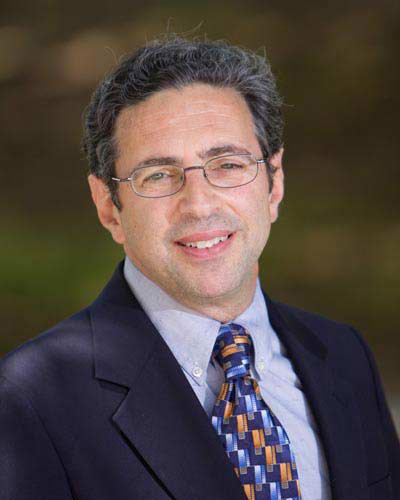
David ZuckermanView profile
Professor
David Zuckerman is a prominent theoretical computer scientist known for his foundational contributions to computational complexity, pseudorandomness, and randomness extraction. His research spans over two decades, with consistent publication in top-tier venues under the Electronic Colloquium on Computational Complexity (ECCC). Although his current institutional affiliation is not specified in the text, his work is widely recognized and frequently collaborative with leading figures in the field. His research interests include: Randomness extraction and derandomization Computational complexity and circuit lower bounds Pseudorandom generators and hitting set constructions Error-correcting codes and combinatorial constructions Communication complexity and Boolean function analysis Applications in cryptography and distributed protocols Analysis of his recent publications reveals a sustained focus on improving the efficiency and scope of randomness extractors, especially for weak or structured sources such as Chor-Goldreich sources, interleaved sources, and algebraic sources. His work often bridges hardness and randomness, leveraging lower bounds to construct pseudorandom objects. A recurring theme is the derandomization of space-bounded and distributed computation, with implications for cryptography and coding theory. David Zuckerman has received significant recognition in the theoretical computer science community, though specific awards are not listed in the provided text. His collaborations with researchers like Salil Vadhan, Raghu Meka, and Eshan Chattopadhyay suggest leadership in major research initiatives. He has also contributed to foundational results in derandomization, such as optimal pseudorandomness from hardness assumptions and improved bounds for coin-flipping protocols. There is no mention of advising students or managing labs in the provided data, but his long-standing research output and mentorship through collaboration imply an academic leadership role. His continued publication into 2025 indicates active engagement in research.