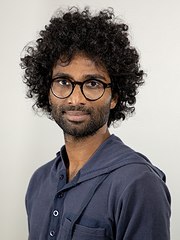
Karthik C. S. is an Assistant Professor in the Department of Computer Science at Rutgers University, specializing in complexity theory, discrete geometry, and parameterized complexity. He is supported by the NSF CAREER Award Simons Foundation Junior Faculty Fellowship National Science Foundation grants . His research explores hardness of approximation, fine-grained complexity, and algorithm design in metric spaces.
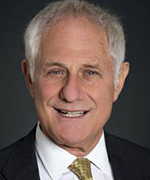
Prof. Vladimir Kolmogorov is a faculty member at the Institute of Science and Technology Austria (IST Austria), specializing in discrete optimization and algorithm design. He holds a Ph.D. in Computer Science from Cornell University and has held positions at Microsoft Research and University College London. His research focuses on combinatorial optimization, MAP inference in graphical models, and applications in computer vision. Educations: M.S. in Applied Mathematics and Physics, Moscow Institute of Physics and Technology Ph.D. in Computer Science, Cornell University Research Interests: Dr. Kolmogorov's work spans algorithmic optimization, including complexity analysis of constraint satisfaction problems, graph algorithms, and machine learning applications. His contributions include foundational work on graph cuts for computer vision and the development of efficient optimization methods for discrete problems. Publications: His recent work includes advancements in parallel algorithms for Gibbs distributions, semidefinite programming, and combinatorial optimization. These contributions highlight his expertise in bridging theoretical computer science with practical applications. Awards: Royal Academy of Engineering/EPSRC Research Fellowship (2006–2011) ERC Consolidator Grant (2014–2020) Best Paper Award at ECCV 2002 Outstanding Student Paper Award (NIPS 2007) Best Paper Honorable Mention (CVPR 2005) Advising and Grants: He has advised multiple PhD students and leads a research team at IST Austria. His grants include significant funding for exploring optimization in machine learning and discrete systems. Labs/Teams: His lab focuses on theoretical and applied discrete optimization, collaborating with institutions globally. Current projects include developing faster algorithms for graph problems and advancing Gibbs distribution analysis.
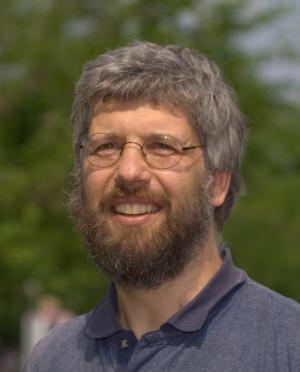
Tom Hutchcroft is a Professor of Mathematics at the California Institute of Technology (Caltech), affiliated with the Division of Physics, Mathematics, and Astronomy. He specializes in probability theory, particularly percolation theory, focusing on phase transitions in non-Euclidean geometries and fractal structures. In 2024, he was awarded the prestigious Packard Fellowship for Science and Engineering, providing $875,000 over five years to support his research. His work includes groundbreaking contributions such as proving the existence of two phase transitions in negatively curved spaces and solving Schramm's locality conjecture with graduate student Philip Easo. Education Bachelor's degree in Mathematics, University of Cambridge (2013) PhD in Mathematics, University of British Columbia (2017) Postdoctoral Fellowships at the University of Cambridge (2017–2021) Research Interests Hutchcroft explores percolation dynamics in complex systems, including phase transitions, long-range percolation, and critical phenomena. His work bridges pure mathematics and theoretical physics, addressing foundational problems like the behavior of three-dimensional percolation at criticality. He investigates how mathematical frameworks can unify seemingly unrelated physical systems. Awards 2024 Packard Fellowship for Science and Engineering Advising & Grants Hutchcroft advises graduate student Philip Easo and leverages the Packard Fellowship to pursue high-risk, high-reward projects. His research is supported by grants enabling exploration of nonamenable graphs and long-range percolation models. Labs/Teams He collaborates with Caltech's Mathematics Department and participates in interdisciplinary initiatives within the Division of Physics, Mathematics, and Astronomy, contributing to research centers like the Institute for Quantum Information and Matter (IQIM).
Hamed Hatami is an Associate Professor in the School of Computer Science at McGill University, with cross-appointment in Mathematics. His research lies at the intersection of theoretical computer science and mathematics, focusing on analytic methods in complexity theory, learning theory, analysis of Boolean functions, and additive combinatorics. Hatami received the IEEE Computer Society Technical Achievement Award in 2012 for his contributions. He has published extensively on graph theory, property testing, communication complexity, and combinatorial limits. Hatami teaches advanced courses in algorithm design, complexity theory, and analysis of Boolean functions, and mentors graduate students through research collaborations. Prior to McGill, he held positions at the Institute for Advanced Study and Princeton University.
Prof. Chinmoy Bhattacharjee is a Professor of Mathematical Stochastics at the University of Hamburg's Department of Mathematics, part of the Faculty of Mathematics, Computer Science and Natural Sciences. His research focuses on stochastic geometry, distributional approximations via Stein's method, stochastic analysis, random graphs, continuum percolation, and nonparametric inference. He holds a PhD from the University of Southern California and previously held postdoctoral positions at the University of Luxembourg and University of Bern. His work is supported by the German Research Foundation (DFG) through Project No. 531540467. Education: PhD in Applied Mathematics, University of Southern California (2013–2018) M.Stat. and B.Stat. (Hons.), Indian Statistical Institute, Kolkata (2008–2013) Teaching: Recent courses include Stochastic Processes, Probability and Statistics, and seminars on percolation theory and probabilistic methods. Research Highlights: Prof. Bhattacharjee's work bridges stochastic geometry and Stein's method, with applications in spatial random structures, non-Gaussian limit theory, and noise sensitivity in percolation models. Key contributions include Gaussian and Dickman approximation techniques, spectral analysis of Poisson functionals, and statistical applications in random forests. Upcoming Events: Co-organizing session on Spatial Stochastics at German Probability and Statistics Days (2025) Invited talks at Aarhus University and workshops in Germany/Croatia (2025)
Rafael Messias Martins is a Researcher at Linnaeus University, affiliated with the Department of Computer Science and Media Technology within the Faculty of Technology. He holds an MSc in Computer Science from the University of São Paulo and a PhD in Computer Science from the University of Groningen. His primary research focuses on Information Visualization and Visual Analytics, particularly emphasizing Multidimensional Data and Networks. He is a core member of the Information and Software Visualization (ISOVIS) research group and leads multiple ongoing and completed research projects, including InfraVis (a national research infrastructure for data visualization) and initiatives addressing medication risks and carbon mitigation in forestry. His work bridges theoretical advancements in visualization with practical applications in education, healthcare, and environmental science. Education MSc in Computer Science, University of São Paulo, Brazil PhD in Computer Science, University of Groningen, Netherlands Research Interests His research explores the intersection of visualization techniques with complex data analysis, emphasizing: Interactive visual analytics for high-dimensional data Machine learning interpretability through visualization Educational data analytics for K-12 institutions Applications in healthcare (e.g., medication risk prediction) and environmental science (e.g., carbon footprint reduction) Development of national visualization infrastructures (InfraVis) Recent Trends in Articles His recent work emphasizes: Enhancing trust in machine learning models through visual explanations Optimizing visualization tools for educational stakeholders Algorithmic fairness in urban planning simulations Scalable dimensionality reduction techniques for streaming data Grants & Collaborations He has coordinated projects such as IDEAL (interaction design curriculum development), TimberVis (3D timber structure visualization), and seed projects addressing carbon mitigation and medication risks. Collaborations span academic, industrial, and governmental partners in Sweden and internationally. Labs & Teams He leads the ISOVIS group, which develops open-source tools like SBGTool (student grouping analytics) and FeatureEnVi (feature engineering visualization). The group also contributes to InfraVis, a national platform for visualization resources.
Zvi Galil is a distinguished academic and former Dean of Computing at Georgia Institute of Technology (2010-2019). He holds the title of Storey Chair and serves as Executive Advisor for Online Programs. His academic journey includes leadership roles at Columbia University (Fu Foundation School of Engineering Dean, 1995-2007) and Tel Aviv University (President, 2007-2009). He earned degrees in Applied Mathematics from Tel Aviv University and a PhD in Computer Science from Cornell University. Galil’s research focuses on algorithms, complexity theory, cryptography, and stringology. He has authored over 200 papers and edited 5 books, with contributions to graph algorithms, parallel computing, and data structures. He is a Fellow of the ACM and American Academy of Arts and Sciences, and a member of the National Academy of Engineering. His work has influenced fields like online education through initiatives like OMSCS (Georgia Tech’s Online Master of Science in Computer Science). Educations: BS and MS (summa cum laude), Applied Mathematics, Tel Aviv University PhD, Computer Science, Cornell University His research trends span dynamic graph algorithms, real-time string processing, and scalable graph isomorphism techniques. He has also contributed to foundational areas like suffix trees and text indexing. His awards include the Columbia Great Teacher Award (2009) for pedagogical excellence. Awards: ACM Fellow Member, American Academy of Arts and Sciences Member, National Academy of Engineering Columbia Society of Graduates Great Teacher Award Galil advises on online education programs and collaborates with the Algorithms and Randomness Center (ARC) at Georgia Tech. He has held editorial roles at major journals and advised Oxford University Press on computer science publications.
Anna Ritz is an Associate Professor of Biology at Reed College, part of the Division of Mathematical and Natural Sciences. Her research integrates computational methods with biological systems, focusing on signaling pathways, cancer genomics, and network biology. She earned her B.A. from Carleton College, M.A. and Ph.D. in Computer Science from Brown University, and conducted postdoctoral work at Virginia Tech. Ritz develops algorithms for analyzing biological networks, including tools like PathLinker and GraphSpace. Her work bridges computer science and biology, emphasizing interdisciplinary education and mentoring undergraduates in computational research. She holds an NSF CAREER Award and an NCWIT Undergraduate Research Mentor Award. Ritz advises numerous students on projects spanning signaling pathway reconstruction, drug repurposing, and network topology analysis. Her lab also focuses on creating accessible tools for computational biology education and conference participation. Education: B.A., Carleton College (2006) M.A. and Ph.D., Brown University Computer Science (2008, 2012) Research Interests: Her interdisciplinary work includes computational modeling of biological systems, structural variant analysis in genomes, and network-based disease gene prediction. She explores hypergraphs to better represent signaling pathways and develops methods for drug repurposing using tensor completion (FiT). Recent projects involve undergraduate conference travel grants and tools like Graphery for teaching network algorithms. Publications and Grants: Ritz has authored over 30 peer-reviewed articles, including work on tumor evolutionary trees, differentially private ANOVA testing, and metabolic reprogramming in cancer. She leads NSF-funded projects on signaling pathway analysis and collaborates with institutions like OHSU and Virginia Tech. Her grants support undergraduate research in computational biology and systems biology. Awards and Mentoring: In addition to her NSF and NCWIT awards, Ritz’s lab hosts travel awards for ACM-BCB conference attendance and manages outreach programs for underrepresented students. She mentors postdocs (e.g., Pramesh Singh) and advises on thesis projects in computational systems biology. Labs/Teams: Ritz directs the CompBio Lab at Reed, focusing on algorithm development for biological networks and interdisciplinary collaboration. The lab emphasizes undergraduate research, with projects often leading to conference presentations and publications.
Lucas Gerin is a Lecturer-researcher at the École Polytechnique's CMAP Probability Department. His roles include co-heading the Probability Department and supervising PhD students such as Théo Lenoir and Maxime Marivain. His research focuses on random graphs, permutations, scaling limits, and probabilistic combinatorial optimization, with notable contributions to permutation patterns and graphon limits. Education: PhD in Applied Mathematics from Université Henri Poincaré (2008), Habilitation to Supervise Research from Université Paris-Sud (2018). Grants: ANR Louccoum (2025-2029). Events: Organized PC Days 2022, designed logo for Permutation Patterns 2019, participated in conferences like European Meeting of Statisticians (2015). Labs/Teams: Active in CMAP research groups focusing on probability and combinatorial structures. Research highlights include work on the Ulam-Hammersley problem, dense graph limits, and longest increasing paths in permutations. His interdisciplinary work bridges probability theory, combinatorics, and statistical physics.
Mohsen Moradi is a Postdoctoral Research Associate in the Department of Electrical and Computer Engineering at Northeastern University. His research focuses on advanced coding theory, particularly in the development of Polarization-Adjusted Convolutional (PAC) codes, forward error correction, and decoding algorithms. He explores intersections between reinforcement learning and signal processing to enhance code performance. His work emphasizes practical applications such as bounded-complexity sequential decoding, tree pruning techniques, and Monte-Carlo-based code construction. Key contributions include optimizing PAC codes through search-constrained algorithms and analyzing their performance alongside Reed-Solomon and Reed-Muller codes. Recent publications (2020–2025) highlight trends in PAC/SC/Polar code design, with a focus on computational efficiency, metric optimization, and algorithmic innovation. His research bridges theoretical insights with real-world implementation challenges in communication systems. Moradi’s explorations extend to hybrid coding systems (e.g., concatenated codes) and stochastic methods like guessing-based decoding. He collaborates with academic and industry partners to advance next-generation communication protocols requiring robust error correction at high data rates.
Prof. Dr. Ullrich Köthe is an Associate Professor and group leader in the Visual Learning Lab Heidelberg at the University of Heidelberg . He focuses on Explainable Machine Learning , leveraging Invertible Neural Networks to enhance transparency and utility in image analysis and medical applications . He also maintains the widely used VIGRA image analysis library. Education: PhD in Informatics, University of Hamburg, 2000 Habilitation in Informatics, University of Hamburg, 2008 His research interests center around machine learning , image analysis , and scientific computing , particularly the development of robust algorithms for medical imaging , computer vision , and life sciences . His work on invertible neural networks and parameter-free segmentation has led to significant advancements in the field. Recent publications highlight his contributions to Bayesian inference , neural network interpretability , and stochastic modeling , with applications ranging from disease outbreak dynamics to connectomics . Key trends include generative models , parameter-free segmentation , and likelihood-free inference . Scientific Awards: DAGM 2003 Main Prize DAGM Best Paper Award 2008 He has supervised numerous Master and Bachelor theses in machine learning and image analysis , with teaching roles in Advanced Machine Learning and Explainable AI . His collaborative research grants include funding from HARMAN International (2024). He leads the Explainable Machine Learning subgroup and has contributed to open-source software projects like ilastik and VIGRA , which are critical tools in bioimage analysis .
Detlef Plump is a Senior Lecturer in the Department of Computer Science at the University of York, UK, where he has worked since 2001. His academic journey includes roles as Assistant Professor at the University of Bremen (1993-2000), Lecturer at the University of York (2000-2001), and Research Associate at the University of Bremen (1987-1993). He holds a Dipl.-Inform degree, Dr.-Ing, and Habilitation from the University of Bremen. His research focuses on graph transformation, graph-based programming models, and rewriting systems, with contributions to theoretical computer science. He has held visiting researcher positions at Heriot-Watt University (Edinburgh), the University of Nijmegen, and the Free University of Amsterdam, accumulating over two years of collaborative research in the Netherlands. At York, he serves as ECA Officer and Programme Leader for the CS/Maths Undergraduate Programmes. His contact details include office CSE/035 and phone +44 (0)1904 325670. His work integrates formal methods with practical applications in graph computation models and algorithm design. Detlef’s contributions span graph program compilers, verification techniques, and theoretical foundations, as evidenced by his extensive publication record in venues like the Journal of Logical and Algebraic Methods in Programming. He emphasizes efficiency and correctness in graph-based systems, addressing challenges in both academia and industry.
Eric Vigoda is a Professor of Computer Science at the University of California, Santa Barbara (UCSB). Previously, he held positions at Georgia Institute of Technology, including Director of the Algorithms and Randomness Center (2016–2019). He earned his PhD in Computer Science from UC Berkeley (1999) and BS/MS from Johns Hopkins University (1994). His research focuses on Markov Chain Monte Carlo (MCMC) algorithms, phase transitions in statistical physics, and randomized algorithms for approximate counting/sampling problems. He has authored over 100 papers and has been recognized with awards such as the Fulkerson Prize (2006) and the Machtey Award (1999). Education: PhD (UC Berkeley, 1999), MS/BS (Johns Hopkins, 1994). Research interests include MCMC methods, randomized algorithms, and applications in evolutionary biology. His work bridges theoretical computer science and statistical physics, particularly in analyzing mixing times of Markov chains. Awards: American Mathematical Society Fellow (2019), Fulkerson Prize (2006), Machtey Award (1999), William A. Baird Teaching Award (Georgia Tech, 2019). Supervised 6 PhD students, including Zongchen Chen (MIT Postdoc), Andreas Galanis (Oxford), and Linji Yang (Entrepreneur). Teaching: Current courses include CS 130A (Data Structures and Graph Algorithms) and CS 190A (Randomized Algorithms). Former courses include Markov Chains in Evolutionary Biology and a MOOC on Graduate Algorithms for Georgia Tech's OMSCS program. Contributions: Organized the 2022 Summer School on 'Spectral Independence and Entropy Decay' at UCSB. Collaborated with researchers on topics like high-dimensional expanders and phase transitions in sampling algorithms.
Yannic Maus is a Professor at Graz University of Technology, affiliated with the Institute of Algorithms and Theory and the Institute of Software Engineering and Artificial Intelligence. His research focuses on distributed computing, graph algorithms, and theoretical computer science. He holds a PhD and multiple bachelor’s and master’s degrees in Computer Science. His work emphasizes distributed graph coloring, locality in algorithms, and massively parallel computing. He has contributed to foundational results in distributed algorithms, including optimal edge coloring and coloring hyperbolic random graphs. His research bridges theoretical insights with practical distributed systems challenges. Education: PhD in Natural Sciences (Dr.rer.nat.), B.Sc. and M.Sc. in Computer Science Key research interests include distributed algorithms for graphs, Lovász Local Lemma applications, and algorithmic efficiency in dynamic networks. His publications explore topics like ruling sets in trees, exponential speedups in MPC models, and adaptive coloring techniques for sparse graphs. He has also investigated the algorithmic small-world phenomenon and connectivity in forests using deterministic approaches. Yannic Maus’s work often addresses theoretical lower bounds and upper limits in distributed computing, with applications to real-world networked systems. His contributions span conferences like DISC and SoCG, focusing on both foundational problems and their algorithmic solutions.
Roles and Affiliations: Sean Cleary is a Professor of Mathematics at The City College of New York (CCNY) and a Graduate Faculty member at the CUNY Graduate Center. He serves as Assistant Chair and Major Advisor in the Department of Mathematics. His office is located in Marshak 301C, and he can be reached at scleary@ccny.cuny.edu . Education: Ph.D., Mathematics, University of California, Los Angeles A.B., Mathematics and Physics, Cornell University Research Interests: Cleary's research focuses on geometric and combinatorial group theory, spaces of trees, and algorithms for trees. He explores Thompson's groups and their properties, including rotation distances between trees and metric structures on tree spaces. His work often intersects computational mathematics and phylogenetics, with applications to algorithm design and geometric dynamics. Teaching: Recent courses include Calculus III with Vector Analysis (Math 213), Differential Geometry (Math 461/A6100), and advanced topics in group theory. He emphasizes rigorous mathematical training and pedagogical innovation, including the use of computational tools like Mathematica. Professional Contributions: Cleary is a member of the New York Group Theory Cooperative and contributes to the calculus.org editorial board. His research has been supported by collaborative efforts within the CUNY system, and he actively participates in academic service roles at CCNY.