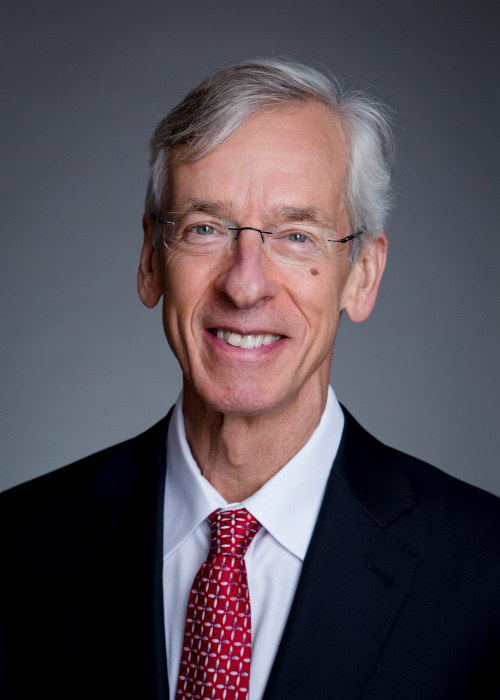
Seung-Yeop Lee is Associate Professor and Associate Chair for Graduate Affairs at the University of South Florida's Department of Mathematics & Statistics. He holds a PhD in Physics from the University of Chicago (2007) and degrees from Seoul National University. Research focuses on mathematical physics including random matrix theory, orthogonal polynomials, and complex analysis. Recent publications examine harmonic polynomials, quadrature domains, and asymptotic behavior of orthogonal polynomials.
Dr. Christopher McCarthy is a Clinical Associate Professor at Manchester School of Physiotherapy, Manchester Metropolitan University. His academic roles include clinical leadership, teaching, and research in musculoskeletal rehabilitation. He previously served as a Consultant Physiotherapist at Imperial College Healthcare NHS Trust and holds Fellowships from the MACP and Chartered Society of Physiotherapy. His research focuses on manual therapy, spinal pain mechanisms, and therapeutic exercise for osteoarthritis. He has published over 60 peer-reviewed papers and contributed to major textbooks like Grieve’s Modern Musculoskeletal Physiotherapy . His clinical expertise includes combined movement theory and the management of spinal stenosis. Education: PhD in Rehabilitation from Manchester University (2000s), postgraduate training in biomechanics and manipulative therapy at Strathclyde/Coventry Universities, and a physiotherapy qualification from 1989. Research interests span manual therapy efficacy, pain perception modulation, and subgrouping patients with musculoskeletal conditions. Recent work includes randomized trials on neck pain interventions and systematic reviews on OA exercise therapies. He leads clinical trials and advises on spinal manipulation safety. Scientific achievements include the 2001 Young Investigator Award for his PhD work and 2010/2011 MACP Fellowships. He chairs clinical advisory boards for Manual Therapy journal and has secured over £1M in research funding. Teaching involves five UK master’s programs in manual therapy and clinical leadership roles at Manchester’s clinical unit. He supervises students in musculoskeletal dysfunction and spinal pain research.
Eric Ramos is a Tenure-Track Assistant Professor at Stevens Institute of Technology in the Charles V. Schaefer, Jr. School of Engineering and Science , Department of Mathematical Sciences. He previously held NSF-sponsored postdoctoral positions at the University of Michigan and University of Oregon, and served as a tenure-track assistant professor at Bowdoin College. Education: PhD in Mathematics (2017, University of Wisconsin-Madison), BS/MS in Mathematics (2012, Carnegie Mellon University) Eric's research lies at the intersection of algebra, combinatorics, topology , and computation , focusing on problems where infinite complexity reduces to finite cases via algebraic structures. His recent work includes stability phenomena in graph braid groups, representation stability, and applications of AI to mathematical education. His publications span topics like graph braid groups , representation stability , symmetric groups , and homology , often combining algebraic and computational methods. He has mentored numerous students, leading to co-authored publications. Grants: NSF Grants DMS-2452031 (Current), DMS-2137628, DMS-1704811. He is involved in institutional service through the Laboratory for AI in Mathematics Education and the SES Faculty Advisory Council.
Yong Meng Sua is a Research Assistant Professor at the Charles V. Schaefer, Jr. School of Engineering and Science, Stevens Institute of Technology. His research focuses on quantum and nonlinear optics, nanophotonics, and single-photon imaging/sensing technologies. Education: PhD in Engineering Physics (2014), Michigan Technological University MS in Photonics (2010) and BS in Physics (2008), University of Malaya Professional Affiliations: Member of Optica (formerly OSA) Member of SPIE - The International Society for Optics and Photonics Member of American Physical Society (APS) Research Interests: Dr. Sua's work bridges quantum optics, nonlinear photonics, and advanced sensing. Key areas include: Integrated quantum photonic devices using thin-film lithium niobate Single-photon imaging for atmospheric cloud analysis and material recognition Nonlinear optical frequency conversion with active stabilization Quantum random number generation and parametric mode sorting LiDAR applications in biomedical imaging and environmental monitoring Scientific Contributions: His recent publications focus on: High-resolution single-photon lidar for atmospheric cloud analysis (2024) Broadband frequency comb generation in lithium niobate microresonators (2024) Efficient on-chip parametric modulation and quantum light sources (2024) Physics-informed machine learning for sparse imaging (2024)
Hadi Ghasemi is an Associate Professor of Mechanical Engineering at the University of Houston, affiliated with the Cullen College of Engineering and the William A. Brookshire Department of Chemical and Biomolecular Engineering. His research spans materials science, nanotechnology, thermal engineering, and biomedical applications. He holds a Ph.D. in Mechanical Engineering from the University of Toronto and postdoctoral training at MIT. Education: Postdoctoral Associate, Massachusetts Institute of Technology Ph.D., Mechanical Engineering, University of Toronto M.Sc., Materials Science and Engineering, Sharif University of Technology B.Sc., Materials Science and Engineering, Iran University of Science and Technology Research focuses on ice-phobic materials, hydrogen storage systems, antibacterial coatings, and energy harvesting technologies. His work integrates computational modeling (e.g., physics-informed neural networks) with experimental material synthesis. Recent studies include scalable antibacterial polyurethane coatings and nanoconfined hydrogen hydrates for energy storage. Articles highlight interdisciplinary themes: from ice adhesion mechanics to biomedical applications of nanomaterials. His publications bridge engineering fundamentals with practical solutions for environmental sustainability and healthcare. Labs/Teams: Directs the NanoTherm Research Group, advancing nanotechnology for thermal and biomedical systems. Collaborates on cross-disciplinary projects in energy storage and surface engineering.
Bogdan M. Vernescu is Professor of Mathematical Sciences and Vice Provost for Research at Worcester Polytechnic Institute (WPI), where he has held academic and administrative positions since joining the faculty in 1991. He currently serves as Vice President and Vice Provost for Research and Innovation, overseeing WPI's research enterprise including research institutes, centers, and offices administering research sponsorship, compliance, and intellectual property. His educational background includes BS/MS in Applied Mathematics from University of Bucharest, Romania (1982) and PhD in Mathematics from Institute of Mathematics, Romania (1989). Prior to joining WPI, he was a researcher at the Institute of Mathematics of the Romanian Academy. Vernescu's research focuses on applied mathematics for multiscale materials sciences, particularly the characterization of material properties of composites, porous media, suspensions, emulsions, and electrorheological/magnetorheological materials. His work spans partial differential equations, homogenization, calculus of variations, and fluid/solid mechanics. He has published over 60 research papers, a monograph titled 'Homogenization Methods for Multiscale Mechanics' (2010), and a proceedings volume. His recent publications demonstrate continued expertise in multiscale modeling, homogenization techniques, and the mathematical analysis of complex materials, with particular emphasis on magnetorheological fluids, emulsions with surface tension effects, and flow through complex media. His work shows a consistent trajectory from fundamental mathematical analysis to applications in materials science. Recognition of Faculty Achievement, WPI, 2015 NPSMA President's Award, 2013 Honorary Member, Institute of Mathematics, Romanian Academy, 2005 President, National Professional Science Master's Association, 2012 Founding President, National Professional Science Master's Association, 2007-2008 Vernescu has successfully advised numerous doctoral and master's students in areas related to multiscale analysis, homogenization, and fluid mechanics. His research has been supported by significant grants from NSF, Alfred P. Sloan Foundation, GE Foundation, and other organizations totaling millions of dollars. As Vice Provost for Research, he has played a key role in increasing WPI's externally sponsored funding and research visibility. He co-founded WPI's Center for Industrial Mathematics and Statistics in 1997 and served as Department Head of Mathematical Sciences from 2003 to 2013. He has held visiting positions at MIT, several French universities, University of Rome, and the Institute of Mathematics of the Romanian Academy.
Prof. Dr. Johannes Roth is a Professor at the Institute for Functional Matter and Quantum Technologies, University of Stuttgart. His research focuses on quasicrystals, laser ablation, and simulation methodologies. He leads projects involving molecular dynamics simulations to study material behavior under extreme conditions, such as laser-matter interactions and phase transitions. His work bridges computational physics with advanced manufacturing technologies like additive manufacturing and selective laser melting. His educational background and specific academic qualifications are not detailed in the provided text, but his professional activities emphasize cutting-edge simulations for materials science. Key research directions include ultra-short-pulsed laser ablation dynamics, thermal conductivity modeling, and the development of advanced interatomic potentials for computational materials design. Roth’s publications highlight innovations in simulation tools like IMD, which enable large-scale molecular dynamics studies. His research also explores quasicrystalline structures and their mechanical properties, contributing to foundational understanding of aperiodic solids. Collaborative efforts likely involve interdisciplinary teams focused on both fundamental physics and applied engineering challenges. No specific awards or grants are listed, but his extensive publication record indicates sustained research impact. Advising activities are not explicitly mentioned, though his role as a professor would typically involve mentoring graduate students in his research areas. His institute’s facilities support advanced computational and experimental infrastructure for studying functional materials and quantum technologies.
Marco Bertola is a Full Professor and Head of the Department of Mathematics and Statistics at Concordia University. His academic career spans over two decades with significant contributions to mathematical physics and integrable systems. Dr. Bertola received his Ph.D. from SISSA-ISAS in Trieste, Italy in 1999. His research has established him as a leading expert in several areas of mathematical physics. His primary research interests focus on Mathematical Physics , particularly Integrable systems , Inverse problems , Asymptotics in nonlinear integrable equations , and Moduli spaces . His work often centers around the mathematical analysis of nonlinear partial differential equations, especially the nonlinear Schrödinger equation, which has applications in optical fibers and ocean wave phenomena. His research has provided fundamental insights into the behavior of solutions near singularities, known as "gradient catastrophes," and their connection to Painlevé equations. He has made significant contributions to understanding rogue waves in the ocean through mathematical modeling. Dr. Bertola's publication record demonstrates consistent high-impact research output, with numerous papers in top mathematical physics journals. His recent work shows a continued focus on deep connections between integrable systems, random matrix theory, orthogonal polynomials, and Painlevé equations. His research often bridges abstract mathematical concepts with physical applications, particularly in wave propagation phenomena. Dr. Bertola is an active participant in the international mathematical community, regularly attending and contributing to specialized workshops and conferences on integrable systems and mathematical physics, including events at the Isaac Newton Institute and other prestigious institutions.
Chen Huang is an Associate Professor in the Department of Scientific Computing at Florida State University (FSU), within the College of Arts and Sciences. His research focuses on computational materials science, particularly developing multiphysics methods for high-accuracy materials simulations and advancing orbital-free density functional theory (DFT) for large-scale studies of functional materials like metal alloys and lithium battery components. Huang holds a Ph.D. in Physics from Princeton University and a B.Sc. in Physics from Tsinghua University, China. Education Ph.D. in Physics, Princeton University B.Sc. in Physics, Tsinghua University Research Interests Development of novel multiphysics methods for oxide interface electronic structure predictions Orbital-free DFT advancements for scalable simulations of functional materials Electronic structure calculations and materials modeling Publications Trends Huang's recent work emphasizes improving DFT methodologies through embedded cluster approximations, analytical force calculations, and optimized effective potentials. His studies address challenges in simulating metals, catalytic reactions, and optoelectronic materials, with applications in energy storage and quantum chemistry. Key contributions include enhancing computational efficiency for large-scale systems and refining electron correlation treatments. Awards No specific scientific awards mentioned in the provided materials. Advising & Grants Current advisee: Mani Tyagi (Ph.D. student since 2023) Past students: Yu-Chieh Chi (UCSB Research Computing Consultant), Maliheh Shaban Tameh (ASU Postdoc) Former postdoc: Albert Dearden (2014-2015) Labs & Teams Huang leads the HUANG GROUP , focusing on computational materials science and DFT methodological advancements through the PROFESS software suite. The group collaborates on embedded cluster density approximations and high-accuracy electronic structure simulations.
Dr. Mahmood Safaei is an Assistant Professor of Instruction in the Department of Computer Information Systems at The University of Akron's College of Engineering and Polymer Science. His research focuses on wireless communication systems, machine learning applications, and sensor network technologies. He has contributed to advancements in antenna design, obesity evaluation through hybrid MCDM methods, and remote sensing image classification using deep learning algorithms. His work spans diverse domains including metamaterials, acoustic signal processing for industrial supervision, and anomaly detection in wireless networks. Notable projects include reconfigurable intelligent surfaces for 5G/6G networks and the development of SmartSim, a simulation tool for TinyOS-based systems. His academic contributions bridge theoretical research with practical applications in healthcare, telecommunications, and manufacturing. Dr. Safaei's publications highlight interdisciplinary approaches, combining engineering principles with data science techniques to address challenges in modern communication systems and healthcare technology adoption.
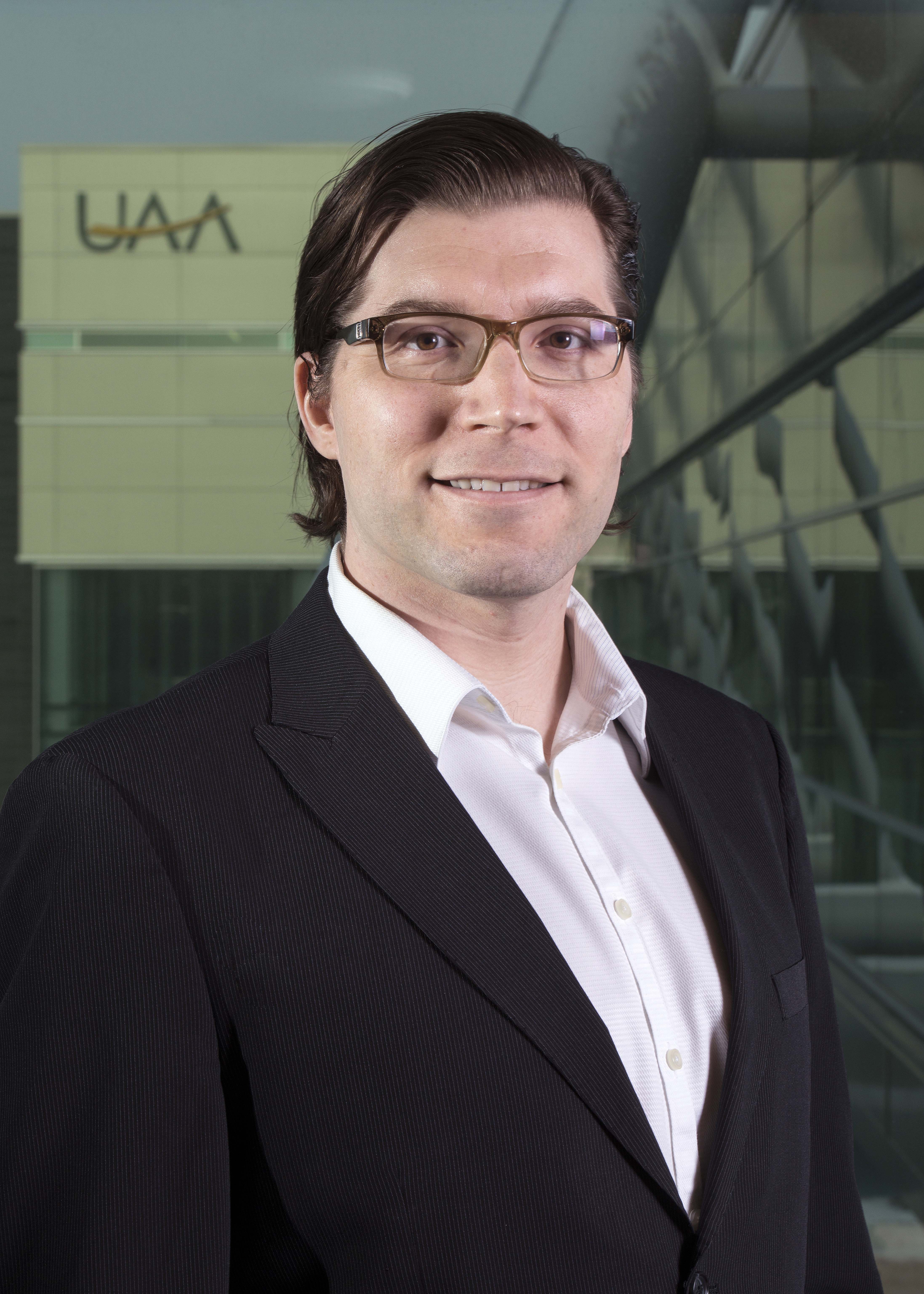
Sebastian Neumayer is an Assistant Professor in the Department of Computer Science and Engineering at the University of Alaska Anchorage (UAA). Prior to his academic role, he served as Technical Staff in MIT's Lincoln Laboratory's Cyber Analytics and Decision Systems Group from 2012 to 2017, focusing on security metrics for network threats. His research emphasizes network reliability during physical/cyber attacks and geographically correlated failures, with additional interests in cryptocurrency security, particularly Bitcoin transaction policies and dynamic mining incentives. Education includes a Ph.D. (2013) and M.S. (2007) in Electrical Engineering and Computer Science from MIT, and a B.S. in Electrical Engineering (Highest Honors) from the University of Illinois at Urbana-Champaign (2013). His research interests span three core areas: Network Survivability under Combined Cyber & Physical Threats Algorithmic Solutions for Geographically Vulnerable Infrastructures Cryptocurrency Security & Mining Economics He develops metrics to quantify attack risks and designs resilient network topologies, including policies to counteract attacker pivoting. His Bitcoin-related work explores transaction acceptance mechanisms and mining under dynamic fee structures. Advising/Grants: Currently no advisees listed. His Lincoln Lab tenure involved grants related to cybersecurity and decision systems. Current research is supported by UAA institutional resources and potential external funding sources not explicitly stated. Labs/Teams: Previously affiliated with MIT Lincoln Laboratory's Cyber Security and Information Sciences Division. Currently leads a research group at UAA investigating network reliability and cryptocurrency systems, with a unique project exploring Bitcoin integration in jewelry design.
Farzana Nasrin is an Assistant Professor in the Department of Mathematics at the University of Hawaiʻi at Mānoa, joining in 2020. She holds a Ph.D. in Mathematics from Texas Tech University (2018). Her research focuses on algebraic topology, Bayesian statistics, and their applications in interdisciplinary domains like genomics, materials science, and biomedical engineering. She develops novel methodologies for topological data analysis, integrating statistical inference with geometric insights to solve complex problems in biology and engineering. Her work bridges pure mathematics and applied sciences, with notable contributions to Bayesian topological learning for classifying biological networks, material microstructure analysis, and corneal disease diagnosis. Her website at math.hawaii.edu showcases her research and teaching activities, including courses in advanced mathematics and statistical methods. She is based in Keller 309 on campus. Recent research trends include advancing topological deep learning frameworks, exploring stochastic topology for material science, and applying Bayesian methods to microbiological systems. Her articles reflect a strong emphasis on computational topology, interdisciplinary collaborations, and methodological innovation. While no awards are explicitly listed, her active publication record and academic contributions highlight her academic impact. She advises graduate students in mathematical sciences and has contributed to grant-funded projects in applied topology and statistics.
Ana Doblas, PhD, is an Assistant Professor in Electrical and Computer Engineering at the University of Massachusetts Dartmouth. She holds a PhD in Physics from the University of Valencia (2015), an MSc in Advanced Physics (2011), and a BSc in Physics (2010). Her Optical Imaging Research Laboratory develops multimodal imaging platforms and computational methods for biomedical applications. Research interests include: Digital holographic microscopy reconstruction algorithms Low-cost diagnostic imaging systems 3D super-resolution microscopy Automated image processing pipelines She has received NSF CAREER and industry funding for developing accessible microscopy technologies. Current projects focus on improving resolution and accessibility of optical imaging for healthcare applications.
Russel E. Caflisch is the Director and Professor of Mathematics at the Courant Institute, New York University. He holds a PhD in Mathematics from the Courant Institute (1978), an M.S. from the same institute (1977), and a B.S. in Mathematics from Michigan State University (1975). His research focuses on applied mathematics, PDEs, fluid dynamics, plasma physics, materials science, Monte Carlo methods, and computational finance. Notable contributions include work on vortex dynamics, epitaxial growth modeling via level set methods, and financial derivatives pricing using simulation-based approaches. Recent articles address vortex layer stability, compressed modes for variational problems, and hybrid methods for plasma collision simulations. His work has been recognized through extensive publications in top journals like Proceedings of the National Academy of Sciences , Communications on Pure and Applied Mathematics , and Journal of Computational Physics . Caflisch’s research bridges theoretical analysis and computational methods, with applications spanning fluid mechanics, materials science, and finance. He has pioneered numerical techniques for simulating complex systems, including rarefied gas dynamics and thin film growth. His leadership at the Courant Institute underscores his role in advancing applied mathematics research and education.
Siri Merete Brændvik is an Associate Professor in the Department of Neuromedicine and Movement Science at NTNU. Her research examines motor disorders in cerebral palsy, with focus on gait biomechanics, orthotic interventions, and neuromuscular responses. She employs RCTs and biomechanical modeling to evaluate: Efficacy of Botulinum toxin and orthoses Energy expenditure during walking Muscle fatigue mechanisms Standardization of spasticity assessment Publications (2017-2024) feature advanced methodologies including electromyography, activity recognition algorithms, and multi-center trials. Recent work emphasizes translational outcomes like orthotic service delivery models and clinical guideline development.




/prod01/production-cdn-pxl/media/umassdartmouth/profiles/engineering/electrical-amp-computer/Ana-Doblas2023.jpg)