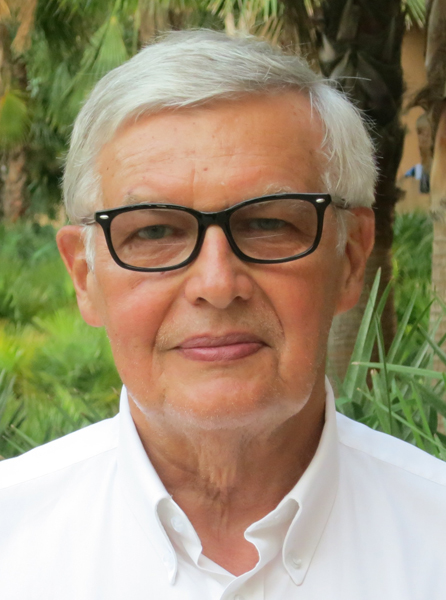
Imre Z. Ruzsa is a Research Professor at the Alfréd Rényi Institute of Mathematics of the Hungarian Academy of Sciences since 1989, head of the Department of Number Theory since 1991. He is also part-time faculty at Central European University. Education: B.S. in Mathematics, Eötvös Loránd University, Budapest (1976) Candidate of Sciences (Ph.D. equivalent) (1979) Doctor of Sciences (D.Sci.) (1990) Research Interests: A leading expert in Additive Combinatorics and Number Theory , his work bridges Probabilistic Number Theory and Combinatorics , focusing on sumsets, Sidon sequences, and entropy connections. His Additive Number Theory contributions include structural theorems and linear equation solutions in integer sets. Scientific Awards: Fellow of the American Mathematical Society (2012) Rollo Davidson Prize (1986) Pichoridis Distinguished Lecturer (2007) Academy Prize (1995) Erdõs Prize (1988) Corresponding Member (1998) and Full Member (2004) of the Hungarian Academy of Sciences Labs/Teams: Head of the Department of Number Theory at the Alfréd Rényi Institute, leading collaborative research in additive structures and probabilistic methods in number theory.
Prof. Dr. Philipp Grohs is a full professor of Mathematical Data Science at the University of Vienna and head of the Mathematical Data Science group at RICAM (Austrian Academy of Sciences). He holds a MSc from TU Vienna (2006) and a PhD from the same institution (2007). After postdoc positions at TU Graz, KAUST, and ETH Zurich, he became an assistant professor at ETH Zurich in 2011 before moving to the University of Vienna in 2016. His research focuses on designing efficient algorithms for signal processing, computational sciences, and finance, with recent contributions to understanding deep learning algorithms and solving high-dimensional PDEs using machine learning. He has received the ETH Latsis Prize (2014) and was selected for an Alexander von Humboldt Professorship (2019). Research Interests: Mathematical foundations of deep learning High-dimensional PDEs and their numerical solutions Signal and image processing (phase retrieval, Gabor systems) Approximation theory and function spaces Computational finance and mathematical modeling Recent Research Trends: His work explores theoretical guarantees for neural network performance, particularly in overcoming dimensionality challenges. Notable contributions include phase retrieval algorithms, analysis of DNN expressivity, and applications of deep learning in quantum chemistry and epidemiology modeling. Awards: ETH Latsis Prize (2014) Alexander von Humboldt Professorship (2019) Advising & Projects: Leads research initiatives such as the 'Data Science' hub at Vienna, and has coordinated projects on hybrid computational sciences and explainable AI models. Active in supervising interdisciplinary research teams across mathematics and computer science. Labs/Teams: Directs the Mathematical Data Science group at RICAM and oversees computational research collaborations with institutions like KAUST and ETH Zurich. Engages in applied projects like group testing strategies for SARS-CoV-2 and neural network-based electronic structure calculations.
Gabriel Kronberger is a Professor at Hagenberg University of Applied Sciences, specializing in Symbolic Regression, Genetic Programming, and Machine Learning. His work bridges theoretical advancements with industrial applications in mechatronics and engineering systems. Active in evolutionary computation and symbolic regression since 2006 Lead researcher at the Josef Ressel Center for Symbolic Regression Developed techniques for alarm flood reduction in critical infrastructure His research focuses on Symbolic Regression , where he explores algorithmic enhancements like redundant parameter reduction and equality graph integration. He applies these methods to material science (e.g., tensile strength prediction) and automotive engineering (e.g., powertrain modeling). Recent publications demonstrate a trend toward interactive tools (rEGGression) and hybrid approaches combining genetic programming with machine learning systems (neural networks, random forests). All 158 publications emphasize practical implementations in industrial contexts. He has organized key conferences like Genetic and Evolutionary Computation Conference (2017-2020) and led 6 major research projects from 2013 to 2026, including EREMA Recycling 4.0 and McTronic educational initiatives.
José Fernando Ferreira Mendes is a Full Professor in the Department of Physics at the University of Aveiro, Portugal. He has held significant leadership roles including Vice-Rector for Research and Doctoral School (2010-2018), Head of Physics Department (2004-2010), and Director of the Institute of Nanostructures, Nanomodelling and Nanofabrication (I3N). Since 2019, he has also been a Visiting Professor at both EPFL (Switzerland) and Nanyang Technological University (Singapore). His research focuses on theoretical analysis of complex systems , specializing in network structure/function, percolation phenomena, and applications to biological/information systems. Key areas include neural networks, granular media, and random network modeling. Honors & Awards: Gulbenkian Science Prize (2004) Fellow of Network Science Society (2019) Fellow of American Physical Society (2019) He leads research teams and maintains global collaborations, having authored a seminal Oxford University Press book on complex networks and over 90 peer-reviewed publications with 5,500+ citations.
Daniel Krenn is an Assistant Professor in the Mathematics Department at Paris Lodron University of Salzburg. He holds a Ph.D. in Technical Mathematics from TU Graz (2013) and a Habilitation in Mathematics from Alpen-Adria Universität Klagenfurt (2019). His research focuses on discrete mathematics, including asymptotic enumeration, analysis of algorithms, analytic combinatorics, digit expansions, and graph theory. He has contributed to software development in SageMath, particularly in automata and transducer modules. Education: 2003–2009: Diploma in Electrical Engineering (TU Graz) 2005–2008: Bachelor's in Technical Mathematics (TU Graz) 2008–2010: Master's in Mathematical Computer Science (TU Graz) 2010–2013: Ph.D. in Technical Mathematics (TU Graz) 2019: Habilitation in Mathematics (Alpen-Adria Universität Klagenfurt) Research Interests: Discrete Mathematics Analysis of Algorithms and Data Structures Digit Expansions and Cryptography Combinatorics and Analytic Number Theory Key Awards: Promotio sub auspiciis Praesidentis rei publicae (2013) Austrian Mathematical Society Study Prize (2013) Austrian Federal Ministry of Science and Research Prize (2013) Professional Contributions: Coordinator of the doctoral program “Discrete Mathematics” at TU Graz (2015) Contributions to SageMath software development Over 30 peer-reviewed publications in journals like Algorithmica, Theoretical Computer Science, and Journal of Number Theory
Affiliation and Education Jan Buitelaar is Professor of Psychiatry and Child & Adolescent Psychiatry at Radboud University Medical Centre and Principal Investigator at the Donders Institute for Brain, Cognition and Behaviour in Nijmegen, Netherlands. He heads the Karakter Child and Adolescent Psychiatry University Centre. He earned his M.D. (1978) and Ph.D. (1991) from Utrecht University, specializing in psychiatry at Utrecht and Erasmus Universities. Research Focus His interdisciplinary research integrates clinical studies, neuroimaging, genetics, and pharmacology to investigate neurodevelopmental disorders including ADHD, autism, and aggression-related conditions. Current work emphasizes translational neuroscience identifying molecular targets for ADHD/autism through preclinical models and human imaging genetics. Publication Trends Recent articles (2011-2015) demonstrate a strong focus on neuroimaging biomarkers (fMRI/MRI), genetic associations, and non-pharmacological interventions for ADHD. Key themes include brain structure/function alterations, familial risk patterns, and dietary impacts on behavior. Awards and Honors Lifetime Achievement Award (INSAR, 2023) Lifetime Achievement Award (Eunethydis, 2022) Knight in the Order of the Dutch Lion (2020) Oeuvre Award (ESCAP, 2019) Fellow, INSAR (2018) Dutch Society for Psychiatry Research Award (2011) Leadership and Funding He coordinates multiple EU consortia (CANDY, BRAINVIEW) and leads work packages in projects like AIMS-2-TRIALS and Eat2beNICE. His research is funded by the EU, NIH, and Dutch Medical Research Council. He advises pharmaceutical companies including Roche, Novartis, and Boehringer Ingelheim. Laboratories and Teams Leads the Neuropsychiatric and Developmental Disorders research group at Radboudumc and the Donders Institute, emphasizing collaborative 'consortium neuroscience' approaches.
Dr. Regino Criado is Full Professor of Applied Mathematics at Rey Juan Carlos University (URJC), where he has held academic positions since June 2000. He currently serves as Academic Director of the Data, Complex Networks and Cybersecurity Sciences Institute (since March 2017) and was elected to the Academia Europaea in May 2023. His career spans European research projects (ESPRIT II/III) and interdisciplinary collaborations at the intersection of mathematics, computer science, and cybersecurity. His research focuses on Complex Networks , including hyper-networks, multiplex networks, and mesoscale structures, with applications to cybersecurity, intentional risk management, and synchronization phenomena. Key innovations include: A game theory-based intentional risk model integrating accessibility, anonymity, and value metrics Hybrid network mining algorithms for credit card fraud detection PageRank extensions to multiplex networks Framework for discrete resilience analysis in technological systems His work on the 2014 Physics Reports monograph The structure and dynamics of multilayer networks (3,500+ citations) established foundational concepts in multilayer network theory. Current research explores linguistic pattern analysis through multilayer hypergraphs for automatic text summarization. Member of Academia Europaea (2023) Chaos Journal Best Paper Award (2011) Academic Entrepeneurs Prize (2002) EUROPA-1992 Prize (1992) As director of the DCNC Institute (2017-present) and BBVA-URJC Chair (2017-2018), he has led major academic-industry collaborations. His 180+ publications (6,500+ citations) demonstrate sustained impact across network science, applied mathematics, and cybersecurity.
Manfred Droste is a Professor at the Institute of Computer Science at the University of Leipzig since 2004. He previously held positions at TU Dresden, University of Dortmund, and University of Essen. Research interests: Automata theory, logic, algebraic models for concurrent systems, domain theory, and model theory. Key affiliations: Academia Europaea member (2011), Vice-speaker of DFG-Research Training Group 'QuantLA' Supervised 8 PhD students including Dietrich Kuske (TU Ilmenau) and Paolo Boldi (University of Milano) Recent Publications focus on weighted automata, formal power series, and quantitative logics with applications in real-time systems and XML processing. 2020: Dr. h.c. from Immanuel Kant Baltic Federal University 2018: Visiting professorship at ENS Cachan 2012: Catedra de Excelencia at URV Tarragona Active in conference organization including 17 international workshops and 6 Dagstuhl seminars. Editorial board member for multiple journals including Journal of Automata, Languages and Combinatorics and Forum Mathematicum . Leads research projects with DFG and DAAD funding including international collaborations in China, Serbia, and Thailand.
Pol D. Spanos is the Lewis B. Ryon Professor of Mechanical and Civil Engineering and Professor of Materials Science and NanoEngineering at Rice University, USA. He is an elected member of the National Academy of Engineering (USA) and foreign member of a dozen prestigious academies worldwide. Education Diploma in Mechanical Engineering and Engineering Science, National Technical University of Athens, Greece M.S. in Civil Engineering, California Institute of Technology (Caltech), USA Ph.D. in Applied Mechanics (with minors in Applied Mathematics and Business Economics & Management), Caltech, USA Research Interests Professor Spanos’ research integrates digital signal processing , nonlinear and stochastic dynamics , and advanced computational mechanics . His group develops analytical, numerical, and Monte-Carlo methods to study: Nonlinear vibrations of structures and mechanical systems under random loads Seismic risk assessment and spectrum estimation Fatigue and fracture of advanced nanocomposite materials Signal processing of biomedical data (ECG, EEG, bone mechanics) Flow-induced vibrations of offshore platforms, risers and pipelines Directional drilling dynamics and certification of space-station payloads The mathematical frameworks involve deterministic and stochastic differential equations (integer or fractional order), finite-element formulations, wavelet/chirplet transforms, and high-performance computing. Scientific Awards & Honors 2024 Blaise-Pascal Medal in Engineering 2021 ASME Gold Medal (highest ASME award) 2020 T.K. Caughey ASME Medal for Lifetime Contributions to Nonlinear Dynamics 2017 International Scientific and Technological Cooperation Award of the People’s Republic of China Member or Foreign Member of 11 national academies and fellow of multiple professional societies ASCE Theodore von Kármán Medal (2003), Newmark Medal, Freudenthal Medal, Huber Prize, etc. Advising & Funding He has supervised over 75 M.S. theses and 60 Ph.D. dissertations , hosted numerous visiting scholars, and secured funding from NSF, NASA, DOE and a broad range of industrial partners. Professional Service & Outreach Editor-in-Chief, International Journal of Non-Linear Mechanics Editor, Journal of Probabilistic Engineering Mechanics Former Chair, ASCE Engineering Mechanics Division and ASME Applied Mechanics Division ASME Distinguished Lecturer (1997-2003) Registered Professional Engineer (Texas) and Licensed Engineer in Greece Active in diversity-enhancing initiatives and pro-bono engineering consulting
Michal Tendera is a Full Professor at the Department of Cardiology and Structural Heart Diseases , Medical University of Silesia, Poland, and a cardiology consultant at the Upper-Silesian Cardiac Center . He has held leadership roles including President of the Polish Cardiac Society (1995-1998) and President of the European Society of Cardiology (2004-2006). Research Interests : Acute/chronic coronary artery disease, heart failure, structural heart disease, stem cell biology/therapy. His work spans clinical trials, regenerative medicine, and cardiovascular pharmacology. Publications include BEAUTIFUL Holter Substudy , REGENT trial , and GEMINI-ACS-1 . Scientific Recognition : Honorary Member of 7 European Cardiac Societies Active Member, Polish Academy of Arts and Sciences (PAU) Corresponding Member, Polish Academy of Sciences (PAN) Thomson Reuters Highly Cited Researcher (2014-2016) Gold Medal, European Society of Cardiology (2006)
Ross Bowden is a Lecturer in Cryptography at the School of Computer Science, University of Bristol. His research focuses on mathematical foundations of cryptography, including endomorphism, hash functions, polynomial systems, and graph theory. He is affiliated with the Bristol Doctoral College. Research interests: His work intersects computer science and mathematics, particularly in cryptographic hash functions, polynomial equation systems, and supersingular isogeny graphs. His recent publications address open problems in these domains. Publications: Active in advancing cryptographic algorithms and mathematical structures, with contributions to supersingular isogeny graphs and polynomial-based cryptographic challenges. Contact: Email ross.bowden@bristol.ac.uk or rb15152@bristol.ac.uk .
Ao.Univ.Prof. Dipl.-Ing. Dr.techn. Horst Bischof is an Associate Professor at Vienna University of Technology (TU Wien). His work focuses on computer vision, medical imaging, and pattern recognition. He has contributed to projects in automated medical diagnosis (e.g., rheumatoid arthritis assessment), 3D reconstruction, and cultural heritage preservation through advanced segmentation techniques. He has supervised numerous students including S. Veigl, A. Belbachir, and G. Langs. Bischof has edited proceedings like the 2005 Computer Vision Winter Workshop and published extensively on topics like Markov Random Fields, Active Appearance Models, and Canonical Correlation Analysis. His research bridges computer science and biomedical applications, with notable contributions to anatomical structure localization and robust model learning. He collaborates with institutions like the European Society of Musculoskeletal Radiology and has developed systems such as the RheumaCoachCAD for automated scoring of bone erosions. Education: Dipl.-Ing. (Master of Engineering) and Dr.techn. (Doctor of Technical Sciences) from TU Wien. Key Projects: CAD systems for rheumatoid arthritis, 3D rock-art segmentation, and MRF-based medical image analysis. Research interests emphasize integrating computational methods into clinical diagnostics and heritage conservation. His work on sparse MRF models and group-wise learning has advanced automated medical image processing techniques.
Chris Dowden is a Research Fellow at the Institute of Discrete Mathematics, Graz University of Technology. His research project 'Asymptotic properties of graphs on a surface', funded by the Austrian Science Fund (FWF Grant P27290), investigates combinatorial and probabilistic aspects of graphs embeddable on 2-dimensional surfaces. Key focus areas include random planar graphs, genus evolution, and extremal graph properties. Recent publications analyze topological constraints in random graphs, with works examining genus evolution in Erdős-Rényi models, surface embedding phase transitions, and extremal problems for cycle-free planar graphs. Research employs combinatorial probability, asymptotic analysis, and topological graph theory to establish fundamental properties of random graph embeddings. Teaching activities include courses in Analytic Combinatorics and Probabilistic Methods in Combinatorics and Algorithmics. No awards, student advisements, or laboratory information are detailed in available sources.
Vladimir Kolmogorov is a Professor at the Institute of Science and Technology Austria (IST Austria), leading the Kolmogorov Group focused on Discrete Optimization. He previously held positions as Assistant Professor at IST Austria (2011–2014), Lecturer at University College London (2005–2011), and Associate Researcher at Microsoft Research (2003–2005). His research spans algorithm development for graphical models, combinatorial optimization, and applications in computer vision. Education: M.S. in Applied Mathematics and Physics from the Moscow Institute of Physics and Technology, and Ph.D. in Computer Science from Cornell University (2003). Research interests include complexity classifications, algorithm design for discrete optimization problems (e.g., max-flow, min-cost matching), and applications in computer vision. Notable contributions include the 'Boykov-Kolmogorov' max-flow algorithm and 'Blossom V' for minimum cost perfect matching. Honors include the ERC Consolidator Grant (2014–2019), Koenderink Prize (2012), and best paper awards at CVPR and ECCV. His work on optimization algorithms and theoretical complexity has significantly impacted computer vision and combinatorial optimization fields. Advising and grants: Supervised multiple PhD students and postdocs, with current advisees including Martin Dvořák and Pavel Arkhipov. His team explores inference in graphical models, combinatorial optimization, and discrete optimization theory.
Uwe Schmock is a Full Professor at the Vienna University of Technology , leading research in Financial and Actuarial Mathematics within the Institute for Statistics and Mathematical Methods in Economics. His work bridges theoretical probability with practical financial and insurance risk modeling. Research interests include large deviations theory , risk aggregation , credit risk models , and stochastic integration . He has contributed to insurance mathematics through catastrophe bond analysis (e.g., WinCAT coupons) and annuity valuation tables. His recent publications focus on U-empirical measures , Panjer's recursion , and exotic options under market constraints. Scientific awards include the Charles A. Hachemeister Prize and the David Garrick Halmstad Memorial Prize . He actively collaborates with institutions like ETH Zurich and the American Casualty Actuarial Society.