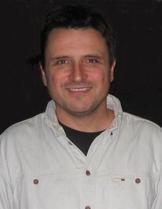
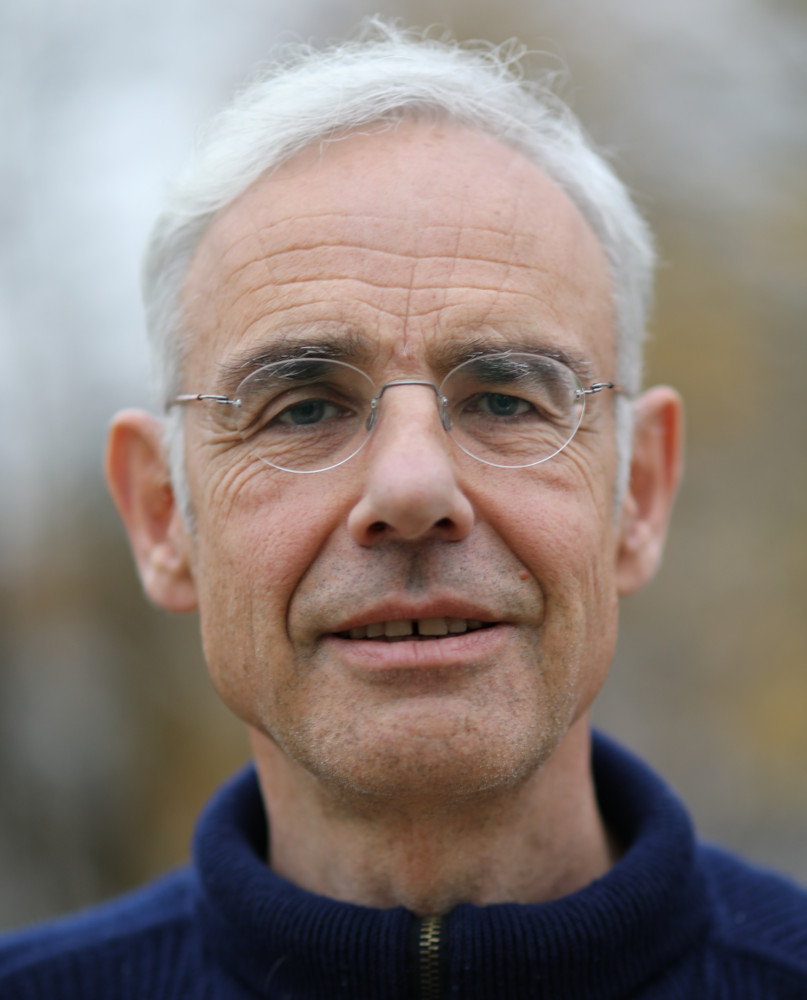
Martin Grohe is a Professor at the School of Logic and Theory of Discrete Systems , part of the Department of Computer Science at RWTH Aachen University . His research spans Algorithms and Complexity , Logic , Database Theory , Graph Theory , and Machine Learning , with a focus on integrating logical frameworks into computational models. His recent work explores graph neural networks , Weisfeiler-Leman algorithms , and parameterized complexity , as seen in publications on isomorphism testing , database repairing , and probabilistic query evaluation . While no specific scientific awards are mentioned, his contributions to graph theory and machine learning are widely recognized through numerous peer-reviewed publications.
Prof. Vladimir Spokoiny is a leading figure in stochastic algorithms and nonparametric statistics at the Weierstrass Institute for Applied Analysis and Stochastics (WIAS) and Humboldt University of Berlin . His work bridges mathematical statistics with practical applications in finance, medicine, and machine learning. Born in 1959 in Moscow, USSR PhD from Lomonosov Moscow State University (1988) Habilitation from Humboldt University (1996) Head of WIAS research group since 2000 Professor at Humboldt University since 2002 Spokoiny's research focuses on adaptive nonparametric methods, high-dimensional data analysis, and statistical finance. His innovations in local homogeneity testing and propagation-separation methods have advanced volatility modeling, image analysis, and manifold learning. He employs Bayesian optimization frameworks and stochastic control techniques for financial instrument pricing. Recent scientific contributions include generalized bootstrap procedures for Bures-Wasserstein barycenters (2024), dimension-free Laplace approximation bounds (2023), and structure-adaptive manifold estimation (2022). His 19+ PhD students and editorial roles in top journals like The Annals of Statistics demonstrate sustained academic impact. International Statistical Institute member American Statistical Association fellow Institute of Mathematical Statistics member Bernoulli Society member
Prof. Laura Vargas Koch serves as Junior Professor at RWTH Aachen University, leading the Teaching and Research Unit of Algorithmic Game Theory and Discrete Mathematics (GDM). Her interdisciplinary work bridges mathematics, computer science, and economics through rigorous theoretical frameworks. Her research focuses on: Algorithmic Game Theory : Analyzing fair pricing mechanisms and equilibrium structures in traffic flow systems Combinatorial Optimization : Developing approximation algorithms for clustering problems and graph-based optimization Analysis of her 2021-2025 publications reveals evolving expertise in dynamic traffic modeling, routing game equilibria, and auction mechanism design. Her work consistently addresses theoretical foundations while maintaining practical relevance to transportation networks and resource allocation systems. The GDM unit under her direction provides specialized coursework and fosters collaborative research at the intersection of discrete mathematics and economic modeling.
Nikolaos Koutsouleris serves as a Research Professor leading the Precision Psychiatry team at the Max Planck Institute of Psychiatry in Munich, Germany. He directs the KOUTSOULERIS LAB, which focuses on developing advanced machine learning methodologies for clinical psychiatry applications. His work bridges computational neuroscience, clinical psychology, and precision medicine approaches to transform psychiatric diagnosis and treatment. Dr. Koutsouleris's research program centers on precision psychiatry, with particular emphasis on multimodal data integration for predicting psychiatric outcomes. His laboratory develops sophisticated machine learning workflows that combine neuroimaging, clinical assessments, genetic information, and biomarker data to create personalized prediction models. This approach enables more accurate identification of individuals at risk for psychosis and other psychiatric disorders, facilitating earlier intervention and tailored treatment strategies. Analysis of Dr. Koutsouleris's publication record reveals a consistent trajectory toward increasingly sophisticated applications of artificial intelligence in psychiatry. His recent work demonstrates a shift from single-modality prediction to complex multimodal frameworks that capture the heterogeneous nature of psychiatric conditions. Key themes include addressing methodological challenges in clinical prediction generalizability, exploring neurobiological underpinnings of mental illness through advanced analytics, and translating computational findings into clinically actionable tools. As leader of the KOUTSOULERIS LAB at the Max Planck Institute of Psychiatry, Dr. Koutsouleris oversees a multidisciplinary research environment that brings together computational scientists, clinicians, neuroscientists, and data analysts. His team collaborates extensively with international consortia to validate prediction models across diverse populations, ensuring robustness and clinical applicability of their findings. The laboratory serves as a nexus for innovation in computational psychiatry, driving methodological advances while maintaining strong connections to clinical practice.
Tibor Szabó is a Professor in the Combinatorics and Graph Theory group at the Department of Mathematics, Freie Universität Berlin. He holds a PhD from The Ohio State University, advised by Ákos Seress. Prior to his current position, he held roles at McGill University, ETH Zürich, the Institute for Advanced Study (Princeton), and the University of Illinois (UIUC) as a J.L. Doob Research Assistant Professor. Research Interests: His work focuses on combinatorics and combinatorial optimization, including extremal problems, random structures and algorithms, pseudorandom graphs, positional games, and the combinatorics of linear programming. He explores tools from algebra, probability theory, and topology applied to combinatorics. Teaching: He teaches courses such as Algorithmic Combinatorics, Extremal Combinatorics, and runs the Combinatorics Seminar. His lecture notes include works on positional games and explicit constructions in extremal combinatorics. Students & Postdocs: Notable PhD advisees include Yamaan Attwa, Silas Rathke, Simona Boyadzhiyska, and Patrick Morris. Postdoctoral fellows include Olaf Parczyk and Anurag Bishnoi. His research has involved collaborations with over 50 co-authors. Funding & Grants: Supported by grants from the Swiss National Science Foundation (SNF) and German Research Foundation (DFG), focusing on topics like positional games and extremal graph theory.
Holger Dette is a Professor and Chair Holder of Stochastics (specializing in Statistics) at the Faculty of Mathematics, Ruhr University Bochum. He leads the prominent Group Dette within the Institute of Statistics, overseeing a team of researchers, doctoral students, and administrative staff including Birgit Tormöhlen as team assistant. His research group is deeply integrated within the university's mathematical ecosystem, collaborating with other research groups across algebra, analysis, numerics, and topology. Dette's research spans mathematical statistics with strong applications in real-world problems. His primary interests include optimal experimental design, time series analysis, functional data, change point problems, nonparametric regression, biostatistics, special functions, goodness-of-fit tests, and random matrices . His work bridges theoretical statistics with practical applications, particularly evident in his collaborations with pharmaceutical giants Novartis and Bayer AG in biostatistics, as well as Quasol, a spin-off company from his statistics institute. His recent publications (2024-2025) reveal a research program increasingly focused on high-dimensional and functional data analysis, privacy-preserving statistics, and novel methodological approaches to longstanding statistical problems. Dette's work shows strong interdisciplinary connections, particularly with biomechanics (analyzing joint angles during fatigue phases) and data science (addressing challenges in the era of big data). His research group is actively involved in multiple DFG-funded projects including the newly established 'Small Data' collaborative research center (Sonderforschungsbereich 1597) and the Spatio-temporal Statistics for the Transition of Energy and Transport (Transregio 391). Dette has received significant recognition including the prestigious Humboldt Research Award . His paper 'With Great Power Come Great Side Channels: Statistical Timing Side-Channel Analyses with Bounded Type-1 Errors' achieved second place at the CSAW'24 Applied Research Competition MENA. His research group has also secured multiple significant funding awards from the German Research Foundation (DFG). As an advisor, Dette supervises numerous doctoral and master's students including Pascal Quanz, Marius Kroll, and Carina Graw. His group offers statistical consulting services for scientists and students across bachelor's, master's, and doctoral phases. The group maintains strong industrial partnerships, particularly in biostatistics applications, demonstrating Dette's commitment to translating theoretical statistics into practical solutions for real-world challenges.
Professor Stefan Glock is an Assistant Professor of Discrete Mathematics at the University of Passau's Faculty of Computer Science and Mathematics, a position he has held since September 2022. Prior to this appointment, he spent three years as a Junior Fellow at the Institute for Theoretical Studies at ETH Zurich, following the completion of his doctorate at the University of Birmingham. Stefan Glock received his mathematics education at Technische Universität Ilmenau from 2009 to 2014, then pursued his PhD at the University of Birmingham, which he completed in 2018. His doctoral dissertation, "Decompositions of Graphs and Hypergraphs," was the runner-up for the Richard-Rado-Preis 2018. Professor Glock's research focuses on discrete mathematical structures, with particular emphasis on their asymptotic properties. His work spans several interconnected fields of combinatorics: Extremal Combinatorics : Investigating the maximum or minimum possible size of mathematical structures satisfying certain properties Probabilistic Combinatorics : Applying probability theory to solve combinatorial problems Graph Theory : Studying properties of graphs and networks Ramsey Theory : Examining conditions under which order must appear in large structures Design Theory : Creating arrangements of elements satisfying specific balance properties Discrete Geometry : Analyzing geometric problems with discrete structures Analysis of Professor Glock's recent publications reveals a consistent focus on solving long-standing open problems in combinatorics using innovative methods that combine probabilistic techniques with structural insights. His work often bridges theoretical mathematics with applications in theoretical computer science, particularly in the analysis of algorithms and network structures. A significant portion of his research addresses fundamental questions about graph and hypergraph decompositions, which have implications for coding theory, cryptography, and network design. Professor Glock has received notable recognition for his contributions to mathematics: Runner-up for the Richard-Rado-Preis 2018 for his dissertation "Decompositions of Graphs and Hypergraphs" Awarded funding through the prestigious DFG Emmy Noether Programme in 2024 for his research group on "the interplay of structure and randomness in mathematics" As a faculty member at the University of Passau, Professor Glock leads the Discrete Mathematics research group and actively collaborates with mathematicians worldwide. He has established a strong research program that has attracted funding for academic visitors and supports multiple research projects. His approach to mathematical problems emphasizes developing new methods that have far-reaching implications beyond the specific problems being solved. Professor Glock's research group at the University of Passau focuses on the interplay between structure and randomness in discrete mathematics. The group maintains active collaborations with leading institutions including ETH Zurich, University of Birmingham, and various research centers across Europe. Through the DFG Emmy Noether Programme funding, his group is expanding its research on combinatorial structures and their applications.
Andreas Groll is a Professor at the Technical University of Dortmund, affiliated with the Department of Statistical Methods for Big Data under the Faculty of Statistics. His research focuses on variable selection, regularization techniques in generalized linear models, categorical data analysis, and sports statistics, particularly predicting international soccer and tennis tournaments. He leads a working group including researchers like Dr. Daniel Horn and Dr. Rouven Michels. Key research areas include semiparametric regression and event data analysis. Recent work explores machine learning applications in sports analytics and healthcare, such as predicting hospital readmissions and modeling environmental data. Groll has published extensively in journals like Journal of Quantitative Analysis in Sports and Statistical Modelling .
Peter K. Friz is an Einstein Professor in Mathematics at TU-Berlin, affiliated with the Institute of Mathematics, and associated with the Weierstrass Institute for Applied Analysis and Stochastics. His research focuses on stochastic analysis, rough path theory, and mathematical finance, with particular emphasis on volatility modeling and applications to quantitative finance. He has held prestigious grants, including ERC Starting and Consolidator Grants, and coordinates the DFG research unit 'Rough paths, stochastic partial differential equations, and related topics.' Friz's work bridges theoretical stochastic analysis and practical financial applications, emphasizing rough path theory and its implications for differential equations and stochastic processes. His collaborations include organizing international conferences and courses on rough paths, with invited lectures at institutions like Cambridge, Paris, and Bonn. Supported by DFG, the European Research Council, and the Einstein Foundation, his research explores geometric aspects of pathwise analysis and stochastic volatility dynamics. He has advised numerous PhD students and maintains active roles in academic administration, including coordinating Berlin Mathematical School programs and teaching advanced topics in stochastic calculus. His contributions to rough path theory and stochastic finance are recognized through his academic leadership and influential publications, including co-authoring the seminal book Multidimensional Stochastic Processes as Rough Paths .
Professor Tobias Nipkow is a leading researcher in formal methods and interactive theorem proving at the Technical University of Munich (TUM), affiliated with the School of Computation, Information and Technology and the Department of Computer Science. He is a core developer of the Isabelle proof assistant and leads the Theorem Proving Group. His work has profoundly influenced program verification, semantics, and formalized mathematics. University: Technical University of Munich School: School of Computation, Information and Technology Department: Department of Computer Science Research Group: Theorem Proving Group Key Projects: Isabelle, Archive of Formal Proofs, Concrete Semantics His research focuses on formal verification, higher-order logic, semantics of programming languages, and verified algorithms. He has pioneered the formalization of textbook algorithms, data structures like B+-trees and quadtrees, and logical systems. His work bridges theoretical foundations with practical tools for software correctness. The most recent publications show a strong trend in verifying classical algorithms (e.g., Gale-Shapley, Earley parser), data structures (B+-trees, deques), and decision procedures, primarily using Isabelle/HOL. His contributions span foundational logic, program analysis, and educational approaches to formal methods. Best Paper Award at CADE 28 (2021) Tobias Nipkow has made extensive contributions to advising and collaborative research, co-authoring with numerous researchers and students. He has secured support for large-scale formalization efforts and contributed to major projects like the Flyspeck proof of the Kepler conjecture. His work is supported by ongoing development of the Isabelle framework and the Archive of Formal Proofs. He leads the Theorem Proving Group at TUM, which is central to the development and application of Isabelle. The group fosters international collaboration, contributes to the Archive of Formal Proofs, and advances research in automated reasoning, semantics, and verified systems.
Tobias Neckel is an Associate Professor at the Institute for Informatics at the Technical University of Munich (TUM), where he leads research projects and coordinates academic programs. He has been the project team leader of the IGGSE Project ExaNIML since 2018, main coordinator of the Ferienakademie since 2014, and Program Coordinator of the Bavarian Graduate School of Computational Engineering (BGCE) since 2009. Diploma in Technomathematik from TU München (2005) Dr. rer. nat. in Informatics from TU München (2009) Neckel's research focuses on Uncertainty Quantification, Random Differential Equations, and High Performance Computing. His work develops efficient numerical algorithms using hierarchic and adaptive methods such as octrees/spacetrees and sparse grids, with applications in fluid-structure interactions and incompressible fluid flow simulation. His research bridges theoretical mathematics with practical computational science, emphasizing robust and efficient implementations. His recent publications demonstrate a strong trajectory in multi-fidelity modeling, uncertainty quantification, and high-performance computing. Neckel has made significant contributions to scalable hierarchical approximation methods, dynamic resource management in HPC, and the application of machine learning techniques to computational science problems. His work spans diverse application domains including plasma physics, hydrology, and computational engineering. Lehrfonds prize of the TUM (2014) Ernst Otto Fischer prize of the TUM (2011) Promotionspreis des Bunds der Freunde der TU München (2009) Neckel has supervised numerous graduate students and has been actively involved in curriculum development and teaching innovation. His book "Bits and Bugs: A Scientific and Historical Review of Software Failures in Computational Science" (2019) represents a significant contribution to understanding software reliability in scientific computing. He has organized minisymposia at major conferences including SIAM CSE and SIAM UQ, and serves on program committees for various computational science conferences. As coordinator of the Ferienakademie and the BGCE, Neckel plays a central role in advanced computational engineering education in Bavaria. His research group develops software for exascale computing and contributes to the Transregional Collaborative Research Centre 89 on Invasive Computing. Neckel also maintains international collaborations, with research stays at institutions including the Australian National University and Tokyo Institute of Technology.
Peter Richtarik is a Professor at the King Abdullah University of Science and Technology (KAUST), specializing in Machine Learning, Optimization, and Federated Learning. He actively teaches courses such as Stochastic Gradient Descent Methods and mentors PhD and MS students like Konstantin Burlachenko, Kai Yi, and Lukang Sun. His research spans distributed optimization, parameter-efficient fine-tuning, and theoretical frameworks for non-convex and non-smooth problems. Recent work includes 2025 contributions to Bernoulli-LoRA (theoretical PEFT) and Gluon (LMO-based optimizers). He co-developed Thanos (block-wise pruning) and BurTorch (CPU-optimized training framework). His publications focus on communication efficiency ( ATA , LoCoDL ), differential privacy ( DP-RBCD ), and stochastic proximal methods. Richtarik received the Charles Broyden Prize for his work on quasi-Newton methods. He frequently presents at workshops like MLSS in Senegal and FLOW seminars.
László Kozma is an Assistant Professor at the Theoretical Computer Science group of the Institute of Computer Science (Freie Universität Berlin). He obtained his PhD from Saarland University under Raimund Seidel, followed by postdoctoral positions at Tel Aviv University and TU Eindhoven. His research focuses on self-adjusting data structures , adaptive algorithms , and combinatorial optimization with applications to problems like the Traveling Salesman Problem, binary search trees, and geometric data structures. Academic Affiliation: Freie Universität Berlin (since 2018) Education: PhD in Computer Science (Saarland University, 2016); postdoc at Tel Aviv University and TU Eindhoven. His work explores the intersection of data structures, combinatorial algorithms, and geometric methods. He has made significant contributions to problems involving pattern-avoidance in inputs, saddlepoint detection , and self-adjusting heaps . Key areas include: Adaptive algorithms for pattern-avoiding inputs Optimal tree and heap structures Geometric and stochastic approaches to optimization Complexity analysis of classical algorithms Recent publications highlight efficient solutions for exponential cut problems (ESA 2025), balanced TSP partitioning (EuroCG 2025), and randomized saddlepoint algorithms (ESA 2024). His research often bridges theory and practice, exemplified by the smooth heap implementation and fun projects like Recursi and Cuckoo Hashing visualization.
Wolfgang Merkle is a Privatdozent at Universität Heidelberg's Institut für Informatik, affiliated with the Faculty of Mathematics and Computer Science. His research focuses on Theoretical Computer Science and Discrete Mathematics, particularly randomized algorithms and Kolmogorov complexity. He teaches courses including 'Randomized Algorithms' and seminars on Kolmogorov complexity for Bachelor and Master programs. Research interests span algorithmic randomness, computational complexity, and information theory, with significant contributions to understanding computability limits and the foundations of theoretical computer science. His recent publications explore the interplay between randomness and computational efficiency, with works examining superspeedability, relativized depth, and information distance theories.
Lionel Truquet is a Lecturer-Researcher in Statistics and Director of Research at ENSAI (École Nationale de la Statistique et de l'Analyse de l'Information). His research focuses on advanced statistical methodologies, including time series analysis, Markov chains, and ecological data modeling. He has contributed to multivariate autoregressive binary models, compact space time series models, and nonstationary count processes. Research Interests: His work emphasizes statistical theory applied to dependent data, with a strong focus on ecological applications. Key areas include ergodic properties of Markov chains, mixing properties of time series, and modeling presence-absence data. His methods address challenges in high-dimensional and nonstationary environments. Publications: Recent work includes influential contributions such as the TJALLING C. KOOPMANS ECONOMETRIC THEORY PRIZE-winning paper on iterations of dependent random maps. His publications span top journals like Bernoulli, the Annals of Applied Probability, and the Journal of Time Series Analysis, reflecting his expertise in both theoretical and applied statistics. Teaching: He teaches advanced courses such as Asymptotic Statistics and Dependence at the M2 level, reflecting his commitment to training future statisticians in cutting-edge methodologies.