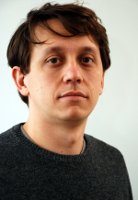
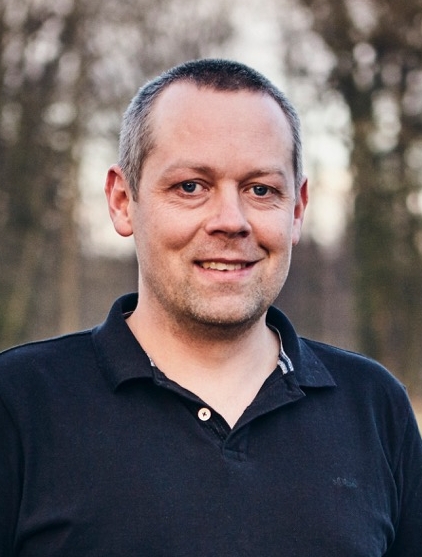
Dr. Lars Krecklau is a researcher at the Department of Computer Science , RWTH Aachen University . He specializes in procedural modeling, real-time rendering, and urban reconstruction. His work includes algorithms for efficient 3D visualization of cityscapes and interactive modeling tools for non-programmers. Research Focus : Procedural modeling, real-time rendering, urban visualization Key Contributions : Procedural facade rendering, historical city interpolation, interconnected structure modeling His publications focus on GPU-accelerated procedural graphics, temporal interpolation of historical data, and intuitive 3D modeling interfaces. He has contributed to frameworks like Houdini and developed techniques for memory-efficient rendering. Email : krecklau@informatik.rwth-aachen.de
Matthias Ziegler is a Professor of Psychological Diagnostics at the Humboldt University of Berlin, Faculty of Life Sciences. He has held a W3 professorship at the Institute of Psychology since April 2012, following a junior professorship at the same institution from 2008-2010 and again 2011-2012. His academic career includes positions at the Ludwig-Maximilians-Universität München where he worked as a research assistant and held substitute professorships. Professor Ziegler's work spans psychological assessment, personality psychology, intelligence research, and test development. Dr. Ziegler pursued his academic education with studies at the University of Marburg, culminating in a doctorate from the University of Munich under Prof. Dr. Markus Bühner on situational demand and its impact on personality questionnaire validity. He completed his habilitation at the University of Munich with mentors including Prof. Dr. Markus Bühner, Prof. Dr. Josef Zihl, and Prof. Dr. Del Paulhus, focusing on the assessment of personality and its interaction with intelligence in predicting academic performance. Professor Ziegler's research interests center on psychological assessment methodologies, personality psychology (particularly the Dark Triad/Tetrad constructs), intelligence research, situational perception, and vocational interests. His work explores the dynamic interplay between personality traits and situations, the measurement of domain-specific knowledge, and the development of robust psychological assessment tools. He has made significant contributions to understanding how personality traits interact with cognitive abilities to predict academic and professional outcomes. His recent publications demonstrate a consistent focus on innovative assessment approaches, with particular attention to situational perception, personality-state dynamics, and cross-cultural measurement issues. Ziegler's work bridges theoretical personality research with practical assessment applications, often incorporating advanced statistical techniques and multi-method approaches to examine complex person-situation interactions across diverse contexts. Editor in chief of European Journal of Psychological Assessment (2013-2016) Holds DIN 33430 license (professional qualification in psychological assessment) Member of German Diagnostic- and Test Committee Board member of Interdisciplinary Center for Educational Research Member of DGPs, EAPA, EAPP, ISSID professional societies Professor Ziegler has served on numerous editorial boards including European Journal of Psychological Assessment, Personality and Individual Differences, and Journal of Intelligence. His methodological expertise is evident in his extensive reviewer work for over 30 psychological journals. His research program demonstrates strong continuity in developing and validating assessment instruments while exploring the complex relationships between personality, intelligence, and situational factors in predicting meaningful life outcomes.
Artem Sokolov serves as an Honorary Professor in the Department of Computational Linguistics at Heidelberg University and as a Research Scientist at Google Berlin. His primary research focuses on machine translation and structured prediction within natural language processing. Previously, he held positions at Amazon, the Statistical NLP Group at Heidelberg University led by Prof. Stefan Riezler, LIMSI, and Orange Labs in France, contributing to advancements in statistical and neural machine translation systems. He earned his PhD in Computer Science and Artificial Intelligence from the IRTCITS research center in Kyiv. His doctoral thesis investigated randomized algorithms for locality-sensitive embeddings of the Levenstein edit distance, establishing foundational work for efficient string similarity search in computational linguistics and intrusion detection systems. Dr. Sokolov's research expertise spans machine translation, imitation learning, bandit algorithms, and weakly supervised learning. He has pioneered methods for learning from partial feedback in structured prediction tasks, particularly addressing exposure bias in sequence generation and multi-facet evaluation of translation systems. His work bridges theoretical machine learning with practical NLP applications, emphasizing robustness against noisy data and scalable optimization techniques for real-world deployment. Analysis of his recent publications reveals trends toward scalable influence functions for model interpretability, multi-attribute control in machine translation, and rigorous auditing of multilingual datasets. His research consistently intersects natural language processing, machine learning optimization, and data quality assessment, with increasing emphasis on ethical AI considerations and efficient learning from weak supervision signals. Scientific awards include: 1st place at ECML/PKDD Discovery Challenge 2010 (English quality task) 2nd place at ECML/PKDD Discovery Challenge 2010 (general task) 2nd place in Semi-Supervised Feature Learning Challenge at NIPS 2011 3rd place in Semi-Supervised Feature Learning Challenge at NIPS 2011 As co-Principal Investigator for the 2015-2017 grant "Weakly Supervised Learning of Cross-Lingual Systems", Dr. Sokolov developed techniques for learning cross-lingual rankings from weakly supervised data sources like patent citations and Wikipedia hyperlinks. He has mentored students through teaching advanced courses including Imitation Learning, Stochastic Learning, and Statistical Machine Translation at Heidelberg University, supervising seminar projects on structured prediction and optimization algorithms. Dr. Sokolov is an active member of the Statistical NLP Group at Heidelberg University and collaborates with research teams at Google Berlin. His current work focuses on advancing production-scale machine translation systems through scalable inverse reinforcement learning and robust training methodologies, building on his extensive background in both academic research and industrial applications.
Nicole Schweikardt is a Professor at the Institute of Computer Science within Humboldt University of Berlin . Her research focuses on Theoretical Computer Science , particularly in Database Theory , Formal Logic , and Algorithmic Meta-Theorems . Academic Rank: Professor Contact: schweikn@informatik.hu-berlin.de Research Interests : Nicole investigates logical characterizations of database query languages, algorithmic meta-theorems for sparse graphs, and efficient enumeration techniques. Her work bridges formal logic, computational complexity, and practical database systems. Scientific Awards : 2018 ACM PODS Alberto O. Mendelzon Test-of-Time Award Recent Article Trends : Nicole's recent publications emphasize schema matching , spanner evaluation , first-order logic extensions , and query enumeration . Her work spans theoretical foundations (e.g., counting quantifiers, Hanf normal forms) and practical applications (e.g., event stream analysis, document compression).
Stephan Eckstein is a junior professor in the Department of Mathematics at the University of Tübingen and a member of the university's machine learning cluster. His research bridges probability theory and machine learning with particular focus on stochastic optimization and numerical approximation. Research interests include: Optimal transport theory and its computational aspects Regularization techniques for high-dimensional problems Causal models and probabilistic structures Graphical models in machine learning Graph neural networks Recent publications analyze dimensional stability in optimal transport, exponential convergence rates for Sinkhorn algorithms, and causal modeling in financial time series generation. Contact: stephan.eckstein@uni-tuebingen.de
Andrej Bogdanov is a Professor in the Department of Computer Science at the Weizmann Institute of Science's Faculty of Mathematics and Computer Science. With a prolific publication record spanning over two decades from 2002 to 2025, he has established himself as a leading researcher in theoretical computer science and cryptography. His research interests span multiple areas of theoretical computer science, with a particular focus on cryptography, computational complexity, pseudorandomness, and secret sharing. His work often bridges theoretical foundations with practical cryptographic applications, exploring the mathematical underpinnings of secure computation and cryptographic primitives. His research has evolved to address contemporary challenges in quantum computing security and machine learning evaluation. Bogdanov's publication record shows consistent contributions to top-tier conferences including FOCS, STOC, CRYPTO, TCC, and ITCS. His work demonstrates deep theoretical insights while maintaining relevance to practical cryptographic applications. Recent publications indicate expanding interests into quantum computing security and machine learning evaluation frameworks. Bogdanov has collaborated extensively with leading researchers in theoretical computer science, most notably with Alon Rosen (31 joint publications), as well as Siyao Guo, Yuval Ishai, and Chin Ho Lee. His collaborative work spans multiple institutions and reflects the interdisciplinary nature of modern theoretical computer science research. His academic contributions include foundational work on pseudorandom generators, secret sharing schemes, hardness amplification, and more recently, contributions to post-quantum cryptography and quantum security. His research has been supported by multiple grants that have enabled his team to explore the theoretical boundaries of cryptographic security.
Rotem Oshman is affiliated with Tel-Aviv University, Israel , where he contributes to research in theoretical computer science, focusing on distributed computing, communication complexity, and quantum algorithms. His work addresses fundamental challenges in network protocols, concurrent data structures, and cryptographic verification.
Timothy Berkelbach is an Associate Professor in the Department of Chemistry at Columbia University and a Research Scientist at the Flatiron Institute's Center for Computational Quantum Physics. He holds a B.A. from New York University (2009) and a Ph.D. from Columbia University (2014), followed by a postdoctoral fellowship at Princeton University (2014–2016). His research focuses on developing and applying computational methods in quantum chemistry and materials science, particularly excited states and spectroscopy. He has received prestigious awards including the AFOSR Young Investigator Award, Sloan Fellowship, NSF CAREER Award, and PECASE. His work bridges theoretical chemistry and computational physics, with applications to plasmons, excitons, and electronic structure in materials. Berkelbach’s contributions include advancements in coupled-cluster theory, GW/BSE methods, and software like PySCF. His research explores phenomena such as anharmonic vibrations in clathrates, plasmon-exciton coupling, and superconductivity in cuprates. He also investigates quantum transport in organic crystals and catalytic effects of electric fields. Education: B.A., NYU (2009); Ph.D., Columbia University (2014) Labs/Teams: Center for Computational Quantum Physics (Flatiron Institute), Columbia Chemistry Department Grants: NSF CAREER Award, AFOSR funding
Luciano Spinello is a Research Fellow affiliated with the University of Freiburg's Department of Computer Science, working within the AIS Lab led by Prof. W. Burgard. Previously, he held roles at Amazon Research (Seattle), ETH Zurich (PhD under Prof. Roland Siegwart), and EPFL Lausanne as a research assistant. His research focuses on the intersection of computer vision and robotics, specializing in robot perception, SLAM, and autonomous systems. He has contributed to projects involving RGB-D data processing, terrain classification, and socially-aware navigation algorithms. Education: PhD in Computer Science from ETH Zurich (2009), Electrical Engineering degree from Rome, Italy. Academic activities include organizing workshops (RSS 2014, IROS 2012), serving on program committees for robotics conferences, and editorial roles (IROS associate editor). His work emphasizes multimodal sensing, object detection in 3D environments, and robust localization across dynamic conditions. Key technical contributions include methods for RGB-D fusion, adaptive domain adaptation, and large-scale place recognition. His research bridges theoretical advancements with practical applications in autonomous robotics, including navigation systems and human-robot interaction protocols.
Dr. Vladimir Sidorenko is a Senior Researcher at the Institute for Communications Engineering, Technical University of Munich (TUM), since January 2015, on leave from the Institute for Information Transmission Problems (IITP), Russian Academy of Sciences. His academic career includes roles at Ulm University (2003–2014) and the Computer Center of the Russian Health Ministry (1975–1983). He holds an M.S. in Electrical Engineering (1972) and a Ph.D. in Mathematics (1975) from the Moscow Institute for Physics and Technology. Research Interests: Coding theory, telecommunications, signal processing, cryptology, and applications. His work focuses on error correction, network security, quantum computing, and cryptographic protocols. He has authored over 140 papers in these areas. Recent Research Trends: Dr. Sidorenko’s recent work emphasizes quantum stabilizer codes decoding , network coding security , and PUF-based key agreement systems . His publications in 2023–2024 highlight advancements in polymorphic Gabidulin codes , data protection in networks , and minimal trellis structures for quantum codes . Awards: Recipient of the In-centi Award for Best Lecturing (Ulm University, 2003–2014). Collaborations: Invited researcher at institutions including Lund University (Sweden), Darmstadt TU (Germany), and Southwest Jiaotong University (China). Active in projects like Secure Key Agreement with PUFs and Concatenated Convolutional Codes .
Felix Joos leads the Theoretical Computer Science and Discrete Mathematics research group at Heidelberg University. His research examines graphs and hypergraphs through algorithmic, extremal, and structural lenses, incorporating probability theory methods. Currently serving as Vice Dean of the Faculty for Mathematics and Computer Science. Key research areas: Combinatorial optimization Random graph structures Discrete probability applications Structural graph theory Significant recognition includes: European Prize in Combinatorics (2023) Lauterschläger Prize for Young Researchers (2020) DFG Emmy Noether grant (2019) Prior academic positions include professorships at Hamburg University and postdoctoral research at University of Birmingham. Research contributions advance fundamental combinatorial methods with applications in computer science and discrete mathematics.
Prof. Werner Martin is a Professor of Big Geospatial Data Management at the Technical University of Munich (TUM), affiliated with the School of Engineering and Design and the Department of Aerospace and Geodesy. His research focuses on georeferenced data processing, distributed computing, quantum algorithms, and machine learning applications in geospatial contexts. Prof. Martin holds a doctorate from LMU Munich and has held academic and research positions at institutions including LMU Munich, Leibniz-University Hannover, the German Aerospace Center (DLR), and UniBW Munich. His work bridges theoretical advancements with practical applications in spatial data analysis, visualization, and high-performance computing. Awards ACM SIGSPATIAL GIS Certificate of Appreciation (2019) 1st place ACM SIGSPATIAL GIS Cup (2015) IPIN Best Paper Award (2014) His recent publications emphasize geospatial AI, quantum computing for data processing, and environmental monitoring systems. Collaborations with industry partners like DLR highlight his focus on real-world geospatial challenges.
Aleksey Sikstel is a part-time faculty member at RWTH Aachen University , holding the title of Vertr.-Prof. (Part-Time Lecturer). His research focuses on advanced numerical methods for hyperbolic conservation laws, including Discontinuous Galerkin schemes, stochastic Galerkin formulations, and error estimation techniques. Key research areas: Numerical Analysis, Computational Fluid Dynamics, and Applied Mathematics Primary affiliation: Faculty 10 Institutions at RWTH Aachen University Contact: aleksey.sikstel@rwth-aachen.de His work emphasizes coupling hyperbolic systems, entropy-stable discretizations, and adaptive grid methods. Recent publications analyze Baer-Nunziato-type models, multiresolution strategies, and boundary control for hyperbolic equations.
Torsten Mütze is a Professor at the Institute of Mathematics at the University of Kassel. Previously, he held positions as an Assistant Professor at the University of Warwick (2019–2024) and was affiliated with Charles University Prague's Department of Theoretical Computer Science and Mathematical Logic. His academic journey includes a postdoc under Martin Skutella at TU Berlin, research stays at Georgia Tech and ETH Zurich, and a software engineering role at Supercomputing Systems Zurich. Education: PhD in 2011 from ETH Zurich under Angelika Steger's supervision Master's and Bachelor's degrees in related fields Research Interests: Focuses on discrete mathematics and theoretical computer science, including combinatorial algorithms, graph theory, computational geometry, order theory, Ramsey theory, and combinatorial games. His work bridges foundational theory and real-world applications, particularly in algorithm design and combinatorial generation. Advising & Grants: Supervised students: Francesco Verciani, Nastaran Behrooznia, Namrata, Arturo Merino, Frieder Smolny, Karl Däubel, Jerri Nummenpalo, and Ondřej Mička Funded projects: DFG Heisenberg grant 522790373, Chancellor's International Scholarships, and EU funding Labs & Collaborations: Organizes workshops like 'Combinatorics, Algorithms and Geometry' and contributes to research networks such as the 'Combinatorial Optimization and Graph Algorithms' group. His work involves collaborations with institutions globally, including ETH Zurich, Georgia Tech, and TU Berlin.
Qiang Xie is a Professor in the Department of Electrical Engineering at Zhejiang University's College of Engineering. With an active research career spanning over two decades, Dr. Xie has established himself as a leading researcher in structural reliability engineering with significant contributions to power system resilience and seismic risk assessment. Dr. Xie's research interests center on structural reliability engineering with particular focus on power infrastructure resilience. His work bridges civil and electrical engineering domains, developing innovative frameworks for seismic risk analysis of electrical substations, post-earthquake power system restoration, and wind-related risk assessment for transmission systems. In recent years, he has expanded his research into medical imaging applications, particularly in gastrointestinal endoscopy assistance systems and ultrasound bone imaging. Analysis of Dr. Xie's recent publications (2021-2026) reveals a strategic expansion of research scope while maintaining core expertise in reliability engineering. The earliest works focused on wireless sensor networks and computer science applications, while the 2018-2021 period saw a strong emphasis on medical imaging and bioinformatics. Since 2022, there's been a pronounced return to power system resilience with increasingly sophisticated methodologies incorporating Bayesian networks, copula models, and multi-strategy frameworks. This evolution demonstrates both depth in core competencies and adaptability to emerging interdisciplinary opportunities. Multiple publications in Reliability Engineering & System Safety (6 papers 2022-2026) Contributions to medical imaging in IEEE Transactions and Frontiers journals Collaborative work with international researchers across engineering and medical domains Dr. Xie maintains active collaborations across multiple institutions, as evidenced by his diverse co-authorship patterns. His research demonstrates strong translational potential, particularly in critical infrastructure protection and medical diagnostic technologies. While specific grant information isn't available in the publication record, the consistent output and diverse funding sources implied by publication venues suggest sustained research support.