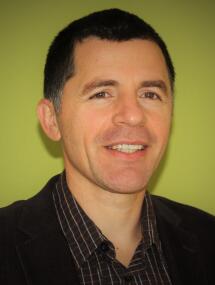
Danny Hucke is a researcher affiliated with the University of Siegen, Department of Electrical Engineering and Computer Science. His work focuses on advanced data compression techniques, algorithmic complexity, and formal verification of streaming systems. Education: PhD in Grammar-based compression for strings and trees (University of Siegen, 2019) Research Interests: Driven by challenges in grammar-based compression, empirical entropy metrics, and formal language processing in streaming environments, his research bridges theoretical computer science and practical algorithm design. Key areas include: Data Compression for Trees and Strings Sliding-Window Algorithms Circuit Complexity Algorithmic Entropy Analysis Scientific Contributions: His work has been recognized with a Best Paper Award at SPIRE 2016. Publications span top-tier venues like IEEE Transactions on Information Theory , ACM TOCT , and conferences including ICALP, STACS, and LATIN. Contact: Department of Electrical Engineering and Computer Science, University of Siegen, Hölderlinstrasse 3, D-57076 Siegen. Email: hucke@eti.uni-siegen.de . Phone: +49-271-740-3415. Office: Room H-A 7104. Collaborations: Conducted research within the group of Prof. Markus Lohrey, collaborating extensively with Moses Ganardi, Louisa Seelbach, and Eric Nöth.
Louisa Seelbach Benkner is a postdoctoral researcher at the University of Siegen , affiliated with the Faculty of Electrical Engineering and Computer Science. Her research focuses on data compression, particularly grammar-based compression, succinct data structures, universal source coding, and analytic combinatorics. She has contributed to theoretical advancements in tree compression and entropy analysis. Education: PhD in Computer Science from University of Siegen (2023). Research interests center on optimizing data compression techniques for tree structures, analyzing entropy bounds, and applying combinatorial methods to algorithm design. Her work bridges theoretical computer science and practical data encoding solutions. Selected publications highlight her expertise in hypersuccinct tree compression, empirical entropy comparisons, and fringe subtree analysis. Key collaborations include researchers like Markus Lohrey, Stephan Wagner, and Travis Gagie. Scientific awards: Capocelli Prize at DCC 2019 Best Student Paper Award at SPIRE 2020 Teaching roles include formal languages, complexity theory, logic, and algorithmics courses. She has also contributed to mathematics instruction in analysis and linear algebra.
Dr. Annika Heckel is a Researcher at the Department of Stochastics and Financial Mathematics, Ludwig-Maximilians-Universität München (LMU Munich). Her research focuses on discrete mathematics, probabilistic combinatorics, and random discrete structures, particularly random graphs. She has published extensively on topics like chromatic numbers of random graphs and their probabilistic behavior. Dr. Heckel completed her PhD at the University of Oxford in 2017 under the supervision of Professor Oliver Riordan. Her work bridges theoretical combinatorics with stochastic processes, addressing fundamental questions in graph theory. Notable contributions include studies on non-concentration phenomena in chromatic numbers and rainbow connection thresholds in random graphs. Her publications span high-impact journals such as the Journal of the American Mathematical Society and Random Structures and Algorithms. While no scientific awards are explicitly mentioned, her research indicates significant contributions to probabilistic combinatorics. She is affiliated with LMU Munich's Mathematical Institute and actively contributes to the academic community through peer-reviewed articles and collaborative research.
Professor Damian Bargiel serves as Head of Institute and holds the Professorship for Applied Geoinformatics in Landscape Planning within the Department of Landscape Planning & Nature Conservation at Geisenheim University. His work bridges advanced geospatial technologies with practical applications in agricultural monitoring and landscape planning. Professor Bargiel's research focuses on applied geoinformatics with particular expertise in remote sensing technologies , especially Synthetic Aperture Radar (SAR) satellite data. His work spans crop classification, agricultural land monitoring, habitat structure detection, and the integration of time series analysis with crop phenology information. He has developed innovative classification methods that significantly improve accuracy over conventional approaches by leveraging the temporal dimension of radar imagery. His publication record demonstrates consistent contributions to the field since 2011, with recent work expanding into satellite-based disease detection (2025) and small satellite Earth observation systems (2024). The research shows a clear progression from foundational work on TerraSAR-X applications to more integrated approaches combining multiple data sources and advanced machine learning techniques. Professor Bargiel is currently leading significant research initiatives including the AGRECO4CAST project (2025-2028), which aims to develop a transdisciplinary assessment framework for agroecological transitions in European agroforestry landscapes. This EU and German government-funded project reflects his expanding research scope into sustainable agricultural systems and policy-relevant applications of geospatial technologies. His work provides valuable methodological advances for agricultural monitoring systems and contributes to practical applications in precision agriculture, landscape planning, and environmental conservation. The integration of technical remote sensing expertise with real-world agricultural and landscape planning challenges represents the distinctive contribution of Professor Bargiel's research program.
Steven Ruggles is Regents Professor of History and Population Studies at the University of Minnesota and Director of the Institute for Social Research and Data Innovation. He is best-known as the creator of IPUMS, the world's largest population database providing over two billion observations describing people residing in 107 countries between 1703 and 2022, including every respondent to the surviving U.S. censuses of 1790 to 1940. His work bridges historical demography, data science, and population studies. Ruggles has published extensively on historical demography, with research focusing on long-run changes in multigenerational families, single parenthood, divorce, and marriage patterns, as well as methodological innovations for population history. His work integrates computational methods with historical analysis, pioneering the use of large-scale population databases for demographic research. He has made significant contributions to understanding census technology evolution, privacy protection in demographic data, and the development of historical population infrastructure. His publications reveal a strong focus on the intersection of data science and historical demography, with particular attention to privacy protection methodologies, census data quality, and the development of large-scale population databases. Recent work examines the political dimensions of census technology, the challenges of differential privacy implementation, and the historical evolution of demographic data collection. King of Quant (Wired Magazine, 1995) Wonkblog-Certified Data Wizard (Washington Post Wonkblog, 2014) MacArthur Fellowship President of the Population Association of America (2015) President of the Association of Population Centers (2017-2018) President of the Social Science History Association (2018-2019) Ruggles has led major data infrastructure projects including IPUMS, which has transformed access to historical population data for researchers worldwide. His work has secured substantial funding for developing and maintaining population databases, enabling new research across multiple disciplines. As Director of the Institute for Social Research and Data Innovation, he oversees a major research center focused on data-driven social science. Through IPUMS and related projects, Ruggles has established one of the most significant population data infrastructure systems in the world, supporting research across history, sociology, economics, and public health. His team has developed innovative methods for harmonizing census microdata across time and space, creating unprecedented opportunities for comparative historical demographic research.
Prof. Manuel Bodirsky is a Professor of Algebra and Discrete Structures at Technische Universität Dresden since August 2014. He leads the Algebra and Discrete Structures group within the Faculty of Computer Science and is affiliated with the International Center for Computational Logic (ICCL). His research focuses on constraint satisfaction problems (CSP), algebraic methods in computer science, computational logic, Ramsey theory, model theory, and discrete mathematics. Notable projects include exploring the algebraic tractability of CSPs and applying universal algebra to classify computational complexity. His work frequently intersects with combinatorics, graph theory, and theoretical computer science. Recent publications address advanced topics like temporal CSPs, spectrahedral shadows, and resilience problems using valued CSP frameworks. He maintains active collaborations in computational algebra and logic, contributing to both theoretical foundations and algorithmic applications. Education: Not explicitly listed in provided texts but inferred to include advanced studies in mathematics and computer science. Research interests span foundational areas such as: Constraint satisfaction problem complexity classification Applications of universal algebra to computational problems Model theory and finite structures Combinatorial properties of graphs and tournaments Algorithmic approaches to algebraic and logical systems His recent articles emphasize methodological innovations, including reductions to semidefinite programming, Ramsey-theoretic techniques, and gadget-based transformations. Despite no listed academic awards in the provided data, his prolific publication record reflects significant contributions to theoretical computer science and discrete mathematics. No student advisees or grant details were explicitly mentioned, though his group likely engages in funded research projects given the institutional context.
Yann Strozecki is an Associate Professor (Maître de Conférences HDR) at the University of Versailles Saint-Quentin, where he is based in the DAVID Laboratory and leads the ALMOST research team focused on algorithms and stochastic models. He is currently on a part-time assignment at LIGM, Gustave Eiffel University, and has previously held positions at LIP6 (RO team), Paris-Sud University (ALGO team), and completed a postdoctoral fellowship at the University of Toronto's Theory Group. He earned his PhD from Paris Diderot (Paris 7) under Arnaud Durand. His research lies at the intersection of theoretical computer science and discrete mathematics, with core interests in: Enumeration complexity, especially delay and space constraints Algorithmic game theory, particularly simple stochastic games (SSGs) Graph and matroid algorithms Cheminformatics and molecular structure generation Sparse polynomials and algebraic complexity Analysis of his recent publications reveals a strong trend in developing efficient enumeration algorithms with provable delay and space bounds, advancing the theoretical foundations of output-sensitive computation. He also contributes to practical algorithms for Cloud RAN scheduling and cheminformatics, often combining theoretical rigor with real-world applications. His work on geometric amortization and strategy improvement in SSGs demonstrates innovation in algorithm design. Notable scientific contributions include: Generic strategy improvement methods for SSGs Polynomial-delay enumeration via closure operations Efficient deterministic scheduling for low-latency networks Tools for molecular cage generation in chemistry Yann Strozecki actively supervises PhD and master’s students, including Noé Demange, Maël Guiraud, and Xavier Badin de Montjoye. He co-organizes the ALMOST team seminar and has advised numerous interns in algorithmics and game theory. His research has been supported through collaborations with Nokia Bell Labs (CIFRE thesis) and interdisciplinary projects in cheminformatics and networking.
Dr. Peter Kissmann is a researcher in the Computer Science Department at Universität des Saarlandes, Germany, affiliated with the Foundations of Artificial Intelligence (FAI) Group. His work focuses on automated planning systems, particularly in optimal and net-benefit planning domains. Research Interests: His primary research areas include Artificial Intelligence, Automated Planning, Symbolic Reasoning, Heuristic Search, and Knowledge Representation. He specializes in BDD-based planning, variable ordering, and symbolic search algorithms for optimal planning. The 15 most recent publications reflect his sustained contributions to the International Planning Competitions (IPC) from 2008 to 2014, showcasing evolution in planner design, including support for conditional effects, bidirectional search, improved variable ordering, and integration of modern BDD libraries like CUDD. These works demonstrate deep technical innovation in planner efficiency, robustness, and scalability. Scientific Awards: No awards mentioned in the provided text. Advising and Grants: There is no explicit information about students or grant funding in the provided material. However, his leadership in developing and releasing competitive planning systems suggests involvement in research projects, possibly with student contributors or collaboration within the FAI group. Labs and Teams: He is a member of the Foundations of Artificial Intelligence (FAI) Group at Universität des Saarlandes, which develops advanced planning systems and participates in international competitions like the IPC.
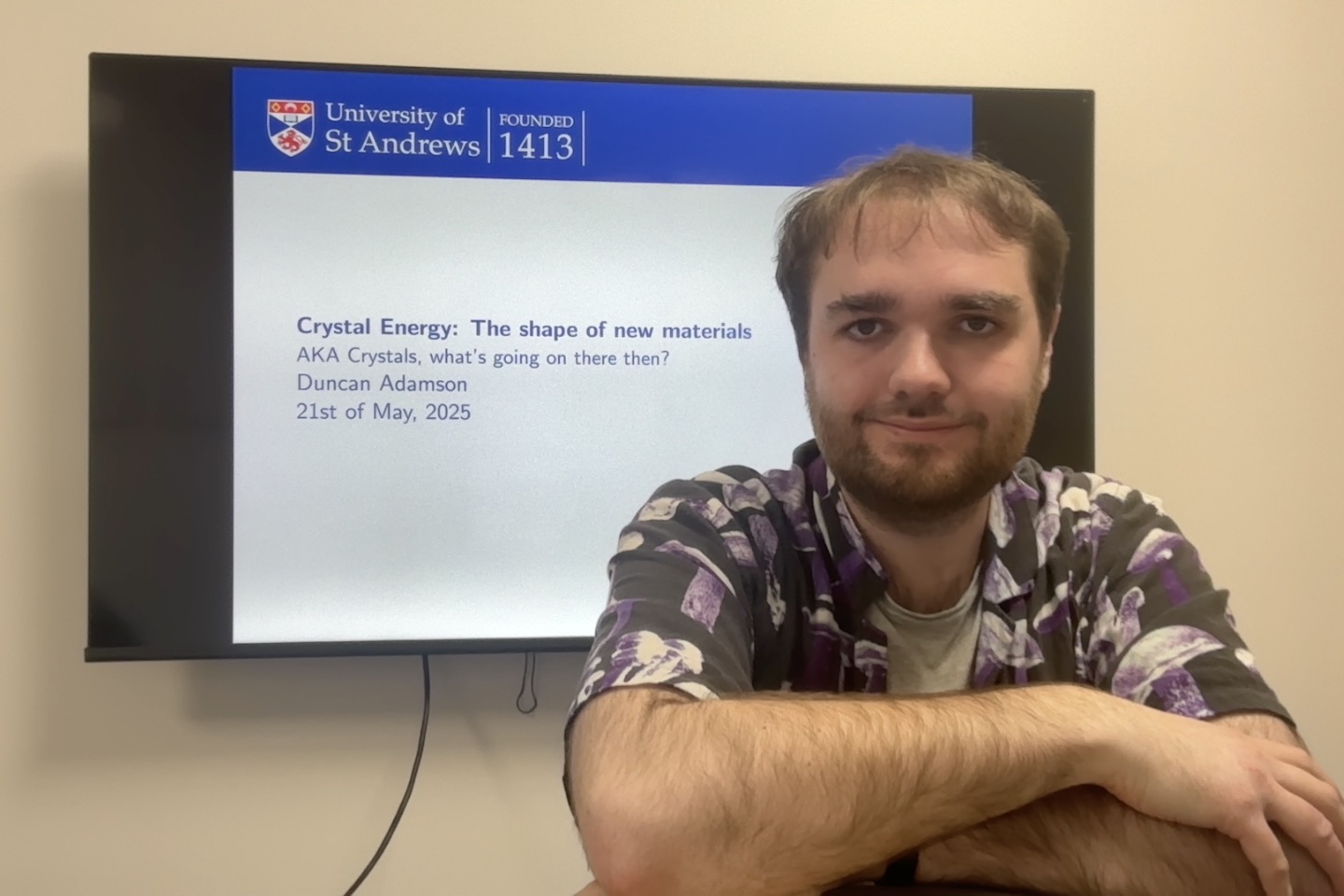
Duncan Adamson is a Lecturer in the School of Computer Science at the University of St Andrews, United Kingdom. He has held prior research positions at the Leverhulme Research Centre for Functional Materials Design, the University of Göttingen, Reykjavik University, and the University of Liverpool. His academic foundation includes a PhD from the University of Liverpool supervised by Prof. Igor Potapov and undergraduate studies at the University of Glasgow. His research lies at the intersection of theoretical computer science and discrete mathematics, with a focus on combinatorics on words , algorithm design , crystal structure prediction , and temporal graphs . He explores symmetry in multidimensional words, develops algorithms for combinatorial enumeration, and investigates computational hardness in materials science. His work often bridges abstract theory with real-world applications in chemistry and robotics. The recent publications show a strong trend in combinatorial algorithms , particularly in enumeration, ranking, and optimization over structured words, graphs, and sequences. A significant portion of his work involves the k-centre problem for implicitly defined combinatorial classes and temporal graph colouring , with increasing emphasis on algorithmic complexity and practical implementation. His 2024 paper on harmonious colourings in temporal matchings was awarded best paper at SAND 2024, highlighting the impact of his research. Scientific Awards: Best Paper Award, SAND 2024 – 'Harmonious Colourings of Temporal Matchings' Duncan Adamson has been supported by the Leverhulme Research Centre for Functional Materials Design during his PhD and postdoctoral work. While no formal advisees are listed, his supervision by leading researchers and collaborative projects suggest active mentorship and team integration. He teaches core computer science modules at St Andrews, including CS2001 and CS3302, and maintains a busy research schedule with weekly meetings and supervisory responsibilities. His research is conducted within the Algorithms and Complexity group at St Andrews, continuing collaborations with international teams in Iceland, Germany, and beyond. Projects often involve interdisciplinary efforts, especially in applying computational techniques to materials science and chemistry.
Dr. Bogdan Savchynskyy is a Senior Researcher and Group Leader at the Computer Vision and Learning Lab, Heidelberg University. His academic journey includes roles at TU Dresden and the Heidelberg Collaboratory for Image Processing. He holds a Ph.D. in Computer Science from National Technical University of Ukraine (Kiev Polytechnic Institute). Savchynskyy's research focuses on combinatorial optimization, graphical models, and their applications in computer vision and machine learning. Education: PhD in Computer Science, National Technical University of Ukraine (2009) Postdoc, Heidelberg Collaboratory for Image Processing (2009–2014) His research interests include large-scale combinatorial optimization, multi-graph matching, and unsupervised learning. Notable achievements include developing state-of-the-art graph matching solvers and securing DFG grants for projects like OPTEMA and UMDISTO. He has published extensively in top venues such as CVPR, ICCV, and AAAI. Dr. Savchynskyy supervises students in projects involving optimization techniques and teaches courses like Applied Combinatorial Optimization . His lab hosts regular seminars on convex and combinatorial optimization. Awards: DFG Grants (2016, 2022, 2024) Outstanding Reviewer Awards (ICML 2022, CVPR 2016/2015) Best Student Paper Award at CVPR 2014 Key projects include the Graph Matching Benchmark and Tracking-by-Assignment , advancing bioimaging and computer vision applications. His lab fosters collaboration in optimization and interdisciplinary research.
Christian Kirches is a full professor at the Institute for Mathematical Optimization within the Carl-Friedrich-Gauß-Fakultät (Faculty of Mathematics, Technische Universität Braunschweig). His research focuses on nonlinear optimization , mixed-integer optimal control , and robust optimization for dynamic systems. He was awarded the Klaus-Tschira prize (2011) for public science communication and the Hengstberger prize (2014) for junior researchers, and received an ERC Consolidator Grant (2022) for his work on optimization under uncertainty. Alumni of Heidelberg University (Diploma, Doctorate, Habilitation) Former resident associate at Argonne National Laboratory and postdoctoral appointee at the University of Chicago Leader of a junior research group (2013–2017) at Heidelberg University His recent publications highlight advancements in mixed-integer nonlinear programming , real-time control systems , and optimization for sustainable energy and transportation . He collaborates with researchers on projects like wind farm control, hydrogen aviation networks, and chromatography process optimization. His methodological work on sum-up rounding , trust-region algorithms , and combinatorial integral approximation has been published in journals such as SIAM Journal on Optimization, Mathematical Programming, and IEEE Control Systems Letters. Kirches also serves as area coordinator for Optimization Online and was associate editor for OR Spectrum (2022–2024). Scientific Awards: Klaus-Tschira Prize (2011) Hengstberger Prize (2014) ERC Consolidator Grant (2022) He is an elected member of the COIN-OR initiative and contributes to open-source optimization software. His lab at TU Braunschweig develops algorithms for dynamic systems under uncertainty, with applications in energy management, autonomous traffic, and industrial processes.
Amin Coja-Oghlan is Professor of Efficient Algorithms and Complexity Theory at TU Dortmund University's Department of Computer Science. His research integrates probabilistic combinatorics, information theory, and statistical physics to solve fundamental problems in theoretical computer science. Education includes a doctorate in Mathematics (University of Hamburg, 2002) and habilitation in Computer Science (Humboldt University Berlin, 2005). Research advances understanding of phase transitions in constraint satisfaction problems, optimization landscapes, and random structures. Recent publications analyze SAT thresholds, group testing, and sparse matrix properties. Academic appointments include professorships at Goethe University Frankfurt and lectureships at Edinburgh and Warwick. Research contributions bridge discrete mathematics with computational complexity.
Sebastian Padó is a Professor and Chair of Theoretical Computational Linguistics at the Institute for Natural Language Processing (IMS) of the University of Stuttgart. He serves as Study Dean for Natural Language Processing and Computational Linguistics within Faculty 5 (Computer Science, Electrical Engineering, and Information Technology). His research focuses on computational semantics, leveraging data-driven approaches to model meaning in language, with applications in political discourse analysis, emotion analysis, and cross-lingual NLP. He leads projects such as CEAT (Emotion Analysis via Appraisal Theory), FIBISS (Fact-Checking in Biomedical Information), and MARDY (Argument Dynamics Modeling). Collaborations include institutions like the University of Tübingen, University of Pisa, and University of Zagreb. His work bridges computational linguistics with social sciences, addressing topics like political positioning, media bias detection, and historical text analysis. Padó oversees the Department of Theoretical Computational Linguistics, managing research and teaching activities. His group's contributions span semantic modeling, neural network interpretability, and interdisciplinary applications in digital humanities. He actively publishes in top venues, with recent work on multilingual models, political text analysis, and transformer architectures. Key achievements include developing methods for emotion analysis in literature and news, creating datasets on political debates (e.g., DEbateNet-mig15), and advancing frame semantics through distributional models. His lab also explores explainable AI techniques for NLP systems, emphasizing transparency and ethical considerations.
Yang Feng is a Professor and Ph.D. Program Director in the Department of Biostatistics at New York University's School of Global Public Health. He holds affiliate faculty positions at the Center for Data Science and PRIISM. His research focuses on Machine Learning, High-Dimensional Statistics, Network Models, and Applications in Biostatistics and Public Health. Key contributions include advancements in Neyman-Pearson classification, federated learning, transfer learning, and high-dimensional statistical methods. He has authored influential papers in journals such as the Annals of Statistics, JASA, and Journal of Machine Learning Research. Recipient of prestigious honors: ASA Fellow, IMS Fellow, and ISI Elected Member. Leading an NSF-funded project on high-dimensional multi-task learning inference (Grant DMS-2324489). Editorial roles at top journals including JASA and AOAS. Research emphasizes theoretical foundations and practical applications, spanning statistical methodology, algorithm development, and interdisciplinary collaborations in health and data science.
Nexhmedin Morina is Professor of Clinical Psychology, Psychotherapy, and Health Psychology at the University of Münster. His research explores trauma psychology, comparison processes, and intervention efficacy. He investigates cognitive mechanisms in PTSD and depression, social comparison in well-being, and climate-related behavioral interventions. His work combines experimental psychopathology with meta-analytical approaches. Morina's publications demonstrate consistent focus on trauma treatment optimization and computational modeling of psychological processes. Recent work examines transformer networks in learning Markov data structures. He leads research on refugee mental health and disaster psychology, with field studies in conflict zones. His lab develops brief interventions for populations exposed to war and forced migration.