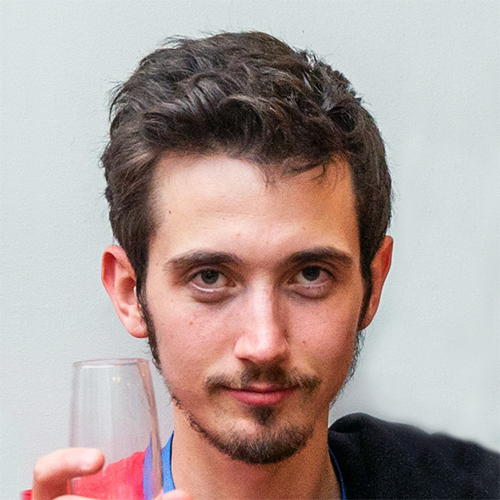
Matteo Biagiola is a Researcher in the Faculty of Informatics at Università della Svizzera italiana (USI), Lugano, Switzerland, and a PostDoctoral researcher at the University of St. Gallen (HSG). He specializes in software testing, particularly test generation for Web applications, deep reinforcement learning systems, and autonomous driving software. His work focuses on enhancing AI robustness through testing and improving software testing via AI techniques. Biagiola holds a Ph.D. from Università degli Studi di Genova (Italy) in collaboration with Fondazione Bruno Kessler, Trento. He has conducted postdoctoral research at USI on the Precrime ERC Advanced Grant project under Paolo Tonella. His research tools include μPRL (mutation testing for RL agents), STILE (web test parallelization), and GenBo (boundary state generation for autonomous systems). Education: Ph.D.: Università degli Studi di Genova / Fondazione Bruno Kessler (2016–2020) M.Sc.: Università Politecnica delle Marche (2014–2016) Affiliations: PostDoc & Scientific Collaborator: University of St. Gallen / USI (2025–present) PostDoc: USI (2020–2025) Visiting Ph.D. Student: University of British Columbia (2018) His research interests span AI-driven testing tools, autonomous system validation, and simulation-based testing. He has received the Distinguished Paper Award at ICST 2025 and serves on program committees for major conferences like FSE, ICSE, and ICST. He co-organizes workshops like DeepTest (co-located with ICSE) and the Cyber-Physical Systems tool competition (SBFT).
Laurent Suppan is a researcher at the University of Geneva, focusing on prehospital emergency care, medical education, and simulation-based training. His work spans airway management, stroke detection, pandemic response, and technology-enhanced healthcare protocols. Affiliation: University of Geneva Key research areas: Emergency Medicine, Medical Education, Public Health Interventions His research explores prehospital clinical decision-making, device evaluation (e.g., supraglottic airways), and digital health tools like mobile apps and serious games to improve emergency care. Recent studies examine student paramedic training, medication error reduction, and pandemic preparedness. Publications include analyses of ventilation techniques during cardiac arrest, hypercapnia management in acute heart failure, and prehospital arterial blood gas evaluation. Collaborative work with institutions in Switzerland highlights his commitment to advancing EMS protocols and education. While no scientific awards are listed here, Suppan's supervision of 4 works and extensive publication record in journals like Journal of Clinical Medicine and BMC Emergency Medicine demonstrate academic leadership. His methodological rigor is evident in randomized controlled trials, retrospective cohort studies, and framework development projects. Current projects involve real-time patient modeling for major incidents and enhancing first responder recruitment during crises.
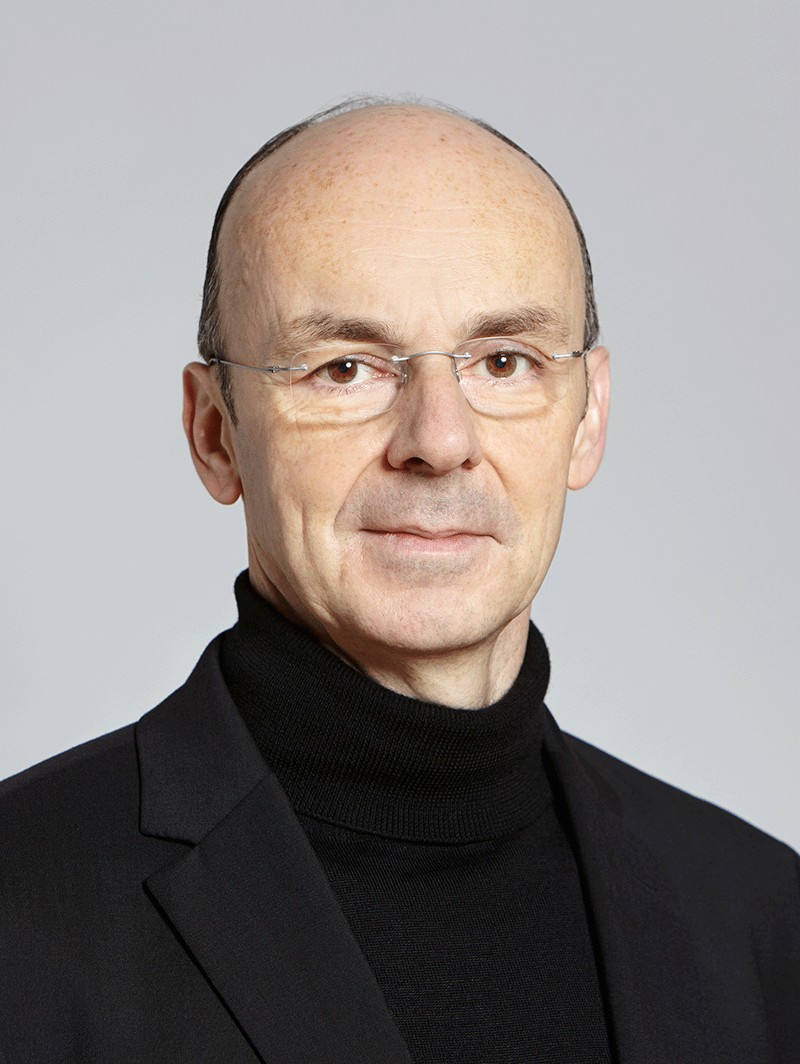
Prof. Dr. Helmut Bölcskei is a Full Professor of Mathematical Information Science at ETH Zurich's Department of Information Technology and Electrical Engineering. He holds a joint affiliation with the Department of Mathematics. His academic journey includes a Dipl.-Ing. and Dr. techn. from Vienna University of Technology, followed by postdoctoral research at Stanford University and industry roles at Iospan Wireless and Celestrius AG. He has been at ETH Zurich since 2002, contributing to applied mathematics, machine learning theory, signal processing, and statistics. Education : 1994: Dipl.-Ing., Vienna University of Technology 1997: Dr. techn., Vienna University of Technology Industry Experience : Co-founder of Iospan Wireless (acquired by Intel) and Celestrius AG His research focuses on applied mathematics , machine learning theory , and data science , with emphasis on neural network approximation, metric entropy, and signal processing. Recent work explores theoretical limits of deep learning and nonlinear system identification. His publications highlight advancements in quantization, compression, and system complexity analysis. Prof. Bölcskei has received numerous accolades, including IEEE Fellow status, the 2010 Vodafone Innovations Award, and the ETH 'Golden Owl' Teaching Award. He served as Editor-in-Chief of the IEEE Transactions on Information Theory (2010–2013) and has held editorial roles in multiple journals. His leadership includes roles on the Board of Governors of the IEEE Information Theory Society and as a delegate for faculty appointments at ETH Zurich. Labs/Teams : Mathematical Information Science Group at ETH Zurich's Department of Information Technology and Electrical Engineering
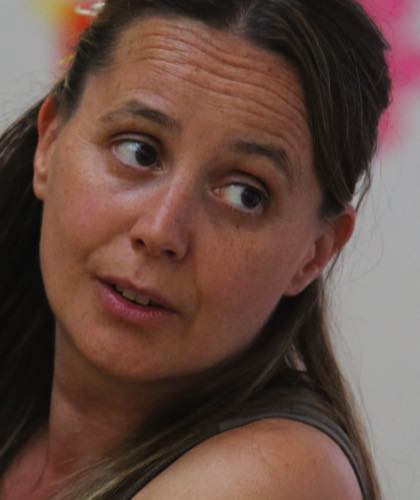
Dr. Manuela Filippa is a researcher at the University of Geneva and Geneva University Hospitals (HUG), collaborating with Professors Petra Hüppi and Didier Grandjean. She holds a PhD in Developmental Psychology from the University of Paris Ouest Nanterre and has conducted postdoctoral research at Paris Descartes University, the University of Valle d'Aosta, and HUG. Her work focuses on maternal voice effects on preterm infants, music psychopedagogy, and early childhood development. She teaches Psychology of Music at the University of Valle d'Aosta and has authored popular science books including Sounds Drops (2014) and Early Vocal Contact and Preterm infants brain development (2017). Education : PhD in Developmental Psychology (University of Paris Ouest Nanterre) Postdoctoral Training : Paris Descartes University (2015), University of Valle d'Aosta (2017), HUG (2017–present) Her research investigates bio-behavioral mechanisms of early vocal interactions, preterm infant interventions, and musical ontogenesis. Key findings include maternal singing/speech improving preterm vagal activity and pain management. Over 150 peer-reviewed articles and book chapters highlight her contributions to neonatal care and music-based therapies. Awards include the 2017 International Acta Paediatrica Young Investigator Award and 2013 Prix Temps Maman. She advises over 15硕士 students and collaborates internationally on projects like the CALADESI and SHER PROJET initiatives. Her work bridges neuroscience, pedagogy, and clinical practice, emphasizing family-centered care in neonatal units. Labs/Teams: Active in Hüppi and Grandjean's developmental neuroscience groups, leading music intervention studies in NICUs globally.
Thomas Weber is a Full Professor at the École Polytechnique Fédérale de Lausanne (EPFL) , holding the Chair of Operations, Economics, and Strategy (OES) within the College of Management (CDM) . He serves as Director of the Doctoral Program in Management of Technology and contributes to academic governance through roles in committees such as the CDM Academic Evaluation Committee. PhD Students: Zhang Ru, Han Jun, Mark Michael, Razeghian Jahromi Maryam Email: thomas.weber@epfl.ch His research spans behavioral economics, risk analysis, and optimization in dynamic systems, with a focus on sharing economy applications, inventory management, and cryptocurrency market dynamics. Recent publications address robust decision-making frameworks, self-exciting point processes, and economic implications of information endogeneity. Key teaching activities include: Information: Strategy & Economics Innovation & Entrepreneurship in Engineering Microeconomics
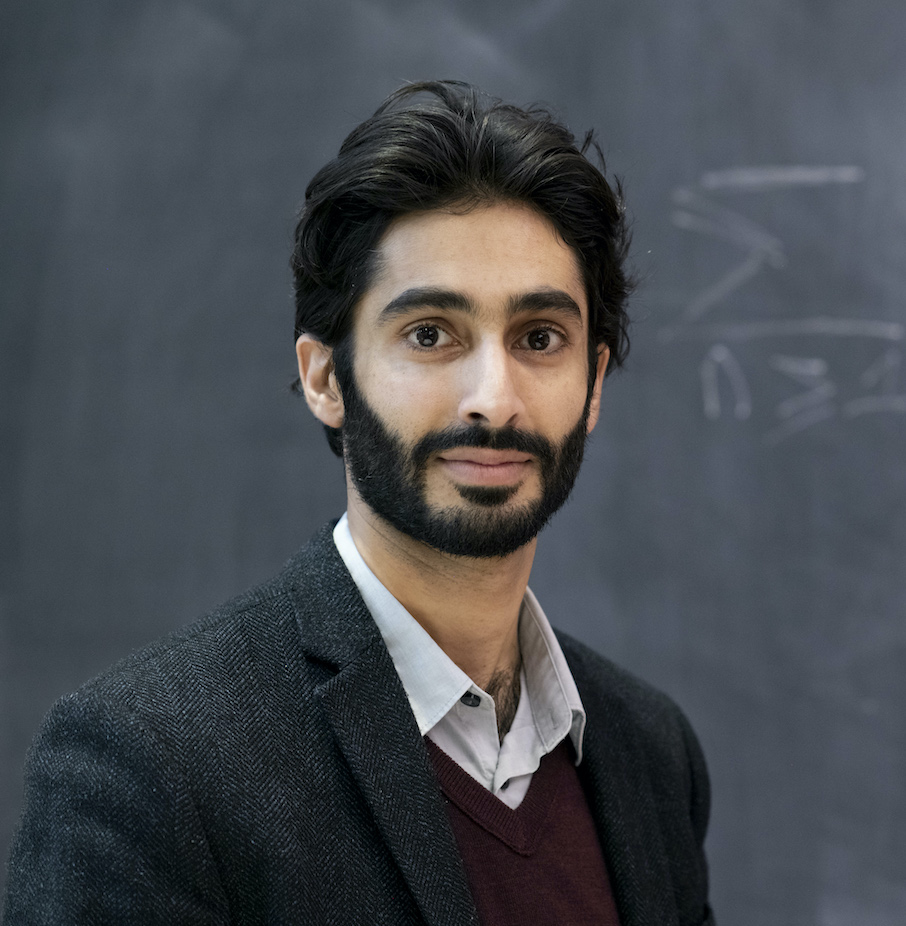
Shahin Tavakoli is a Senior Lecturer in the Research Institute for Statistics and Information Science at the Geneva School of Economics and Management (University of Geneva). He holds a PhD in Mathematical Statistics from EPFL and has held positions as a University Research Fellow at the University of Cambridge and a tenure-track Assistant Professor at the University of Warwick. His research focuses on functional data analysis with applications in neuroimaging, phonetics, biophysics, econometrics, and genomics. Education: BSc/MSc in Mathematics (EPFL), PhD in Mathematical Statistics (EPFL). Key roles include Associate Editor for the Journal of Statistical Planning and Inference and proposer for a JRSS B discussion paper. Teaching includes Applied Bayesian Statistics, Multivariate Analysis, and Mathematics courses at the University of Geneva. Research interests emphasize statistical methodologies for complex data structures, including high-dimensional functional time series and spatial modeling of linguistic data. Notable recent publications address phonetic analysis, brain imaging, and econometric factor models. Collaborations span institutions like the University of Cambridge, University of Warwick, and LMU Munich. Advising includes PhD students Marco Palma and Beatrice Matteo, with contributions to projects such as functional regression clustering and normative brain mapping. His work bridges theoretical statistics with applied domains, reflecting interdisciplinary impact across natural and social sciences.
Luka Markić is a postdoctoral researcher at the University of Zurich and the Center for Democracy Aarau (ZDA), and has served as a Lecturer at the Faculty of Law, University of Zurich since 2024. He holds a Dr. iur. degree and has a strong background in public law, constitutional history, and political and legal philosophy. His work focuses on direct democracy, political rights, and legal protection procedures in Switzerland. Education: Admitted to the bar of the Canton of Schwyz (2024) Doctorate (Dr. iur.) from the University of Zurich (2017–2021) Master of Law (MLaw), University of Zurich (2015–2017) Bachelor of Law (BLaw), University of Zurich (2011–2015) His research interests include direct democracy , political rights , constitutional law , administrative law , and digital democracy . He has analyzed legal enforcement of political rights in cantonal contexts, restrictions during emergencies, and challenges in electronic voting. His publications span court decision commentaries, book chapters, and legal articles on Swiss political and administrative law. Luka is also affiliated with the Center for Democracy Aarau (ZDA), where he contributes to research on direct democracy and legal frameworks.
Daphné Bavelier is a prominent Professor in the Department of Psychology at the University of Geneva, Switzerland, with an extensive research portfolio spanning cognitive neuroscience, video game effects on cognition, and neuroplasticity. Her work has established her as a leading authority on how digital experiences, particularly video gaming, reshape brain function and cognitive abilities. Professor Bavelier's primary research interests focus on understanding how action video game play enhances various cognitive functions including attentional control, perceptual learning, and task-switching abilities. Her groundbreaking work demonstrates that video games are not merely entertainment but powerful tools for cognitive enhancement, with implications for education, rehabilitation, and cognitive training across the lifespan. She investigates how gaming experience alters neural processing in visual attention, spatial cognition, and multitasking abilities, challenging traditional assumptions about screen time effects. Analysis of her recent publications reveals a clear trajectory toward translational research, where fundamental discoveries about gaming's cognitive benefits are being applied to clinical populations. Her work now spans amblyopia treatment through video game therapy, anxiety reduction in adolescents, and cognitive interventions for autism spectrum disorder. Notably, her research increasingly examines contextual factors rather than screen time alone, emphasizing that how technology is used matters more than mere exposure duration. Professor Bavelier has supervised 42 academic works throughout her career, mentoring the next generation of cognitive scientists. Her research has garnered significant attention, with many publications accumulating thousands of views and downloads, reflecting the broad impact of her work across multiple disciplines including psychology, neuroscience, education, and clinical practice.
Wilfried Pfingsten is a Senior Scientist at the Paul Scherrer Institute (PSI) within the Laboratory for Waste Management, part of the Center for Nuclear Engineering and Sciences. He holds an adjunct Lecturer role at ETH Zurich's Department of Environmental Systems Science (2010–2020). His research focuses on nuclear waste management, reactive transport modeling, and geochemical processes in subsurface systems. Pfingsten leads projects such as MODATS (monitoring data management) and contributes to global initiatives like EURAD and SITEX.Network. Education: PhD (Dr.-Ing.) in Civil Engineering from Leibniz University Hannover (1990), with earlier roles as a Research Scientist at the Institute of Water Resources Management (1987–1991) and Laserzentrum Hannover (1987). Research Interests: Machine learning applications in geochemical modeling, parameter uncertainty quantification, and digital twins for nuclear waste disposal. He has authored over 50 peer-reviewed papers and delivered presentations at major conferences including EURAD Annual Events and the International Conference on Nuclear Engineering. Professional Contributions: Member of PSI’s Research Committee (2003–2013), CCEM Research Committee (2006–2017), and emergency staff (2010–2024). Active in civil society engagement through UMAN project dialogues on nuclear waste uncertainties.
Miloš Stojaković is a Full Professor at the Department of Mathematics and Informatics, Faculty of Sciences, University of Novi Sad, Serbia. He has held this position since 2016, following roles as Associate Professor (2011–2016) and Assistant Professor (2006–2011). His research focuses on positional games, discrete and computational geometry, discrete random structures, combinatorial algorithms, and graph theory. He leads the Foundations of Computer Science group since 2018. Stojaković earned his Ph.D. in Computer Science from ETH Zurich (2005), advised by Emo Welzl and Tibor Szabó, and holds M.Sc. and B.Sc. degrees from the University of Novi Sad. He has been recognized with the Dr Z. Đinđić Award (2008) for best young scientist in Vojvodina and the Best Student of University of Novi Sad Award (1998/99). He has advised three Ph.D. students: Mirjana Mikalački, Marko Savić, and Jelena Stratijev. His work spans over 60 publications, including seminal contributions to positional games and computational geometry. He serves on editorial boards of Discrete Mathematics & Theoretical Computer Science and the Novi Sad Journal of Mathematics . Stojaković teaches courses such as Combinatorial Algorithms, Graph Theory, and Theoretical Computer Science at the University of Novi Sad. He has also taught specialized courses on positional games at institutions like the University of Buenos Aires and Eötvös Loránd University Budapest. His research interests emphasize algorithmic and combinatorial aspects of games, geometry, and graph theory.
Robert Dalang is a Full Professor and Chair of Probabilities at École Polytechnique Fédérale de Lausanne (EPFL) in Switzerland. He is affiliated with the School of Basic Sciences, Department of Mathematics, specifically the Probability Section. His office is located in building MA, room B2 493 at EPFL's Lausanne campus. He also serves as a Full Professor in the Section of Mathematics (SMA) and for the Doctoral Program in Mathematics (EDMA). Professor Dalang's research focuses on probability theory and stochastic analysis. His work primarily centers on: Stochastic partial differential equations (SPDEs), particularly stochastic heat and wave equations Brownian motion and Brownian sheet Lévy processes and Lévy white noise Hitting probabilities and polarity Fractal properties of random fields Stochastic optimization problems His recent publications demonstrate a continued focus on the theoretical properties of solutions to stochastic partial differential equations, including their regularity, hitting probabilities, and asymptotic behavior. He has made significant contributions to understanding the fine properties of solutions to stochastic heat and wave equations, particularly in critical dimensions. Professor Dalang has served on the elected committee for the Pension fund PUBLICA since Fall 2007, being reelected for 2009-2012. His work on this committee has focused on preserving employee interests during the transition from a defined benefits system to a defined contributions system. He has supervised numerous PhD students, including: Candil David Jean-Michel Chen Le Ciccarella Carlo Conus Daniel Dumas Frédéric Humeau Thomas Marie Jean-Baptiste Pu Fei Rossel Jean-Benoît Vinckenbosch Laura Professor Dalang teaches courses including Analysis III, Analysis IV, and Theory of Stochastic Calculus at EPFL.
Professor Alfredo Franco-Obregón is a Research Associate Professor at the National University of Singapore (NUS), with multiple appointments across the Yong Loo Lin School of Medicine. He holds positions in the Department of Surgery and the Department of Physiology, and is affiliated with the Institute for Health Innovation & Technology, the Healthy Longevity Translational Research Programme, the NUS Centre for Cancer Research, and the Nanomedicine Translational Research Programme. He leads the Biolonic Currents Electromagnetic Pulsing Systems (BICEPS) Laboratory, which focuses on developing non-invasive electromagnetic technologies to enhance muscle function and systemic health, particularly for aging populations and those with mobility limitations. Dr. Franco-Obregón's research centers on understanding how biophysical forces, particularly mechanical and electromagnetic stimuli, translate into tissue regeneration and survival. His work specifically investigates the role of Transient Receptor Potential (TRP) channels, particularly TRPC1, in skeletal muscle development and how magnetic fields can activate mitochondrial respiration through a process he terms "Magnetic Mitohormesis." This research has significant implications for metabolic health, cancer therapy, and aging interventions. His laboratory has demonstrated that brief (10-minute) weekly exposure to low-energy pulsed electromagnetic fields (PEMFs) can enhance muscle development, improve metabolic efficiency, and even produce anticancer effects through the activation of muscle secretome responses. His recent publication record demonstrates a strong focus on translating these findings into clinical applications, with numerous randomized controlled trials examining the effects of PEMF therapy on conditions including knee osteoarthritis, Achilles tendinopathy, metabolic disorders, and breast cancer. His research bridges fundamental cellular mechanisms with practical clinical applications, showing how magnetic field exposure can serve as a non-invasive exercise mimetic for populations unable to engage in physical activity. 2020: Innovation of the Year Product Winner by the Ageing Asia World Ageing Festival (for QuantumTx) 2015: Wong Hock Boon Society Best Mentor Award (NUS) 2008: Goldenen Eule (The Golden Owl Excellence in Teaching Award) (ETH) 1990: Martin Luther King Mentorship Award (UCSF) Dr. Franco-Obregón is actively engaged in mentoring students and collaborating on international research projects. He has established the BICEPS Laboratory as a hub for interdisciplinary research, bringing together engineers, clinicians, and basic scientists. His work has led to the founding of QuantumTx Pte. Ltd., a NUS spin-off company developing magnetic therapeutic devices, and he is currently conducting human clinical trials in Singapore, China, Southeast Asia, and the US to evaluate the efficacy of his magnetic therapeutic platforms. The BICEPS Laboratory operates at the intersection of engineering and clinical medicine, with a mission to develop non-invasive technologies that enhance muscle function and bioenergetics. The lab's research has significant potential to transform clinical practice, particularly in preventative medicine and rehabilitation. Dr. Franco-Obregón is also working to establish international collaborations, including potential student exchange programs between ETH/UZH and NUS, to further advance this field of research.
Juhan Aru is an Associate Professor in the Department of Mathematics at the École Polytechnique Fédérale de Lausanne (EPFL), affiliated with the Random Geometry (RGM) group. His research focuses on random geometry, Gaussian Free Fields (GFF), and stochastic processes , with applications to statistical mechanics and mathematical physics. He teaches courses such as Analysis IV, Probability, Gaussian Processes, and Introduction to Random Geometry. Affiliations: SB MATH RGM (Random Geometry Group) EDMA - Enseignement (Mathematics Education) SMA - Enseignement (Mathematics Teaching) His research investigates critical phenomena in 2D statistical physics, including SLE processes, Liouville quantum gravity, and multiplicative chaos. Recent work explores the interplay between GFF properties and geometric/topological structures like excursion decomposition and thick points. He advises PhD students including Philémon Bordereau and Han Xiao, and has directed Guillaume Charles Woessner's thesis. His lab's website is https://www.epfl.ch/labs/rgm/ .
Prof. Dr. Aurelien Lucchi is an Assistant Professor in the Department of Mathematics and Computer Science at the University of Basel, Faculty of Science. His research group focuses on the intersection of optimization and machine learning, particularly in advancing theoretical understanding and algorithmic design for deep learning systems. His research interests include: Stochastic and non-convex optimization Deep learning theory and generalization Kernel methods and spectral analysis Transformer architectures and training dynamics Batch Normalization and initialization effects Modeling optimization via stochastic differential equations (SDEs) The recent publications (2023–2025) highlight a strong focus on theoretical machine learning, especially in characterizing optimization landscapes, generalization in kernel methods, and the role of noise and adaptive methods in training. There is a clear trend toward using advanced mathematical tools—such as random matrix theory, SDEs, and curvature analysis—to explain phenomena in deep learning. His group actively publishes in top venues including NeurIPS, ICML, ICLR, and AISTATS. Scientific awards and recognitions include: SNF Consolidator Grant (1.7M CHF) Prof. Lucchi leads an active research group with postdoctoral fellows and ongoing projects, including work on quantum machine learning and noise-adaptive optimization. He has secured competitive research funding and mentors early-career researchers. His group has received recent paper acceptances at ICLR 2025, AISTATS 2025 (oral), and NeurIPS 2024, indicating strong momentum in theoretical and algorithmic machine learning. He previously held a scientific research position at ETH Zurich (2014–2021) and earned his PhD from EPFL. The group is currently involved in two major ongoing projects: Designing and Training Hybrid Hierarchical Quantum Neural Networks with Quantum Advantage Noise-Adaptive Optimization Methods and their Robustness Properties
Jonathan Dong is a Researcher at the École Polytechnique Fédérale de Lausanne (EPFL) within the School of Engineering. He works at the Biomedical Imaging Laboratory (LIB), focusing on advanced imaging techniques and computational models. PhD Students: Hu Zhiyuan, Liu Yan His research spans biomedical imaging, computational optics, and machine learning applications in imaging inverse problems. Recent work emphasizes phase retrieval, optical reservoir computing, and quantum information in microscopy. Key article trends show expertise in MRI classification , optical tomography , deep learning for imaging, and scattering media analysis . Collaborations include technical development in optoacoustics and super-resolution microscopy. Contact: jonathan.dong@epfl.ch | Office: BM 4141, EPFL, Station 17, Lausanne