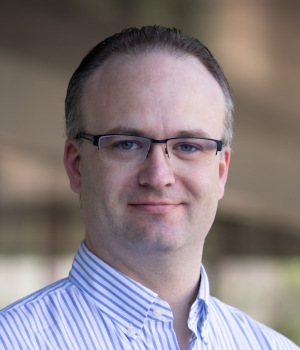
Xiang Yin is a Research Associate at the Department of Computing in Imperial College London , affiliated with the Computational Logic and Argumentation group (CLArg) . His work bridges Explainable AI (XAI) and Computational Argumentation (CA) , focusing on the explainability of Quantitative Bipolar Argumentation Frameworks (QBAFs) through attribution and counterfactual explanations. Research Interests: Explainable AI (XAI) Computational Argumentation Quantitative Bipolar Argumentation Frameworks Model Interpretability Human-AI Interaction Logical Reasoning for AI Publication Trends reveal a focus on argumentation-based explainability, with 2025-2024 works addressing large language models for claim verification, truth-discovery frameworks, and counterfactual explanations. Earlier works (2023-2022) explore random forest explanations, faithfulness criteria, and QBAF analysis. His 2018 publications on aircraft prediction systems demonstrate applied machine learning expertise. Education PhD in Artificial Intelligence under Prof. Francesca Toni and Dr. Nico Potyka Pre-PhD: Machine Learning R&D Engineer at Baidu Labs & Teams Xiang is part of the CLArg group at Imperial College London, focusing on integrating computational argumentation with AI explainability and contestability.
Eva Cantoni is a Full Professor at the Research Center for Statistics within the Geneva School of Economics and Management , University of Geneva. Her expertise spans robust statistical methodology, model selection, and applications in ecology and medicine. Ph.D. from University of Geneva Accredited European Statistician (FENStatS) Research Interests : She specializes in Robust statistics for real-world data Variable/model selection in high-dimensional settings Nonparametric and semi-parametric regression Zero-inflated and overdispersed count models Longitudinal and spatiotemporal data analysis Her work addresses ecological challenges (fish stock assessment), medical applications (hospital congestion modeling), and housing market analysis. Recent Trends in Publications : Recent articles focus on Confidence intervals for robust mixed models Editorial leadership in robust statistics Applications to fisheries science and public health Flexible modeling frameworks for complex data Comparative studies of statistical measures Extremes modeling in healthcare Leadership & Grants : She has served as: Vice-Dean for Teaching (2020-2023) Director of Master's in Statistics (2012-2019) Director of Applied Statistics Certificate (2015-2019) President, Swiss Federal Statistics Committee (2024-2027) Specialty Chief Editor, Frontiers in Applied Mathematics (2024) Grants include projects on Robust solutions for modern data (2023-2025) Sustainable fisheries modeling (2018-2021) Advancements in state-space models (2014-2017) Software Contributions : Developed R packages for robust statistical methods: confintROB (bootstrap confidence intervals) RobSSM (robust state-space models) R2_LMM (explained variation measures)
Florent Krzakala is a Full Professor at École polytechnique fédérale de Lausanne (EPFL) in Switzerland, holding positions across multiple departments including the School of Basic Sciences (SB), School of Engineering (STI), and specifically within the Department of Physics (IPHYS) and Department of Electrical Engineering (IEM). He leads the Information, Learning and Physics Laboratory (IdePHICS) and maintains an office at ELD 239, Station 11, 1015 Lausanne. His research bridges statistical physics and computational disciplines, with significant contributions to understanding the theoretical foundations of machine learning and optimization problems. Dr. Krzakala received his MSc in Physics from Orsay, France in 1999, followed by a PhD in Statistical Physics from Orsay, Paris XI, France in 2002, and completed a postdoctoral position at Roma La Sapienza in 2004. This strong foundation in physics has informed his interdisciplinary approach to computational problems. His research interests span Statistical Physics, Machine Learning, Probability and Statistics, Computer Science, Information Theory, Inference on Graphs, Random Constraint Optimization, and Computational Optics. Krzakala's work focuses on applying methods from statistical physics to problems in theoretical computer science, probability, and machine learning. He investigates how concepts from disordered systems and phase transitions can illuminate computational barriers in optimization and inference tasks. His research has particular relevance for understanding the behavior of neural networks, compressed sensing, and high-dimensional statistical models. Analysis of his recent publications reveals a strong trend toward understanding the fundamental limits of learning in high-dimensional settings, with particular emphasis on phase transitions, statistical-to-computational gaps, and the theoretical properties of deep learning architectures. His work frequently bridges rigorous mathematical analysis with practical machine learning applications, demonstrating how insights from statistical physics can inform algorithm design and theoretical understanding in AI. Krzakala actively mentors the next generation of researchers, supervising numerous PhD students whose work continues to advance these interdisciplinary fields. His laboratory serves as a hub for researchers exploring the intersection of physics and computation, fostering collaborations across traditional disciplinary boundaries. He teaches advanced courses including Fundamentals of Inference and Learning, Statistical Physics, and Statistical Physics for Optimization & Learning, which examine the connections between physical principles and computational methods. His educational materials, including lecture notes on statistical physics methods in optimization and machine learning, have become valuable resources for students and researchers worldwide. As founder and scientific advisor of the startup Lighton, Krzakala has also demonstrated a commitment to translating theoretical insights into practical applications, particularly in the realm of optical computing for machine learning tasks.
Vincent Vargas is a French mathematician and Associate Professor at the University of Geneva, where he joined in 2021 after holding a research position at CNRS. He completed his PhD in mathematics at Paris-Diderot University under the supervision of Francis Comets. His primary research interests include: Probability Mathematical Physics Statistical Mechanics Quantum Field Theory Gaussian Multiplicative Chaos Liouville Quantum Gravity Vargas has made significant contributions to the rigorous probabilistic construction of Liouville field theory and the proof of the DOZZ formula, work that was featured in Quanta Magazine. His research bridges mathematics and theoretical physics through probabilistic methods applied to quantum gravity. Analysis of his recent publications reveals a strong focus on mathematical structures underlying conformal field theory, with particular attention to Liouville quantum gravity across various geometries and the connections between probability and quantum physics. His notable scientific achievements have been recognized with prestigious awards: Marc Yor Prize (2019) George Pólya Prize (2022) Vincent Vargas has mentored several PhD students including Romain Allez, Yichao Huang, Guillaume Rémy, and Tunan Zhu. He has been actively involved in the academic community through organizing conferences and workshops, including a trimester at the Institut Henri Poincaré in 2015 and a conference on 'Probability and quantum field theory' in 2019. His professional activities extend to industry applications through his previous consultancy with Capital Fund Management (2007-2013) and his current role on the board of their research foundation.
Simon Ruffieux is a Senior Researcher and Lecturer at the Department of Computer Science, University of Fribourg, and a member of the Human-IST Institute. He currently leads the HIP-Initiative (Human-IST x SwissPost Initiative) and coordinates academic projects related to Swiss Post. His academic roles include Lecturer and Senior Assistant , reflecting his active engagement in teaching and research. His research focuses on leveraging advanced technologies to support individuals, particularly those with special needs. Key areas include: Machine Learning and Data Science for urban systems (e.g., bike-sharing optimization) Human-Computer Interaction (HCI), especially gesture recognition and multimodal interfaces Augmented and Virtual Reality applications in rehabilitation and assistance Development of smart glasses for visually impaired users Physiological signal analysis for workload classification The 15 most recent publications reveal a strong trend in applying AI and data science to real-world challenges, particularly in assistive technologies and urban mobility. His work often involves interdisciplinary collaboration, integrating computer science with psychology, rehabilitation, and industrial applications. There is a consistent emphasis on user-centered design and real-world usability. Simon Ruffieux has not been mentioned as receiving specific scientific awards in the provided text. He has advised or collaborated with several researchers, including Nicolas Spycher, Samuel Torche, and Nicolas Ruffieux, on projects related to forecasting, AR, and gesture recognition. While no formal grant details are listed, his leadership of the HIP-Initiative suggests involvement in externally funded academic projects. His work is closely tied to the Human-IST Institute, where he contributes to interdisciplinary research in human-centered computing. He is actively involved in research teams focused on assistive technologies, gesture interaction, and data-driven urban solutions. The Human-IST Institute serves as the primary hub for his collaborative efforts, particularly through the HIP-Initiative with Swiss Post.
Laurent Condat is a Senior Research Scientist at King Abdullah University of Science and Technology (KAUST) in Saudi Arabia, where he conducts research in optimization algorithms and their applications. He is affiliated with the College of Engineering, Department of Computer Science, and has previously held research positions at CNRS in France, working at GREYC in Caen and GIPSA-Lab in Grenoble. Dr. Condat received his PhD in 2006 from Grenoble Institute of Technology, followed by a 2-year postdoc in Munich, Germany. He was recruited as a permanent researcher by CNRS in 2008 and has been on leave from CNRS since November 2019 to work at KAUST. In February 2025, he was promoted to 'chargé de recherche hors classe' (senior research scientist) by CNRS. His research focuses on deterministic and stochastic optimization algorithms, convex relaxations, and applications to machine learning, signal and image processing. His work spans theoretical foundations of optimization methods to practical implementations for distributed and federated learning systems. He has developed several influential algorithms including RandProx, TAMUNA, and LoCoDL that address communication efficiency in distributed optimization. His recent publications demonstrate strong trends in communication-efficient distributed optimization, with particular emphasis on federated learning, compression techniques, and local training methods. His work bridges theoretical optimization with practical machine learning applications, showing consistent innovation in algorithmic design for large-scale problems. Best reviewer award at AISTATS 2025 Meritorious Service Award from Mathematical Programming Stanford's list of world's top 2% most influential scientists Dr. Condat has co-supervised PhD students including Daniele Picone and Julien Baderot. He serves as an Associate Editor for IEEE Transactions on Signal Processing and has presented his work at numerous international conferences including plenary talks at major optimization workshops. His research is supported through KAUST funding and collaborative projects with researchers worldwide.
Beat Rechsteiner is a Senior Lecturer and Postdoctoral Researcher at the Institute of Education, University of Zurich, specializing in educational processes within schools. He serves as Project Lead for the SNSF Research Project R2 (Regulation of Routines in Teaching Development) and contributes to theoretical and empirical research on teacher collaboration, school improvement, and social network analysis. His work emphasizes self-regulated learning, instructional capacity, and adaptive strategies for educational challenges. Doctoral Program in Education (University of Zurich, 2018–2022) Master’s in Educational Science (University of Zurich, 2014–2018) Secondary School Teacher Training (Zurich University of Teacher Education, 2005–2009) His research focuses on: Teacher collaboration networks and their impact on school improvement Professional development dynamics through experience sampling Brokerage mechanisms in educational change Adaptation of routines during crises (e.g., pandemic effects on math competencies) Recent publications highlight trends in social network analysis, school reform, and collective regulation. Key themes include boundary-crossing activities, data-driven school development, and stress management in collaborative environments. Awards include the GRC Travel Grant (2022). He actively reviews for journals like Teaching and Teacher Education and Journal of Educational Change , participates in international exchanges (University of Antwerp), and teaches graduate courses on systematic reviews, school improvement routines, and educational research.
Lenka Zdeborová is an Associate Professor at EPFL, jointly affiliated with the School of Basic Sciences and School of Computer and Communication Sciences. She leads the Laboratory of Statistical Physics of Computational Systems, where her research bridges statistical physics, machine learning, and computational biology. Education: PhD in Physics, Université Paris-Cité (2012) MSc in Fundamental Physics, École Normale Supérieure (2009) BSc in Physics, École Normale Supérieure de Lyon (2007) Her work focuses on phase transitions in learning algorithms, high-dimensional statistics, and neural network theory. Current projects investigate fundamental limits of machine learning, dynamics of graph neural networks, and applications to biological systems. Recent publications explore attention mechanisms in transformers, neural network depth advantages, and Bayes-optimal learning. Methodological innovations include cavity methods for hypergraphs and analysis of high-dimensional inference problems. Supervises doctoral students researching statistical physics approaches to machine learning and optimization. Teaches graduate courses in data science and machine learning for physicists.
Manos Athanassoulis is an Associate Professor in the Department of Computer Science at the College of Arts and Sciences, Boston University. He is the Founder and Director of the BU Data-intensive Systems and Computing (DiSC) lab and a member of the BU MiDAS group. His research focuses on data systems, particularly cloud data management, hybrid transactional/analytical workloads, and integration with emerging hardware such as non-volatile memory and heterogeneous computing. His educational background includes a PhD from EPFL (2014), an MSc in Computer Systems Technology, and a BSc in Informatics and Telecommunications from the University of Athens, Greece. Prior to BU, he was a Postdoctoral Researcher and Research Associate at Harvard University, supported by a SNSF Postdoc Mobility Fellowship. His research interests span data systems, database architectures, LSM trees, indexing, storage systems, and performance optimization. He explores how novel hardware can be leveraged to improve data management efficiency and scalability, especially in cloud environments. His recent publications (2021–2025) predominantly focus on LSM trees, covering topics such as compaction policies, Bloom filter tuning, DPU offloading, adversarial resilience, and sustainable caching. Earlier works include foundational contributions on access methods (RUM Conjecture) and optimal key-value stores (Monkey). The trend shows a consistent focus on data system efficiency, adaptability, and robustness under varying workloads and hardware constraints. Scientific Awards: NSF CAREER Award (2022) Facebook Faculty Research Award (2020) NSF CRII Award (2019) Best of VLDB 2017 and Best of SIGMOD 2017 SIGMOD Most Reproducible Paper Award (2017) Multiple ACM SIGMOD Distinguished PC Member recognitions (2018–2025) VLDB 2023 Best Demo Award RedHat Collaboratory Research Incubation Awards (multiple, 2021–2023) SNSF Postdoc Mobility Fellowship (2015–16) IBM PhD Fellowship (2011–12) Dr. Athanassoulis has advised numerous students and collaborators, evident from his co-authorship on works with researchers such as Niv Dayan, Stratos Idreos, and A. Ailamaki. His grants include major awards from NSF, Facebook, and RedHat, supporting research in robust data systems, hardware-software co-design, and learned cost models. He has also been recognized for teaching excellence at Harvard University. He leads the DiSC lab at Boston University, which focuses on data-intensive computing and systems research. The lab explores next-generation data architectures, particularly in cloud and hardware-aware environments. Collaborations with the BU MiDAS group enhance interdisciplinary research in data science and AI.
Rachel Grange is a Full Professor in the Department of Physics at ETH Zurich and Head of the FIRST Center for Micro- and Nanoscience. Her research focuses on nanoscale material investigations, particularly using metal-oxides like lithium niobate and barium titanate for classical and quantum photonic devices. Education: Ph.D. in Ultrafast Laser Physics from ETH Zurich (2006). Career: Postdoctoral work at EPFL (2007–2010), group leader at Friedrich Schiller University in Jena (2011–2014), and progressive roles at ETH Zurich since 2015 (Assistant Professor, Associate Professor, Full Professor from 2025). Her recent work emphasizes integrated photonic platforms for quantum computing, nonlinear optics, and miniaturized electro-optic spectrometers. She explores both top-down and bottom-up fabrication techniques for nanophotonic structures, with applications in neuromorphic computing and mid-infrared communication. Grange leads the FIRST Center, advancing micro- and nanoscience technologies. She teaches courses like Nanomaterials for Photonic Devices and contributes to the development of scalable photonic systems for next-generation computing and quantum technologies.
Edouard Gentaz is a Professor in the Psychology Section of the Faculty of Psychology and Educational Sciences at the University of Geneva (UNIGE). He leads the Sensory-Motor, Affective and Social Development Laboratory (SMAS), where he conducts research on child development with particular focus on sensory-motor, emotional, and social aspects across typical and atypical developmental trajectories. His research interests span multiple domains of developmental psychology, with emphasis on emotion comprehension in children , tactile exploration skills , social-emotional development , and intervention strategies for children with developmental challenges including autism spectrum disorders, preterm infants, and children with intellectual disabilities. His methodological approach frequently employs eye-tracking technology to assess socio-emotional capabilities in populations with communication limitations. Gentaz's publication record shows consistent productivity with 78 publications spanning two decades, with recent work focusing on screen time effects on young children, emotion training interventions, and sensory processing in neurodevelopmental conditions. His collaborative approach is evident in publications addressing practical applications in educational settings and healthcare contexts. His scientific contributions include research on: Early social-emotional abilities in infants and toddlers Development of emotion discrimination across childhood Interventions for preterm children's emotional and executive competences Multisensory perception in neurodevelopmental disorders Impact of digital media on young children's development Gentaz has supervised 120 academic works, indicating significant mentorship activity. His research demonstrates strong translational potential with applications in educational settings, clinical interventions, and parenting guidance, particularly regarding screen exposure for very young children.
Fabio Nobile is a Full Professor at the École Polytechnique Fédérale de Lausanne (EPFL) in the School of Basic Sciences (SB), Department of Mathematics (MATH), holding the CADMOS Chair in Scientific Computing and Uncertainty Quantification. He leads the CSQI (Chair of Scientific Computing and Uncertainty Quantification) group. His work focuses on numerical methods for partial differential equations (PDEs), uncertainty quantification, stochastic modeling, and computational fluid dynamics. He is involved in collaborative projects involving fluid-structure interaction, cardiac electro-mechanics, and energy systems. Professor Nobile has extensive teaching experience, including courses on advanced analysis, stochastic simulation, and numerical integration of stochastic differential equations. He supervises numerous PhD students and has contributed to over 200 peer-reviewed publications, covering topics such as low-rank approximation methods, multilevel Monte Carlo techniques, and optimal control under uncertainty. His research emphasizes interdisciplinary applications, including biomedical engineering (e.g., personalized cardiac simulations) and renewable energy (e.g., probabilistic load forecasting). He collaborates with industries and academic institutions globally, advancing computational methodologies for engineering and scientific challenges.
Prof. Vicente Carabias-Hütter is a full Professor at the Zurich University of Applied Sciences (ZHAW), Winterthur, where he heads the Research Group "Sustainable Energy Systems and Smart Cities" and serves as Coordinator of the cross-institute "ZHAW Platform Smart Cities & Regions". Since 2013 he also lectures in Technology Foresight within the School of Engineering. Education & Continuous Learning MSc ETH in Environmental Sciences, ETH Zurich (1996–2000) Certificate of Advanced Studies in Management Education, ZHAW (2014) Continuing-education certificates in foresight, scientific writing & team leadership, JRC-IPTS (2011–2014) Research Interests Carabias-Hütter’s work integrates sustainable energy systems , smart-city innovation , and technology foresight . He investigates socio-technical transitions at neighbourhood, city and regional scales, combining participatory scenario development, behavioural energy research, and living-lab experimentation. Key themes include: Co-creation of smart-city visions and pathways Community-centred energy interventions (apps, games, social norms) Life-cycle and social sustainability assessment of emerging energy technologies Policy-oriented foresight to support the Swiss Energy Strategy 2050 and EU grand challenges Publications & Knowledge Outputs From 1997 to 2021 he (co-)authored 28 peer-reviewed journal articles plus numerous book chapters and policy briefs. Recent outputs (2018-2021) reveal a shift from methodological foresight papers toward empirical, intervention-based studies that evaluate digital community platforms, game-based energy savings, and integrative smart-city governance frameworks. Scientific & Professional Service Principal investigator or co-lead on >20 Swiss and EU projects (PEDvolution-WIN, Swiss Smart City Outreach, Living Labs Interfaces, etc.) Advisor to MSc programmes in Environment & Natural Resources and in Engineering at ZHAW Member of Future City Alliance, Smart City Hub Switzerland, EELISA European alliance Active reviewer for SNF Ambizione and various EU framework programmes Labs, Teams & Networks He leads the Team Sustainable Energy Systems within the ZHAW Institute of Sustainable Development and co-steers the WinLab Winterthur living-lab infrastructure. He also coordinates interdisciplinary teams across the ZHAW Platform Smart Cities & Regions, linking engineering, social sciences, and digital technologies.
Xue-Mei Li is a Professor of Mathematics at Imperial College London and École Polytechnique Fédérale de Lausanne (EPFL). She holds chairs in Probability and Stochastic Analysis at both institutions. Her research focuses on stochastic analysis, geometric stochastic processes, and multi-scale systems, with contributions to areas like Malliavin calculus, fractional dynamics, and coarse curvature. Li has held positions at the University of Warwick, University of Connecticut, and others, supported by fellowships from the Alexander von Humboldt Foundation, Royal Society, and MSRI. Her work addresses fundamental questions in stochastic differential equations, geometric analysis, and their applications to complex systems. Education and Career: PhD in Mathematics, University of Warwick EPSRC Research Associate Faculty positions at the University of Connecticut (tenured Associate Professor) Research Interests: Her research spans stochastic differential equations (SDEs), stochastic partial differential equations (SPDEs), geometric stochastic analysis, and fractional dynamics. Notable contributions include the BEL formula, strict local martingales, and solutions to longstanding problems in strong completeness on non-compact manifolds. She explores interactions between stochastic processes and geometric structures, including coarse Ricci curvature and homogenization theory. Awards and Grants: Supported by NSF, EPSRC/UKRI, and Swiss NSF grants Awarded fellowships from Alexander von Humboldt Foundation, Royal Society, and MSRI Advising and Teams: PhD students: Johann Gehringer, Rhys Steel, Julian Sieber, and others Leading working groups on stochastic analysis and geometric dynamics
Prof. Daniel Kressner is a Professor at the École Polytechnique Fédérale de Lausanne (EPFL), holding positions in the School of Basic Sciences (SB), Mathematics Institute (MATH), and the Numerical Algorithms and High-Performance Computing (ANCHP) group. He also leads the SMA-ENS unit within the SB-SMA division. His research focuses on numerical linear algebra, high-performance computing, and tensor approximation methods, with applications in scientific computing and data science. Education details are not explicitly listed, but his career at EPFL includes leadership in key research groups and doctoral programs. He supervises multiple doctoral students, including Alice Cortinovis, Peter Effenberger, and others. Research interests emphasize low-rank methods, matrix equations, and efficient algorithms for large-scale problems. Recent work includes advancements in randomized algorithms, tensor networks, and preconditioning techniques for eigenvalue problems. His publications span high-impact journals like Siam Journal on Matrix Analysis and Applications and Numerical Linear Algebra with Applications, addressing topics such as compressed sensing, multigrid methods, and distributed signal processing. Prof. Kressner advises doctoral candidates and contributes to the Program doctoral Mathématiques (EDMA-GE) committee. His lab, ANCHP, develops software tools for hierarchical matrices and tensor computations, such as the hm-toolbox for HODLR and HSS matrices.