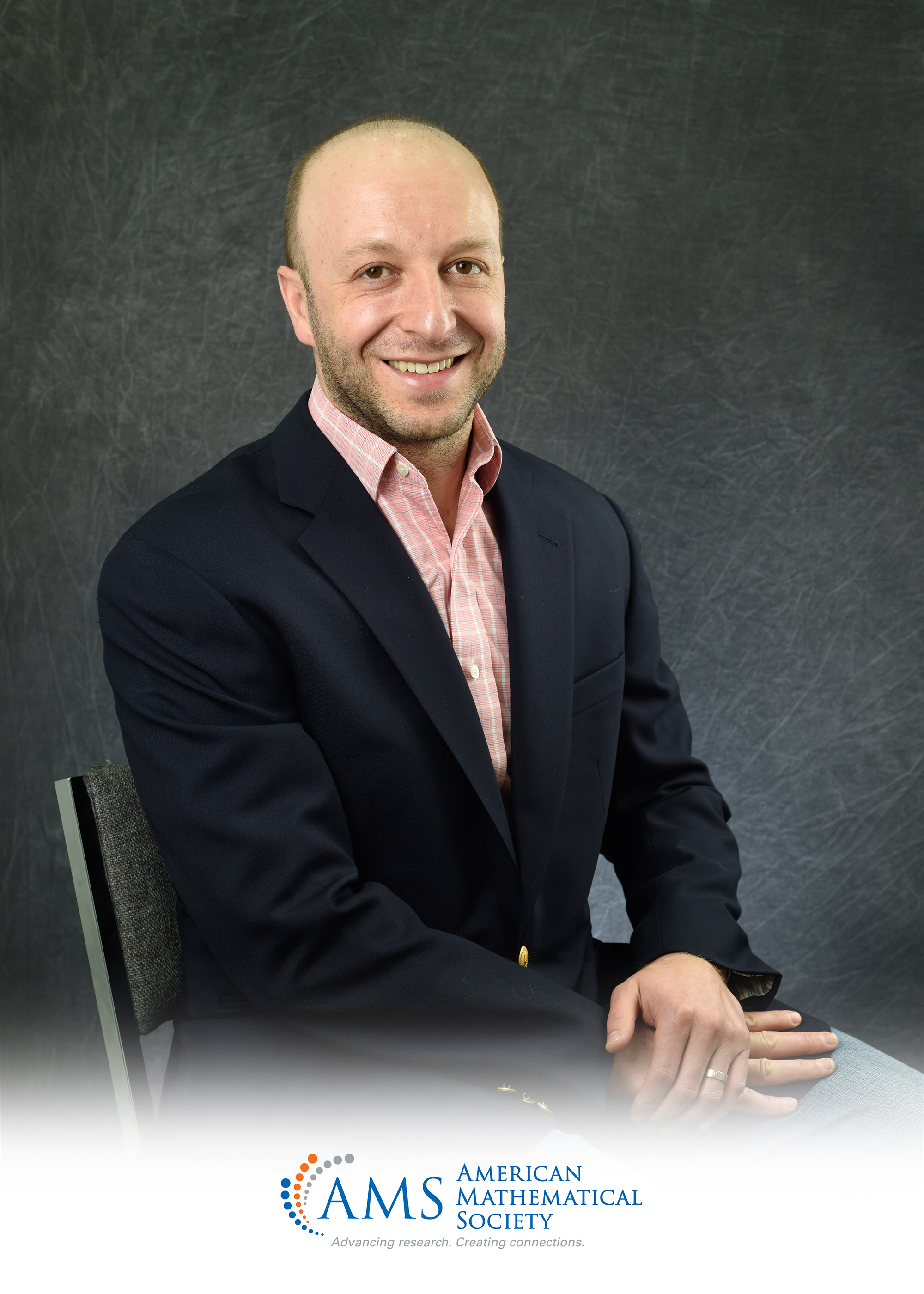
Hugo Duminil-Copin is a renowned mathematician holding half-time appointments as Professor at the Institut des Hautes Études Scientifiques (IHÉS) and the Université de Genève . He has been recognized with prestigious awards, including the Fields Medal (2022) and the New Horizons Prize in Mathematics (2017) . His research focuses on probability theory and statistical mechanics, particularly phase transitions, percolation, and critical phenomena. Education: He earned his Ph.D. in Mathematics from the University of Geneva in 2012. Key academic milestones include a Full Professorship at IHÉS from 2015 and prior roles as Assistant and Associate Professor at Geneva. Research: Duminil-Copin explores foundational questions in statistical physics, such as the rigorous analysis of lattice models and phase transitions in dimensions three and four. His work bridges probability, combinatorics, and mathematical physics, with notable contributions to percolation theory and the Ising model. Awards: Beyond the Fields Medal, he has received the EMS Prize (2016), the Loeve Prize (2017), and an ERC Consolidator Grant (CRIBLAM, 2018–2023). Grants & Leadership: He led the ERC-funded CRIBLAM project, investigating random-cluster models and related topics. His collaborations span global institutions, emphasizing interdisciplinary approaches to complex systems.
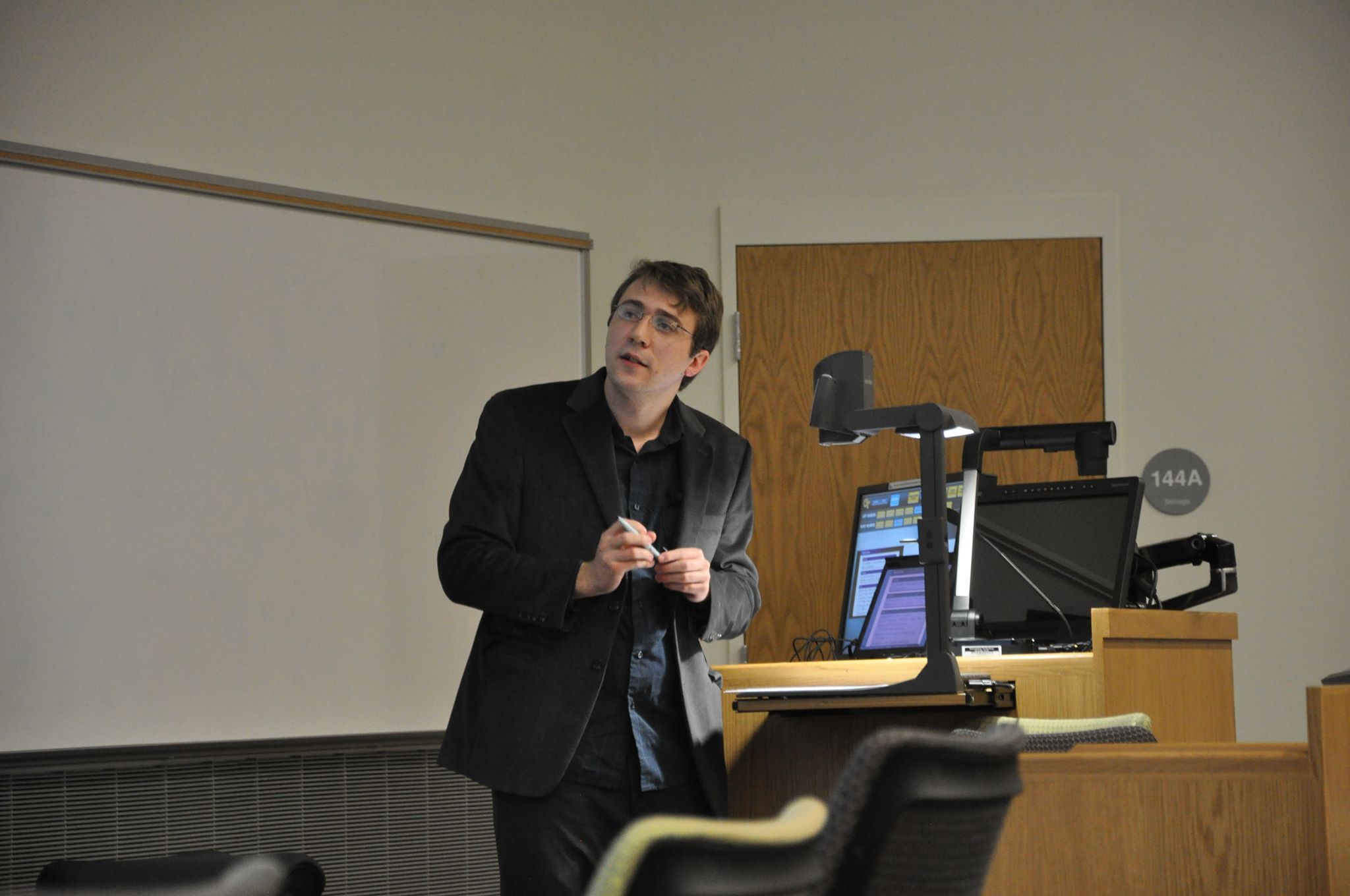
Jason Miller is a Reader in Probability at the Department of Pure Mathematics and Mathematical Statistics (DPMMS) within the Faculty of Mathematics at the University of Cambridge. His research focuses on advanced topics in probability theory and mathematical physics, particularly exploring the deep connections between random geometry, conformal invariance, and quantum gravity. Miller's research interests span a sophisticated range of topics in modern probability, with particular emphasis on Schramm-Loewner evolution (SLE), Gaussian free field, Liouville quantum gravity, random planar maps, and random walks. His work sits at the intersection of probability theory, complex analysis, and mathematical physics, developing rigorous mathematical frameworks for understanding two-dimensional random structures that arise in statistical mechanics and quantum gravity. He has made significant contributions to establishing the connections between discrete random structures and their continuum limits, particularly in the context of Liouville quantum gravity and the Brownian map. Analysis of Miller's recent publications reveals a consistent research program focused on establishing the deep connections between various mathematical objects in two-dimensional random geometry. His work demonstrates how Liouville quantum gravity serves as a universal scaling limit for random planar maps, how Schramm-Loewner evolution describes the continuum limits of critical interfaces, and how these objects relate to the Brownian map through various characterization theorems. The mathematical techniques employed span conformal field theory, metric geometry, stochastic analysis, and complex analysis. As a member of the Statistical Laboratory research group within DPMMS, Miller collaborates extensively with leading researchers in probability theory, including Scott Sheffield, Ewain Gwynne, and Wendelin Werner. His work has been published in the most prestigious mathematics journals including Acta Mathematica, Inventiones Mathematicae, and the Annals of Probability, reflecting the significance and rigor of his contributions to the field.
David Renfrew is an Associate Professor in the Department of Mathematics and Statistics at SUNY Binghamton. His research focuses on probability theory, random matrix theory, and their applications to mathematical physics and biological systems. Primary research areas: Probability, Random Matrix Theory, Mathematical Physics Special interest in non-Hermitian matrices and free probability interplay Current work explores dynamics of coupled systems and spectral properties of structured matrices Recent publications analyze singularity degrees of random matrices (2025), fractional free convolutions (2024), and universality phenomena in elliptic random matrices (2023). His methodological work bridges abstract probability theory with concrete applications in network dynamics and differential equations.
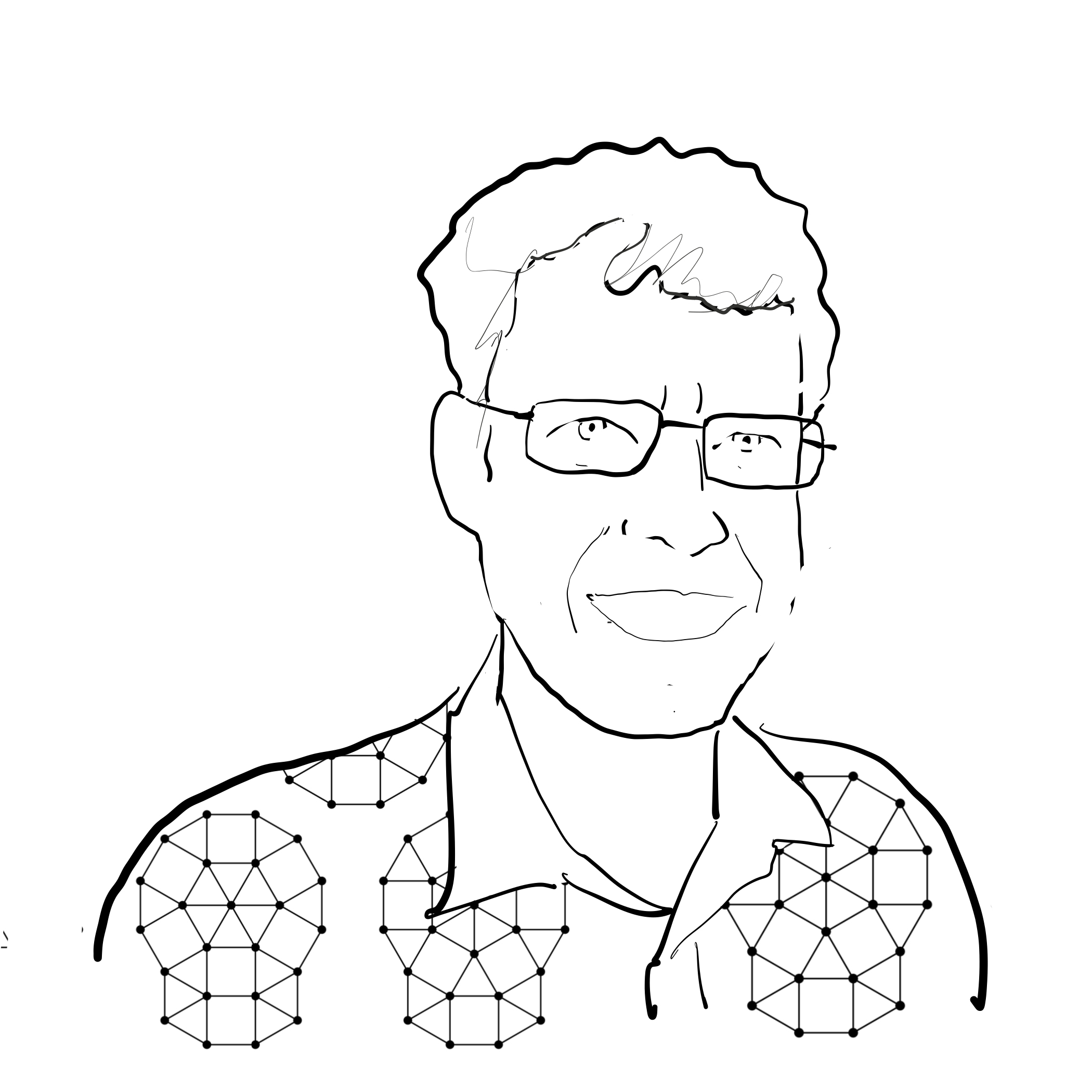
Richard Kenyon is the Erastus L. DeForest Professor of Mathematics at Yale University, serving as Director of Undergraduate Studies. His research focuses on statistical mechanics, probability, and discrete geometry, with notable contributions to dimer models, random tilings, and integrable systems. He has explored topics such as limit shapes, phase transitions, and combinatorial configurations. His work intersects algebraic geometry, combinatorics, and mathematical physics, often involving the analysis of lattice models and their applications. His research includes open problems such as tiling optimization, geometric spanning surfaces, number theory questions, and rigidity of tilings. Kenyon's gallery showcases visualizations of mathematical concepts, including random triangulations, Vinnikov curves, and conformal mappings. His academic contributions span over three decades, with recent articles addressing dimers, webs, and eigenvalue properties. He actively collaborates on projects like the six-vertex model, multiwebs, and renormalizable dynamical systems. Kenyon’s academic service includes directing undergraduate studies at Yale and contributing to initiatives in discrete differential geometry. His work highlights the interplay between pure mathematics and applied probability, with applications in physics and combinatorial optimization.
Thomas Jordan is a Lecturer in the ergodic theory group within the Department of Mathematics at the University of Bristol. Previously, he worked as a research assistant at Warwick University and completed his PhD under Mark Pollicott. His research focuses on dimension theory of dynamical systems, particularly examining self-similar and self-affine sets, multifractal analysis, thermodynamic formalism, and Fourier transforms of measures. His primary research interests include: Dimension theory of dynamical systems Self-similar sets and fractals Self-affine sets Multifractal analysis Thermodynamic formalism Fourier transforms of measures Ergodic theory Thomas Jordan's publications reveal a consistent focus on geometric and measure-theoretic aspects of dynamical systems, with particular emphasis on dimensional properties of fractal sets. His work demonstrates strong collaborative relationships with researchers including Mark Pollicott, Michał Rams, Jonathan Fraser, and Henna Koivusalo across numerous publications spanning two decades. He has organized significant academic events including: Projection and Slicing Theorems in Fractal Geometry conference (Bristol, June 2014) Special session of the 2016 BMC on ergodic theory (Bristol, April 2016) Probability, Analysis and Dynamics workshops (2018, 2022) Thermodynamic formalism workshop at ICMS (June 2018) Workshop on affine and overlapping iterated function systems (Bristol, May 2022) Thomas Jordan serves as a key contact for the One Day Ergodic Theory Meetings series, a collaborative effort between multiple UK universities funded by the London Mathematical Society. He teaches first year analysis (Analysis A) and dynamical systems courses at the University of Bristol.
Alex Kontorovich is a Distinguished Professor of Mathematics at Rutgers University, where he holds the academic rank of Professor. His primary affiliation is with the Department of Mathematics, School of Arts and Sciences. He currently serves as Managing Editor of the Journal of the Association for Mathematical Research and is Executive Director of Rutgers MathCorps . During the 2024-2025 academic year, he is on leave, visiting Princeton University and the Institute for Advanced Study (IAS). Kontorovich's research focuses on automorphic forms, homogeneous dynamics, harmonic analysis, and number theory, with interdisciplinary connections to data science and machine learning. His work bridges pure mathematics with computational aspects, including sphere packing geometry and arithmetic dynamics. He has held distinguished visiting roles, such as the 2020-21 Distinguished Visiting Professor for the Public Dissemination of Mathematics at the National Museum of Mathematics (MoMath), where he contributed to academic content and exhibits. His academic career includes teaching advanced courses like Graduate Complex Analysis, Automorphic Representations, and History of Mathematics. Notable awards include the Simons Foundation Fellowship, von Neumann Fellowship at IAS, and Alfred P. Sloan Research Fellowship. Grants include multiple NSF awards (regular, CAREER, FRG) and a Binational Science Foundation grant. His research explores topics like spectral gaps, thin groups, and applications of modular forms to equidistribution problems. Kontorovich’s scholarly contributions extend beyond academia: he serves on the Scientific Board of Quanta Magazine , advises the Lean Focused Research Organization , and participates in editorial and strategic roles across institutions. His work emphasizes the interplay between theoretical mathematics and computational methods, shaping modern research in number theory and dynamics.
Dr. Luke Postle is a Canada Research Chair in Graph Theory and a Professor in the Department of Combinatorics and Optimization at the University of Waterloo. His research focuses on Graph Coloring, Graph Decompositions, Topological and Structural Graph Theory, Extremal and Probabilistic Combinatorics, and Matroids. He has received the 2021 Coxeter-James Prize for his contributions to combinatorics. His work includes theoretical advancements in graph coloring, decomposition algorithms, and structural properties of graphs on surfaces. He teaches courses on Graph Theory and Probabilistic Methods, with lecture series available on YouTube. Postle’s research has been published in top journals such as Journal of Combinatorial Theory Ser. B , Journal of Graph Theory , and Transactions of the American Mathematical Society . His articles address problems in list coloring, cycle counting, matroid structure, and probabilistic graph decomposition. Key Awards: 2021 Coxeter-James Prize Teaching: Graph Theory and Probabilistic Methods courses on YouTube Research Themes: Structural Graph Theory, Combinatorial Optimization, Probabilistic Methods
Dr. John Haslegrave is a Lecturer in Probability at Lancaster University's School of Mathematical Sciences, where he is an active member of both the Probability and Combinatorics research groups. Previously, he held positions at the University of Oxford (working with Peter Keevash), University of Warwick (with Agelos Georgakopoulos), and University of Sheffield (with Hong Liu and Chris Cannings). He completed his PhD at Trinity College, Cambridge under Béla Bollobás. His research focuses on: Random graphs and evolving network models (especially preferential attachment) Interacting particle systems and random walks on graphs Extremal problems in graph/hypergraph theory Percolation theory and geometric probability Combinatorial optimization and graph invariants Analysis of recent publications reveals strong emphasis on probabilistic combinatorics, with frequent exploration of: structural graph properties, asymptotic behavior of stochastic processes, geometric embeddings, and optimization problems. His work consistently bridges discrete mathematics with statistical physics concepts. Dr. Haslegrave welcomes PhD students interested in discrete probability and graph theory, with current supervision interests including preferential attachment models, interacting particle systems, planar percolation, and extremal problems. He teaches undergraduate courses in Graph Theory (MATH326) and Probability (MATH103), and organizes Lancaster's Pure Mathematics Seminar series.
Roie Levin is an Assistant Professor at Rutgers University's Department of Computer Science. He received his PhD in Algorithms, Combinatorics and Optimization from Carnegie Mellon University in 2022, advised by Anupam Gupta. Prior to that, he worked at the Allen Institute for Artificial Intelligence (2015-2017) and earned dual BSc degrees in Computer Science/Applied Mathematics and Mathematics from Brown University (2015). Before joining Rutgers, he was a Fulbright Postdoctoral Fellow at Tel Aviv University under Niv Buchbinder. Current Role: Assistant Professor in Computer Science Academic Training: PhD (2022) CMU, BSc (2015) Brown University Postdoctoral: Fulbright Fellow at Tel Aviv University Levin's research focuses on approximation algorithms for uncertain environments (online/dynamic/streaming models) and submodular function optimization. His work spans theoretical foundations and practical implementations across distributed systems, geometric constraints, and reinforcement learning paradigms. Teaching includes graduate and undergraduate algorithms courses (CS 344, CS 513) with emphasis on problem-solving techniques, computational complexity, and modern algorithmic trends. His publications showcase expertise in online algorithms, submodular optimization, and approximation theory with applications in clustering, caching, and machine learning. The 2025 articles demonstrate continued exploration of online consistency and contention resolution, while 2023-2024 works focus on submodular optimization under uncertainty and dynamic environments. Earlier publications (2015-2017) cover semantic parsing, geometric approximation, and planar graph optimization. Fulbright Postdoctoral Fellow Levin's research connects theoretical guarantees with practical implementations, bridging classical algorithm design with modern machine learning applications. His recent work explores primal-dual methods in online settings and robust subspace approximation techniques for streaming data environments.
Lluis Vena Cros is a distinguished researcher in the Department of Mathematics at Universitat Politècnica de Catalunya - BarcelonaTech (UPC-BarcelonaTech), affiliated with the Faculty of Mathematics and Statistics. He is a core member of the GAPCOMB research group, which specializes in Geometric, Algebraic and Probabilistic Combinatorics. His research spans multiple domains within combinatorics, with particular emphasis on graph theory, algebraic combinatorics, geometric combinatorics, and probabilistic combinatorics. Vena Cros has made significant theoretical contributions to the understanding of graph homomorphisms, Tutte polynomials, Ramsey theory, and extremal combinatorial structures. His work often explores the deep connections between combinatorial objects and other mathematical disciplines such as topology, algebra, and discrete geometry. An analysis of his recent publications reveals a consistent focus on combinatorial structures with applications across multiple mathematical domains. His work on Tutte polynomials for various graph structures demonstrates a unifying approach to graph invariants, while his research in Ramsey theory explores structural properties of large combinatorial objects. The recurring theme across his publications is the investigation of extremal properties and computational aspects of combinatorial configurations. Vena Cros actively participates in multiple research projects including 'Structure, Randomness and Computational Methods in Extremal Combinatorics,' 'COntemporary COmbinatorics and Applications (COCOA),' and the 'Grup GAPCOMB de la UPC.' These projects involve collaborations with numerous researchers across Spain and internationally, reflecting his significant standing in the combinatorial mathematics community. His work has been supported by various funding bodies including the Spanish State Research Agency and the European Union's Horizon 2020 program. As a member of the GAPCOMB research group, Vena Cros contributes to a vibrant mathematical community focused on advancing combinatorial theory and its applications. The group maintains strong connections with other research centers and regularly participates in international conferences and collaborative projects, fostering the exchange of ideas across the global combinatorial mathematics community.
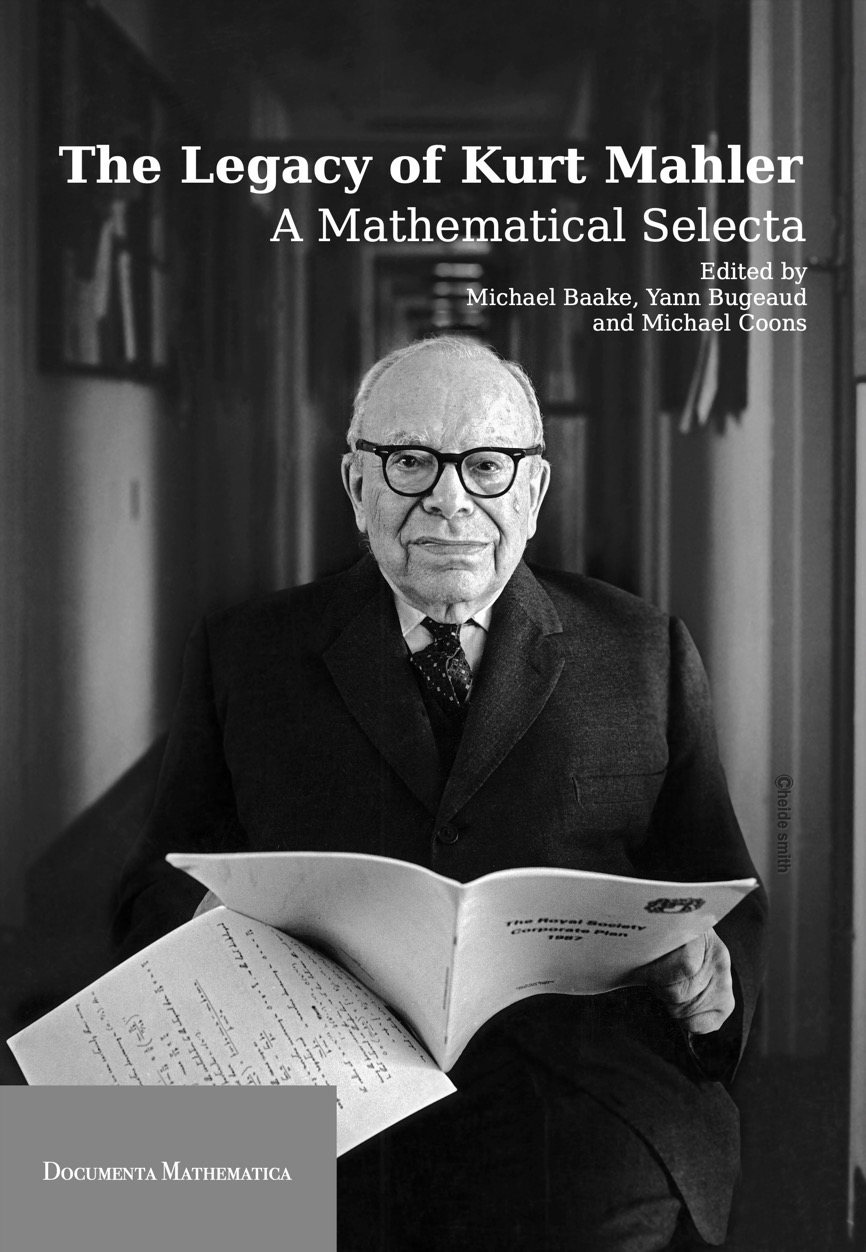
Michael Baake is a Professor of Mathematics at Bielefeld University, affiliated with the Faculty of Mathematics. His research focuses on Aperiodic Order, Dynamical Systems, Combinatorics, and Mathematical Physics. He leads multiple research projects, including the SFB/TR 358 'Integral Structures in Geometry and Representation Theory' and SFB 1283 'Taming Uncertainty'. His work bridges pure mathematics with applications in crystallography and stochastic systems. Affiliations: Representative for the Faculty Library, Co-Director of the Research Focus on Mathematical Modeling. Cooperations: Collaborates with international experts like Uwe Grimm, Daniel Lenz, and Nicolae Strungaru on topics such as aperiodic tilings and spectral theory. Research Groups: Leads a vibrant research group with members including Anna Klick, Daniel Luz, and Timo Spindeler, focusing on quasicrystals, combinatorial structures, and number theory applications. His contributions include co-editing the book 'Aperiodic Order: Crystallography and Almost Periodicity' and organizing workshops on spectral theory and dynamical systems. He actively engages in academic service, including editorial roles and conference organization.
Samuel Fiorini is Associate Professor in the Department of Mathematics at the Université libre de Bruxelles (ULB) , member of the Algebra and Combinatorics group (CP 216). His research centres on polyhedral combinatorics, extended formulations, combinatorial optimisation and approximation algorithms , with frequent overlap into structural graph theory. Research in depth: Fiorini’s work explores how high-dimensional polytopes can sometimes be expressed compactly through extended formulations, proving exponential lower bounds when they cannot. He has contributed new approximation algorithms for classical problems such as vertex cover, clique transversal and odd-cycle packing, and has advanced the understanding of sorting and entropy in partially ordered sets. His papers often combine tools from graph minors, communication complexity and polyhedral theory. Scientific recognition: Best Paper Award, 44th ACM Symposium on Theory of Computing (STOC 2012) Programme committees: FOCS, IPCO, APPROX, STACS, WAOA Organiser, Sixth Cargese Workshop on Combinatorial Optimization Advising & grants: He currently supervises PhD students Carole Muller and Matthew Drescher and has mentored six completed PhDs as well as more than a dozen post-doctoral researchers. His group has been supported by an ERC starting grant and other national and international projects focusing on polyhedral approaches to hard optimisation problems. Lab & team: Fiorini leads a vibrant team within the Algebra and Combinatorics cluster at ULB, maintaining active collaborations with researchers worldwide and hosting frequent visitors working on discrete optimisation and polyhedral combinatorics.
Jonathan A. Kelner is a Professor of Applied Mathematics at the Massachusetts Institute of Technology (MIT) and a member of the Computer Science and Artificial Intelligence Laboratory (CSAIL) . His research bridges pure mathematics and algorithms, focusing on spectral graph theory, combinatorial optimization, and distributed computing.
Ron Peled is a Full Professor in the School of Mathematical Sciences at Tel Aviv University. Starting in summer 2024, he will serve as a Brin Professor in the Department of Mathematics at the University of Maryland, on leave from Tel Aviv University. During the 2022-2024 academic years, he visited Princeton University and the Institute for Advanced Study. His research spans multiple areas of probability theory and statistical physics, with significant contributions to understanding random surfaces, first-passage percolation, spin systems, and disordered models. Peled's research interests primarily focus on Probability Theory and Statistical Physics. His work examines the behavior of random systems, particularly in the presence of disorder or constraints. He has made significant contributions to understanding minimal surfaces in random environments, the structure of geodesics in first-passage percolation, phase transitions in spin systems, and the properties of random surfaces. His research often combines deep probabilistic insights with connections to statistical mechanics and mathematical physics, revealing universal behaviors in complex random systems. Analysis of Peled's recent publications reveals a strong focus on understanding the effects of disorder in statistical physics models. His work spans multiple domains including first-passage percolation, random surfaces, spin systems, and random matrix theory. A recurring theme is the investigation of how microscopic randomness affects macroscopic properties, with particular attention to phase transitions, correlation decay, and geometric structures emerging in random environments. His research often employs sophisticated probabilistic techniques combined with insights from statistical mechanics. Peled has received significant recognition through prestigious grants including multiple Israel Science Foundation grants (1048/11, 861/15, 1971/19, 2340/23), a Marie Skłodowska-Curie Actions International Reintegration Grant (SPTRF), an ERC Starting Grant (LocalOrder), and an ERC Consolidator Grant (Transitions). These awards reflect the importance and impact of his research in the mathematical community. Peled has supervised numerous students and postdocs throughout his career. His Ph.D. students include Daniel Hadas (joint with Wojciech Samotij) and Yinon Spinka (graduated August 2018). His Master's students include Michal Bassan (joint with Shoni Gilboa), Daniel Hadas, Yoav Bar Nir, Dor Elboim (who went on to do a Ph.D. at Princeton), Vital Kharash, Omri Cohen-Alloro, Alexey Gladkich, and Yinon Spinka. He has also mentored postdoctoral fellows including Lakshmi Priya, Paul Dario, Matan Harel, Raimundo Briceño, Alexander Glazman, Alexander Magazinov, Xiaolin Zeng, Nishant Chandgotia, Jeremiah Buckley, Wojciech Samotij, and Tom Ellis. Peled is actively involved in the academic community, serving as one of the organizers of the online Joint Israeli Probability Seminar and previously organizing the Horowitz Seminar on Probability, Ergodic Theory and Dynamical Systems. He has also organized several workshops and conferences including "Challenges in probability and statistical mechanics" at the Technion in 2022, the "Workshop on Strongly Correlated Random Interacting Processes" at Oberwolfach in 2018, and "Elegance in probability: A conference honoring Russell Lyons' 60'th birthday" at Tel Aviv University in 2017.
Robert Johansson is an Associate Professor at the Department of Mathematics and Mathematical Statistics, Umeå University, and holds an affiliated position with the Faculty Office of Science and Technology. His research focuses on discrete mathematics and graph theory, with a strong emphasis on combinatorial structures and theoretical foundations. Research Focus His work explores critical areas in graph theory, including edge-decompositions, chromatic numbers, and path-factors. He has contributed to understanding extremal properties of graphs and combinatorial optimization problems in planar and r-partite graph systems. Publications The majority of his publications fall under discrete mathematics and theoretical computer science, with recurring themes in graph theory, combinatorial analysis, and network structures. His 2012 educational text on advanced mathematics further highlights his contributions to pedagogical frameworks. Labs & Teams Member of the Discrete Mathematics research group at Umeå University