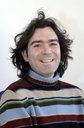
Afonso S. Bandeira is a Professor of Mathematics at ETH Zurich with a joint appointment at the Institute for Operations Research (IFOR) and a courtesy affiliation with D-ITET. His research spans High Dimensional Probability , Random Matrices , and Theoretical Computer Science , focusing on mathematical frameworks for data analysis. Ph.D., Applied and Computational Mathematics, Princeton University (2015) M.S. and B.S. in Mathematics, University of Coimbra (2010, 2009) His work bridges Signal Processing , Machine Learning , and Mathematical Optimization , with publications on stochastic block models , random matrix bounds , and graph Laplacian inequalities . Recent trends include non-asymptotic analysis of random matrices and theoretical foundations of community detection in networks. Group members include Daniil Dmitriev, Konstantin Donhauser, Anastasia Kireeva, Kevin Lucca, Chiara Meroni, Gil Kur, Petar Nizic-Nikolac, and Almut Roedder. Contact: bandeira@math.ethz.ch .
Risto Wichman is a Professor in the Department of Information and Communications Engineering at Aalto University's School of Electrical Engineering. His research focuses on signal processing techniques for wireless communication systems, spanning physical layer design and MAC layer innovations with applications in next-generation networks. His research interests center on in-band full-duplex communications, multiple antenna systems (including massive MIMO), RF non-ideality compensation, spectrum sharing, cooperative communications, and network topology optimization. He employs advanced methodologies from communication theory, detection and estimation theory, stochastic geometry, random matrix theory, and large system analysis to solve complex wireless challenges. Recent publications (2024-2025) reveal strong emphasis on satellite-terrestrial integration, optical wireless networks, and machine learning-driven resource allocation. Key themes include line-of-sight optimization for positioning/sensing, Doppler effect characterization in LEO networks, full-duplex protocol design, and information harvesting for wireless power transfer. His work bridges theoretical foundations with practical implementations for 5G/6G systems. No scientific awards are documented in the provided materials. Information regarding student advising and research grants is not specified in the available sources. His leadership of the Risto Wichman Research Group drives collaborative work in wireless signal processing. The Risto Wichman Research Group focuses on cutting-edge wireless communication systems, with active projects spanning satellite networks, optical wireless integration, full-duplex technologies, and machine learning applications for network optimization. The group maintains strong industry and academic collaborations while developing solutions for real-world deployment challenges.
Scott Aaronson is a Professor of Computer Science at the University of Texas at Austin, holding the David Bruton, Jr. Centennial Professorship. Prior to joining UT, he was a faculty member in Electrical Engineering and Computer Science at MIT for nine years. His research focuses on theoretical computer science, particularly the capabilities and limits of quantum computers and computational complexity theory. Professor Aaronson's research spans a wide range of topics in quantum computing , computational complexity theory , and quantum information . His work explores fundamental questions about what problems quantum computers can solve efficiently, how they compare to classical computers, and the theoretical limits of quantum computation. He has made significant contributions to areas such as quantum algorithms, quantum complexity classes, quantum cryptography, and the theoretical foundations of quantum mechanics. Analysis of Aaronson's recent publications reveals a strong focus on establishing quantum advantage and understanding the separation between quantum and classical computation. His work spans theoretical foundations (such as complexity class relationships and query complexity) to more applied aspects (like quantum randomness generation and quantum cryptography). A recurring theme is using computational complexity theory to address fundamental questions in quantum mechanics and quantum gravity, particularly through connections to the AdS/CFT correspondence. 2018 - Tomassoni-Chisesi Award 2016 - Vannevar Bush Faculty Fellowship 2015 - IT from Qubit: Simons Collaboration on Quantum Fields, Gravity, and Information 2012 - Alan T. Waterman Award of the National Science Foundation 2011 - Best Paper, International Computer Science Symposium in Russia 2010 - US Presidential Early Career Award for Scientists and Engineers 2009 - Junior Bose Teaching Award, MIT 2009 - DARPA Young Faculty Award 2009 - TIBCO Career Development Chair, MIT 2009 - Sloan Research Fellowship Aaronson has supervised numerous PhD students who have gone on to successful careers in academia and industry. His research has been supported by major grants from the National Science Foundation, Department of Defense, and private foundations. His work on quantum supremacy experiments, particularly related to random circuit sampling and certified randomness, has had significant impact in both theoretical and experimental quantum computing communities. Professor Aaronson maintains an active research group at UT Austin focused on quantum computing and theoretical computer science. His group collaborates with both theoretical physicists working on quantum gravity and experimental quantum computing groups. He is also known for his influential blog "Shtetl-Optimized," where he discusses technical topics in quantum computing as well as broader issues in science and academia.
Christ Richmond is a Professor in the Department of Electrical and Computer Engineering, focusing on advanced signal processing and communication systems. His work bridges theoretical analysis and practical applications in radar, sonar, and wireless networks. Institution: Department of Electrical and Computer Engineering Role: Faculty member His research interests include signal processing for high-clutter environments, cooperative radar-communication systems, and robust adaptive beamforming. He explores statistical methods to handle model misspecification and employs Bayesian nonparametric techniques for tracking and estimation challenges. Key trends in his publications span radar-communication integration (2019-2022), SAR image change detection (2015-2020), and theoretical bounds for parameter estimation under uncertain models (2000-2020). The Learning to Communicate project (2022) investigates next-generation communication networks using data-driven approaches, addressing variability in wireless links and evolving system modeling paradigms.
George C. Linderman is a Physician Scientist at Harvard Medical School's Department of Surgery, Massachusetts General Hospital, with a dual MD/PhD background from Yale University (PhD in Applied Mathematics). His primary focus combines clinical surgical training with advanced computational research in high-dimensional data analysis. His research interests span High Dimensional Data Analysis , Machine Learning , Computational Biology , and Single-Cell Genomics , with particular emphasis on developing novel algorithms for dimensionality reduction and data visualization. He has made significant contributions to the field through his development of widely-used software packages including FIt-SNE (Fast Fourier Transform-accelerated Interpolation-based t-SNE), ALRA (Adaptively-thresholded Low Rank Approximation), and t-SNE Heatmaps . Linderman's publication record demonstrates a consistent trajectory of impactful research in both theoretical and applied domains, with recent work published in premier journals including Nature Biotechnology , Nature Methods , and SIAM Journal on Mathematics of Data Science . His research bridges computational mathematics with biomedical applications, particularly in single-cell RNA sequencing analysis. His teaching experience includes serving as a Teaching Fellow for Linear Algebra with Applications at Yale and mentoring in the Directed Reading Program across multiple semesters, demonstrating his commitment to academic education alongside his research and clinical pursuits.
Talel Abdessalem is a Professor at Télécom Paris , where he has held leadership roles including Director of LTCI Research Laboratory (since 2017) and Dean of Research (since 2018). He currently serves as Deputy Vice-President for Research at Institut Polytechnique de Paris . PhD in Computer Science from Paris-Dauphine University Habilitation (HDR) from UPMC-Sorbonne University His research spans large-scale data management , recommender systems , social network analysis , and uncertain data modeling . He has participated in numerous national (ANR, FEDER) and European (FP7) research projects, with recent work focusing on stream-based learning , graph analytics , and privacy-preserving systems . His publications include diverse contributions to directed graph centrality algorithms (2021), stream recommender frameworks (River, Scikit-Multiflow), and geospatial recommendation models (ALGeoSPF). He has supervised 14 PhD students and collaborates with researchers in France, Brazil, and Indonesia. Co-leads DIG (Data, Intelligence and Graphs) research team Director of LTCI (Information Processing and Communication) laboratory
Dr. Michael Tait is a Professor in the Department of Civil Engineering at McMaster University, specializing in structural engineering, seismic isolation, blast risk mitigation, and infrastructure resilience. His research integrates advanced computational modeling with experimental validation to enhance the safety and performance of critical systems. Research Interests Structural and seismic engineering with focus on fiber-reinforced materials Development and analysis of tuned liquid dampers for vibration control Resilience-based design frameworks for blast and multi-hazard scenarios Numerical modeling of complex systems using smoothed particle hydrodynamics Probabilistic risk assessment and infrastructure hardening Selected Publications His recent work (2025-2022) spans seismic fragility of bridges, blast risk mitigation for masonry systems, power grid resilience, and innovative damping technologies. Key themes include hybrid modeling, nonlinear dynamics, and geometric optimization of fluid control systems. Teaching Professor Tait has taught Structural Analysis (CIVENG 3G04) and Structural Dynamics (CIVENG 739) since 2017, emphasizing computational tools and real-world engineering applications.
Ervin Dervishaj is a PhD Fellow at the Machine Learning Section of the Department of Computer Science, University of Copenhagen. His research spans theoretical and applied machine learning, with a focus on recommendation systems, medical imaging, and computational modeling. The Machine Learning Section engages in interdisciplinary work across Information retrieval Medical data analysis Remote sensing Sustainability Biological data modeling Recent publications highlight expertise in Recommendation system interpretability (2025) GAN-based collaborative filtering (2022) Linguistic typology through language embeddings (2018) Medical imaging applications in osteoarthritis and neurodegenerative diseases (2016-2018) Optimization algorithms for adversarial learning (2016-2017) He contributes to projects involving the SCIENCE AI Centre and the TreeSense Centre for remote sensing applications.
Dr. Oleg Verbitsky is a Researcher at the Institute of Computer Science within the Faculty of Mathematics and Natural Sciences at Humboldt University of Berlin. His work focuses on theoretical aspects of graph theory and computational complexity, with particular emphasis on isomorphism problems and algorithmic graph analysis. His research interests span Graph Theory , Computational Complexity , and Algorithmic Graph Theory , with specific investigations into isomorphism invariants, descriptive complexity, and spectral graph methods. Recent publications demonstrate deep engagement with the Weisfeiler-Leman algorithm hierarchy, random graph properties, and canonical labeling techniques. Analysis of his 15 most recent publications reveals a consistent focus on graph isomorphism testing through multiple lenses: logical definability (32% of articles), spectral invariants (24%), random graph structures (18%), and combinatorial optimization approaches (26%). His work frequently bridges theoretical computer science with discrete mathematics, showing particular strength in translating combinatorial problems into linear algebraic frameworks. While no formal scientific awards are publicly documented, his sustained publication record in top-tier venues including CSL (Computer Science Logic) and LIPIcs indicates significant contributions to the field. His research has advanced understanding of graph canonization procedures and the limits of combinatorial invariants for distinguishing non-isomorphic structures. Dr. Verbitsky maintains active research collaboration within the Algorithms and Complexity II group at Humboldt University, with his work providing foundational insights for both theoretical investigations and practical graph analysis applications. His email contact verbitsk@informatik.hu-berlin.de serves as the primary channel for academic correspondence.
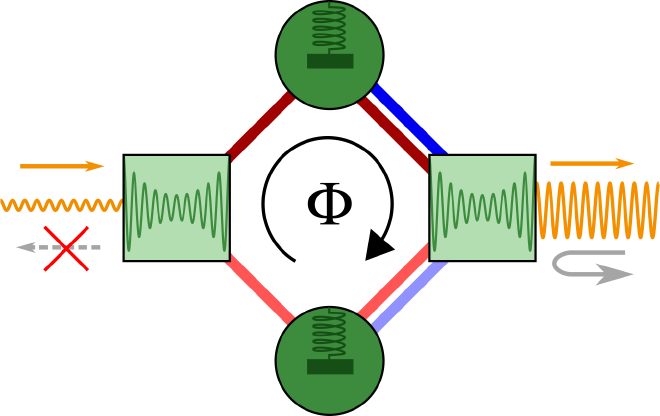
Daniel Hendrik Malz is an Assistant Professor in the Department of Mathematical Sciences at the University of Copenhagen. His research focuses on theoretical aspects of quantum technology, with particular emphasis on quantum information theory, quantum optics, and many-body physics. He is embedded in the Quantum for Life center and QMATH research group, and maintains strong collaborations with experimental groups at the nearby Niels Bohr Institute. Dr. Malz received his PhD from the University of Cambridge (2015-2018) under the supervision of Andreas Nunnenkamp, following his BA and MMath at Trinity College, Cambridge (2011-2015). He held postdoctoral positions at the Max Planck Institute of Quantum Optics (2018-2022) working with Ignacio Cirac, and at the Technical University of Munich (2022-2023) with Johannes Knolle, before joining the University of Copenhagen as an Assistant Professor in April 2023. His research program spans several interconnected areas in quantum physics. In quantum optics, he investigates many-body phenomena in open quantum systems, particularly collective effects like superradiance in waveguide QED and chiral systems. His work in quantum information theory focuses on the computational complexity of quantum many-body problems, random quantum circuits, and the boundary between classically simulable and quantum-computationally hard problems. He has made significant contributions to tensor network state preparation, developing efficient methods for creating these important quantum states. In quantum simulation, he explores novel approaches to simulating complex quantum systems, particularly using atomic arrays and superconducting circuits. Dr. Malz's publication record shows a strong focus on theoretical quantum physics with increasing engagement with experimental implementations. His recent work demonstrates a trend toward more applied research that bridges theoretical concepts with experimental feasibility, particularly in the areas of photonic quantum computing and superconducting circuit implementations. The breadth of his work spans fundamental theoretical questions to potential applications in quantum simulation and computation. Dr. Malz is actively building his research group at the University of Copenhagen and is hiring both PhD students and postdoctoral researchers. He maintains strong connections with experimental groups, particularly in the quantum optics section of the Niels Bohr Institute, and is part of Copenhagen's vibrant quantum research ecosystem, which includes the Novo Nordisk Quantum Computing Programme. His research group operates within the Department of Mathematical Sciences but is deeply integrated with Copenhagen's broader quantum research community, including collaborations with the Niels Bohr Institute and participation in the Quantum for Life center. This interdisciplinary environment allows for close interaction between theoretical and experimental researchers across multiple quantum platforms.
Harsh Mathur is a Professor in the Department of Physics at Case Western Reserve University , where he also serves as Associate Dean for Academic Affairs. His research spans theoretical physics, with primary contributions to condensed matter theory and cosmology, and interdisciplinary projects linking physics to art and history. Education B. Tech., Indian Institute of Technology, Kanpur (1987) Ph.D., Yale University (1994) Research Interests Condensed Matter Theory: Focus on mesoscopic systems, quantum dots, and localization phenomena. Cosmology: Investigates primordial gravitational radiation and cosmic microwave background physics. Interdisciplinary Work: Applies statistical physics to art authentication (Pollock’s fractal analysis) and language evolution. Publications Recent work (2008) explores gravitational radiation from phase transitions and critiques of fractal authentication of Pollock paintings. Earlier publications (1992-2003) address quantum transport, Berry phase effects, and localization models.
Floske Spieksma is an Associate Professor at the Mathematical Institute (Probability Theory) of Leiden University , where she has worked since 1985 in various roles including PhD researcher, Postdoc, Assistant Professor, and Associate Professor. Her research focuses on Stochastic Processes , Markov Decision Processes , and Operations Research , particularly in Queueing Theory and Network Optimization . She has supervised multiple PhD students including Herman Blok and Laurens Smit and co-organized international workshops. Education : PhD in Mathematics (1990), Leiden University MSc (cum laude) in Mathematics (1985), Leiden BSc in Mathematics (1981), Leiden BA in Spanish (1981), Leiden Research Trends : Her recent publications analyze unbounded jump rate Markov processes , graph resistance metrics , and stochastic decision frameworks . Key collaborations include work with M.N. Katehakis, L. Smit, and H. Blok. Scientific Awards : KNAW 5-year fellowship (1993) C.J.Kok prize (1991) Shell travel grant (1991) Two book grants (1984) Advising : Supervises PhD students and research projects, with past advisees including Herman Blok and Laurens Smit. Organized the H.E.T. Symposium (2012) connecting students with alumni in industry.
Rhenish Friedrich Wilhelm University of BonnGermany
Prof. Patrik Ferrari is a Professor of Probability Theory and Stochastic Analysis at the Institute for Applied Mathematics, University of Bonn, where he has been employed since October 2008 and became a professor in April 2009. His research primarily focuses on stochastic processes, random matrix theory, and the Kardar-Parisi-Zhang (KPZ) universality class. His educational background includes: Physics studies at EPFL (Swiss Federal Institute of Technology in Lausanne) from 1996 to 2001 Diploma thesis at Rutgers University under Prof. Joel L. Lebowitz PhD at Technische Universität München (TUM) completed in 2004 under Prof. Herbert Spohn Ferrari's research interests span Probability Theory, Stochastic Analysis, Random Matrix Theory, KPZ Universality Class, and Interacting Particle Systems. His work often explores the connections between stochastic growth models, random matrices, and determinantal processes. He has made significant contributions to understanding the Airy processes, which describe the limit behavior of various stochastic models in the KPZ universality class. His publications from the last five years reveal a consistent focus on the theoretical aspects of exclusion processes, last passage percolation, and KPZ-related models. The research demonstrates deep mathematical analysis of correlation structures, fluctuation properties, and universality phenomena in these systems. His notable awards include: Alexanderson Award from the American Institute of Mathematics (2018) Heinz Maier-Leibnitz prize from the German National Foundation (2009) EPFL Award for second best general exams average (2001) Ferrari has served on editorial boards for several prestigious journals including The Annals of Applied Probability (2013-2018), Mathematical Physics, Analysis and Geometry (2013-2022), and Electronic Journal of Probability (2018-2023). His research has established important connections between probability theory, statistical mechanics, and random matrix theory, particularly in the context of the KPZ universality class.
Paul Beame is a Professor and Associate Director for Facilities at the Paul G. Allen School of Computer Science & Engineering (University of Washington). He earned his B.Sc. in Mathematics (1981) , M.Sc. in Computer Science (1982) , and Ph.D. in Computer Science (1987) from the University of Toronto, followed by postdoctoral work at MIT (1986-87). His research spans computational complexity , proof complexity , quantum computing , and formal verification , with applications to databases and AI. Research Interests : Computational complexity theory, proof complexity, SAT-solving, quantum algorithms, time-space tradeoffs, communication complexity, circuit complexity, knowledge representation, probabilistic inference. Recent Publications : Focus on quantum time-space tradeoffs, multiparty communication complexity, formal verification of nonlinear arithmetic, and lower bounds for circuit and proof systems. Articles appear in ACM Transactions on Computation Theory , SIAM Journal on Computing , and conferences like STOC, FOCS, and NeurIPS. Teaching & Service : Active in theoretical computer science education and professional service, including program committee roles and tutorials. Personal : Engages in sports like squash and softball.
Timoteo Carletti is a Full Professor in the Department of Applied Mathematics at the University of Namur, Belgium, and a leading researcher at the Namur Institute for Complex Systems (naXys). He has been with the University of Namur since 2005, progressing from lecturer to professor in 2008 and Full Professor in 2011. Carletti co-founded the Namur Center for Complex Systems in 2010 and directed it until 2014. His academic journey includes postdoctoral research at Paris XI, IMPA in Rio de Janeiro, Scuola Normale Superiore in Pisa, and the University of Padova. Carletti earned his Master's degree in Physics from the University of Florence in 1995 and completed his Doctorate in Mathematics there in 2000 with a thesis on "Stability of orbits and Arithmetics for some discrete dynamical systems." His research spans diverse fields including biology, celestial mechanics, chaos detection, complex networks, control of systems, dynamic systems, economics, particle accelerators, and social dynamics. With over 150 publications and an h-index of 26 (2,450 citations), his work demonstrates significant impact in the field of complex systems. His research focuses on complex networks , synchronization phenomena , higher-order interactions , and pattern formation . Recent work explores synchronization in matrix-weighted networks, chimera states on directed hypergraphs, topological Dirac synchronization, and control strategies for desynchronizing Kuramoto oscillators. His publication record shows a clear evolution from traditional network analysis toward increasingly complex higher-order structures and topological approaches to understanding dynamical systems. Carletti has led numerous significant research projects including EMOTIONS (Emergent MOTifs in IntercONnected Systems), Be-neXst (Belgian advanced studies on compleX systems), and UNDER-NET (underground fungal networks). He served as President of the Graduate School FNRS "Non-linear phenomena, Complex Systems and Statistical Mechanics" from 2011-2017 and has organized major international conferences including ECCS12 in Brussels. As an educator, Carletti has supervised numerous PhD and Master's theses across mathematics, economics, biology, and computer science. His upcoming activities for 2025 include hosting researchers, delivering invited talks on global synchronization, and organizing the Perspectives in Nonlinear Dynamics conference and the International School and Conference on Network Science.