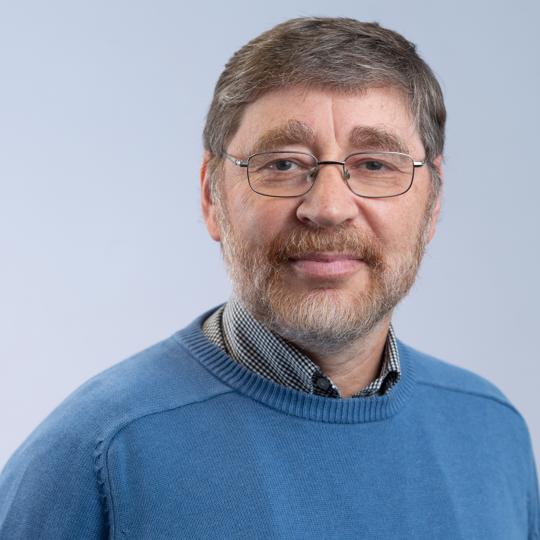
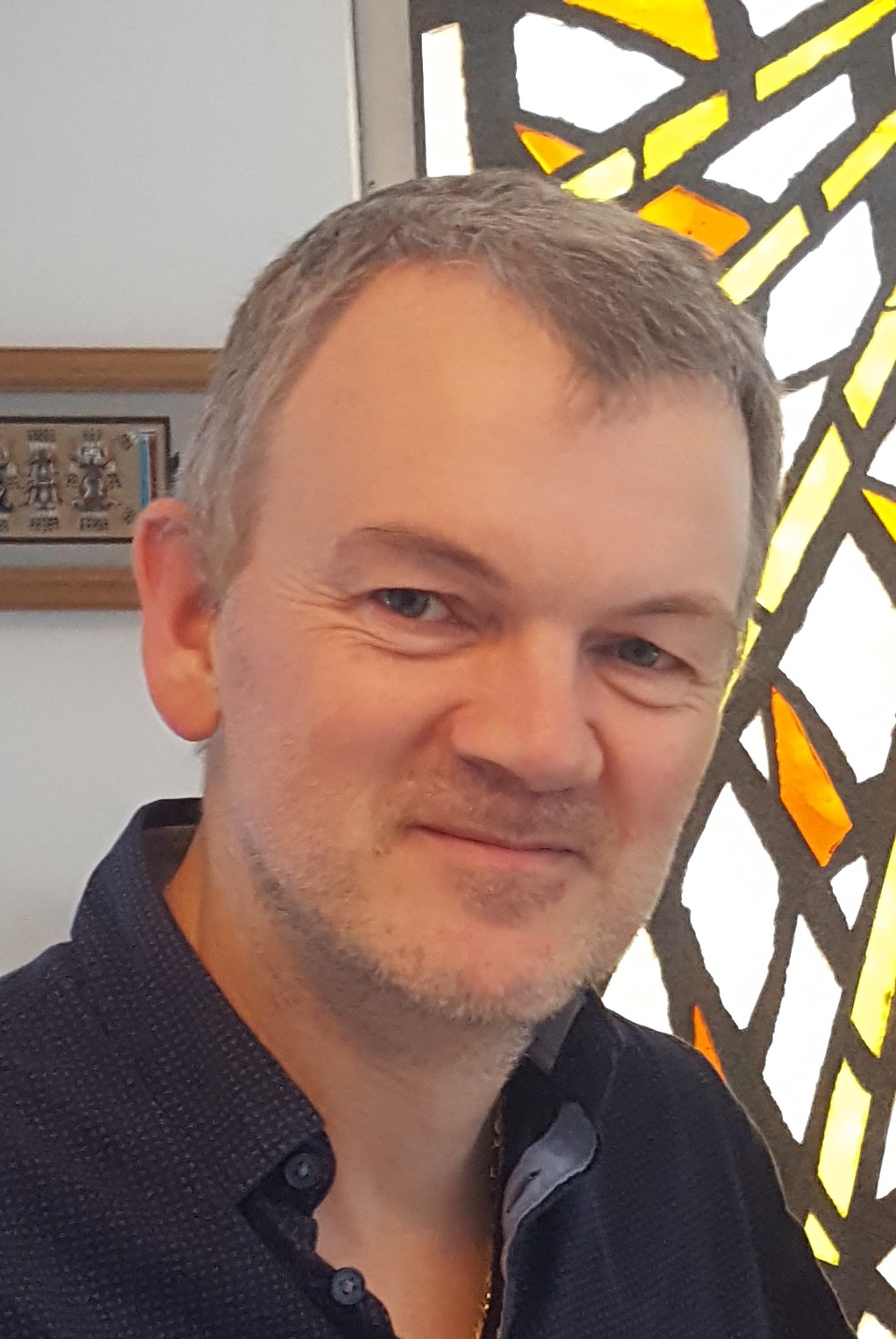
Zhu Han is a Professor at the University of Houston, TX, USA, with a PhD from the University of Maryland, College Park. He is affiliated with the Chinese Academy of Sciences' Aerospace Information Research Institute in Beijing, China. His research spans wireless networks, 6G communication, and machine learning applications in telecommunications. Key areas: Semantic communication, UAV networks, IoT security, quantum networking. Recent publications focus on federated learning, optical IRS for VLC, and resource allocation in LEO satellite systems. His work integrates AI with network security and edge computing. He collaborates extensively on topics like reconfigurable intelligent surfaces, quantum-assisted optimization, and privacy-preserving protocols. No specific awards or student details are provided in the dataset.
Dr. Luca Cassia is a Research Fellow in Pure Mathematics at the School of Mathematics and Statistics, affiliated with the Faculty of Science. His research focuses on mathematical physics, particle physics, and high-energy physics, with particular emphasis on string theory, matrix models, and supersymmetric gauge theories. He holds a PhD from the University of Milan-Bicocca. His work bridges algebraic geometry, quantum field theory, and integrable systems. Recent studies explore symplectic geometry in Calabi-Yau threefolds, refined Chern-Simons theories, and q-deformed matrix models. He has contributed to understanding topological strings, Virasoro constraints, and Wilson loop calculations via supersymmetric localization techniques. Publications span theoretical frameworks connecting gauge dynamics with quantum gravity, including studies on monopole superpotentials and brane configurations in 3D supersymmetric systems. While no specific awards are listed, his research has been published in high-impact journals like Communications in Mathematical Physics and Journal of High Energy Physics.
Ignacio Cascudo is an Associate Research Professor at the IMDEA Software Institute in Madrid, Spain. Previously, he held positions at Aalborg University (Denmark) as Associate and Assistant Professor, and at Aarhus University and CWI (Netherlands) as a postdoc. He earned his Ph.D. in Mathematics from the University of Oviedo (Spain). His research focuses on cryptography, particularly secure multiparty computation, secret sharing, and cryptographic protocols. He explores connections to error-correcting codes, finite fields, algebraic number theory, and algebraic complexity. He has advised PhD students such as Jaron Skovsted Gundersen and co-supervised Diego Mirandola. Recent projects include leadership in Spain's SecuRing grant and collaborations on Confidential6G (Horizon Europe), as well as research on verifiable computation, homomorphic encryption, and secure randomness generation. His work appears in top venues like CRYPTO, EUROCRYPT, and ASIACRYPT. Teaching includes courses on cryptographic protocols, computer security, and algebraic foundations at universities in Spain and Denmark. He contributes to interdisciplinary projects like SECURE at Aalborg University.
Dr Ryan Thomas is a researcher in the Department of Quantum Science & Technology at the Australian National University (ANU). He holds a PhD and has expertise in quantum physics, atomic physics, and quantum technology applications. His research focuses on cold atom systems, atom interferometry, and quantum scattering dynamics. Key projects include developing compact quantum sensors, stabilizing atom interferometers, and studying Feshbach resonances using laser-based atom colliders. He leads the MiniGrav project, creating a drone-deployable gravimeter for subsurface mapping. His work bridges theoretical quantum mechanics with experimental advancements in precision measurement and quantum instrumentation. Thomas collaborates on topics like quantum defect theory and feedback control systems for ultracold atomic samples. His contributions advance applications in quantum sensing, metrology, and fundamental physics experiments.
Dr. Amir Joudaki is a Researcher affiliated with the Department of Biomedical Informatics at ETH Zürich. His role is part of the Professorship for Data Analytics, focusing on interdisciplinary research at the intersection of machine learning and biomedicine. He is stationed at CAB F 53.1, Universitätstrasse 6, Zurich. His research interests span machine learning, biomedical data analytics, neural network theory, genomics, and bioinformatics algorithms. Notable contributions include work on deep neural network dynamics, batch normalization techniques, and graph-based genomic sequence analysis. Though not explicitly listed in the provided texts, his work suggests involvement in projects related to alignment-free bioinformatics methods, optimization in deep learning, and theoretical aspects of neural networks. Lab/Team Affiliation: Part of the Biomedical Informatics group at ETH Zürich, likely contributing to interdisciplinary data science initiatives in healthcare and genomics.
Tomasz Trzcinski is an active computer vision and machine learning researcher with a prolific publication record across top-tier conferences and journals including CVPR, ECCV, WACV, NeurIPS, and IEEE Access. His work spans multiple institutions, primarily collaborating with researchers from Polish academic and research organizations as evidenced by co-author patterns and institutional affiliations in his publications. 229+ publications documented in DBLP (2012-2025) Active contributor to computer vision and machine learning communities Regular presence at major conferences (CVPR, ECCV, NeurIPS) Trzcinski's research primarily focuses on continual learning , where he has made significant contributions to addressing catastrophic forgetting and knowledge retention. His work extends to 3D vision , particularly neural radiance fields (NeRF), Gaussian splatting, and point cloud processing, with applications in robotics and scene understanding. He also explores medical imaging applications, collaborating with medical researchers on projects involving pulmonary artery pressure estimation and fetal birth weight prediction. His methodological contributions include innovations in hypernetworks, vision transformers, and test-time adaptation techniques. Analysis of his recent publications (2023-2025) reveals a strong emphasis on continual learning methodologies, with approximately 40% of his work addressing challenges in this domain. His research demonstrates a consistent trajectory toward more efficient and robust neural network architectures, with increasing focus on practical applications in robotics, medical imaging, and real-world adaptation scenarios. The integration of vision-language models and contrastive learning approaches represents his latest research direction, indicating adaptation to emerging trends in the field. As a senior researcher, Trzcinski frequently serves as a corresponding author and collaborates with numerous junior researchers, suggesting an active supervisory role. His work shows evidence of securing research funding through collaborations with institutions involved in medical imaging and computer vision applications. Trzcinski maintains active research collaborations across multiple teams, particularly with groups focused on continual learning (Twardowski, Deja, Cygert), 3D vision (Kania, Kowalski), and medical applications (Sitek, Grzeszczyk). His research group appears to maintain strong connections between theoretical machine learning advancements and practical applications in healthcare and robotics.
Morgan Shirley is a postdoctoral researcher in theoretical computer science at the University of Victoria, hosted by Professors Sajin Koroth and Bruce Kapron. Previously, he completed his PhD at the University of Toronto under the supervision of Toni Pitassi and a Masters degree at Oregon State University advised by Mike Rosulek. His educational background includes: PhD in Computer Science, University of Toronto Masters in Computer Science, Oregon State University Shirley's research focuses on computational complexity, with particular emphasis on communication complexity, proof complexity, and the interplay between theoretical computer science and additive combinatorics. His work often involves proving lower bounds and developing new techniques in matrix analysis and Boolean function theory, driven by fundamental questions about computational limits. His publications from 2018 to 2025 reveal a consistent trajectory in communication complexity, featuring breakthroughs in factorization norms, equality oracles, and multi-party protocols. A unifying thread is the application of combinatorial and algebraic methods—particularly matrix analysis—to establish tight lower bounds and structural insights across diverse computational models. No scientific awards were mentioned in the provided text. There is no information available regarding student advising or research grants, reflecting his current postdoctoral status focused on independent research rather than mentorship or funded projects.
Riko Jacob is an Associate Professor and Head of Section in Theoretical Computer Science at the IT University of Copenhagen. His research focuses on algorithms, complexity, sorting, differential privacy, and combinatorial optimization. He leads projects such as DIREC (Digital Research Centre Denmark) and DISTRUST (Distributed business process execution under partial trust), emphasizing interdisciplinary collaboration. Research Interests: Jacob's work spans algorithm design, competitive analysis, randomized algorithms, and matrix operations. His recent studies address bichromatic sorting, saddlepoint detection, and parallel sorting with comparison errors, contributing to foundational advancements in theoretical computer science. Projects: Jacob is the Principal Investigator (PI) in key initiatives including DIREC (2020–2025), focusing on digital research innovation, and DISTRUST (2020–2025), addressing secure distributed systems. He also contributed to SSS (Scalable Similarity Search) under EU funding. Awards: No scientific awards explicitly listed, though his extensive publication record reflects scholarly impact. Advising & Grants: Supervised 1 student (name unspecified). Secured funding through Innovation Fund Denmark and EU grants, totaling millions in research support. Labs/Teams: Affiliated with the Center for Information Security and Trust and collaborates on global networks in algorithmic research.
Yan Fyodorov is a Professor of Mathematics and Co-chair in Disordered Systems at King's College London's Department of Mathematics within the Faculty of Natural, Mathematical & Engineering Sciences. He holds a PhD from the Petersburg Nuclear Physics Institute (1988) and has held positions at institutions including Brunel University, University of Nottingham, Queen Mary University, and visiting roles at Cologne University, Isaac Newton Institute, and École normale supérieure. Research Interests: Focuses on random matrix theory, statistical mechanics of disordered systems, quantum chaotic scattering, Anderson localization, and statistical topology of random landscapes. His work bridges pure mathematics and applications in physics, particularly in complex systems and high-dimensional landscapes. Publications: Active in high-impact journals like Physical Review Letters , Annales Henri Poincaré , and Journal of Statistical Physics . Recent work explores eigenvalue statistics, non-orthogonal eigenvectors, and replica symmetry breaking in spin-glass models. Awards: Recognized as a Bessel Research Awardee (2006/7) and Leverhulme Research Fellow (2008). His research has been supported by grants from EPSRC and Alexander von Humboldt Foundation. Labs/Teams: Leads the Disordered Systems group at King's, part of the Centre for Non-Equilibrium Science (CNES), and collaborates with the Probability group in Mathematics.
Chiara Cammarota is a Lecturer in Disordered Systems within the Mathematics department. Her research focuses on interdisciplinary topics spanning statistical physics, complex systems, and mathematical modeling. She investigates areas such as random graph stability, predator-prey network dynamics, and collective memory phenomena. Her work contributes to UN Sustainable Development Goals through studies on ecosystem stability and social dynamics. Recent publications include studies on ecosystem stability via sparse random graphs and the comparison of neural network dynamics to glassy systems. Collaborations involve international researchers in physics and mathematics. She has supervised three academic works, though specific student names are not listed.
Anatoly Konechny is an Associate Professor in the School of Mathematical & Computer Sciences at Heriot-Watt University, with a primary affiliation to the Department of Mathematics. His research focuses on Mathematical Physics, particularly two-dimensional conformal field theory, renormalization group flows, string theory applications, and non-commutative geometry. He holds a Ph.D. in pure mathematics from UC Davis (1999) and has held postdoctoral positions at UC Berkeley (1999–2002), Hebrew University (2002–2004), and Rutgers University (2004–2006). His work contributes to UN Sustainable Development Goals through theoretical advancements in physics and mathematics. Education Diploma in Mathematical Physics, Independent University of Moscow (1995) Ph.D. in Pure Mathematics, UC Davis (1999) Research Interests Dr. Konechny’s research explores foundational aspects of theoretical physics, including: Two-dimensional conformal field theory (CFT) and its boundary conditions. Renormalization group (RG) flows and their applications to critical phenomena. World-sheet methods in string theory, focusing on D-branes and non-commutative geometry. Mathematical structures in quantum field theories, such as fixed points and topological defects. Research Trends Recent publications highlight studies on RG interfaces, boundary flows, and defects in two-dimensional systems. His work bridges abstract mathematical frameworks with physical phenomena, emphasizing interdisciplinary connections between geometry, topology, and quantum physics. Awards & Grants No specific awards are listed, but his sustained research output (46 publications) reflects consistent academic engagement. His current role at Heriot-Watt University includes teaching and mentoring in advanced mathematical physics. Labs & Collaborations Collaborations include co-authored works on boundary and defect conformal field theories, reflecting participation in international theoretical physics networks.
Eduard Eiben is a Lecturer in Computer Science at Royal Holloway, University of London. He previously held a postdoctoral position at the University of Bergen, Norway (2017–2019), and completed his PhD at TU Wien, Austria, focusing on parameterized algorithms and complexity. His research interests center on parameterized algorithms and complexity, with applications to artificial intelligence and graph theory. Education: PhD in Theoretical Computer Science (2018), TU Wien, Austria Postdoctoral Researcher in Algorithms (2017–2019), University of Bergen, Norway MSc and BSc in Computer Science, Comenius University, Slovakia Research Interests: Parameterized Algorithms and Complexity Algorithmic Game Theory Graph Theory and Combinatorial Optimization Algorithmic Robotics and Motion Planning His work often explores structural properties of computational problems to design efficient algorithms. Awards: Best Paper Award at SACMAT 2022 Best Paper Award at SACMAT 2021 Lab/Team: Active in the Centre for Intelligent Systems at Royal Holloway, contributing to interdisciplinary research in algorithms and complexity.
Emmanuel GOBET is a Professor of Applied Mathematics at École Polytechnique, leading the SIMPAS research team and the Financial Mathematics group. He holds roles as Scientific Leader of the Stress Test: RISK Management and Financial Steering Chair (2018–present) and former Head of the Applied Mathematics Department (2020–2023). He co-directs the Master's program in Probability and Finance since 2010 and is involved in pedagogical coordination at Hi! PARIS (2021–2024). His research focuses on machine learning, data science, stochastic processes, and their applications in climate, energy, finance, and blockchain. Education includes a PhD in Probability (University Paris 7, 1996–1998), Master’s in Statistics (University Paris 7, 1995–1996), and an engineering degree from École Polytechnique. He has held academic positions at Grenoble Institute of Technology (2005–2010) and prior roles as Assistant Professor at École Polytechnique and University Paris 6. Research interests span extreme value analysis, Monte Carlo methods, risk modeling, and stochastic control. Notable projects include the ANR BLOCKFI (Blockchain & Decentralized Finance, 2024–2029) and leadership in conferences like CLIFIRIUM and GenHack data challenges. His work bridges theoretical advancements with practical applications in climate finance, energy systems, and financial risk management. Publications emphasize methodological innovations in stochastic simulation, risk assessment, and generative modeling of extreme events. Over 20 PhD students have been advised, contributing to fields like quantitative finance, stochastic control, and climate-related risk analysis. Current research priorities include climate transition pathways, energy systems optimization, and decentralized finance frameworks.
Misha Kilmer is the William Walker Professor of Mathematics at Tufts University, with a secondary appointment in Computer Science. She also serves as Deputy Director of ICERM at Brown University and co-PI of Tufts TRIPODS Institute. Her research focuses on numerical linear algebra, scientific computing, and image reconstruction/restoration. Kilmer has held leadership roles, including Chair of Tufts' Mathematics Department (2013-2019) and has received prestigious recognition, including SIAM Fellowship (2019) and the Tufts Undergraduate Teaching Award (2001). Education: PhD in Applied Mathematics, University of Maryland (1997) MA in Mathematics, Wake Forest University (1994) BS in Mathematics, Wake Forest University (1992) Research Interests: Kilmer's work emphasizes tensor decompositions, iterative methods, and model reduction. She develops algorithms for high-dimensional data analysis, imaging applications, and inverse problems. Her techniques bridge computational mathematics and engineering challenges, with applications in biomedical imaging, environmental monitoring, and machine learning. Publications Trends: Recent work highlights advancements in tensor-based neural networks, dynamic image reconstruction, and efficient algorithms for large-scale data. Key contributions include randomized algorithms for tensor decompositions and compressed sensing techniques for multi-modal data. Awards: SIAM Fellow (2019) Tufts Undergraduate Initiative in Teaching Award (2001) Advising & Grants: Kilmer has secured funding from NSF, NIH, IARPA, DARPA, and IBM. She co-chairs major SIAM conferences and serves on editorial boards for journals like SIAM Review and La Matematica . Labs/Teams: Active in Tufts' Data Intensive Studies Center (DISC) and co-leads the TRIPODS Institute. Collaborates internationally on projects involving tensor analysis and computational science.
Dr. Mustazee Rahman is an Associate Professor in the Department of Mathematical Sciences at Durham University. His research focuses on Combinatorics, Probability, and Statistical Mechanics, with contributions to stochastic processes, random matrix theory, and graph theory. He has published extensively on topics such as particle systems, growth models, and permutation patterns. His work bridges theoretical mathematics and applications in statistical physics. Key research interests include scaling limits in interacting particle systems, spectral properties of graphs, and algorithmic limitations in combinatorial optimization. Recent studies explore universality classes in KPZ models and local statistics in random sorting networks. His research also addresses percolation phenomena and meta-Fibonacci sequence dynamics. Publications span high-impact journals such as the Annals of Probability, Communications on Pure and Applied Mathematics, and Combinatorica. He has contributed to understanding phase transitions in random graphs and the geometry of permutation limits. His work demonstrates interdisciplinary connections between combinatorics, probability, and mathematical physics.