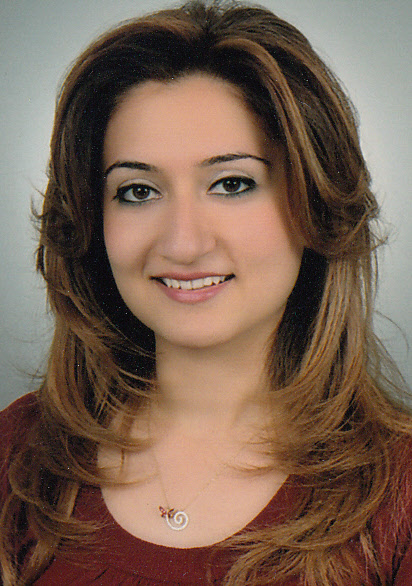
Dr. Özge Parlak Öz is an Assistant Professor at Gaziantep University, Faculty of Dentistry , affiliated with both the Department of Clinical Sciences and Department of Prosthetic Dentistry . Her academic journey began with a Doctorate in Prosthetic Dentistry from Gaziantep University (2010-2014) and a Licence in Dentistry from Marmara University (2004-2010). Her research focuses on Prosthetic Dentistry , CAD/CAM technology , laser applications in dental treatments, and dental materials for implant-supported and temporary restorations. Key areas include surface roughness, bacterial adhesion, bond strength, and aesthetic rehabilitation. She has published extensively on laser therapy (e.g., 2024 clinical trials on trigeminal neuralgia), CAD/CAM materials (2024 studies on ceramic finishing), and implant prosthetics (2019 retrospective analyses). Her work often involves multidisciplinary collaboration and clinical trials to optimize prosthetic outcomes. Projects include evaluating CAD/CAM temporary restorations (2022-2024) and low-dose laser efficacy (2023-2025). She has supervised theses on topics like fracture resistance of post-core systems and color stability of CAD/CAM materials .
Christian Godballe is a Professor at the Department of Clinical Research, University of Southern Denmark, with additional affiliations at Karolinska Institutet (KI) and Odense University Hospital (OUH). He leads the Research unit of Oto Rhino Laryngology in Odense and serves as an academic leader at the Faculty of Health Sciences. His academic background and professional trajectory demonstrate deep expertise in: Head and Neck Oncology (74% of research fingerprint) Oto Rhino Laryngology and related surgical specialties Medical Imaging applications in cancer diagnosis (82% PET-CT focus) Systematic review methodology (72% of research activity) Clinical outcomes research for thyroid and parathyroid procedures Professor Godballe's research program maintains strong clinical relevance with emphasis on improving patient outcomes through evidence-based approaches. His recent publications (2023-2025) show a strategic focus on surgical complications, rehabilitation protocols, and diagnostic methodologies in head and neck conditions. The work frequently employs large cohort studies, randomized clinical trials, and systematic review methodologies, often in collaboration with the DAHANCA (Danish Head and Neck Cancer) research group. His scientific contributions demonstrate significant impact: 286 total research outputs including 186 peer-reviewed journal articles 94 professional activities spanning conference presentations, committee work, and editorial duties 13 research projects (9 completed, 4 ongoing) with substantial supervision of PhD candidates Extensive national and international collaborations visible in research network mapping As an academic mentor, Professor Godballe has supervised multiple PhD students across diverse projects related to parathyroid imaging, head and neck cancer diagnostics, glottic neoplasia, and surgical outcomes. His leadership extends to institutional roles including PhD school administration at the Faculty of Health Sciences as documented in press mentions from 2018 and 2024. His clinical research maintains strong translational focus with direct applications to surgical practice, cancer management, and rehabilitation protocols for patients with head and neck conditions.
Arthur GOETSCHY is a Lecturer at ESPCI Paris and an active researcher at the Langevin Institute, focusing on wave propagation phenomena in complex and disordered media. His work bridges theoretical physics with practical applications in optics, quantum information, and biomedical imaging. He maintains an office at Room R52 with contact number 01 80 96 39 46. GOETSCHY's research centers on coherent control of wave propagation in disordered environments, with particular emphasis on optimization of transmission, absorption, and focusing. His scientific activities span microscopic theory of random lasers , quantum information propagation in complex media, photon-phonon dynamics in optomechanical networks, light propagation in cold atomic gases , and advanced random matrix theory applications. His work demonstrates how wave interference effects can be harnessed to control light in scattering environments. Analysis of his publication record from 2017-2025 reveals a consistent focus on wave control in disordered systems, with increasing sophistication in manipulating light for practical applications. His recent work (2023-2025) shows strong emphasis on broadband light delivery, multi-region control, and quantum aspects of wave propagation. A notable trend is the progression from fundamental theoretical understanding toward applications in biomedical imaging and telecommunications. At the Langevin Institute, GOETSCHY contributes to research on wave phenomena in complex media, collaborating with physicists working on multiple scattering, quantum optics, and nanophotonics. His theoretical work complements experimental efforts at the institute, particularly in wavefront shaping techniques and characterization of light propagation through turbid media.
Antonio Luigi Pastore serves as an Associate Professor in the Department of Medical and Surgical Sciences and Biotechnologies at Sapienza University of Rome, where he contributes significantly to urological education and research. His academic profile reflects deep expertise in clinical urology with specialization in surgical techniques and patient outcomes. His research portfolio spans multiple critical areas of modern urology: Functional Urology and Sexual Health Prostate Cancer Diagnosis and Treatment Minimally Invasive Surgical Techniques Bladder Cancer Management Erectile Dysfunction and Male Infertility Pastore's scholarly work demonstrates particular focus on comparative effectiveness research, evaluating new technologies against established methods while prioritizing functional preservation during surgical interventions. His methodology frequently employs multicenter randomized trials and prospective cohort studies that provide high-level evidence for clinical practice. His recent publications reveal emerging trends toward precision surgical approaches, mathematical modeling for treatment selection, and rigorous assessment of diagnostic imaging accuracy - particularly in prostate cancer detection and characterization. This work bridges technological innovation with patient-centered outcomes. As an educator, Pastore teaches multiple courses across nursing, medicine, and physiotherapy programs with specific urological focus, including Clinical Nursing in Surgical Area - Urology, Integrated Medical-Surgical Pathology II - Urology, and Rehabilitation in Specialized Area - Urology, demonstrating his commitment to training the next generation of healthcare professionals.
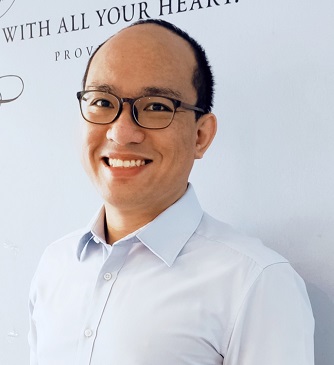
Lai Changquan is an Assistant Professor at Nanyang Technological University (NTU), holding positions in both the School of Mechanical & Aerospace Engineering and the School of Materials Science & Engineering. He is the Principal Investigator for the Advanced Materials Design and Synthesis (AMDS) Lab, which he established in November 2017, and received the prestigious Nanyang Assistant Professorship in 2022. Education: B.Eng in Mechanical Engineering, National University of Singapore (2009) M.Eng in Materials Science and Engineering, Massachusetts Institute of Technology (2010) Ph.D. in Advanced Materials for Micro- and Nano- Systems, National University of Singapore (2014) Dr. Lai's research spans multiple interdisciplinary fields with a focus on functional structural materials and waste valorization for circular economy applications. His work integrates design, materials science, and manufacturing innovation to engineer novel structures and surfaces. Key research areas include additive manufacturing, nanomaterials, metamaterials, structural batteries, sustainable materials, and machine learning applications in materials science. His lab has made significant contributions to the development of architected materials with exceptional mechanical properties and sustainable manufacturing processes, including turning wastepaper into battery anodes which was featured by the World Economic Forum. Analysis of Dr. Lai's recent publications reveals a strong focus on advanced materials design, particularly in structural metamaterials, additive manufacturing of metals and composites, and sustainable energy applications. His research increasingly incorporates machine learning techniques for materials prediction and optimization while maintaining experimental validation. There's a clear progression toward practical applications in renewable energy, particularly in battery technologies and sustainable manufacturing processes that align with circular economy principles. Scientific Awards: Nanyang Assistant Professorship (2022) Temasek Labs - Best Research Award (Bronze) (2021, 2022, 2023, 2024) Singapore Teaching and Academic Research Talent Scholarship (2021) Temasek Research Fellowship (2016) SMART Postdoctoral Fellowship (2015) Dr. Lai actively mentors a diverse group of graduate students and postdoctoral researchers in the AMDS Lab, including Po-Ju Chiang who became the lab's first PhD graduate in 2024. His research is supported by multiple grants through the HP-NTU Digital Manufacturing Joint Lab and other industry partnerships. He has successfully guided several PhD students through their research on topics including site-specific control of alloy properties through binder jet 3D printing and structural battery development. The Advanced Materials Design and Synthesis Lab maintains strong industry collaborations and has received significant media attention for its innovative work. The lab's research on sustainable materials has been featured in numerous international outlets including The Straits Times, Science Daily, and The Engineer (UK), demonstrating the real-world impact of their work on waste valorization and sustainable manufacturing technologies.
Trevor Coward is a Professor and Consultant in Maxillofacial & Craniofacial Rehabilitation at King's College London's Centre for Oral, Clinical & Translational Sciences. With over 35 years of experience, he specializes in facial prosthetics for patients with defects from cancer, trauma, or congenital conditions. He founded the Academic Centre of Reconstructive Science (ACRS) in 2015, integrating academic research with NHS clinical services to advance translational applications. His global collaborations include the University of Alberta, Hong Kong University, and institutions in Italy, India, and the USA. Education : PhD in Digitised Technology (University of London, 2004); MPhil in Artificial Ears (University of London, 1996). Trevor Coward's research focuses on digital technology integration in facial prosthesis design, including CT/MRI/Laser scanning, CAD/CAM, and stereophotogrammetry. He pioneered computerized color formulation for silicone prostheses to match diverse ethnic skin tones and developed innovative 3D printing techniques for anatomical parts. His work spans biomaterials testing, vascular engineering, and social perception studies aimed at reducing bias toward facial differences. Recent publications emphasize 3D morphable modeling for prosthetic design, color stability of silicone materials, and automated workflows for transparent facial orthoses. His team's clinical trials compare digital and conventional manufacturing methods for orbital and nasal prostheses, while collaborations explore bioactive PEEK functionalization for bone regeneration. These studies intersect with UN Sustainable Development Goals (SDGs) through education and healthcare innovation. Scientific Recognition : Clinical Research Fellow at the University of Alberta; Honorary Clinical Professor at Hong Kong University. As an educator, he established unique MSc programs at King's College London, attracting global students. His grants include EPSRC-funded projects like AMFaces (2023-2028) and ScanSeal (2020-2021). Coward actively participates in conferences as a keynote speaker, focusing on craniofacial implants and digital planning techniques. His lab, ACRS, serves as an international hub for maxillofacial prosthetic research and training.
Zhiwen Liu is a Professor in Electrical Engineering , focusing on Biomedical Imaging , Optical Engineering , and Photonics . His research leverages Metasurface Technology and Machine Learning to advance imaging systems and diagnostic tools. Active Projects : Metasurface-based chromatic confocal endoscope (NIBIB, 2024-2026), Random laser reconfiguration (NSF, 2023-2026) Finished Projects : Multi-line coherent Raman imaging (NIBIB, 2018-2021), Band-shifting probes (NIBIB, 2017-2020) Research Trends : Recent work spans Raman Spectroscopy , Holography , and Spectro-polarimetric Imaging , with applications in Healthcare , Agriculture , and Materials Science . His 15 most recent articles (2023-2025) emphasize Machine Learning , Metasurfaces , and Real-time Imaging . UN Sustainable Development Goals : His research contributes to Global Health and Food Security through low-cost diagnostics and crop disease detection technologies. Collaborations : Partners include Ni , Yang , and Keating from institutions like Penn State University Citations : 3380+ citations with an h-index of 34
Srabani Kar is an Assistant Professor in the Department of Physics at the Indian Institute of Technology Hyderabad (IIT Hyderabad), specializing in experimental condensed matter physics. Her research focuses on time-resolved terahertz spectroscopy and optoelectronic properties of low-dimensional materials, with applications in biomedical research and advanced optical systems. Education: Ph.D. from Indian Institute of Science (IISc), Bengaluru Research Interests: Time-resolved terahertz spectroscopy of low-dimensional materials Contactless conductivity measurements Optoelectronics of layered materials Applications of ultrafast hot carriers for biomedical research Random lasers and micro-lasing patterns Contact: Office Address: Room PH-213, Physics Building, Indian Institute of Technology Hyderabad, Kandi-502284, Sangareddy, Telangana, India Email: srabani@physics.iith.ac.in
James Emmett Herndon is a Professor of Biostatistics & Bioinformatics at Duke University and a Member of the Duke Cancer Institute, specializing in statistical methodologies for cancer clinical trials with emphasis on neuro-oncology applications. Education Ph.D., University of North Carolina, Chapel Hill (1988) Research Interests Herndon pioneers biostatistical approaches for cancer trials, focusing on time-dependent covariates in survival models, phase II trial designs minimizing logistical barriers, and longitudinal analysis of quality-of-life data in advanced cancer. His neuro-oncology work addresses critical challenges in brain tumor research through innovative statistical frameworks. Publication Trends With 589 publications, Herndon's recent work (2024-2025) demonstrates dominance in neuro-oncology, integrating machine learning for brain tumor classification, analyzing clinical trial disparities, and developing novel therapeutic strategies for gliomas. Key themes include financial toxicity in brain tumor care, immune-based therapies, and prognostic tool validation. Grants Inflammasomes - a driver of sexual dimorphism to glioma therapies (NIH, 2025-2030) McCain/Bayh Glioblastoma Consortium (DoD, 2025-2029) ATRX mutations, innate immune activation and therapeutic vulnerability in malignant gliomas (NCI, 2022-2027) Enhancing efficacy of Radiation Therapy for brainstem glioma (NCI, 2022-2027) Randomized Phase 2 trial of Lerapolturev for recurrent glioblastoma (2024-2027) Targeting tumor-neural interactions in lung cancer brain metastasis (NIH, 2021-2026) ABL-regulated networks in breast cancer metastases (DoD, 2022-2025) Synergistic microglial activation for GBM response (NINDS, 2021-2025) Genomic analysis of oligodendroglioma (Doris Duke, 2022-2025) Reviving cancer immune surveillance with CD4 T cell help (NCI, 2022-2025) Collaborative Leadership As senior faculty, Herndon mentors junior researchers across Duke Cancer Institute and leads multi-institutional consortia including the McCain/Bayh Glioblastoma Consortium. His grant portfolio demonstrates exceptional collaboration with neurosurgeons, oncologists, and immunologists to translate statistical innovations into clinical impact.
Martin M A Sieber is a Reader in Applied Mathematics at the School of Mathematics, University of Bristol, specializing in mathematical physics and quantum chaos. With a Ph.D. from Hamburg and an M.Sc. from California, his research focuses on the intersection of semiclassical physics, wave chaos, and random matrix theory in quantum systems. Sieber's primary research explores quantum chaotic systems through semiclassical approximations, optical microresonators, and wave scattering phenomena. His work connects mathematical physics with experimental realizations in microwave and optical systems, analyzing resonance statistics, eigenfunction distributions, and directional emission in complex cavities. Key interests include the universal properties of chaotic scattering, trace formulas for quantum systems, and statistical behavior of disordered systems. His publications demonstrate consistent focus on quantum chaos universality, semiclassical methods for wave systems, and optical/microwave resonator physics. Recent work shows progression toward symmetry-inclusive quantum models and experimental validations of random matrix theories. Research Projects: ASYMPTOTIC AND NUMERICAL APPROACHES TO THE THEORY OF OPTICAL MICRORESONATORS AND MICROLASERS (2006-2009): Investigated dielectric properties, Q factors, and scatterer effects in microresonators. SEMICLASSICAL THEORIES OF QUANTUM FLUCTUATION STATISTICS (2005-2006): Developed frameworks for fluctuation properties in chaotic quantum systems.
Dr. Kouros Nouri-Mahdavi is an accomplished ophthalmologist and clinical researcher at the UCLA Stein Eye Institute , specializing in cataract and glaucoma surgery . With over 20 years of clinical experience, he focuses on advanced surgical techniques including femto laser-assisted cataract surgery and minimally invasive glaucoma procedures. Education : MD from Isfahan University of Medical Sciences, MS in Clinical Research from UCLA Training : Residency at UCSD, Fellowships in France and Yale Eye Center His research interests center around glaucoma progression detection , with particular emphasis on: Optical Coherence Tomography (OCT) imaging Artificial intelligence applications in diagnostics Visual field analysis and functional testing Macular structure-function relationships Blood pressure interactions in glaucoma Scientific contributions include: R01-EY027929 grant on advanced glaucoma progression NIH K23 award for OCT optimization research Pioneering deep learning models for glaucoma detection (DDLSNet, RimNet) International recognition through editorial roles and innovation awards
Professor Jenny leads the Jenny Research Group at ETH Zürich, specializing in turbulent reactive flows, rarefied gas kinetics, and biomedical fluid dynamics. Her work bridges fundamental research with industrial applications in energy systems and fluid mechanics. Develops advanced turbulence models (TDDM, hybrid LES/RANS) for multi-scale flows Pioneers data assimilation frameworks for RANS simulations using adjoint methods Advances particle-based stochastic algorithms for fractured porous media transport Her recent publications emphasize adaptive time integration techniques, probabilistic modeling of non-linear transport phenomena, and optimized simulation tools for hydrogen storage systems. The group's methodological innovations focus on reducing computational costs while maintaining physical accuracy through novel regularization strategies. Key applications include combustion device optimization, high-pressure tank filling analysis, and fractured reservoir simulations. Current projects integrate machine learning with traditional CFD methods to address challenges in droplet clustering, flame surface density propagation, and supersonic spray dynamics. The research framework spans from direct numerical simulations of fundamental flow physics to industrial-scale hybrid modeling implementations.
Joseph Kileel is an Assistant Professor in the Department of Mathematics at the University of Texas at Austin, with additional appointments as a Core Faculty Member of the Oden Institute for Computational Engineering and Sciences and as a member of the Machine Learning Laboratory. His academic journey includes a Ph.D. in Mathematics from UC Berkeley (2017) under Bernd Sturmfels and a postdoctoral fellowship at Princeton University (2017-2020) with Amit Singer. Professor Kileel's research spans applied mathematics, mathematical data science, and computational algebra, with particular expertise in inverse problems for imaging science, tensor methods, and non-convex optimization. His work has important applications in cryo-electron microscopy, 3D reconstruction, and mathematical theory for machine learning algorithms. His research program is supported by the NSF, DOE, and Sloan Foundation. His publication record demonstrates consistent high-impact contributions across multiple venues including IEEE Transactions, SIAM journals, Foundations of Computational Mathematics, and NeurIPS. His recent work shows a strong trend toward developing algebraic and geometric methods for data science problems, with increasing focus on tensor decompositions and their applications to molecular imaging. His research bridges theoretical mathematics with practical computational methods. Charles Chui Young Researcher Best Paper Award Bernard Friedman Memorial Prize for Best Thesis in Applied Mathematics Professor Kileel currently advises six doctoral students and postdocs, maintaining an active research group that combines theoretical depth with practical applications. His students work on diverse projects spanning tensor methods, optimization theory, and applications to imaging science. The group benefits from strong connections with the Oden Institute and Machine Learning Laboratory at UT Austin, providing access to interdisciplinary collaborations and resources. His research group focuses on developing mathematical foundations for data science problems, particularly those involving algebraic structure. Current projects include tensor decomposition algorithms, geometric methods for 3D reconstruction, and theoretical analysis of non-convex optimization landscapes. The group maintains active collaborations with researchers at Princeton, Berkeley, and international institutions, reflecting the interdisciplinary nature of his work.
Carlo Alberto Cutolo is a Researcher at the Department of Neuroscience, Rehabilitation, Ophthalmology, Genetics, and Maternal and Child Sciences (DINOGMI) at the University of Genoa. He serves on the Joint Teacher-Student Commission for the School of Medical and Pharmaceutical Sciences and teaches specialized courses including Semiology of the Anterior Segment , Rehabilitation in Ophthalmology , Ocular Pharmacology , and Diseases of the Visual System across Medicine, Orthoptics, and Podology degree programs. His research focuses on: Advanced ophthalmic imaging (OCTA, capillaroscopy) for microvascular analysis Glaucoma treatment innovations (microshunt devices, laser trabeculoplasty) Diabetic retinopathy diagnostics using AI and telemedicine Systemic sclerosis-related ocular manifestations Recent publications (2023-2025) demonstrate strong emphasis on translational ophthalmology, with studies spanning AI-driven diagnostics, multi-center clinical trials, and novel biomarker discovery for autoimmune disorders. No awards or student advisories are documented.
David Clément is an Associate Professor at the Institut d'Optique Graduate School, where he has been a permanent faculty member since 2010. He is part of the Quantum Gases group within the Laboratoire Charles Fabry, where he coordinates the 'Helium - Lattice' research project. His academic journey includes a PhD on Bose-Einstein condensates in random potentials under Professor Alain Aspect, followed by post-doctoral work in Florence, Italy. Clément's research focuses on quantum gases, particularly Bose-Einstein condensates in various potentials and lattice systems. His work investigates quantum correlations, phase transitions, momentum distributions, and the behavior of ultracold atoms in disordered environments. His recent publications demonstrate expertise in non-Gaussian statistics, quantum entanglement, and quantum depletion phenomena in interacting Bose gases. Analysis of his 15 most recent publications (2019-2025) reveals a consistent focus on quantum correlations in ultracold atomic systems, with particular emphasis on non-Gaussian statistics, momentum-space measurements, and quantum phase transitions. His work frequently appears in top-tier journals including Nature Physics and Physical Review Letters, often receiving special recognition as Editors' Suggestions. Junior member of Institut Universitaire de France (2016-2021) Habilitation à Diriger des Recherches (HDR) (2019) As an active researcher with numerous recent publications, Clément likely supervises PhD and Master's students in his laboratory. His research group would have access to advanced experimental setups for ultracold atom manipulation, including optical lattice systems and high-precision detection equipment. The 'Helium - Lattice' project suggests specialized equipment for working with metastable helium atoms in lattice configurations. David Clément leads the 'Helium - Lattice' research group within the Quantum Gases team at Laboratoire Charles Fabry. His laboratory likely features state-of-the-art equipment for laser cooling, atom trapping, optical lattice generation, and single-atom detection. The research environment supports both experimental work with ultracold atoms and theoretical collaborations to interpret complex quantum phenomena.