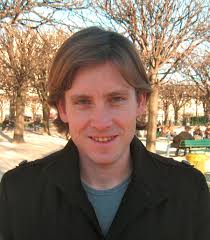
Professor Damien Woods is a faculty member at Maynooth University's Faculty of Science & Engineering, specifically affiliated with the Department of Computer Science and the Hamilton Institute. He leads groundbreaking research in DNA computing, molecular programming, and optical computing, focusing on self-assembly, algorithmic design, and computational complexity. ERC Consolidator Grant: 'Computationally Active DNA Nanostructures' SFI ERC Support Award EIC Pathfinder Challenge Grant: 'DISCO - DNA Infrastructure for Storage and Computation' His research projects explore programmable DNA storage, molecular robotics, and robust self-assembly systems. Recent publications span diverse topics like algorithmic DNA tile assembly, thermodynamic stability, and computational universality in nanosystems. Awards include ERC and SFI grants, with a focus on bridging theoretical computer science and experimental molecular biology. Scientific Contributions include: 2022: 'Turning Machines' - Molecular Robotics 2019: 'Diverse Molecular Algorithms' in Nature 2017: 'A Cargo-Sorting DNA Robot' in Science
Christian Engwer is a full Professor at the University of Muenster in the Institute for Applied Mathematics, specializing in Analysis and Numerics. He leads the Engwer Group focused on Applications of Partial Differential Equations and is actively involved in the Cells in Motion initiative as a supervisor in the CiM-IMPRS Graduate Programme. His research centers on developing numerical methods for partial differential equations, particularly addressing challenges in complex geometries and multi-physics applications. He specializes in Unfitted Discontinuous Galerkin methods, which allow simulations on complex geometries without requiring domain-fitted meshes. His work spans porous media modeling, biological systems, and bioelectromagnetism applications, with significant contributions to EEG/MEG forward modeling in neuroscience. Analysis of his recent publications reveals a strong focus on model order reduction techniques, stabilized numerical schemes for cut-cell meshes, and applications in bioelectromagnetism. His work demonstrates a consistent trajectory toward developing robust, efficient numerical methods applicable to real-world problems in medical imaging and biological modeling, with increasing emphasis on high-performance computing implementations. Professor Engwer actively supervises doctoral students, with recent completions including Lukas Renelt (2025), Michael Wenske (2021), and Maria Carla Piastra (2019), among others working on topics related to numerical methods and biomedical applications. He leads several major research projects including BrainStorm: Highly Extensible Software for Advanced Electrophysiology and MEG/EEG Imaging (NIH-funded since 2019), multiple EXC 2044 Cluster of Excellence projects through 2025, and the InterKI interdisciplinary teaching program on machine learning and artificial intelligence. His group develops several important software packages including DUNE (Distributed and Unified Numerics Environment), duneuro (for bioelectromagnetism applications), and TPMC (Topology Preserving Marching Cubes). These tools support research in numerical methods and their applications to complex scientific problems.
Fima Klebaner is Professor in the School of Mathematics at Monash University and Director of the Centre for Modelling of Stochastic Systems. His research spans stochastic processes, financial mathematics, and population biology, with emphasis on limit theorems, branching processes, and diffusion models. Current projects include ARC-funded work on stochastic population dynamics and financial derivatives pricing. Key research areas: 1) Population-dependent stochastic systems; 2) Large deviation principles; 3) Financial mathematics (Dupire formula, volatility); 4) Approximation methods for complex processes. Recent publications (2018-2025) show balanced focus on theoretical probability (45%) and applied modeling (55%), particularly in ecology and finance. Article analysis reveals advanced methodologies in: 1) Stochastic calculus applications (33% of recent works); 2) Limit theorems for interacting systems (27%); 3) Financial mathematics innovations (20%). Theoretical contributions frequently interface with biological and financial applications.
Eric Bettinger is the Conley DeAngelis Family Professor in the Stanford University School of Education and a Senior Fellow at the Hoover Institution. He also holds appointments as a Senior Fellow at the Stanford Institute for Economic Policy Research (SIEPR) and Professor (by courtesy) of Economics. Bettinger directs the Center for Educational Policy Analysis and the Lemann Center for Brazilian Education at Stanford, and serves as a research associate with the National Bureau of Economic Research. His educational background includes a Ph.D. in Economics from the Massachusetts Institute of Technology (2000) and a B.A. in Economics, Magna cum Laude with Honors, from Brigham Young University (1996). Bettinger's research focuses on the economics of education, with particular emphasis on student success and completion in college, the impacts of online education, financial aid effects, teacher characteristics, and voucher programs. His work employs rigorous statistical methods to identify cause-and-effect relationships in higher education. Notably, his research on simplifying financial aid applications has directly influenced White House efforts to streamline financial aid processes, demonstrating the real-world policy impact of his scholarship. His recent publications reveal consistent focus on educational interventions, technology in education, and policy evaluation. Bettinger's work spans multiple methodologies including randomized controlled trials, natural experiments, and large-scale data analysis. His research often addresses practical educational challenges while maintaining strong theoretical foundations in economics. Bettinger has served as a consultant to the White House and various state governments on financial aid policies, translating academic research into actionable policy recommendations. His work bridges the gap between academic scholarship and practical educational policy implementation. As an academic leader, Bettinger directs multiple research centers and has advised numerous doctoral students. His current advisees include Joseph Moore, Sergio Arango, Michelle Blair, Dallas Gilmore, Gabriel Koraicho, and postdoctoral researcher Saloni Gupta.
Liang Zhang is a Professor of Higher Education at New York University's Steinhardt School, specializing in higher education economics, finance, and public policy. He previously taught at the University of Minnesota, Vanderbilt University, and Penn State University. His research examines the role of governments and institutions in shaping institutional performance and student outcomes, with a focus on college access, labor markets, and policy efficacy. Dr. Zhang holds dual PhDs from Cornell University (Economics) and the University of Arizona (Higher Education). His work has been published in leading journals such as Review of Higher Education , Economics of Education Review , and Harvard Education Review . Key research areas include the impact of state policies on college enrollment, peer effects in academic decisions, and the global dynamics of scientific productivity. Recent studies highlight his analysis of the Post-9/11 GI Bill’s effects on veteran education access and outcomes, as well as the stratification of faculty employment in U.S. higher education institutions. His work consistently bridges economic theory and policy practice, offering actionable insights for institutional leaders and policymakers.
Dr. Joshua Jeong is an Assistant Professor in the Hubert Department of Global Health at Emory University's Rollins School of Public Health. He serves as the principal investigator for three cluster randomized controlled trials assessing community-based parenting interventions in Tanzania and Kenya. His work focuses on father-inclusive strategies to improve early childhood development (ECD) in resource-limited settings. Dr. Jeong holds affiliate editorship at the Journal of Child Psychology and Psychiatry and collaborates with NGOs, governments, and international agencies to inform scalable ECD programs. His research integrates mixed-methods approaches for intervention development and evaluation, emphasizing gender equality and couples' relationships. Dr. Jeong earned his ScD and ScM in Global Health and Population from Harvard University (with FLAS Swahili fellowship and Harvard Center on the Developing Child award), and a BS in Human Development from Cornell University. His educational background includes advanced training in implementation science and intervention design. Research interests center on parent-child relationships , particularly father engagement in low-resource contexts. He explores how caregiver mental health, economic empowerment, and family dynamics impact ECD outcomes. Current projects address parenting program scalability through existing community networks and faith-based organizations. Findings aim to improve program fidelity, gender equity, and holistic child development support. His team's work has been recognized with awards from NIH, Society for Research in Child Development, and the Jacobs Foundation. Ongoing projects include evaluations of father-inclusive parenting programs and studies on maternal decision-making power's influence on child care-seeking behaviors. Lab activities involve graduate and undergraduate research assistants analyzing qualitative and quantitative data from fieldwork in Tanzania and Kenya. Weekly lab meetings are project-specific, with Spring 2025 sessions held at the Rollins Building. Collaborations with local implementing partners like Anglican Development Services and ChildFund Kenya drive applied research initiatives.
Brian Kirby is the Meinig Family Professor in the Department of Mechanical Engineering at the College of Engineering, Cornell University. He is a leading researcher in microfluidics, biomedical engineering, and cancer diagnostics, with a strong emphasis on circulating tumor cells (CTCs), rare cell isolation, and biophysical forces in disease. His work bridges engineering, biology, and clinical medicine. Institution: Cornell University School: College of Engineering Department: Mechanical Engineering Rank: Professor Education: Stanford University, 2001 Brian Kirby's research focuses on developing and applying microfluidic technologies to solve biomedical challenges. His work centers on microfluidic rare cell capture , particularly circulating tumor cells (CTCs) , enabling early cancer detection and monitoring treatment response. He investigates biophysical forces such as shear stress and surface interactions in conditions like thrombosis and cancer metastasis. His lab also works on dielectrophoresis , acoustophoresis , and electrokinetics for cell separation and analysis. Additional interests include bioinstrumentation , lab-on-a-chip devices , and fluid mechanics in biological systems . His recent publications show a consistent focus on microfluidic diagnostics, cancer biophysics, and smart fluid systems. Articles span topics from CTC isolation in prostate and pancreatic cancers to thrombosis in medical devices and programmable viscosity metamaterials . The research integrates engineering design with clinical applications, often involving interdisciplinary collaboration. Scientific Awards: Creative Teaching Award, Cornell Center for Teaching Innovation Advising Award, College of Engineering, Cornell University, 2015 Research Award, College of Engineering, Cornell University, 2015 Brian Kirby is actively involved in advising and research mentorship. While specific student names are not listed in the provided text, his extensive publication record and leadership of a research group indicate active supervision of graduate students and postdoctoral researchers. His research is supported by grants related to cancer diagnostics, microfluidics, and biomedical engineering, though specific grant details are not provided. He has contributed to the development of novel microfluidic devices such as the GEDI (Geometrically Enhanced Differential Immunocapture) platform for CTC capture and functional analysis. Labs and Teams: Kirby leads a research laboratory at Cornell focused on microfluidics and biomedical instrumentation. His team develops and applies microfluidic platforms for clinical diagnostics, particularly in oncology and hematology. The lab collaborates with clinicians and scientists across disciplines to translate engineering innovations into medical applications.
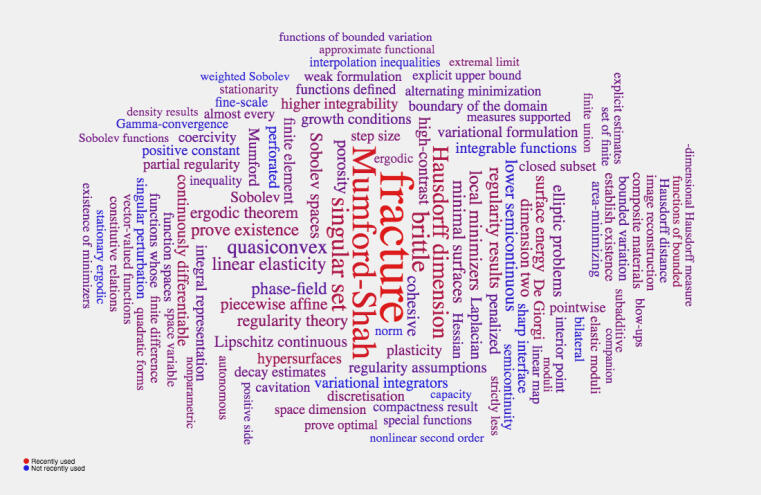
Professor Caterina Ida Zeppieri is a distinguished mathematician at the Westfälische Wilhelms-University Münster (University of Münster) in Germany, where she leads the Research Group 'Analysis and Modelling' within the Institute for Analysis and Numerics. She has maintained a continuous academic presence since at least the Winter semester 2012/13 through to upcoming semesters in 2025/26, consistently teaching advanced mathematics courses and supervising research activities. Her research focuses on fundamental aspects of mathematical analysis with significant applications to materials science. She specializes in Calculus of Variations, Elliptic PDEs, Gamma-convergence, Homogenization theory, Free-discontinuity problems, Nonlinear elasticity, and Plasticity. Her work bridges theoretical mathematics with practical applications in understanding material behavior, particularly fracture mechanics and composite materials. Professor Zeppieri's publication record demonstrates a consistent and impactful research trajectory from 2007 through forthcoming publications in 2025. Her recent work shows a strong emphasis on stochastic homogenization techniques applied to free-discontinuity problems and singularly-perturbed functionals, revealing sophisticated mathematical approaches to modeling complex material behaviors across multiple scales. She regularly collaborates with leading researchers including Filippo Cagnetti, Gianni Dal Maso, and Lucia Scardia, contributing to significant advances in the mathematical understanding of material science phenomena. Her research has been published in top-tier mathematics journals including Calculus of Variations and Partial Differential Equations, Archive for Rational Mechanics and Analysis, and SIAM Journal on Mathematical Analysis. Within the department, Professor Zeppieri plays an active role in teaching advanced courses such as Partial Differential Equations, Calculus of Variations, and Advanced Topics in the Calculus of Variation, while participating in the department's Advanced Seminar in Applied Mathematics and Colloquium on Applied Mathematics.
James R. Lee is a Professor in the Department of Computer Science at the University of Washington. His research spans theoretical computer science, probability, and geometry. He has held visiting scientist roles at Microsoft Research (2023, 2018, 2017) and participated in programs at the Simons Institute (2023, 2020, 2018, 2017, 2014). Research Interests: Algorithms, complexity theory, convex optimization, metric embeddings, spectral graph theory, probability, stochastic processes, and the interplay between discrete and continuous analysis. Teaching: Courses on modern algorithms, quantum computing, optimization theory, and spectral methods in theoretical computer science. Scientific Contributions: Developed sparsification algorithms for generalized linear models and norms with near-linear size guarantees (STOC'24, FOCS'23). Extended Cheeger-type inequalities to higher eigenvalues (STOC'12, STOC'18). Proved super-polynomial lower bounds for LP/SDP relaxations in constraint satisfaction (STOC'15, FOCS'13). Disproved Benjamini-Papasoglou conjectures on annular separators (Discrete Comp. Geom. 2024). Advanced understanding of random walks in geometric and unimodular graphs (Israel J. Math. 2023, GAFA 2023). Scientific Awards: Best Paper Award, STOC 2015
Professor Tim Rogers is affiliated with the University of Bath as a faculty member in the Department of Mathematical Sciences . He is actively involved in research spanning complex systems, network theory, and stochastic processes. PhD in Random Matrix Theory from King's College London (2010) His research focuses on emergent behavior in random systems , including: Collective Behavior : Crowd dynamics, lane formation, and noise-enhanced synchronization Epidemics & Networks : Spread prediction, node risk assessment, and misinformation impacts Ecology & Evolution : Trait emergence, species boundaries, and demographic noise effects Random Matrix Theory : Spectral analysis and applications to complex systems Publication trends reflect interdisciplinary work bridging Physics, Biology, and Mathematics , with a focus on network structures , stochastic modeling , and emergence phenomena . Scientific awards include: 2015 : Editor's Choice for Europhys. Lett. 109, 28005 2016 : Highlight of Journal of Physics A 2017 : Editor's Suggestion for Phys. Rev. E 92, 032708 He has supervised numerous PhD students and postdocs on projects related to stochastic dynamics , network modeling , and mathematical biology , with ongoing grants from agencies like EPSRC and The Leverhulme Trust .
Dr. Albert Koulman is a Principal Research Associate at the University of Cambridge, affiliated with the Metabolic Research Laboratories (MRL) within the Institute of Metabolic Science. His work focuses on developing advanced analytical methods for metabolomics and lipidomics to understand metabolic processes in diseases. Department: Department of Clinical Biochemistry, University of Cambridge Key Roles: Scientific Director of the NIHR BRC Metabolomics and Lipidomics facility Research Interests 1. Metabolism in Pregnancy & Early Life: Collaborates with international teams to study lipid metabolism during pregnancy and infancy, developing biomarkers for gestational diabetes, infant nutrition, and childhood obesity risks. 2. Technological Innovations: Leads development of single-cell lipidomics and organelle-specific lipid profiling, establishing a full pipeline from sample preparation to bioinformatics. 3. Nutritional Biomarker Methodology: Specializes in dried blood spot applications for lipid analysis in clinical and population studies, supported by the MRC Epidemiology Unit. Article Trends Recent publications highlight his expertise in lipid metabolism across diseases (e.g., diabetes, melanoma, NAFLD). Key themes include sexual dimorphism in lipid biosynthesis, vitamin D dynamics during exercise, stromal lipid influences on cancer progression, and malnutrition recovery protocols. Methodological advancements (LC-MS/MS, single-cell analysis) and global health applications (Gambian maternal nutrition, pediatric rehabilitation) are recurring topics. Group Members & Collaborations Dr. Ben Jenkins (Analytical Chemist) Ms. Paulina Guevara Dominguez (Research Assistant) Ms. Nina van der Velde (MPhil Student) Collaborators: Sue Ozanne (Pregnancy Metabolism), MJFF (Parkinson’s research), MRC (Epidemiology Unit) Research Funding Biotechnology and Biological Sciences Research Council (BBSRC) JPI (Joint Programming Initiative) Michael J. Fox Foundation (MJFF) Medical Research Council (MRC) National Institute for Health and Care Research (NIHR)
Yuhan Jiang is a Research Fellow in the Department of Mathematics at the University of California, Berkeley, where they work under the mentorship of Professor Sylvie Corteel. Previously, Jiang completed their PhD at Harvard University under the supervision of Professor Lauren K. Williams. Their academic address is 931 Evans Hall, Berkeley. Education: PhD in Mathematics from Harvard University, advised by Professor Lauren K. Williams Dr. Jiang specializes in algebraic combinatorics, with research spanning polytope theory, matroid theory, and algebraic statistics. Their work connects combinatorial structures with algebraic geometry and representation theory, particularly focusing on coinvariant rings, poset dynamics, and Ehrhart theory. Jiang's research demonstrates a strong interplay between discrete mathematics and geometric structures, often revealing deep connections between seemingly disparate areas of mathematics. Analysis of Jiang's recent publications shows a consistent focus on combinatorial structures with geometric interpretations. Their work on alternating diagonal coinvariants, echelonmotion, and positroid polytopes demonstrates expertise in connecting algebraic combinatorics with geometric reasoning. The publications reveal a progression from foundational combinatorial structures to applications in probability (through Markov chain analysis) and statistics (through algebraic statistical models). A notable trend is Jiang's ability to bridge theoretical combinatorics with concrete computational results, as seen in their work on Ehrhart series and k-ellipses. Dr. Jiang teaches Math 185: Complex Analysis for Fall 2025 at UC Berkeley, indicating active participation in the department's educational mission. While specific grant information isn't provided in the available text, their productive research output across multiple mathematical domains suggests successful funding support for their scholarly activities.
Ethan McCormick is an Assistant Professor in the School of Education at the University of Delaware, specializing in longitudinal and psychometric modeling. He holds a Ph.D. in Psychology from the University of North Carolina at Chapel Hill (2020) and a B.S. in Biochemistry from the University of Arkansas (2013). His research focuses on integrating short-term and long-term longitudinal models to study behavioral and cognitive changes across the lifespan, with recent emphasis on educational data analysis and nonlinear random effects modeling. He is a Resident Faculty member of the University of Delaware’s Data Science Institute and previously served as an Assistant Professor of Methodology & Statistics at Leiden University (2022–2024). Dr. McCormick’s grants include the NWO Veni SSH Grant (2024–2027) for tracking educational outcomes via statistical modeling and the Jacobs Foundation Fellowship (2024–2026) for studying complex growth in math ability. His work bridges methodological rigor with applied neuroscience, examining brain-behavior relationships in developmental contexts through large-scale collaborations. Professional Experience : Assistant Professor, University of Delaware (2024–present); Assistant Professor, Leiden University (2022–2024) Key Research Themes : Longitudinal modeling, time series analysis, psychometrics, developmental cognitive neuroscience Awards : NWO Veni SSH Grant, Jacobs Foundation Fellowship His recent articles emphasize improving time-series methodologies, addressing limitations of two-time-point studies, and advancing models for asymmetric temporal dynamics. He collaborates internationally on projects simulating developmental datasets and analyzing neural correlates of behavior.
Scott Armstrong is a Professor of Mathematics at the Courant Institute of Mathematical Sciences, New York University. His research focuses on partial differential equations, calculus of variations, and probability theory, with a specialization in stochastic homogenization of PDEs in random media and related statistical mechanical systems. He holds a Ph.D. from UC Berkeley (2009) and a B.S. from Texas A&M University (2002). Education: Ph.D. in Mathematics, University of California, Berkeley, USA (2009) B.S. in Mathematics, Texas A&M University, USA (2002) Research Interests: Scott's work addresses fundamental questions in homogenization theory, including quantitative estimates for elliptic and parabolic equations in random media, renormalization group methods, and applications to statistical mechanics. His contributions bridge analysis, probability, and mathematical physics, with a focus on rigorous mathematical frameworks for understanding macroscopic behavior from microscopic models. Publications: His recent work includes studies on anomalous diffusion, renormalization group techniques, and quantitative homogenization in high-contrast media. Over 50 peer-reviewed articles highlight his expertise in stochastic PDEs, elliptic regularity, and variational methods. Awards: No specific awards listed in the provided text. Advising & Grants: No student advisees or grant details explicitly mentioned in the text. Labs/Teams: No dedicated labs or collaborative teams explicitly noted, though his research likely involves interdisciplinary collaborations within the Courant Institute.
Dr. Curt von Keyserlingk is a Reader (equivalent to Associate Professor) in theoretical physics at King's College London, based in the Theory & Simulation of Condensed Matter Group within the Department of Physics, Faculty of Natural, Mathematical & Engineering Sciences. His research focuses on understanding complex quantum systems through both analytical and numerical approaches. His educational background includes an MMath from the University of Cambridge, followed by DPhil studies at the University of Oxford under Professor Steve Simon. Prior to his current position at King's, he held a postdoctoral research fellowship at the Princeton Center for Theoretical Science and was a lecturer at the University of Birmingham. Dr. von Keyserlingk's research centers on interacting quantum systems, studying exotic phenomena such as superconductivity, topological order, localization, and time crystallinity. His work bridges the gap between fundamental quantum mechanics and practical applications in quantum computing. He develops both analytical frameworks and numerical tools to understand how quantum systems evolve and behave under various conditions, with particular emphasis on non-equilibrium dynamics, quantum information processing, and topological phases of matter. His recent publications reveal a strong focus on quantum many-body systems, with particular attention to topological phases in three dimensions, operator dynamics in quantum systems, and the interplay between dissipation and quantum information. His work spans from fundamental theoretical questions about quantum thermalization to practical applications in quantum error correction and quantum computing architectures. Dr. von Keyserlingk is the recipient of a prestigious UKRI Future Leaders Fellowship, which supports his research on robust many-body quantum phenomena. His current projects include 'Robust Many-body Quantum Phenomena Through Driving And Dissipation' (2025-2028) and 'Robust many-body Quantum phenomena through Driving and Dissipation' (2022-2025). He actively supervises PhD students and runs the physics intercollegiate programme between King's College London and Royal Holloway, University of London. His research group focuses on developing new theoretical frameworks to understand quantum systems that could potentially be harnessed for quantum computing applications.