Ravi TandonView profile
Professor
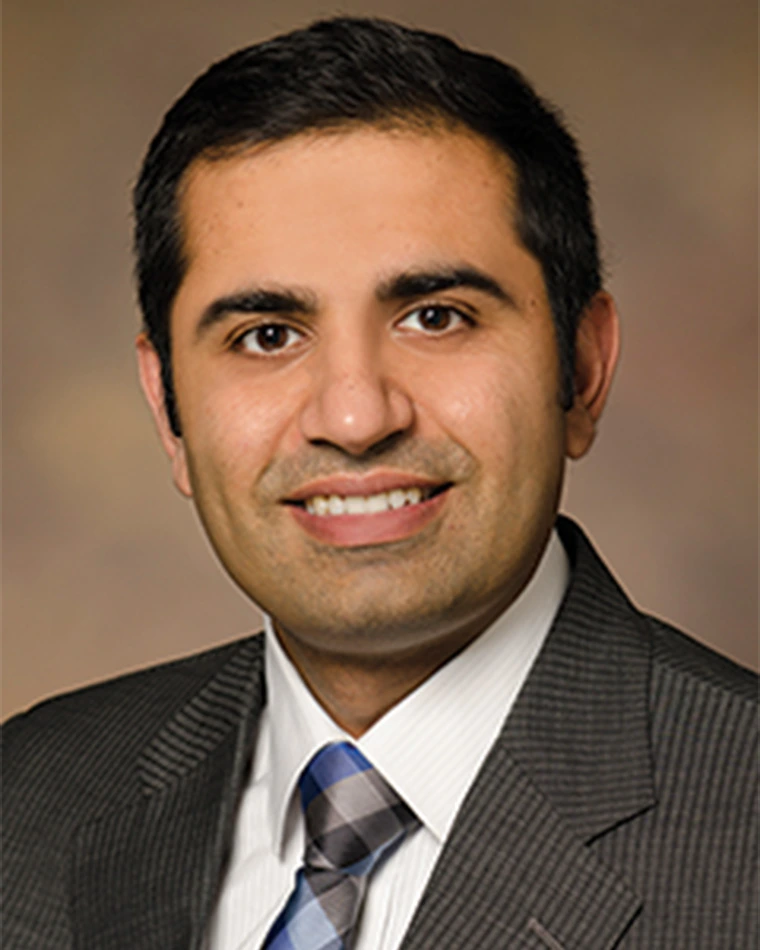
Ravi Tandon is a Professor in the Department of Electrical and Computer Engineering at the University of Arizona, where he holds a Craig M. Berge Faculty Fellowship and a courtesy appointment in Applied Mathematics. He joined the university in 2015 after serving as a Research Assistant Professor at Virginia Tech. Education: PhD in Electrical and Computer Engineering, University of Maryland, College Park, 2010 B.Tech in Electrical Engineering, Indian Institute of Technology (IIT) Kanpur, 2004 Research Interests: His research spans information theory and its applications to wireless networks, machine learning, security, and privacy. He focuses on trustworthy machine learning, privacy-preserving AI, federated learning, secure communications, and private information retrieval. His work aims to develop foundational theories and practical systems for secure, fair, and efficient AI and communication systems. Recent Research Trends: His most recent publications (2023–2025) emphasize trustworthy AI, including fairness-accuracy tradeoffs, robustness, uncertainty quantification, and privacy in generative models and causal inference. He also continues to advance information-theoretic foundations of secure communications and distributed learning. Scientific Awards: NSF CAREER Award (2017) Keysight Early Career Professor Award (2018) Best Paper Award, IEEE GLOBECOM 2011 Advising and Grants: Dr. Tandon actively supervises PhD and MS students, with former students placed at Apple, Google, Meta, NXP, and other leading tech firms. He has led significant research projects, including an NSF SaTC grant on differential privacy in graph mining. His editorial service includes roles at IEEE Transactions on Information Theory, IEEE Transactions on Wireless Communications, and IEEE Transactions on Communications. Labs and Teams: He leads a research group focused on information theory, machine learning, and privacy, collaborating with researchers in computer science, applied mathematics, and industry. His work bridges theoretical foundations with real-world AI and communication system design.