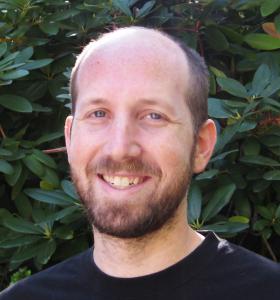
Eric Corwin is a Professor of Physics at the University of Oregon, College of Arts and Sciences. He has been at UO since 2010, conducting research in soft condensed matter physics with a focus on granular materials, jamming, and non-equilibrium statistical mechanics. Education: Ph.D., University of Chicago, 2007 Corwin employs experimental, simulational, and theoretical tools to study complex systems arising from simple interactions. His work addresses fundamental questions in the glass transition, jamming, and the behavior of granular materials, with implications for material design and biophysics. Analysis of his recent publications (2021-2025) reveals three dominant themes: (1) extreme diffusion and outlier statistics in many-particle systems, (2) mechanical stability of ultra-low density sphere packings (Dionysian packing), and (3) scaling relations in jamming critical phenomena, including high-dimensional prefactors. Leading the CORWIN LAB, Corwin explores how simple interactions generate complex behavior. Current projects include Dionysian Packing for lightweight materials, Extreme Diffusion frameworks for environmental fluctuations, and computational studies of jamming in high dimensions.
Hartmut Löwen is a Professor and Chair at the Institute of Theoretical Physics II - Soft Matter at Heinrich Heine University Düsseldorf, where he has held a professorship since 1995. His research spans multiple areas of theoretical physics with a particular focus on soft matter systems and statistical physics. He has served in numerous leadership roles including as Coordinator of the Sonderforschungsbereich TR6 (2002-2013), Coordinator of the German-Japanese bilateral cooperation on Soft Matter in nonequilibrium (2011-2013), and as a member of the Senate of the Deutsche Forschungsgemeinschaft (2014-2021). 1982-1986: Study of physics, mathematics and chemistry at University of Dortmund 1987: PhD in physics on Phase transitions in polaron systems at University of Dortmund 1988-1990: Postdoc at Ludwig-Maximilians-Universität München 1990-1991: Postdoc at Ecole Normale Supérieure de Lyon 1991-1995: Postdoc at Ludwig-Maximilians-Universität München 1993: Habilitation at Ludwig-Maximilians-Universität München Löwen's research focuses on structure, dynamics and phase transitions in colloidal suspensions, collective behavior of active particles, statistical mechanics of interfaces, nonequilibrium phenomena, glass transition, nucleation, computer simulations, density functional theory, polymers, polyelectrolytes and liquid crystals, biological physics including bacterial motility and protein crystallization, and dusty plasmas. His work bridges theoretical physics with experimental collaborations across multiple international institutions. His recent publications (2023-2025) demonstrate a strong focus on active matter systems, with particular emphasis on non-equilibrium dynamics, phase transitions in active systems, and the thermodynamics of self-propelled particles. The publications reveal a consistent pattern of interdisciplinary research that connects statistical physics with soft matter, biophysics, and materials science, often through collaborations with experimental groups to validate theoretical predictions. SigmaPhi Prize for seminal contributions to Statistical Physics (2023) Fellow of the Institute of Physics (since 1999) Gentner-Kastler-Prize (2003) ERC Advanced Grant INTERCOCOS (2010) Heisenberg-fellowship of the Deutsche Forschungsgemeinschaft (1994) Selected as Outstanding Referee for Physical Review journals (2017) Löwen has successfully secured significant research funding including the ERC Advanced Grant INTERCOCOS and leadership roles in multiple DFG-funded priority programs including SPP 1726 on microswimmers and SPP 1296 on heterogeneous nucleation. His current research group maintains active collaborations with institutions across Europe, Japan, and the United States, focusing on both theoretical development and experimental validation of models in soft matter physics. He has supervised numerous PhD students and postdoctoral researchers who have gone on to establish careers in academia and industry. Löwen leads a vibrant research group focused on theoretical soft matter physics with connections to multiple experimental collaborations. His group participates in the Science Priority Program SPP 2265 'Random geometric systems' of the DFG and the ITN Active Matter of the EU, maintaining active partnerships with researchers studying complex plasmas, liquid crystalline phases, microgel particles, active colloidal particles, and breathing particles.
Clara Stegehuis is an Associate Professor in the Mathematics of Operations Research group at the University of Twente . Her research sits at the intersection of probability theory, graph theory, and stochastic networks, with applications in network science, physics, and computer science. Education: PhD in Networks with Communities and Clustering from Eindhoven University of Technology (2019), M.S. and B.S. in Applied Mathematics from University of Twente Academic Positions: Associate Professor (2022–present) and Assistant Professor (2019–2021) at University of Twente Her research focuses on epidemic spreading/percolation processes on random graph models, network motif analysis, asymptotic network properties (degree-degree correlations, clustering), and geometric networks. She investigates how network structures influence robustness and connectivity patterns in complex systems like social media, internet infrastructure, and biological networks. Key grants include: NWO M-2 grant (2022) for chemical reaction network analysis NWO Veni grant (2020) for subgraph pattern research KWG PhD prize (2018) She actively contributes to academic service as: Board member of Netsci NL Board member of The Young Academy at University of Twente (2019) Organizer of YEP XV workshop
Pim van der Hoorn is an Assistant Professor in Probability at the Department of Mathematics and Computer Science at Eindhoven University of Technology. He is also a member of the Eindhoven Young Academy of Engineers and serves as a board member of the Dutch Network Science Society. His primary research affiliation is with the Institute for Complex Molecular Systems (ICMS), where he is part of the ICMS Core research group. Dr. van der Hoorn's research focuses on developing mathematical foundations of network science using probability theory, statistics, random graphs and graph limits. His work centers around two main pillars: the design of mathematical frameworks for statistical analysis of networks and understanding emerging geometry in networks. He also applies network science to solve problems in computational biology and materials science, particularly in studying cell-cell interactions in cancer and molecular charge transport in organic semiconductors. His recent publications demonstrate a strong trend toward unifying theoretical frameworks for network analysis while simultaneously applying these frameworks to solve complex problems across disciplines. His work bridges pure mathematical theory with practical applications, showing how network science can provide insights into diverse fields from cancer biology to materials engineering. Dr. van der Hoorn is actively involved in teaching with courses including Extreme values and other catastrophes, Network Statistics for Data Science, and Measure, Integration and Probability Theory. His educational activities reflect his research interests, providing students with both theoretical foundations and practical applications of probability and network science. He collaborates extensively across disciplinary boundaries, working with researchers in computational biology, cancer research, and materials science. His research has received support from organizations including the Netherlands Organization for Scientific Research (NWO) and the Immunoengineering Program of the Institute for Complex Molecular System.
Christian Kühn is a Full Professor at the Technical University of Munich (TUM), affiliated with the TUM School of Computation, Information and Technology. His research bridges differential equations, dynamical systems, and mathematical modeling, with emphasis on multiscale problems, stochastic effects, and adaptive networks. Phenomena of interest include pattern formation, bifurcations, and scaling laws. Education: BSc in Mathematics, Jacobs University Bremen (2005) M.A.St., University of Cambridge (2006) PhD in Applied Mathematics, Cornell University (2010) His work integrates analytical rigor with applications across physics, biology, and engineering. Key themes involve geometric singular perturbation theory, critical transitions in complex systems, and noise-driven dynamics. Publications consistently explore hierarchical temporal structures and universal mechanisms in nonlinear phenomena. Awards: Richard-von-Mises Prize (2017) Lichtenberg Professorship (2016) Best Paper Award, TU Vienna (2014) Leibniz Fellowship (2013) APART Fellowship (2012)
Patti Frazer Lock is a Professor of Mathematics in the Department of Mathematics, Computer Science, and Statistics at St. Lawrence University . She has co-authored multiple influential textbooks including Statistics: Unlocking the Power of Data and works with the Calculus Consortium for Higher Education. Her academic contributions span mathematics education, graph theory, and curriculum development. Education: Ph.D. in Mathematics, University of Massachusetts (1981) M.A. in Mathematics, University of Massachusetts (1978) B.A. in Mathematics, Colgate University (1975) Her research focuses on graph theory and mathematics education , with particular emphasis on statistical pedagogy and calculus reform. Her publications include foundational work on uniquely Hamiltonian-connected graphs and innovative approaches to teaching introductory statistics through data-driven methods. Recent publications highlight her contributions to statistics education (2021), multivariable calculus (2021), and applied calculus (2022) textbooks. Earlier works explore quantum logics (1984), graph connectivity (1991), and interdisciplinary applications in biology (2008). Lock actively participates in professional service through roles on the AMS-ASA-MAA-SIAM Joint Data Committee , ASA-MAA Joint Committee on Undergraduate Statistics , and editorial boards for PRIMUS and Math Horizons journals. She has led workshops nationally on undergraduate mathematics and statistics education. Contact: plock@stlawu.edu | Office: Valentine Hall 219 | Sabbatical: Spring 2025
H. M. Zafer is an Associate Professor at the University of Washington , specializing in Arabian and African Languages through pre-modern networks of knowledge spanning 6th-16th century Horn of Africa and Western Arabian societies. He also serves as a Senior Lecturer in the Program in African Studies. Education: PhD from Cornell University (2014) Zafer's research focuses on historical linguistics, medieval studies, and Islamic studies, particularly analyzing the Ecumenical Community in the context of Red Sea wars and Early Muslim communitarianism. His current projects include The Comrades of the Ship (Early Muslim historiography) and The Ethiopic Quran (16th-century Ge'ez commentary on the Quran). His scholarly contributions bridge interdisciplinary themes in comparative literature, religious studies, and computational methodologies through his earlier work in machine learning applications for bioinformatics and natural language processing. Scientific Awards: Mellon-Sawyer Fellow, University of Notre Dame Katz Fellow, University of Pennsylvania His publications from 1997-2009 explore hierarchical classification, Bayesian aggregation techniques, and neural networks applied to genomic prediction, linguistic analysis, and automated puzzle generation, demonstrating technical expertise in algorithm development and data modeling.
Yuval Peres is a Professor at the Beijing Institute of Mathematical Sciences and Applications (BIMSA). His research spans Probability Theory , Analysis , Theoretical Computer Science , and Game Theory . He has made foundational contributions to topics such as Random Walks , Markov Chains , Fractals , and Brownian Motion , with applications in network science and mathematical physics. Research Interests : Peres’ work often intersects probability and analysis, focusing on problems like phase transitions , mixing times , Gaussian analytic functions , and homogenization . His recent papers address homogenization problems, cutoff phenomena in Markov chains, and boundary value problems via stochastic methods. Advising and Mentorship : Peres has mentored over 20 PhD students and postdoctoral scholars, many of whom hold prominent positions at institutions like MIT, UC Berkeley, and Yale. His collaborations span mathematics, computer science, and physics. Awards : Linked to the David P. Robbins Prize (specific paper not named in text)
Daniel C. Jerison is an Assistant Professor in the Department of Mathematics and Statistics at the University of San Francisco, supporting undergraduate programs in mathematics and data science. His academic career demonstrates a strong trajectory through prestigious institutions including Stanford University, Harvard University, Cornell University, and Tel Aviv University. Education: PhD in Mathematics, Stanford University, 2016 BA in Mathematics, Harvard University, 2007 Dr. Jerison specializes in discrete probability theory with emphasis on the properties of random objects and convergence of Markov chain algorithms. His research explores random planar maps, abelian sandpiles, circle packing, and discrete complex analysis. His work bridges theoretical mathematics with applications in statistical physics, examining how complex systems evolve and reach equilibrium states through sophisticated probabilistic methods. His approach often combines combinatorial techniques with analytical methods to solve problems in discrete geometry and probability. Analysis of Dr. Jerison's publications reveals consistent focus on the intersection of probability theory and discrete structures. His research demonstrates sophisticated mathematical techniques for analyzing convergence rates in Markov chains, establishing geometric criteria for planar structures, and solving boundary value problems for discrete systems. The recurring themes across his work include probabilistic methods applied to geometric problems, the study of self-organized critical systems, and theoretical frameworks for understanding complex discrete phenomena. Dr. Jerison has extensive teaching experience across multiple institutions, teaching courses ranging from foundational calculus to advanced probability theory. He has taught Probability Theory I (Math 6710), Stochastic Processes (Math 4740), Linear Algebra for Engineers (Math 2940), Prove It! (Math 3040), and Applied Complex Analysis (Math 4220) at Cornell University, in addition to his current teaching responsibilities at USF. He has also been involved with prestigious summer programs for high school students including PROMYS and SUMaC, where he directed research labs and served on admission committees.
Daniel Huttenlocher is the John P. and Rilla Neafsey Professor of Computing, Information Science, and Business at Cornell University, where he serves as Dean of Computing and Information Science. Concurrently, he holds the position of Dean at MIT's Stephen A. Schwarzman College of Computing and is Vice Provost of Cornell Tech. His academic roles span Cornell's Computer Science Department and Johnson Graduate School of Management. Huttenlocher's research encompasses diverse domains including computer vision (image matching, object recognition, video analysis), social networks (governance models, link prediction, community dynamics), autonomous systems (DARPA Urban Challenge), geometric algorithms , and interactive document systems . His work bridges theoretical algorithms and practical applications, with recent advancements in structured models for visual recognition and large-scale network analysis. His publications (2010-2006) demonstrate a consistent focus on algorithmic innovation in computer vision and social computing. Recent works emphasize real-world applications like location recognition, social media governance, and image restoration, employing machine learning, probabilistic modeling, and large-scale data mining techniques across diverse visual and network datasets. While no awards are listed, Huttenlocher co-chaired major conferences (CVPR 2006/2009) and serves on the MacArthur Foundation Board. He has developed educational tools like the CoNote annotation system to foster collaborative learning and chaired Cornell's computing initiatives leading to the Faculty of Computing and Information Science.
Professor Emmanuel Breuillard is a faculty member at the Mathematical Institute of the University of Oxford. His research spans diverse areas in pure and applied mathematics, including Algebra, Combinatorics, Number Theory, Topology, Probability , and Group Theory . Recent work highlights his contributions to probabilistic phenomena in algebraic structures, such as the central limit theorem on nilpotent Lie groups, and the study of free subgroups in semisimple algebraic groups. His publications in top-tier journals like the Annals of Probability and the Journal of Algebra reflect his interdisciplinary impact across geometry, probability, and algebraic dynamics. Scientific Awards Fellow of the Royal Society (FRS) As a leading academic, he continues to shape modern mathematical research through rigorous theoretical investigations and collaborations.
Professor Peter Grindrod holds a faculty position at the Mathematical Institute, University of Oxford, where he leads research in applied mathematics with focus on neuromorphic computing and network theory. His affiliations include the Machine Learning and Data Science research group and the Oxford Centre for Industrial and Applied Mathematics. Research interests span mathematics of consciousness, neuromorphic information processing, network theory, and digital marketing. His innovative work on cortex simulations via Kuramoto-type models enables laptop-based simulations of neural columns instead of computationally expensive full-brain models. He investigates AI's inner workings, particularly how layer-by-layer topology explains vulnerability to adversarial attacks. His 15 most recent publications (2018-2025) reveal strong focus on consciousness modeling (27%), network dynamics (33%), and AI/neuromorphic computing (40%). Key trends include mathematical consciousness frameworks, sparse network modeling for brain simulation, and topology-based analysis of neural networks. CBE honor Grindrod leads significant research strategy initiatives, focusing on unconventional and high-risk research funding. He has secured substantial grants through his roles on EPSRC Council and RCUK Digital Economy programme. His commercial ventures include Hare Analytics, GTTA Limited, and CountingLab, demonstrating strong industry-academia knowledge exchange. He directs the Oxford Centre for Industrial and Applied Mathematics, overseeing collaborations between academic researchers and industry partners in energy, telecommunications, and digital marketing sectors.
Professor Vladimir Markovic serves as a Professor of Mathematics at the University of Oxford's Mathematical Institute and holds the prestigious title of Fellow of the Royal Society (FRS). His academic work centers on foundational questions in topology and geometry, with significant contributions to the mathematical landscape through rigorous theoretical frameworks and innovative problem-solving approaches. Markovic's research spans Teichmüller theory , quasiconformal mappings , hyperbolic geometry , and geometric group theory , with particular focus on minimal surfaces, harmonic maps, and the structure of mapping class groups. His investigations into random geometric structures and homogenization processes reveal deep connections between probabilistic methods and classical geometric analysis, demonstrating exceptional versatility across mathematical disciplines. Analysis of his publication trajectory shows sustained exploration of low-dimensional geometric structures, especially hyperbolic manifolds and Riemann surfaces. Recent work integrates stochastic elements into geometric frameworks, exemplified by studies on random quasiconformal mappings and delauney triangulations, while maintaining rigorous connections to classical problems like the Ehrenpreis conjecture and Schoen's conjecture. His principal recognition includes: Election as Fellow of the Royal Society (FRS) While the provided documentation does not detail specific student supervision activities or grant-funded projects, Markovic's extensive collaborative work—particularly with researchers like Jeremy Kahn and Yair Minsky—highlights his role in advancing collective knowledge. No dedicated laboratory facilities or team structures are referenced in the available materials, consistent with theoretical mathematics research paradigms.
Nathan (Nati) Linial is a Professor at the School of Computer Science and Engineering at The Hebrew University of Jerusalem, where he has maintained a distinguished academic career spanning several decades. His research bridges multiple mathematical disciplines with theoretical computer science. Linial's primary research interests encompass Combinatorics, Theory of Algorithms, Geometry, Analysis, and Computational Molecular Biology . His work often explores the deep connections between discrete mathematics and computer science, particularly focusing on high-dimensional combinatorial structures, metric embeddings, and their algorithmic applications. His publication record demonstrates consistent contributions across decades, with recent work focusing on high-dimensional permutations, simplicial complexes, graph theory, and coding theory. Linial has developed significant theoretical frameworks for understanding complex combinatorial structures and their geometric representations. Among his notable achievements is being named an AMS Fellow and receiving the 2008 Conant Prize for the influential survey paper "Expander graphs and their applications" co-authored with S. Hoory and A. Wigderson. His research has shaped multiple areas of theoretical computer science and discrete mathematics. Linial has served on the editorial boards of prestigious journals including Israel Journal of Mathematics (where he was Chief Editor 2013-2017), Random Structures and Algorithms , and Combinatorica . He has supervised numerous students throughout his career and maintains active research collaborations worldwide.
Randal Burns is a Professor and the Bill and Lisa Stromberg Head of the Department of Computer Science in the Whiting School of Engineering at Johns Hopkins University. He is also affiliated with the Data Science and AI Institute and co-founder of NeuroData. His research focuses on scalable data systems for scientific applications, spanning storage technologies, cloud infrastructure, and graph/sparse-matrix engines for machine learning. Key themes include data-intensive science, neuroscience imaging analysis, and adaptive performance management. Recent publications highlight trends in edge-parallel graph encoders masked matrix operations for sparsity decentralized foundation model training storage optimization for evolving AI models batch-parallel data structures turbulence data analysis These reflect his work on scalable systems for machine learning and scientific computing. Scientific awards include NSF CAREER Award DOE Early Career Principal Investigator Kavli Fellowship IBM Outstanding Innovation Award Advising: Mentors PhD students in scalable data systems and machine learning. Grants: Supported by NSF, DOE, and DARPA initiatives. Labs: Core member of the Johns Hopkins Turbulence Database Group and NeuroData team, developing open platforms for neuroscience and turbulence research.