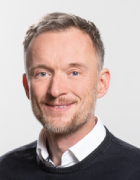
Prof. Dr. Frank Pollmann is a Full Professor (W3) at the Department of Physics PH-I, Technical University of Munich (TUM), leading the Chair of Theoretical Solid-State Physics since 2022. His research focuses on condensed matter theory and quantum information concepts , particularly in systems of correlated electrons and quantum many-body dynamics . PhD: Max Planck Institute for the Physics of Complex Systems / TU Ilmenau (2006) Postdoc: UC Berkeley (2008-2010) Group Leader: MPIPKS Dresden (2011-2016) Associate Professor: TUM (2017-2022) His work spans topological phases , frustrated spin systems , and non-equilibrium quantum dynamics , utilizing tensor network methods and quantum information theory to study phenomena like many-body localization and Hilbert space fragmentation . His publications demonstrate trends in quantum scar states , Kardar-Parisi-Zhang hydrodynamics , and quantum transport anomalies . Scientific Awards : ERC Consolidator Grant (2017) Walter Schottky Prize (2015) Otto-Hahn Medal (2007) He teaches courses including Advanced Methods in Quantum Many-Body Theory , Solid State Theory , and Topology in Condensed Matter , while leading the Pollmann Group under the TUM School of Natural Sciences.
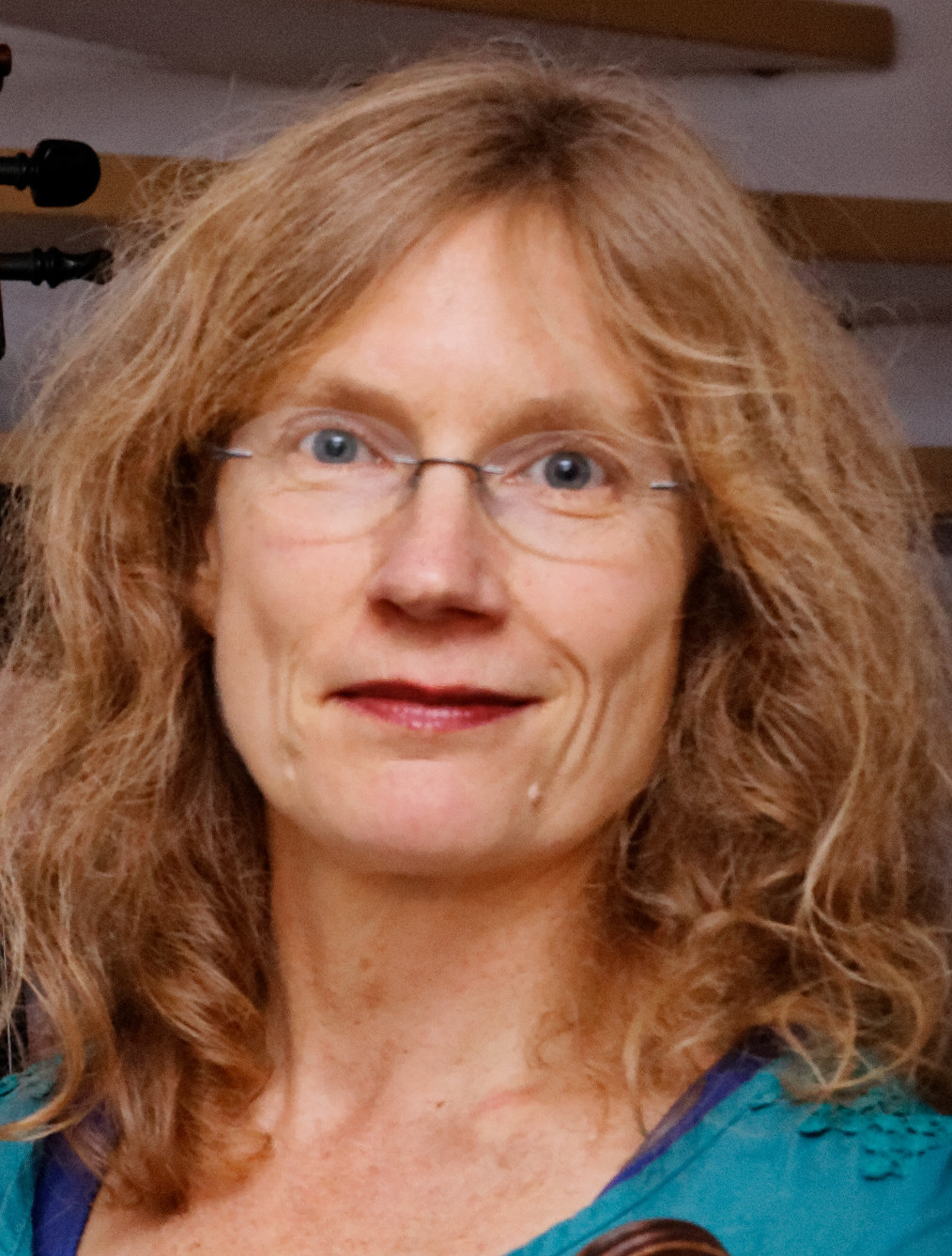
Anna Levina is an Assistant Professor for Computational Neuroscience at the University of Tübingen , affiliated with the Department of Computer Science under the Faculty of Science. Her research focuses on the self-organization of neuronal activity, critical dynamics in neural networks, and the excitation/inhibition balance in cortical circuits. Current positions: Assistant Professor (since 2018), Group Leader (2017-2018), Equality Officer (Computer Science) Previous roles: IST Fellow (2015-2017), Associated Researcher (2011-2015), Postdoc/PI (2011-2015), Postdoc (2008-2011) Her research integrates mathematical modeling , statistical physics , and computational neuroscience to study criticality phenomena, neural avalanches, and adaptive network dynamics. Key interests include: Self-organized criticality in neural systems Excitation/Inhibition balance mechanisms Network topology and dynamics Timescale analysis in neural processing Stochastic modeling of neural activity Recent publications reveal trends in understanding critical dynamics across biological and artificial networks, with applications to memory systems, sensorimotor integration, and disease modeling. She has received recognition as an IST Fellow .
Kord Eickmeyer is a Lecturer at Technische Universität Darmstadt in the Department of Mathematics, specializing in the mathematical logic group. He holds a PhD in mathematics from Humboldt University Berlin and has held postdoctoral positions at TU Darmstadt (2011–2017) and the National Institute of Informatics in Tokyo (2011–2013). His research focuses on finite model theory, graph structure theory, and computational complexity, particularly in descriptive and parameterized complexity, as well as randomization and derandomization techniques. Research interests include exploring the boundaries of computational complexity through logical frameworks, analyzing graph structures for efficient algorithm design, and investigating the role of randomness in computation. His work bridges theoretical computer science and mathematical logic, with applications in algorithm design and formal methods. Publications span topics from model-checking on ordered structures to gap-planar graphs and randomized logics. Collaborations include prominent institutions like the National Institute of Informatics and Humboldt University Berlin. No scientific awards are explicitly listed, but his extensive academic contributions reflect a strong research trajectory. Advising and grants are not detailed in the provided text, though his academic career includes supervision roles during his PhD and postdoctoral phases. His involvement with the mathematical logic group at TU Darmstadt highlights collaborative research efforts in foundational areas of computer science and mathematics.
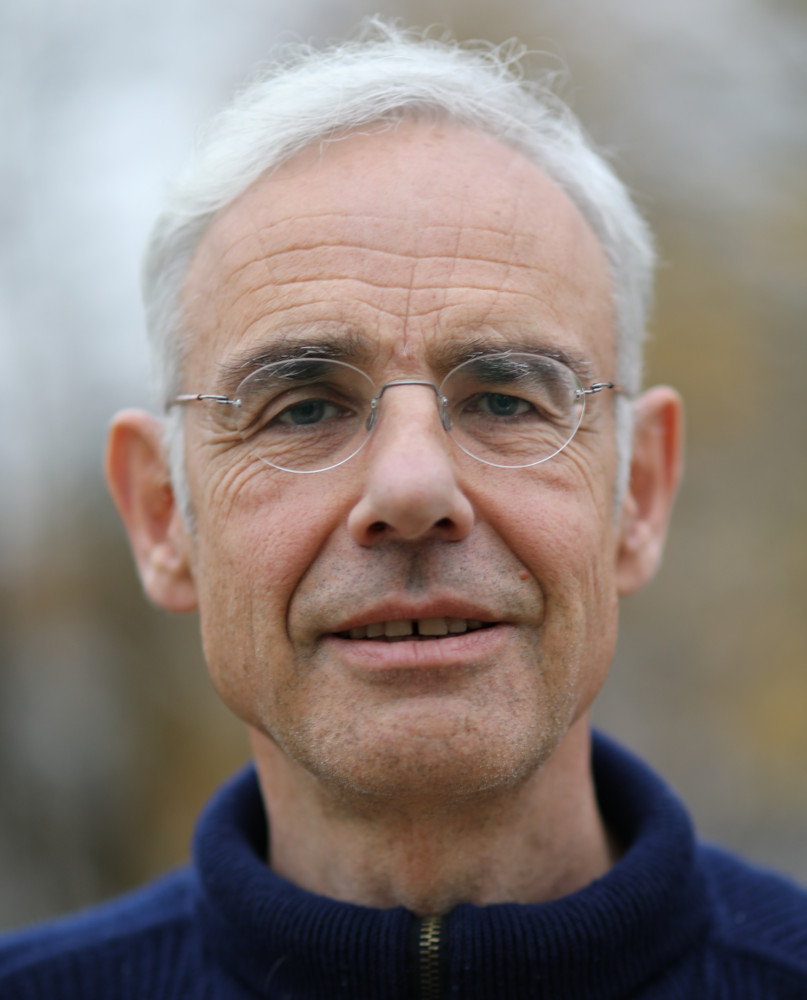
Professor Katrin Tent is a distinguished mathematician specializing in mathematical logic at the University of Münster, where she holds a professorship in the Faculty of Mathematics and Computer Science within the Institute for Mathematical Logic and Foundations Research. She is an active researcher in Mathematics Münster, an investigator in CRC 1442 Geometry: Deformations and Rigidity, and contributes to multiple research projects including Topics in Mathematics Münster T3: Models and universes, T4: Groups and actions, and T8: Random discrete structures and their limits. PhD in Linguistics, Christian-Albrechts-Universität zu Kiel (1988) Diplom in Mathematics, Christian-Albrechts-Universität zu Kiel (1989) PhD in Mathematics, University of Notre Dame (1994) Habilitation, "Model theory of groups and BN-pairs" (2000) Professor Tent's research bridges model theory, group theory, and geometry, with particular focus on finite Morley rank structures, BN-pairs, and sharply multiply transitive groups. Her work often combines methods from these areas to prove unexpected results, either constructing groups or incidence geometries with surprising model theoretic properties or using model theory to construct new and interesting geometries or groups. Her recent publications reveal a consistent trajectory connecting model theory with group-theoretic structures. She has made significant contributions to understanding sharply 2- and 3-transitive groups, finite Morley rank geometries, and the model theory of generalized polygons. Her work demonstrates how model-theoretic techniques can solve deep problems in group theory and geometry, particularly through the study of BN-pairs and incidence structures. DFG Research Fellowship (1996-1998) Bayerischer Habilitationsförderpreis (1998-2001) Heisenberg-Stipendium (2001-2004) ERC Consolidator Grants expert panel (2016, 2018) Elected to DFG Senate (2019) Professor Tent leads an active research group with current members including Marco Amelio, Dr. Benjamin Brück, Anna Cascioli, Lukas Jonuska, Silke Meissner, Zahra Mohammadi Khangheshlaghi, and Dr. Sam Shepherd. Her former research group members include Dr. Simon Andre, Dr. Isabel Müller, and Dr. Tim Clausen, among others. Her supervisory work spans both theoretical foundations and specific applications in geometric group theory and model theory. Her research group operates within the Institute for Mathematical Logic and Foundations Research at the University of Münster, collaborating closely with other researchers in the Mathematics Münster cluster. The group participates in various projects including CRC 1442 - C04: Group theoretic aspects of negative curvature, contributing to the vibrant mathematical research environment at one of Germany's leading mathematics institutions.
Ron Peled is a Full Professor in the School of Mathematical Sciences at Tel Aviv University , currently on leave to serve as the Brin Professor in the Department of Mathematics at the University of Maryland starting summer 2024. During 2022–2024 he was a Member at Princeton University and the Institute for Advanced Study . Education & Career: While explicit degrees are not listed, his trajectory shows appointments at NYU (2009–2010), UC Berkeley and Tel Aviv University as a teaching assistant, followed by faculty positions culminating in full professorship. Research Interests: His work lies at the intersection of probability theory, statistical physics, and combinatorics . Key themes include: Disordered systems and random environments (random-field Ising, spin glasses) First-passage percolation and random metrics Random surfaces and height functions Loop models and critical phenomena Random matrices and band matrices Geometric probability and allocation problems Publications & Impact: With over 70 papers in top journals such as Annals of Mathematics , Annals of Probability , Inventiones Mathematicae , and Communications in Mathematical Physics , his recent work explores minimal surfaces in random environments, localization in random band matrices, and quantitative disorder effects in low-dimensional spin systems. Grants & Awards: Research has been continuously funded by: Israel Science Foundation (grants 1048/11, 861/15, 1971/19, 2340/23) ERC Starting Grant LocalOrder ERC Consolidator Grant Transitions Marie Skłodowska-Curie International Reintegration Grant SPTRF Teaching & Mentoring: Prof. Peled has taught a broad spectrum of courses at Tel Aviv University (Brownian motion, probability, percolation, random matrices, stochastic calculus) and NYU (combinatorics, discrete mathematics). He has supervised 13 post-doctoral fellows and 8 graduate students (PhD & MSc) to date. Service & Outreach: He co-organizes the Joint Israeli Probability Seminar and has organized numerous international workshops and conferences including at Oberwolfach, Technion, and Tel Aviv University.
Professor Barak Weiss is a distinguished faculty member in the School of Mathematical Sciences at Tel Aviv University's Faculty of Exact Sciences. His research focuses on the intersection of dynamical systems, number theory, and geometry, particularly in the areas of homogeneous dynamics, ergodic theory, and Diophantine approximation. Professor Weiss has made significant contributions to the understanding of translation surfaces, lattice orbits, and the dynamics of flows on homogeneous spaces. His work often bridges pure mathematics with applications in number theory and geometry, revealing profound connections between seemingly disparate fields. His research on horocycle dynamics, measure rigidity for fractal carpets, and the classification of cut-and-project sets has advanced our understanding of geometric structures and their dynamical properties. His recent publications (2023-2025) demonstrate a strong focus on equidistribution phenomena, statistical properties of dynamical systems, and the application of homogeneous dynamics to problems in geometric number theory. A notable trend in his work is the interplay between geometric structures and their arithmetic properties, particularly in the context of Diophantine approximation. Professor Weiss actively organizes the "Homogeneous Dynamics and Applications" seminar at Tel Aviv University, which has been running continuously since at least 2014 with detailed schedules available through 2025. This seminar serves as a hub for cutting-edge research discussions, featuring both local and international speakers working on dynamical systems and related areas. He teaches advanced courses in analysis and supervises graduate students, with recent teaching assignments including Real Analysis for summer semester 2025. His office is located in Schreiber building, room 329, and his regular office hours are Tuesdays from 15:00-16:00.
Prof. Vladimir Spokoiny is a leading figure in stochastic algorithms and nonparametric statistics at the Weierstrass Institute for Applied Analysis and Stochastics (WIAS) and Humboldt University of Berlin . His work bridges mathematical statistics with practical applications in finance, medicine, and machine learning. Born in 1959 in Moscow, USSR PhD from Lomonosov Moscow State University (1988) Habilitation from Humboldt University (1996) Head of WIAS research group since 2000 Professor at Humboldt University since 2002 Spokoiny's research focuses on adaptive nonparametric methods, high-dimensional data analysis, and statistical finance. His innovations in local homogeneity testing and propagation-separation methods have advanced volatility modeling, image analysis, and manifold learning. He employs Bayesian optimization frameworks and stochastic control techniques for financial instrument pricing. Recent scientific contributions include generalized bootstrap procedures for Bures-Wasserstein barycenters (2024), dimension-free Laplace approximation bounds (2023), and structure-adaptive manifold estimation (2022). His 19+ PhD students and editorial roles in top journals like The Annals of Statistics demonstrate sustained academic impact. International Statistical Institute member American Statistical Association fellow Institute of Mathematical Statistics member Bernoulli Society member
Professor Vitali Wachtel of Bielefeld University's Faculty of Mathematics specializes in advanced stochastic processes, probability theory, and their applications in mathematical modeling. Since 2021, he holds a W3 Professorship and serves as Principal Investigator in CRC 1283 'Taming uncertainty and profiting from randomness and low regularity in analysis, stochastics and their applications' since 2023. Chaired Examination Boards for Bachelor & Master Business Mathematics Member, Bielefeld Graduate School in Theoretical Sciences Research focus: Markov processes, random walks in cones, branching processes Research Trends: His recent work spans critical multitype branching in random environments (2025), asymptotic expansions for conditioned random walks (2024), and invariance principles for integrated processes. He explores connections between stochastic processes, combinatorial structures, and risk modeling with level-dependent premiums. Awards: Feodor Lynen Research Fellowship (2017), Alexander von Humboldt Foundation Teaching: Coordinates modules including 'Stochastic Processes' (24-M-PT-STP) and 'Introduction to Probability Theory' (24-B-EW-5). Active in curriculum development and academic governance through multiple university committees.
Professor Stefan Glock is an Assistant Professor of Discrete Mathematics at the University of Passau's Faculty of Computer Science and Mathematics, a position he has held since September 2022. Prior to this appointment, he spent three years as a Junior Fellow at the Institute for Theoretical Studies at ETH Zurich, following the completion of his doctorate at the University of Birmingham. Stefan Glock received his mathematics education at Technische Universität Ilmenau from 2009 to 2014, then pursued his PhD at the University of Birmingham, which he completed in 2018. His doctoral dissertation, "Decompositions of Graphs and Hypergraphs," was the runner-up for the Richard-Rado-Preis 2018. Professor Glock's research focuses on discrete mathematical structures, with particular emphasis on their asymptotic properties. His work spans several interconnected fields of combinatorics: Extremal Combinatorics : Investigating the maximum or minimum possible size of mathematical structures satisfying certain properties Probabilistic Combinatorics : Applying probability theory to solve combinatorial problems Graph Theory : Studying properties of graphs and networks Ramsey Theory : Examining conditions under which order must appear in large structures Design Theory : Creating arrangements of elements satisfying specific balance properties Discrete Geometry : Analyzing geometric problems with discrete structures Analysis of Professor Glock's recent publications reveals a consistent focus on solving long-standing open problems in combinatorics using innovative methods that combine probabilistic techniques with structural insights. His work often bridges theoretical mathematics with applications in theoretical computer science, particularly in the analysis of algorithms and network structures. A significant portion of his research addresses fundamental questions about graph and hypergraph decompositions, which have implications for coding theory, cryptography, and network design. Professor Glock has received notable recognition for his contributions to mathematics: Runner-up for the Richard-Rado-Preis 2018 for his dissertation "Decompositions of Graphs and Hypergraphs" Awarded funding through the prestigious DFG Emmy Noether Programme in 2024 for his research group on "the interplay of structure and randomness in mathematics" As a faculty member at the University of Passau, Professor Glock leads the Discrete Mathematics research group and actively collaborates with mathematicians worldwide. He has established a strong research program that has attracted funding for academic visitors and supports multiple research projects. His approach to mathematical problems emphasizes developing new methods that have far-reaching implications beyond the specific problems being solved. Professor Glock's research group at the University of Passau focuses on the interplay between structure and randomness in discrete mathematics. The group maintains active collaborations with leading institutions including ETH Zurich, University of Birmingham, and various research centers across Europe. Through the DFG Emmy Noether Programme funding, his group is expanding its research on combinatorial structures and their applications.
Professor Caterina Zeppieri is a faculty member at the Institute for Analysis and Numerics within the Faculty of Mathematics and Computer Science at the University of Münster, Germany. She serves as an investigator in Mathematics Münster and specializes in optimization and calculus of variations. Her research spans multiple collaborative projects within the Excellence Cluster EXC 2044. Her primary research interests focus on Calculus of Variations , Homogenization Theory , and Free-Discontinuity Problems , with significant contributions to the mathematical understanding of material science phenomena. Her work bridges theoretical mathematics with practical applications in material modeling, fracture mechanics, and multi-scale analysis. She has developed sophisticated mathematical frameworks for understanding stochastic homogenization, phase-field approximations, and gradient damage models in heterogeneous materials. Analysis of her recent publications reveals a consistent trajectory toward increasingly complex multi-scale problems involving randomness and discontinuities. Her work demonstrates deep connections between Γ-convergence theory, stochastic processes, and applications to material science, particularly in modeling fracture phenomena and composite materials. A notable trend is her development of global methods that unify deterministic and stochastic approaches to homogenization problems. Zeppieri actively contributes to teaching at the University of Münster, regularly offering courses on Partial Differential Equations, Calculus of Variations, and Advanced Topics in Mathematical Modeling. Her teaching spans both undergraduate and graduate levels, including specialized seminars on cutting-edge research topics in her field. She is deeply involved in the EXC 2044 collaborative research center, particularly in project units C1 (Evolution and asymptotics), C2 (Multi-scale phenomena and macroscopic structures), and C3 (Interacting particle systems and phase transitions), where she contributes her expertise in variational methods and homogenization to multi-disciplinary research efforts.
Peter K. Friz is an Einstein Professor in Mathematics at TU-Berlin, affiliated with the Institute of Mathematics, and associated with the Weierstrass Institute for Applied Analysis and Stochastics. His research focuses on stochastic analysis, rough path theory, and mathematical finance, with particular emphasis on volatility modeling and applications to quantitative finance. He has held prestigious grants, including ERC Starting and Consolidator Grants, and coordinates the DFG research unit 'Rough paths, stochastic partial differential equations, and related topics.' Friz's work bridges theoretical stochastic analysis and practical financial applications, emphasizing rough path theory and its implications for differential equations and stochastic processes. His collaborations include organizing international conferences and courses on rough paths, with invited lectures at institutions like Cambridge, Paris, and Bonn. Supported by DFG, the European Research Council, and the Einstein Foundation, his research explores geometric aspects of pathwise analysis and stochastic volatility dynamics. He has advised numerous PhD students and maintains active roles in academic administration, including coordinating Berlin Mathematical School programs and teaching advanced topics in stochastic calculus. His contributions to rough path theory and stochastic finance are recognized through his academic leadership and influential publications, including co-authoring the seminal book Multidimensional Stochastic Processes as Rough Paths .
Professor Tobias Nipkow is a leading researcher in formal methods and interactive theorem proving at the Technical University of Munich (TUM), affiliated with the School of Computation, Information and Technology and the Department of Computer Science. He is a core developer of the Isabelle proof assistant and leads the Theorem Proving Group. His work has profoundly influenced program verification, semantics, and formalized mathematics. University: Technical University of Munich School: School of Computation, Information and Technology Department: Department of Computer Science Research Group: Theorem Proving Group Key Projects: Isabelle, Archive of Formal Proofs, Concrete Semantics His research focuses on formal verification, higher-order logic, semantics of programming languages, and verified algorithms. He has pioneered the formalization of textbook algorithms, data structures like B+-trees and quadtrees, and logical systems. His work bridges theoretical foundations with practical tools for software correctness. The most recent publications show a strong trend in verifying classical algorithms (e.g., Gale-Shapley, Earley parser), data structures (B+-trees, deques), and decision procedures, primarily using Isabelle/HOL. His contributions span foundational logic, program analysis, and educational approaches to formal methods. Best Paper Award at CADE 28 (2021) Tobias Nipkow has made extensive contributions to advising and collaborative research, co-authoring with numerous researchers and students. He has secured support for large-scale formalization efforts and contributed to major projects like the Flyspeck proof of the Kepler conjecture. His work is supported by ongoing development of the Isabelle framework and the Archive of Formal Proofs. He leads the Theorem Proving Group at TUM, which is central to the development and application of Isabelle. The group fosters international collaboration, contributes to the Archive of Formal Proofs, and advances research in automated reasoning, semantics, and verified systems.
Riddhipratim Basu is an Associate Professor at the International Centre for Theoretical Sciences (ICTS-TIFR) in Bengaluru, India, since September 2017. Previously, he was a Szegö Assistant Professor of Mathematics at Stanford University (2015–2017) and a Ph.D. graduate in Statistics from UC Berkeley (2015), supervised by Allan Sly. Research focuses on Probability Theory, with emphasis on First/Last Passage Percolation, Interacting Particle Systems, Large Deviations, and Random Matrix Theory. Key collaborators include Allan Sly, Shirshendu Ganguly, Mahan Mj, and Manan Bhatia. Publications span journals like Communications on Pure and Applied Mathematics , Annals of Probability , and Comm. Math. Phys. His work explores geodesic structures in percolation models, scaling exponents in KPZ universality, and geometric properties of stochastic processes. Recent studies include Liouville Quantum Gravity and Airy process fluctuations.
Rupert Frank is a Professor of Mathematics at the University of Munich (LMU Munich) . He has held academic positions at Caltech (2013–2021) and Princeton University (2009–2013). His research spans Mathematical Physics , Spectral Theory , and Functional Inequalities , with a focus on quantum many-body systems, stability of matter, and nonlocal operators. Research Themes : Analysis of eigenvalues for Schrödinger and Pauli operators with complex potentials Semi-classical spectral asymptotics and effective theories for quantum systems Matrix inequalities and quantum information theory Calculus of variations in models like the liquid drop problem Geometric inequalities and their applications to quantum mechanics Magnetic field effects on spectral properties Recent Publications : 2025: Sharp stability for Sobolev/log-Sobolev inequalities with dimensional dependence 2025: Endpoint Schatten class properties of commutators 2024: Degenerate stability of Caffarelli-Kohn-Nirenberg inequality 2024: Hardy inequalities for large fermionic systems 2023: Review on Scott conjecture for Coulomb systems Scientific Awards : Young Scientist Prize in Mathematical Physics (2009) Grants and Collaborations : Principal Investigator in CRC TRR 352 (2023–) PI in Munich Center for Quantum Science and Technology (2019–) Multiple NSF grants (2009–2020) DFG and DAAD grants Editorial and Conference Leadership : Editorial boards: Communications in Mathematical Physics , Journal in Mathematical Physics , Journal of Spectral Theory , SIAM Journal on Mathematical Analysis , Springer Lecture Notes Organized conferences/workshops on quantum many-body systems, spectral methods, and functional inequalities (2018–2025)
László Kozma is an Assistant Professor at the Theoretical Computer Science group of the Institute of Computer Science (Freie Universität Berlin). He obtained his PhD from Saarland University under Raimund Seidel, followed by postdoctoral positions at Tel Aviv University and TU Eindhoven. His research focuses on self-adjusting data structures , adaptive algorithms , and combinatorial optimization with applications to problems like the Traveling Salesman Problem, binary search trees, and geometric data structures. Academic Affiliation: Freie Universität Berlin (since 2018) Education: PhD in Computer Science (Saarland University, 2016); postdoc at Tel Aviv University and TU Eindhoven. His work explores the intersection of data structures, combinatorial algorithms, and geometric methods. He has made significant contributions to problems involving pattern-avoidance in inputs, saddlepoint detection , and self-adjusting heaps . Key areas include: Adaptive algorithms for pattern-avoiding inputs Optimal tree and heap structures Geometric and stochastic approaches to optimization Complexity analysis of classical algorithms Recent publications highlight efficient solutions for exponential cut problems (ESA 2025), balanced TSP partitioning (EuroCG 2025), and randomized saddlepoint algorithms (ESA 2024). His research often bridges theory and practice, exemplified by the smooth heap implementation and fun projects like Recursi and Cuckoo Hashing visualization.