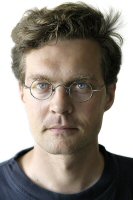
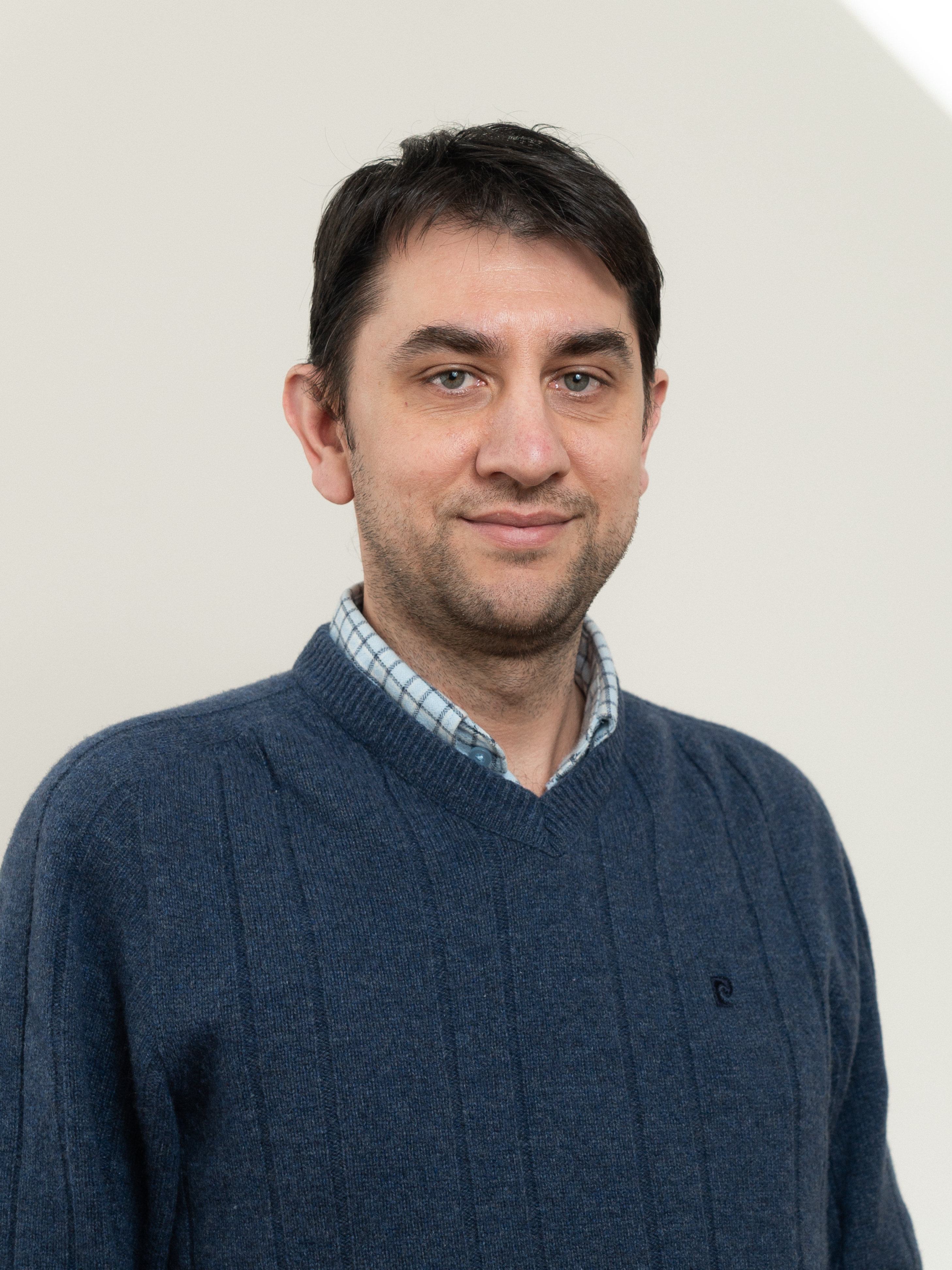
Dr. Nicky van Foreest is an Associate Professor at the Faculty of Economics and Business , University of Groningen. His research bridges probability theory and optimization , focusing on applications in manufacturing, inventory, queueing, and service processes. His 15 most recent articles explore computational methods in probability, recursion, and entropy (e.g., Solving Wordle with Entropy ), geometric properties (e.g., Sagemath Proofs for Three Circles ), and stochastic system analysis (e.g., Memoryless Excursions ). He develops educational materials and open-source software, including contributions to stochastic_or and sicm_sagemath . Contact: n.d.van.foreest@rug.nl | University Profile | Personal Homepage .
Nutan Limaye is a Professor at the Department of Theoretical Computer Science , IT University of Copenhagen , specializing in Algorithms , Computational Complexity , and Algebraic Circuits . She actively contributes to research on polynomial complexity, quantum computation, and lower bound techniques. Key Research Areas : Algebraic Circuit Complexity, Polynomial Computation, Graph Isomorphism, Boolean Satisfiability Current Projects : FLows : Formula complexity and lower bounds (2024-2026) DIREC: OnlineAlgo : Digital research initiatives (2022-2025) BARC2 : Basic Algorithms Research Copenhagen (2024-2029) Scientific Recognition includes the FOCS Best Paper Award (2022) . Her work frequently appears in top conferences like CCC , FSTTCS , and SIGACT News , with recent collaborations in Denmark and international institutions. She contributes to public understanding through media appearances on topics like basic computer science research and BARC's initiatives .
Renato Ferrero is an Associate Professor at the Department of Control and Computer Science (DAUIN), Politecnico di Torino (Polito) , with key roles as contact person for training activities and member of the PIC4SeR Interdepartmental Center for Service Robotics . His research spans Wireless Sensor Networks (WSN) , Internet of Things (IoT) , and Environmental Monitoring , supported by competitive grants like AGRITech Spoke 6 (2022-2025) and MIUR funding (2017). He has published extensively on topics including air pollution monitoring , quantum-inspired security , and agricultural technology , with recent work focusing on deep learning for mask/respirator detection and biofertilizer analysis . As an IEEE Access Associate Editor and program committee member for conferences like COMPSAC and RFID-TA, he contributes to academic governance. His teaching includes Computer Architecture (2019-2025) and Ubiquitous Computing (2019-2021) at Polito. He advises PhD students Chiara Panico and Nicola Dilillo , with projects in Data Science , Computer Vision , and AI Life Sciences .
Dr. Michael Hinz is a researcher at Bielefeld University's Faculty of Mathematics with significant involvement in multiple research initiatives. He is affiliated with the International Research Training Group 2235 as a participating scientist and contributes to the Collaborative Research Center 1283 (SFB 1283) project titled 'Taming uncertainty and profiting from randomness and low regularity in analysis, stochastics and their applications,' specifically working on subproject A3: 'Analysis of manifolds, metric spaces and graphs.' Additionally, he is a member of the Bielefeld Graduate School in Theoretical Sciences academic staff. His research focuses on the intersection of mathematical analysis and stochastic processes, with particular emphasis on geometric structures. Dr. Hinz maintains offices at locations UHG V4-239 and UHG V3-237 on campus and can be reached through the Faculty of Mathematics secretariat at +49 521 106-4773. Research interests include: Analysis on manifolds and metric measure spaces Stochastic processes in geometric settings Spectral theory on graphs and fractals Dirichlet forms and potential theory Geometric analysis with applications to mathematical physics Dr. Hinz contributes to the 'Mathematical World' strategic research area at Bielefeld University, which develops fundamental mathematical concepts and theories with applications to solve long-standing open problems in economics and the natural sciences. His work aligns with the university's interdisciplinary research culture, particularly connecting mathematical theory with applications in complex systems.
Dmitriy (Tim) Kunisky is an Assistant Professor in the Department of Applied Mathematics and Statistics at Johns Hopkins University's Whiting School of Engineering. He is also affiliated with the Data Science and AI Institute, the Department of Mathematics, and the Algorithms and Complexity Group at Johns Hopkins. Dr. Kunisky received his bachelor's degree in mathematics from Princeton University, worked as a software engineer for Google, earned his PhD in mathematics from the Courant Institute at NYU under the supervision of Afonso Bandeira and Gérard Ben Arous, and was a postdoctoral associate in computer science at Yale University before joining Johns Hopkins. His research broadly concerns how probability theory and mathematical statistics interact with computational complexity and the theory of algorithms. He investigates the mathematical phenomena that govern the power and limitations of algorithms processing massive and high-dimensional inputs, drawing on asymptotic statistics, convex geometry, random matrix theory, statistical physics, and representation theory. His work includes studying convex relaxation algorithms on combinatorial optimization problems, computational intractability in high-dimensional statistics, pseudorandomness, and experimental approaches to number theory and combinatorics. His recent publications demonstrate a consistent focus on the intersection of computational complexity, statistical inference, and random matrix theory. There's a clear trajectory from theoretical foundations to practical algorithmic applications, with particular emphasis on information-computation gaps, spectral methods, and the sum-of-squares hierarchy. His work often bridges theoretical computer science with statistical physics approaches. Dr. Kunisky actively advises graduate students at Johns Hopkins, including PhD candidates in Applied Mathematics and Statistics. He has taught courses on Random Matrix Theory in Data Science and Statistics, Probability Theory, Sum-of-Squares Optimization, and Modern Probability for Theoretical Computer Science, demonstrating his commitment to both research and education in mathematical data science.
Mark Walters is a Reader in Pure Mathematics at the School of Mathematical Sciences , Queen Mary University of London. He is affiliated with the Centre for Combinatorics, Algebra and Number Theory , where his work focuses on probabilistic and combinatorial methods in mathematical sciences. His research interests span Combinatorics , Probability , and Random Geometric Graphs , with a particular emphasis on Percolation , Euclidean Ramsey Theory , and applications to Sensor Networks . Publications highlight collaborations with leading researchers including Paul Balister, Béla Bollobás, Imre Leader, and J. Robert Johnson. Mark's submitted and published work includes studies on Constructible Graphs , Optimal Resistor Networks , and geometric problems like Subtended Angles . His recent articles focus on network theory, probabilistic combinatorics, and Ramsey-type problems, reflecting interdisciplinary applications in computer science and engineering.
Alexander Barvinok is a Professor in the Department of Mathematics at the University of Michigan, Ann Arbor. His office is located in East Hall (4066 East Hall), where he has been conducting research and teaching advanced courses in computational mathematics since receiving his Ph.D. from Leningrad State University in 1988. Professor Barvinok's research focuses on computational complexity and algorithms in algebra, geometry and combinatorics. He is particularly interested in connections between various notions of phase transition in statistical physics, analytical properties of partition functions and computational complexity. His work bridges theoretical mathematics with practical computational approaches, exploring how physical phenomena can inform algorithmic design and analysis. His research spans convex geometry, combinatorial optimization, and the computational aspects of polynomial systems. His recent publications (2016-2024) demonstrate a consistent focus on partition functions, computational aspects of convex bodies, and approximation algorithms for counting problems. He has made significant contributions to understanding the zeros of partition functions in statistical physics models, developing efficient volume estimation algorithms for polyhedra, and creating polynomial-time approximation schemes for problems previously thought to be computationally intractable. His work frequently connects algebraic properties of polynomials with computational feasibility. Professor Barvinok has authored several influential textbooks including "A Course in Convexity" (AMS Graduate Studies in Mathematics, 2002), "Integer Points in Polyhedra" (Zurich Lectures in Advanced Mathematics, 2008), and "Combinatorics and Complexity of Partition Functions" (Springer, 2016). He regularly teaches advanced graduate courses such as Math 669 on specialized topics including "Combinatorics, Geometry and Complexity of Integer Points" and "Topics in Convexity," with his lecture notes often evolving into significant research contributions.
Sergey Oleksandrovych Sgadov is a Senior Lecturer in the Department of Computer Systems and Networks at Zaporizhzhia Polytechnic National University. With academic activity at the university since 1998, he has established himself as a dedicated educator and researcher in computer science and microprocessor technologies. His institutional affiliation places him within the Faculty of Computer Sciences and Technologies, where he contributes to both teaching and research initiatives. Education: Graduated from Zaporizhia National University in 1993 with honors, specializing in "Solid-state electronics and microelectronics" and receiving the qualification of "specialist". Dr. Sgadov's research spans multiple domains of computer science and engineering. His primary interests include microprocessor programming, application development using Delphi and C++, web programming with .NET technologies, and computer modeling of physical processes. He has made significant contributions to graph theory, particularly in topological graph drawing algorithms and their applications in printed circuit board design. His work bridges theoretical computer science with practical engineering applications, focusing on creating efficient algorithms for complex computational problems. Analysis of his publication record reveals a strong focus on graph theory applications in electronic design automation, microprocessor systems development, and educational tools for computer engineering. His research has evolved from fundamental theoretical work on graph algorithms to practical implementations in microcontroller programming and educational technology. The consistent thread throughout his work is the application of computational methods to solve complex engineering problems, particularly in circuit design and microprocessor systems. Dr. Sgadov teaches courses in microcontroller programming and programming of microcontroller systems, bringing his research expertise directly into the classroom. His teaching methodology likely incorporates practical, hands-on experience with modern microprocessor technologies, reflecting his research interests in ARM Cortex processors and microcontroller applications.
Prof. Niv Buchbinder is a faculty member in the Department of Statistics and Operations Research at the School of Mathematical Sciences, Tel Aviv University. His research centers on algorithmic solutions for combinatorial optimization in offline and online contexts, with significant contributions to primal-dual methodologies and algorithmic game theory. His academic background includes a Ph.D. in Computer Science from the Technion (2008) under Prof. Seffi Naor and an M.Sc. in Computer Science from the Technion (2003) under Prof. Erez Petrank. Key research areas encompass Combinatorial Optimization, Online Algorithms, Algorithmic Game Theory, Primal-Dual Methods, and Submodular Optimization, focusing on competitive analysis for problems like set cover, ad-auctions, and caching. Recent publications (2012-2015) reveal a concentrated effort in submodular optimization and online decision-making, with applications in advertising, resource allocation, and machine learning. These works consistently employ primal-dual frameworks to achieve strong competitive ratios in adversarial settings. Scientific recognition includes: Best Paper Award at ESA 2007 for “Online Primal-Dual Algorithms for Maximizing Ad-Auctions Revenue” Best Paper Award at FOCS 2011 for “A Polylogarithmic Competitive Algorithm for the k-Server Problem” No information is available regarding student advising or research grants. Similarly, details about laboratory facilities, research teams, or future projects are not provided in the source materials.
Prof. Oleg Ivrii is a Senior Lecturer in the Department of Theoretical Mathematics at Tel Aviv University's Faculty of Exact Sciences. He earned a B.Sc. in Mathematics from the University of Toronto (2009) and a Ph.D. in Mathematics from Harvard University (2014). Following postdoctoral research positions at the University of Helsinki (2014-2016) and California Institute of Technology (2016-2019), he joined Tel Aviv University in 2019. Research Focus: Complex analysis, conformal geometry, thermodynamic formalism, and geometric function theory. Key Contributions: Studies on analytic mappings of the unit disk, inner functions, quasiconformal homogenization, and Makarov's principle. His work explores critical structures of inner functions, stable convergence, and applications to dynamical systems. He has advised Emanuel Sygal (Master's thesis) and collaborated with Artur Nicolau, Mariusz Urbański, and Vladimir Marković. Ivrii's publications appear in journals like Inventiones Mathematicae , Journal of Differential Geometry , and Analysis & PDE .
Dr. Daniele Ettore Otera is a Senior Researcher at the Institute of Data Science and Digital Technologies (DMSTI) and the Faculty of Mathematics and Informatics of Vilnius University , Lithuania. His work is centered on geometric group theory, low-dimensional topology, and group theory, with a focus on asymptotic topology and topological tameness of groups and manifolds. Education: He earned a Mathematics degree from the University of Palermo (1999), a DEA (Master’s) from Université Paris-Sud 11 (2001), and a co-tutored PhD from both University of Palermo and Université Paris-Sud 11 (2006). Research Interests: Geometric group theory: quasi-isometries, ends of groups, lattices in Lie groups Low-dimensional topology: topological tameness, simple connectivity at infinity, geometric simple connectivity Group theory: subgroup permutability, commutativity degrees, probability in group theory Publications: His recent work spans graph theory, spectral invariants, group actions, and geometric topology, reflecting a deep interdisciplinary approach combining algebra, topology, and combinatorics. Labs & Teams: He is affiliated with the Interdisciplinary Statistical Research Group within DMSTI, contributing to collaborative research in mathematical sciences.
Daniel Cullina is an Assistant Professor in Electrical Engineering, specializing in theoretical computer science and machine learning. His research explores fundamental aspects of adversarial robustness, graph alignment, and information theory, with applications spanning cybersecurity and data science. Research Focus: Adversarial machine learning: Robustness guarantees, attack/defense strategies for classifiers Graph algorithms: Alignment and recovery in random graph models like Erdős-Rényi Information theory: Fundamental limits of database matching and Gaussian alignment Coding theory: Deletion error correction and converse bounds His publications (28+ with 575+ Scopus citations) demonstrate consistent contributions to understanding adversarial vulnerabilities in ML systems and combinatorial algorithms for graph/data matching. Recent work (2020-2023) focuses on theoretical characterization of optimal losses under attacks and database alignment frameworks. With an h-index of 12, his research output shows sustained productivity since 2012, peaking in 2016 (8 publications) and maintaining 3-5 annual publications in recent years.
Rakesh Venkat is an Assistant Professor in the Department of Computer Science and Engineering at the Indian Institute of Technology Hyderabad. His research focuses on Theoretical Computer Science, including approximation algorithms, hardness of approximation, and communication complexity. Education : Ph.D., Tata Institute of Fundamental Research (TIFR), Mumbai. Research Trends : His work addresses fundamental challenges in algorithm design, such as optimizing cache misses, improving clustering algorithms, analyzing graph expansion, and exploring embedding techniques. Publications span top-tier conferences like APPROX, FSTTCS, ICALP, and ITCS, with collaborations at institutions including HUJI, TIFR, and IIT-Bombay. Teaching : Courses taught include Approximation Algorithms, Advanced Data Structures, Discrete Mathematics, and Spectral Graph Theory.
Professor Carl P Dettmann is a faculty member at the University of Bristol , affiliated with the School of Mathematics under the Department of Applied Mathematics . His research spans interdisciplinary areas including dynamical systems, statistical physics, and wireless networks. Education : B.Sc.(Hons.) in Physics Ph.D. in Physics His recent work focuses on network theory, mathematical musicology, and control systems. Projects include spatially embedded networks (2015-2019) and datasets exploring chaos/order boundaries and geometric graphs. He serves as an external examiner at King's College London (2021-2025) and Queen Mary University of London (2016-2020). Scientific Awards : No specific awards listed in the provided data With over 153 research outputs, his contributions include theoretical frameworks for network stability and novel applications of mathematical principles in music theory.
Ayalvadi Ganesh is a Lecturer in the Department of Mathematics at the University of Bristol's School of Mathematics, where he teaches advanced courses including Complex Networks, Stochastic Optimisation, and Queueing Networks. His academic work bridges theoretical mathematics with practical network applications. His research spans communication networks , decentralized algorithms , and stochastic modeling , with core expertise in large deviations theory , random graphs , queueing systems , and information theory . Recent work demonstrates strong focus on multi-agent bandit problems, epidemic modeling on networks, and latency optimization in distributed systems, reflecting interdisciplinary applications from cybersecurity to biological networks. Analysis of his 15 most recent publications reveals dominant trends in decentralized decision-making (38% of works), network epidemics/rumor spreading (27%), and stochastic optimization (20%), with increasing crossover into machine learning and biological applications since 2020. Best Paper award at ACM SIGMETRICS 2010 for 'Load balancing via random local search in closed and open systems' His teaching portfolio includes graduate-level courses on Complex Networks, Stochastic Optimisation, and Queueing Theory, with documented emphasis on connecting theoretical foundations to real-world network challenges. While specific grant details aren't provided in source materials, his publication pattern suggests sustained research funding in network science and stochastic systems.