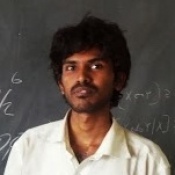
Riddhipratim Basu serves as an Assistant Professor at the Tata Institute of Fundamental Research, following the completion of his Ph.D. in Statistics from the University of California, Berkeley in 2015 under the supervision of Professor Allan Sly. His doctoral research focused on Lipschitz embeddings of random objects, establishing his foundation in theoretical probability. His academic credentials include: B.Stat.(Hons.), Indian Statistical Institute, 2009 M.Stat., Indian Statistical Institute, 2011 Ph.D. in Statistics, University of California, Berkeley, 2015 Dr. Basu's research centers on the mathematical foundations of probability theory, with emphasis on stochastic processes and combinatorial structures in random systems. His work explores the geometric and topological properties of random objects through Lipschitz embeddings, contributing to the understanding of complex probabilistic phenomena in discrete mathematics. No scientific awards are documented in the provided information. Details regarding student mentorship, research funding, laboratory affiliations, or collaborative initiatives were not specified in the source material, though his dissertation suggests engagement with advanced theoretical frameworks in statistics.
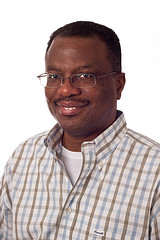
George B. Mertzios is an Associate Professor in the Department of Computer Science at Durham University, affiliated with the Algorithms and Complexity Research Group (ACiD) within the School of Engineering and Computing Sciences. He has held academic positions at Durham since 2011, progressing from Lecturer to Senior Lecturer and then to Associate Professor since 2017. He has also held visiting positions at institutions including the University of Bordeaux/CNRS and the University of Haifa. His research interests lie at the intersection of theoretical computer science and network science, with a strong focus on temporal graphs , algorithmic graph theory , parameterized complexity , and combinatorial optimization . He investigates efficient algorithms for dynamic and evolving networks, geometric graph models, and computational problems in network evolution and connectivity. His work often bridges foundational theory with applications in network design and distributed systems. The recent publications and ongoing activities of George B. Mertzios demonstrate a consistent and impactful research trajectory centered on the algorithmic foundations of temporal and dynamic networks. His work spans complexity analysis, algorithm design, and structural graph theory, with a notable emphasis on temporal vertex cover, sliding window models, and connectivity in time-varying graphs. He frequently publishes in top-tier conferences such as ICALP, MFCS, AAAI, and STACS, as well as leading journals including the Journal of Computer and System Sciences and Algorithmica . Gold Medal, Balkan Mathematical Olympiad, 1998 Distinguish Diploma, Bulgarian National Mathematical Competition 'Chernorizets Hrabar', 1998 Certificate of Merit, Mediterranean Mathematics Competition, 1999 Best paper award of Track C, ICALP 2010 Best student paper award, SAND 2024 George B. Mertzios has been actively involved in research supervision and leadership. He has supervised multiple PhD students to completion and currently advises ongoing doctoral research. He has served as Principal Investigator for EPSRC grants on Algorithmic Aspects of Temporal Graphs and Algorithmic Aspects of Intersection Graph Models , and as a Co-Investigator on projects related to graph coloring. He is a frequent organizer of scientific workshops, including the Algorithmic Aspects of Temporal Graphs series at ICALP and Dagstuhl seminars, and serves on the program committees of numerous international conferences such as MFCS, IWOCA, and SAND. He is a key member of the Network Engineering Science and Theory in Durham (NESTiD) research group, where he coordinates seminar series and fosters collaborative research in network algorithms and theory.
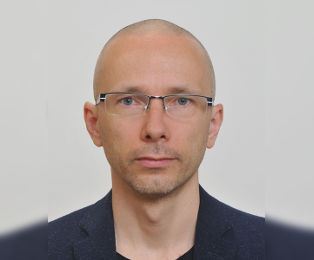
Dan Mikulincer is the Brian and Tiffinie Pang Assistant Professor at the University of Washington in the Department of Mathematics, College of Arts and Sciences. He previously held a postdoctoral Instructor position at MIT Mathematics and earned his Ph.D. from the Weizmann Institute of Science under Ronen Eldan. He completed his B.Sc. in Mathematics and Computer Science at Ben-Gurion University, where he also studied Cognitive Neuroscience. B.Sc.: Ben-Gurion University (Mathematics, Computer Science, Cognitive Neuroscience) Ph.D.: Weizmann Institute of Science, Faculty of Mathematics Postdoc: MIT Mathematics Current: Assistant Professor, University of Washington, Department of Mathematics His research lies at the intersection of high-dimensional geometry, probability, statistics, information theory, and data science. He is particularly focused on normal approximations, Stein's method, stochastic analysis, and dimension-free phenomena. His work explores foundational aspects of learning theory, random matrices, transportation inequalities, and neural networks, often using probabilistic and analytic tools to derive sharp, robust results in high dimensions. The recent publications reflect a consistent focus on probabilistic methods in high-dimensional settings. Key themes include normal approximation via Stein's method, optimal transport, concentration and anti-concentration inequalities, random graph models, and theoretical aspects of machine learning such as learnability and neural network expressivity. The work spans both pure mathematics (e.g., GAFA, PTRF) and top-tier computer science venues (e.g., COLT, STOC, NeurIPS), highlighting interdisciplinary impact. Although no formal scientific awards are listed in the provided text, his publications in premier journals and conferences (Annals of Probability, STOC, NeurIPS, COLT) indicate significant recognition in the theoretical community. Dan Mikulincer has advised or collaborated with several researchers including Yair Shenfeld, Max Fathi, Ronen Eldan, and Sébastien Bubeck. He has served as a TA for 18.650: Statistics for Applications at MIT and taught programming courses (Java, Python, JavaScript) at the Interdisciplinary Center Herzliya. He is also a senior lecturer at WeCode, a nonprofit providing free programming education to underrepresented youth in Israel, indicating a strong commitment to education and outreach. He has been affiliated with research groups at MIT Mathematics, Weizmann Institute, and Microsoft Research AI, where he spent the summer of 2019 hosted by Sébastien Bubeck. These collaborations span theoretical machine learning, stochastic processes, and algorithmic foundations.
Tselil Schramm is an Assistant Professor in the Department of Statistics at Stanford University, with courtesy appointments in Computer Science and Mathematics. She is actively engaged in research and teaching in theoretical computer science and statistics. Department: Department of Statistics School: School of Humanities and Sciences University: Stanford University Office: CoDa E254 Email: tselil@stanford.edu She earned her PhD from UC Berkeley under Prasad Raghavendra and Satish Rao, followed by postdoctoral work at Harvard and MIT with Boaz Barak, Jon Kelner, Ankur Moitra, and Pablo Parrilo. Her research lies at the intersection of theoretical computer science and statistics, focusing on high-dimensional estimation, information-computation tradeoffs, sum-of-squares algorithms, and random graph theory. She develops algorithms for statistical problems and investigates the boundaries between what is statistically possible and what is computationally feasible. Her recent publications span topics including the overlap-gap property, discrepancy algorithms, robust message passing, semidefinite programming, spectral clustering, and random geometric graphs, appearing in top venues such as STOC, FOCS, COLT, NeurIPS, and The Annals of Statistics. She teaches a range of courses, including Introduction to Statistics (STATS 60), Theory of Statistics II (STATS 300B), and Machine Learning Theory (STATS 214 / CS 228M), reflecting her expertise in both foundational and advanced statistical theory. Runner-up for Best Paper at COLT 2021 Invited to STOC 2022 special issue of SICOMP Invited to SODA 2016 special issue of ACM Transactions on Algorithms Invited to CCC 2019 special issue of Theory of Computing Tselil Schramm advises and collaborates with numerous students and researchers, including Shuangping Li, Misha Ivkov, and Siqi Liu. She has been involved in multiple research grants and projects, particularly in the areas of high-dimensional inference and algorithmic robustness. Her work often bridges theoretical guarantees with practical algorithmic design. She is affiliated with Stanford’s theoretical computer science and statistics research groups, contributing to a vibrant academic environment. Her future work is expected to further explore the limits of efficient computation in statistical settings, with potential applications in machine learning, signal processing, and network analysis.
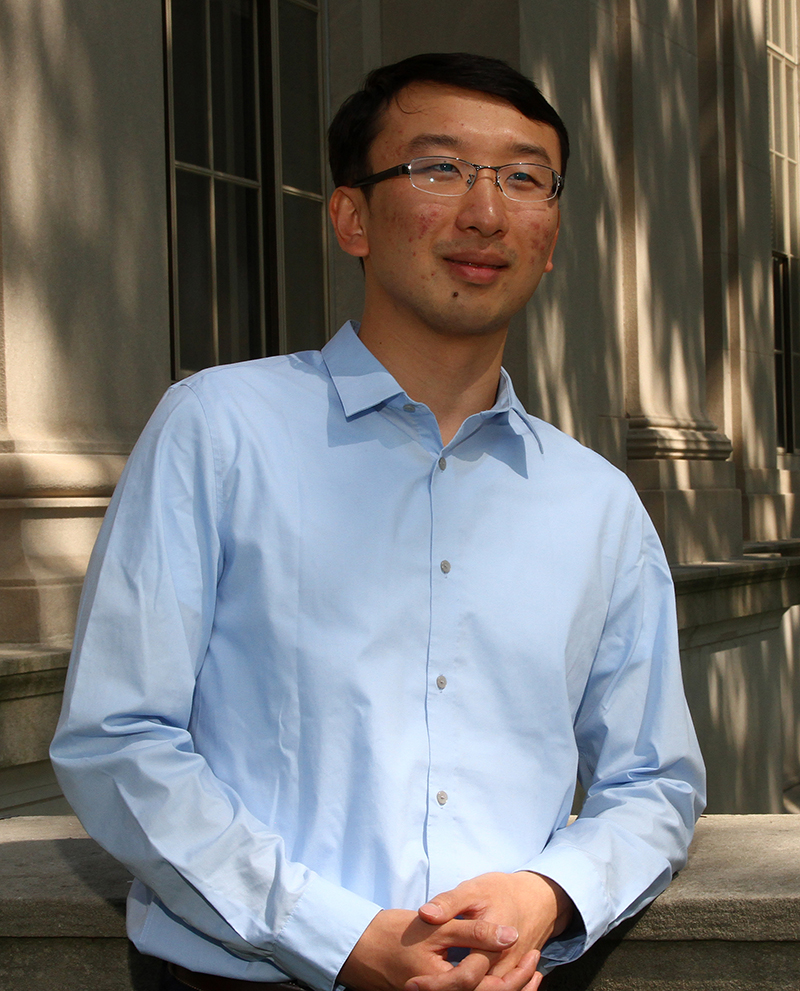
Yufei Zhao is an Associate Professor of Mathematics at the Massachusetts Institute of Technology (MIT). His research focuses on extremal, probabilistic, and additive combinatorics, with applications to graph theory, discrete geometry, and computer science. Dr. Zhao received his S.B. in Mathematics and Computer Science and Engineering from MIT in 2010, followed by an M.A.St. in Mathematics with Distinction from Cambridge University in 2011. He completed his Ph.D. in Mathematics at MIT in 2015 under the supervision of Jacob Fox. His research interests span a broad range of combinatorial mathematics, with particular emphasis on the interplay between structure and randomness. Dr. Zhao has made significant contributions to extremal graph theory, additive combinatorics, and the theory of pseudorandom graphs. His work often connects different areas of mathematics through innovative applications of combinatorial methods. Dr. Zhao's publications demonstrate a consistent focus on fundamental problems in combinatorics, with recent work exploring equiangular lines, spherical codes, extremal set theory, and the connections between graph theory and additive combinatorics. His research has been recognized with prestigious awards including the Fulkerson Prize (2024), NSF CAREER award (2021), Sloan Research Fellowship (2019), and Dénes König Prize (2018). Fulkerson Prize (2024) NSF CAREER award (2021) Sloan Research Fellowship (2019) Dénes König Prize (2018) Dr. Zhao actively mentors students, currently advising Travis Dillon, Dingding Dong, and Nitya Mani. His former PhD students include Benjamin Gunby, Jonathan Tidor, Aaron Berger, Ashwin Sah, and Mehtaab Sawhney. He has also authored the influential textbook "Graph Theory and Additive Combinatorics: Exploring Structure and Randomness" (Cambridge University Press, 2023), which has received high praise from leading mathematicians including Terry Tao and Ben Green.
Wilfrid Gangbo is a Professor of Mathematics at UCLA, specializing in nonlinear analysis, partial differential equations, and calculus of variations. He received his Ph.D. from EPFL (Switzerland) in 1992 and maintains active research in mathematical physics and optimization theory. Research interests focus on: Calculus of variations and nonlinear PDEs Optimal transport theory and Wasserstein spaces Mean field games and kinetic theory Functional analysis with applications to fluid mechanics Recent publications demonstrate strong focus on: Hamilton-Jacobi equations in metric spaces Structure of Wasserstein spaces Connections between optimal transport and game theory Regularity theory for polyconvex energies Professional activities include founding EcoAfrica, an organization supporting mathematical sciences in African countries through workshops and collaborative projects since 1990. Current teaching includes advanced mathematics courses such as Math 131BH (Winter 2025).
Karen Gunderson is an Associate Professor in the Department of Mathematics at the University of Manitoba's Faculty of Science. Her research spans graph theory, combinatorics, random graphs, percolation, hypergraphs, and extremal combinatorics. Research Focus : Graph theory, combinatorics, random graphs, percolation, hypergraphs, extremal combinatorics Academic Role : Associate Professor, Acting Associate Head Graduate Contact : Karen.Gunderson@umanitoba.ca , karen.gunderson@umanitoba.ca Her work includes bootstrap percolation , random geometric graphs , and extremal hypergraph problems , with applications in network modeling and probabilistic combinatorics. Recent publications focus on adversarial burning densities, Erdos-Ko-Rado robustness, and Turán numbers in switching contexts. Academic Leadership : Co-organizer of the University of Manitoba Combinatorics Seminar and key organizer for the 2023 CanaDAM conference and Movement & Symmetry in Graphs retreat.
Prof. Dr. Matthias Keller is a leading researcher in discrete spectral theory and graph analysis, affiliated with the Institute of Mathematics at the University of Potsdam since 2015. His work bridges geometric properties of graphs with spectral theory, focusing on Dirichlet forms, Schrödinger operators, and functional inequalities. Key Collaborations : Daniel Lenz, Radoslaw Wojciechowski, Yehuda Pinchover Books Authored : Graphs and Discrete Dirichlet Spaces (Springer, 2021) His research explores non-positively curved graphs, stochastic completeness, and magnetic sparseness. Recent projects include optimal Hardy inequalities and spectral analysis of fractional Laplacians. Scientific Awards : Swiss Fellowship (2023) Golda Meir Fellowship (2012-2013) Klaus Murmann PhD Fellowship (2007-2010) He advises PhD and Master’s students such as Yannik Thomas , Matti Richter , and Philipp Bartmann , while maintaining active roles in DFG-funded projects and international workshops.
Dr. DSc, Eng Szymon Głąb is a research and teaching university professor at the Department of Applications of Modern Mathematical Analysis, Lodz University of Technology. His work bridges abstract mathematical analysis with applied problems in computer science and topology. Fields of Interest Mathematical Analysis Set Theory Functional Analysis Algebrability Measure Theory Density Operators His research focuses on the interplay between set theory, measure theory, and functional analysis, particularly in characterizing small sets (e.g., Haar-null sets, meager ideals) and studying algebrability of non-measurable functions. Recent publications highlight his contributions to inverse Fraïssé limits, duality for posets, and topological properties of ideals. Notable collaborations include advising Jarosław Swaczyna (2020) on Haar-I sets, Jacek Marchwicki (2018) on conditionally convergent series, and contributing to blockchain applications in computer science.
Michel Goemans is the RSA Professor and Head of the Department of Mathematics at the Massachusetts Institute of Technology (MIT), with additional affiliations at MIT CSAIL and MIT ORC. Previously, he held the Leighton Family Professorship (2007-2017) and adjunct/visiting positions at the University of Waterloo, University of Louvain, and RIMS Kyoto. His research focuses on combinatorial optimization , discrete algorithms , and approximation methods , with applications spanning network design, stochastic optimization, and algorithmic game theory. His publications consistently explore fundamental problems in mathematical programming and theoretical computer science. Notable awards include: Leroy P. Steele Prize (2022) George B. Dantzig Prize (2021) Farkas Prize (2012) Fellowships: AMS, ACM, SIAM, Guggenheim, Sloan Foundation Doctor Honoris Causa (Université catholique de Louvain) He advises doctoral candidates and postdocs, with prominent former students including David Williamson (Cornell), Jon Kleinberg (Cornell), and Aleksander Madry (MIT). Research is primarily funded by NSF and ONR grants.
Xavier Goaoc is a Professor of Computer Science at Université de Lorraine, affiliated with the Department of Computer Science & Engineering at École des Mines de Nancy and the Gamble research team (joint between LORIA and INRIA). His research focuses on algorithms and discrete mathematics, particularly discrete and computational geometry, including convex hulls, intersection patterns, topological generalizations, and geometric transversal theory. University: Université de Lorraine School: School of Engineering Department: Department of Computer Science & Engineering Research Team: Gamble (LORIA/INRIA) Emails: xavier.goaoc@loria.fr , xavier.goaoc@univ-lorraine.fr His research spans computational geometry, combinatorial convexity, geometric transversal theory, and random geometric structures. Key topics include homological minors, order types of point sets, and geometric optimization. His 15 most recent publications highlight advancements in computational geometry algorithms, structural complexity, and topological constraints. Notably, his work has received Best Paper Awards at SoCG 2020, 2018, 2016, and 2012. Administrative roles include heading the computer science & engineering department at Mines Nancy and co-chairing the computer science department of the IAEM doctoral school. He is also a member of the Université de Lorraine's ‘pôle AM2I’ council. Teaching activities encompass courses in algorithms, computer architecture, blockchains, and geometric models for vision, with publications and grants reflecting his interdisciplinary impact in computer science and mathematics.
François Pirot is an Associate Professor (Maître de Conférences) at Université Paris-Saclay since September 1, 2021. He conducts research at the LISN laboratory within the GALaC team and teaches at the Faculty of Science of Orsay. PhD in Mathematics (Radboud University) and Computer Sciences (Université de Lorraine), 2019 Postdoctoral experience: ULB (2019), G-SCOP (2019-2020), Inria Sophia Antipolis (2020-2021) His research focuses on graph coloring problems in diverse contexts such as graph powers, locally sparse graphs, and distributed algorithms, utilizing probabilistic methods and connections to bio-informatics through circular codes. He has advanced bounds for h -conflict-free coloring, acyclic coloring, and dichromatic numbers in oriented graphs, with applications to minor-closed families and geometric group theory. Scientific contributions include: Asymptotically tight bounds for chromatic numbers in sparse graphs Efficient fractional coloring algorithms for K_t-minor-free graphs Structural analysis of comma-free and mixed circular codes in genetic alphabets Charles Delorme Prize for outstanding thesis in Graph Theory (2019) Collaborations span institutions like ULB, G-SCOP, Inria, and cross-disciplinary fields from computer science to mathematical biology.
Gerth Stølting Brodal is a Professor in the Department of Computer Science at Aarhus University, Denmark, holding this position since January 2016. Previously, he served as an Associate Professor (tenured) at the same department from 2004 to 2015. His career includes a PostDoc at the Max-Planck-Institute for Computer Science in Saarbrücken, Germany (1997-1998) and long-term affiliations with research centers BRICS (1998-2005) and MADALGO (2007-2017). Education: PhD in Computer Science, Aarhus University (1997). Thesis: "Worst Case Efficient Data Structures". Research Focus: Brodal specializes in the design and analysis of algorithms and data structures. His work spans fundamental data structures (dictionaries, priority queues, persistent structures), computational geometry, graph/string algorithms, I/O-efficient and cache-oblivious methods, algorithm engineering, and computational biology. He is renowned for worst-case efficient solutions and external memory algorithm contributions, with a fingerprint emphasizing data structures (100%), worst-case analysis (42%), and I/O efficiency (27%). Recent Publication Trends: His 2024-2025 output reveals sustained innovation in advanced data structures—dynamic convex hulls, binary search trees with finger search capabilities, strict Fibonacci heaps, and cache-oblivious selection algorithms—demonstrating theoretical rigor with practical engineering applications in massive data processing. Academic Leadership: Brodal has supervised PhD students (evidenced by one thesis in his output) and contributed to major collaborative initiatives. His 141 research outputs include journal articles, conference papers, and book chapters, reflecting deep engagement with algorithmic theory and its real-world implementations.
Olga Holtz is a Professor in the Department of Mathematics at the University of California-Berkeley, appointed in 2007. Her research spans applied mathematics, algebra, and computational complexity. Research Interests: Numerical analysis, matrix theory, algebra and combinatorics, computational complexity. Her recent publications focus on communication-efficient algorithms, matrix theory, and zonotopal algebra. Key trends include interdisciplinary work bridging theoretical mathematics with high-performance computing challenges. Contact: holtz@math.berkeley.edu . Personal website: http://www.cs.berkeley.edu/~oholtz/ .
Michael J. Lindsey is an Assistant Professor in the Department of Mathematics at the University of California, Berkeley, and a Faculty Scientist at Lawrence Berkeley National Laboratory. His research focuses on computational methods driven by Numerical Linear Algebra , Optimization , and Randomization , particularly for High-Dimensional Scientific Computing in quantum many-body problems and applied probability. University : UC Berkeley (Assistant Professor since 2022) Lab Affiliation : Mathematics Group at Lawrence Berkeley National Laboratory Email : lindsey@berkeley.edu His work includes Semidefinite Relaxation for quantum and classical problems, Monte Carlo Sampling techniques, and Tensor Networks for high-dimensional functions. He has pioneered Variational Embedding theory with guaranteed energy bounds and scalable solvers for quantum systems. Recent publications span Quantum Chemistry , Machine Learning , and High-Dimensional Probability , with applications to Electronic Structure , Molecular Dynamics , and Optimal Transport . He received the 2024 Hellman Fellowship and the 2019 SIAM Student Paper Prize . Teaching includes graduate and undergraduate courses in numerical analysis and applied mathematics at UC Berkeley and New York University. He also organizes the HDSC Seminar on high-dimensional scientific computing.