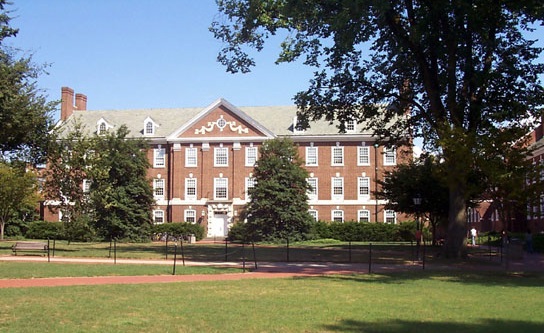
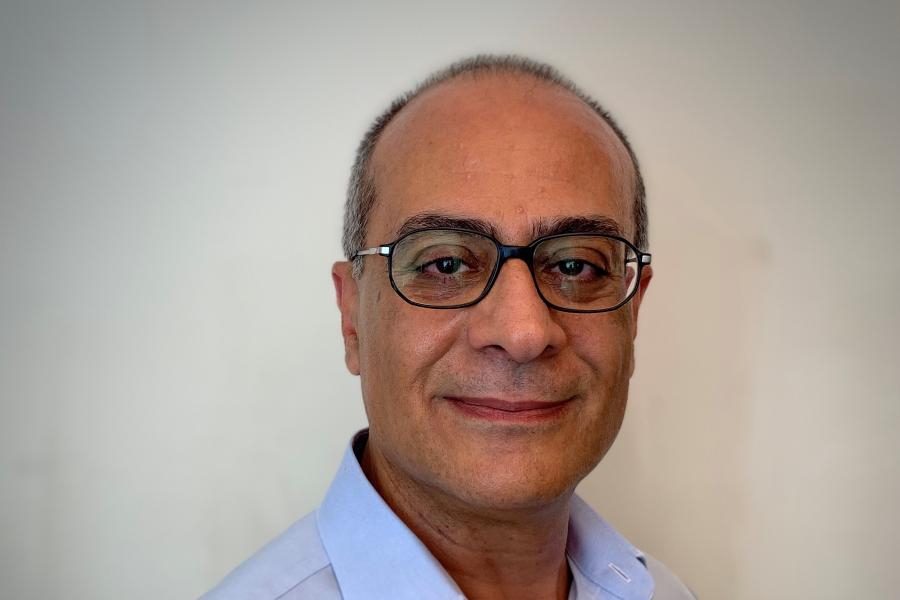
Mohsen Badiey , Professor in the Department of Electrical and Computer Engineering at the University of Delaware's College of Engineering, leads the Ocean Acoustics & Engineering Laboratory (OAELab) with facilities at Evans Hall and STAR campus. His interdisciplinary work spans applied physics, mechanical systems, ocean sensing, and computational signal analysis. Research Focus: Geoacoustic inversion, waveguide physics, machine learning for seabed classification, and underwater communication challenges. Key Projects: Shallow Water 2006 (SW06) and Shallow Water Acoustic in Random Media (SWARM95) experiments analyzing nonlinear internal wave dynamics. Scientific Contributions include developing dictionary learning techniques for sound speed profile analysis, advancing graph neural networks for underwater signal processing, and studying acoustic propagation through intense internal waves. His work emphasizes both fundamental and applied research with field data collection and computational modeling. Recent Publications demonstrate expertise in physics-based machine learning for source localization, seabed classification, and time-varying signal reconstruction. His team's 2024 studies on transiting ocean observers and Sobolev graph networks highlight cutting-edge methodologies. Laboratory: OAELab employs specialized instrumentation for broadband acoustic signal analysis, combining experimental data with computational approaches to solve real-world oceanographic problems.
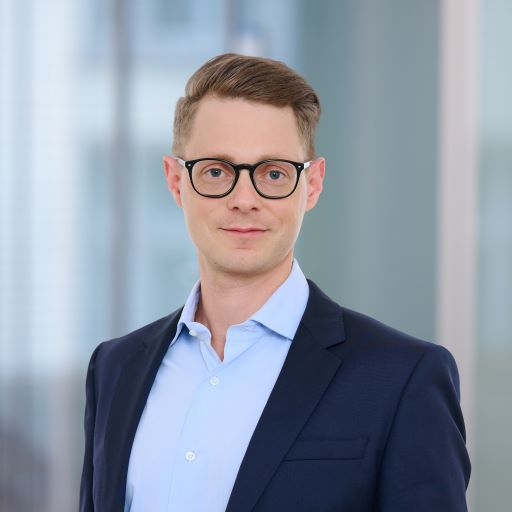
Prof. Raphael Flepp is an Assistant Professor of Sports Data Based Management and Economics at the Department of Business Administration, University of Zurich. His research focuses on behavioral economics, sports economics, and managerial decision-making, particularly examining outcome bias, market efficiency, and psychological factors influencing economic decisions. He has contributed to understanding biases in managerial dismissals, sports performance evaluation, and risk-taking behaviors in gambling contexts. His work integrates field experiments and quasi-experimental methods to analyze topics like casino gambling, sports betting markets, and leadership dynamics. Key themes include the impact of randomness on performance evaluations, the role of sentiment in pricing, and separating psychological vs. strategic momentum in sports. Flepp's research bridges behavioral economics with applied settings in sports and finance, providing insights into how cognitive biases affect real-world decision-making processes. Flepp's publications span journals such as the Journal of Economic Behavior & Organization, Journal of Sports Economics, and Economics Letters. He has collaborated extensively with co-authors like Prof. Franck and Dr. Meier, addressing topics ranging from CEO turnover dynamics to liquidity advantages in betting markets. His work emphasizes empirical rigor and practical relevance in both academic and applied contexts.
Dr. Panqiu Xia is a Lecturer in the School of Mathematics at Cardiff University since Autumn 2024. His research focuses on theoretical and applied probability, with expertise in stochastic partial differential equations (SPDEs) and chemical reaction networks (CRNs). Previously, he held postdoctoral positions at Auburn University (USA) and the University of Copenhagen (Denmark). He earned his Ph.D. in Mathematics from the University of Kansas (USA) in 2020 under the supervision of Professors Yaozhong Hu and David Nualart. His research interests include Malliavin calculus, Stein's method, and the analysis of SPDEs such as the parabolic Anderson model and super-Brownian motions. In CRN studies, he investigates stationary distributions and stochastic modeling of biochemical systems. His work bridges pure probability theory with applications in mathematical biology and statistical physics. Dr. Xia has taught courses in statistics, stochastic analysis, and numerical methods at institutions including Auburn University and the University of Copenhagen. His educational background includes a BSc from Wuhan University (China) and an MSc from the University of Macau. Key research themes include the long-term behavior of SPDE solutions, intermittency phenomena, and ergodic properties. His contributions span both theoretical advancements in stochastic analysis and applied problems in chemical reaction systems.
Dr. Or Brook is an Associate Professor of Competition Law and Policy at the School of Law, University of Leeds, and Deputy Director of the Centre for Business Law and Practice. They hold interdisciplinary qualifications, including a PhD from the Amsterdam Centre for European Law and Governance, an LLM in European Competition Law from the University of Amsterdam, and degrees in Law and Economics from the Hebrew University of Jerusalem. Research focuses on international EU competition law, antitrust, and empirical legal methods. Notable projects include the Priority Setting Project (funded by ESRC) and a comprehensive study of judicial review in EU competition law. They co-edit the Research Handbook on Abuse of Dominance and lead the UK branch of ASCOLA, contributing to policy discussions through international collaborations. Education: PhD in Law, University of Amsterdam LLM in European Competition Law, University of Amsterdam LLB and BSc in Economics, Hebrew University of Jerusalem Research interests emphasize empirical analyses of legal texts, institutional enforcement practices, and competition law’s intersections with other regulatory frameworks. Recent monograph Non-Competition Interests in EU Antitrust Law (Cambridge UP, 2022) presents novel empirical data on public policy influences in EU competition enforcement. Key awards include the Michael Beverley Innovation Fellowship (associated member), supporting entrepreneurial academic initiatives. Their work bridges law and economics through interdisciplinary methods, advocating for empirical rigor in European legal scholarship.
Terry Soo is an Associate Professor in the Department of Statistical Science at University College London (UCL), a position he has held since 2020. His academic background includes postdoctoral roles at the University of Warwick and the University of Victoria, followed by an Associate Professorship at the University of Kansas. He holds degrees from Simon Fraser University (undergraduate) and the University of British Columbia (PhD). His research focuses on probability theory and ergodic theory , with a particular emphasis on topics such as nonsingular systems, Bernoulli shifts, and stochastic processes. His work often explores structural properties of dynamical systems and their isomorphisms, with applications to measure-preserving transformations and entropy theory. Soo teaches advanced courses such as Stat 0009 (Probability and Statistics) and LTCC Stochastic Processes . His research has been published in prestigious journals like Annals of Probability and Ergodic Theory and Dynamical Systems , and he maintains an active presence in the academic community through external profiles on arXiv, ZbMATH, and AMS.
Joseph Amsili is a Senior Extension Associate and Program Director for the New York Soil Health Program at Cornell University's School of Integrative Plant Science, Department of Soil and Crop Sciences. His work focuses on advancing soil health through applied research, extension initiatives, and farmer engagement. Key roles include leading the Soil Health and Climate Resiliency Field Day series and the NY Soil Health Specialist Training Series. He developed the Production Environment Soil Health Benchmarks, adopted by NY State to align with the Soil Health and Climate Resiliency Act. His research emphasizes soil carbon dynamics, sustainable soil management, and cover crop impacts. Education: Ph.D. in Soil Science (Cornell University, 2024), M.S. in Soil Science with a Biogeochemistry minor (Penn State, 2018), B.S. in Earth Systems with a Soil Science minor (Cornell, 2013). Research interests include soil health assessment protocols, carbon sequestration, cover crop root traits, and agroecosystem resilience. He collaborates with institutions like Cornell AgriTech and the Lake Erie Research & Extension Lab, contributing to case studies like the Betts Farm cover cropping initiative. His work bridges academic research with practical applications to enhance agricultural sustainability and climate resilience.
Professor Jennifer Davis is a Professor of Civil and Environmental Engineering and Higgins-Magid Senior Fellow at Stanford University's Woods Institute for the Environment. She leads the Stanford Program on Water, Health & Development, focusing on water infrastructure, public health, and economic development in low/middle-income countries. Her work spans over 20 countries, emphasizing equitable water management solutions. Davis holds a PhD and MSPH from UNC-Chapel Hill in Environmental Science & Engineering and Public Health. Her research investigates the intersection of water systems, poverty, and climate resilience, with major projects including rural water infrastructure sustainability in Uganda/Africa, school-based sanitation programs in Zambia/India, and Lotus Water's chlorine disinfection innovations. She collaborates with global teams to address WASH challenges in healthcare facilities and refugee settlements. Through market-based maintenance models and IoT approaches, her group explores scalable solutions for infrastructure durability. Over 60 Stanford trainees have participated in her projects, emphasizing interdisciplinary training. Her lab's "Poop Group" fosters creative problem-solving in sanitation engineering. Key initiatives include the EPIC project linking infrastructure to poverty reduction, Uganda's rural healthcare WASH sustainability efforts, and Zambia's piped water gender equality studies. Davis advises graduate/undergraduate students in environment-focused programs at Stanford, emphasizing competitive admissions and external fellowships.
Dr. Muni Rami Reddy Rasappagari is a casual academic staff member at the University of Southern Queensland (UniSQ) , Australia, within the School of Engineering . He holds a Diploma in Civil Engineering from SV Govt Polytechnic Tirupati, a Bachelor of Technology from Nagarjuna University, a Master of Science in Civil Engineering from Indian Institute of Technology (IIT), and a PhD from the University of Madras . His research spans composite materials , structural mechanics , fracture mechanics , and nanomaterials , with a particular focus on graphene-reinforced composites , functionally graded materials , and delamination modeling . His work integrates finite element analysis , fractal methods , and vibration analysis to address complex structural integrity problems. Dr. Rasappagari's recent publications (2018–2022) emphasize graphene nanoplatelet (GPL) reinforcement in composite plates, exploring free and forced vibration , flexural behavior , and boundary condition effects . Earlier work (2007–2009) centered on fractal finite element methods for crack sensitivity analysis and stress intensity factor computation in anisotropic and multi-crack systems . Contact: 📧 muniramireddy.rasappagari@unisq.edu.au
Mason Porter is a Professor in the Department of Mathematics at the University of California, Los Angeles (UCLA). His research focuses on network science, nonlinear dynamics, and mathematical modeling of complex social systems. He explores topics such as opinion dynamics, temporal networks, multilayer networks, and the interplay between network structure and dynamical processes. Porter’s work spans theoretical and applied domains, including the analysis of social networks, epidemic spread, and infrastructure resilience. He has contributed to methods for detecting community structures, analyzing hypergraphs, and modeling collective behavior in systems ranging from online social media to biological networks. His recent studies emphasize bounded-confidence models, quantum walks on networks, and the application of topological data analysis to spatial systems. His research also intersects with interdisciplinary projects, such as modeling disease mitigation strategies, customer mobility in supermarkets, and the coevolution of disease spread and opinions. He has collaborated on initiatives like the NSF-funded project to predict microbiome assembly via multilayer networks. Porter’s publications reflect a deep engagement with both foundational theory and real-world applications, often leveraging computational and analytical techniques to uncover principles governing complex systems. His work bridges mathematics, physics, and social sciences, addressing challenges in data ethics, information diffusion, and network-driven phenomena.
Laura Poggio serves as a Research Associate at ISRIC - World Soil Information, which operates under Wageningen University & Research. Her work focuses on advancing digital soil mapping methodologies and global soil information systems through interdisciplinary research combining remote sensing, machine learning, and soil science. Her primary research interests include: Digital Soil Mapping at multiple scales (local to global) Soil Organic Carbon monitoring using satellite imagery Machine learning applications for soil property prediction Global soil information systems development (notably SoilGrids) Integration of remote sensing data with soil databases Analysis of her 15 most recent publications reveals strong emphasis on continental-scale soil monitoring systems, particularly using Sentinel-2 satellite data for soil organic carbon assessment across Europe. Her work consistently addresses methodological challenges in handling spatial uncertainty, integrating multi-source data, and developing scalable models applicable from local to global contexts. Key technological approaches include machine learning algorithms (particularly Random Forest), survival probability models for censored data, and multi-sensor remote sensing integration. Her research output demonstrates significant collaboration across European institutions through projects like EJP SOIL and contributions to the Global Soil Partnership. While no specific awards are documented in the available materials, her work shows substantial scholarly impact through high citation counts and dataset adoption. Dr. Poggio actively contributes to soil science through conference presentations and supervised research work, particularly focusing on operational implementation of digital soil mapping for environmental monitoring and policy support.
Professor Alexandros ALEXAKIS is affiliated with the Physics Department at ENS-PSL, where he holds a Professor position at the ENS Physics Laboratory (LPENS). His research focuses on hydrodynamics and turbulence, particularly addressing topics such as turbulent condensates, magnetic reconnection, and large-scale self-organization in fluid systems. He explores fundamental aspects of energy cascades, intermittency, and nonlinear dynamics in both classical and magnetohydrodynamic (MHD) turbulence. His work bridges theoretical frameworks, numerical simulations, and experimental insights to understand complex fluid behaviors in geophysical and astrophysical contexts. Key research interests include the interplay between large-scale flows and turbulent dynamics, the role of helicity in MHD systems, and the statistical properties of turbulent cascades. Recent studies have addressed topics like the spreading mechanisms of turbulence, the impact of fractal forcings on intermittency, and the saturation of turbulent dynamos. His contributions span fluid dynamics, plasma physics, and nonlinear systems, with applications to astrophysical plasmas and geophysical fluid dynamics. Professor ALEXAKIS' research also involves the development of shell models and geometric microcanonical theories to describe turbulent equilibria. He has published extensively on the transition between three-dimensional and quasi-two-dimensional turbulence, the effects of rotation and stratification on energy transfers, and the statistical signatures of fluctuation relations in turbulent systems.
Dr. Nariman Sepehri is a Professor in the Department of Mechanical Engineering at the Price Faculty of Engineering, University of Manitoba, Canada. He has held significant administrative roles including Department Associate Head (Graduate Studies), Associate Dean of Engineering (Undergraduate Programs), and Acting Dean of Engineering. His research focuses on fluid power systems, robotics, and control with applications in rehabilitation and heavy machinery. Education: Post-Doctorate, Electrical & Computer Engineering, University of British Columbia, Canada (Tele-Robotics, Mechatronics) PhD, Mechanical Engineering, University of British Columbia, Canada (Control, Fluid Power Systems, Robotics) MSc, Mechanical Engineering, University of British Columbia, Canada (Computer-Aided Manufacturing Planning) BSc, Mechanical Engineering, Sharif University of Technology, Iran (Machine Design) Dr. Sepehri's research interests span Fluid Power Systems and Technology , Robotics and Teleoperation , Control Systems , Condition Monitoring , and Mechatronics of Rehabilitation Devices . His work integrates advanced control theory with practical applications in hydraulic and pneumatic systems, aiming to improve energy efficiency and reliability in robotics, manufacturing, aerospace, and healthcare. Notably, he has developed innovative rehabilitation devices using game-based interfaces for stroke and cerebral palsy patients. His recent publications (2022-2025) demonstrate a strong trend towards energy-efficient hydraulic systems, fault detection using machine learning, and the development of soft robotic actuators for rehabilitation. Key areas include electro-hydrostatic actuators, pump-controlled circuits, and the application of advanced algorithms for condition monitoring and control. Scientific Awards: Dean of Engineering’s Award for Superior Academic Performance University of Manitoba Rh Award for outstanding contributions to scholarships and research in Applied Sciences Fellow of the Canadian Academy of Engineering (CAE) Fellow of the American Society of Mechanical Engineers (ASME) Fellow of the Canadian Society for Mechanical Engineering (CSME) Dr. Sepehri has supervised over 100 graduate and postdoctoral students, contributing significantly to the field of fluid power and robotics. His research has been supported by major grants from the Natural Sciences and Engineering Research Council of Canada (NSERC) and other sources, enabling the establishment of the Fluid Power Research Laboratory. This lab features state-of-the-art equipment including a human-robot-in-the-loop simulator and hardware-in-the-loop test facilities for condition monitoring. The Fluid Power Research Laboratory at the University of Manitoba, under Dr. Sepehri's leadership, is a hub for innovation in fluid power technology. The lab collaborates internationally with researchers in USA, Brazil, China, Hungary, Romania, Denmark, Sweden and France, and has developed interdisciplinary projects bridging engineering with healthcare applications.
Dr. Man E. Charurat is a Professor at the University of Maryland School of Medicine with primary appointment in the Department of Medicine and secondary appointment in the Department of Epidemiology and Public Health. He serves as the Division Director for Global Health Sciences, Global Director of the Center for International Health, Education, and Biosecurity (Ciheb), and Division Head of both Global Health Sciences within the Department of Epidemiology and Public Health and Epidemiology and Prevention at the Institute of Human Virology (IHV). Dr. Charurat earned his BS in Biochemistry and Molecular Biology from the University of Washington, followed by an MHS in Infectious Disease Epidemiology and PhD in International Health from Johns Hopkins University. His academic progression at the University of Maryland includes Assistant Professor (2004-2010) and Associate Professor (2010-2016) appointments in both Medicine and Epidemiology, before becoming a tenured Professor of Medicine in 2016. Dr. Charurat's research focuses on critical areas of HIV/AIDS, including maternal-infant HIV transmission, key and vulnerable populations, implementation science, HIV surveillance, and transmission dynamics. His work extends to HIV program implementation, health systems strengthening, and the intersection of HIV with other conditions such as non-communicable diseases. As a global health leader, he has established vibrant centers of excellence across Nigeria, Kenya, Zambia, Botswana, and Tanzania that conduct public health implementation and clinical research in infectious diseases and cancer control. Analysis of Dr. Charurat's recent publications reveals a strong emphasis on HIV prevention strategies among key populations in Africa, particularly sexual and gender minorities in Nigeria. His work spans epidemiological studies, implementation science, and health systems research, with a growing focus on the intersection of HIV with non-communicable diseases and mental health. Notably, his research increasingly addresses health disparities, stigma, and social determinants of health that impact HIV outcomes in sub-Saharan Africa. Dr. Charurat serves on numerous national and international committees including the NIH AIDS and Clinical and Epidemiology Review Panel, the World Bank-funded Center of Excellence in Public Health and Maternal-child Health, and the International AIDS Society. His contributions to the field have positioned him as a leading expert in HIV implementation research in resource-limited settings. As a mentor, Dr. Charurat has guided many African researchers who now hold important positions in universities and government agencies across Africa. He is Principal Investigator for over $200 million in grant funding from the U.S. NIH and CDC for research and training in sub-Saharan Africa. His current major grants include the NIH UG1HD113162 RISE Clinical Research Center, NIH U01CA275048 Botswana Smoking Abstinence Trial, and NIH D43TW012274 Integrated Networks of Scholars in Global Health Research Training. Through the Center for International Health, Education, and Biosecurity (Ciheb) and the Institute of Human Virology, Dr. Charurat leads multidisciplinary teams conducting impactful research across Africa. His centers of excellence model has proven effective in building sustainable research capacity while addressing pressing public health challenges related to HIV, infectious diseases, and health systems strengthening.
Marko Voutilainen is a University Lecturer in the Department of Accounting and Finance at the University of Turku. His research focuses on stochastic processes, time series analysis, and statistical modeling with applications in finance and mathematical statistics. He has published extensively on topics such as stationary processes, AR models, and generalized Ornstein-Uhlenbeck processes. His work emphasizes theoretical developments in stochastic modeling, including Lamperti transformations, spatial sign autocovariance matrices, and parameter estimation techniques. Recent contributions explore discrete and continuous-time stationary processes, as well as applications of ARCH models in financial contexts. Voutilainen frequently collaborates with researchers like Pauliina Ilmonen, Lauri Viitasaari, and Ciprian Tudor, contributing to peer-reviewed journals like Stochastic Models , Theory of Probability and Mathematical Statistics , and Scandinavian Journal of Statistics . Despite his prolific output, no scientific awards or grants are explicitly mentioned in the provided materials. No doctoral students are listed, though his research likely engages graduate-level collaboration.
Dr. Annika Mueller is an Associate Professor (with ius promovendi) at the Department of Economics, Econometrics and Finance within the Faculty of Economics and Business at the University of Groningen. She serves as an EEF Fellow at the FEB Research Institute, Program Coordinator for the MSc International Financial Management, and holds membership on the Board of Examiners and GrEELab Committee. Her research affiliations include being an Affiliate of the CESifo Research Network, Member of CoRE-IPD, and Member of the Dutch Development Economics Network (DUDE). Education: Ph.D. in Economics, University of Michigan (Awarded December 18, 2011) Dr. Mueller's research focuses on Development Economics, Experimental Economics, and Behavioral Economics, with particular expertise in financial inclusion, Islamic microfinance, and field experiments in developing countries. Her work examines how financial services can be structured to better serve marginalized populations, with specific attention to religious and cultural factors that influence financial behavior. She investigates savings behavior, intergroup relations in economic contexts, and the effectiveness of development interventions, particularly in Pakistan, Uganda, Ghana, and Malawi. Her research contributes directly to Sustainable Development Goals related to poverty reduction and economic development. Her publication record demonstrates a consistent focus on field experiments in developing economies, with recent work examining cash-transfer programs in Uganda, Islamic finance mechanisms in Pakistan, and survey methodology innovations. Mueller frequently collaborates with researchers including Lensink, Ahmad, and van Dongen, producing rigorous empirical work that bridges theoretical economics with practical development applications. Her articles appear in top journals across economics, finance, and development studies. Scientific Recognition: Impact Case - Financial Inclusion in Pakistan (2024) - recognized by 2 news outlets, referenced in 1 policy source, and widely discussed with 229 readers on Mendeley Dr. Mueller actively supervises research and has advised on multiple projects, though specific student names are not listed in available documentation. She leads current research projects including an Information Transparency system for farmers' access to credit in Ghana and the Nebbi Inclusive Development Project in Uganda, which demonstrates that universal basic income proves to be an effective method of development aid. Her work combines rigorous experimental methodology with practical applications for development policy. She is affiliated with the Development Economics Research Unit and contributes significantly to the understanding of how financial systems can be adapted to cultural contexts in developing countries, particularly through her work on Islamic finance mechanisms and their comparative effectiveness against conventional microfinance approaches.