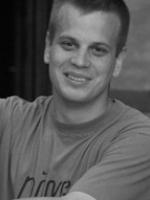
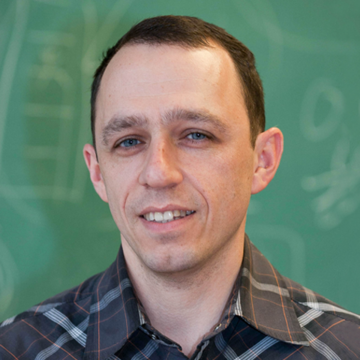
Amanda Redlich is an Assistant Professor in the Department of Mathematics & Statistics at the University of Massachusetts Lowell (UML), part of the Kennedy College of Sciences. She holds a PhD in Mathematics from the Massachusetts Institute of Technology (2010) and a BA in Mathematics from the University of Chicago (2005), with additional studies at the Budapest Semesters in Mathematics (2003). Her research focuses on probabilistic combinatorics, randomized algorithms, random graphs, and applications to biological and social networks. Her work explores allocation processes, graph decomposition, and stochastic systems, with notable contributions to balanced and unbalanced allocation models. Publications highlight advancements in load balancing, graph theory, and combinatorial analysis. Redlich has been recognized with prestigious fellowships, including the NSF Mathematical Sciences Postdoctoral Research Fellowship (2010) and the Akamai Presidential Fellowship (2005). Her academic journey includes postdoctoral work at Rutgers University and the Institute for Computational and Experimental Research in Mathematics (ICERM) at Brown University, as well as teaching roles at Bowdoin College. She actively engages in research seminars and workshops, presenting on topics like network science and combinatorial games.
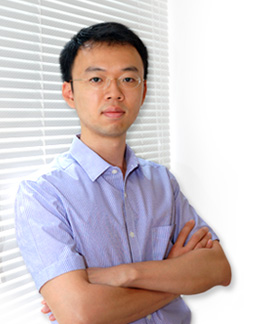
Peng Zhang is an Assistant Professor at Rutgers, The State University of New Jersey, affiliated with the School of Arts and Sciences. His research focuses on theoretical computer science, algorithms, computational complexity, and optimization. He leads the Theory of Computing research group and has received the NSF CAREER Award for his work. His research explores advanced topics such as discrepancy theory, Laplacian solvers, and algorithmic hardness results. Key research interests include developing efficient algorithms for structured numerical problems, analyzing computational complexity, and advancing methods in combinatorial optimization. His recent work addresses challenges in randomized experiments, covariate balancing, and parallel algorithm design. Awards: NSF CAREER Award Lab/Group: Theory of Computing Research Group Office: Hill 444 His publications span topics from discrepancy minimization to linear programming equivalence, reflecting a deep engagement with foundational computational theory and its applications.
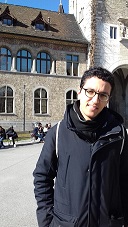
Prof. Duc Nguyen is a Professor in the Department of Civil & Environmental Engineering at Old Dominion University (ODU), affiliated with the Batten College of Engineering and Technology. His expertise spans Computational Mechanics, Finite Element Analysis (FEA), Structural Dynamics, and Parallel Computing. He has held numerous prestigious roles, including NASA-ASEE Fellowships and the 2010 ODU Shining Star Award. Nguyen holds a Ph.D. from the University of Iowa (1982), M.S. from the University of California (1976), and B.S. from Northeastern University (1974). Research focuses on large-scale algorithms for parallel supercomputing, design sensitivity analysis, sparse linear solvers, and multiphysics CAD-based optimization. He has led grants totaling over $2 million, including projects on numerical methods, engineering education, and structural analysis. Notable publications address parallel finite element methods, structural/acoustic coupling, and optimization using genetic algorithms. Awarded honors include recognition for citation impact (2004), teaching excellence (2001), and computational performance (1989). His work bridges computational efficiency with engineering applications, emphasizing interdisciplinary collaboration. Current research explores MPI-enabled algorithms, multi-hazard risk assessment, and coastal infrastructure resilience.
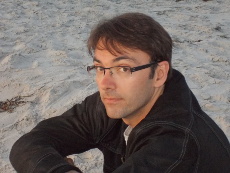
Dr. Jem Corcoran is an Associate Professor in the Department of Applied Mathematics at the University of Colorado Boulder. His research focuses on applied probability and computational statistics, with an emphasis on developing advanced Monte Carlo methods and Bayesian techniques. He specializes in MCMC (Markov Chain Monte Carlo) algorithms, perfect sampling, and stochastic simulation across disciplines such as image processing, chemical reaction networks, and econometric modeling. His work integrates theoretical rigor with practical applications, addressing challenges in rare event simulation, Bayesian network inference, and high-dimensional data analysis. Notably, he has contributed to advancements in Gibbs sampling, particle filtering, and the application of coupler methods for continuous distributions. His research also explores computational efficiency in stochastic processes and algorithmic design for complex systems. Dr. Corcoran’s scholarly contributions span over two decades, with publications on topics ranging from perfect sampling in Kac equations to Bayesian fusion of particle estimates. His methodologies have been applied in fields such as systems biology, quantum mechanics, and financial time series analysis. Despite his extensive publication record, no academic awards or grants are explicitly mentioned in the provided text.
Adrien Kassel is a Researcher at CNRS based at École Normale Supérieure de Lyon, working within the Unit for Pure and Applied Mathematics (UMPA) in the Probabilities team. His research spans the intersection of probability theory, combinatorics, and mathematical physics, with particular focus on random structures on graphs and surfaces. Dr. Kassel's research centers on probabilistic combinatorial structures, especially determinantal point processes , random spanning trees and forests , and loop models . His work connects deep mathematical concepts from statistical mechanics with geometric and topological structures. He investigates scaling limits of discrete models, connections to conformal field theory, and applications to mathematical physics. His research often reveals profound connections between seemingly disparate areas of mathematics through the lens of probability. His publications demonstrate a consistent focus on the interplay between combinatorial structures and probabilistic phenomena. The research trajectory shows increasing sophistication in handling geometric aspects of random processes, with recent work exploring connections to quantum gravity and conformal field theory through Schramm-Loewner evolution. Dr. Kassel received the prestigious Paul R. Halmos - Lester R. Ford Award for his article "The Looping Rate and Sandpile Density of Planar Graphs" co-authored with David B. Wilson. This award recognizes expository excellence in mathematical writing. He has advised Héloïse Constantin, who successfully defended her PhD thesis on "Spanning forests and phase transition" in June 2023. Dr. Kassel teaches advanced courses including "Determinantal processes" at the Master's level and "Integration and Probability" at the undergraduate level. He has co-organized numerous academic events including the ICJ-UMPA probability seminar, workshops on random maps and matrices, and meetings between ENS Lyon and SISSA. As coordinator of MathαLyon from 2017-2022, he actively engaged in mathematical outreach, bringing exhibits to middle and high schools across the Lyon region. His commitment to popularization extends to writing for Images des Mathématiques and participating in various math circles and outreach programs.
Divesh Aggarwal is an Associate Professor in the Department of Computer Science at the National University of Singapore (NUS) and a Principal Investigator at the Centre for Quantum Technologies (CQT). He holds a PhD from ETH Zurich (2012) and was a postdoc at EPFL and New York University. His research focuses on discrete structures in theoretical computer science, with emphasis on cryptography, lattices, computational number theory, and coding theory. Aggarwal has advised numerous PhD students and postdocs, and his work bridges cryptography, quantum computing, and algorithm design. He is involved in editorial roles for journals like Information Processing Letters and serves on program committees for top conferences such as CRYPTO, EUROCRYPT, and STOC. Education: PhD in Computer Science from ETH Zurich (2012), under Prof. Ueli Maurer. Postdoctoral research at EPFL (School of Computer and Communication Sciences) and NYU (Department of Computer Science). Research Interests: Information-theoretic Cryptography Randomness Extractors Lattice Algorithms and Applications Coding Theory Quantum Cryptography and Algorithms Computational Number Theory Recent Work Trends: His publications emphasize lattice-based cryptography, quantum-resistant algorithms, and complexity-theoretic hardness. Recent topics include SVP/ CVP algorithms, non-malleable codes, and quantum-proof cryptographic protocols. Over 70 papers in venues like FOCS, STOC, CRYPTO, and ITCS. Advising & Grants: Supervised students now in academia (e.g., IIT Delhi) and industry. Hosts visiting researchers and postdocs. Open to highly motivated PhD candidates and postdocs in theoretical computer science. Labs & Collaborations: Leads research at CQT and NUS School of Computing. Collaborates internationally on projects like quantum-resistant cryptosystems and lattice algorithm optimizations.
Dimitrios Fotakis is a Professor at the School of Electrical and Computer Engineering at the National Technical University of Athens (NTUA), where he has been serving since February 2009. He also collaborates with the "Archimedes" research unit as an experienced researcher since 2023. His academic journey includes previous positions as a Senior Research Scientist at Yahoo Research (2017-2019), Assistant Professor at the University of the Aegean (2004-2009), and Postdoctoral Researcher at the Max-Planck Institut für Informatik (2001-2003). National Technical University of Athens (2009-present): Professor "Archimedes" Research Unit (2023-present): Collaborating Senior Researcher Yahoo Research (2017-2019): Senior Research Scientist University of the Aegean (2004-2009): Assistant Professor Max-Planck Institut für Informatik (2001-2003): Postdoctoral Researcher Education: He holds a Diploma (1994) and a PhD (1999) from the Department of Computer Engineering and Informatics at the University of Patras, Greece. Dimitrios Fotakis specializes in Theoretical Computer Science with a focus on Algorithmic Game Theory and Approximation Algorithms. His research centers on the algorithmic properties of congestion games, the design of approximate mechanisms without monetary exchanges, and direct algorithms with emphasis on service location problems. His work has produced significant results including optimal algorithms for service location problems, potential functions for generalizations of congestion games, and optimal approximate truth-based mechanisms. With over 120 publications in major international conferences and journals and more than 3,000 citations according to Google Scholar, his research has had substantial impact in the field. His recent publications (2023-2025) demonstrate a continued focus on cutting-edge topics at the intersection of algorithms, game theory, and machine learning. These works span diverse areas including learning-augmented algorithms, graph neural networks, facility location problems, mechanism design, opinion dynamics, and fairness in ranking systems. The breadth of his research shows his ability to bridge theoretical computer science with practical applications in energy systems, social networks, and AI ethics. Teaching: Professor Fotakis teaches courses including Algorithms and Complexity, Discrete Mathematics, Computer Programming, Algorithmic Game Theory, Network Algorithms and Complexity, and Convex Optimization with Applications in Machine Learning. Research Leadership: He has served as Principal Investigator for several significant research projects including BALSAM (Beyond Worst-Case Analysis in Approximation Algorithms and Mechanism Design, 2019-2023), LEADAlgo (Learning-Augmented and Data-Driven Online Algorithms, 2020-2022), and Selfish Resource Allocation through Game Theoretic Models (2009-2021). He has also contributed as a Senior Researcher to multiple THALES projects through the years. Mentorship: Professor Fotakis has supervised numerous PhD students who have gone on to prestigious postdoctoral positions at institutions including MIT, Stanford, Yale, and UT Austin. His academic lineage extends through many successful students now working in top universities and research institutions worldwide.
Professor Peter Varju is a faculty member at the University of Cambridge within the Department of Pure Mathematics and Mathematical Statistics . His research spans Analysis , Combinatorics , and Number Theory , with a focus on mathematical structures in dynamical systems and probabilistic models. Academic Rank: Professor Department: Pure Mathematics and Mathematical Statistics Research Group: Combinatorics Contact: P.Varju@dpmms.cam.ac.uk His research explores: Analysis : Fourier decay, self-similar measures, Bernoulli convolutions, and harmonic properties of measures. Combinatorics : Random walks, nilspaces, and mixing time phenomena in finite settings. Number Theory : Multiplicative groups in finite fields, Lehmer's conjecture, and Diophantine properties. Recent publications highlight trends in: Self-similar structures and their spectral properties. Interplay between dynamics on nilmanifolds and combinatorial algebra. Probabilistic methods in algebraic and geometric contexts. Applications of Fourier analysis to measure theory and fractals. Exponential growth in linear groups and irreducibility of polynomials. He is affiliated with the Combinatorics research group at DPMMS and leads investigations into mathematical structures with implications across pure and applied fields.
Professor Hubert T.H. Chan is an Associate Professor at the Department of Computer Science, University of Hong Kong, and serves as Programme Director for the BEng(CompSc) programme. He holds a PhD from Carnegie Mellon University (2007) and previously worked as a postdoc at Max-Planck-Institut für Informatik in Germany. His research focuses on algorithms, combinatorial optimization, discrete metric spaces, and security & privacy, with applications in graph theory, network analysis, and privacy-preserving mechanisms. Education: PhD in Computer Science, Carnegie Mellon University, 2007 BEng (Computer Science), details not specified in text Research interests emphasize algorithmic design for dynamic systems, privacy in data aggregation, and efficient optimization techniques. His work bridges theoretical computer science with practical applications in network security and distributed systems. Key grants include Hong Kong RGC-funded projects on oblivious data structures, spectral hypergraph analysis, and dynamic metric problems (2012–2018). His publications span top conferences like SODA, FOCS, WWW, and ICML, addressing challenges in clustering, sorting, privacy, and graph decomposition. He oversees research groups exploring hypergraph learning, secure computation, and algorithmic privacy. His lab's work often intersects with real-world systems, emphasizing both theoretical rigor and practical relevance.
Markus Faustmann is a Senior Scientist at the Institute for Analysis and Scientific Computing (E 101) within the Faculty of Mathematics and Geoinformation at TU Wien. His research focuses on numerical methods for partial differential equations, with particular emphasis on fractional differential operators, finite element methods (FEM), boundary element methods (BEM), and hierarchical matrices. He has held roles including Senior Lecturer (2016-2021) and currently serves on the management team of TUForMath since 2023. Education: PhD in Mathematics (Dr.techn.), TU Wien (2015) Dipl.-Ing. in Technical Mathematics, TU Wien (2009) Bachelor of Science in Technical Mathematics (B.Sc.), TU Wien (2008) Research Interests: His work addresses non-local operators, elliptic regularity theory, and efficient numerical techniques for fractional PDEs. He develops and analyzes methods like hp-FEM and matrix compression strategies to tackle fully populated matrices arising from non-local problems. Recent projects include FEM-BEM coupling for fractional diffusion and exponential convergence analysis of hp-FEM. Awards: TU Best Teacher Award 2022 TU Best Paper Award 2022 Teaching & Advising: Faustmann teaches courses such as Nonlocal Operators and Numerical Methods for PDEs . He has supervised numerous students in master's theses (e.g., Paul Dunhofer, Tobias Slowiak) and bachelor's projects (e.g., Lukas Sichert, Paul Lucan). His seminars cover topics like randomized algorithms and differential equations. Labs/Teams: Active in the TUForMath initiative and collaborates on projects involving adaptive FEM for fractional operators and H-matrix approximations.
Benjamin Dadoun is an Associate Professor in the field of probability theory at Le Mans University, affiliated with the Laboratoire Manceau des Mathématiques (LMM). His research focuses on asymptotic convex geometry, random matrices, high-dimensional phenomena, and growth-fragmentation processes. His research interests include: Asymptotic behavior of random structures in high dimensions Growth-fragmentation processes and their scaling limits Random convex polytopes and their geometric properties Random matrix theory and associated energy functionals Dadoun's recent publications demonstrate a strong focus on the intersection of probability theory, convex geometry, and high-dimensional analysis. His work often involves establishing precise asymptotic behaviors and phase transitions in high-dimensional settings. He has made significant contributions to understanding the properties of Schatten balls, Poisson polytopes, and growth-fragmentation processes, with publications in top journals like Journal of Functional Analysis and Random Matrices: Theory and Applications. His doctoral thesis completed at the University of Zurich under Jean Bertoin established foundational work on growth-fragmentation processes, showing how these continuous processes emerge as scaling limits of discrete Markov branching structures.
Xavier Goaoc is a Professor of Computer Science at Université de Lorraine, affiliated with the Department of Computer Science & Engineering at École des Mines de Nancy and the Gamble research team (joint between LORIA and INRIA). His research focuses on algorithms and discrete mathematics, particularly discrete and computational geometry, including convex hulls, intersection patterns, topological generalizations, and geometric transversal theory. University: Université de Lorraine School: School of Engineering Department: Department of Computer Science & Engineering Research Team: Gamble (LORIA/INRIA) Emails: xavier.goaoc@loria.fr , xavier.goaoc@univ-lorraine.fr His research spans computational geometry, combinatorial convexity, geometric transversal theory, and random geometric structures. Key topics include homological minors, order types of point sets, and geometric optimization. His 15 most recent publications highlight advancements in computational geometry algorithms, structural complexity, and topological constraints. Notably, his work has received Best Paper Awards at SoCG 2020, 2018, 2016, and 2012. Administrative roles include heading the computer science & engineering department at Mines Nancy and co-chairing the computer science department of the IAEM doctoral school. He is also a member of the Université de Lorraine's ‘pôle AM2I’ council. Teaching activities encompass courses in algorithms, computer architecture, blockchains, and geometric models for vision, with publications and grants reflecting his interdisciplinary impact in computer science and mathematics.
Daniel C. Jerison is an Assistant Professor in the Department of Mathematics and Statistics at the University of San Francisco, supporting undergraduate programs in mathematics and data science. His academic career demonstrates a strong trajectory through prestigious institutions including Stanford University, Harvard University, Cornell University, and Tel Aviv University. Education: PhD in Mathematics, Stanford University, 2016 BA in Mathematics, Harvard University, 2007 Dr. Jerison specializes in discrete probability theory with emphasis on the properties of random objects and convergence of Markov chain algorithms. His research explores random planar maps, abelian sandpiles, circle packing, and discrete complex analysis. His work bridges theoretical mathematics with applications in statistical physics, examining how complex systems evolve and reach equilibrium states through sophisticated probabilistic methods. His approach often combines combinatorial techniques with analytical methods to solve problems in discrete geometry and probability. Analysis of Dr. Jerison's publications reveals consistent focus on the intersection of probability theory and discrete structures. His research demonstrates sophisticated mathematical techniques for analyzing convergence rates in Markov chains, establishing geometric criteria for planar structures, and solving boundary value problems for discrete systems. The recurring themes across his work include probabilistic methods applied to geometric problems, the study of self-organized critical systems, and theoretical frameworks for understanding complex discrete phenomena. Dr. Jerison has extensive teaching experience across multiple institutions, teaching courses ranging from foundational calculus to advanced probability theory. He has taught Probability Theory I (Math 6710), Stochastic Processes (Math 4740), Linear Algebra for Engineers (Math 2940), Prove It! (Math 3040), and Applied Complex Analysis (Math 4220) at Cornell University, in addition to his current teaching responsibilities at USF. He has also been involved with prestigious summer programs for high school students including PROMYS and SUMaC, where he directed research labs and served on admission committees.
Dr. Eng. Jan Bolek is an Assistant Professor at the Faculty of Physics, Warsaw University of Technology. His research focuses on optical engineering and holographic technologies. Specializes in holographic pattern recording Works with photomagnetic materials and liquid crystal composites Develops diffraction control techniques His work intersects Optics , Nanophotonics , and Signal Processing with applications in advanced imaging systems. Recent publications demonstrate expertise in spatial light modulator calibration and computational holography optimization. Key contributions include: Wavefront aberration correction techniques Diffraction order suppression methods Self-organized photonic structures
David Gamarnik is a Professor of Operations Research at the Operations Research and Statistics Group within the Sloan School of Management at the Massachusetts Institute of Technology (MIT). He holds a PhD in operations research from MIT (1998) and a BA in mathematics from New York University (1993). Prior to joining MIT in 2005, he was a research staff member at IBM T.J. Watson Research Center. Research Interests : Discrete probability, optimization and algorithms, quantum computing, statistics, machine learning, and stochastic processes. His recent work focuses on algorithmic obstructions in random structures, quantum optimization, and high-dimensional statistical models. He has contributed to understanding the overlap gap property in combinatorial problems and the performance of gradient descent in neural networks. Scientific Awards : Fellow of the Institute for Mathematical Statistics (IMS) Fellow of the Institute for Operations Research and Management Science (INFORMS) Fellow of the American Mathematical Society (AMS) Erlang Prize Best Publication Award from the Applied Probability Society of INFORMS Franz Edelman Prize competition finalist He currently serves as an area editor for Mathematics of Operations Research and has previously held editorial roles in Operations Research , Annals of Applied Probability , Queueing Systems , and Stochastic Systems journals.