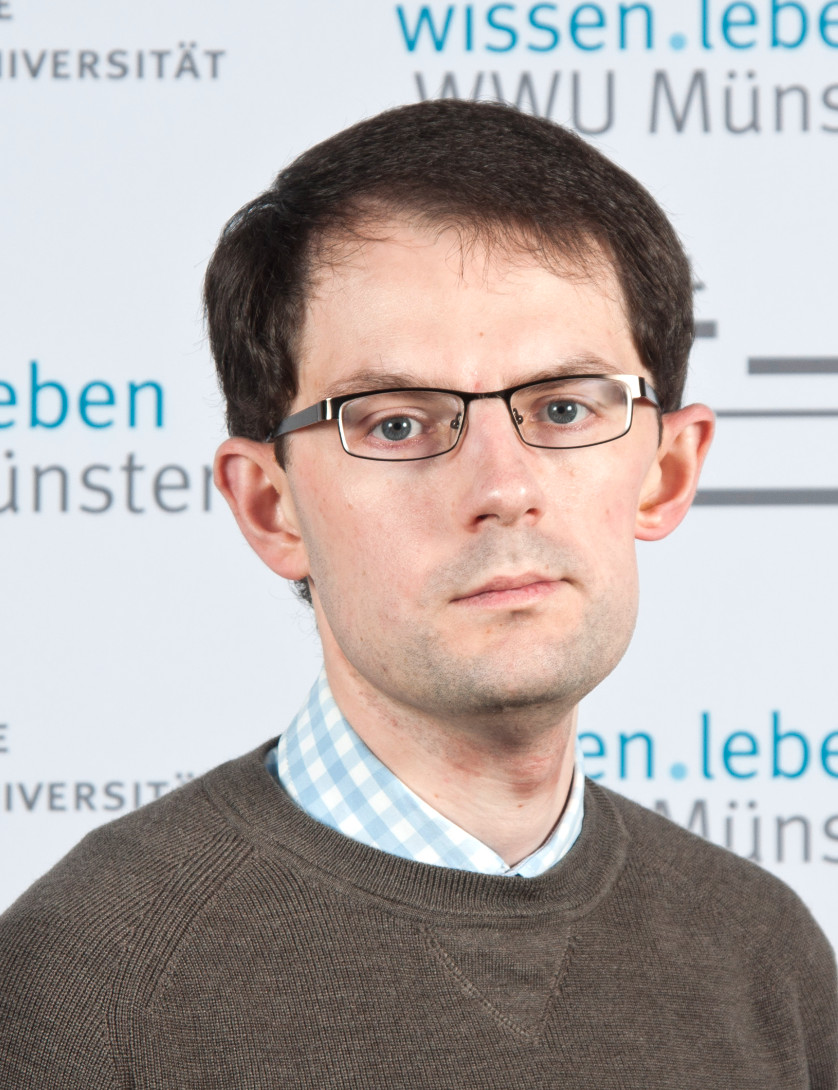
Werner Ballmann is a renowned mathematician specializing in differential geometry and geometric analysis. He served as Full Professor at the University of Bonn (1989–2016) and the University of Zürich (1987–1989). Since 2007, he has been a Scientific Member and Director of the Max Planck Institute for Mathematics (2007–2019). His research focuses on nonpositive curvature, spectral theory, and geometric structures on manifolds. Ballmann holds a Diplom (1976) and Promotion (1979) from the University of Bonn, with a Habilitation in 1984. His work includes groundbreaking studies on the geometry of manifolds, hyperbolic spaces, and orbifolds. Recent articles address spectral instability, eigenvalue analysis, and stochastic processes on geometric structures. Notable contributions include investigations into Martin boundaries, diffusion discretizations, and the interplay between geometry and spectral properties. Ballmann has authored influential textbooks such as Lectures on Kähler Manifolds (2006) and Introduction to Geometry and Topology (2018). His research bridges geometric analysis, topology, and probability, with applications in manifold theory and group actions.
Maria Axenovich is a Professor at the Department of Mathematics , Karlsruhe Institute of Technology (KIT). Her research focuses on graph theory and combinatorics , emphasizing unavoidable structures in graphs, Ramsey-type problems, Turán densities, and extremal graph theory. Education : Undergraduate in Novosibirsk, Russia; Ph.D. at the University of Illinois at Urbana-Champaign under Zoltan Füredi. Positions : Previously at Iowa State University; since 2012 at KIT. Editorial Roles : Editor-in-Chief of the Electronic Journal of Combinatorics (2020–present); Associate Editor of Order (2016–present). Recent Research Trends : Her 2023–2025 publications address hypercubes , poset Ramsey numbers , interval colorings , extremal subgraphs , and canonical Ramsey theorems . Collaborations span institutions in the US, UK, Hungary, and Germany. Students and Collaborations : Supervises Ph.D., Master’s, and Bachelor students. Current advisees include Dingyuan Liu , Christian Winter , and Lea Weber . Former students like Jonathan Rollin and Torsten Ueckerdt have contributed to extremal graph theory and hypergraphs. Courses : Teaches Linear Algebra , Combinatorics , and Graph Theory at KIT. Leads seminars on Extremal Set Theory and Discrete Mathematics .
Jonathan Leake is an Assistant Professor in the Department of Combinatorics and Optimization at the University of Waterloo. His research lies at the intersection of combinatorics, optimization, and theoretical computer science, with a focus on log-concave and Lorentzian polynomials and their applications in discrete and continuous settings. Assistant Professor, University of Waterloo (2022–present) Dirichlet Postdoctoral Fellow, TU Berlin (2020–2022) Postdoctoral Fellow, Institut Mittag-Leffler, Stockholm (Spring 2020) Postdoctoral Fellow, KTH, Stockholm (Fall 2019) James H. Simons Fellow, Simons Institute, UC Berkeley (Spring 2019) His research explores the deep connections between algebraic structures and combinatorial phenomena, particularly through polynomial capacity and Lorentzian polynomials. He applies these tools to problems in optimization, sampling, and representation theory. His work often involves developing new algebraic and analytic techniques to tackle longstanding conjectures and algorithmic challenges. The recent publications highlight a consistent focus on Lorentzian polynomials, capacity bounds, and their applications in combinatorics, optimization, and theoretical computer science. Key themes include matroid theory, log-concavity, sampling algorithms, volume approximation, and connections to Lie theory and representation theory. The research spans both theoretical developments and algorithmic applications, often in collaboration with leading researchers in the field. Dirichlet Postdoctoral Fellowship, TU Berlin Postdoc Fellowship in Algebraic and Enumerative Combinatorics, Institut Mittag-Leffler James H. Simons Fellowship, Simons Institute, UC Berkeley Jonathan Leake has advised or collaborated with several researchers, though formal advisees are not listed in the provided text. His work has been supported by prestigious fellowships and collaborations with institutions such as the Simons Institute and TU Berlin. He has taught courses including CO 250: Introduction to Optimization, MATH 239: Introduction to Combinatorics, and CO 739: Lorentzian Polynomials at the University of Waterloo and TU Berlin. While specific lab or research group names are not mentioned, Leake's collaborative work with researchers like Petter Brändén, Nisheeth Vishnoi, and Leonid Gurvits suggests active participation in research teams focused on algebraic combinatorics, optimization, and theoretical computer science. His publicly shared code for sampling from HCIZ densities and verifying positivity in Lie-theoretic contexts indicates an active computational research component.
Marie-Christine Düker is an Assistant Professor in the Department of Statistics and Data Science at Friedrich-Alexander University (Germany). Her research focuses on high-dimensional statistics, time series analysis, functional data analysis, and extreme value theory with applications in economics, psychology, chemistry, and ecology. Previously, she was a postdoctoral associate at Cornell University's Department of Statistics and Data Science under David Matteson. She earned her PhD in Mathematics from Ruhr-University Bochum under Herold Dehling and spent part of her doctoral studies at the University of North Carolina at Chapel Hill with Vladas Pipiras. Current Position: Assistant Professor, Department of Statistics and Data Science, Friedrich-Alexander University Previous Academic Affiliation: Postdoctoral Associate, Cornell University Education: PhD in Mathematics, Ruhr-University Bochum; Part-time research at University of North Carolina Research Interests: Her work spans high-dimensional time series under long-range dependence and nonstationarity, discrete data modeling, nonlinear dynamics, dimension reduction, and change-point analysis. Applications include econometrics, neuroscience, chemical data analysis, and ecological forecasting. Recent Publications: Her 2025-2024 work covers Hilbert space-valued linear processes, kernel estimation for nonlinear dynamics, confidence interval approximations, and latent Gaussian count time series. Earlier papers address simultaneous diagonalization, long-run variance matrices, and transition rate estimation challenges. Contact: marie.dueker@fau.de
Dr. Arie Levit is a Senior Lecturer (tenure track) in the Department of Theoretical Mathematics at Tel Aviv University's School of Mathematics, a position he has held since 2021. Previously, he served as a Gibbs Assistant Professor at Yale University from 2017. His academic career centers on pure mathematics with emphasis on structural properties of discrete groups and dynamical systems. His educational background includes: B.A in Mathematics from the Hebrew University of Jerusalem (2004) M.A in Mathematics from the Hebrew University of Jerusalem (2012) Ph.D. in Mathematics from the Weizmann Institute of Science (2017) under Prof. Tsachik Gelander Levit's research spans discrete groups, geometric and analytic group theory, and ergodic theory, with significant contributions to lattice theory, invariant random subgroups, character rigidity, and group stability. His work integrates algebraic, geometric, and probabilistic frameworks to solve fundamental problems in classification and rigidity of group actions, particularly in non-Archimedean and hyperbolic settings. Analysis of his 14 publications (2014-2024) reveals evolving focus from foundational lattice theory toward contemporary stability phenomena and character theory, with 60% of recent work (2022-2024) addressing permutation stability, Hilbert-Schmidt representations, and ergodic properties of group actions. Key methodological threads include the application of ergodic theory to group-theoretic classification and the development of analytical tools for stability problems. His scholarly recognition includes: Klein Prize (2017) ISF-BSF research grant (2020) As principal investigator of the ISF-BSF grant, Levit leads research on group stability and ergodic theory. His extensive collaborations with Gelander, Lubotzky, and Lazarovich demonstrate active mentorship within the global mathematics community. His work is conducted within Tel Aviv University's Theoretical Mathematics department, which maintains strong international partnerships in geometric group theory and dynamics.
Michael Baake is a Professor of Mathematics at Bielefeld University, affiliated with the Faculty of Mathematics. His research focuses on Aperiodic Order, Dynamical Systems, Combinatorics, and Mathematical Physics. He leads multiple research projects, including the SFB/TR 358 'Integral Structures in Geometry and Representation Theory' and SFB 1283 'Taming Uncertainty'. His work bridges pure mathematics with applications in crystallography and stochastic systems. Affiliations: Representative for the Faculty Library, Co-Director of the Research Focus on Mathematical Modeling. Cooperations: Collaborates with international experts like Uwe Grimm, Daniel Lenz, and Nicolae Strungaru on topics such as aperiodic tilings and spectral theory. Research Groups: Leads a vibrant research group with members including Anna Klick, Daniel Luz, and Timo Spindeler, focusing on quasicrystals, combinatorial structures, and number theory applications. His contributions include co-editing the book 'Aperiodic Order: Crystallography and Almost Periodicity' and organizing workshops on spectral theory and dynamical systems. He actively engages in academic service, including editorial roles and conference organization.
Jason Abaluck is a Professor of Economics at Yale School of Management, specializing in health economics and behavioral economics. His research focuses on consumer choice in health insurance markets, particularly Medicare Part D, and the effects of health interventions. Abaluck has led major research initiatives including a cluster randomized trial in Bangladesh involving 350,000 people to assess the impact of community masking on COVID-19 transmission. Abaluck's research interests span health economics, insurance markets, behavioral economics, and public health interventions. His work examines how consumers make decisions in complex health insurance markets, with a particular focus on Medicare Part D. He investigates choice inconsistencies, welfare implications, and potential policy solutions to improve decision-making. His research on mask-wearing during the pandemic demonstrated significant reductions in COVID transmission, particularly among vulnerable elderly populations. Analysis of Abaluck's publications reveals a consistent focus on healthcare decision-making across multiple contexts. His work spans theoretical modeling of consumer choice, empirical analysis of insurance markets, and field experiments testing public health interventions. Key themes include the impact of information on decision quality, the welfare consequences of choice inconsistencies, and the design of market structures to improve outcomes. Abaluck's scientific contributions have been recognized with several prestigious awards: 2023 Top 10 Clinical Research Award for his work on community masking during the pandemic 2017 NIHCM Honorable Mention for the Best Paper in Health Economics 2012 NIHCM Winner for the Best Paper in Health Economics Abaluck has secured significant research funding for projects including 'Differential Mortality in Medicare Advantage,' 'Mortality Effects of Health Insurance Networks and Providers,' and 'HEARTSPOT: Implementation and Rigorous Evaluation of a Machine Learning System to Aid Decision-Making in the Emergency Department.' His current work includes large-scale cluster randomized trials in multiple countries examining vaccination rates and the impact of trial representativeness on doctor treatment decisions. Abaluck leads collaborative research teams involving dozens of researchers from Yale, Stanford, Berkeley, and other institutions. His Bangladesh mask-wearing study, for example, involved coordination across multiple organizations and 600 villages. His work often bridges economics, public health, and clinical medicine, reflecting his interdisciplinary approach to solving complex healthcare problems.
Andreas Winter is an ICREA Research Professor at Universitat Autònoma de Barcelona and holds a Hans Fischer Senior Fellowship at TUM-IAS, Technical University of Munich. He specializes in quantum and classical information theory with affiliations at the University of Cologne's Department of Quantum Information and Computation. His research examines fundamental limits in quantum communication, entropy applications, and quantum computing foundations. Education: Diploma in Mathematics, Freie Universität Berlin Ph.D. in Mathematics, Universität Bielefeld Research: His interdisciplinary work bridges quantum Shannon theory, thermodynamics, and discrete mathematics, exploring quantum channel capacities, information tradeoffs, and cryptographic protocols. Recent publications demonstrate advances in quantum coding efficiency and high-dimensional quantum systems. Awards: 2022: Hans Fischer Senior Fellowship, Alexander von Humboldt Prize, QCMC Quantum Award 2017: IEEE Information Theory Paper Award 2012: Whitehead Prize (LMS) 2007: Philipp Leverhulme Prize Leadership: Leads the Quantum Information Theory Focus Group at TUM-IAS, collaborating with Prof. Holger Boche on quantum communication frameworks.
Dr. Max Willert is affiliated with the Theoretical Computer Science Group at the Institut für Informatik, part of the Fachbereich Mathematik und Informatik at Freie Universität Berlin. His research focuses on computational geometry, algorithm design, and theoretical computer science, with a particular emphasis on problems involving polygonal domains, geometric algorithms, and combinatorial optimization. He has contributed to routing schemes, conflict-free chromatic guarding, and geometric covering problems. Education includes a Bachelor's thesis (2014) on orthogonal variants of the chromatic art gallery problem and a Master's thesis (2016) on routing schemes for disk graphs and polygons. His work bridges theoretical foundations with practical algorithmic solutions in geometric computing. Teaching spans from 2011 to 2020, covering courses like Informatik A/B, ProInformatik I, randomized algorithms, and programming. He has also led exercise sessions and seminars in topics such as logic, discrete mathematics, and object-oriented programming. His publications, including contributions to Computational Geometry: Theory and Applications and ISAAC , reflect expertise in geometric algorithms and discrete mathematics. Collaborations include work on routing in polygonal domains, chromatic guarding, and stabbing intersecting disks.
Mordecai J Golin is a Professor in the Department of Computer Science and Engineering at The Hong Kong University of Science and Technology (HKUST), School of Engineering. His research lies at the intersection of theoretical computer science, algorithms, and discrete mathematics, with strong applications in information theory and computational geometry. His research interests include algorithms , computational geometry , data structures , dynamic programming , coding theory , and combinatorics . He has made significant contributions to the design and analysis of optimal search trees, prefix-free coding, and minmax regret optimization in dynamic flow networks. His work often combines probabilistic analysis with algorithmic efficiency. The recent publications highlight a sustained focus on optimization problems in graphs and trees, particularly in dynamic flow networks for applications like evacuation modeling, and in data compression via advanced Huffman and AIFV coding techniques. The research spans from theoretical foundations to algorithmic innovation, with recurring themes of efficiency, robustness, and structural analysis. Scientific Awards No specific awards mentioned in the provided text. Advising and Grants : While specific students and grants are not listed, Dr. Golin has an extensive record of collaborative research with colleagues at HKUST and internationally, suggesting active supervision and project leadership. His frequent publications in top-tier venues indicate sustained funding and research activity. Labs and Teams : Though not explicitly named, his work is likely conducted within theoretical computer science or algorithms research groups at HKUST, possibly associated with centers focusing on discrete mathematics or information sciences.
Markus Heydenreich is a Professor at the Institute of Mathematics, Faculty of Mathematics, Natural Sciences and Technology, University of Augsburg. His research focuses on probability theory, particularly discrete random objects in statistical mechanics, mean-field behavior, lace expansion, and spatial random graph models. 2025: Workshop Bayrischzell 2024: Workshop Frauenchiemsee His recent publications highlight critical phenomena in random connection models, percolation, and spatial networks. He contributes to editorial boards and DFG-funded projects, including Random Geometric Systems and Mathematics of Many-Body Quantum Systems . Teaching includes courses on stochastic processes and seminars on probability and forensics. Key research themes: phase transitions, high-dimensional random walks, and mathematical physics applications. Collaborators include Remco van der Hofstad, Christian Hirsch, and Kilian Matzke. The team at Augsburg comprises doctoral researchers and postdocs.
Alice Niemeyer is a Professor at the Algebra Teaching and Research Area of RWTH Aachen University , specializing in computational algebra, finite group theory, and interdisciplinary applications in civil engineering. She has co-authored over 30 publications in journals like PNAS Nexus , Linear Algebra and Its Applications , and International Journal of Solids and Structures , with recent work bridging abstract algebra and topological interlocking concrete systems. Research Interests : Finite groups, matrix decomposition algorithms, combinatorial design, and applications to sustainable construction. Key Collaborators : Cheryl Praeger, Tomasz Popiel, Wilhelm Plesken, Daniel Robertz, Reymond Akpanya. Notable Grants : Funding from the Simons Foundation for computational algebra research. Awards : No explicit awards mentioned in the provided text.
Federico Vigolo is a Junior Professor in pure mathematics at the University of Göttingen's Mathematical Institute and a Principal Investigator of RTG 2491 - Fourier Analysis and Spectral Theory. He also serves as one of the Equal Opportunities Officers (Gleichstellungsbeauftragte) of the Mathematical Institute. His work bridges several areas of mathematics including coarse geometry, operator algebras, and geometric group theory. Dr. Vigolo completed his PhD at the University of Oxford in 2018 with a thesis titled "Geometry of actions, expanders and warped cones". His academic journey has led him to become a prominent researcher in coarse geometry and its interactions with other mathematical fields. His primary research focuses on Coarse Geometry and its rich interactions with operator algebras, index theory, and group theory. Specific topics he has extensively worked on include Roe algebras, Expander Graphs, coarse Baum–Connes conjecture, actions on metric and measure spaces, and CAT(0) and Hyperbolic Cube Complexes. His work often explores the connections between large-scale geometric properties and algebraic structures, with significant contributions to understanding coarse groups and warped cones. An analysis of his publication record reveals a strong focus on the intersection of coarse geometry with operator algebras and group theory. His work consistently explores how coarse geometric properties manifest in algebraic structures like Roe algebras, and how these connections can be used to prove rigidity results or construct counterexamples to important conjectures. A notable trend is his development of frameworks that unify previously disparate concepts in coarse geometry, such as his work on coarse geometric modules and rigidity frameworks for Roe-like algebras. His 2023 monograph "An Invitation to Coarse Groups" represents a foundational contribution to this emerging field. Professional Activities Organizer of the "Autumn School on Large Scale Geometry" (2023, Göttingen) Organizer of the "Random walks and related random topics" workshop (2022, Göttingen) Organizer of the YMC*A conference (2021, Münster) Organizer of the "Interactions between expanders, groups and operator algebras" mini-workshop (2021, Münster) Dr. Vigolo actively supervises students, with Christos Kitsios currently pursuing a PhD under his guidance. He welcomes bachelor's and master's students interested in topics related to coarse geometry, geometric group theory, group actions on measure spaces, and operator algebras. He teaches a variety of courses including "Analytische Geometrie und Lineare Algebra," "Introduction to algebraic topology," and specialized seminars on topics like "Gender and Mathematics" and "topological K-theory." His research has led to significant contributions in multiple areas, particularly in developing the theory of coarse groups and exploring the connections between coarse geometry and C*-algebras. His work on warped cones and asymptotic expanders has provided new counterexamples to the coarse Baum-Connes conjecture and advanced our understanding of coarse geometric invariants.
Artur Czumaj is a Professor of Computer Science and Director of the Center for Discrete Mathematics and its Applications (DIMAP) at the University of Warwick, United Kingdom. He is a member of the Global Faculty at the University of Cologne and serves as President of the European Association for Theoretical Computer Science (EATCS). PhD and Habilitation from University of Paderborn Recipient of the IBM Award and Fellow of EATCS His research focuses on theoretical computer science, particularly in the design of randomized algorithms, analysis of large data, and applications to parallel/distributed computing, property testing, sublinear algorithms, optimization algorithms, and algorithmic game theory. His work has been funded by major institutions including EPSRC, NSF, Royal Society, European Union, Simons Foundation, and IBM. The 15 most recent publications reflect expertise in graph algorithms, distributed systems, approximation techniques, and algorithmic complexity. His research spans foundational algorithm design to practical applications in large-scale data processing. Fellow of the European Association for Theoretical Computer Science (EATCS) IBM Award recipient Czumaj has held leadership roles in prominent conferences, including Program Committee Chair for STOC, ICALP, SODA, and HALG. His academic career is supported by grants from multiple international research councils and organizations.
Prof. Zakhar Kabluchko is a faculty member at the University of Münster, affiliated with the Institut für Mathematische Stochastik and the Mathematics Münster cluster of excellence. His research focuses on stochastic processes, convex and integral geometry, and probabilistic number theory. He holds a professorship and has contributed to high-impact publications in areas like random polytopes, stochastic geometry, and extreme value theory. His research interests include the study of random analytic functions, stochastic processes in high dimensions, and geometric probability. Notably, he has explored beta-star polytopes, Poisson zero cells, and the interplay between convex hulls and random walks. Kabluchko has also investigated applications of stochastic geometry in statistical mechanics and number theory. Recent work includes studies on high-dimensional limit theorems, propagation of chaos in spin systems, and the geometry of random simplices. He collaborates actively with researchers like Christoph Thäle and Vladimir Vysotsky, contributing to advancements in geometric probability and stochastic analysis.